I wrote the last words of the manuscript after midnight, knowing that the ending wasn't powerful enough and it would have to be re-written when I wasn't so sleepy.
From the very beginning, however, I wrote with a sense that I'd finally found the right story to get a literary agent's attention.
One manuscript after another, and there's plenty of compliments on the writing. In the end, however, the novel just wasn't right for the agent, wasn't what was selling. I knew that all along, of course, because what's out there in book shops isn't what I want to read, so we're not at all on the same page here.
The market for historical fiction is limited as it is, so not hitting on the exact most popular era or the top choice in locations meant I could write my heart out but it wouldn't matter. There's no market for art, just books that sell, and that's based on what's sold in the past.
This time, I've been telling myself, I've got the sort of story that should intrigue the reading public.No exotic locations but a familiar place, in an era not too far in the past. The lead character is portrayed differently than history has written him, and there's political gamesmanship and corruption at the top to add interest.
There's editing to be done, but already I'm thinking about the query letter. This is going to be the one, the break-out novel. Locked in the hard drive of the computer (and on a flash drive and an external hard drive) is the next step on the road to publication, the paved road that leads to a contract.
Why are we so gullible, my main character is asked. Because we want to believe. There's no quitting.
Saturday, July 24, 2010


Friday, July 23, 2010
Passing The Agents
Major publishers don't accept unagented manuscripts. That's why you need a literary agent, to walk in a door that's locked to you.
Agents negotiate the contract and take their cut. It's in their best interest to get the biggest contract possible.
Wouldn't it be a more perfect world if the publishers could deal direct with the author? No middleman getting his slice of the pie. Easier to reach a cheaper deal with a new writer whose work might not pan out. A smaller advance, or no advance at all, means the publisher incurs less risk.
So it's not so good for the author. The publishers are going to look out for themselves when they can.
Bowker, the firm that sells ISBNs, is starting up a new service for publishers who are in search of manuscripts.
Someone will have to pay for the service. Either the author will be charged to download their manuscript into the database, or the publisher will pay for each manuscript they purchase. Still cheaper than an agent's 15%, most likely.
Submissions will be categorized based on subject, allowing the publisher to plug holes in their lists with the appropriate manuscript. Need a romance set on a horse farm in Texas? There it is, and if the author can claim that it's edited professionally, the publisher is half-way there.
Who's to sift through the slush, however? Authors will post a chapter as a writing sample, but that would mean someone at the publishing house doing the work that an agent does. Of course, the publisher can hire a cheap summer intern at a discount, so the Bowker system could make financial sense.
Will it help authors get published who are otherwise ignored in a market-driven industry?
Not likely. The publishers are risk averse and aren't in the market for literary art.
If anything, books could become even more cookie-cutter-like, without a literary agent pushing a piece of fiction that might be well worth the effort of bringing it to market, even in the face of a conservative industry that wants only blockbusters.
In the end, it's all about making money.
Agents negotiate the contract and take their cut. It's in their best interest to get the biggest contract possible.
Wouldn't it be a more perfect world if the publishers could deal direct with the author? No middleman getting his slice of the pie. Easier to reach a cheaper deal with a new writer whose work might not pan out. A smaller advance, or no advance at all, means the publisher incurs less risk.
So it's not so good for the author. The publishers are going to look out for themselves when they can.
Bowker, the firm that sells ISBNs, is starting up a new service for publishers who are in search of manuscripts.
Someone will have to pay for the service. Either the author will be charged to download their manuscript into the database, or the publisher will pay for each manuscript they purchase. Still cheaper than an agent's 15%, most likely.
Submissions will be categorized based on subject, allowing the publisher to plug holes in their lists with the appropriate manuscript. Need a romance set on a horse farm in Texas? There it is, and if the author can claim that it's edited professionally, the publisher is half-way there.
Who's to sift through the slush, however? Authors will post a chapter as a writing sample, but that would mean someone at the publishing house doing the work that an agent does. Of course, the publisher can hire a cheap summer intern at a discount, so the Bowker system could make financial sense.
Will it help authors get published who are otherwise ignored in a market-driven industry?
Not likely. The publishers are risk averse and aren't in the market for literary art.
If anything, books could become even more cookie-cutter-like, without a literary agent pushing a piece of fiction that might be well worth the effort of bringing it to market, even in the face of a conservative industry that wants only blockbusters.
In the end, it's all about making money.
Wednesday, July 21, 2010
Crude Pawn Stars
Recently, BP's Tony Hayward was spotted in Las Vegas, engaging in a discrete transaction. What happens in Vegas stays in Vegas, but it's possible that the following transaction took place this past week.
Tony walked into the shop off the famous Vegas strip, and the pawn broker asked what he had brought in. The BP chief executive laid out his papers on the glass counter, fanning them out to make them look large.
"Permian Basin holdings in Texas and southeast New Mexico," Tony said with pride. He was an engineer, not a salesman, and his awkwardness showed through. "Gas in Canada. Exploration concessions in Egypt. Half of Prudhoe Bay in Alaska."
"What are you looking to get for them?"
"I need to raise twenty billion," said Tony. "Things were going great until the accident. The repair bill has been growing larger by the day, and we've run through out little savings account. Well, we spent a big piece of that on campaign contributions and wasn't that throwing away good money? If we don't give in to the government's demands to set up a slush fund, who knows what the bullies in Congress might do?"
"You looking to sell them or pawn them?"
"Oh, sell, sell. In fact, I'll throw in some oil fields in Pakistan and Vietnam. Do we have a deal?"
"I'm in this business to make money," said the broker. "I don't have a lot of customers walking in the door looking for oil fields and drilling rights. But I can see you're in a bind and I'd like to help you out. I'll give you eight billion."
"No, I can't let it go for that. Fifteen billion? I'm getting desperate here." Flop sweat beaded on his forehead. He hated to beg, but a man in his position had little choice. "The bosses have given me the sack and my retirement fund depends on this transaction. Can you go ten billion?"
"It's a deal. Let's go sign some paperwork."
Tony walked into the shop off the famous Vegas strip, and the pawn broker asked what he had brought in. The BP chief executive laid out his papers on the glass counter, fanning them out to make them look large.
"Permian Basin holdings in Texas and southeast New Mexico," Tony said with pride. He was an engineer, not a salesman, and his awkwardness showed through. "Gas in Canada. Exploration concessions in Egypt. Half of Prudhoe Bay in Alaska."
"What are you looking to get for them?"
"I need to raise twenty billion," said Tony. "Things were going great until the accident. The repair bill has been growing larger by the day, and we've run through out little savings account. Well, we spent a big piece of that on campaign contributions and wasn't that throwing away good money? If we don't give in to the government's demands to set up a slush fund, who knows what the bullies in Congress might do?"
"You looking to sell them or pawn them?"
"Oh, sell, sell. In fact, I'll throw in some oil fields in Pakistan and Vietnam. Do we have a deal?"
"I'm in this business to make money," said the broker. "I don't have a lot of customers walking in the door looking for oil fields and drilling rights. But I can see you're in a bind and I'd like to help you out. I'll give you eight billion."
"No, I can't let it go for that. Fifteen billion? I'm getting desperate here." Flop sweat beaded on his forehead. He hated to beg, but a man in his position had little choice. "The bosses have given me the sack and my retirement fund depends on this transaction. Can you go ten billion?"
"It's a deal. Let's go sign some paperwork."
Tuesday, July 20, 2010
Your Bail, M'lord
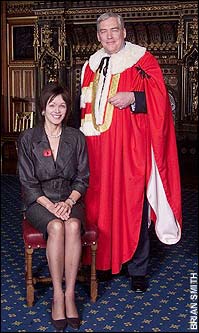
Because of questions surrounding the legality of the honest services law that was used to convict him, Conrad Black, Peer of the Realm, has been granted bail.
Off with the orange jumpsuit. Back in to finely tailored suits and silk boxers.
At the close of His Lordship's trial, the judge instructed the jury as to the honest services portion of the fraud charge. The Supreme Court, in finding that the law isn't clear, determined that Mr. Black's trial might have been tainted.
He would, in that case, have to be tried under under some other statute that fits the crime of robbing shareholders blind and using the corporate accounts like private banks.
On the other hand, the appeals court could determine that there was plenty of other cause for the jury to convict the man who brought down Hollinger International and very nearly killed the Chicago Sun-Times. In that case, the conviction stands and it's back to the orange jumpsuit.
His Lordship will want his legal team to seek as many continuances as possible. The longer this drags out, the longer he can enjoy his former posh lifestyle as Lord Black of Some-Obscure-Place-In-England.
He looks spectacular in scarlet and ermine. He simply doesn't look good in orange.
Monday, July 19, 2010
This Week's Crop Of Debuts
Alex Gilvarry has a novel coming out, his first.
He's not an ordinary person like you. He's a Normal Mailer fellow, right out of Mr. Mailer's writer's colony on Cape Cod.
What's it about? What's selling in New York these days? A story about an up and coming fashion designer who gets kidnapped and shipped to Gitmo. Yeah, I'm right there with you. The story's about three years too late. It's almost historical fiction at this point.
Conde Nast has a couple of representatives in the debut column. Again, they're not ordinary writers like you. They have a platform strong enough to support the heaviest pile of words. They know people who know people in publishing.
A novel about a woman reading her dead friend's journal? I picture long passages in italics filling out the manuscript, or being used as transitions into changing scenes. I'm picturing Cecilia Ahern's P.S. I Love You in fancy dress.
As for the debut of Jennifer Close, editor and writer? Chick lit isn't quite dead yet. Any book that deals with a group of women in their twenties and has bridal showers in it couldn't be anything less.
The ordinary creative types aren't gaining any traction these days. It's the economy, it's the tight fiction market, it's corporate caution taken to its boring and dull extreme.
The new fiction section at the public library has shrunk by one third. What's coming out next year isn't going to fill the empty space.
He's not an ordinary person like you. He's a Normal Mailer fellow, right out of Mr. Mailer's writer's colony on Cape Cod.
What's it about? What's selling in New York these days? A story about an up and coming fashion designer who gets kidnapped and shipped to Gitmo. Yeah, I'm right there with you. The story's about three years too late. It's almost historical fiction at this point.
Conde Nast has a couple of representatives in the debut column. Again, they're not ordinary writers like you. They have a platform strong enough to support the heaviest pile of words. They know people who know people in publishing.
A novel about a woman reading her dead friend's journal? I picture long passages in italics filling out the manuscript, or being used as transitions into changing scenes. I'm picturing Cecilia Ahern's P.S. I Love You in fancy dress.
As for the debut of Jennifer Close, editor and writer? Chick lit isn't quite dead yet. Any book that deals with a group of women in their twenties and has bridal showers in it couldn't be anything less.
The ordinary creative types aren't gaining any traction these days. It's the economy, it's the tight fiction market, it's corporate caution taken to its boring and dull extreme.
The new fiction section at the public library has shrunk by one third. What's coming out next year isn't going to fill the empty space.
Sunday, July 18, 2010
Writing Ain't Beanbag

Test them in math and science. Test them in reading. Who cares if they can write.
Illinois students won't have to take a writing exam that was originally put in place to measure educational progress in grades three, five, six and eight.
Everyone's texting anyway. Why find out if the kids can write?
The Illinois Sate Board of Education has figured out that if they eliminate the test, they can save a few million dollars and it's all about cutting the budget. Okay, it's all about cutting the budget in places where voters won't notice the pain come election day.
It's not as if the Feds require the test. If it wasn't for some universities requiring it, the eleventh grade test could be eliminated as well, at a cost savings that wouldn't upset voters who don't realize how important writing skills are.
By fifth grade, the writing skills of Illinois pupils have tanked, so why test the students and give the voting parents evidence of the disaster that is public education. That adds to the "throw the bums out" mentality, and for the bums, they like their jobs thanks very much.
Why bother to teach writing if there's no test for it? Aren't the teachers supposed to teach to the test so the scores look good and the politicians can get re-elected?
The kids aren't learning how to write, which means their reading skills are being hurt as well. They'll come out of the primary grades with limited communication skills, and when they head off to college, they won't get into the University of Illinois at Urbana-Champaign because they'll be competing against kids from outside Illinois who were taught how to write.
And all those out-of-state kids pay a much higher tuition which helps plug the holes in the budget that the politicians created through mismanagement and outright fraud.
To paraphrase "Bathhouse John" Coughlin, writing ain't beanbag.
Saturday, July 17, 2010
Thinking The Unthinkable

That's the word from Downing Street in the wake of serious rioting in Ardoyne.
The Orange Order wants to parade past the Irish Catholic area of Ardoyne, just to remind them who won that battle in 1620 that put the Protestants in charge. Imagine the Ku Klux Klan demanding the right to parade through African-American neighborhoods, just to remind them who's on top.
Little wonder that the minority group doesn't want the parade and has done everything in their power to stop it. After so many years of discrimination and abuse, they're fighting back with bricks and petrol bombs.
We need more money to quell these disturbances, goes the Police Service of Northern Ireland.
Move the parade route, says Downing Street. Move the feckin' parade out of the nationalist areas and there won't be any riots and you won't need more money that isn't there to put more police on the street.
The very idea is unthinkinable. Unimagineable to a Unionist. London telling them to give in to nationalist demands? Surely the world is coming to an end.
For centuries, the unionist element dug in their heels and London gave in. Times have changed, however. Brittania doesn't rule the waves and there won't always be an empire.
The Orange Order that loves a parade isn't getting any traction from pointing fingers at the nasty rioters. They aren't getting support from Downing Street in their stubborn refusal to meet with local citizens to reach a compromise on the parade route, to avoid rioting.
The Six Counties is a financial drain on the Exchequer. There's no real purpose served in hanging on to the port at Belfast. Bad news all around for the unionists.
Friday, July 16, 2010
Moral Equivalance

Former victims feel that the rules and regulations don't go far enough. There's no official mandate making it clear to the local bishop that he's to inform civil authorities when a pervert's been caught. The new rules are only the old guidelines now put into code.
Curb the perpetrator's public ministry says the Holy See. No mention of driving him to the nearest police station for arrest and trial by a jury of his peers.
You just know that some clever type will make a remark about the lack of women in the priesthood, and wouldn't the Church be better off with women priests? It's not as if there's no women in the world so how can the Vatican hierarchy be so uniformly unisex?
Put that thought away. Anyone who dares to consecrate a female of the species into the priesthood is as evil as the priest who abuses children. So says the Holy See.
Quite a stretch, that bit of moral equivalence. Make a woman a priest and you're as bad as the man who goes from parish to parish abusing children and destroying lives.
They've made it clear, the red-robed cardinals and the white-clad Pope, they've left no doubt about their regard for women. And it's rather obvious what they think of the parishioners.
Wednesday, July 14, 2010
Literary Smoke and Mirrors
Authors in search of publication usually have no experience with the publishing industry. They don't know what to do with the manuscript they've spent months and years to create.
Google is your friend, would be author. You can check the bona fides of agents and publishers and even the offers that don't sound quite right.
Reading your local paper, you might see that that a neighbor has found publishing success with PublishAmerica and you think, that's for me. Google first. You'd be amazed at what you'd find.
So many people have Googled and discovered the truth about the scam that is PublishAmerica that PublishAmerica has taken to blowing a lot of literary smoke up the ass of naive writers.
So bad is the reputation that they've taken to masking themselves. For a time, at any rate. Until this scam, too, is rumbled.
Aware of the stigma that is PublishAmerica? They have an app for that. It's called Independence Books. See? Not PublishAmerica at all. Those who would have laughed at you for signing with a scam outfit won't realize that you've been made a sucker.
"It will not show as POD" goes the announcement from PA. Your book will look a little more like it was published by a house that vets all its publications, unlike PA that prints up anything that comes in the door.
It won't make it any easier to sell, because it's still Print On Demand and there's still no sales and marketing departments to get your book into the shops.
It still doesn't make sense to consider PublishAmerica in any of its forms.
Google is your friend, would be author. You can check the bona fides of agents and publishers and even the offers that don't sound quite right.
Reading your local paper, you might see that that a neighbor has found publishing success with PublishAmerica and you think, that's for me. Google first. You'd be amazed at what you'd find.
So many people have Googled and discovered the truth about the scam that is PublishAmerica that PublishAmerica has taken to blowing a lot of literary smoke up the ass of naive writers.
So bad is the reputation that they've taken to masking themselves. For a time, at any rate. Until this scam, too, is rumbled.
Aware of the stigma that is PublishAmerica? They have an app for that. It's called Independence Books. See? Not PublishAmerica at all. Those who would have laughed at you for signing with a scam outfit won't realize that you've been made a sucker.
"It will not show as POD" goes the announcement from PA. Your book will look a little more like it was published by a house that vets all its publications, unlike PA that prints up anything that comes in the door.
It won't make it any easier to sell, because it's still Print On Demand and there's still no sales and marketing departments to get your book into the shops.
It still doesn't make sense to consider PublishAmerica in any of its forms.
Monday, July 12, 2010
Tripped Up In The Details
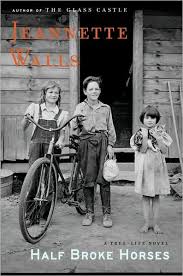 The book club is reading Jeannette Wells' Half Broke Horses this month.
Better than some of the selections that have been explored this year. The novel is almost a biography of the author's grandmother, a woman who lived a hardscrabble life but found ways to survive and thrive.
The reading was going along smoothly until Ms. Wells' grandmother decided to move from her birthplace in Arizona to Chicago.
Some things set my teeth on edge. Things that spoil an otherwise good book.
I know it's fiction, but if an author is using a real place in a real time, shouldn't they at least do a quick Google search to ascertain the facts?
The main character in the novel goes to Wrigley Field as a young woman before the First World War.
Nice touch, but Ms. Wells didn't notice that the ballpark where the Cubs play baseball was built in 1914 and it was called Weeghman Field. After the Federal League folded and the Cubs moved from the West Side Grounds, the place was called Cubs Field. Until 1920.
The average reader wouldn't notice that her subtle reference to Buckingham Fountain was a pure flight of fantasy, as the fountain wasn't built until 1927.
Such glaring errors pull my focus completely out of the novel and then dance around my head while I try to read the rest. It's more than merely a distraction.
As a reader, we suspend disbelief so that we can accept the author's premise. Events and characters merge in ways that aren't entirely possible but for the most remote circumstance, but we'll accept it if the author keeps the whole fantasy intact.
Make glaring errors in period detail and I might as well be reading science fiction or steampunk, neither of which I like.
I'm trying to finish the novel, but my heart's not in it. I went into the reading with a notion that the events depicted were based on a woman's real life, with names changed or characters merged for the sake of good literary flow. Turns out it's not all that. Turns out that the distraction of mistakes has me thinking that the book's getting boring and I don't really care how the story ends.
Wrigley Field before the First World War. Everyone knows that's not true. How can you suspend disbelief of a fact that's part of your personal history?
Friday, July 09, 2010
Creative Writing Gone Awry

The author herself had no idea how her little bit of fiction would end.
Chances are good that Aishling Madden was under the influence on the night she composed a short piece and posted it online.
She did some research on her characters so that she could make a more accurate portrayal. While working as a temp at Accenture, she found the CV of a receptionist and lifted it from the company's files. She'd be sending out her own flurry of resumes soon enough, since she didn't want to be a temp forever.
That took care of the female protagonist. What of a male character? Miss Madden was inspired by a man who worked at Office Angels, a recruiting firm. He interviewed her for positions, but she didn't suit. All the same, she kept an e-mail from him.
She typed up her story and posted it on Gumtree, where other would-be authors and sex workers posted their tales. Gumtree, as it turned out, wasn't an online journal of literature but an online marketplace where those interested in performing various sex acts could run an advertisement.
The woman whose CV was stolen started getting phone calls of a disturbing nature. Quite a few men were willing to take her up on the offer. The gardai were notified and they tracked the posting to Ms. Madden's computer.
They found all sorts of evidence on Ms. Madden's hard drive. She tried to compose another piece of flash fiction on the spot, but lost the plot line and ended up presented scenarios that didn't mesh.
She saved the CV for research purposes. She wrote up the ad but didn't post it. Some people came to her house and they posted it, but she couldn't recall their names or addresses. To link the various plot lines, she said that it had only been a practical joke.
No one found it funny, especially the two people whose names and phone numbers were put on the Internet, where nothing ever goes away.
Ms. Madden has been found guilty of defamation and publishing grossly offensive materials. She's been remanded on bail and returned to her parents. She's expected back in court at the end of the month for sentencing.
A stint in jail would do wonders for her literary career, providing plenty of real-life experiences that aren't to be found sitting in her bedroom in her daddy's house.
Paying a fine could pose some difficulty for the budding author. Unemployment doesn't pay much, and the two victims of her literary tour de force will be looking for compensation for the misery Ms. Madden put them through.
Thursday, July 08, 2010
Losing Steam
 My head's in the 1890's.
Louis Sullivan's architecture is celebrated, his buildings still smell of wet plaster and paint. Electric street cars share the roads with horse carts and buggies. People walk to destinations because it's cheap transportation.
Two literary agents are considering full manuscripts and I wonder where they are at with the reading and the possibility of offering.
I should compile a list of small press publishers to submit the manuscript to if things don't work out, but when do I pull the plug and figure these agents aren't falling in love with the story? So it's not a blockbuster, but maybe it would fit into a small niche where authors don't receive an advance and the royalties are next to nothing.
Work is piling up as clients race the ticking tax bomb clock.
No wonder I'm in the 1890's. The pace is slow because speed has yet to be invented. Time is short.
I have to leave for work soon.
Sorry if I seem distracted, or rush you to finish the conversation. I'm in the 1890's with the characters of a novel I'm writing, and they're more interesting than the fate of Lebron James.
Wednesday, July 07, 2010
The Confession
Jerry Hobbs and Sheila Hollabaugh had their problems. They argued too much. Weren't getting along like a pair of love birds.
When police in Zion, Illinois, a rustbelt town down on its luck, found the bodies of Laura Hobbs and her friend Krystal Tobias in a park, they questioned the parents first. Didn't take long to learn that the couple had some serious relationship issues.
Turns out that Jerry Hobbs had gotten out of prison in Texas about a month earlier, and came up to Zion to be with his honey. Once a felon, always a felon. The cops brought him in.
Cops see horrific crimes all the time. They've had enough experience to know that even the father of a little girl can't be ruled out as her murderer. Even when semen was left on the child's clothes. There's some sick men out there. No scenario can be eliminated until the evidence shows otherwise.
A simple man is easy to crack. Long before the semen was analyzed for DNA, Mr. Hobbs confessed to killing his own flesh and blood. He confessed to stabbing two nine-year-old girls multiple times, sticking the knife into his daughter's eyes.
Fingernail scrapings taken from the two little corpses was tested and failed to match Mr. Hobbs. The DNA from the semen failed to match Mr. Hobbs.
No problem for Lake County Prosecutor Michael Mermel. He had that confession, you see, and to hell with DNA. That semen could have come from the child rubbing up against a tree in a spot that was a popular lover's tryst.
What the fuck, you say?
Due to errors, the first attempt to match the DNA to a national database turned up blank.
Mr. Hobbs, meanwhile, sat in jail. Mr. Mermel had his perp and he wasn't going to let him go. No bail was granted. The father was locked up in 2005 and left there while Mermel rounded up enough evidence to make a solid case. Clearly, the semen on the tree scenario wasn't going to fly with a jury of reasonably intelligent people.
The DNA match was repeated and wouldn't you know but there was a match. To a man who was already in jail in Virginia. Who lived two doors down from the Hollabaugh residence at the time of the murders.
Mr. Hobbs is due in court, and it's anyone's guess as to whether or not he'll be released.
It's not the first time that Mr. Mermel has ignored DNA evidence that didn't come from the man he wanted to prosecute. Given that track record, it's not likely that a Lake County judge would continue to hold Mr. Hobbs.
How likely is it that Mr. Mermel will continue to be gainfully employed by the County of Lake? Does he get canned before or after Mr. Hobbs sues the County for prosecutorial misconduct and every other error a greedy lawyer can think up?
In the meantime, the Lake County Board will be meeting with their insurance agents to make sure the County's coverage is up-to-date. There's a big claim for damages coming.
When police in Zion, Illinois, a rustbelt town down on its luck, found the bodies of Laura Hobbs and her friend Krystal Tobias in a park, they questioned the parents first. Didn't take long to learn that the couple had some serious relationship issues.
Turns out that Jerry Hobbs had gotten out of prison in Texas about a month earlier, and came up to Zion to be with his honey. Once a felon, always a felon. The cops brought him in.
Cops see horrific crimes all the time. They've had enough experience to know that even the father of a little girl can't be ruled out as her murderer. Even when semen was left on the child's clothes. There's some sick men out there. No scenario can be eliminated until the evidence shows otherwise.
A simple man is easy to crack. Long before the semen was analyzed for DNA, Mr. Hobbs confessed to killing his own flesh and blood. He confessed to stabbing two nine-year-old girls multiple times, sticking the knife into his daughter's eyes.
Fingernail scrapings taken from the two little corpses was tested and failed to match Mr. Hobbs. The DNA from the semen failed to match Mr. Hobbs.
No problem for Lake County Prosecutor Michael Mermel. He had that confession, you see, and to hell with DNA. That semen could have come from the child rubbing up against a tree in a spot that was a popular lover's tryst.
What the fuck, you say?
Due to errors, the first attempt to match the DNA to a national database turned up blank.
Mr. Hobbs, meanwhile, sat in jail. Mr. Mermel had his perp and he wasn't going to let him go. No bail was granted. The father was locked up in 2005 and left there while Mermel rounded up enough evidence to make a solid case. Clearly, the semen on the tree scenario wasn't going to fly with a jury of reasonably intelligent people.
The DNA match was repeated and wouldn't you know but there was a match. To a man who was already in jail in Virginia. Who lived two doors down from the Hollabaugh residence at the time of the murders.
Mr. Hobbs is due in court, and it's anyone's guess as to whether or not he'll be released.
It's not the first time that Mr. Mermel has ignored DNA evidence that didn't come from the man he wanted to prosecute. Given that track record, it's not likely that a Lake County judge would continue to hold Mr. Hobbs.
How likely is it that Mr. Mermel will continue to be gainfully employed by the County of Lake? Does he get canned before or after Mr. Hobbs sues the County for prosecutorial misconduct and every other error a greedy lawyer can think up?
In the meantime, the Lake County Board will be meeting with their insurance agents to make sure the County's coverage is up-to-date. There's a big claim for damages coming.
Tuesday, July 06, 2010
The Finger Of Blame
Didn't the nuns always tell us that we shouldn't point a finger of blame because the other three fingers were pointing back at us?
 Adam Clayton is learning the truth of the old adage.
He gave his assistant, Carol Hawkins, free rein to his bank accounts and she in turn robbed him blind. The lawsuit is still being heard in court, but as far as anyone can tell, the money has been spent and it won't be coming back again, whether Mr. Clayton wins his case or not.
More recently, the U2 bassist has sued his bankers and financial managers. Didn't they notice that there were large sums of money going missing? Where were their keen eyes?
And where were your own two eyes, Mr. Clayton, ask the bankers. Couldn't be bothered looking over the balance sheets, you lazy sot. Don't go blaming us for your lack of oversight.
Not so fast goes Mr. Clayton. You, Mr. Banker, called me in the first instance, back in October of 2009, to alert me to certain odd banking transactions that were caused by Ms. Hawkins' pilfering. You could have checked into it sooner and I'd not be out over four million euros.
Who was it who kept the woman on after she confessed in 2008 to helping herself to your bank accounts, says the bankers. If you'd given her the sack then, you could have prevented a large part of the fraud yourself.
In the end, it's the employees of Bank of Ireland Private Banking Ltd. who have more to answer for. Their job, for which they were paid, was to mind Mr. Clayton's money. That includes asking questions about odd transactions and sums of money going missing when the money's owner is nowhere near the bank from which the money is being taken. They were supposed to be minding the till so that Mr. Clayton could go make music and not worry about his financial future.
It's a matter of due diligence for the money's owner to check up on things from time to time, but a man who plucks metal strings on an electric bass guitar knows his limitations when it comes to money. Investments, tax dodges and the like can be complex and tricky, and so a smart man hires a smarter man to do the heavy lifting. Would Mr. Clayton have understood the balance sheets if he'd tried to read them?
Mr. Clayton's desire to fast-track the case into the Commercial Court has been denied. Instead, the High Court can listen to the bickering and watch fingers of blame point in all directions. Then the judge will have to assign the proper proportions of the blame pie to the musician, the bankers and the accountants. No one's hunger will be satisfied.

He gave his assistant, Carol Hawkins, free rein to his bank accounts and she in turn robbed him blind. The lawsuit is still being heard in court, but as far as anyone can tell, the money has been spent and it won't be coming back again, whether Mr. Clayton wins his case or not.
More recently, the U2 bassist has sued his bankers and financial managers. Didn't they notice that there were large sums of money going missing? Where were their keen eyes?
And where were your own two eyes, Mr. Clayton, ask the bankers. Couldn't be bothered looking over the balance sheets, you lazy sot. Don't go blaming us for your lack of oversight.
Not so fast goes Mr. Clayton. You, Mr. Banker, called me in the first instance, back in October of 2009, to alert me to certain odd banking transactions that were caused by Ms. Hawkins' pilfering. You could have checked into it sooner and I'd not be out over four million euros.
Who was it who kept the woman on after she confessed in 2008 to helping herself to your bank accounts, says the bankers. If you'd given her the sack then, you could have prevented a large part of the fraud yourself.
In the end, it's the employees of Bank of Ireland Private Banking Ltd. who have more to answer for. Their job, for which they were paid, was to mind Mr. Clayton's money. That includes asking questions about odd transactions and sums of money going missing when the money's owner is nowhere near the bank from which the money is being taken. They were supposed to be minding the till so that Mr. Clayton could go make music and not worry about his financial future.
It's a matter of due diligence for the money's owner to check up on things from time to time, but a man who plucks metal strings on an electric bass guitar knows his limitations when it comes to money. Investments, tax dodges and the like can be complex and tricky, and so a smart man hires a smarter man to do the heavy lifting. Would Mr. Clayton have understood the balance sheets if he'd tried to read them?
Mr. Clayton's desire to fast-track the case into the Commercial Court has been denied. Instead, the High Court can listen to the bickering and watch fingers of blame point in all directions. Then the judge will have to assign the proper proportions of the blame pie to the musician, the bankers and the accountants. No one's hunger will be satisfied.
Monday, July 05, 2010
Of Course It's Only Fiction
Revenge is a dish best served cold, with a side of literary hash.
Tim Waterstone, owner of the book chain bearing his name, has weathered some fierce financial storms of late. Sales have declined, profits have dropped, expenses have climbed, and he had to sell out before everything he'd built up had tumbled down.
He's an angry man indeed, still fuming years after his chain of book stores was taken over by WH Smith and later EMI but it's all a tangled web of buying and selling and take-overs that you'd need a scorecard to keep track of the players.
Mr. Waterstone is getting back at those who did him wrong. His first novel in ten years is due to come out in September, and already people are suggesting that the thinly veiled characters in the novel are readily identifiable.
According to pre-publication rumor, Mr. Waterstone put his enemies in the novel, where he could parody and mock them to his heart's content. It's all fiction, after all, so no one can sue him for libel.
In the pages of a novel, he gets back at those who foiled his attempt to buy back the Waterstone book chain after EMI merged with HMV and the new company's focus was distracted from the traditional book business. Sales within the British publishing industry will be huge, fueled by a curiosity to discover who's in the book and how they are portrayed. Sales to the general public will be boosted by the buzz. A book that lifts the veil on the publishing industry? Gotta have it.
Authors have gotten even with their enemies through literature since mankind first started telling stories. With Tim Waterstone's solid platform as a mover and shaker in the industry he's writing about, he can expect a very good return on his investment.
Those who are parodied in the pages of his new novel, however, will have to grumble in private. It's all fiction, isn't it?
Tim Waterstone, owner of the book chain bearing his name, has weathered some fierce financial storms of late. Sales have declined, profits have dropped, expenses have climbed, and he had to sell out before everything he'd built up had tumbled down.
He's an angry man indeed, still fuming years after his chain of book stores was taken over by WH Smith and later EMI but it's all a tangled web of buying and selling and take-overs that you'd need a scorecard to keep track of the players.
Mr. Waterstone is getting back at those who did him wrong. His first novel in ten years is due to come out in September, and already people are suggesting that the thinly veiled characters in the novel are readily identifiable.
According to pre-publication rumor, Mr. Waterstone put his enemies in the novel, where he could parody and mock them to his heart's content. It's all fiction, after all, so no one can sue him for libel.
In the pages of a novel, he gets back at those who foiled his attempt to buy back the Waterstone book chain after EMI merged with HMV and the new company's focus was distracted from the traditional book business. Sales within the British publishing industry will be huge, fueled by a curiosity to discover who's in the book and how they are portrayed. Sales to the general public will be boosted by the buzz. A book that lifts the veil on the publishing industry? Gotta have it.
Authors have gotten even with their enemies through literature since mankind first started telling stories. With Tim Waterstone's solid platform as a mover and shaker in the industry he's writing about, he can expect a very good return on his investment.
Those who are parodied in the pages of his new novel, however, will have to grumble in private. It's all fiction, isn't it?
Friday, July 02, 2010
Still Crazy After All These Years

Assumed he'd quietly retired, to live out his golden years with his subservient wife.
The paper-mill Reverend is still spewing fire, still crazy after all these years.
He's front and center, leading the protests against a visit by a Catholic prelate. What more would you expect from a man who once called the Pope the Anti-Christ, and to his face?
Using the sex abuse scandal as an excuse to excoriate British authorities for inviting His Holiness, Ian Paisley is complaining mightily that Pope Benedict will soon set a red-shoed foot on British soil.
It's the first official visit for the head of the Roman Catholic Church, the same church that the British tried with all their might to wipe out throughout the not-so-united kingdom.
Having met with no little success, Ireland excepted, it must be a mistake to invite the Pope to come and meet the Queen. Such an official meeting indicates British acceptance of Catholicism, and to Ian Paisley, that's heresy.
He's taking some comfort in knowing that Her Majesty will be on Scottish soil, not in England, when the meeting takes place. And he's insisting that there's not a single minister in all the land who wants "anything to do" with His Holiness.
It must really irk Mr. Paisley to know that he's singing in the chorus with gay activists and atheists, who all plan to protest when Pope Benedict arrives in England's green and pleasant land. He hates them, too.
A Taste Of Chicago Violence
 After decades of taking care of his cronies, Chicago's mayor Richard Daley has been forced to cut back on the city's lavish spending. With that in mind, the spectacular Fourth of July fireworks has to suffer the consequences.
Rather than the big production on the third of July at Grant Park, readily accessible to those attending the Taste of Chicago festival, there's to be a clutch of smaller, cheaper displays at three different locations.
It may be more than finances that are driving the revised celebration.
Huge crowds gather at Grant Park in a nightmare scenario for the under-manned police force. Gang violence is worse than ever, and it tends to spill out where special events draw rivals into close proximity.
Tourists who might have been departing from the eating orgy last night would have walked into the middle of a pitched brawl on State Street, only blocks away from the fun and frivolity of music and food. They might have witnessed a young man get carted off to the hospital for treatment of a stab wound in his back. They may have seen the man who resisted arrest get Tasered.
Not what you want anyone to think of when they think of the city's tourist attractions. It's very bad publicity, coming on top of a string of news stories about multiple shootings that make Chicago sound more like the Wild West than a civilized city.
How's that hand gun ban working out for you, Chicago? Not at all, judging by the numbers.
Out of town guests want to feel safe and secure when they wander around, and they aren't getting reassured when they read about gang fights and running gun battles. Who'd want to find themselves in a crowd, when you never know who might have a gun and decide to use it? Little good is a ban on hand guns when the only ones with hand guns are those who routinely break the law.
With that in mind, those on Chicago's South Side can get themselves over to Rainbow Beach (i.e. the African-American folks) to observe the fireworks display that will be coordinated with another at Navy Pier (white tourists) and a third to the north at Montrose Beach (miscellaneous including Asian and Hispanic).
Divide and conquer. Keep the crowds down to a manageable size at separate locations and pray that the gun slingers confine themselves to their neighborhoods and don't threaten the tourists with their precious dollars.
Thursday, July 01, 2010
It's A Bird, It's A Plane, It's SuperKindle
Television adverts for Amazon's Kindle feature catchy pop tunes that stick in your head, coupled with clever visuals that promote the imagination, rather than the actual chunk of plastic.
 Now comes the new and improved and lower-priced SuperKindle. Along with a new and remarkably uncreative promotion.
The big improvement, according to Amazon, is the remarkable contrast on the screen that makes it easier to read. You see, with a book, you adjust the contrast by turning on the lamp over your shoulder and shifting either yourself or the lamp to get the best illumination. With a Kindle, there's no shifting that would help the letters stand out better from the screen.
To demonstrate how perfect this new and improved display is, the commercial opens with a very clear image of a book page on the new device. As the camera pans back, we see a lady sitting on a beach, and there's her significant other next to her with his own Kindle.
What's missing?
There's no curling up. There's no book placed on the lap while the reader watches the waves for a minute or two and digests what's just been read. The significant other doesn't have an open book stretched over his face while he takes a brief nap under the summer sun.
Sure the image is one of summer heat, but it's cold. Stiff, inflexible, and uncomfortable would best describe the poses of the Kindle owners in their beach chairs.
Grand that you can download an entire library and store it in a flat little rectangle of plastic. Brilliant that it's been modified to make it easier to read in bright sunlight.
I'll take a book any day. It never needs to be recharged. It won't be damaged if I should drop it in the sand. It's always been readable in bright sunlight.
The new and improved Kindle. Still lacking in the sensory experience of books.
The big improvement, according to Amazon, is the remarkable contrast on the screen that makes it easier to read. You see, with a book, you adjust the contrast by turning on the lamp over your shoulder and shifting either yourself or the lamp to get the best illumination. With a Kindle, there's no shifting that would help the letters stand out better from the screen.
To demonstrate how perfect this new and improved display is, the commercial opens with a very clear image of a book page on the new device. As the camera pans back, we see a lady sitting on a beach, and there's her significant other next to her with his own Kindle.
What's missing?
There's no curling up. There's no book placed on the lap while the reader watches the waves for a minute or two and digests what's just been read. The significant other doesn't have an open book stretched over his face while he takes a brief nap under the summer sun.
Sure the image is one of summer heat, but it's cold. Stiff, inflexible, and uncomfortable would best describe the poses of the Kindle owners in their beach chairs.
Grand that you can download an entire library and store it in a flat little rectangle of plastic. Brilliant that it's been modified to make it easier to read in bright sunlight.
I'll take a book any day. It never needs to be recharged. It won't be damaged if I should drop it in the sand. It's always been readable in bright sunlight.
The new and improved Kindle. Still lacking in the sensory experience of books.
Wednesday, June 30, 2010
Under The Influence
Everyone's heard some tale of woe from a friend who made the mistake of sending off a nasty e-mail while under the influence of drink.
Don't send that e-mail until you're sober, you've been told. When drunk, you do stupid things and something as permanent as an e-mail is something you'll regret.
 Turns out that you shouldn't buy and sell on the commodities market while drunk, either.
Steven Perkins went off to the company's golf outing last June and took advantage of the river of booze that was flowing at company expense.
He went home and had a few more drinks, just to keep the party atmosphere going.
Drunk to the point of stupor, Mr. Perkins then took out his laptop and logged in to his trading account. Just for a laugh, and don't things seem hysterically funny when you're pissed. Come the morning and you're holding your hung-over, throbbing head in your hands and sorrowing over your idiocy.
Not everyone's drunken on-line lark can drive oil prices to spike, however. Turns out that Mr. Perkins was employed at PVM where he traded in oil futures.
Oh what fun it is to take a $500 million position on Brent crude oil futures. The market price shot up to $73.50 per barrel, and the analysts went into a panic. They commenced to wringing their hands, in fear of what high oil prices would mean to the health of the fragile economic recovery when the world's economy is energy-driven. There was no reason for the price to spike like it did, which only made the worry that much greater.
Ho, ho, ho, all a big joke. A trade done under the influence of drink after much drink was taken, and PVM had to unwind what their employee (a former employee in short order) had done. Oil prices then fell to a market based level of $69 per barrel and the world exhaled with relief.
Just as you shouldn't e-mail while drunk, it's not wise to buy oil futures while under the influence. Not only did the broker lose his job, but he's been fined E89,000 by the Financial Services Authority in London.
There's a hangover that a couple of aspirin and a Bloody Mary won't cure.
Don't send that e-mail until you're sober, you've been told. When drunk, you do stupid things and something as permanent as an e-mail is something you'll regret.
Steven Perkins went off to the company's golf outing last June and took advantage of the river of booze that was flowing at company expense.
He went home and had a few more drinks, just to keep the party atmosphere going.
Drunk to the point of stupor, Mr. Perkins then took out his laptop and logged in to his trading account. Just for a laugh, and don't things seem hysterically funny when you're pissed. Come the morning and you're holding your hung-over, throbbing head in your hands and sorrowing over your idiocy.
Not everyone's drunken on-line lark can drive oil prices to spike, however. Turns out that Mr. Perkins was employed at PVM where he traded in oil futures.
Oh what fun it is to take a $500 million position on Brent crude oil futures. The market price shot up to $73.50 per barrel, and the analysts went into a panic. They commenced to wringing their hands, in fear of what high oil prices would mean to the health of the fragile economic recovery when the world's economy is energy-driven. There was no reason for the price to spike like it did, which only made the worry that much greater.
Ho, ho, ho, all a big joke. A trade done under the influence of drink after much drink was taken, and PVM had to unwind what their employee (a former employee in short order) had done. Oil prices then fell to a market based level of $69 per barrel and the world exhaled with relief.
Just as you shouldn't e-mail while drunk, it's not wise to buy oil futures while under the influence. Not only did the broker lose his job, but he's been fined E89,000 by the Financial Services Authority in London.
There's a hangover that a couple of aspirin and a Bloody Mary won't cure.
Monday, June 28, 2010
The Special Collections Library
When Saul Bellow split with Harriet Wasserman, the literary agent wound down her agency and closed up shop. Over the years, she shipped off her records to Duke University, to be housed in the Special Collections Library, and so her business history was catalogued and made accessible to researchers. Correspondence with the great Saul Bellow? Priceless.
Ms. Wasserman was a member of A.A.R., and had once worked at Russell & Volkening before starting off on her own, taking her existing clients with her.
The early correspondence of Saul Bellow from 1948? Even more priceless. Although it's doubtful that any stray love letters might have escaped notice and gotten catalogued by the Duke librarians. Ms. Wasserman would have kept the passion for her own memories.
But Saul Bellow left his lover for Andrew Wylie and that was the end of Harriet Wasserman as she had been.
Since that split, several of her former clients are suing her for royalties owed that she never paid them.
Bellow bid farewell and Ms. Wasserman stopped caring about her clients. She didn't push and promote in the ways that literary agents are expected to do for their clients. Worst of all, she failed to keep the account books in order and never got around to cutting the royalty checks.
Ms. Wasserman closed her agency three years ago, and it's not likely that she'll ever be able to make good on what she owes her former clients.
It's a sad tale of mental decline by a person entrusted with the finances of others. It would make a splendid novel in the Bellow tradition, a tragedy of heartbreaking scale, a story of human failings and the fall-out that poisons those on the periphery.
Ms. Wasserman was a member of A.A.R., and had once worked at Russell & Volkening before starting off on her own, taking her existing clients with her.
The early correspondence of Saul Bellow from 1948? Even more priceless. Although it's doubtful that any stray love letters might have escaped notice and gotten catalogued by the Duke librarians. Ms. Wasserman would have kept the passion for her own memories.
But Saul Bellow left his lover for Andrew Wylie and that was the end of Harriet Wasserman as she had been.
Since that split, several of her former clients are suing her for royalties owed that she never paid them.
Bellow bid farewell and Ms. Wasserman stopped caring about her clients. She didn't push and promote in the ways that literary agents are expected to do for their clients. Worst of all, she failed to keep the account books in order and never got around to cutting the royalty checks.
Ms. Wasserman closed her agency three years ago, and it's not likely that she'll ever be able to make good on what she owes her former clients.
It's a sad tale of mental decline by a person entrusted with the finances of others. It would make a splendid novel in the Bellow tradition, a tragedy of heartbreaking scale, a story of human failings and the fall-out that poisons those on the periphery.
Friday, June 25, 2010
Ongoing Injustice For Magdalenes
They were slaves.
There's no other way to put it. The women who were locked up in Magdalene laundries for crimes such as having a child out of wedlock, of being particularly atttractive to men, or being illegitimate, all worked for the various religious orders who ran the laundries. Not one of the women received a cent for her toil.
 Citing privacy concerns, the nuns won't release the women's records. The former Magdalene inmates can't prove that they worked, and because of that, they cannot get the old age pension that is their due.
Minister for Finance Brian Lenihan throws up his hands and tells them that there's nothing the government can do. Because they were "employed" by a religious group, their complaint doesn't fall under the scope of the Privacy Bill.
It would require an amendment to the Bill, which Labour's Kathleen Lynch is supporting. However, no such legislation is planned. The Maggies are once again facing continued injustice.
The women went through hell during their time in the laundries. On the heels of the clerical abuse crisis that has rocked the Catholic Church, the inmates sought justice for the misery inflicted on them, but neither the State nor the Church will accept blame.
By not accepting blame, or actively seeking to right the wrong, the Magdalene inmates are continually abused by the government and the Church that worked together to enslave them.
In their old age, their spirits broken and their minds warped by decades of institutionalization, they have nothing to fall back on. No pension, no savings, and many have no families to support them.
They're a passive bunch, the Maggies. Beat a woman down psychologically and she's less likely to rise up.
Makes it easy for the government and the Church to ignore them. Eventually, the old ladies will die off and the problem will be solved.
The slaves in the American south never received old age pensions, but the masters felt it their moral obligation to feed and house those whose toil made them wealthy. The Catholic Church isn't even doing that much for their coterie of slave laborers.
There's no other way to put it. The women who were locked up in Magdalene laundries for crimes such as having a child out of wedlock, of being particularly atttractive to men, or being illegitimate, all worked for the various religious orders who ran the laundries. Not one of the women received a cent for her toil.
Minister for Finance Brian Lenihan throws up his hands and tells them that there's nothing the government can do. Because they were "employed" by a religious group, their complaint doesn't fall under the scope of the Privacy Bill.
It would require an amendment to the Bill, which Labour's Kathleen Lynch is supporting. However, no such legislation is planned. The Maggies are once again facing continued injustice.
The women went through hell during their time in the laundries. On the heels of the clerical abuse crisis that has rocked the Catholic Church, the inmates sought justice for the misery inflicted on them, but neither the State nor the Church will accept blame.
By not accepting blame, or actively seeking to right the wrong, the Magdalene inmates are continually abused by the government and the Church that worked together to enslave them.
In their old age, their spirits broken and their minds warped by decades of institutionalization, they have nothing to fall back on. No pension, no savings, and many have no families to support them.
They're a passive bunch, the Maggies. Beat a woman down psychologically and she's less likely to rise up.
Makes it easy for the government and the Church to ignore them. Eventually, the old ladies will die off and the problem will be solved.
The slaves in the American south never received old age pensions, but the masters felt it their moral obligation to feed and house those whose toil made them wealthy. The Catholic Church isn't even doing that much for their coterie of slave laborers.
Thursday, June 24, 2010
Brushing Up On Protocol
It's been an age since Ireland had a visit from British royalty.
King George arrived one hundred years ago, shortly before the Dublin workers were locked out and Jim Larkin was organizing the union. To say that George arrived in a peaceful nation happy to see him would be very wrong.
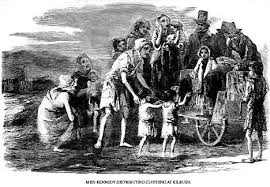 Before him, there was another visit that went poorly. Queen Victoria was young at the time, stepping out on Dublin's streets as a rather sheltered girl who had no idea her subjects were literally starving to death all around her.
The fact that she was feted with an overabundance of food did nothing to endear her to the Irish.
There's no great love of British royalty in Ireland, not among a people possessed of long memories and capable of holding grudges across generational lines. The young ones might be intrigued by the princes, their lives the stuff of gossip rags, but a full-out royal visit? Don't expect Gerry Adams or Martin McGuinness to be high on the guest list.
Taoiseach Brian Cowen has extended an invitation to Queen Elizabeth to pay a call. The relationship between the two countries is better than ever, with the peace process taking hold in the north and both nations struggling mightily with an economic meltdown.
In the Dail, Caoimhghin O Caolain of Sinn Fein is pitching a fit, and it's unlikely he'll quietly stay at home while the Commander in Chief of the British armed forces is marching around the Phoenix Park. And he won't greet the Queen with open arms until England moves on its promise to investigate collusion between the English army and the loyalists in regard to the deadly bombings in Dublin and Monaghan back in the '70's.
A pleasant state visit with happy faces all around? Not likely.
 The Queen might consider leaving the old man at home and bringing along Harry and Wills. The Shinners' protests would be drowned out by the squeals of the young ladies and everyone could pretend that things went smoothly during the first royal visit since independence was won.
King George arrived one hundred years ago, shortly before the Dublin workers were locked out and Jim Larkin was organizing the union. To say that George arrived in a peaceful nation happy to see him would be very wrong.
The fact that she was feted with an overabundance of food did nothing to endear her to the Irish.
There's no great love of British royalty in Ireland, not among a people possessed of long memories and capable of holding grudges across generational lines. The young ones might be intrigued by the princes, their lives the stuff of gossip rags, but a full-out royal visit? Don't expect Gerry Adams or Martin McGuinness to be high on the guest list.
Taoiseach Brian Cowen has extended an invitation to Queen Elizabeth to pay a call. The relationship between the two countries is better than ever, with the peace process taking hold in the north and both nations struggling mightily with an economic meltdown.
In the Dail, Caoimhghin O Caolain of Sinn Fein is pitching a fit, and it's unlikely he'll quietly stay at home while the Commander in Chief of the British armed forces is marching around the Phoenix Park. And he won't greet the Queen with open arms until England moves on its promise to investigate collusion between the English army and the loyalists in regard to the deadly bombings in Dublin and Monaghan back in the '70's.
A pleasant state visit with happy faces all around? Not likely.
Wednesday, June 23, 2010
Goldman Sachs Takes A Mulligan
No hole in one for the Federally bailed-out Goldman Sachs. A judge has determined that they can't foreclose on the posh Sawgrass golf resort in Florida.
A large group of Irish investors bought the resort a few years back, when money was no object and everything on the horizon was golden. Turns out that gold-tinged hue was a firestorm of bad debt that swept through RQB Resort LP and left nothing but ash and dust in its wake.
The group filed for Chapter 11 bankruptcy protection and sat down with Goldman Sachs to reorganize the bloated debt. They proposed an extension to give them more time to pay the loan, and they asked for a lower interest rate that accounted for the steep decline in revenue. Fewer resort guests meant a drop in income, and RQB thought that they might work out a deal with Goldman Sachs that would have the debt burden equalized to the new, reduced level of cash flow.
Sure the property is worth half what RQB paid for it, but Goldman Sachs saw a positive outcome down the road and they wanted to get their hands on the Florida resort. Hence, they foreclosed.
Not so fast said the judge in Jacksonville. The Irish investors can have until the end of December to put together a restructuring plan. They'll have time to get the property appraised so that the court can determine how much Goldman Sachs might be able to realize.
A little too greedy was Goldman Sachs, trying to snag a resort with potential before the owners could work with the courts to restructure their debt.
That's the point of Chapter 11. A debtor is allowed to spread his losses around amongst his creditors, who are supposed to be happy to get something rather than the nothing they'd get if RQB went belly-up. Having swamped investors with Goldman Sachs-created losses during the sub-prime mortgage orgy, the investment firm didn't want to end up on the short end of its own stick.
What's next for Goldman Sachs in the wake of this loss? They could always call in favors from their hirelings in the Congress and get the bankruptcy laws modified, but in some quiet and discrete way. The voting public has no stomach for their antics and the politicians, who love Goldman Sachs campaign contributions, realize that they still have to win an election that's decided by a lot of unhappy citizens.
A large group of Irish investors bought the resort a few years back, when money was no object and everything on the horizon was golden. Turns out that gold-tinged hue was a firestorm of bad debt that swept through RQB Resort LP and left nothing but ash and dust in its wake.
The group filed for Chapter 11 bankruptcy protection and sat down with Goldman Sachs to reorganize the bloated debt. They proposed an extension to give them more time to pay the loan, and they asked for a lower interest rate that accounted for the steep decline in revenue. Fewer resort guests meant a drop in income, and RQB thought that they might work out a deal with Goldman Sachs that would have the debt burden equalized to the new, reduced level of cash flow.
Sure the property is worth half what RQB paid for it, but Goldman Sachs saw a positive outcome down the road and they wanted to get their hands on the Florida resort. Hence, they foreclosed.
Not so fast said the judge in Jacksonville. The Irish investors can have until the end of December to put together a restructuring plan. They'll have time to get the property appraised so that the court can determine how much Goldman Sachs might be able to realize.
A little too greedy was Goldman Sachs, trying to snag a resort with potential before the owners could work with the courts to restructure their debt.
That's the point of Chapter 11. A debtor is allowed to spread his losses around amongst his creditors, who are supposed to be happy to get something rather than the nothing they'd get if RQB went belly-up. Having swamped investors with Goldman Sachs-created losses during the sub-prime mortgage orgy, the investment firm didn't want to end up on the short end of its own stick.
What's next for Goldman Sachs in the wake of this loss? They could always call in favors from their hirelings in the Congress and get the bankruptcy laws modified, but in some quiet and discrete way. The voting public has no stomach for their antics and the politicians, who love Goldman Sachs campaign contributions, realize that they still have to win an election that's decided by a lot of unhappy citizens.
Tuesday, June 22, 2010
This Means (Price) War

Not cheap by any means. Even so, there are those technophiles who simply have to have the newest toy.
The Kindle isn't new any more, and it has competition beyond the iPad. After all, an iPad does much more than Amazon's electronic reading device. Trying to out-do Apple isn't where the Kindle is going. It can't hang around a price point that's close to the iPad because it's so weak in comparison.
Competitive pressure is coming from Sony, which invented the Nook as an alternative to Amazon's Kindle, and the price war is concentrated at the e-reader level.
Sony released the Nook and charged $259 for it, forcing Amazon to drop their price to keep pace. Sony has again lowered the price on their e-reader because people are looking at iPads and thinking the Nook isn't worth the money because all it does is books.
This week, Amazon dropped the price of the Kindle further, putting some distance between an expensive iPad that does everything and a book reading device that only delivers the written word. They can't be the most expensive e-reader out there, either, so they're looking over their corporate shoulder at Sony, which is set to introduce a Wi-Fi enabled e-reader soon, at an even cheaper price.
Will the price war cull the weak and strengthen the e-reader industry?
Few people bought downloaded books last year, and it has yet to make large gains in popularity. There's just something about books, about their physical presence on a shelf, that is totally lacking in a piece of plastic filled with circuit boards.
If you want to read on a tablet, why would you spend a couple of hundred dollars on a Kindle when you could get an iPad for twice the price, but with more than twice the features?
It's hard to envision a future where the Kindle or the Nook are around. Offering them to the public at a lower cost won't make the iPad less desirable. Sometimes it's not entirely about how much an item costs, but about how much the buyer gets for their money.
Monday, June 21, 2010
Efficient Use Of Resources
A man might, on occasion, drop off the little ones with the child minder and perhaps notice that the lady who will be tending to his offspring's needs during the day is a pretty young thing.
On his way to work, he might fantasize about all that sexuality that goes unnoticed by the two-year-old set.
Would he ever imagine that his wife would have selected a child minder who could make all those fantasies come true?
There isn't much money to be made in the child care industry. Salaries are low, insurance is high, and then there's all the licensing and hoops to leap through to prove the center is sanitary and safe.
Little wonder that Amy Elizabeth Thoren of Naperville, Illinois, opened a second business that is wholly unregulated and doesn't need any sort of license.
The kids are gone from her home-based center at night, so why not make use of the empty space and generate income from a business that's seen a steady demand since the beginning of human kind. No different than a fast food restaurant opening up for breakfast. The facilities are in place, the utilities are humming and the physical plant is costing money whether it's open or not. So why not open?
Ms. Thoren's home functioned as the call center, while the actual work was done in various hotels and motels in town. She shared the home with another prostitute, although it's not yet known if her house mate was also helping out with the day care center by day. You'd think that a woman who was up all night working wouldn't be much help chasing down toddlers.
The Department of Children and Family Services has been alerted, since day care centers generally aren't permitted in brothels, even if said brothel was more of a private office for the pimp and no sex acts were performed in places that were accessible to the children.
How often have you heard or seen advertising that claims you can make a fortune and never leave home? Ms. Thoren may have discovered the fine print.
On his way to work, he might fantasize about all that sexuality that goes unnoticed by the two-year-old set.
Would he ever imagine that his wife would have selected a child minder who could make all those fantasies come true?
There isn't much money to be made in the child care industry. Salaries are low, insurance is high, and then there's all the licensing and hoops to leap through to prove the center is sanitary and safe.
Little wonder that Amy Elizabeth Thoren of Naperville, Illinois, opened a second business that is wholly unregulated and doesn't need any sort of license.
The kids are gone from her home-based center at night, so why not make use of the empty space and generate income from a business that's seen a steady demand since the beginning of human kind. No different than a fast food restaurant opening up for breakfast. The facilities are in place, the utilities are humming and the physical plant is costing money whether it's open or not. So why not open?
Ms. Thoren's home functioned as the call center, while the actual work was done in various hotels and motels in town. She shared the home with another prostitute, although it's not yet known if her house mate was also helping out with the day care center by day. You'd think that a woman who was up all night working wouldn't be much help chasing down toddlers.
The Department of Children and Family Services has been alerted, since day care centers generally aren't permitted in brothels, even if said brothel was more of a private office for the pimp and no sex acts were performed in places that were accessible to the children.
How often have you heard or seen advertising that claims you can make a fortune and never leave home? Ms. Thoren may have discovered the fine print.
Friday, June 18, 2010
What Of Food For The Soul?
Tuition hikes at the University of Illinois have parental shorts tied up in knots. It doesn't help that the university's leaders set off a few years ago to heavily recruit students from out of state who would be paying a higher tuition. That means fewer places for Illinois residents whose tax dollars go to support the university where their kids can't get admitted without political clout or a near perfect ACT score.
But I digress.
On the heels of the latest scandal involving influence and special deals for the select few, the U of I bid farewell to its President and its list of rejected students who were to be admitted through a back door.
Who could restore the lustre of the prestigious university? Those in control of the situation called on former President Stanley Ikenberry.
He's plunged into the task of cutting a budget that's suffering from the inability of the State of Illinois to meet its financial obligations. He's instituted furlough days, staff reductions, and anything else that would save money without damaging the school's ability to educate the next generation of Chinese engineers.
Somehow or other, he slipped up when slicing and dicing the budget. He overlooked one line item, a mere $98,000 expense that had to be pointed out by a reporter for the Chicago Tribune.
But what price might be placed on food for the soul? Is there not room for art in the tightest of budgets? Especially when that art is to be paid for out of money that the parents think is going to cover the cost of their child's room and board.
Who could argue with the notion that Mr. Ikenberry deserves a plaque that honors his years of service to the university. It's not as if that money might be used to pay the salary of an instructor or two for a year.
The sculpture has been cancelled. When Mr. Ikenberry leaves his post as interim President at the start of the next school year, there will be no sculpture hanging in the dining hall of Ikenberry Commons.
University Trustee Carlos Tortolero thinks it's not too much money for art, after all, and Mr. Ikenberry deserves an honor. Maybe a private donor will come forward, he has suggested...a private donor with children who'd like to attend U of I but just don't have the grades, perhaps.
But I digress.
On the heels of the latest scandal involving influence and special deals for the select few, the U of I bid farewell to its President and its list of rejected students who were to be admitted through a back door.
Who could restore the lustre of the prestigious university? Those in control of the situation called on former President Stanley Ikenberry.
He's plunged into the task of cutting a budget that's suffering from the inability of the State of Illinois to meet its financial obligations. He's instituted furlough days, staff reductions, and anything else that would save money without damaging the school's ability to educate the next generation of Chinese engineers.
Somehow or other, he slipped up when slicing and dicing the budget. He overlooked one line item, a mere $98,000 expense that had to be pointed out by a reporter for the Chicago Tribune.
But what price might be placed on food for the soul? Is there not room for art in the tightest of budgets? Especially when that art is to be paid for out of money that the parents think is going to cover the cost of their child's room and board.
Who could argue with the notion that Mr. Ikenberry deserves a plaque that honors his years of service to the university. It's not as if that money might be used to pay the salary of an instructor or two for a year.
The sculpture has been cancelled. When Mr. Ikenberry leaves his post as interim President at the start of the next school year, there will be no sculpture hanging in the dining hall of Ikenberry Commons.
University Trustee Carlos Tortolero thinks it's not too much money for art, after all, and Mr. Ikenberry deserves an honor. Maybe a private donor will come forward, he has suggested...a private donor with children who'd like to attend U of I but just don't have the grades, perhaps.
Thursday, June 17, 2010
Is She Gone?
The use of no response to indicate a rejection means we have to cull our submission list from time to time, to keep things updated.
I sent a query to Amy Boggs, a newish agent at the Donald Maass agency. According to her short bio, she started in 2009, so you'd think she was keen to build her client list and would be receptive to some great writing, a brilliant plot set in the Victorian era, and a decent query letter that explained it all.
How long to wait? Based on the statistics available at Querytracker, she hasn't answered many queries at all.Out of 144 submitted, only 8 received a response. One was a full request, another a partial, while the remaining six were rejections.
She got those answers out in anywhere from four days to two months. That leaves over one hundred unaccounted for.
Should I keep waiting, or write it off?
The signs point to the exit. Mr. Maass recently updated his page at Publishersmarketplace.com, and Amy Boggs is not listed as one of his key personnel.
Her name is still there on his website, but to update a page and leave her off? Sounds like someone's given up the agenting business.
A few folks who use Querytracker to monitor their submissions have already written Ms. Boggs off and labeled their queries as closed with no response. Guess I'll join them. The writing, or lack thereof in the agency's most recently updated information, is on the wall.
I sent a query to Amy Boggs, a newish agent at the Donald Maass agency. According to her short bio, she started in 2009, so you'd think she was keen to build her client list and would be receptive to some great writing, a brilliant plot set in the Victorian era, and a decent query letter that explained it all.
How long to wait? Based on the statistics available at Querytracker, she hasn't answered many queries at all.Out of 144 submitted, only 8 received a response. One was a full request, another a partial, while the remaining six were rejections.
She got those answers out in anywhere from four days to two months. That leaves over one hundred unaccounted for.
Should I keep waiting, or write it off?
The signs point to the exit. Mr. Maass recently updated his page at Publishersmarketplace.com, and Amy Boggs is not listed as one of his key personnel.
Her name is still there on his website, but to update a page and leave her off? Sounds like someone's given up the agenting business.
A few folks who use Querytracker to monitor their submissions have already written Ms. Boggs off and labeled their queries as closed with no response. Guess I'll join them. The writing, or lack thereof in the agency's most recently updated information, is on the wall.
Wednesday, June 16, 2010
Sunday Bloody Sunday

For those who suffered discrimination and abuse for centuries at British hands, it's a much longed for report that states the truth in all its hideous reality.
A long time coming, the Saville inquiry into the events of Bloody Sunday, 1972, in Derry.
The British set up an inquiry immediately after the incident, and as the Irish Catholics expected, British paratroopers were completely exonerated of any guilt in the slaughter of fourteen people.
It turns out that the paratroopers lied through their teeth about what happened.
According to the Saville report, those fourteen people were unarmed, contrary to what was put into the original inquiry. They were marching in protest on that Sunday, marching for their civil rights and equality for Irish Catholics. Soldiers panicked, lost composure and control, and started shooting.
Some protesters were shot in the back as they ran from the bullets. Some were shot when they went to the aid of those who had fallen.
As Prime Minister David Cameron said, one does not defend the British Army by defending the indefensible. Only by coming clean could there be hope of moving forward in Northern Ireland.
The accusations made against the victims have been shown to be false. The original report has been shown to be a whitewash.
What comes next? Trials and lawsuits. The fight has gone from the streets to the courts. There's progress.
Tuesday, June 15, 2010
There's An App For That
With Bloomsday scheduled for tomorrow in Dublin, fans of James Joyce's epic Ulysses might like to carry around something Joycean, yet not be encumbered by a weighty tome.
 There's an app for that.
Just in time for Bloomsday, Throwaway Horse has gotten Apple to approve a new application that brings the comic book version of Ulysses to the tiny screen.
Comics being graphic in nature, and the novel having once been banned as obscene, you would be correct to assume that the combination of the two resulted in some naughty bits that created a controversy.
Didn't the novel create more than enough controversy when it was first published, not in Dublin, but in free-thinking Paris?
The iPad app included nude images of a woman exposing her breasts. Apple didn't want its users to be sitting on the commuter train, reading away, only to flick the page and scandalize all those who would be reading over the iPad user's shoulder. You never know who might be sitting behind you, wishing you'd read faster and get moving with the page turning.
The publisher offered to pixilate the image or paint a fig leaf over the knockers, but Apple wasn't having it.
Until last night, when someone figured out it was all rather silly to ban an iPad app of a classic piece of literature because of some cartoon mammary glands. Apple has given the go-ahead on the app, complete with nudity.
The app will be sold as suitable for 17 and over, and if you have an iPod, you can download the comic through the iTunes store.
According to Mark Traynor of the James Joyce Centre, bringing the muddled work of experimental wordplay to picture form will make the novel more accessible (i.e. bring some sense to it) and he's all in favor.
No iPad yet? The comic book is available at ulyssesseen.com. The artwork is exquisite.
Happy Bloomsday. I'll pass on the breakfast of fried kidneys, thanks just the same.
Just in time for Bloomsday, Throwaway Horse has gotten Apple to approve a new application that brings the comic book version of Ulysses to the tiny screen.
Comics being graphic in nature, and the novel having once been banned as obscene, you would be correct to assume that the combination of the two resulted in some naughty bits that created a controversy.
Didn't the novel create more than enough controversy when it was first published, not in Dublin, but in free-thinking Paris?
The iPad app included nude images of a woman exposing her breasts. Apple didn't want its users to be sitting on the commuter train, reading away, only to flick the page and scandalize all those who would be reading over the iPad user's shoulder. You never know who might be sitting behind you, wishing you'd read faster and get moving with the page turning.
The publisher offered to pixilate the image or paint a fig leaf over the knockers, but Apple wasn't having it.
Until last night, when someone figured out it was all rather silly to ban an iPad app of a classic piece of literature because of some cartoon mammary glands. Apple has given the go-ahead on the app, complete with nudity.
The app will be sold as suitable for 17 and over, and if you have an iPod, you can download the comic through the iTunes store.
According to Mark Traynor of the James Joyce Centre, bringing the muddled work of experimental wordplay to picture form will make the novel more accessible (i.e. bring some sense to it) and he's all in favor.
No iPad yet? The comic book is available at ulyssesseen.com. The artwork is exquisite.
Happy Bloomsday. I'll pass on the breakfast of fried kidneys, thanks just the same.
Monday, June 14, 2010
Counting Up the Savings
Once WEbook went to a pay-per-use service, I gave it up. There's only so much money to go around, and I couldn't see the need to spend my hard-earned dollars on something that I could do myself for free.
What became of the submissions that went in before the deadline when the freebies expired?
All I can say is, thank heavens I didn't spend money on these submissions. It would have been money thrown away.
Jessica Salky at Russell & Volkening never opened the submission. Not once. And it arrived in her mailbox at the beginning of January.
If I'd downloaded all the necessary bits and pieces and then paid $9.95 for the service, I'd be pretty pissed off by now. Six months later, and no answer. The submission was never looked over, not the query letter, not the short synopsis, not the author bio.
Who else never looked at my request for consideration? Donna Bagdasarian, for one, but she's a new agent and she doesn't seem to be responding to anyone at all. Too bogged down trying to build up a business with what she brought along for the ride, I suppose, and not in a financial position to take on an unknown.
Regina Brooks of Serendipity Literary Agency has yet to open a submission that I sent in March. I take it that's a no, that lack of interest. Maybe when she said she was open to submissions she didn't mean just any submission but a submission from an established author who would guarantee an immediate pay day.
The same must go for John Talbot and Helen Breitwieser. Of course, Ms. Breitwieser doesn't accept e-mail queries, and how else is WEbook's submission going to work except via e-mail? Not handling modern technology well, apparently.
My final submission through WEbook went out to Amanda Cardinale in April. It's only been two months, so maybe there's an outside chance that she'll get around to opening it before Christmas.
So I saved myself almost $60 by not using a paid service that doesn't seem to work all the time.
For that kind of money, I could buy some high-quality booze and have a much better time than I would have if I'd bought six rounds of WEbook and come up empty-handed.
What became of the submissions that went in before the deadline when the freebies expired?
All I can say is, thank heavens I didn't spend money on these submissions. It would have been money thrown away.
Jessica Salky at Russell & Volkening never opened the submission. Not once. And it arrived in her mailbox at the beginning of January.
If I'd downloaded all the necessary bits and pieces and then paid $9.95 for the service, I'd be pretty pissed off by now. Six months later, and no answer. The submission was never looked over, not the query letter, not the short synopsis, not the author bio.
Who else never looked at my request for consideration? Donna Bagdasarian, for one, but she's a new agent and she doesn't seem to be responding to anyone at all. Too bogged down trying to build up a business with what she brought along for the ride, I suppose, and not in a financial position to take on an unknown.
Regina Brooks of Serendipity Literary Agency has yet to open a submission that I sent in March. I take it that's a no, that lack of interest. Maybe when she said she was open to submissions she didn't mean just any submission but a submission from an established author who would guarantee an immediate pay day.
The same must go for John Talbot and Helen Breitwieser. Of course, Ms. Breitwieser doesn't accept e-mail queries, and how else is WEbook's submission going to work except via e-mail? Not handling modern technology well, apparently.
My final submission through WEbook went out to Amanda Cardinale in April. It's only been two months, so maybe there's an outside chance that she'll get around to opening it before Christmas.
So I saved myself almost $60 by not using a paid service that doesn't seem to work all the time.
For that kind of money, I could buy some high-quality booze and have a much better time than I would have if I'd bought six rounds of WEbook and come up empty-handed.
Friday, June 11, 2010
Tweet, Tweet You're Fired

The only sound you might hear are pencils scratching across paper as they put down all the knowledge they possess, in the hope of winning a coveted spot at their dream university.
What, then, is the supervisor to do? Once you've scanned the rows of desks and determined that no one is cheating, what's to be done to kill a couple of hours?
One such supervisor thought he might post updates to Twitter. It's a mindless enough activity, nothing that might distract him from someone fainting with horror upon discovering that they have to write an essay on James Joyce and the resurgent Gaelic Movement, an era the student has completely forgotten.
Tweeting is forbidden. So is reading the newspaper or a book, knitting a new pair of mittens, or composing a novel. Leaving Certificate examination supervisors are to supervise and nothing else.
The guilty exam proctor was promptly given the sack for tweeting while supervising. The officials who are in charge of the Leaving Cert assured everyone that the exam itself was safe and no one has to re-take the thing next week.
Rather a harsh sentence for the unlawful use of a Twitter account, but when you're hired to do a job, you're expected to do it, even if it means sitting in the front of a classroom twiddling your thumbs.
Unless, of course, twiddling is also grounds for dismissal.
Thursday, June 10, 2010
Taking The Day Off

I'll be taking the day off.
Even though I won't be at a desk with paper and pen to write, I'll be working on the new manuscript. The story never quite leaves me, even if I don't put the words down that spin around my skull.
Transitions from one scene to the next will develop in the back of my brain while I pickle the rest of the grey matter. A fragment of conversation that I might chance to overhear at the pub will be plugged into the mouth of one of the characters in the manuscript, rolled around and tried out for size---taken home like a souvenir.
Over the course of our crawl, we plan to sample the kegged commodities at a variety of establishments. Raise a glass among the old gents who still do the liquid lunch. Tip a pint surrounded by blue collar workers in their dusty work clothes. Sip a brew with the office workers who favor the trendy. Finish off at our favorite spot, where the bartender serves up our preferred beverage the minute we walk in the door.
After that, the work that was left undone will still be waiting for me and I'll put in a few hours making up for lost time because I don't actually have the time to spare.
Unless my legs are too weary after all the walking we'll be doing as we crawl along. I may need to take the night off as well.
Wednesday, June 09, 2010
Bright Side Of The Road

It's said that Van Morrison is a shy fella. Attend one of his performances and you'll not hear a spoken word out of him, just the singing of song after song with no mindless chatter.
Little wonder that such a private person would safeguard his privacy.
Desmond and Mary Kavanaugh should have realized that before they built their fancy big house in Dalkey. Right next door to Mr. and Mrs. Van Morrison.
Mrs. Morrison is suing her new neighbors over some shrubbery. She insists that the original plan called for tall trees to be planted between the properties so that the Kavanaugh's various windows could not look out onto the Morrison garden. What if Van the Man took a notion to pee on the roses? It would be all over the Internet, with a video on YouTube. Talk about an invasion of privacy.
Mr. and Mrs. Kavanaugh planted big bushes instead, according to the lawsuit that was filed in the High Court. Therefore, An Bord Pleanala had no business accepting the permission compliance notice because the Kavanaughs did not comply.
Bay laurel and holly are lovely, but Mrs. Morrison believes that there's a height problem and her new neighbors will be looking into the Morrison living room unless they plant some nice tall trees.
Like any judge hearing a dispute between neighbors, Mr. Justice Michael Hanna told the warring parties to sit down and talk like mature adults.
There's the problem, of course. Van Morrison doesn't talk. He's not an ebullient Irishman, but a stern and dour descendant of the Ulster Plantation.
He's more comfortable letting his solicitor do the talking, even if it ends up costing a small fortune.
You might think it would make more sense to take that money and invest it in some trees that he could have installed on his own property, but that would be missing the point. He's an important man, a wealthy man, and he will have his way.
Sometimes money does the talking.
Tuesday, June 08, 2010
Duct Tape: The Eighth Wonder Of The World
Is there anything you can't do with duct tape?
The Mythbusters crew has demonstrated just some of the many uses of this wonder on a roll.
They've built bridges, car lifts and boats out of the stuff, and anyone who's done anything around the house knows that a well-placed piece of duct tape can handle almost any repair job.
But did you know that it's useful for repairing your ambulance?
Irish paramedic Simon Sexton of the Cavan Regional Hospital lost his life when an ambulance door popped open unexpectedly and he fell to the road while trying to close it. A problem with the door latches on all the HSE ambulances in the region was discovered, and authorities moved quickly to correct it before another paramedic was killed or injured.
To retro-fit the latch system would not only take a great deal of money, which is scarce as snow in summer these days, but would require down-time for the ambulance fleet. The northeast of Ireland could not be left without ambulance coverage. The citizens could not be expected to rely on private ambulance service.

Emergency latches are being covered in duct tape.
To open the door, the duct tape has to be removed. Only then can an operator turn the handle to open the emergency door.
Considering how strong and highly adhesive duct tape is, a person would have to slice it off. Also, there's no chance that the tape could be stretched enough to allow someone to get a grip on the handle once the tape was pulled across. Fast as simple. A little duct tape and the troublesome handle is not such a safety hazard any longer.
Even if someone were to fall against the handle, the forces that the tape can endure would hold the covering in place. The chances that the emergency door could open while the vehicle was moving are fairly remote thanks to duct tape.
At some point, the ambulance manufacturer may come up with a better latch that doesn't fly open readily. Until then, there's duct tape. It's cheap. It works. And carpenters have been known to use it to repair some sizable cuts. Has anyone at HSE noticed that it's far cheaper than traditional butterfly bandages?
Summertime Reading
For all the hype about Kindles and iPads, for all the electronic capacity to hold thousands of books in a small device, there's nothing like real books.
Try to build an impressive library in your stately home without bookshelves and books to put on them. You'd hardly consider it attractive to have one iPad on a shelf and then row upon row of empty shelves, even though the iPad contains the same number of words as all the books that would fill those shelves.
So you'll want to take a long weekend in Chicago from June 12 through 13. Book sellers will be out en masse, their display tables covered with books you won't know you need until you see them.
The Printer's Row Lit Fest is an annual event that has drawn crowds since its inception. It's mainly about book selling, but there's plenty of action for writers as well.
Free seminars will cover topics ranging from the music of Peter, Paul and Mary to kid lit events for the small set.
Cooking demonstrations will be found, and where's there cooking, there are cook books.
Panel discussions on fiction, poetry readings...there's something for all the literati out there.
The weather is expected to be decent with a chance of rain, so bring an umbrella and your credit card and your reading glasses.
Try to build an impressive library in your stately home without bookshelves and books to put on them. You'd hardly consider it attractive to have one iPad on a shelf and then row upon row of empty shelves, even though the iPad contains the same number of words as all the books that would fill those shelves.
So you'll want to take a long weekend in Chicago from June 12 through 13. Book sellers will be out en masse, their display tables covered with books you won't know you need until you see them.
The Printer's Row Lit Fest is an annual event that has drawn crowds since its inception. It's mainly about book selling, but there's plenty of action for writers as well.
Free seminars will cover topics ranging from the music of Peter, Paul and Mary to kid lit events for the small set.
Cooking demonstrations will be found, and where's there cooking, there are cook books.
Panel discussions on fiction, poetry readings...there's something for all the literati out there.
The weather is expected to be decent with a chance of rain, so bring an umbrella and your credit card and your reading glasses.
Saturday, June 05, 2010
Dead But Not Forgotten
Patrick McLoughlin lost a dear friend several years ago, but he cherished the memory of Gerry Donnelly. He cherished Mr. Donnelly's pension checks as well.
 The pension checks were sent off to Mr. Donnelly and they were picked up at the local An Post office. Year after year, the checks came in on time, year after year until Mr. Donnelly became a centenarian.
100 years of age? You're in line for a Presidential award. The island nation is but 94-years-old, and having people around who witnessed the Easter Rising as children is of interest.
The proper government office in charge of honoring centenarians sent a social worker around to Mr. Donnelly's home, only to learn that the home had been sold in 1989. A bit of searching brought up Mr. Donnelly's death certificate, filed in 1984.
Yet the pension checks had been cashed for the past twenty-six years.
A simple sting operation by An Garda Siochana provided videotaped evidence of Mr. McLoughlin retrieving the pension check.
Once nabbed red-handed, he claimed that he'd stayed with Mr. Donnelly until the end, and then paid for his funeral. As compensation, Mr. Donnelly's son gave Mr. McLoughlin the deceased's pension book and told him to collect the pension checks to cover his costs.
It must have been one expensive funeral. The amount of the fraud is estimated at E136,000.
To his credit, Mr. McLoughlin lived a simple life, but he did enjoy a drink or two. Or E136,000 worth of drinks over the course of two decades.
While the Irish government scrambles to figure out how such a long-running scheme could have gone on without being noticed, Mr. McLoughlin has offered to reimburse An Post E40 per week by taking a deduction from his disability check.
It's cheaper in the long run than putting Mr. McLoughlin in jail. His wife is ill and he cares of her, but if he were locked up in the 'Joy, the State would have to foot the bill for her care in a nursing home.
At least they're making some attempt to rein in out of control spending.
100 years of age? You're in line for a Presidential award. The island nation is but 94-years-old, and having people around who witnessed the Easter Rising as children is of interest.
The proper government office in charge of honoring centenarians sent a social worker around to Mr. Donnelly's home, only to learn that the home had been sold in 1989. A bit of searching brought up Mr. Donnelly's death certificate, filed in 1984.
Yet the pension checks had been cashed for the past twenty-six years.
A simple sting operation by An Garda Siochana provided videotaped evidence of Mr. McLoughlin retrieving the pension check.
Once nabbed red-handed, he claimed that he'd stayed with Mr. Donnelly until the end, and then paid for his funeral. As compensation, Mr. Donnelly's son gave Mr. McLoughlin the deceased's pension book and told him to collect the pension checks to cover his costs.
It must have been one expensive funeral. The amount of the fraud is estimated at E136,000.
To his credit, Mr. McLoughlin lived a simple life, but he did enjoy a drink or two. Or E136,000 worth of drinks over the course of two decades.
While the Irish government scrambles to figure out how such a long-running scheme could have gone on without being noticed, Mr. McLoughlin has offered to reimburse An Post E40 per week by taking a deduction from his disability check.
It's cheaper in the long run than putting Mr. McLoughlin in jail. His wife is ill and he cares of her, but if he were locked up in the 'Joy, the State would have to foot the bill for her care in a nursing home.
At least they're making some attempt to rein in out of control spending.
Friday, June 04, 2010
Go Jump In The Lake
 Looking for a place to swim in Chicago? Go jump in the lake. Do not, under any circumstances, take a dip in the Chicago River.
The EPA has decreed that the city of Chicago must make its river swimmable. In theory, it sounds like a wise decision. Who doesn't want clean water?
In practice, the notion is impossible. The good folks at the EPA, you see, don't know much about Chicago history.
The Chicago River was a natural body of water when Jean Baptiste Pointe du Sable and John Kinzie built lovely riverfront homes (i.e. shacks). There were fish swimming in the marsh-draining waterway, and once you filtered out the mud you could drink the murky water.
Then along came all those other people who used the river as rivers had been used for centuries. North and South Branches became sewers.
The water flowed away from the homes, carrying all manner of refuse with it. And it worked well for a time, until the population expanded. The amount of sewage increased, and with the Chicago River flowing into Lake Michigan, it was soon apparent that the river's pollution was poisoning the city's drinking supply.
Engineers are probably aware of the great feat that caused the river to flow backwards. By digging a canal and damming the river at the lakefront, the slow-moving sewer was re-directed to the south, to the Illinois and Mississippi. At the same time, the Chicago River was dredged and re-shaped to suit its new function.
Swim in the Chicago River? It is no longer a natural stream. It's been made into a drainage ditch, with steep sides that a swimmer cannot climb.
Care to back crawl around the barges? The south side of Chicago is an industrial area and plays host to a heavy amount of barge traffic. Not exactly conducive to a pleasant dip on a hot summer day. Anyone suggesting that such traffic be banned so that recreational users can have free access to the river will be looked upon as insane.
The Chicago River is not anywhere near as polluted as it used to be. There actually are fish in it, and people do go fishing. They take great care not to fall in, because they know they may not get out.
To suggest that the river be used for swimming is unrealistic. It's not the slow-moving stream draining the vast prairie any more. Kill some bacteria? Fine. Give kids the idea that they could swim in the river? A boy drowned recently. To imply that swimming might be feasible is to put naive little children at risk.
And don't even suggest cleaning up Bubbly Creek. That particular branch of the river, used as a sewer by the slaughterhouses for many years, might be better suited to a walking path than a swimming hole.
Thursday, June 03, 2010
There's Never Enough Time
I'm so wrapped up in the new manuscript that I haven't bothered to query the one that's finished.
Except that I found the name of a new agent, a former editor who's gone to the other side of the book acquisition world. Can't hurt, says I, to fire off the most recent version of the query letter that was thoroughly ignored by the other two agents who received it.
New agents who are building a client list are more inclined to ask for pages on a query letter that's not perfect but is composed in standard English and is coherent.
Can't blog and put together a submission at the same time. That's because there's a limited number of minutes available in the day for any and all writing related projects.
I know the agent asked for a writing sample because she's new and is more inclined to ask. But I'll take the happy feelings that arise from having a partial manuscript in an agent's hands, and use it to fire up my inspiration as I work on another novel.
Doesn't leave enough time to come up with a pithy blog post, however.
Except that I found the name of a new agent, a former editor who's gone to the other side of the book acquisition world. Can't hurt, says I, to fire off the most recent version of the query letter that was thoroughly ignored by the other two agents who received it.
New agents who are building a client list are more inclined to ask for pages on a query letter that's not perfect but is composed in standard English and is coherent.
Can't blog and put together a submission at the same time. That's because there's a limited number of minutes available in the day for any and all writing related projects.
I know the agent asked for a writing sample because she's new and is more inclined to ask. But I'll take the happy feelings that arise from having a partial manuscript in an agent's hands, and use it to fire up my inspiration as I work on another novel.
Doesn't leave enough time to come up with a pithy blog post, however.
Wednesday, June 02, 2010
Part Of The Problem, Not Part Of The Solution
In a sign that the Vatican's ears are tuning in to the voice of the faithful, the Pope selected a crack team of Cardinals to head over to Ireland and set things right. The clerical sex abuse scandal has caused more damage to the Church than Martin Luther and Henry VIII combined, and something has to be done.
Who better to send than two clergymen who added to the problem?
Cardinal Cormac Murphy-O'Connor had a pedophile priest on his hands back in 1985, and he immediately took action and....moved him to another ministry. The chaplain of Gatwick Airport wouldn't come into contact with children, would he? Or at least not too many. And they'd be traveling through, most likely.
Was it a shocking development when that very priest abused a child at the airport?
Cardinal Sean O'Malley took over Boston's troubled archdiocese after its former shepherd so thoroughly mishandled abuse allegations that he was forced out. The Cardinal tackled the deteriorating situation by....reinstating three priests who had earlier been removed from ministry due to abuse allegations. The State's Attorney in Falls River, Massachusetts, got so fed up with O'Malley's stonewalling that he took it upon himself to make public the names of priests accused of molesting children.
In the Pope's mind, these two men are perfect for the job of telling other bishops how to handle clerical abuse cases in Ireland. They've made the mistakes and have learned from them. Just like the pedophile priests confessed their sins and promised not to abuse again. That worked out well, didn't it?
The Irish delegation lacks a single lay person, yet it's the laity that's led the charge against the entrenched interests of the Church's executive branch.
To solve the abuse crisis in Ireland, the Pope has sent in men who added to the crisis by their failures. Selecting descendants of the Irish diaspora, who were raised in the ethos of Irish Catholicism, won't make a bit of difference. What matters is the fact that those who added to the problem are proclaimed as the solution to the problem that they made worse. Only entrenched executives living within a bubble would see that as progress.
The bishops of Ireland will welcome the Cardinals, show them around the place, say a Mass together, and listen politely. It's asking too much to expect them to do as the Cardinals say, and not as the Cardinals did.
Who better to send than two clergymen who added to the problem?
Cardinal Cormac Murphy-O'Connor had a pedophile priest on his hands back in 1985, and he immediately took action and....moved him to another ministry. The chaplain of Gatwick Airport wouldn't come into contact with children, would he? Or at least not too many. And they'd be traveling through, most likely.
Was it a shocking development when that very priest abused a child at the airport?
Cardinal Sean O'Malley took over Boston's troubled archdiocese after its former shepherd so thoroughly mishandled abuse allegations that he was forced out. The Cardinal tackled the deteriorating situation by....reinstating three priests who had earlier been removed from ministry due to abuse allegations. The State's Attorney in Falls River, Massachusetts, got so fed up with O'Malley's stonewalling that he took it upon himself to make public the names of priests accused of molesting children.
In the Pope's mind, these two men are perfect for the job of telling other bishops how to handle clerical abuse cases in Ireland. They've made the mistakes and have learned from them. Just like the pedophile priests confessed their sins and promised not to abuse again. That worked out well, didn't it?
The Irish delegation lacks a single lay person, yet it's the laity that's led the charge against the entrenched interests of the Church's executive branch.
To solve the abuse crisis in Ireland, the Pope has sent in men who added to the crisis by their failures. Selecting descendants of the Irish diaspora, who were raised in the ethos of Irish Catholicism, won't make a bit of difference. What matters is the fact that those who added to the problem are proclaimed as the solution to the problem that they made worse. Only entrenched executives living within a bubble would see that as progress.
The bishops of Ireland will welcome the Cardinals, show them around the place, say a Mass together, and listen politely. It's asking too much to expect them to do as the Cardinals say, and not as the Cardinals did.
Tuesday, June 01, 2010
Seasonal Cleaning
Since I finally made a start on a new manuscript, with a plot that's been kicking around my head for nearly two years, I've let the query outbox accumulate dust.
As summer is officially here, it's time to clean house and toss out the old and unanswered.
Two months waiting on Lucy Carson of the Friedrich Agency. I'm guessing that no response means no. Not that you'd get any inkling by looking at the agency's website, but after all this time, I'd say it's a fair assumption.
Delete. Update the records to "No response" and move on.
What of Kristyn Keene, a newcomer to powerhouse agency ICM? Two months with no answer---there's the answer right there. What was I thinking? Myself, an unpublished author, daring to seek representation among so elite a crew....delete. Update the records.
What of Amy Boggs at the Donald Maass Agency? Another non-responder? In the past, other agents at the same agency have responded to queries, but is she following her own query road? Then again, what if she was swamped with queries when it was learned that she'd joined a new agency?
I'm not ready to abandon all hope of the woman just yet. Let it ride for another month. Three months of waiting will have to be the limit. If there's no request for more material by then, whether there's a proper reply or not, it'll be a no.
Looking much tidier in the e-mail bin. Almost tempting to try to compose and revise a new query letter for the old manuscript, but that would just distract me from putting together submissions to small publishers for the other manuscript that I've been meaning to get out there for months and haven't gotten around to.
Or I could just go back to my current work in progress and put the query aggravation aside for another day.
As summer is officially here, it's time to clean house and toss out the old and unanswered.
Two months waiting on Lucy Carson of the Friedrich Agency. I'm guessing that no response means no. Not that you'd get any inkling by looking at the agency's website, but after all this time, I'd say it's a fair assumption.
Delete. Update the records to "No response" and move on.
What of Kristyn Keene, a newcomer to powerhouse agency ICM? Two months with no answer---there's the answer right there. What was I thinking? Myself, an unpublished author, daring to seek representation among so elite a crew....delete. Update the records.
What of Amy Boggs at the Donald Maass Agency? Another non-responder? In the past, other agents at the same agency have responded to queries, but is she following her own query road? Then again, what if she was swamped with queries when it was learned that she'd joined a new agency?
I'm not ready to abandon all hope of the woman just yet. Let it ride for another month. Three months of waiting will have to be the limit. If there's no request for more material by then, whether there's a proper reply or not, it'll be a no.
Looking much tidier in the e-mail bin. Almost tempting to try to compose and revise a new query letter for the old manuscript, but that would just distract me from putting together submissions to small publishers for the other manuscript that I've been meaning to get out there for months and haven't gotten around to.
Or I could just go back to my current work in progress and put the query aggravation aside for another day.
Subscribe to:
Posts (Atom)