Memoirs can be dangerous manuscripts to publish.
County Clare-based Salmon Publishing has learned that memoirs can also be expensive to un-publish.
Rita Ann Higgins, Irish poet, decided to pen her memoirs in a combination of rhyme and verse. Salmon Publishing put her words on paper and bound the pages into books, 900 copies worth of paper and ink. The official launch was then set and Ms. Higgins fired off copies to her siblings.
"Brilliant" said her sister in Dublin.
What her brother in New York had to say may have involved profanity, but in any case, he was not at all pleased to see his name in print. The anecdote in which he featured may not have cast him in the best light, and what his famous sister thought was enlightening was not his idea of positive press.
Nine hundred copies of memoir have become nine hundred copies of pulp.
To avoid conflict in the family, or possibly a lawsuit, Salmon Publishing destroyed the existing copies and then edited the manuscript to delete family names. The opening essay in the memoir, which now everyone knows is about the author's brother Joe, has been rendered nameless.
There are no longer any family names in Hurting God. All references to Higginses living and dead have been altered to protect the innocent.
Salmon Publishing is out of pocket, having to eat the cost of producing and then destroying and then editing and then reprinting the books, and all of it getting done in time for the official lay-down in Galway on Saturday.
Ms. Higgins is sorry for the added expense to her publisher, a small operation in the west of Ireland. She is no doubt sorry for causing strife in the family, having never harbored an intention to alienate one of her siblings.
In the future, she may think long and hard about what she writes, which would be a shame. Self-censorship can block up the flow of creativity, the life blood of a writer.
Thursday, September 23, 2010


Wednesday, September 22, 2010
The Architect Vs. The Engineer
What they don't know how to do is construct what they've dreamed up.
Sometimes, the architectural engineers whose job it is to translate dreams into reality don't quite know how to construct imaginary objects either.
The Art Institute of Chicago is suing the engineering firm that took Renzo Piano's vision and turned it into an actual structure containing priceless works of modern art.
The museum claims that Ove Arup & Partners made a mess of things, to the tune of $10 million worth of needed repairs. There are concrete floors cracking, windows fogging up, and an overwhelmed air conditioning system.
You might wonder why the Art Institute didn't go with Skidmore, Owings & Merrill, a Chicago firm, to handle the engineering. They'd be more likely than a London firm to know that the Art Institute is built on landfill on what was once a swamp, and if you like humidity, you'll love Chicago in August.
The lawsuit is going forward because the Art Institute claims that Ove Arup & Partners failed to offer any financial concessions when presented with a bill of particulars. Someone has to pay for the errors in engineering, after all, and it won't be Mr. Piano or the well-heeled benefactors.
Unfortunately, engineers are the ones left holding the bag when an architect's vision isn't readily translated into brick and mortar and steel beams. The firm makes its best estimate of costs, lands the contract, and then prays that someone on staff can figure out how to make a flying carpet roof that doesn't whistle due to air turbulence.
Lawyers will go into court to argue over who is at fault, and try to convince a judge that the engineers were tasked with the impossible and it's the architect's vision that's flawed, while the other side claims that promises were made and no one said it couldn't be done.
Money will change hands. The repairs will be made. The engineering firms who bid and lost will sit back and gloat, savoring an 'I told you so' moment.
Musuem guests won't know the difference. Whether the floor is cracked or not, the Modern Wing is a beautiful space filled with beautiful (and a few ridiculous) objects. On the surface, Renzo Piano's vision and Ove Arup & Partner's execution has accomplished what was desired---an impressive building.
Albeit one that gets a bit steamy during a hot Chicago summer.
Tuesday, September 21, 2010
More Reason To Take Up Fishing
On the face of it, eating salmon or ocean pout wouldn't be appreciably different. They're both aquatic creatures, swimming along until caught and pan-fried.
I shouldn't have any qualms about consuming salmon that also contains the genetic material for the anti-freeze gene of the ocean pout. But I do.
By inserting pout genes into the part of salmon DNA that regulates growth, scientists can make the salmon grow faster, which means more profit for the salmon farms.
The salmon-pout hybrid then reproduces, replicating its man-made genetic code, and there you have what is essentially a new species of salmon that goes to market quickly. That translates into an abundance of pouty salmon for all.
However, the anti-freeze in deep water fish is special fat that doesn't freeze in the cold water, so will the salmon taste of this pout fat? By inserting the DNA in the middle of a salmon gene, does it get read in a different way and no longer code for fat but for protein-building enzymes?
To me, it makes no difference. I don't eat farm raised salmon because it's tasteless. It's wild caught or nothing. Might as well open a can of tuna and enjoy the savory richness of mercury with lettuce and mayonnaise.
What might happen if this man-made creation escapes into the wild and intermingles with those delicious Copper River salmon of Alaska? Will the genes be dominant and swamp the natural populations? Will an overpopulation of fast-growing fish overwhelm spawning grounds and further drive out the natural-occurring population?
When there's money to be made, some questions don't get answered thoroughly.
It's being touted as a done deal, that the fish not found in nature will soon be available in local grocers everywhere.
I won't be eating it.
I'm not getting any younger, and by the time enough data is collected to determine if the genetically modified salmon is thoroughly safe to eat, it will either have escaped cultivation and destroyed God's own salmon, or it will be found to be hazardous after twenty years of consumption.
Where did I put my fishing pole and tackle box?
Monday, September 20, 2010
Who Needs A Book Tour When There's Costco
Marketing departments in publishing houses rely on the book tour to promote a book. The author goes from city to city, gives interviews, sits in book stores and signs books, and the book sells.
Not necessarily the case in the modern era of the big box wholesale discount megastore.
Debut author Shilpi Somaya Gowda is tracking at Number Two on the Canadian publishing charts and HarperCollins is a bit stunned.
The author resides in California, where the book isn't to be found in every book store. A novel about a California couple (who would have guessed) adopting a baby girl in India (write what you know!), sales were in the mid-list range until the book buyer at Canada Costco thought it would be a good fit for the discounter.
The book took off.
HarperCollins marketers, being a savvy bunch, pushed the fact that Ms. Gowda was a native of Toronto, giving it the Canadian angle. With that, they published the Canadian version as a trade paperback, which costs less, and pushed the author's connection to the Great White North.
Odd for Costco to sell a book that isn't already a best-seller, which makes you think that the the buyer got caught up in the Canadian author business and might have some connections to India that sparked his or her interest in the novel.
A touch of marketing and a drop of chance brought success to Ms. Gowda. The Secret Daughter is moving quickly, and sales are expected to continue to climb as copies are sold to holiday shoppers buying prezzies for their reading friends.
Those in the know say that the plot of the novel follows along themes popular with Canadians, dealing with family conflicts across multiple generations with immigrants in the mix. Will it play well in the States, given a little more publicity?
Considering the fact that HarperCollins is on the fourteenth printing, you'd have to say they've turned a profit and could afford to budget a few dollars for promotion in the States.
There's a second novel in the works. Don't be surprised if Shilpi Somaya Gowda appears on morning television shows to plug it. She's a proven commodity for HarperCollins, and that's what they want when they take a chance on a debut author.
Not necessarily the case in the modern era of the big box wholesale discount megastore.
Debut author Shilpi Somaya Gowda is tracking at Number Two on the Canadian publishing charts and HarperCollins is a bit stunned.
The author resides in California, where the book isn't to be found in every book store. A novel about a California couple (who would have guessed) adopting a baby girl in India (write what you know!), sales were in the mid-list range until the book buyer at Canada Costco thought it would be a good fit for the discounter.
The book took off.
HarperCollins marketers, being a savvy bunch, pushed the fact that Ms. Gowda was a native of Toronto, giving it the Canadian angle. With that, they published the Canadian version as a trade paperback, which costs less, and pushed the author's connection to the Great White North.
Odd for Costco to sell a book that isn't already a best-seller, which makes you think that the the buyer got caught up in the Canadian author business and might have some connections to India that sparked his or her interest in the novel.
A touch of marketing and a drop of chance brought success to Ms. Gowda. The Secret Daughter is moving quickly, and sales are expected to continue to climb as copies are sold to holiday shoppers buying prezzies for their reading friends.
Those in the know say that the plot of the novel follows along themes popular with Canadians, dealing with family conflicts across multiple generations with immigrants in the mix. Will it play well in the States, given a little more publicity?
Considering the fact that HarperCollins is on the fourteenth printing, you'd have to say they've turned a profit and could afford to budget a few dollars for promotion in the States.
There's a second novel in the works. Don't be surprised if Shilpi Somaya Gowda appears on morning television shows to plug it. She's a proven commodity for HarperCollins, and that's what they want when they take a chance on a debut author.
Friday, September 17, 2010
For Your Penance, I Mean, Your Sentence...
A fine wouldn't be out of line. A public apology to the person you insulted, absolutely. Community service seems appropriate.
How about a penance to atone for your sins?
Joseph McElwee had a few pints too many one night and decided to spew venom at a garda standing outside the pub that had over-served him.
There was no reason to curse and swear at the officer of the law, but a man under the influence is capable of great feats of stupidity. Needless to say, Mr. McElwee was promptly arrested and then had to explain himself to Judge Seamus Hughes.
He was drunk, the solicitor for the defendant said. Not much of a defense, but it was the truth. In addition, the defendant had apologized personally to the garda, but once a man's been charged with certain crimes, an apology isn't enough.
Judge Hughes sentenced Mr. McElwee, not to jail, but to a pilgrimage.
In a month's time, the chastised gentleman is to climb Croagh Patrick and do the four stations. He must say some prayers and think about his actions on the night he drank himself stupid. Having berated the garda who hailed from Mayo, Mr. McElwee is to go to Mayo and atone for his sins.
How will anyone know that the penance has been made?
How did the nuns know you'd studied your catechism? Yes, it will be question and answer time in the dock come 11 October, when Mr. McElwee will be quizzed by the judge.
Already, he may be preparing for the ordeal that he hasn't experienced since his First Communion preparation.
All together now: Who made the world? God made the world.
Thursday, September 16, 2010
Blame The Victim
The trial of Kayla Narey and Sean Mulveyhill has been scheduled, and their lawyers have already indicated that they intend to blame Phoebe Prince for her own death.
It's a classic approach, one that has been tried and succeeded. A group of American teens will claim that Phoebe Prince hanged herself because she would have anyway, whether they bullied her or not.
The trick is to convince the jury that the relentless, cruel bullying had nothing to do with Ms. Prince's suicide. Attorneys must present medical experts to claim that the young lady, recently arrived from Ireland, was so fragile mentally that she was suicidal long before Mr. Mulveyhill sweet-talked her into his bed. Young Phoebe, they will say, had serious issues that were absolutely not exacerbated by Ms. Narey and her cadre resorting to vicious cruelty to win back her boyfriend.
Convincing twelve people that the actions of a small army of bullies on someone already on edge is a tricky proposition. The average jurist is familiar with bullies, and probably recalls someone in their past who liked to pick on the weak ones.
A bully doesn't pick a fight with someone who'll pound them to a pulp. They choose someone they can intimidate, and that someone is often a child with a weakness to be exploited.
In Ms. Prince's case, it was a weakness to fit in with a new group of people in a new country with an entirely new culture to navigate.
The defense attorneys are poring over Ms. Prince's medical records, school transcripts and police reports, all in an effort to find scraps of evidence that will fless out the skeleton of their theory. Then will come the psychologists and other experts who will state that the teens accused of driving a young woman to suicide were just normal teens, doing normal things, and it was Ms. Prince who was at fault.
When it comes time for jury selection, you can bet that the defense team will challenge anyone who was ever bullied or has dealt with bullying of their own children. And then they'll dismiss parents of teen-aged daughters who won't shrug off Sean Mulveyhill's sexual affair with Phoebe Prince as youthful exuberience.
It's one thing to prove that the victim was psychologically predisposed to suicide. It's quite another to convince an adult that sex with such a fragile girl could possibly be consensual. The penalty for statuory rape is more severe than that for bullying a young lady to death.
It's a classic approach, one that has been tried and succeeded. A group of American teens will claim that Phoebe Prince hanged herself because she would have anyway, whether they bullied her or not.
The trick is to convince the jury that the relentless, cruel bullying had nothing to do with Ms. Prince's suicide. Attorneys must present medical experts to claim that the young lady, recently arrived from Ireland, was so fragile mentally that she was suicidal long before Mr. Mulveyhill sweet-talked her into his bed. Young Phoebe, they will say, had serious issues that were absolutely not exacerbated by Ms. Narey and her cadre resorting to vicious cruelty to win back her boyfriend.
Convincing twelve people that the actions of a small army of bullies on someone already on edge is a tricky proposition. The average jurist is familiar with bullies, and probably recalls someone in their past who liked to pick on the weak ones.
A bully doesn't pick a fight with someone who'll pound them to a pulp. They choose someone they can intimidate, and that someone is often a child with a weakness to be exploited.
In Ms. Prince's case, it was a weakness to fit in with a new group of people in a new country with an entirely new culture to navigate.
The defense attorneys are poring over Ms. Prince's medical records, school transcripts and police reports, all in an effort to find scraps of evidence that will fless out the skeleton of their theory. Then will come the psychologists and other experts who will state that the teens accused of driving a young woman to suicide were just normal teens, doing normal things, and it was Ms. Prince who was at fault.
When it comes time for jury selection, you can bet that the defense team will challenge anyone who was ever bullied or has dealt with bullying of their own children. And then they'll dismiss parents of teen-aged daughters who won't shrug off Sean Mulveyhill's sexual affair with Phoebe Prince as youthful exuberience.
It's one thing to prove that the victim was psychologically predisposed to suicide. It's quite another to convince an adult that sex with such a fragile girl could possibly be consensual. The penalty for statuory rape is more severe than that for bullying a young lady to death.
Wednesday, September 15, 2010
There's Promotion And There's Ethical Promotion
With HBO picking up his book for adaptation, Judge Nelson Johnson is riding high.
 His superiors, however, have taken him down a notch.
His Honor wrote Boardwalk Empire, a work of non-fiction that laid out the corruption and shady goings-on in Depression-era Atlantic City. With illustrious actor Steve Buscemi playing a starring role in the upcoming television series, it's a sure hit and there's going to be a big uptick in sales of the original book.
Selling is all about promotion and the Judge was doing his bit to bring in the royalties. Apparently, his bit has run him afoul of ethics rules governing judicial behavior.
While he's allowed to write a book, he may not be permitted to do the book tour thing. Then there's his docket, which must take precedence over any other outside activities. There's no taking a long recess so that Judge Johnson can sit for an interview to plug his prose.
The publisher, Plexus Publishing, is wringing its ink-stained hands. The firm is small and was counting on the bump in sales to bring in some highly desirable profits, but if the Judge can't promote his book, they expect sales to suffer.
Not everyone gets HBO, after all, but an appearance on a morning talk show would make some difference in the marketing department. An intriguing tale, related by the man who put it down on paper, would go a long way to increasing the bottom line at Plexus.
Sadly, like most bureaucratic wranglings, it will take a long, long time for the Judge's rebuttal to be heard and a decision reached. In the meantime, the initial buzz will fade and the urge to buy Boardwalk Empire will slip away.
You'd get the impression that someone on the New Jersey Superior Court is green with envy over their colleague's sudden success. You'd think that jealousy is driving the promotion ban. How can plugging a book when time permits be contrary to proper judicial conduct off the bench? When someone else stands to make more money and mingle with Hollywood celebrities, do you think?
His Honor wrote Boardwalk Empire, a work of non-fiction that laid out the corruption and shady goings-on in Depression-era Atlantic City. With illustrious actor Steve Buscemi playing a starring role in the upcoming television series, it's a sure hit and there's going to be a big uptick in sales of the original book.
Selling is all about promotion and the Judge was doing his bit to bring in the royalties. Apparently, his bit has run him afoul of ethics rules governing judicial behavior.
While he's allowed to write a book, he may not be permitted to do the book tour thing. Then there's his docket, which must take precedence over any other outside activities. There's no taking a long recess so that Judge Johnson can sit for an interview to plug his prose.
The publisher, Plexus Publishing, is wringing its ink-stained hands. The firm is small and was counting on the bump in sales to bring in some highly desirable profits, but if the Judge can't promote his book, they expect sales to suffer.
Not everyone gets HBO, after all, but an appearance on a morning talk show would make some difference in the marketing department. An intriguing tale, related by the man who put it down on paper, would go a long way to increasing the bottom line at Plexus.
Sadly, like most bureaucratic wranglings, it will take a long, long time for the Judge's rebuttal to be heard and a decision reached. In the meantime, the initial buzz will fade and the urge to buy Boardwalk Empire will slip away.
You'd get the impression that someone on the New Jersey Superior Court is green with envy over their colleague's sudden success. You'd think that jealousy is driving the promotion ban. How can plugging a book when time permits be contrary to proper judicial conduct off the bench? When someone else stands to make more money and mingle with Hollywood celebrities, do you think?
Tuesday, September 14, 2010
The Evolution Of The Book Launch
Minister for Science Conor Lenihan will not be attending a book launch in an official capacity after all.
One would find it rather odd that a man whose portfolio deals with all things scientific would be present when a book that purports to refute Darwin's theory of evolution is released to the general public.
The fact that author John May asked Mr. Lenihan not to come suggests that Mr. May figured out that Mr. Lenihan was showing up to have a good laugh at May's expense.
Mr. May, you see, is not an educated scientist but a crank who has decided that there is no evidence of evolution. He's calling on someone, anyone, to prove to him that there is a link at the biochemical level. Otherwise, he'll carry on about the hoax that he claims is evolution.
To say that Mr. May has gained a tremendous amount of free publicity is unquestionably true. He might even sell a few more of his self-published tomes to those who otherwise would never have heard of him, thanks to the dust-up surrounding Mr. Lenihan's expected attendance and hasty reconsideration.
There's to be an actor dressed up like King Kong at the launch party, which is scheduled for tomorrow evening at Buswell's Hotel in Dublin. (After party at Lilies Bordello. You must admit, Mr. May knows how to have a good time).
And if the book doesn't sell through, he has his other occupations to fall back on. A man who's a D.J., an actor, a marriage counselor, and a poet has nothing to worry about. Except being ignored, perhaps.
Never-Ending Uncertainty
The first three chapters have been requested and I'm thinking the opening pages just aren't good enough. Maybe it's too much backstory too early? Too many names being introduced?
I've hesitated completing the submission because I've had to read over the pages, again and again, wondering if I'm blowing another opportunity with writing that doesn't meet all the rules.
You know the rules. Noah Lukeman's rules for the first five pages, that is.
The book is readily available second-hand, since it's often used in writing classes and the students don't always have an urge to hang on to the textbook.
Once you get past the chapters about spelling and grammar, you arrive at the more esoteric regulations for good novel openings. Not too much backstory, and not too many characters.
Naturally, you'll find plenty of novels that break the rules. You'll also notice that those novels are either not debut fiction, or they're written by MFAs with a string of awards who get to write their own rules.
What can I do about my particular opening? Some backstory is needed to set up the premise, to get the reader interested in what's to come. How much is too much? Damned if I know.
The plot of the novel turns on a conspiracy with a huge number of people involved. Quite a complex proposition, and how can I set up the conspiracy without naming names? I could re-write the first chapter, I suppose, and have two characters discuss things without resorting to appellations. Refer to their colleagues by number, perhaps, like a secret society?
Should I re-write the first chapter? Should I stick with what I have and send it off anyway? I like the way it reads. I like the way it presents the protagonist's conflict between his duty to himself and to his country.
What else can I do but take a chance and hope that if the pages are rejected, I get some tiny fragment of feedback to give me a clue about which way to go.
Might as well hit send and hope for the best. It's all so subjective anyway.
I've hesitated completing the submission because I've had to read over the pages, again and again, wondering if I'm blowing another opportunity with writing that doesn't meet all the rules.
You know the rules. Noah Lukeman's rules for the first five pages, that is.
The book is readily available second-hand, since it's often used in writing classes and the students don't always have an urge to hang on to the textbook.
Once you get past the chapters about spelling and grammar, you arrive at the more esoteric regulations for good novel openings. Not too much backstory, and not too many characters.
Naturally, you'll find plenty of novels that break the rules. You'll also notice that those novels are either not debut fiction, or they're written by MFAs with a string of awards who get to write their own rules.
What can I do about my particular opening? Some backstory is needed to set up the premise, to get the reader interested in what's to come. How much is too much? Damned if I know.
The plot of the novel turns on a conspiracy with a huge number of people involved. Quite a complex proposition, and how can I set up the conspiracy without naming names? I could re-write the first chapter, I suppose, and have two characters discuss things without resorting to appellations. Refer to their colleagues by number, perhaps, like a secret society?
Should I re-write the first chapter? Should I stick with what I have and send it off anyway? I like the way it reads. I like the way it presents the protagonist's conflict between his duty to himself and to his country.
What else can I do but take a chance and hope that if the pages are rejected, I get some tiny fragment of feedback to give me a clue about which way to go.
Might as well hit send and hope for the best. It's all so subjective anyway.
Monday, September 13, 2010
Reading In One Form Or Another
That would seem to be the theory at work at Sourcebooks. The independent publisher is busily developing apps for Apple systems. Reading, in whatever form, is where they've gone to survive.
The publishing world is struggling, now that books aren't the main source of cheap entertainment. Those with money to spare are spending it on adult toys like iPhones and iPads. It makes sense, then, to create an app for the hardware that will get people using a book, albeit in non-book form.
If the world of reading is going digital, Sourcebooks is positioning itself to be there ahead of time. Download a Sourcebooks app and you can study for the SAT. Like taking quizzes with your significant other? You can obtain an app from Sourcebooks and ask all those important questions to help you determine if you should marry that man of your dreams.
Married and expecting a blessed event? Sourcebooks has a book of baby names that you can store on your iPhone and browse while you're in labor. Who'd think to pack the book in the bag of important labor-related items, next to the tube of tennis balls? But you know you'll always have your phone with you.
Will all the digital hype play out into reality? No one can predict the future of publishing. No one can say if the antipathy some express towards reading tablets is indicative of a trend or just a personal opinion being spouted.
Not knowing which way the wind will blow, wise publishing houses are prepared to go in any and all directions that sales will take them. Being flexible is the key to survival in an uncertain business climate.
Getting reading material out to the general public in every possible way is where publishing is at right now. How much longer before there's an app for a publisher's complete list of e-books, for those times when you fell like reading but miss the experience of browsing in a bookstore?
Or will the tactile, sensual nature of paper and ink win out in the end?
Friday, September 10, 2010
Further Redress
The abuse of the industrial school system and Magdalen laundries in Ireland has been well documented and publicly investigated. It turns out that neglect wasn't limited to institutions run by the Catholic Church.
Niall Meehan of Griffith College discovered a trove of unmarked graves at Mount Jerome Cemetery. His investigation showed that the bodies buried there came from Bethany Home, an institution run by members of the Church of Ireland.
Times were hard in Ireland during the Great Depression, made harder by the destructive public policies of Eamon De Valera and his colleagues. That women would turn to prostitution rather than starve would be no surprise. That they were detained in Bethany Home fits the overall pattern of social experimentation that was intended to rebuild Ireland's morality.
So it wasn't just the Catholics who locked up women who strayed from the desired path of prudery and repression. Those who survived Bethany Home would also like to be included in the redress scheme that was initially worked out with Catholic religious orders. The Protestants ask that they, too, be compensated in some small way for the misery inflicted on them by members of their own faith, with the tacit approval of the Irish Free State.
Like the unnamed Maggies whose graves were discovered twenty years ago, so too were infants and women of Bethany Home buried in a cemetery without notification given to the proper authorities.
From Mr. Meehan's probing of old records, he's found that more deaths occurred than were reported, and several of the children who died succumbed to convulsions and malnutrition. The home was required to report incidents of infant mortality, but they didn't. In spite of regulations that required the government to inspect such facilities, nothing was done.
Illegitimate children were adopted out to American families, just as was done in the Catholic-run mother nad baby homes. And just like the Maggies, the government claims that inmates entered voluntarily, and therefore they have no right to redress for the wrongs done.
Except, of course, for those whe were arrested for infanticide or prostitution. For them, Bethany Home was a prison where they were sent to serve their civil sentence.
The past was well-hidden, but public perceptions change over time and the public is no longer so tolerant of lapses by the clergy. Good intentions don't cut it anymore. It's all about the deed, and the deeds of the past are dark and dirty.
There is not enough money in all of Ireland to compensate those who suffered. There is certainly not enough money to run the country. Given time and delay, the victims will die of old age and the problem will solve itself. Doesn't it seem as if that's the government's policy?
Niall Meehan of Griffith College discovered a trove of unmarked graves at Mount Jerome Cemetery. His investigation showed that the bodies buried there came from Bethany Home, an institution run by members of the Church of Ireland.
Times were hard in Ireland during the Great Depression, made harder by the destructive public policies of Eamon De Valera and his colleagues. That women would turn to prostitution rather than starve would be no surprise. That they were detained in Bethany Home fits the overall pattern of social experimentation that was intended to rebuild Ireland's morality.
So it wasn't just the Catholics who locked up women who strayed from the desired path of prudery and repression. Those who survived Bethany Home would also like to be included in the redress scheme that was initially worked out with Catholic religious orders. The Protestants ask that they, too, be compensated in some small way for the misery inflicted on them by members of their own faith, with the tacit approval of the Irish Free State.
Like the unnamed Maggies whose graves were discovered twenty years ago, so too were infants and women of Bethany Home buried in a cemetery without notification given to the proper authorities.
From Mr. Meehan's probing of old records, he's found that more deaths occurred than were reported, and several of the children who died succumbed to convulsions and malnutrition. The home was required to report incidents of infant mortality, but they didn't. In spite of regulations that required the government to inspect such facilities, nothing was done.
Illegitimate children were adopted out to American families, just as was done in the Catholic-run mother nad baby homes. And just like the Maggies, the government claims that inmates entered voluntarily, and therefore they have no right to redress for the wrongs done.
Except, of course, for those whe were arrested for infanticide or prostitution. For them, Bethany Home was a prison where they were sent to serve their civil sentence.
The past was well-hidden, but public perceptions change over time and the public is no longer so tolerant of lapses by the clergy. Good intentions don't cut it anymore. It's all about the deed, and the deeds of the past are dark and dirty.
There is not enough money in all of Ireland to compensate those who suffered. There is certainly not enough money to run the country. Given time and delay, the victims will die of old age and the problem will solve itself. Doesn't it seem as if that's the government's policy?
Thursday, September 09, 2010
It's Not The Titanic
It's been one hundred fifty years since the Lake Michigan steamer went down just north of Chicago, taking the lives of three-hundred-fifty people. Yet the shipwreck is all but forgotten, part of the lore of fly-over country.
The wreck is owned by Harry Zych, who clearly did not dive in search of treasure. Those who sailed on the little ship were traveling inland waters, not wealthy robber barons hauling their jewels and treasures about. Mr. Zych brought up about three hundred dollars worth of coins, the pocket change of those who drowned.
What he'd like to see is some recognition of the worst shipwreck in Lake Michigan history. He has artifacts in storage which would make a fabulous display in a museum, but no museum is much interested in paying for the cost of preservation.
Offer them a plate from the Titanic and they're all over it. Offer them plates from the Lady Elgin and they don't have the money to mount an exhibit.
The Irish Union Guard of Milwaukee was on the ship, returning from a fund-raising trip to Chicago. They'd gotten on the wrong side of Wisconsin's abolitionists and had their weapons confiscated. Seems they weren't in favor of slavery, but they wouldn't support Wisconsin's secession if the U.S. didn't abolish slavery outright.
In spite of the captain's concern with the weather, the ship set off for Milwaukee. It wasn't the weather that did her in, but a collision with a lumber ship that was sailing under a full press of sail, out of control. The Captain of the Irish Guard lost his life, but only after he'd rescued several victims.
Northwestern University student Edward Spencer swam out into the pounding waves to save as many as he could, ending up permanently injured. Could there be a more romantic figure than him? Yet no one would know of him if not for the lifesaving station that was constructed in Evanston, to be manned by students of the nearby university.
No millionaires or robber barons, but Irishmen willing to fight to preserve the Union and ordinary families traveling between Chicago and Milwaukee. A brave young man, risking his life to save others. The saga of the Lady Elgin is a story more worth telling than that of an ocean liner hitting an iceberg, but it's largely forgotten.
Memory fades, and history is often lost. The tragedy of the Lady Elgin is not so much the sinking as the fact that museums in Chicago and Milwaukee don't seem to notice that their local lore has as much merit as a British steam ship that sank in the Atlantic Ocean, thousands of miles away.
Wednesday, September 08, 2010
A Missed Homework Assignment
I signed on to St. Martin's Press book promotion program for the sake of study, but lately I've been missing my homework assignments.
What better way to understand what's getting published than by reading the opening of a new release?
At no cost, the opening pages of a brand new novel are placed in my inbox every weekday morning. I can let the snippets accumulate until the weekend, and then sit down with the first twenty-five pages and dissect the paragraphs.
It is not an easy task, especially when the plot or genre isn't my cuppa. There's been wretched chick-lit tripe that's poorly written, and it takes determination to sift through the detritus to get at the hook and the tid-bits of character development that would snag a reader's interest. If I have to read one more story about budding writers in New York City, I may gouge out my eyeballs.
Yes, I know that mysteries and thrillers are the most popular. The fact is, I don't enjoy reading that sort of book and I have no intention of trying to write one. So I'm not doing my studies this week, when St. Martin's Press is touting a thriller.
The thriller usually opens with someone being murdered. That's an easy way to snag the reader. Who done it and why will entice a person to turn the pages.
I'm better off using my time in an examination of other bits of commercial fiction that don't open with blood spilling down the page. So this week, I won't be reading the offering in the inbox.
Wonder what next week will bring? All you have to do is sign up and get down to the difficult task of learning how to write in the way that published writers do.
What better way to understand what's getting published than by reading the opening of a new release?
At no cost, the opening pages of a brand new novel are placed in my inbox every weekday morning. I can let the snippets accumulate until the weekend, and then sit down with the first twenty-five pages and dissect the paragraphs.
It is not an easy task, especially when the plot or genre isn't my cuppa. There's been wretched chick-lit tripe that's poorly written, and it takes determination to sift through the detritus to get at the hook and the tid-bits of character development that would snag a reader's interest. If I have to read one more story about budding writers in New York City, I may gouge out my eyeballs.
Yes, I know that mysteries and thrillers are the most popular. The fact is, I don't enjoy reading that sort of book and I have no intention of trying to write one. So I'm not doing my studies this week, when St. Martin's Press is touting a thriller.
The thriller usually opens with someone being murdered. That's an easy way to snag the reader. Who done it and why will entice a person to turn the pages.
I'm better off using my time in an examination of other bits of commercial fiction that don't open with blood spilling down the page. So this week, I won't be reading the offering in the inbox.
Wonder what next week will bring? All you have to do is sign up and get down to the difficult task of learning how to write in the way that published writers do.
Tuesday, September 07, 2010
The Writing Of Autumn
The days get shorter and there's something rather sad about climbing out of bed before the sun is up. A mood is created from the start of the day and it filters into the writing.
Such gloom has me thinking this morning of a new novel I could write. Not that I'd really write it. More like lifting someone else's and then submitting it to see what happens.
In part. I'm not advocating plagiarism.
Patricia Engel's novel Vida is reviewed in the New York Times today, and I am inspired.
The coming of age story is wildly popular if the person coming of age is a young lady of foreign birth, preferably from an ethnic group that is facing prejudice at the hands of the right-leaning.
Ms. Engel has created an Hispanic character who endures all the same sorts of difficulties that children of immigrants always experience. It's the same things the Irish found when they landed on American shores, but of course they're accepted now and the markets for historical fiction are limited. Publishers don't want to print books that remind people of how things were exactly the same a century ago as they are now and what the Hispanics face isn't any different than the discrimination leveled at the Irish, the Italians or the Eastern European Jews.
Why not take the bones of Ms. Engel's novel and make the young lady coming of age a young lady from a Muslim country? How about The Kite Runner with a female protagonist?
I read a great deal, and that may be why I have the impression that there's nothing new out there to read. One novel is the same as the next, the plot and the character's dilemma and the resolution.
Books are beginning to look like factory-produced widgets, each one stamped out on the same press.
Or maybe it's just the shorter days and the first of the falling leaves skittering across the lawn that create a sense of mourning over the loss of summer's brightness.
Such gloom has me thinking this morning of a new novel I could write. Not that I'd really write it. More like lifting someone else's and then submitting it to see what happens.
In part. I'm not advocating plagiarism.
Patricia Engel's novel Vida is reviewed in the New York Times today, and I am inspired.
The coming of age story is wildly popular if the person coming of age is a young lady of foreign birth, preferably from an ethnic group that is facing prejudice at the hands of the right-leaning.
Ms. Engel has created an Hispanic character who endures all the same sorts of difficulties that children of immigrants always experience. It's the same things the Irish found when they landed on American shores, but of course they're accepted now and the markets for historical fiction are limited. Publishers don't want to print books that remind people of how things were exactly the same a century ago as they are now and what the Hispanics face isn't any different than the discrimination leveled at the Irish, the Italians or the Eastern European Jews.
Why not take the bones of Ms. Engel's novel and make the young lady coming of age a young lady from a Muslim country? How about The Kite Runner with a female protagonist?
I read a great deal, and that may be why I have the impression that there's nothing new out there to read. One novel is the same as the next, the plot and the character's dilemma and the resolution.
Books are beginning to look like factory-produced widgets, each one stamped out on the same press.
Or maybe it's just the shorter days and the first of the falling leaves skittering across the lawn that create a sense of mourning over the loss of summer's brightness.
Saturday, September 04, 2010
A Brief Rest
The hurricane has passed New York City and the literary agents are free to head off to the Hamptons for the weekend, without fear of being rained out.
No queries are being read, by and large. It's the end of the summer being mourned, and grief over the coming of winter is occupying every mind.
It's a good time for authors in search of representation to get their submissions together and send them off via snail mail where appropriate. The e-mail submission should be stored away in the drafts folder, ready to go on Tuesday.
However, you would want to check the agent's website to be sure they're accepting queries and verify that the end of summer holiday isn't extended into the following week.
Newcomers to the query game won't know that, you see, and they'll end up on the black list while you earn points for style. Every little bit helps, especially when unemployment is high and there's a crowd thinking they could write a book to make a buck it's so easy and they're wasting the agents' valuable time while your well-done query gets a brief glance by someone in a foul mood.
The window of opportunity is opening, and it's only open until Thanksgiving and Christmas holidays come around. Let the querying begin.
No queries are being read, by and large. It's the end of the summer being mourned, and grief over the coming of winter is occupying every mind.
It's a good time for authors in search of representation to get their submissions together and send them off via snail mail where appropriate. The e-mail submission should be stored away in the drafts folder, ready to go on Tuesday.
However, you would want to check the agent's website to be sure they're accepting queries and verify that the end of summer holiday isn't extended into the following week.
Newcomers to the query game won't know that, you see, and they'll end up on the black list while you earn points for style. Every little bit helps, especially when unemployment is high and there's a crowd thinking they could write a book to make a buck it's so easy and they're wasting the agents' valuable time while your well-done query gets a brief glance by someone in a foul mood.
The window of opportunity is opening, and it's only open until Thanksgiving and Christmas holidays come around. Let the querying begin.
Friday, September 03, 2010
Opening Markets For Brazilian Beef
Like anything else, there's a limit to how many Brazilian restaurants any one town can support. The South American meat producers need more markets for their product.
How about the Home of the Whopper?
Burger King has been taken over by 3G Capital, a New-York based firm with Brazilian money behind it. Four billion dollars worth of money, according to reports.
Not a bad investment for the group that bought Burger King from Diageo back in 2006. An initial investment of $1.5 billion sure did provide a nice rate of return.
Jorge Paulo Lemann, Carlos Sicupira and Marcel Telles have big plans to take the King global. They must believe that they have something to offer that could knock McDonald's off of its international perch, and what could that be besides Brazilian beef?
A steady supply of ground animal parts at a low price could spell discount burgers for everyone around the world. Except for India, that is. The Hindus wouldn't touch a burger no matter where the bovine flesh came from.
Imagine O Rei in Ecuador or Chile, Russia or China. So much more intimidating a mascot than the wimpy Ronald McDonald. Burger King can't miss.
Thursday, September 02, 2010
You Need A Literary Agent To Take The Blame
A deadline is set and the author is supposed to deliver the manuscript by that date. With so many personal organizer programs available for every computer, it shouldn't be so hard to set a series of reminders.
 Even so, sports writer Adrian Wojnarowski missed his deadline to deliver a biography of the late Jim Valvano. That was three years ago.
Penguin Group had saved a slot in their catalog, and they were somewhat perturbed that the book would not be laid down as promised. Sales reps who might have been touting the new work would have had to go back to their contacts and explain, and that's never a good thing for the marketing department.
Can we have it now, Penguin asked. Ready yet? Next month, if it's not too much trouble?
To get Mr. Wojnarowski's attention, the publisher sliced $75,000 off the deal, but still, no book. Finally, they'd had enough and the contract was declared null and void.
Oh, yes, and the author had to return his $140,000 advance. No book, no pay-out.
Deadline? There was a deadline? asked the sports writer. My agent would have told me if there was a deadline. My agent never told me.
While Mr. Wojnarowski cuts a check to Penguin to reimburse their expenses, he might want to let his literary agent know what he's up to. The agent might have been counting on his or her share of the royalties of the $400,000 book deal, and that money is never going to materialize.
Of course, it's quite likely that the literary agent cut the writer loose long ago, when it was apparent that no manuscript would be forthcoming. The lack of communication between agent and author could have been due to a letter of cancellation, declaring their contract null and void. Unbeknownst to Mr. Wojnarowski, he might not have a literary agent at the present time, and it isn't a lack of communication that saw the deadline slip away until Penguin filed a lawsuit.
And there you are, desperate to land a literary agent and get your novel published. You'd settle for the tiniest advance, just to get your foot in the door, while a book about a dead coach gets a six-figure deal and a six-figure advance that's tossed aside like it's nothing.
Just remember, publishing is a business and it's not at all about the art.
Penguin Group had saved a slot in their catalog, and they were somewhat perturbed that the book would not be laid down as promised. Sales reps who might have been touting the new work would have had to go back to their contacts and explain, and that's never a good thing for the marketing department.
Can we have it now, Penguin asked. Ready yet? Next month, if it's not too much trouble?
To get Mr. Wojnarowski's attention, the publisher sliced $75,000 off the deal, but still, no book. Finally, they'd had enough and the contract was declared null and void.
Oh, yes, and the author had to return his $140,000 advance. No book, no pay-out.
Deadline? There was a deadline? asked the sports writer. My agent would have told me if there was a deadline. My agent never told me.
While Mr. Wojnarowski cuts a check to Penguin to reimburse their expenses, he might want to let his literary agent know what he's up to. The agent might have been counting on his or her share of the royalties of the $400,000 book deal, and that money is never going to materialize.
Of course, it's quite likely that the literary agent cut the writer loose long ago, when it was apparent that no manuscript would be forthcoming. The lack of communication between agent and author could have been due to a letter of cancellation, declaring their contract null and void. Unbeknownst to Mr. Wojnarowski, he might not have a literary agent at the present time, and it isn't a lack of communication that saw the deadline slip away until Penguin filed a lawsuit.
And there you are, desperate to land a literary agent and get your novel published. You'd settle for the tiniest advance, just to get your foot in the door, while a book about a dead coach gets a six-figure deal and a six-figure advance that's tossed aside like it's nothing.
Just remember, publishing is a business and it's not at all about the art.
Tuesday, August 31, 2010
Keeping Up Appearances, Russian Style
There's plenty of millionaires living along the North Shore of Lake Michigan, but if you're looking for an opulent lifestyle with plenty of display, you'd need go no further north of Chicago than Highland Park.
Mikhail Katamanin resided in a lakefront mansion, with a second mansion next door to accommodate his happy family. Or to accommodate his fleet of vintage sports cars. Either way, he broadcast to the community that he was a wealthy man with plenty of money to throw around.
Except it was all a big show.
Mr. Katamanin died recently, leaving more debts than assets. He spent what he didn't have, playing off his apparent wealth to acquire loans that funded a lavish lifestyle he couldn't actually afford.
Little wonder that he died young of a heart ailment. The stress of keeping up appearances must have been phenomenally stressful.
While his creditors scramble to get their $20 million back, the Katamanin children have been selling off bits and pieces of the estate to get their share before it's all gone to pay off loans.
The side by side mansions are up for grabs at the moment. According to legal documents, the properties are owned by a separate corporation, but there's other legal documents that show Mr. Katamanin used the parcels as collateral for a personal loan. Nothing like weaving a tangled web to keep your creditors running around in circles while you party, party, party!
It was wealth on paper, and now that the paper has crumbled to dust, the family thinks they are entitled to something when there's actually nothing there. They'll fight in court, of course, and the only ones who'll end up ahead will be the lawyers.
Unlike Daniel Deronda, Mr. Katamanin didn't entice others into bad investments, but he's a fascinating character for a novel anyway. There's an international element, with his homes and business in Russia and America and Switzerland.
And he's a made-up character through and through.
There was no real money, just pretend wealth. His life was a complex shifting of scenery to mask what was going on behind the stage.
The curtain has rung down, the show is over, and Mr. Katamanin's children are scrambling to find money to pay college tuition and keep a roof over their heads. The lakefront homes are for sale, but who will get the proceeds will take years to determine.
The drama has ended and the set must be struck. And so ends the big production that was keeping up appearances. As always, the stagehands are left to clean up the mess.
Mikhail Katamanin resided in a lakefront mansion, with a second mansion next door to accommodate his happy family. Or to accommodate his fleet of vintage sports cars. Either way, he broadcast to the community that he was a wealthy man with plenty of money to throw around.
Except it was all a big show.
Mr. Katamanin died recently, leaving more debts than assets. He spent what he didn't have, playing off his apparent wealth to acquire loans that funded a lavish lifestyle he couldn't actually afford.
Little wonder that he died young of a heart ailment. The stress of keeping up appearances must have been phenomenally stressful.
While his creditors scramble to get their $20 million back, the Katamanin children have been selling off bits and pieces of the estate to get their share before it's all gone to pay off loans.
The side by side mansions are up for grabs at the moment. According to legal documents, the properties are owned by a separate corporation, but there's other legal documents that show Mr. Katamanin used the parcels as collateral for a personal loan. Nothing like weaving a tangled web to keep your creditors running around in circles while you party, party, party!
It was wealth on paper, and now that the paper has crumbled to dust, the family thinks they are entitled to something when there's actually nothing there. They'll fight in court, of course, and the only ones who'll end up ahead will be the lawyers.
Unlike Daniel Deronda, Mr. Katamanin didn't entice others into bad investments, but he's a fascinating character for a novel anyway. There's an international element, with his homes and business in Russia and America and Switzerland.
And he's a made-up character through and through.
There was no real money, just pretend wealth. His life was a complex shifting of scenery to mask what was going on behind the stage.
The curtain has rung down, the show is over, and Mr. Katamanin's children are scrambling to find money to pay college tuition and keep a roof over their heads. The lakefront homes are for sale, but who will get the proceeds will take years to determine.
The drama has ended and the set must be struck. And so ends the big production that was keeping up appearances. As always, the stagehands are left to clean up the mess.
Monday, August 30, 2010
Not Turning Out To Be The Blockbuster
After I'd finished the last manuscript, the one I thought was a sure hit, I worked up a query letter and fired off a few, just to gauge interest.
A story set in a city other than London or New York, with an international flavor, surely that would pique someone's curiosity?
Apparently not.
It's been more than grim in the response department. Grim as in one single request for pages as compared to twenty rejections or ignorings.
Query letters are particularly tough to write because it's a marketing tool and I'm not much at marketing strategy.
So it's time to revise the query letter and float a few more out there, but my approach has to change in some direction that I can't easily determine. There is one angle, but I don't know if it will help or hurt. Once I've sent out the letter, of course, I'll have an idea, but there's no re-querying for several months if the new letter fails.
Religious terrorism isn't anything new. It's happened in the past, and like so much history, it gets forgotten. A new cast of characters arises and people think it's the first time God's been brought into the picture of violence.
Do I risk getting rejected by mentioning, or making some slight reference to, terrorism as a tool of rebellion? Is it the way to go, or should I find some other emotional element to play on?
I hate query letters. Little wonder that so many literary agents say they find clients through contact at seminars and workshops. Given three minutes, you can better explain a story than you can with 250 words. For those of us who have to work every day to make a living, all we have are those 250 words.
It's all a matter of picking just the right ones, in the right combination.
A story set in a city other than London or New York, with an international flavor, surely that would pique someone's curiosity?
Apparently not.
It's been more than grim in the response department. Grim as in one single request for pages as compared to twenty rejections or ignorings.
Query letters are particularly tough to write because it's a marketing tool and I'm not much at marketing strategy.
So it's time to revise the query letter and float a few more out there, but my approach has to change in some direction that I can't easily determine. There is one angle, but I don't know if it will help or hurt. Once I've sent out the letter, of course, I'll have an idea, but there's no re-querying for several months if the new letter fails.
Religious terrorism isn't anything new. It's happened in the past, and like so much history, it gets forgotten. A new cast of characters arises and people think it's the first time God's been brought into the picture of violence.
Do I risk getting rejected by mentioning, or making some slight reference to, terrorism as a tool of rebellion? Is it the way to go, or should I find some other emotional element to play on?
I hate query letters. Little wonder that so many literary agents say they find clients through contact at seminars and workshops. Given three minutes, you can better explain a story than you can with 250 words. For those of us who have to work every day to make a living, all we have are those 250 words.
It's all a matter of picking just the right ones, in the right combination.
Friday, August 27, 2010
The Minnow Gets Its Fins Rapped
Back in the day, naughty children would get a rap on the knuckles from the nun. What with nuns being few and far between these days, it's up to lay teachers like Bernie Ruane to handle the corporal punishment.
She's given educational publishers a severe, though vocal, rap on their greedy hands. Ms. Ruane, the president of the Teachers' Union of Ireland, is quite put out about business practices in the educational publishing world. That means you, Mr. Barry O'Callaghan and all your colleagues at HMH-Riverdeep etc.
Hard-pressed taxpayers are wondering why their local school board is ordering new textbooks for subjects that don't change. After all, two plus two has always made four, and why would a brand new edition of a mathematics textbook be needed every couple of years?
So if a new edition isn't necessary, why are publishers dropping editions after a year or two? When the school needs one or two more copies to accomodate increasing class size, the book isn't available and the school board has to buy a brand new set, at an expense they are hard-pressed to meet.
As Ms. Ruane notes, her syllabus hasn't changed so why should she teach from a revised edition?
The financial picture at HMH-Riverdeep etc. has certainly changed over time. In spite of John Paulson's cash infusions, the whale-swallowing minnow continues to deal with a heavy debt burden. The only way to get out from under is to turn a profit. The only way to turn a profit (now that every possible synergy has been realized) is to sell books.
Seeing as there's little profit to be gained from selling a few additional copies of the same old textbook, it makes perfect business sense to revise and renew every few years. New illustrations, new ways to teach algebra and pre-calculus. Fresh approaches to literature and beginning reading.
If Ms. Ruane got her wish and school boards could buy fewer books, there would be a decline in educational publishing. Without a profit motive, fewer publishers would produce educational materials that could not be updated frequently. Fewer publishers would mean less competition and prices would rise. In the end, the school boards would pay the same amount of money for a smaller quantity of materials.
Besides, old books are filled with crib notes and we all know what kind of trouble Harry Potter got into when he was issued that book of spells.
And we all know what kind of trouble Barry O'Callaghan got into when he set out to grow his little minnow into a mighty whale of a publishing house. A drive to cut back on school textbook purchases just might drown him.
She's given educational publishers a severe, though vocal, rap on their greedy hands. Ms. Ruane, the president of the Teachers' Union of Ireland, is quite put out about business practices in the educational publishing world. That means you, Mr. Barry O'Callaghan and all your colleagues at HMH-Riverdeep etc.
Hard-pressed taxpayers are wondering why their local school board is ordering new textbooks for subjects that don't change. After all, two plus two has always made four, and why would a brand new edition of a mathematics textbook be needed every couple of years?
So if a new edition isn't necessary, why are publishers dropping editions after a year or two? When the school needs one or two more copies to accomodate increasing class size, the book isn't available and the school board has to buy a brand new set, at an expense they are hard-pressed to meet.
As Ms. Ruane notes, her syllabus hasn't changed so why should she teach from a revised edition?
The financial picture at HMH-Riverdeep etc. has certainly changed over time. In spite of John Paulson's cash infusions, the whale-swallowing minnow continues to deal with a heavy debt burden. The only way to get out from under is to turn a profit. The only way to turn a profit (now that every possible synergy has been realized) is to sell books.
Seeing as there's little profit to be gained from selling a few additional copies of the same old textbook, it makes perfect business sense to revise and renew every few years. New illustrations, new ways to teach algebra and pre-calculus. Fresh approaches to literature and beginning reading.
If Ms. Ruane got her wish and school boards could buy fewer books, there would be a decline in educational publishing. Without a profit motive, fewer publishers would produce educational materials that could not be updated frequently. Fewer publishers would mean less competition and prices would rise. In the end, the school boards would pay the same amount of money for a smaller quantity of materials.
Besides, old books are filled with crib notes and we all know what kind of trouble Harry Potter got into when he was issued that book of spells.
And we all know what kind of trouble Barry O'Callaghan got into when he set out to grow his little minnow into a mighty whale of a publishing house. A drive to cut back on school textbook purchases just might drown him.
Wednesday, August 25, 2010
Making Use Of Agent Feedback
There's something there, the literary agent wrote in the rejection letter. Here's some suggestions. Feel free to resubmit if you agree and re-work the manuscript.
When a literary agent takes the time to get somewhat specific, I'd be a fool not to follow her advice. The problem I've run into is that I can't quite figure out how to get where I need to go with the novel.
Easy enough to insert a scene or two and make the main character more appealing to the reader. I've begun to rough out a couple of paragraphs that I can insert into the opening chapter and solve that little problem.
The real difficulty lies within the sub-plots that I thought were driving the narrative along to its conclusion. The agent read the manuscript and felt that the sub-plots were unconnected incidents which need to be linked together.
Those things that the main character encounters, the forces that help her grow during the course of the story, were done with showing and not telling. Or so I hoped. My problem could be that my showing is too subtle. Action A leading to Action B might not be seen to lead to Action C.
Weaving the many strands together may require more telling. Maybe. Or my showing needs work in some direction that I still can't determine.
On top of all that confusion is the nasty little voice in my head that's telling me this is my one and only chance to land a literary agent and get something published. Do this right, read her mind as to what she's looking for, and it's an offer of representation. Get it wrong, and it's a rejection.
I have a feeling that the best way to sort through the whole thing is to print out the manuscript and spread it out on the desk, to lay out the chapters and go through them one by one. That way, I can make notes about the plot lines and see where reminders are placed, to refresh the reader's memory about an incident in an early chapter that is important in the last third of the novel.
The manuscript is short enough that there's room to play with, and I can add. The question is, what exactly should I add, and could there be other things to remove?
I'm off to buy a ream of paper.
When a literary agent takes the time to get somewhat specific, I'd be a fool not to follow her advice. The problem I've run into is that I can't quite figure out how to get where I need to go with the novel.
Easy enough to insert a scene or two and make the main character more appealing to the reader. I've begun to rough out a couple of paragraphs that I can insert into the opening chapter and solve that little problem.
The real difficulty lies within the sub-plots that I thought were driving the narrative along to its conclusion. The agent read the manuscript and felt that the sub-plots were unconnected incidents which need to be linked together.
Those things that the main character encounters, the forces that help her grow during the course of the story, were done with showing and not telling. Or so I hoped. My problem could be that my showing is too subtle. Action A leading to Action B might not be seen to lead to Action C.
Weaving the many strands together may require more telling. Maybe. Or my showing needs work in some direction that I still can't determine.
On top of all that confusion is the nasty little voice in my head that's telling me this is my one and only chance to land a literary agent and get something published. Do this right, read her mind as to what she's looking for, and it's an offer of representation. Get it wrong, and it's a rejection.
I have a feeling that the best way to sort through the whole thing is to print out the manuscript and spread it out on the desk, to lay out the chapters and go through them one by one. That way, I can make notes about the plot lines and see where reminders are placed, to refresh the reader's memory about an incident in an early chapter that is important in the last third of the novel.
The manuscript is short enough that there's room to play with, and I can add. The question is, what exactly should I add, and could there be other things to remove?
I'm off to buy a ream of paper.
Tuesday, August 24, 2010
Who Says The River Isn't Clean?
The Feds are after the Chicago sewage treatment people about cleaning up the Chicago River, but it's plenty clean enough if alligators can make a home.
Kayakers have spotted a living alligator in the Chicago River, home to various types of carp and schools of used condoms but that's another creature altogether.
Alligator Bob has been called in to work his traps once again. No, this isn't the first time an alligator has taken up residence in the river. He's of the opinion that these gators are house pets that were purchased small and then caused the owner a tremendous shock when they grew.
The latest gator is sunning itself on the banks of the north branch, up near Belmont where there's plenty of small game to eat. You'd have to ask yourself how dirty the water could be if a water-based critter is able to live in it.
No one swims in the river, but that has more to do with the dredging and channeling that took place when the course of the Chicago River was reversed so that the city's waste could flow south to Lockport and Peoria and not into Lake Michigan.
Even so, an alligator would pose a threat to the occasional boater who might fall in, and that isn't the sort of scenario that the average Chicagoan is prepared to handle.
The river doesn't freeze over in winter because it's not that clean, but Chicago gets mighty cold in December and January and the alligator would become a gator-sicle if it isn't caught and sent down to Florida with the rest of the snowbirds.
As long as people buy pet alligators thinking they'll stay cute and small, Alligator Bob will be kept busy. Are these stray alligators of any use in curtailing the Canada goose population? Maybe he could temporarily relocate his captives to area ponds and golf courses.
Monday, August 23, 2010
Independent Publishers
The literary agents like the writing but don't think it's a big blockbuster of a novel, so it's time to take the next step.
I picked out two independent publishers who handle the sort of genre that might define my old, dusty manuscript. The first three chapters of that beloved relic are on their way.
Here I go into a new level of waiting. The small presses are swamped with manuscripts from unagented authors, and it can be anywhere from six months to a year before I'd hear back.
A bit of a slog, when you compare it to the three weeks I'm willing to wait on a literary agent with an e-query, but what's to be done? If I don't try a small press, I might as well tuck the novel back under the bed to collect more dust.
There is, of course, the completely independent route of self-publishing, but I don't have the time or the skill to do my own marketing.
At the rate of four submissions per year, I might manage to occupy my mind while I keep writing the next manuscript that's sure to be published because it's got to be better than the one before it.
This writing and submitting business is an absolute addiction.
I picked out two independent publishers who handle the sort of genre that might define my old, dusty manuscript. The first three chapters of that beloved relic are on their way.
Here I go into a new level of waiting. The small presses are swamped with manuscripts from unagented authors, and it can be anywhere from six months to a year before I'd hear back.
A bit of a slog, when you compare it to the three weeks I'm willing to wait on a literary agent with an e-query, but what's to be done? If I don't try a small press, I might as well tuck the novel back under the bed to collect more dust.
There is, of course, the completely independent route of self-publishing, but I don't have the time or the skill to do my own marketing.
At the rate of four submissions per year, I might manage to occupy my mind while I keep writing the next manuscript that's sure to be published because it's got to be better than the one before it.
This writing and submitting business is an absolute addiction.
Offensive, Yet Delicious
The drinks party ended far too early for some of us, so off we went to the nearest pub.
Let's do "car bombs" says the Big Swede and I'm up for anything that involves Guinness. It's the name, however.
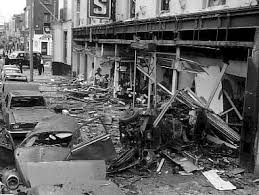 It hasn't been all that long since Dublin and Monaghan were attacked by the Ulster Volunteers. No one was ever charged with the mass murder of innocent Irish shoppers, and it's still said that the British Army was heavily involved.
The young lady behind the bar lined up four half-pints of the Black Stuff and then set up a row of shot glasses. She wasn't even born when Dublin's Talbot Street went up in smoke and flame and shrapnel. All she'd know of car bombings in Ireland might have come from the film Omagh.
A shot of Jameson's fine Irish whiskey was topped with a generous splash of Bailey's Irish Cream.
We dropped the shots into the beer and chugged it down before the cream in the Bailey's had a chance to curdle.
It was delicious. The perfect drink to close out an evening when you have a taste for something sweet but don't care for a dessert.
We've come a long way in the peace process. The Troubles are so far behind that they've almost disappeared in the rear view mirror of the car. The name of a drink means nothing more than the action of dropping a shot into a glass of beer, mixing a variety of Irish beverages. It's a creation of the younger generation that did not live in fear of random acts of terror.
To them, a car is a lethal weapon when the driver's been drinking. And that's as it should be.
Let's do "car bombs" says the Big Swede and I'm up for anything that involves Guinness. It's the name, however.
The young lady behind the bar lined up four half-pints of the Black Stuff and then set up a row of shot glasses. She wasn't even born when Dublin's Talbot Street went up in smoke and flame and shrapnel. All she'd know of car bombings in Ireland might have come from the film Omagh.
A shot of Jameson's fine Irish whiskey was topped with a generous splash of Bailey's Irish Cream.
We dropped the shots into the beer and chugged it down before the cream in the Bailey's had a chance to curdle.
It was delicious. The perfect drink to close out an evening when you have a taste for something sweet but don't care for a dessert.
We've come a long way in the peace process. The Troubles are so far behind that they've almost disappeared in the rear view mirror of the car. The name of a drink means nothing more than the action of dropping a shot into a glass of beer, mixing a variety of Irish beverages. It's a creation of the younger generation that did not live in fear of random acts of terror.
To them, a car is a lethal weapon when the driver's been drinking. And that's as it should be.
Saturday, August 21, 2010
Rules Made To Be Broken
Nation-members of the European Union must limit the amount of fertilizer used by their farmers. Can't have anyone putting too much nitrates into the environment, no matter where that farm might be. What's good for Greece is good for Ireland and don't go whinging about the differences in terrain or climate.
 By limiting fertilizer use, the EU has managed to ruin Irish barley. The knock-on effect is to ruin the Black Stuff.
The Greencore malting operation has noted that protein levels in Irish barley have fallen in the past couple of years, during which the Irish farmer has been slavishly following the EU directive on nitrates. A proper malting of the barley requires higher protein content than currently exists. A proper pint of Guinness requires proper malted barley.
 What's to be done? Besides telling the EU to shove their fertilizer rule up their collective arses, that is.
Use barley from someplace else. Import barley into Ireland to manufacture an Irish product.
Makes all the sense in the world if you're a bureaucrat. If you're in the malting business, the higher costs would drive you out of business in short order and that makes absolutely no sense.
Irish agricultural scientists hope to find a way to increase protein in Irish barley without using as much fertilizer as is needed to achieve the result because they can't use enough fertilizer to get the right amount of protein. Genetic modification is not even on the table.
A rule that sounded fair and equitable at the time is proving to be detrimental to one nation's most famous product. That's a rule that's just made to be broken, before the Guinness gets pale.
The Greencore malting operation has noted that protein levels in Irish barley have fallen in the past couple of years, during which the Irish farmer has been slavishly following the EU directive on nitrates. A proper malting of the barley requires higher protein content than currently exists. A proper pint of Guinness requires proper malted barley.
Use barley from someplace else. Import barley into Ireland to manufacture an Irish product.
Makes all the sense in the world if you're a bureaucrat. If you're in the malting business, the higher costs would drive you out of business in short order and that makes absolutely no sense.
Irish agricultural scientists hope to find a way to increase protein in Irish barley without using as much fertilizer as is needed to achieve the result because they can't use enough fertilizer to get the right amount of protein. Genetic modification is not even on the table.
A rule that sounded fair and equitable at the time is proving to be detrimental to one nation's most famous product. That's a rule that's just made to be broken, before the Guinness gets pale.
Friday, August 20, 2010
Ticking Off The Days
I will respond within three weeks if interested, says literary agent Jonathan Lyons. If you do not receive a response within three weeks then....no response is a no in literary agent circles.
Three weeks is more than enough time. I've already ticked this one off as a non-responding rejection even though it's been but ten days.
If something catches an agent's eye, and that something is inevitably the hook sentence that opens your query, then you'll hear back from them right away. Within days, most often.
They're in the business of making money, and if one agent sees something in your proposal, it's possible that other agents have seen that same thing and it's all about who's first out of the gate.
For many agents, they already have enough clients. Anyone new added to the roster is filling a gap in the agent's talent stable. Maybe you've written something brilliant, but if it isn't a Regency romance set in the Yukon, which is what an editor happens to be looking for, then you'll get a rejection.
Should you, by sheer dumb luck, send your query to an agent who is looking for the subject of your manuscript, you'll be asked to send along a few pages as a sample. Not only does your query have to fit a particular set of requirements, but you have to tell your story in a way that meets some preconceived needs. Hit on all points and there's a chance for you.
Hitting all those points is unlikely. Hence, it's almost impossible to land an agent and a publishing contract.
Don't waste time wondering if a non-responding agent might be considering your query after two or three or more weeks have gone by. Move on. Revise the query, personalize it for the next literary agent on the list, but don't wonder if that wonderful agent just might respond in four weeks.
Interest is demonstrated in haste. It's the rejecting that's plodding.
Three weeks is more than enough time. I've already ticked this one off as a non-responding rejection even though it's been but ten days.
If something catches an agent's eye, and that something is inevitably the hook sentence that opens your query, then you'll hear back from them right away. Within days, most often.
They're in the business of making money, and if one agent sees something in your proposal, it's possible that other agents have seen that same thing and it's all about who's first out of the gate.
For many agents, they already have enough clients. Anyone new added to the roster is filling a gap in the agent's talent stable. Maybe you've written something brilliant, but if it isn't a Regency romance set in the Yukon, which is what an editor happens to be looking for, then you'll get a rejection.
Should you, by sheer dumb luck, send your query to an agent who is looking for the subject of your manuscript, you'll be asked to send along a few pages as a sample. Not only does your query have to fit a particular set of requirements, but you have to tell your story in a way that meets some preconceived needs. Hit on all points and there's a chance for you.
Hitting all those points is unlikely. Hence, it's almost impossible to land an agent and a publishing contract.
Don't waste time wondering if a non-responding agent might be considering your query after two or three or more weeks have gone by. Move on. Revise the query, personalize it for the next literary agent on the list, but don't wonder if that wonderful agent just might respond in four weeks.
Interest is demonstrated in haste. It's the rejecting that's plodding.
Wednesday, August 18, 2010
The Lord Helps Those Who Help Themselves
If you've heard it once, you've heard it a million times. It's almost impossible to get your manuscript published.
So why not do it yourself?
Bring up that option and you'll be told that you don't have the skills and knowledge needed to market your product and get it in bookstores.
How about starting up your own publishing company?
If you're in Chicago, you can sign up for a course in independent publishing at DePaul University.
Like all well-conceived continuing education programs, the course will be taught by two men who know what they're talking about. Jonathan Messinger and Zach Dodson founded independent publisher featherproof Books in 2005, and the small press is showing success.
According to the course description, the students will learn all about publishing, from editing to financing. You'll end up with a certificate in publishing and then you can start up your own indie press with the benefit of knowing how to do it.
Is this the wave of the future? As publishing houses restrict their product to the tried and true, will creative authors turn to the do-it-yourself option to get their words out to the public?
So why not do it yourself?
Bring up that option and you'll be told that you don't have the skills and knowledge needed to market your product and get it in bookstores.
How about starting up your own publishing company?
If you're in Chicago, you can sign up for a course in independent publishing at DePaul University.
Like all well-conceived continuing education programs, the course will be taught by two men who know what they're talking about. Jonathan Messinger and Zach Dodson founded independent publisher featherproof Books in 2005, and the small press is showing success.
According to the course description, the students will learn all about publishing, from editing to financing. You'll end up with a certificate in publishing and then you can start up your own indie press with the benefit of knowing how to do it.
Is this the wave of the future? As publishing houses restrict their product to the tried and true, will creative authors turn to the do-it-yourself option to get their words out to the public?
Tuesday, August 17, 2010
Meet And Greet At Irish Fest
Irish Fest is said to be the biggest celebration of all things Hibernian. It follows, then, that the tourism promoters from County Clare would head up to the town due north of Chicago and encourage visits to the west coast of Ireland.
Unfortunately, money is tight in Ireland these days and the Clare Tourism delegation is being criticized for traveling abroad when everyone else is tightening their belts.
The Mayor of Clare, Christy Curtin, will be staying at home. Rather than a big group, only three people will be on hand to sell, sell, sell.
Those who complain of the cost are short-sighted. It takes money to make money, and it takes promotion to convince Americans who might be thinking of taking a trip abroad to come to the other side of the island, where it's peaceful and quiet and the golf is great.
Hitting Milwaukee means attracting a good chunk of the Irish interest in Chicago, which is so close that it's not unheard of for people from the northern suburbs to use Milwaukee's airport rather than drive to O'Hare. Staying in Milwaukee is cheaper, but the Clare Tourism Forum is reaching the bigger audience in Chicago at the same time.
Tourism is down because of the economy, and the Clare Tourism Forum has to work that much harder to snag their share of the limited business. If they stayed away from Milwaukee, they would save the cost of their trip, but how much would the nation lose in the long run?
Monday, August 16, 2010
If You Think You Don't Need That M.F.A.
Every now and then, you'll see a blog post from a literary agent that goes on and on about how you don't need a Master of Fine Arts degree to get published, it's all about the writing, a good query, an encounter at a conference......
What's the hot debut novel this year? Kathryn Stockett's The Help has been heavily promoted. So what of the author?
Ms. Stockett isn't some clerk at the local convenience store who pens novels in her spare time. She holds a degree in Creative Writing. She was trained to write. She studied the formulae.
After the diploma was placed into her waiting hand, she went off to New York City and worked in magazine publishing, where she made the sort of connections you need in publishing that people outside of the field never make.
Next year, you can look for Carter Sickels' debut novel about small town West Virginia life. He's not a former coal miner by any means. No, he's got himself an M.F.A. from Penn State. And then there's the fellowships to all the posh writer colony places that set the hearts of industry insiders to flutter.
Blame the bean counters who run the publishing houses. They've promoted the university-trained writer at the expense of those with creativity, imagination, talent and a non-English degree. By picking up an author who's learned how to do it according to the rules, there's less editing and that saves money and publishing is a business.
No, you don't need a string of degrees and publishing industry experience to get published, as long as you've set your sights no higher than a paperback romance from Harlequin.
The literary agents like to think that an author doesn't have to have an M.F.A., but it's a case of wishful thinking. The art part of the publishing equation is long gone. There's not enough profit in developing talent and this isn't the 1920's.
So who might be the next Jane Austen or Theodore Dreiser or Ernest Hemingway? Can such creativity be taught through the right lesson plan or homework assignment? Or are we losing out on quality manuscripts in the sole interest of the bottom line?
What's the hot debut novel this year? Kathryn Stockett's The Help has been heavily promoted. So what of the author?
Ms. Stockett isn't some clerk at the local convenience store who pens novels in her spare time. She holds a degree in Creative Writing. She was trained to write. She studied the formulae.
After the diploma was placed into her waiting hand, she went off to New York City and worked in magazine publishing, where she made the sort of connections you need in publishing that people outside of the field never make.
Next year, you can look for Carter Sickels' debut novel about small town West Virginia life. He's not a former coal miner by any means. No, he's got himself an M.F.A. from Penn State. And then there's the fellowships to all the posh writer colony places that set the hearts of industry insiders to flutter.
Blame the bean counters who run the publishing houses. They've promoted the university-trained writer at the expense of those with creativity, imagination, talent and a non-English degree. By picking up an author who's learned how to do it according to the rules, there's less editing and that saves money and publishing is a business.
No, you don't need a string of degrees and publishing industry experience to get published, as long as you've set your sights no higher than a paperback romance from Harlequin.
The literary agents like to think that an author doesn't have to have an M.F.A., but it's a case of wishful thinking. The art part of the publishing equation is long gone. There's not enough profit in developing talent and this isn't the 1920's.
So who might be the next Jane Austen or Theodore Dreiser or Ernest Hemingway? Can such creativity be taught through the right lesson plan or homework assignment? Or are we losing out on quality manuscripts in the sole interest of the bottom line?
Friday, August 13, 2010
Holy Faith In Morgan Stanley
The nuns don't have all that much money these days and they tend to invest wisely and conservatively. With so many elderly sisters to support, they've got their eyes on the bottom line of their portfolio.
 So when Morgan Stanley pulled off a clever bit of business with some Dresdner Funding Trust bonds, the Holy Faith Sisters in Glasnevin promptly sued.
In the eyes of the religious, Morgan Stanley was under contract to redeem notes when the bonds were downgraded to junk status. The prayerful order had no intention of taking too much risk with their limited funds.
We're right on top of it said Morgan Stanley, but the investment bank waited for six months to complete the transaction. By that time, the value of the bonds had climbed and Morgan Stanley was $11.2 million to the good. They had to earn something for their time and management, didn't they? Just a little "termination payment", Mother Superior, and sorry there's nothing left for the sisters but that's business.
The bonds were purchased through Bloxham Stockbrokers, a London firm that is being sued by other investors who also fell for Morgan Stanley's snake oil. In fact, Bloxham is joining in the suit against Morgan Stanley, claiming that they were bamboozled.
Morgan Stanley will have some explaining to do within the next two weeks. It's one thing to pull a fast one on some well-heeled investors who can afford to take a risk. It's quite another to take advantage of a religious order that's dedicated to helping the downtrodden.
Then there's all the entreaties to God, asking for Divine Retribution. I wouldn't want to be a Morgan Stanley executive right now, with the Holy Faith Sisters praying for justice. Maybe the nuns could pray for a Catholic boycott of Morgan Stanley while they're at it.
In the eyes of the religious, Morgan Stanley was under contract to redeem notes when the bonds were downgraded to junk status. The prayerful order had no intention of taking too much risk with their limited funds.
We're right on top of it said Morgan Stanley, but the investment bank waited for six months to complete the transaction. By that time, the value of the bonds had climbed and Morgan Stanley was $11.2 million to the good. They had to earn something for their time and management, didn't they? Just a little "termination payment", Mother Superior, and sorry there's nothing left for the sisters but that's business.
The bonds were purchased through Bloxham Stockbrokers, a London firm that is being sued by other investors who also fell for Morgan Stanley's snake oil. In fact, Bloxham is joining in the suit against Morgan Stanley, claiming that they were bamboozled.
Morgan Stanley will have some explaining to do within the next two weeks. It's one thing to pull a fast one on some well-heeled investors who can afford to take a risk. It's quite another to take advantage of a religious order that's dedicated to helping the downtrodden.
Then there's all the entreaties to God, asking for Divine Retribution. I wouldn't want to be a Morgan Stanley executive right now, with the Holy Faith Sisters praying for justice. Maybe the nuns could pray for a Catholic boycott of Morgan Stanley while they're at it.
Thursday, August 12, 2010
No Retreat, No Surrender
Surrender yourselves to the authorities, the Irish bishops were told, and being obedient lads, they did.
I didn't really mean it, said His Holiness the Pope.
 For thirty years, children in Ireland were abused by priests and the bishops moved the offenders around in a bid to hide the evidence and make all the bad things go away.
Bad things don't stay hidden forever. A civil investigation into the Dublin archdiocese found evidence that Bishops Eamonn Walsh and Raymond Field had their clerical fingers in the slime that was the sex abuse scandal. The public raised an outcry and Archbishop Diarmuid Martin looked for heads to roll. It seemed like the best way to stop the continuing decline in active Catholics who drop money in the collection plate on a Sunday.
Last December, the bishops told the Pope they were resigning. They'd done more to turn people away from the Church than they'd brought souls to Jesus. Mea culpa, mea culpa, mea maxima culpa.
In the Vatican, word came from on high that those who had sinned had better confess. Said it very loudly, so that Catholics around the world would hear. See how the Holy See is right on top of the problem, they announced in triumph. Fixing the problem. All will be well in no time.
The resignations have been rejected.
It was loud public outcry that got the bishops to step down, and we can't have public outcry running things in Vatican City. Would have been quite a different story if the Irish bishops had done the actual abusing. Then they'd be out on the street.
All they did was try to cover it up. That's not reason enough for the Holy Father to accept surrender.
Men who stood by and helped pedophile priests evade capture so that they could abuse even more children get to keep their lofty perches in the Church hierarchy. All the talk of cleaning house was just that, nothing but talk.
So talk to us from the pulpit, all you priests and bishops. Tell us about morality and sin. Don't mind the cynical laughter coming back at you from the pews.
I didn't really mean it, said His Holiness the Pope.
Bad things don't stay hidden forever. A civil investigation into the Dublin archdiocese found evidence that Bishops Eamonn Walsh and Raymond Field had their clerical fingers in the slime that was the sex abuse scandal. The public raised an outcry and Archbishop Diarmuid Martin looked for heads to roll. It seemed like the best way to stop the continuing decline in active Catholics who drop money in the collection plate on a Sunday.
Last December, the bishops told the Pope they were resigning. They'd done more to turn people away from the Church than they'd brought souls to Jesus. Mea culpa, mea culpa, mea maxima culpa.
In the Vatican, word came from on high that those who had sinned had better confess. Said it very loudly, so that Catholics around the world would hear. See how the Holy See is right on top of the problem, they announced in triumph. Fixing the problem. All will be well in no time.
The resignations have been rejected.
It was loud public outcry that got the bishops to step down, and we can't have public outcry running things in Vatican City. Would have been quite a different story if the Irish bishops had done the actual abusing. Then they'd be out on the street.
All they did was try to cover it up. That's not reason enough for the Holy Father to accept surrender.
Men who stood by and helped pedophile priests evade capture so that they could abuse even more children get to keep their lofty perches in the Church hierarchy. All the talk of cleaning house was just that, nothing but talk.
So talk to us from the pulpit, all you priests and bishops. Tell us about morality and sin. Don't mind the cynical laughter coming back at you from the pews.
Wednesday, August 11, 2010
Looking Back At History
Isn't hindsight 20/20?
If all you know about Upton Sinclair's novel Oil! is the film There Will Be Blood, then you've missed out on a tremendous lesson in hindsight.
As an author, he was a preacher, to be sure. Sinclair's powerful story of the Chicago packinghouses brought in a flurry of regulations to improve the quality and safety of America's foods. It is a bit of a slog to get through The Jungle because of the sermons, but there's a good story underneath it all.
The same can be said of Oil!. The conflict between a father and son is brilliant, but it's Sinclair's belief in socialism that makes for a good laugh.
When he wrote his novel, of course, no one knew what would happen under a regime that promoted the collective and the workers owning the means of production. All these years later, we can look back to recent events and see how the system collapsed because it was nothing more than a dream with no basis in reality.
Writing from the time when the Bolshevik revolution was new, Mr. Sinclair could put all sorts of grand schemes into the mouths of his characters. By using the backdrop of the Teapot Dome Scandal, he had plenty of ammunition with which to attack capitalism. The overblown patriotism and over-reaching government propaganda machine of the First World War also found a place in his support of the Soviet Union.
We watched the Berlin Wall fall down, and the Soviet Union with it. The form of government that sounded so perfect in 1918 proved to be a nightmare because some people made themselves more equal than others.
In its own way, Upton Sinclair's novel is a slice of Americana, providing insight into the thinking of the time. History books will list names and dates, battles and events, but it takes an author of fiction to express the emotion of an era.
Funny to read, in the light shed by time. Odd to notice that the same arguments are being made in the present time, as if no one has read the history and are blindly repeating it.
Tuesday, August 10, 2010
For Want Of A Nail
David William Caswell hit on a brilliant scam that might have brought him millions of ill-gotten gains, if only he hadn't forgotten that little nail.
He set up a book publishing firm, but he failed to actually print a single book.
A Print-On-Demand copy of a manuscript is cheap to produce. All Mr. Caswell needed was to invest those few dollars into his enterprise, and the Indiana Attorney General would have no reason to investigate his New Century Publishing company.
Authors can create PDF files of their manuscripts, and all that remained to Mr. Caswell was to forward those files to a POD publisher like Lulu.com. Charge the author more than Lulu charges him, and it's profit.
Best of all, there is product. Sure, we'll get you into print says New Century Publishing. Then it's up to the author to create their own sales. Plenty of printing houses are doing it, and you don't see the Attorney General probing their operations.
It was probably too much to ask of Mr. Caswell that he think his scam through. He's been in trouble with Indiana authorities before, for such diverse crimes as impersonating a lawyer and bigamy. He's done time for fraud and income tax evasion, and he's in default on fines imposed on him after he was convicted of running a phony job search scheme.
For want of a nail, the kingdom was lost. For want of a cheap printed copy of some dreamer's manuscript, Mr. Caswell is lost.
Not to worry. He's been incarcerated at the federal prison in Terre Haute before, so he knows his way around the penitentiary in Indiana. Should this latest investigation into his dishonest practices return him to a cell, he might know someone who could put in the word for him. He'd be perfect for the job of prison librarian.
Monday, August 09, 2010
A Frail And Elderly Child Molester
The charges were lodged against Father Patrick McCabe in 1988, but the gardai didn't know where he was and they couldn't call him in for an interview and there you have it.
Between 1973 through 1981, he was a priest in Dublin. Six men came forward in 1988 to say that they were abused by McCabe. By that time, McCabe was ministering to Californians. What are the chances that the diocese moved him out, as they did with so many other pedophile priests?

The first allegation came up in 1987, at which time you'd think the Catholic Church would have been able to tell An Garda Siochana where one of its clergymen was residing. They must have been able to locate McCabe, as he left the priesthood in 1988 and it's all a bit too coincidental to be blind luck.
It took Interpol until 2003 to trace the ex-priest to the San Francisco area. It took gardai another four years to arrange an overseas trip, but they did finally speak to him. The next thing anyone knew, there were warrants issued for his arrest.
Easy enough to avoid being incarcerated by avoiding trips to Ireland. Once Irish authorities figured that out three years on, they requested his extradition.
Mr. McCabe's lawyers have painted their client as a frail, elderly man of 74 who's had no brush with American law and couldn't everyone just leave him alone to live out his golden years in peace?
Should the American judge not buy the sympathy ploy, which plays well in Ireland but not so well in the States, they'd like to point out that there's really not any such law in America that's quite like the Irish law regarding indecent assault, so he can't be extradited.
Child molestation by a priest is pretty much understood across national borders. What one nation chooses to call the offense doesn't make it any less an offense, and it's a crime wherever it occurs.
Don't do the crime if you can't do the time. Even if the time comes when you're old and comfortable and don't much want to go to prison back home where pedophile priests aren't particularly popular.
Between 1973 through 1981, he was a priest in Dublin. Six men came forward in 1988 to say that they were abused by McCabe. By that time, McCabe was ministering to Californians. What are the chances that the diocese moved him out, as they did with so many other pedophile priests?
The first allegation came up in 1987, at which time you'd think the Catholic Church would have been able to tell An Garda Siochana where one of its clergymen was residing. They must have been able to locate McCabe, as he left the priesthood in 1988 and it's all a bit too coincidental to be blind luck.
It took Interpol until 2003 to trace the ex-priest to the San Francisco area. It took gardai another four years to arrange an overseas trip, but they did finally speak to him. The next thing anyone knew, there were warrants issued for his arrest.
Easy enough to avoid being incarcerated by avoiding trips to Ireland. Once Irish authorities figured that out three years on, they requested his extradition.
Mr. McCabe's lawyers have painted their client as a frail, elderly man of 74 who's had no brush with American law and couldn't everyone just leave him alone to live out his golden years in peace?
Should the American judge not buy the sympathy ploy, which plays well in Ireland but not so well in the States, they'd like to point out that there's really not any such law in America that's quite like the Irish law regarding indecent assault, so he can't be extradited.
Child molestation by a priest is pretty much understood across national borders. What one nation chooses to call the offense doesn't make it any less an offense, and it's a crime wherever it occurs.
Don't do the crime if you can't do the time. Even if the time comes when you're old and comfortable and don't much want to go to prison back home where pedophile priests aren't particularly popular.
Saturday, August 07, 2010
You Have Been Replaced By A Machine
They're treated about as well as you'd treat a machine. Keep it running until it breaks down, and then replace it. Maintain low operating costs to turn a maximum profit.
Americans aren't so heartless as that, which leads employers to find some other way to compete with manufacturers who aren't interested in paying a living wage or showing concern for the well-being of the worker.
Simple solution.
Hire actual machines. Skip the people.
Number crunching types have determined that the trend exists and it's strong. Manufacturers are investing in machinery to do the work that laborers once did. Then they don't need to hire so many people to make their widgets.
Not good news for the high school drop-outs who figured they could get a job in a factory and make a living. Those jobs are done by gears and rotors that won't go on strike or ask for a raise. Those jobs won't revert back to flesh and bone employees.
The drive is on to increase productivity without taking on more people who would have to be covered by expensive health insurance and employer-paid FICA and Medicare.
Businesses will get used to having fewer bodies around, and the remaining bodies will get used to doing the job of two or three to keep that job.
Unemployment, in that case, would stay high permanently because there would be more people milling around than jobs available for them to fill.
Put them on Prozac and give them televisions for entertainment and Aldous Huxley becomes a genuine seer, a man who predicted the future. Brave New World may have to be moved to the non-fiction section of the bookstores.
Friday, August 06, 2010
Best Laid Plans
From a young age, she was exposed to learning. Like so many others in the town, she was writing the alphabet by the age of three and had begun to master a few simple reading skills before kindergarten began.
She would have to work her way into the accelerated learning program. It was the road to success in the adult world. Work hard, she was told, study hard. Get ahead.
The select program in elementary school pushed her ahead of the pack, so that by the time she reached secondary school she was taking college level coursework. Not to ignore the incidentals, she had dance lessons and studied piano. Got involved in school activities. Crafted a thick resume of top grades and creative endeavours. Every minute of every day rattled with keys to future success.
Ivy League university followed, as planned. The route was clearly marked. A course of study in the business field, to become a banker or highly placed executive in a Fortune 500 company. No pot of gold at the end of the rainbow, but a six-figure salary was a desirable prize.
In all the twenty-one years of careful planning, no consideration was given to an unemployment rate hovering around 10%. The finest education, and she has no job. Neither has she any nibbles on resumes or interviews. Nothing.
There is no work for college graduates. Hard work, an over-scheduled life, and she waits tables for a pittance on a part-time basis, her summer job for the past four years becoming her occupation.
Those who study such things claim that she'll never catch up, even if the job market turns around in the next year.
A parent can plan, but they can't control the random throw of the dice that is the free market which send the best laid plans astray.
She would have to work her way into the accelerated learning program. It was the road to success in the adult world. Work hard, she was told, study hard. Get ahead.
The select program in elementary school pushed her ahead of the pack, so that by the time she reached secondary school she was taking college level coursework. Not to ignore the incidentals, she had dance lessons and studied piano. Got involved in school activities. Crafted a thick resume of top grades and creative endeavours. Every minute of every day rattled with keys to future success.
Ivy League university followed, as planned. The route was clearly marked. A course of study in the business field, to become a banker or highly placed executive in a Fortune 500 company. No pot of gold at the end of the rainbow, but a six-figure salary was a desirable prize.
In all the twenty-one years of careful planning, no consideration was given to an unemployment rate hovering around 10%. The finest education, and she has no job. Neither has she any nibbles on resumes or interviews. Nothing.
There is no work for college graduates. Hard work, an over-scheduled life, and she waits tables for a pittance on a part-time basis, her summer job for the past four years becoming her occupation.
Those who study such things claim that she'll never catch up, even if the job market turns around in the next year.
A parent can plan, but they can't control the random throw of the dice that is the free market which send the best laid plans astray.
Thursday, August 05, 2010
Harley-Davidson: Hecho En Mexico?
One after another, American manufacturers look at their bottom lines and realize that profits could be increased if they didn't have to pay their employees so much.
Maytag pulled out of Newton, Iowa, and went to Mexico where folks are happy with any sort of job and aren't so concerned about the hourly rate or union benefits.
The product is now considered a piece of junk and sales have plummeted, but the costs to produce washers and dryers went down, didn't it?
Harley-Davidson is as much a part of Milwaukee as Maytag was to Newton.
Like Maytag, the Harley people have to get their costs down, and they have to convince their employees that they should suck it up like everyone else. Or go look for another job when the unemployment rate is approaching 10%.
If labor costs can't be contained, says Harley, they'll pull out of Milwaukee and go where they can cut costs.
Harleys have always been pricey, and pricey isn't selling that well these days. Most luxury goods aren't.
The only way to make the bike more affordable without killing its ethos is to reduce the cost to manufacture it. There's only so low the parts suppliers can go. If the employees don't go along with the plan, Harley will leave.
After what happened to the Maytag reputation on the heels of that relocation, it's not a pretty picture to contemplate.
So, what's it going to be? Will Harley-Davidson and Milwaukee continue their relationship, or will the next generation of bikes by labelled "Hecho En Mexico"?
Wednesday, August 04, 2010
Buy This Book....Store
The Board of Directors thinks the stock is undervalued. They think there's money to be made in books of all varieties, both real and digital, and their stock options should reflect that belief. How to realize this desired gain in value? Sell.
Book sales are down because no one has money for luxuries, and books are a luxury. If you don't have access to a public library, it's easy enough to shop at Abebooks and find a used version at a steep discount. That translates into one full-priced sale for the likes of Barnes & Noble, while several people read a single copy.
Leonard Riggio, the majority shareholder, has suggested that he'd be part of a group to buy up the book dealer. There's a man with faith in the future of the published word.
Ever since Amazon came aboard, it's been a tough competition. Add to that the popularity of the iPad, with e-book sales revenue going to Apple, and you'd have to expect the market for literary warehouses to be shrinking.
Will Barnes & Noble survive? They seem to be winning out over rival Borders, which has just laid off another one hundred employees at its Tennessee distribution center.
In the battle for e-reader supremacy, it's hard to say if the Nook will beat out the Kindle. It's unlikely that anyone would buy two or more electronic reading devices and Amazon was there first. iPads are so far advanced from a simple reading device that Nook seems almost primitive, and one would hope that Mr. Riggio isn't putting too much faith in B&N's future as an e-book retailer.
Unless there's a B&N app for Apple devices?
Tuesday, August 03, 2010
Return Of Missile Command
In these modern times, we make fun of Pong, but it was a cutting edge game in its day. There are those of a certain age who played the game, who sat in front of a television for hours moving a cursor up and down to hit a bouncing ball of light, and they were having fun.
Atari fell on hard times as the competition for home video games exploded. Pong just didn't cut it after a while.
Then along came more complex games like Centipede....and Missile Command.
They, too, fell by the wayside as Nintendo and Sega created better graphics and more complex games. Atari couldn't keep up. Everyone figured they were dead.
The resurrection is coming. The new and improved Atari game company is bringing back Missile Command, to introduce a simple yet amusing game to a younger generation.
The plan of CEO Jeff Lapin is to create games for online play at sites like Facebook, where gaming is popular. If you're already wasting time on your social networking, just wait. Missile Command is strangely addictive. You'll get no work done and lose your job before long.
Modern video games are expensive to produce and the money isn't there. By going with online distribution, Atari has a chance of carving out a niche for itself, and if it can turn a profit, it might grow itself back into the big leagues.
But wait, there's more.
Atari is represented by International Creative Management, which is working on a deal to make the video game Asteroids into a movie. Tron was cutting edge in its day and that was based on the notion of the video game. Don't laugh.
Let the games begin.
Atari fell on hard times as the competition for home video games exploded. Pong just didn't cut it after a while.
Then along came more complex games like Centipede....and Missile Command.
They, too, fell by the wayside as Nintendo and Sega created better graphics and more complex games. Atari couldn't keep up. Everyone figured they were dead.
The resurrection is coming. The new and improved Atari game company is bringing back Missile Command, to introduce a simple yet amusing game to a younger generation.
The plan of CEO Jeff Lapin is to create games for online play at sites like Facebook, where gaming is popular. If you're already wasting time on your social networking, just wait. Missile Command is strangely addictive. You'll get no work done and lose your job before long.
Modern video games are expensive to produce and the money isn't there. By going with online distribution, Atari has a chance of carving out a niche for itself, and if it can turn a profit, it might grow itself back into the big leagues.
But wait, there's more.
Atari is represented by International Creative Management, which is working on a deal to make the video game Asteroids into a movie. Tron was cutting edge in its day and that was based on the notion of the video game. Don't laugh.
Let the games begin.
Monday, August 02, 2010
A Character Worthy Of A Novel
I have to confess, I'm fascinated by the entire Rod Blagojevich trial. A more interesting cast of characters has never before been assembled.
I've never served on a jury in all my life, and I know I could walk into a court room and observe, but having to work every day makes that just about impossible. So I watch from the sidelines, reading every word in the newspapers, and my novelist mind twists and bends the facts into a work of fiction.
The main character might not be the disgraced ex-governor, who has some remarkable personality traits that any author has to love. There's those around him, the men who advised him and turned State's Evidence rather than go down with him. What goes on in a person's head, driven by greed or personal glory, to lie and cheat and steal from the very folks who elected Blago to office?
Could there be a more intriguing character than one who has put aside morality and ethics? Should I write such a story, there'd have to be a mental wrestling match to make for good reading, with the sleaze-bag being pulled back towards the better angel while the devil whispers in his left ear.
The straight laced prosecuting attorneys provide a marked contrast to the flashy, Cook County Courthouse savvy defense team. The drama inherent in the match-up would make for a page-turner of a novel.
What's the ending, though? That's what everyone's waiting for. What goes in that last chapter, in the closing paragraphs?
I can't wait to see. Lucky for me I have a Blackberry for the latest updates.
Saturday, July 31, 2010
Always Potential, Never An Offer
The rejection arrived on Friday, late in the afternoon, just in time to start drinking heavily.
Unusual, to get feedback from the literary agent, so there's no discounting the advice. The problem is, as I read the critique, I get a sense that I'm wasting my time.
There doesn't seem to be story arc in the manuscript I submitted. I know what the term means, but I thought I had a line I was following. If I'm that far off base, it's obvious that I just don't know how to write a novel.
Most of the characters are based on people I know, and most of the plot is taken from the events of a real person's life, but as I wrote about them, the whole thing came off flat.
How is that to be fixed? If incidents that I'm familiar with don't project some spark, then it's a problem with the way I tell a story.
Lack of talent. That sums it up.
Of course, if I can fix the issues, I'm invited to re-submit, but it would take a skilled writer to take my ideas and plump them up. Someone who has a better ear then me might be able to round up the different plot lines and get them moving forward instead of standing still like a tableau.
Time to step back from the manuscript and research books on how to write a novel, I suppose. Teaching myself by voracious reading isn't cutting it.
Unusual, to get feedback from the literary agent, so there's no discounting the advice. The problem is, as I read the critique, I get a sense that I'm wasting my time.
There doesn't seem to be story arc in the manuscript I submitted. I know what the term means, but I thought I had a line I was following. If I'm that far off base, it's obvious that I just don't know how to write a novel.
Most of the characters are based on people I know, and most of the plot is taken from the events of a real person's life, but as I wrote about them, the whole thing came off flat.
How is that to be fixed? If incidents that I'm familiar with don't project some spark, then it's a problem with the way I tell a story.
Lack of talent. That sums it up.
Of course, if I can fix the issues, I'm invited to re-submit, but it would take a skilled writer to take my ideas and plump them up. Someone who has a better ear then me might be able to round up the different plot lines and get them moving forward instead of standing still like a tableau.
Time to step back from the manuscript and research books on how to write a novel, I suppose. Teaching myself by voracious reading isn't cutting it.
Thursday, July 29, 2010
There's Even An App For That
Subscribing to Twitter is of benefit to those who would like to follow the rocky road to publishing without falling in the potholes.
It's free. Agents tweet about what they're not looking for, what they hate in a query, or if they're closed to submissions so don't get on the black list by submitting.
There's now an app for that, available for free from iTunes. Download it to your iPhone. Literary agent Laurie Abkemeier's pithy tweets in all their Apple-organized glory can be found with a flick of the finger.
Under the name "Agent Obvious", Ms. Abkemeier has offered advice on Twitter with a touch of humor. If you have next to no idea how to approach an agent, what goes in a query letter, or you're curious about the publishing industry, you don't have to sort through old tweets to find the nugget of wisdom you need.
Don't own an iPod or an iPhone to dowload the app to? Not to worry. The price keeps dropping as competition heats up and new technology replaces old yet serviceable models.
On the other hand, you can go into your Twitter account and sort through Ms. Abkemeier's tweets manually. When you can't afford to pay someone to do the work, you just have to do it yourself.
It's free. Agents tweet about what they're not looking for, what they hate in a query, or if they're closed to submissions so don't get on the black list by submitting.
There's now an app for that, available for free from iTunes. Download it to your iPhone. Literary agent Laurie Abkemeier's pithy tweets in all their Apple-organized glory can be found with a flick of the finger.
Under the name "Agent Obvious", Ms. Abkemeier has offered advice on Twitter with a touch of humor. If you have next to no idea how to approach an agent, what goes in a query letter, or you're curious about the publishing industry, you don't have to sort through old tweets to find the nugget of wisdom you need.
Don't own an iPod or an iPhone to dowload the app to? Not to worry. The price keeps dropping as competition heats up and new technology replaces old yet serviceable models.
On the other hand, you can go into your Twitter account and sort through Ms. Abkemeier's tweets manually. When you can't afford to pay someone to do the work, you just have to do it yourself.
Flying Off On A Tangent
The rough draft is put down and the idea that was kicking around in my head is fixed in place.
It isn't just a case of writing a story, however. The antagonist and protagonist need a reason to be at each other's throats.
What is the motivation? When writing historical fiction, it isn't always a case of looking up the past. Most unpleasant interactions wouldn't appear in a history book.
Reading the history is one thing. It's up to the author to read between the lies, to envision two people squaring off. Human nature doesn't seem to change from year to year. People will forever be jealous of a rival's success. They'll begrudge another's accomplishments, and sometimes they'll do what they can to pull the adored one from the pedestal.
There was the motivation, right in front of me. The antagonist in real life was an ambitious man, stepping on the backs of others to reach the top. Interaction with the protagonist took place early on, before the opening of my story, but the tension was set and bringing it out was as simple as inserting a few lines of back story.
No need to go into a big long exposition about how their enmity began. A short and sweet reference to an act in the past will be enough to set the stage and put the conflict into context. Of course they hate each other, the reader will say. It will make sense.
The logic comes from historical fact, coupled with a little imagination. As an author, you have to observe human behavior, and sooner or later you'll create a character who fits someone you've seen or heard before. Stealing from experience, you'll create a realistic, believable person.
You might think you're veering off on a tangent, wasting valuable time. Like a movie scene of five minutes that takes a week to film, you spend a lot of time reading and gain little more than a sentence or two, but that short piece of back story could make the difference between a cardboard character and a genuine, flesh and blood individual the reader can understand.

It isn't just a case of writing a story, however. The antagonist and protagonist need a reason to be at each other's throats.
What is the motivation? When writing historical fiction, it isn't always a case of looking up the past. Most unpleasant interactions wouldn't appear in a history book.
Reading the history is one thing. It's up to the author to read between the lies, to envision two people squaring off. Human nature doesn't seem to change from year to year. People will forever be jealous of a rival's success. They'll begrudge another's accomplishments, and sometimes they'll do what they can to pull the adored one from the pedestal.
There was the motivation, right in front of me. The antagonist in real life was an ambitious man, stepping on the backs of others to reach the top. Interaction with the protagonist took place early on, before the opening of my story, but the tension was set and bringing it out was as simple as inserting a few lines of back story.
No need to go into a big long exposition about how their enmity began. A short and sweet reference to an act in the past will be enough to set the stage and put the conflict into context. Of course they hate each other, the reader will say. It will make sense.
The logic comes from historical fact, coupled with a little imagination. As an author, you have to observe human behavior, and sooner or later you'll create a character who fits someone you've seen or heard before. Stealing from experience, you'll create a realistic, believable person.
You might think you're veering off on a tangent, wasting valuable time. Like a movie scene of five minutes that takes a week to film, you spend a lot of time reading and gain little more than a sentence or two, but that short piece of back story could make the difference between a cardboard character and a genuine, flesh and blood individual the reader can understand.
Monday, July 26, 2010
The End Doesn't Mean It's Done
The final chapter got a complete overhaul and I felt that I had said all I wanted to say.
THE END
The last word of the manuscript, stored in the computer's memory. Give it some time, let the head clear, and then go back for editing, I says to myself says I.
Until I happened to look up an old newspaper article that dealt with the main character of the latest manuscript. The information wasn't considered earlier because I ended the story before the real person's life ended, but I got curious about what happened after and I went back to the archives.
I learned a few things about motive and the emotional impact of events I hadn't considered. There was such a wealth of information to go through as it was, and here I had almost missed something that would create greater impact in the first third of the story.
So I won't let the manuscript sit around, gathering dust so that I can go back to it with a different perspective. I have to re-write most of the middle and a good part of the end, to bring in what I discovered after the fact.
THE END, it says on the very last page. It's not quite at the end just yet. There's more to be done, things I couldn't really see until the rough draft was down and the skeleton of the story wired together.
Not the end. I'll be going back to put some meat on the bones.
THE END
The last word of the manuscript, stored in the computer's memory. Give it some time, let the head clear, and then go back for editing, I says to myself says I.
Until I happened to look up an old newspaper article that dealt with the main character of the latest manuscript. The information wasn't considered earlier because I ended the story before the real person's life ended, but I got curious about what happened after and I went back to the archives.
I learned a few things about motive and the emotional impact of events I hadn't considered. There was such a wealth of information to go through as it was, and here I had almost missed something that would create greater impact in the first third of the story.
So I won't let the manuscript sit around, gathering dust so that I can go back to it with a different perspective. I have to re-write most of the middle and a good part of the end, to bring in what I discovered after the fact.
THE END, it says on the very last page. It's not quite at the end just yet. There's more to be done, things I couldn't really see until the rough draft was down and the skeleton of the story wired together.
Not the end. I'll be going back to put some meat on the bones.
Subscribe to:
Posts (Atom)