Saturday, September 17, 2016

When Your Source Documents Are Classified

Chicago Tribune journalists exposed military secrets in 1942 but we can't read about it now
Historians churn through old documents to create the story for us, the students of history. All the information is out there and they do the heavy lifting, putting all the little details together to form a cohesive picture.

For Elliot Carlson, some of the documents he needs to finish up his history of a World War II incident are sitting in the National Archives under lock and key, the dusty old artifacts not to be viewed by his curious eyes.

World War II was a long time ago, you might say, and don't we all know that the vets are dying off so rapidly that soon there'll be no one alive who witnessed the fighting. Surely there is some kind of time frame that would allow for the release of documents that have been sequestered for the past seventy-five years.

Not in today's modern bureaucracy there isn't.

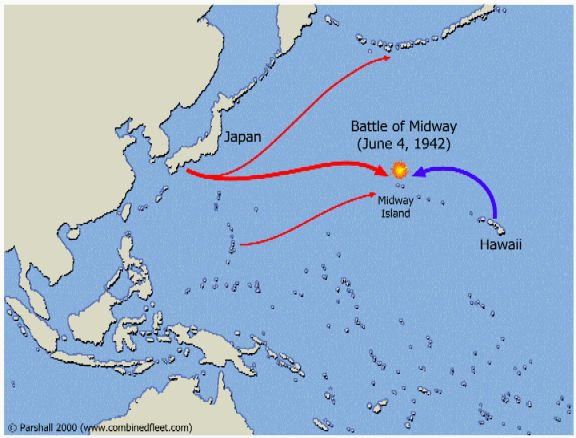
Mr. Carlson, an octogenarian himself, has written a book about an intriguing case that involved the Chicago Tribune and the Federal Government during the war. It seems that the newspaper published some interesting facts surrounding the Battle of Midway, facts that pretty much told the world that the U.S. had cracked the Japanese code and knew everything the enemy was going to do.

That sort of thing falls under the "loose lips sink ships" rule, and the U.S. Government decided that the journalists were essentially guilty of espionage. The case was more political than factual, a product of the hatred that President Franklin Roosevelt felt for the ardent Republican publisher Col. Robert McCormick. Roosevelt saw a chance to strike at his nemesis, using the power of the Justice Department. Hadn't McCormick used the power of the press to lambaste Roosevelt? Tit for tat, and so a prosecution was put into motion.

A grand jury was convened to discuss the matter, and because the documents Mr. Carlson seeks are transcripts of that same grand jury hearing, he's been told that he can't have them. Grand jury transcripts are sealed, to preserve the secrecy of grand jury proceedings, and so the Justice Department said no, go away. And take your historical interest with you. It's all about preserving the sanctity of grand jury secrecy, even if it's been 75 years.

True bureaucrats never look at the broad picture, of course, because they're all about following the rules to the letter. Even to the point of being ridiculous.

If the point of secrecy is to protect the safety of witnesses, well, you can be sure that they are all either a) dead, or b) not in any danger. It's not like some Japanese double agent is lurking in the shadows, ready to exact revenge.

Thus far, a federal district judge has scoffed at the arguments made by the Justice Department to have the records kept sealed, and a subsequent appeal was also denied by the 7th U.S. Circuit. So that's Justice Department 0, Elliot Carlson 2.

He hasn't won yet, and he's got his eye on the clock as the Justice Department considers its option to ask for a full hearing before the Court of Appeals, or possibly bumping the case up to the Supreme Court. There are rules, after all, and rules are there to be followed no matter what because what would a bureaucrat do at work if not be sure that all rules are being followed?

There's just no place for common sense or a nod to the public good when a bloated bureaucracy is looking out for itself.

Friday, September 16, 2016

Avenue of Spies: A Book Review

To read of ordinary people exhibiting extraordinary courage in wartime is to delve into the heart of genuine wartime experience. AVENUE OF SPIES takes the reader into Nazi-occupied Paris, into a home that was surrounded by SS agents and Gestapo headquarters. The ordinary people in this case were an American doctor, his wife and only child, all of whom were involved in the French Resistance.

Author Alex Kershaw does a good job of setting the scene, providing enough background to give historical context. He presents a piece of the resistance movement through the activities of Dr. Sumner Jackson, surgeon at the American Hospital, along with his Swiss-born wife and son. The family could have escaped as the Germans bore down on Paris, but the doctor chose to stay and his wife refused to leave her home.

What sort of person joined the French underground, hiding downed Allied fliers and helping them esape? People like the Jacksons, who lived in the midst of the Gestapo yet refused to yield when cooperation would have made life easier. Instead, they risked their lives, and ultimately were sent to concentration camps in Germany as the Allies landed in Normandy and the German overlords grew increasingly brutal.

The book is a definite page-turner, with just enough cliff-hanging to keep you reading, wondering how the Jacksons are going to escape one close call after another. When the end does finally come, you are pulled through their time in concentration camps, struggling to survive, and again you fly through the book to find out what happens.

AVENUE OF SPIES is a story of courage and a refusal to surrender, a willingness to give up one's life for the good of a nation. For anyone seeking some insight into the life of common people during the occupation of France, this book is well worth reading.

Thursday, September 08, 2016

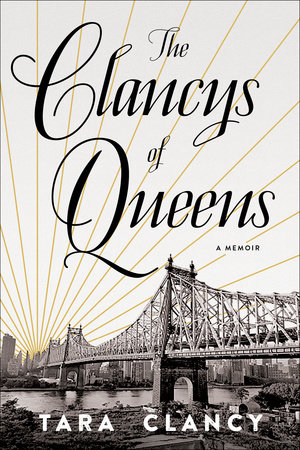
The Clancys Of Queens: A Book Review

Time flows in a single direction, always moving forward at a steady pace.

Writers have the luxury of moving through time in their narrative, going forward or back, sideways and into the future. If an author chooses to skip the linear form, however, they should let their readers know.

Too often in THE CLANCYS OF QUEENS, Tara Clancy loses her readers as she tells about her childhood in Queens, New York. It can be maddening at times, those abrupt halts when you think she's five but suddenly she's eighteen and you never saw the transition coming.

Ms. Clancy has a strong platform built of short stories previously published, along with a web presence. She learned how to write along the way, and the lesson about ending a chapter with a cliff-hanger ending took hold. How does a child running loose in a working class part of New York end up riding somewhere else in a private limousine? You'll turn the page to find out.

Her memoir is well told from a prose standpoint, her ability to tell stories evident as she describes what is an incredibly dysfunctional childhood. Her parents divorce when she is but a toddler, and she divided her time between her father who lives in a single room and her maternal grandmother (along with her grandmother's geriatric neighbors) and her mother. Her father, an alcoholic, drags her along to the bar when she's in residence, while her mother takes her to her lover's luxury home in the Hamptons for the weekend.

How does the other half live? Ms. Clancy found out firsthand, by living in both the poor and the rich spheres. That is the major theme of the memoir, her experiences rotating through two worlds, although she only brushes up against wealth and is formed more by common hardships and the sort of schools that can only be found in a hardscrabble environment, a more violent world than the average reader knows.

The book is readable, except for the disjointed style that has you thumbing back to earlier pages to figure out how the time jumped and did you miss something along the way. There is something very sad flowing beneath the witty stories of a wild child acting up continuously, getting expelled from high school for misbehavior and generally spending much of her teen years in an alcoholic, marijuana infused haze. There is a moment of redemption, however, when Ms. Clancy discovers literature and gets her life in order.

It's the end of summer and this one is more of a beach read, something short to breeze through on a warm weekend.

Wednesday, August 31, 2016

Fagin Is Alive And Living In Chicago

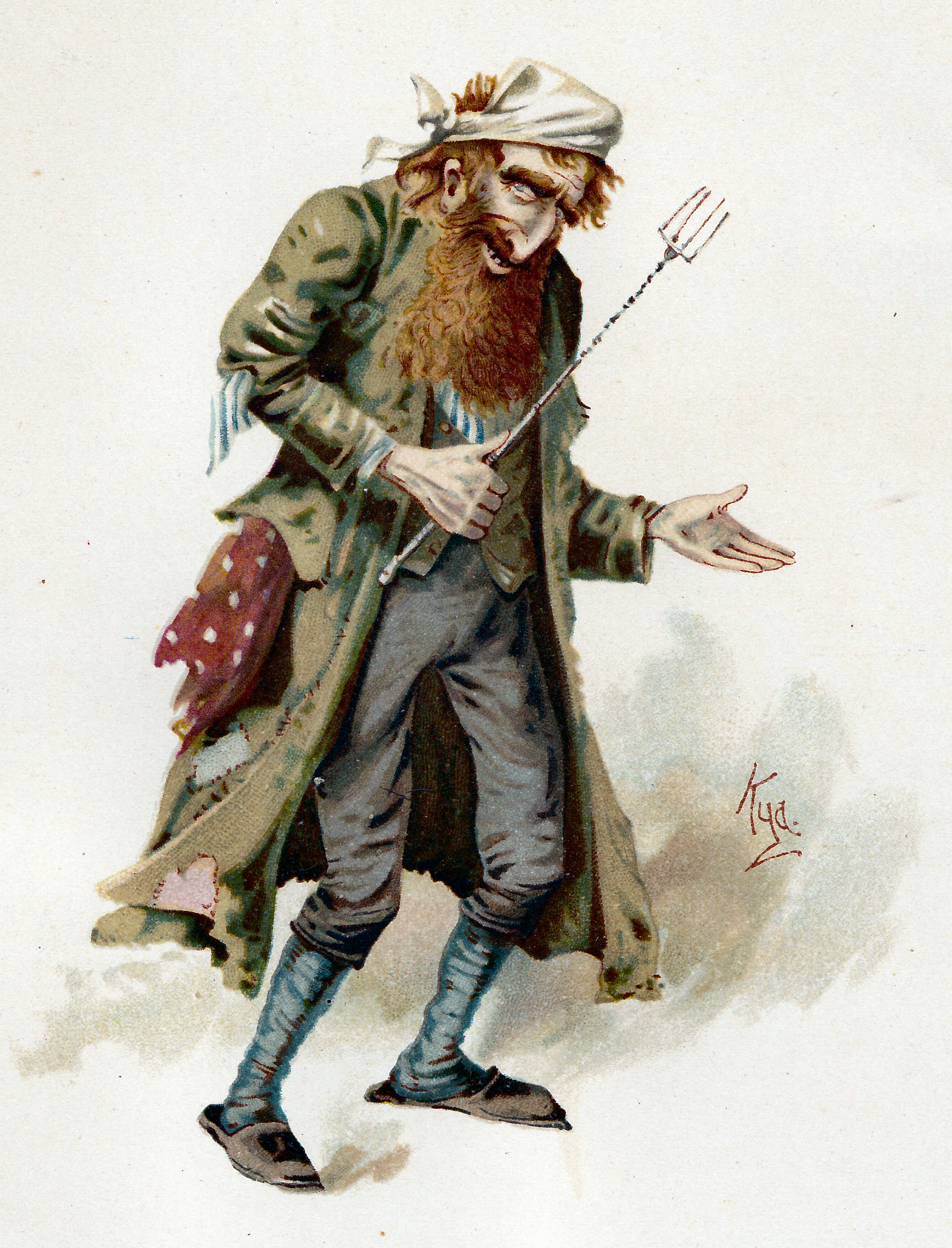
Fagin of the Dickens era
Oliver Twist ran with a rough crowd during his abandoned orphan days. You remember the classic Dickens tale, about the waif who had to survive the mean streets of London during the Victorian era. He was taken in by a man named Fagin, a master of young thieves who taught such skills as pocket picking.

Fagin might be a fictional character, but he's come to life in Chicago.

Fagin earned a living by sending his army of boys out into the better areas, the places where Londoners had money, and the gang dutifully committed their robberies and brought the goods back to Fagin. In return, they gained a roof over their heads and food in their bellies, and isn't that what survival is all about?

A group of six boys is thought to be responsible for a string of strong-arm robberies that took place in Chicago on Monday. The teens worked in unison to get their intended victim into a headlock, hold a knife to the victim's throat, and demand cell phones and credit cards. They went off on their spree during after school hours, and even went so far as to target a thirteen-year-old who was watching a track meet.

They worked an area of the city that is home to the more well-to-do of Chicago, the upper middle class who can afford to buy restored Victorian rowhouses. This being Chicago, those denizens of the comfortable enclaves aren't carrying weapons, either, making them that much more vulnerable. The attacks were quick, get in and get out, and once the criminals had the goods they jumped into a nearby car where the modern day Fagin was waiting.

Pretty brazen, but not unlike Fagin's crew doing their dirty work in crowded places. Of course, Fagin's boys were more about the quiet crime, the stealth of a wallet from a pocket without the victim any the wiser.

Part of their strategy is the sudden attack, leaving the victim too shocked and frightened to really get a good look at the perpetrators. It's no easy thing to tell the police what the boys looked like after that kind of assault, and about all that is known is that the thieves are teen-aged and their getaway driver is a man in his early twenties.

Probably not Jewish, like Dickens' Fagin, but of more modern stereotype. The police are looking for a black man.

And six boys who were taught how to pull off robberies and take small things that can be fenced at the less ethical cell phones stores that dot the poor neighborhoods of Chicago. As for the credit card thefts, they might be able to fill up the getaway car with gas, assuming they figured out that the zip code needed to unlock the gas pump was most likely the zip code for the area from which they stole the card. Even someone stunned by a crime would think to call the credit card company and cancel their account immediately, rendering the card useless for any kind of major purchase.

Like Fagin's crew, the riches are paltry and stealing five or six cell phones isn't going to put a lot of money in anyone's pockets.

But it's a start.

What's next? Six boys running into high-end shops, grabbing what expensive merchandise they can carry, and then making a dash for Fagin's little Nissan car?

Maybe. If today's Fagin is creative enough. Otherwise, his army of thieves might get a little restless with the paltry rewards after a hard day's toil. The business model may need some tweaking. Like adding in a little breaking and entering, swiping of expensive silver or jewelry. So many possibilities for a clever mastermind.


Monday, August 29, 2016

The Dead Zone

The publishing year calendar for this time of year is rather standard fare. The industry has entered into the dead zone, where no breeze blows and no manuscript ship can sail.


August - September 2016


28
29
Out of Office
auto-responder
on
30
31
1
2
3


4
5
Last Holiday 
of Summer
6
7
8
9
10
Grudgingly
return to work


Yes, it's dead quiet in New York City for the next couple of weeks. Not a creature is stirring, not even a book worm.

Copy and paste this handy calendar wherever you keep track of your query letters, and refer to it often when you have the urge to send a literary agent a perfectly polished query. Just don't. Wait until they've had a chance to recover from their sun holiday in Europe or the rigors of closing up the beach house in the Hamptons.

You want the agent to be in the best frame of mind when they read your killer opening line, right? They can't very well read it when they're out of the office and not checking e-mails. Sure they'll find it when they get back to work in two weeks, but can you imagine how many e-mails have accumulated in that time? And do you want your query to get the scantest of scant perusal because the agent is trying to catch up with a backlog?

Your letter would be lost in the maelstrom.

Unless you have some spectacular writing credentials, that is, but chances are you do not.

If you're desperate to query, you can select those literary agents who tweet with abandon. If they're on vacation, you'll know about it. If their little bon mots suggest they're at work, then you can take a chance. Maybe you're after some young agent, newly minted and keen to make a big splash in the publishing ocean.

But just remember, it's the dead zone time of year and not much will happen. Spend the next two weeks polishing the query letter, making sure the manuscript is stellar, and for feck's sake write something else to keep yourself busy.

Friday, August 26, 2016

Gentrification Creeps In On Little Pawn Feet

The sort of people who can afford to live in Bucktown and Wicker Park are not the sort of people who need a pawn shop. They use banks. They have jobs that pay well, and if they find themselves running a little short of cash, they either hit the ATM or whip out a credit card.

When the locals in a given neighborhood have no need of a shop in the neighborhood, that shop goes out of business. No clients, no income, no way to survive.

The businesses do not shutter their doors all at once. The change is gradual, like the fog creeping in on little cat feet. One day, there is merchandise in a storefront, and the next day, the windows are papered over and a "For Rent" sign appears. It's almost not noticeable, that single gap on the commercial block. Some new business comes in, but it isn't a taqueria or a dollar store. It's a boutique, or it's a restaurant serving high end grilled cheese sandwiches and craft beers.

Some would say it's progress that's marching on, progress that sees a business catering to the working classes or urban poor giving way to shops that are patronized by the young urban professionals.

For the few clinging to their homes near Noble Square, they may not see it as progress when their nearest pawn shop is gone soon.

Value Pawn has been doing business at the corner of Ashland and Milwaukee Avenues for the past five years, and it's a wonder the owner opened up in the first place. Back in 2011, the area was already undergoing gentrification. Scott Lee Cohen, who once toyed with the notion of public office, bought the structure at a good price, getting in at the right time, to wait out the gentrification wave. Now it has washed over the Noble Square area, having swept across Bucktown and Wicker Park, and the investment is set to pay off. The pawnbroking business, however, did not face the same benefits.

Realtors will tout the location, location, location, but you won't find any literature promoting the site as perfect for a pawnshop. No, in this case of gentrification, the seller is suggesting the corner building as a good spot for a restaurant. Lots of foot traffic, they'll say, with all the young urban professionals marching by on their way to the public transportation facilities that bring them to their jobs in the Loop. They're fond of drinking coffee and nibbling on whole grain, gluten-free, low fat muffins. Why not start up your business at Ashland and Milwaukee and cater to those unmet needs?

They like to dine out, as evidenced by the numerous trendy restaurants that dot the area, and that's more than can be said about the former residents of Noble Square. Some of them are still around, grumbling about the way the place is changing and you can't recognize it for all the fancy places popping up, but that's a good sign. It shows that you're getting in early, like an urban pioneer, to make your mark or stake your claim to the hipster dollar.

It's gentrification in action, creeping in quietly, to push out the old and the poor and drag in the well-heeled with plenty of money to spend on luxuries. They don't need a pawn shop. So the pawn shop will go to where it is wanted, until that neighborhood becomes the latest hot spot for gentrification that will creep in and spread across the city.

It's inevitable. The only people who can afford the ever-escalating taxes and fees imposed by Chicago's government are the ones with money. The ones who have never set foot in a pawn shop.

Thursday, August 25, 2016

Welcome To The "Gare"?

Can we get a deal on a loan for a house in the suburbs? Outside of Cook County?
You'll hear the occasional comment about Chicagoans never accepting name changes. The Sears Tower is still the Sears Tower, even if some foreign corporation bought the physical building and purchased the naming rights. Good for you, Willis. You made enough money to buy an iconic structure. But you don't exist in the hearts and minds of true Chicagoans.

The White Sox have always played at the ballpark named for their founder, Charles Comiskey. When a cell phone company paid for the right to slap their name and logo on the glorified shopping mall at 35th and Shields, the few fans who were not run off by Sox owner Jerry Reinsdorf grumbled mightily and kept on calling the place Comiskey.

Sure, some came to accept the new name, in a fashion. The entire corporate entity title was too long, of course, so the ballpark was generally referred to as "The Cell".

Appropriate, for the more typical Sox fan as compared to the well-heeled (and overserved) who patronize Wrigley Field.

(Notice how no one is talking about naming rights for a ballpark named for the gum magnate who used to own the Cubs a long time ago. Some corporations know when they're fighting a losing battle.)

Amid much fanfare yesterday, while the White Sox were losing yet again, the team announced that a new company had come forward with cash in hand, to lay claim to the name of the field that had to change because there isn't a U.S. Cellular mobile phone company any more. Mergers, wouldn't you know. And the contract was up, so why not find someone else.

A name on a ballpark generates loads of publicity because the name of the field gets mentioned all over the place during the baseball season. Tonight at "insert ballpark name here", the White Sox took on etc. etc.. Sports writers throw in a mention to fill out the needed words in their articles, and when someone needs whatever product that naming firm sells, the product name is instantly familiar.

So now, it is expected that whenever a White Sox fan needs a home loan, they'll be thinking "Guaranteed Rate".

With the latest round of tax increases hitting Chicago residents, there might be a greater demand for new home loans on homes located outside the boundaries of the city. Property taxes have just skyrocketed, and now the Chicago Public School system plans to tack on another blast of taxes. And that's on top of the planned hike in water fees.

Yes indeed, Guaranteed Rate picked an excellent time to get their name out there, to boost their recognition factor. More and more people will be thinking about making a move out of Cook County, and every time they listen to a report on the tanking White Sox, they'll get that little subliminal nudge about guaranteed home loan rates.

Of course, the name is too long for easy conversation. It will get shortened, in time, like U.S. Cellular became The Cell. What is still considered Comiskey might some day be nicknamed "The Gare" or "The Last Best Option Before Rahm Bleeds Us All Dry."

Saturday, August 20, 2016

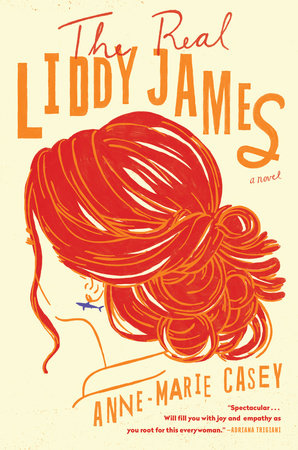
The Real Liddy James: A Book Review

Don't let the confusion of the opening pages stop your reading. It will become clear soon enough, after you've stumbled over the clunky bits of backstory that make for a rough go. Read on, and you'll be glad you stayed around to meet Liddy James and the cast of characters who share her life.

The story of the high-powered divorce attorney is told with a touch of humour, as Liddy's carefully crafted world starts falling to pieces around her head. She has left her hardscrabble, offspring-of-Irish-immigrants-past behind and presents an image of success, albeit one that is grounded in New York City materialism. She has the private car, the driver, the luxurious flat, and a brilliant career, but she comes to see that it isn't all that after all.

Her teenaged son has grown moody and recalcitrant, her second son (paternity backstory is well done) needs his mother but she isn't much of a mother because she has the nanny and her ex-husband and her ex's live-in lover to manage the kids in their way, one that is not in keeping with Liddy's prescriptive book on the subject. And by the way, the live-in lover is pregnant and wants to quit her job to raise the child, much to the horror of Liddy's ex. 

Liddy goes off the deep end and runs back to Ireland to find her true self, back to the land of her birth, and it's there that she finds the real Liddy James.

Takes a handsome son of the auld son to push her along, and doesn't prove how brilliant Anne-Marie Casey is as an author?

The story is pure fluff but it's entertaining, and isn't that what you want in a novel?

Read it with your book group, and then argue over the message of the story. Is the key to happiness the abandonment of riches, like the nuns beat into our hard heads? Is the author channeling her inner Roman Catholic with the way she closes the novel? Open up another bottle of wine and discuss.

Thursday, August 18, 2016

Sic Semper Sears

Don't you think that the first clue should have been fairly obvious? Barnes and Noble plucked their CEO from the management of Sears Canada, and I could swear I'd heard that Sears was dying a slow death.

Ron Boire came in last year as the great saviour of Barnes and Noble. He had the expertise to turn the struggling book vendor around, to boost online sales and get the Nook buzzing and bring people in to the bricks and mortar stores. None of it happened, but should anyone be surprised? Someone ruling over a failing enterprise can't be expected to succeed at doing something in a different location that he couldn't do in his original spot.

Mr. Boire was let go from Barnes and Noble after a brief tenure in which the bottom line of the book store chain continued to sink. Whatever ideas he might have put into action did not result in the desired outcome, and so the great experiment failed. Little wonder, when he came from a culture of dinosaurs.

Sears was once a mighty retailer, but the climate changed and Sears could not keep up. It had become too big and unwieldly to turn around, and now it is shedding real estate and shuttering stores as it succumbs to its failures. Mr. Boire was part of that very environment.

Maybe if he had more time to let his new ideas grow and blossom, the financial picture might have become rosy enough to save his job. He had a limited amount of time, after all, because Barnes and Noble is bleeding cash and the corporation was quite short on time. The decision to go back to the company's roots, to focus some attention on the physical stores, has yet to show what promise there could be. Perhaps it will take a few years to get people to go back to the stores, to discover what Harry Selfridge promoted in his grand venture. Shopping was once recreation, it was seen as a fun activity, but that means a store has to offer that which is not to be found in every other shop.

What would that be in a bookstore? What could Barnes and Noble offer to get people to buy their books from them instead of using the internet and Amazon?

There is the element of personal attention that has saved the independent book vendor, to an extent. It's no easy matter for a chain of shops to offer personal attention, to ensure that the staff is knowledgeable in the latest books and can recommend something based on a client's general description of their interests. That kind of study is usually done by a motivated store owner, not a low-level employee toiling for minimum wage.

Publishers see nothing but turmoil at Barnes and Noble in the coming months, a period of time that includes the all-important holiday shopping season.

Sears. Barnes and Noble. Too big to turn around?

Thursday, August 11, 2016

June: A Book Review

There's a story in this novel, a story desperately trying to claw its way out of a prison of flowery prose. A good editor was needed to hack through the thicket of excess verbiage, but alas, JUNE was published in its current form and it is up to a reader to find the good parts.

This being literary fiction, the writing has more metaphors than you're likely to find in some potboiler thriller, and like any other seasoning, a little goes a long way. Too much can spoil a good recipe. There were times when I had to go back and reread a few pages to understand what the author was trying to say, and that is the definition of too much verbal flourishing.

A pity, really, because the plot underneath is quite good. We have Cassie, an artist raised by her grandmother after her parents died in a tragic accident. She returns to her greandmother's home after the old woman's passing, guilt-ridden at not spending enough time with Grandma as the end neared. The old house is a bit magical in that it can invade Cassie's dreams with its past and those who once graced the halls, and while that sounds silly it lends a bit of charm to the story.

Out of nowhere, Cassie learns that she has inherited the fortune of a film star who came to the small Ohio town where Cassie now resides to shoot a movie. It takes a while to get there, through a dense forest of words that you will end up skipping over because they don't help move the narrative. With the introduction of that little mystery, the plot moves forward, with the famous daughter of that movie star arriving to settle things with Cassie rather than contest the will in a public courtroom.

Famous daughter Tate drags along her entourage from Hollywood, bringing in a little sexual tension between Nick the assistant and Cassie. Their interactions don't come about naturally, however, with their sparring and romancing the result of an author propelling them along, rather than the characters coming together.

The novel drags a bit through the middle, but the story fights its way out in the last third and really flows beautifully. Cassie continues on her quest to find out why this movie star left her his fortune, how her grandmother came to be involved in the star's life, and what became of her grandmother's best friend from childhood, the one with most of the answers.

Intertwined in Cassie's narrative is the story of June, the grandmother, and the film star during their short interlude of happiness. June's best friend has her say as the tangled relationship grows into what could be wedded bliss but for a few very deadly encounters that crush June's hopes.

Is the book worth reading, you ask.

For the good bits, yes. You have to work to find them, but when you find them, you will see what promise Miranda Beverly-Whittemore has as an author. If only she could find a good, honest editor to cut out the excess. Literary fiction doesn't have to be dense to be labeled as literary.

With thanks to Blogging for Books for the copy used in this review.

Tuesday, August 09, 2016

Too Much Social Media Is Not Wise

Kids today.

They have the fastest thumbs around, with bulging muscles developed with repetitive use. Those two digits just seem to fly when a message needs to be sent to a legion of followers.

Older folks can cluck their tongues and shake their heads in dismay. What is this generation coming to? Does no one talk face to face, person to person?

The lack of human contact must surely have an effect on brain processes, wouldn't it? Some section of the frontal lobe not developing in the same way as happened before man learned how to communicate without speaking?

For Brandon McNeil, that dire possibility was proved true. His malformed neural connections failed him at a most critical time, and now he's behind bars.

Maybe the whole behind bars thing started when he made an earlier bad decision, to run from the cops after he was spotted firing off a few rounds from a gun.

Yeah, okay, the bad decision was before that, when he acquired a gun in the first place, and then decided to use it. But that does not alter the fact that Twitter led to his ultimate downfall.

Mr. McNeil knew that shooting a gun in Chicago was illegal. The city has the toughest gun laws around, and the police do try to clamp down when they can. There aren't enough of them to go around and it's a challenge to be where the guns are at the right time, but in this case, there they were. In Beverly. The nicer part of the city where a lot of cops and firemen live.

Yes, shooting a gun in Beverly, the south side neighborhood favored by city employees who have to live in the city, is also not a smart move. But back to Twitter.

Once the sirens started blaring, Mr. McNeil knew he had to remove himself from the scene. He thought it was clever to live Tweet his dash for freedom, as if the police would be clueless about social media and none of Mr. McNeil's followers would be dumb enough to point out to the authorities that the man was live Tweeting while running.

It's all in the thumbs, of course.

The gunman ran into a home and thought he might amuse his followers, and maybe add a few more, by tweeting out a picture of where he was hiding out while the police dashed around in a panic, knowing they had to track down an armed man who they might have to shoot back at and that's the last thing the cops want these days.

Those tweets? And that picture? That's what a prosecutor would call evidence. Shooters are advised to not tweet things like "I hid the pole, here's my hiding spot" because the police take the phone, look on the social media history, and find the hidden gun with ease. And just like that, the tweeter is arrested for possession of a gun with a filed-off serial number, which is even more illegal than a normal gun.

Gun court is, by and large, a joke in Chicago, but Mr. McNeil helped things out by tweeting and providing enough information to escalate his case beyond simple possession.

If only he'd put down the phone before the urge to tweet struck. He'll have plenty of time behind bars to regret his social media addiction.

Thursday, August 04, 2016

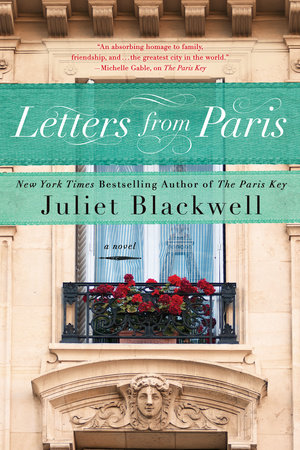
Letters From Paris: A Book Review

Female protagonist at loose ends in her life? Check.

Brooding male love interest with a few secrets in his artistic closet? Check.

Paris locale? Check.

Juliet Blackwell covers all the requisites for a work of romantic women's fiction in her newest release, LETTERS FROM PARIS. She gives her readers Claire Broussard, the orphan girl raised by her grandmother after her mother died and her father proved to be an abusive alcoholic parent. Claire ran from her past, all the way from Louisiana bayou country to Chicago, but she still hasn't found what she's looking for. She is unsatisfied in life, and what self-respecting work of women's fiction doesn't have a main character who isn't satisfied with what she has but feels that more is out there if she just goes looking for it.

While visiting her dying grandmother she reconnects with a mysterious bit of home decor in the form of a popular plaster mask that was shipped from Paris at the close of the Second World War. Inside is a cryptic note and there's the next item on the check list. Claire needs a quest to continue her journey, and that quest is finding out the significance of the note.

So she's off to Paris, the most romantic city in the world, and she meets up with Mr. Darcy as a plaster-caster. While she takes on a little side job as his assistant, the reader is treated to flashbacks told by the woman whose face was used to create the original mask that Claire has long been fascinated by. The story within a story parallels much of Claire's experiences, but it is told in present tense to bring the past more readily into the present.

At any rate, the mystery of the mask is gradually revealed while the relationship between Claire and the Frenchman heats up. It's what you expect in women's fiction, no real surprises or artistic flourishes. Girl meets boy, they dance around, and then they reveal pieces of their past that release the old ghosts and thus ends the haunting. Cue the violins.

For those who consume romances, this is perhaps a more substantial read than most. It's a book that satisfies the cravings for all things sweet and light, seasoned with a touch of life's tearful moments. The ending is happy for everyone, as it should be in this kind of thing. Sometimes it's what you need when everyone else is fretting about what Brexit will mean to the economy.

WIth thanks to Penguin Random House and their First To Read offers.

Monday, August 01, 2016

Spontaneous: A Book Review

Isn't it difficult to be a teen these days? And isn't it just that much more difficult when your classmates start spontaneously combusting?

There's the premise for SPONTANEOUS by Aaron Starmer.

It's mad, yes, a premise so bizarre that you can't help but keep reading. Where can an author go with a story that opens with a young lady turning into a cloud of blood?

Against a backdrop of unexplained incidents in which students disappear in bloody explosions that come without warning, Mara Carlyle is navigating the typical world of American youth, in which friendships and cliques are all important. At least until students combust. That adds a whole new element to things.

The combustions add an element of uncertainty to life, when a person doesn't know why it's happening, or who will be next. As you'd expect, government experts come in to uncover the cause, but suspicions soon arise. Mara, her best friend, and her new boyfriend are all drawn in to a secretive investigation being conducted by a rogue FBI agent who has her own opinions on the cause and the source of the combusting.

Novels about teen angst abound, but by going absurd the author creates a different way to tell a story about friendship and the importance of relationships during trying times. This book is fresh and creative, a bit draggy at times but otherwise a very entertaining bit of prose.

Even if you don't care about the difficulties of being on the cusp of adulthood, heading off to university, the novel throws in a unique concern as far as getting go university is concerned. What if the characters that you've come to know have the greatest worry of all, that they won't make it to their graduation ceremony because everyone in the class seems to be combusting spontaneously? And there's no escaping the confines of the small town because somehow the government knows where all those senior-level students are hiding.

And thanks to Penguin Random House for the review copy. Much appreciated.


Thursday, July 28, 2016

Results May Vary: A Book Review

The title of this review will be: The Narcissist As Narrator.

I could not finish this book. The protagonist was so thoroughly engrossed in herself that I could not muster the slightest bit of sympathy for her situation.

Her husband proves to be gay, and has existed In a world of obfuscation to hide his sexuality. Clearly such a man earns sympathy and perhaps encouragement to seek counseling, but not here. Caroline is so wrapped up in herself that she never has a moment to spare in concern for others.

Her sister falls for a man Caroline imagines as her own lover, and promptly feels betrayed. Not joy at Sis finding love. No indeed. It's all about Caroline, all the time.

Never once did the author provide the slightest glimmer of redemption on Caroline's part, that she would snap out of her self-obsession. It was just all about Caroline, whose nickname of "Care" or "Care Bear" sparked recollections of an old Vince Vaughn movie that really has nothing to do with RESULTS MAY VARY but quite a bit to do with narcissism.


A reader looks for a protagonist to grow in knowledge as the story moves forward. I did not find that kind of growth in Caroline, who remained focused on herself. Perhaps the real turning point in my decision to abandon the book came early on, when she discovers that her husband hid his publishing success from her because he had published drivel, rather than the brilliant prose he thought was expected of him. She should have dragged the man off to therapy, but instead she pursues divorce because she just can't trust him.

Is this really what women's fiction is becoming? Instead of being of service to others, the characters serve themselves? Could this be a work of new adult fiction, aimed at the twenty-somethings who have next to nothing and so hoard what little they have? Whatever genre, RESULTS MAY VARY did not prove enlightening as to the human condition.

It was just too hard to cheer for Caroline. She was too unlikeable.

This kind of book will likely appeal to New York-based twenty-somethings who are equally engrossed in their self-described problems. There is so much more going on in the world that needs addressing that this novel feels like a waste of precious time.

Thanks just the same, Penguin Random House. The free review copies can't all be brilliant.

Saturday, July 23, 2016

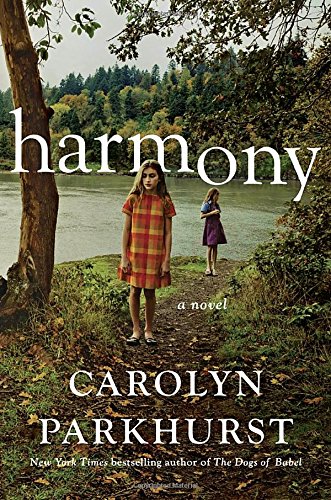
Harmony: A Book Review

How do seemingly intelligent people fall for the purveyors of snake oil? That query lies at the heart of HARMONY.

The novel is told largely through the eyes of Iris, the sibling of an autistic sister, a use of POV that gives the author some space to tell the story from a more naive perspective. She does not understand why her parents, in a quest to find a cure (or a method for coping) with Tilly's anti-social behavior, leave the world behind and follow their autism guru into an isolated wilderness where said guru is completely in charge.

Through flashbacks told by the mother, the lead-up to the relocation is presented. Increasingly desperate, and increasingly whingey, Alexandra tells the reader how alone she was, how desperate for help, but as a reader you might notice how obsessed she is with what the neighbors will think when her daughter acts out in public. Can she not just tell onlookers that her child is autistic? It's not as if the others have never heard of (or met someone with) the condition.

The prologue is a waste of words and you'd do well to skip it, along with the epilogue that reads like an exercise from a creative writing course. The novel itself is filled with tension as Iris and Tilly chafe at the rules of Camp Harmony's regime, while Scott the autism guru comes apart at the seams when his control over everyone's behavior cannot be as absolute as he demands. That alone keeps the pages turning, while skimming over Alexandra's litany of parental torment. 

Readers get a sense of impending doom as small things go wrong at Camp Harmony, although the climax feels a trifle forced. Not a bad novel, not a brilliant work of fiction, but entertaining enough for a weekend read.

The review copy was provided by Penguin Random House, for which I thank them.

Thursday, July 21, 2016

With Love From The Inside: A Book Review

There's a powerful opening for you. The protagonist reveals her current abode is death row in prison. Talk about things blowing up to grab a reader's interest.

The narrative moves between Grace Bradshaw, said inmate, and her daughter Sophie who has made herself a new life far from the scandal of having a mother doing time for infanticide. Grace is preparing for her execution by writing a journal for Sophie, while Sophie is grappling with the lies she has told to hide the fact that her mother was convicted of murdering her baby brother.

There are the usual cruel, insensitive prison guards and the misunderstood fellow convicts to populate the story, while Sophie is keeping a watchful eye on a neighbor with designs on her well-to-do husband. Typical suburban fare, you could say.

But the clock is ticking, with the execution date set and Sophie finally deciding to contact her mother and come clean about her past. In the process, she uncovers evidence that could set her mother free, but will she reach the governor in time? And how is she to tell her husband that he has a mother-in-law, and his wife was not in reality an orphan when they married?

The tension builds up as Sophie and Grace reconnect while the lawyer seeks clemency, making for much turning of pages. Women readers looking for a tale with heart and positive messages about the power of family bonds will enjoy this one. There is a touch of Christian influence spread throughout, what with Grace being the wife of a minister, but it is a light touch that fits with the character. You might get the impression that Grace is passive, yielding endlessly to the dictates of her faith and all those tidbits of advice that you'd get from the Protestant church ladies. She does not come across as a fighter, but as someone resigned to her fate because she's going to be with God so it's not so bad, is it?

Again, in a bow to the average female reader, Sophie's husband is painted as a near saint, madly in love with her even after he finds out she's been less than honest with him. Despite the brief episode of upset, he comes through and supports her efforts to exonerate her mother completely, even if it means damaging his career trajectory. Sometimes you need a simple kind of story without too many complications, right?

So, does Grace get her reprieve and a new trial? You'll have to read the novel to find out.

Thanks, Penguin Random House, for providing this book for review.

Monday, July 18, 2016

The Gentleman: A Book Review

Some books are read for the plot. THE GENTLEMAN is a book you read to enjoy the voice.

There is a plot, of course. It centers on young Lionel Savage, a proper gentleman who runs out of money and so must marry it. While hiding from one of his wife's society parties (he does not love his wife, as he makes plain. He is the narrator, by the way) his solitude is broken by a visit from THE GENTLEMAN, none other than the devil himself.

The next thing Mr. Savage knows, his wife is gone and he's quite sure that he inadvertently sold her to the Devil (of Dev'l as he prefers to say it. He is a poet and only needs the one syllable). He wants to get her back, and in league with his brother-in-law he attempts to organize an adventure to Hell to rescue his wife, whom he suddenly realizes he loves.

Silly? Silly indeed, but told with such over-the-top dialogue and absurb humour that you will thoroughly enjoy this madness. The creativity is striking, as Mr. Savage and his coterie try to figure out how one gets to Hell. Some have compared this novel to the work of P.G. Wodehouse, and that is perhaps the best way to put it.


I highly recommend this book to all who need a break from a world too filled with harsh reality. Take a small vacation and get lost in some witty prose.

With thanks to Penguin Random House for the early review copy.

Friday, July 15, 2016

Pokemon Go Meets Urban Reality

Pokemon Go get mugged
It's all so cute, the game that gets people out of the house and moving. We need incentive to exercise, because better health just isn't enough of a motivator to burn off some calories.

Pokemon Go has been all over the news lately. Wherever you turn, there's some reference to the phone-based game that has taken the techno-savvy world by storm. Everyone's playing it, doesn't it feel that way? You hear chatter constantly about Pokemon Go and catching one or another of the little digital creatures like it's a quest with world consequences.

Pokemon Go has run up against urban reality in Chicago. It isn't the harmless game as portrayed.

One of the problems cited with Pokemon Go is the distraction factor. Players are so totally focused on their cell phone screens in their effort to catch the critter that they are oblivious to their surroundings. You've probably heard stories of players walking into traffic or crashing into fellow pedestrians as they play the game and forget that they are not sitting on their couch.

For one Chicago player, the distraction proved quite painful.

An Edgewater resident went out for a late-night stroll near the lakefront to catch a few Pokemon. What better place than an open park, a wide bike path or a relatively quiet street to play without danger of colliding with fellow players chasing after the same quarry? His partner was previously occupied, and what's a man to do with time on his hands and no one to pass it with?

Off he went, to chase the elusive Pokemon hiding near Lake Michigan. Hot on the trail, he followed the path that Pokemon led him on, right into a pedestrian underpass.

At night.

In the dark.

Alone.

So would anyone familiar with life in Chicago these days be surprised to learn that a gang of three teenagers jumped him?

Phone theft is such a common crime these days. Kids swipe the phone from the hands of a distracted owner and they're gone to the nearest shady phone dealer in their run-down neighborhood. Shady phone dealer wipes the phone before the victim has a chance to locate the iPhone, the kids get a few bucks, and the phone's owner gets to be another statistic.

The Pokemon Go player was engrossed in the game, and never noticed the vultures hovering. If he had been on his usual game, the urban walk with eyes in the back of the head wide open, he would not have made for an easy target.

The thugs used the classic distraction technique of fists to head and torso, took the phone, and would have taken the man's wallet once he was down if not for a few other pedestrians who noticed the commotion.

Instead of capturing Pokemon in the pedestrian tunnel, the player caught a little hell. He went to the hospital to have his injuries seen to, but the phone is gone and he's a bit wiser today.

Forget the tales of people walking off cliffs in a distracted daze. If you dare to play Pokemon Go in Chicago, bring a partner. Or an armed guard.

Why make it easier on the thieves who see Pokemon Go players as so many fools just asking to be robbed?

Thursday, July 14, 2016

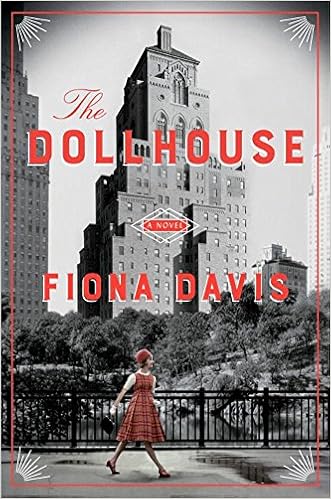
The Dollhouse: A Book Review

Journalist Fiona Davis makes her ficiton debut with THE DOLLHOUSE, and wouldn't you know it but her protagonist is a journalist. Much like herself, would you say?

Fictional journalist Rose Lewin is starting over in both the work and personal spheres when she encounters a mysterious old woman who also lives at the former Barbizon Hotel, now a luxury condominium building with spaces reserved for the oldest tenants. She's a bit of a mystery woman, this Darby McLaughlin, having lived at the Barbizon from the days it housed young single woman in the early 1950's.

Ms. Davis intertwines the narratives of Rose, with her love life in tatters, and Darby the naif who befriends a hotel maid with tragic results. Bits and pieces of the tragedy come to light as Rose investigates the past, and the reader gets to pick up the bread crumbs along the trail as the story unfolds.

In general, the novel is a pedestrian effort that follows the formula of how to write a novel, and it opens strong. After the opening, however, the author demonstrates her background of telling stories, rather than showing them. Much of the action taken by the characters feels directed entirely by the author, rather than the characters.

As the novel reaches its conclusion, the movements felt forced and a bit artificial, almost unbelievable. It's more than a case of an unreliable narrator. It's an issue with telling how untrustworthy a character is, instead of showing it. When the cause of Darby's disfigurement is revealed, the episode plays false. As for the happy reunion of two former lovers, the couple comes together with an amity that is quite fictional as the author wants a happy ending even though the backstory would suggest something else, more complex perhaps but not so pat.

The novel is easy to read, and like a literary version of empty calories it won't fill you up or contribute to your lean, mean intellectual weight. Make it a summer read, light and breezy, and don't scoff too much at the way the loose threads are tied up a bit too neatly at the end.

Thanks to Penguin Random House for providing this review copy.

Friday, July 08, 2016

Guilty Minds: A Book Review

Someone's tried to bring down the Chief Justice of the United States, a web of lies we're told, and in comes Nick Heller to dig into the dirt to expose the truth. A fine start to a thriller, and author Joseph Finder leads his reader in like a roller coaster climbing lazily to the top of a hill that won't be seen until you've crested it.

The novel is a bit of a roller coaster ride, with a bit of excitement at the beginning that is just the beginning. The issue with the potential scandal is quickly dispelled, but that only sends the reader deeper into a more involved scenario with far greater complexity. There are plenty of twists and turns to the narrative as Nick Heller probes beyond the surface question and tries to uncover the real actors who put the scandal into motion, to uncover their motives.

Without getting himself killed, of course. That's what a thriller is all about, after all, creating scenarios of great danger that build up as the mystery gets closer to solution. Joseph Finder does this sort of thing quite well, with tight prose that never falls off into the hard-boiled realm.

There are plenty of techie gadgets and electronic snooping that appear without intruding, the purpose explained just enough to let you know what the device will do, and then what it will not do when the intrepid investigator lands in another tight squeeze.

How can I say more about the plot without giving things away? Let's just say that the action takes place largely in the Washington, D.C. area, some high-powered people are involved in a devious plot that is more intricate than first appears, and the protagonist develops a relationship with the woman journalist who thought she had the scoop of her life when she was handed the story about the morally righteous Chief Justice enjoying the services of a high-priced call girl.

The novel has all the elements you look for in bit of fiction that is designed to engage a reader.

GUILTY MINDS makes for the perfect summer read, a thrill ride that satisfies a craving for something light, entertaining, and well-written.