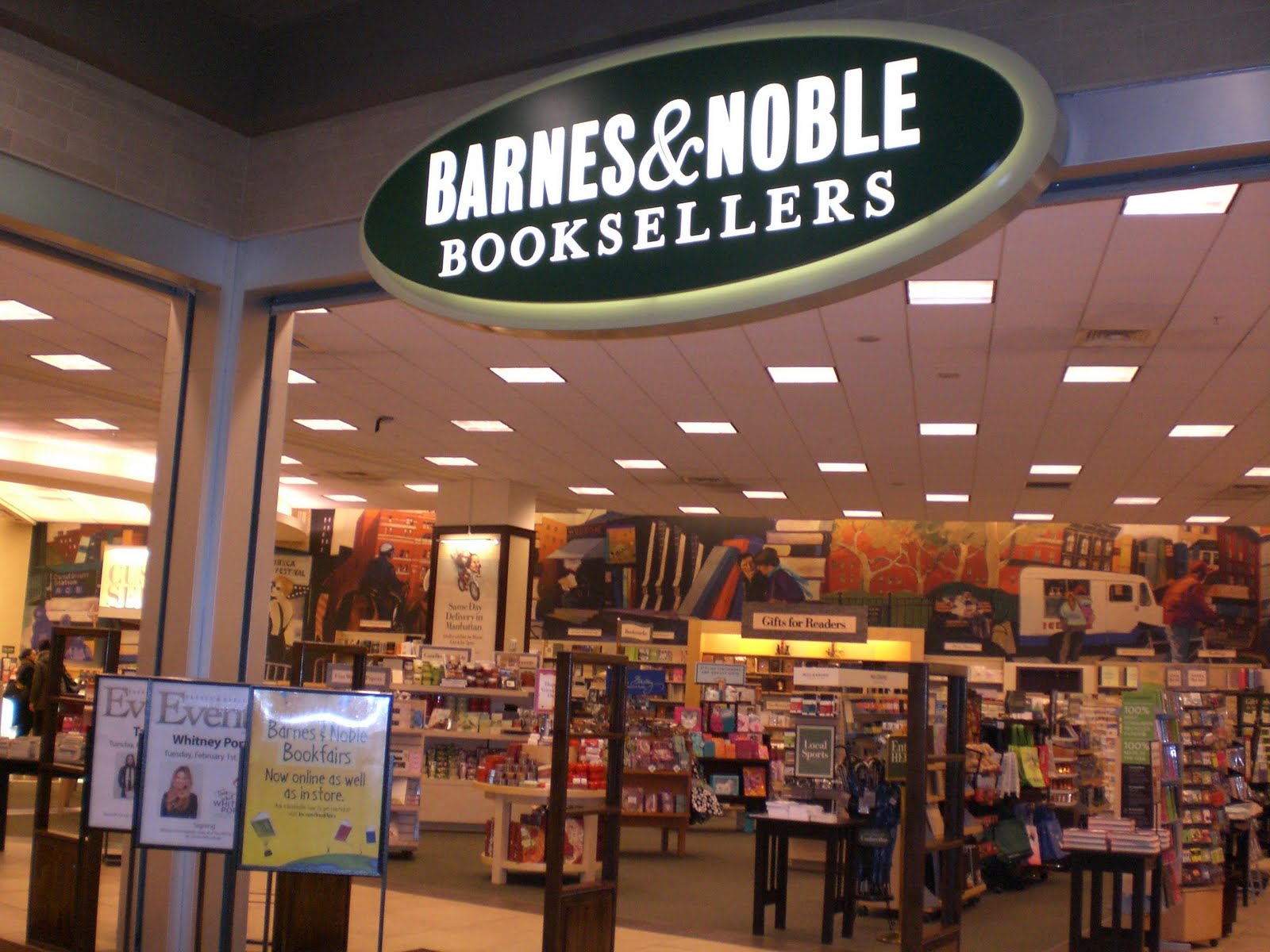
Don't you think that the first clue should have been fairly obvious? Barnes and Noble plucked their CEO from the management of Sears Canada, and I could swear I'd heard that Sears was dying a slow death.
Ron Boire came in last year as the great saviour of Barnes and Noble. He had the expertise to turn the struggling book vendor around, to boost online sales and get the Nook buzzing and bring people in to the bricks and mortar stores. None of it happened, but should anyone be surprised? Someone ruling over a failing enterprise can't be expected to succeed at doing something in a different location that he couldn't do in his original spot.
Mr. Boire was let go from Barnes and Noble after a brief tenure in which the bottom line of the book store chain continued to sink. Whatever ideas he might have put into action did not result in the desired outcome, and so the great experiment failed. Little wonder, when he came from a culture of dinosaurs.
Sears was once a mighty retailer, but the climate changed and Sears could not keep up. It had become too big and unwieldly to turn around, and now it is shedding real estate and shuttering stores as it succumbs to its failures. Mr. Boire was part of that very environment.
Maybe if he had more time to let his new ideas grow and blossom, the financial picture might have become rosy enough to save his job. He had a limited amount of time, after all, because Barnes and Noble is bleeding cash and the corporation was quite short on time. The decision to go back to the company's roots, to focus some attention on the physical stores, has yet to show what promise there could be. Perhaps it will take a few years to get people to go back to the stores, to discover what Harry Selfridge promoted in his grand venture. Shopping was once recreation, it was seen as a fun activity, but that means a store has to offer that which is not to be found in every other shop.
What would that be in a bookstore? What could Barnes and Noble offer to get people to buy their books from them instead of using the internet and Amazon?
There is the element of personal attention that has saved the independent book vendor, to an extent. It's no easy matter for a chain of shops to offer personal attention, to ensure that the staff is knowledgeable in the latest books and can recommend something based on a client's general description of their interests. That kind of study is usually done by a motivated store owner, not a low-level employee toiling for minimum wage.
Publishers see nothing but turmoil at Barnes and Noble in the coming months, a period of time that includes the all-important holiday shopping season.
Sears. Barnes and Noble. Too big to turn around?
Showing posts with label Book selling. Show all posts
Thursday, August 18, 2016
Saturday, September 07, 2013
That Was Then, Now It's Closing
We all mourn the demise of an independent book shop, knowing that some community is losing an element that makes the place more civilized. Every time a store closes, someone mentions Amazon and its power to set prices, not pay local taxes because it does not exist anywhere, and generally crush the competition.
Sometimes, however, a shop goes out of business because times have changed while the store has not.
Such is the case of Giovanni's Room in Philadelphia, Pennsylvania. It is one of the oldest bookstores serving the gay community (which includes all sub-genres of homosexuality such as lesbians, bisexuals, transgender et al.), but that is the problem. The community once served is not as marginalized as it was when the shop relocated in 1976. Almost forty years later, it is slated to close.
Relative to the over-all book-buying public of Philadelphia, the place was serving a small community. The niche market was large enough to support the shop when that was all there was, but when other options came available, the business went into a decline.
Owner Ed Hermance has waxed nostalgic over the heady days when the AIDS epidemic was first recognized, a time when causes and cures were largely unknown and rumour was substituted for knowledge. His shop served a critical function back then, by providing literature and information that was factual. No one else bothered with it because it was relevant to a community that was under-served, except by Mr. Hermance.
These days, information about AIDS is available online, direct from multiple sources.
The niche book seller lost a piece of his niche, but had nothing else with which to fill the gap.
The niche is not hunkered down trying to hide in the shadows, either. People have more support in the community at large than they once did, and coming out to your friends does not require a poetry reading at an indie bookshop that caters to a specific subset of the population.
Giovanni's Room once served a purpose, but the purpose has been lost to a changing attitude that has seen openly gay politicians win public office while their constituents yawn at the announcement of sexual orientation. Grand, so, but can you get the trash picked up and lower our taxes and bring jobs to the place? is what matters to voters these days.
It is always sad to see a small shop close up, no longer there to provide the personal service or recommendations that make a local book store such a pleasure, in a way that Amazon can never match. But in a way, it is a victory for acceptance of a small population that was once on the fringes of society. The need for a shop catering specifically to gay people, where they can feel comfortable, is no longer as necessary as it was in 1973.
That's progress. It's a good thing, in one way. Acceptance has made Giovanni's Room redundant, with the niche it once filled no longer existing in a size large enough to support an entire bookstore. For those who enjoyed the store and considered it their local shop, where they knew people and could find friendly faces when they walked through the door, it isn't such a great day at all.
Sometimes, however, a shop goes out of business because times have changed while the store has not.
Such is the case of Giovanni's Room in Philadelphia, Pennsylvania. It is one of the oldest bookstores serving the gay community (which includes all sub-genres of homosexuality such as lesbians, bisexuals, transgender et al.), but that is the problem. The community once served is not as marginalized as it was when the shop relocated in 1976. Almost forty years later, it is slated to close.
Relative to the over-all book-buying public of Philadelphia, the place was serving a small community. The niche market was large enough to support the shop when that was all there was, but when other options came available, the business went into a decline.
Owner Ed Hermance has waxed nostalgic over the heady days when the AIDS epidemic was first recognized, a time when causes and cures were largely unknown and rumour was substituted for knowledge. His shop served a critical function back then, by providing literature and information that was factual. No one else bothered with it because it was relevant to a community that was under-served, except by Mr. Hermance.
These days, information about AIDS is available online, direct from multiple sources.
The niche book seller lost a piece of his niche, but had nothing else with which to fill the gap.
The niche is not hunkered down trying to hide in the shadows, either. People have more support in the community at large than they once did, and coming out to your friends does not require a poetry reading at an indie bookshop that caters to a specific subset of the population.
Giovanni's Room once served a purpose, but the purpose has been lost to a changing attitude that has seen openly gay politicians win public office while their constituents yawn at the announcement of sexual orientation. Grand, so, but can you get the trash picked up and lower our taxes and bring jobs to the place? is what matters to voters these days.
It is always sad to see a small shop close up, no longer there to provide the personal service or recommendations that make a local book store such a pleasure, in a way that Amazon can never match. But in a way, it is a victory for acceptance of a small population that was once on the fringes of society. The need for a shop catering specifically to gay people, where they can feel comfortable, is no longer as necessary as it was in 1973.
That's progress. It's a good thing, in one way. Acceptance has made Giovanni's Room redundant, with the niche it once filled no longer existing in a size large enough to support an entire bookstore. For those who enjoyed the store and considered it their local shop, where they knew people and could find friendly faces when they walked through the door, it isn't such a great day at all.
Wednesday, September 04, 2013
Bundling: The Sharing Of A Bed By An Unmarried Couple, and Google's New Marketing Gimmick
Naturally, I'm going with the old concept of bundling because I'm a publisher of historical fiction and I'm more likely to run across characters who bundle than a publisher who sticks to modern commercial fiction.
Yet it is appropriate to look at the archaic definition of bundling to get a sense of what Amazon plans to do in October when they start bundling.
Amazon will let those who buy hard copies of books purchase the digital version of the same book at a steep discount.
Sort of like getting to share a bed with the one you love, but there's a board between you that's meant to keep you separate. What good is the bed, in that case, if you can't use it to its fullest? You have to roll over the board when the parents aren't looking, or listening, if you're to get anywhere.
By the same token, Amazon is going to take advantage of the absence of the now illegal agency pricing model. Before, the publishers set the prices of their e-books and screamed mightily when Amazon wanted to peg them all to a $9.99 point. Now, Amazon can dictate harsher terms to the publishers who don't have a lot of leverage against the biggest purveyor of e-books around.
Amazon is proclaiming the new bundling option as a way to increase market share, but how many people are going to buy a hard copy and an e-book of the same book? Do you really need two books?
The e-book is still cheaper than the paper book, so if you're looking to save a little money, you'd go with the e-book and realize that you're still better off than if you bought two versions of the same words.
How many people are so avid in their reading that they'd want to be able to pick up where they left off without having to haul the book around? Are these the same sorts of bibliophiles who like to have the real thing to put on a shelf in the library of their spacious flats, but prefer the convenience of the e-reader as they jet around Europe? There can't be that many of them, or at least not enough to make a big uptick in sales.
Newcastlewest Books is joining in the experiment which we don't expect will go anywhere for those of us who publish on a small scale and see the preponderance of our sales in digital. But just the same, here's the plug. Buy a hard copy of THE KING OF THE IRISH in October from Amazon and get the digital version for $1.99.
Go ahead and bundle.
Back in the day, those boards didn't keep man and woman apart anyway. Bundling hard copies and e-versions doesn't seem to be any more effective at doing what it's advertised to do.
Yet it is appropriate to look at the archaic definition of bundling to get a sense of what Amazon plans to do in October when they start bundling.
![]() |
| Bundling |
Sort of like getting to share a bed with the one you love, but there's a board between you that's meant to keep you separate. What good is the bed, in that case, if you can't use it to its fullest? You have to roll over the board when the parents aren't looking, or listening, if you're to get anywhere.
By the same token, Amazon is going to take advantage of the absence of the now illegal agency pricing model. Before, the publishers set the prices of their e-books and screamed mightily when Amazon wanted to peg them all to a $9.99 point. Now, Amazon can dictate harsher terms to the publishers who don't have a lot of leverage against the biggest purveyor of e-books around.
Amazon is proclaiming the new bundling option as a way to increase market share, but how many people are going to buy a hard copy and an e-book of the same book? Do you really need two books?
The e-book is still cheaper than the paper book, so if you're looking to save a little money, you'd go with the e-book and realize that you're still better off than if you bought two versions of the same words.
How many people are so avid in their reading that they'd want to be able to pick up where they left off without having to haul the book around? Are these the same sorts of bibliophiles who like to have the real thing to put on a shelf in the library of their spacious flats, but prefer the convenience of the e-reader as they jet around Europe? There can't be that many of them, or at least not enough to make a big uptick in sales.
Newcastlewest Books is joining in the experiment which we don't expect will go anywhere for those of us who publish on a small scale and see the preponderance of our sales in digital. But just the same, here's the plug. Buy a hard copy of THE KING OF THE IRISH in October from Amazon and get the digital version for $1.99.
Go ahead and bundle.
Back in the day, those boards didn't keep man and woman apart anyway. Bundling hard copies and e-versions doesn't seem to be any more effective at doing what it's advertised to do.
Subscribe to:
Posts (Atom)


