Showing posts with label Publishing. Show all posts

Saturday, September 24, 2016

Job Opening In Denver

This could be you
Do you enjoy skiing and other outdoor activities associated with mountains? Fond of hiking and camping in the back country, watching the elk graze, that sort of thing?

And are you a literary agent looking to enjoy those hobbies while keeping your job?

Kristin Nelson is looking for you.

The Colorado-based agent is looking to expand, or at least replace Sara Megibow, who went on to a different agency after she'd learned the ropes from Ms. Nelson. There's a limit to how many clients one agent can manage, and the time has come for Ms. Nelson to bring in someone to carry some of the weight, and bring in a few more clients to grow the agency.

You have to have some knowledge of the publishing business, according to the job posting. Just because you think it would be interesting, or just because you could get your manuscript published more easily if you were an agent and developed connections, doesn't mean you'll get hired.

Ms. Nelson needs someone ready to jump into the game straight off, with a minimal amount of training. Maybe you've been interning in New York and are ready to live in the pristine wilderness, where canyons are real canyons and not just streets lined by skyscrapers. Perhaps you've been bored in your position as a minor acquisitions editor, disappointed with the offerings and thinking that if you were an agent you'd find some decent books for publication.

This is your chance, to combine your love of books with your love of the outdoors.

But you aren't too keen on bears and snakes, you say?

Not to worry. If your heart is set on moving up in the agenting business, Ms. Nelson is open to telecommuting. After all, it would be to her advantage to have a partner in New York City, in the heart of the beast. An occasional trip to Denver would be manageable, wouldn't it? The elevation would leave you breathless.


Monday, August 29, 2016

The Dead Zone

The publishing year calendar for this time of year is rather standard fare. The industry has entered into the dead zone, where no breeze blows and no manuscript ship can sail.


August - September 2016


28
29
Out of Office
auto-responder
on
30
31
1
2
3


4
5
Last Holiday 
of Summer
6
7
8
9
10
Grudgingly
return to work


Yes, it's dead quiet in New York City for the next couple of weeks. Not a creature is stirring, not even a book worm.

Copy and paste this handy calendar wherever you keep track of your query letters, and refer to it often when you have the urge to send a literary agent a perfectly polished query. Just don't. Wait until they've had a chance to recover from their sun holiday in Europe or the rigors of closing up the beach house in the Hamptons.

You want the agent to be in the best frame of mind when they read your killer opening line, right? They can't very well read it when they're out of the office and not checking e-mails. Sure they'll find it when they get back to work in two weeks, but can you imagine how many e-mails have accumulated in that time? And do you want your query to get the scantest of scant perusal because the agent is trying to catch up with a backlog?

Your letter would be lost in the maelstrom.

Unless you have some spectacular writing credentials, that is, but chances are you do not.

If you're desperate to query, you can select those literary agents who tweet with abandon. If they're on vacation, you'll know about it. If their little bon mots suggest they're at work, then you can take a chance. Maybe you're after some young agent, newly minted and keen to make a big splash in the publishing ocean.

But just remember, it's the dead zone time of year and not much will happen. Spend the next two weeks polishing the query letter, making sure the manuscript is stellar, and for feck's sake write something else to keep yourself busy.

Thursday, June 16, 2016

Good Agents Don't Spam Publishers

The submission requirements for Newcastlewest Books are quite simple and straightforward. We don't want nobody nobody sent. Manuscripts are considered by referral only. So it's clear that Faye Swetky of the Swetky Agency didn't bother to read the page on how to submit.

We've received a second submission from her this month. It's apparent that she throws submissions out there to see if any stick. Not exactly the mark of an agent who is working for her client, targeting those publishers most likely to want what she is offering.

Her client Dawn Turzio has written a book about New York fire fighter wives, apparently, and the query came to our office where we specialize in books with an Irish influence. Historical fiction in particular, although our CITY THAT WORKS imprint was set up to publish works set in the Chicago area where the Irish have historically supported the auld sod. So clearly there's no link between a modern work of fiction set in New York City, but Faye Swetky didn't let that small detail stop her.

And I am sure that  author Dawn Turzio, with all her credentials, has faith in her agent and expects Ms. Swetky to find her a publisher.

I hope that Ms. Turzio is not paying for the service. If she had done some research and used Google to its full potential, she would have found a thread on the discussion forum at AbsoluteWrite.com in which things are pretty much laid out about how this agent is an agent in name only.If she knew in advance, you would hope that she would have avoided what is sure to be disappointment when nothing comes of the blanket submissions.

Did Ms. Turzio go the traditional route of finding an agent, writing up a query and utilizing beta readers to vet that query? Did she search the internet to find out how to query, for that matter?

There is so much information out there for budding authors that it's almost staggering, but querying is a definite process with its own set of rules and formats. It's work, yes, and frustrating beyond measure, but there are no shortcuts to getting published. Literary agents can't take shortcuts either, and send out queries at random in the hope they get lucky, like the blind squirrel finding a nut.

And speaking of squirrels, you know that if you feed one it will just keep coming around. With that in mind, I won't be replying to Ms. Swetky's missive. It only encourages her to send more, and our submission requirements are simple but stringent. If you aren't recommended to us, we won't consider the manuscript. We are a niche publisher with very particular needs, a very narrow focus.

No matter how brilliant F.D.N Wives might be, it doesn't meet any of our requirements.

Sorry, Ms. Turzio. But you really should find yourself a good agent who can get your book into the hands of a publisher who is looking for mainstream, contemporary women's fiction.


Tuesday, February 23, 2016

Self-Publishing Without Internet Access

Out of print as quickly as it was laid down
The Royal Canadian Mounted Police don't understand how serial killer Robert Pickton was able to self-publish a book when he does not have access to the Internet.

They seem to think that self-publishing requires a person to do all the work, when in fact anyone can publish a book and never do a single thing online. All you need, in that case, are friends with computers who share your love of literature.

Mr. Pickton is currently serving a life sentence in British Columbia, and as part of his punishment, he cannot surf the Net. No googling, no e-mail, no electronic connection to the outside world. Yet he still managed to get his memoir published by Outskirts Press in far-away Colorado. Their web page, which Mr. Pickton could not have seen from his cell, boldly proclaims that it exists to help the self-publisher achieve his goal. So how could a man without the World Wide Web do such a thing?

As far as the Mounties can determine, the author wrote out his manifesto by hand, using good old-fashioned paper and pen. There are those (myself included) who really believe that the first draft comes out better when handwritten. The slower pace forces a writer to think a bit longer about each word and sentence, making for a stronger start to a long process.

With his drafts edited to his satisfaction, Mr. Pickton had only to turn to his cellmate for help. Michael Chilldres smuggled the manuscript out of the prison somehow, and it found its way to Outskirts Press. Being a criminal, the concept of honesty never came into play so whoever helped him just said that Mr. Chilldres was the author, or said they were Michael Chillldres and they were self-publishing the manuscript.

Except he wasn't the author, but again, these are men in prison we are dealing with.

Unfortunately, it's very difficult to do a book tour when you're behind bars. Getting publicity and generating buzz was never going to be easy. Did the writing duo of Pickton and Chilldres even sell a single copy? Maybe they did, to someone connected with Mr. Pickton's murder victims, who would be very likely to keep an eye on the Internet to make sure the murderer didn't profit from his crimes.

The book was discovered and a petition was launched to have Amazon pull the book from its listings. Amazon being the biggest book seller, it's only natural that the petition was directed there.

Amazon responded by removing the book, and if you try to buy direct from Outskirts, you'll come up empty. They aren't going to carry the title any more either. They wouldn't want to be getting any bad publicity about publishing any and all shite that comes their way, especially when it's shite scribed by a convicted killer who isn't allowed to visit their website to see his work available for sale.

His future as an author, even one off the grid, has come to a screeching halt.

The authorities in British Columbia are now busy crafting legislation that would prevent convicts from profiting off their crimes. Currently there is no law on the books to stop Mr. Pickton from selling his prose in the province, even though other provinces bar the practice. The law exists in the U.S. as well, and when you've lost the greatest part of your market, your future in writing looks quite dismal.

Until such laws are enacted, however, the prison authorities will have to monitor phone calls and visits, to be sure that criminals are not dictating their memoirs to their visitors, who can then go home to their computers and complete the process of self-publishing. It's not as if publishing on your own really requires you to do it all yourself. You can always get by with a little help from your friends.

Tuesday, April 28, 2015

How Not To Design Your Book Cover

Publishing has never been easier for those with the drive to tackle the process. Easier being a relative term, of course. You have to acquire some skill to properly format the book's interior, and that's after you have edited the manuscript until it is a highly polished gem. The title has to be catchy. There is marketing after you've completed those tasks, but there is one aspect that could trip up your book before it is launched.

Readers do indeed judge books by their covers.

Your novel needs a cover that will catch the eye, while at the same time offer some insight into the content of your story. Consider the romance genre, and the ubiquitous bare-chested, abs of steel male model featured prominently. You can spot a Regency romance by the image of an adoring couple in period costume, with the distinctive waistline favored by the Empress Josephine showing, rather than telling, what era the reader will plunge into upon purchasing that novel.

But let us consider the erotic novel, which is something you are most likely to find as a self-published oeuvre. The Fifty Shades phenomenon began in the self-publishing realm because traditional publishers are not inclined to handle pornography.

If you've written a bit of mommy porn, you want a cover that hints at the steamy contents within, but you don't want too much explicit art on the cover. You want subtle, to appeal to women who are not comfortable leaving a book out where the wee little ones can see pictures and ask questions and cause no end of trouble.

You want beautiful people, of course. Pretty faces are more marketable than your own plain features gracing the cover. But where do you find pictures of such youthful beings?

If you want to avoid a lawsuit, go find a young couple willing to participate or buy some stock photos. Do not go to the Internet and download whatever picture strikes your fancy.

An author of erotica threw together a bunch of words and then picked a title that was pithy and timely. A GRONKING TO REMEMBER traded on an American footballer's name that became synonymous with a post-score celebration. People searching for information about the athlete just might be directed to the novel, and who knows but some of them would make a purchase on a whim, to see what erotic fiction was all about and did their sports hero play a role in the novel.

Said author found a photograph of a couple and downloaded it for use on the cover.

The couple saw the picture, which they had snapped as part of a photographic montage of their experiences from engagement to marriage.

The book cover caught the attention of the media, and suddenly the engagement picture was all over, associated with a pornographic novel. That's more than embarrassing, and worse, once something is out there online, it's there forever. The humiliation just goes on and on.

How do you track down an author using a pseudonym? And after you've forced the author to pull the book, how do you make it go away so people can't purchase the thing?

The publisher in a traditional setting would get sued. Publishers have in-house graphic artists to do book cover design so they avoid problems like this, but in the world of self-publishing, there are no such legal checks unless the self-publisher is aware of the restrictions. Just because there is a picture on the Internet doesn't mean it's there for the taking.

The couple whose faces are forever associated with a gronking to remember have sued Amazon, Apple and Barnes and Noble, suing them as the "publishers". The defense claims that they are not publishers at all. It is the self-publisher who is the publisher. The online marketplaces are just shops that sell an item. They don't have any control, or legal responsibility. Amazon pulled the book from its list, but that is all that it can do. Jeff Bezos didn't buy the manuscript and design the cover, now, did he? Go sue the person who did the publishing work, not the messenger.

The case will be heard in the U.S. Federal court because the issue is one of those things that has cropped up because technology is moving faster than the legal system.

Who is a publisher, in this day and age? A group of judges will have to define the term. While we are waiting for their answer, don't post pictures online that you wouldn't want to see on the cover of smut. And be very, very careful when designing the cover of your self-published opus.

Wednesday, December 03, 2014

Book Cover Design Principles To Avoid Lawsuits

With the ease of self-publishing these days, any author can put together a book, but at some point they have to create a book cover that will be appealing to readers. The cover has to say something in keeping with the book's content, whether it is the shirtless man with rippling muscles on the front of a romance novel or the image of a gun on the cover of a murder mystery.

These simple principles are used by professional cover designers, as well as other marketing types who probably know more about how to promote your book via a well-crafted cover than you know. Independent authors often turn to a professional to handle the cover design. Not everyone is handy with Photoshop or InDesign, and not everyone has a tech-savvy family member available to handle the artwork that you have so cleverly concocted in your head.

Warning: Do not use random pictures pulled off the Internet unless you know the subjects are all dead
Not all professional book cover designers are immune from making mistakes, however.

Professor Diarmaid Ferriter wrote a history book, as is the habit of the "publish or perish" set in academia. His treatise on the origins and development of a tea-totaling movement placed the drinkers and non-drinkers as "extremes" in Irish society. The whole world associates Ireland with drinking, after all, and you'll find an Irish pub in every corner of the globe. The professor thought it would be intriguing to look at the collision of those two extremes, by exploring the Pioneer Total Abstinence of the Sacred Heart organization as it existed within a boozy country.

His publisher, Irish Academic Press, turned over cover design to Jarlath Hayes, a professional cover designer who arranged some old snapshots in a way intended to portray the two sides side by side. The book was published, the professor sat back to rest on his laurels, and out of nowhere came a lawsuit.

Unfortunately for Mr. Hayes, who died before the suit was filed, he used a photograph on the cover that depicted a man who is very much alive and who very much did not appreciate the image that was created by the designer. Trad singer Tim Lyons was depicted as part of the alcoholic extreme, juxtaposed against the tea-totaling Pioneers in two other images.

Mr. Lyons did not like the way his picture, worth one thousand words, suggested that he was an alcoholic. Being a traditional singer, Mr. Lyons would often perform at pubs, and the photograph alone, without context, certainly did him no favors. There he was in his younger days, standing at the bar with two pints and a tumbler of whiskey before him. It appeared that the drinks were his, not one, but three, the mark of a drunkard with no shame.

He sued Professor Ferriter and Irish Academic Press for casting aspersions on his character. The poor professor tired to get himself removed from the suit, stating quite accurately that he wasn't the one who created the book cover and it was the publisher who controlled its acceptance and use.

The judge didn't dismiss the writer two years ago when Prof. Ferriter pleaded for mercy. He was but the author, a reasonable defense that failed, and the legal proceeding continued grinding through the courts. 

The two sides have now settled, although details have not been announced. You can be sure that someone is paying real money as part of that settlement.

Take this as a cautionary tale. When you design your book cover, or have it designed for you, do not forget to Google the images in use and be sure that the faces appearing on your labor of love are those of people very much dead.

Friday, August 29, 2014

Creative Differences In Publishing

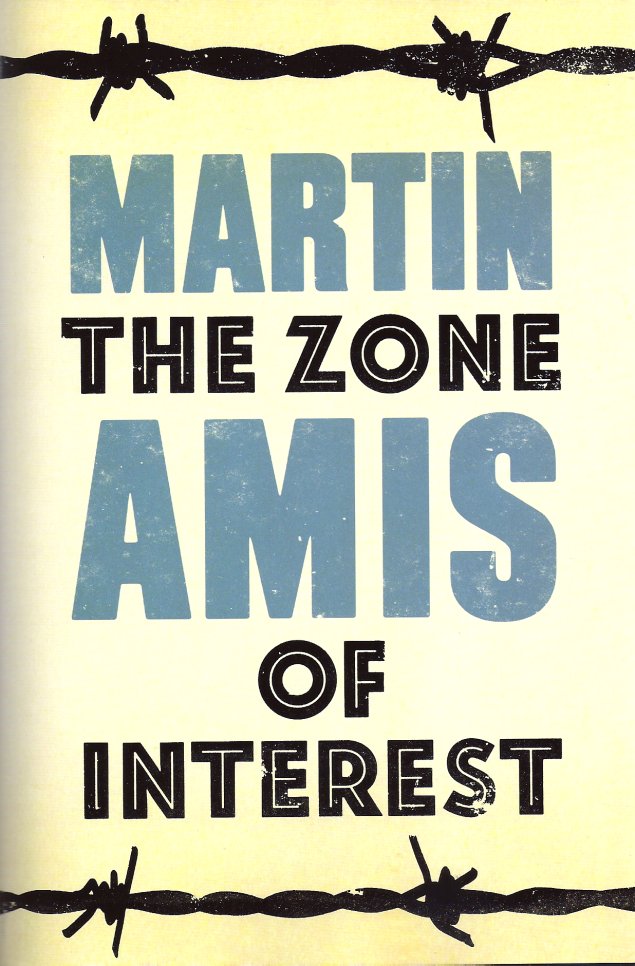
Martin Amis is one of England's literary stars, but that doesn't mean he can get his novel published in Germany or France. No matter how well known his name, it all comes down to sales or lack thereof.

Mr. Amis has penned a new book about the Holocaust, which was once a rather sensitive subject. With the passage of time and continued insight into the era, however, there is a renewed interest in the period of Fascism and world war. Writing fiction set in concentration camps has proved successful, as in THE BOY IN THE STRIPED PAJAMAS which presented impossibly horrible circumstances from the eyes of a child. Why not write a novel from the point of view of those who were in charge of mass murder?

THE ZONE OF INTEREST has been met with critical acclaim, another example of Martin Amis' ability to probe the depths of the human soul and present the bleakest of pictures. Despite the positive reviews, his usual publishers in Germany and France declined to publish the book, but it had nothing to do with the subject. It was simply a matter of the publisher not believing that the book would sell.

According to reports, the German publisher found the book 'too frivolous'. A topic as heavy as the Holocaust was not dealt with in a suitably heavy manner in THE ZONE OF INTEREST, what with a love story between two of the main characters, a married woman and a man related to one of Hitler's confidantes. Germans would not buy such a treatment, in the publisher's mind, and so the book was turned away.

In France, the book will be published by Calmann-Levy, after the opportunity was declined by Gallimard. There are those who believe that Calmann-Levy was feeling the sting of having rejected a previous best-selling novel on the Holocaust, and this was an opportunity to correct the error. As for Gallimard, they must have felt that Amis was not selling well enough in France to warrant their participation in the new venture, and once the Germans declined, well, there must have been something lacking in the novel and best to jump ship before it starts to sink.

Not everyone 'gets' what a writer is trying to say, no matter how well that author thinks he has composed his prose. Not everyone likes what every author has written. Not everyone who reads books is a fan of Martin Amis.

It's a matter of finding the right fit, whether you are famous or completely unknown.

Finding that fit, of course, takes time and effort. That is why you keep going with your submissions and your next novel and the next one after that. Because you just don't know when the pieces will fall into place, and someone out there will appreciate what you've done and see the financial benefit in bringing it to the reading public.


Thursday, July 03, 2014

Amazon Knows What Is Best For You So Sit Down And Be Quiet

Amazon's new policy
You can usually tell when bad publicity is reaching its mark, and that is when the company on the receiving end of the criticism comes out with a statement that is supposed to fix things so the negatives stop flowing.

Amazon, which is under heavy attack for its Mafia-like squeeze on Hachette Book Group, has tried a counterpunch against a publishing industry that is not falling into line like the rest of the widget makers who sell via Amazon.

There is something about books, and the dissemination of knowledge that they represent, that has the reading public upset. After making itself the vendor of greatest convenience and thus greatest volume, Amazon is making it very difficult to purchase and pre-order Hachette's books. Smells a bit like censorship, but Amazon is only trying to strong-arm Hachette into taking a cut in profit so Amazon can make more money.

So maybe Jeff Bezos started out with an intention to put the customer first. To listen to the customer's needs and then find a way to fill that niche. That was then. He's a high roller now. And the customer isn't dictating to him any more.

He knows what you need. So go sit quietly in the corner with your electronic device and order what he lets you order.

Amazon executive Russ Grandinetti has spelled out the new policy. Rest assured, dear customers, he says. Amazon is taking Hachette down because we know it's best for you, the reader. You want cheap books, don't you? Of course you do. We want you to have cheap books. Don't question us. Stop talking about us in that unpleasant way.

The tactics worked before, to bring Macmillan to heel. It's all about getting the buyer the best price. Don't go considering how much more Amazon stands to make by extracting concessions from publishers. Don't think about the authors who will have to pay in the form of lower royalties and fewer opportunities. It's all about you. It's all about you.....

But readers don't have the same relationship with the provider of their reading material as they do with, say, the factory that makes the garden spade they're looking to buy. The provider of their entertainment and information is an author, a person whose photo appears on the cover of the book. A person whose biography is found in the same place. A person with a website, a person a reader can write to and often get a personal reply.

It is little surprise that author Douglas Preston is getting the attention he is for the letter he wrote, setting out the facts about Amazon's attempt to rein in Hachette. His books are not available for pre-order because he is published by Hachette and Amazon is trying to punish Hachette. But it is Mr. Preston who suffers because Amazon is a behemoth book seller and the biggest book seller isn't letting people buy his book. By clogging up the book selling system, the authors are being harmed.

Mr. Preston is gathering signatures from authors willing to sign on to his letter of protest, asking that Amazon stop holding books hostage and stop blocking book sales. By doing so, Amazon is falling away from its old promise to be entirely consumer-oriented, and Jeff Bezos needs to be reminded of his origins.

And Amazon has responded by letting the world know that it is not going to be consumer-oriented any more. Going forward, it will be just like any other business, entirely profit oriented, and if innocent authors are hurt in the process, it's not personal.

It's only business.

Thank you, Godfather. We'll just take the cannoli. And leave the gun. Hachette Book Group? Oh, you won't see them around no more.

Wednesday, June 25, 2014

And Then There Was One

Perseus Books Group is know for its non-fiction. Hachette Book Group is known for its ongoing war with Amazon, but beyond that, it is a heavy producer of fiction.

A marriage made in heaven, surely. Perseus and Hachette have declared their intention to merge, thereby creating one from what once was two, and shrinking the publishing universe a little more. Random House and Penguin did it not long ago. Why not us, the happy couple said.

We won't end up like Houghton Mifflin and Harcourt did, on the rocks from the start and nearly breaking up completely. That lesson has been learned.

But like the whale of a merger that united Riverdeep with two other large publishers, those who would blend Perseus and Hachette speak lovingly of synergies and all the cost savings that will be had.

Those who once worked at Harcourt or Houghton Mifflin can tell you what realizing synergies means. It means you lose your job in accounting because there are plenty of other bean counters toiling at the other company. It means you're out on the street because there's a limit to how many editors any publisher needs, and when two can do the work of three, well, there's a synergy in there to be given the sack.

Hachette will gain access to the American market, and all those textbook sales that Perseus controls. You'd almost think Barry O'Callaghan was directing things from behind the scenes, with this fascination with academic works and creating the world's largest publisher of educational materials. But then again, there are always children and young adults going to school and they need textbooks so it's a market in need of product on a regular basis. And the market is in bookstores, not Amazon's website.

The ethos between the two partners is radically different, however. Hachette is all about blockbuster bestselling fiction, while Perseus plods along with non-fiction that typically reaches smaller markets. There's the occasional self-help book that sells well, but with non-fiction the concept of a bestseller is not quite the same.

Will Hachette's executives be able to keep their ethos out of Perseus? While Hachette plans to keep the Perseus imprints running as they have been, Perseus' CEO David Steinberg will leave after the dust of the merger has settled, along with his chief marketing officer and chief operating officer. There's a fine example of realizing some synergies.

Hachette will sell Perseus' distribution division to Ingram, which is already a powerhouse in book distribution, and so focus the merged publisher's attention on publishing.

It is up to Ingram, then, to decide how many of Perseus' distribution employees it will retain, but the folks who ship books out of the Tennessee warehouse are not feeling the love emanating from the upcoming union. Ingram is more likely to take over the physical space and consolidate its operations, again realizing synergies because one warehouse does not need multiple managers when one can do the job.

For authors, there is always the concern that fewer outlets buying manuscripts means fewer opportunities. While the two publishers are producing books in different areas, there is a concern that Hachette's acquisition of Perseus' back list would provide enough profit that Hachette would not have to take as much risk with someone new and untested. They wouldn't need the money so much, not with the back list selling and the e-book potential ready to be tapped.

Synergies all around, so.

Tuesday, June 17, 2014

The Cold, Inhuman Sherlock Holmes Belongs To The Public

Copyrights have a finite existence. After the term has expired, the written work belongs to the public.

You can download a free version of The Count of Monte Cristo if you like, because M. Dumas is long dead and he can no longer control what is done with his characters or his novels. In a way, his patent expired and anyone can use the work. You could write a novel based on one of his characters, a modified version of fanfic, and not be taken to court for violating copyright.
Copyright infringement, Mr. Watson

Such is the case with Sherlock Holmes, a beloved character who entered the scene in 1887. Despite the author's attempt to kill the character off, Sherlock Holmes continued to experience adventures and solve crimes well into the 1920s. Only Arthur Conan Doyle's death brought an end to the tales of the fictional British detective.

The literary estate of Arthur Conan Doyle inherited the copyright on the author's works, and with the market still hot for Sherlock, it became the licensing agent for anything related to the novels. All those films featuring Basil Rathbone? Every one of them was money into the literaty estate's pocket in licensing fees.

Leslie Klinger edited an annotated version of some classic Holmes stories, and dutifully paid the licensing fee to the estate. However, he knew that books fell into the public domain after a set period of time, and when he set out to create another annotated collection, he did not write a new cheque. Why pay for the license if the license is not required? There is a limited amount of money to be made in peddling annotated works and who can afford to spend needlessly these days?

Not willing to part with an income stream, the estate declared that it would stop book sales, which would leave publisher Penguin with a lot of pulp to dispose of if it went ahead with the book release. Mr. Klinger was not willing to back down, and it was up to the courts to decide.

And so the literary estate lost on the first round, and has just been handed a second defeat on appeal. The judge has found that copyrights do not go on forever, and the copyright on the novels that Mr. Klinger was editing had passed from this earth. He did not have to pay a fee for works that had fallen into the public domain.

As for the later stories penned after 1923, those continue to enjoy the privileges and benefits of copyright protection. Therefore, if you choose to pen your own version of the famed detective, you may not use elements introduced in those works. According to the estate's representative, that would mean your Holmes would not be warm and human, and could not mention a second wife. Or be shown growing increasingly friendly with Dr. Watson. Does that mean they could not be depicted as gay lovers, or is that more than a growing friendship? Consult your solicitor on that one.

Just keep him cold and heartless, writers, or you'll be facing the ire of the literary estate in a court of law.

Tuesday, September 17, 2013

Lost Again

Books are expensive and there's a long line ahead of me waiting for new releases at the public library, so I took the plunge. I signed up with Penguin. Gave them my e-mail. Let them send me their adverts and alerts.

Sure there's a sucker born every minute.

Penguin runs a contest every month, in which participants (like me, and there must be thousands of us) can take a chance on winning an advance copy of upcoming releases. The idea is to get reviews out there when the book hits the market officially, with all that pre-release buzz that is generated by influential bloggers and book reviewers.

Clearly I'm not influential. Could that be the issue?

I've been receiving the e-mail offer of entry for several months, and every time I get it I scan the books and read the cover copy. What might I like to read, I ask as I scroll through. No romance. No self-help. Some fiction. Some non-fiction.

And every month I get a response that advises me that I have not won.

Again.

But by all means, here's a link to easily buy a copy of the book for yourself! How kind of Penguin, to make things so easy.

How about a little cash to cover the cost of the book, Penguin? I don't have it.

So for all the effort, I get nothing more for free than access to the opening pages. I could review those, I suppose. Let potential buyers know if the book caught my interest or if it seemed like a long slog that they'd be advised not to undertake.

But it's not all that convenient to get to the excerpt. At least St. Martin's Press has the generosity to send me the first twenty pages of their new releases every week, through the Read It First program. They don't apply pressure to buy the book, either.

Will I give up on Penguin? Not yet. There's that element of gambling involved, the thrill that's not unlike buying a lottery ticket and waiting for the numbers to be drawn. You're not likely to win that, either, but it is a little exciting to imagine the possibilities.

This month, I lost the Penguin book give-away contest again.

Next month, I'll try again.

If, by some miracle, I remember the titles of the books I requested but didn't win when they finally come around to the shelf at the library, I might read them. And review them. But by that time, it will be old news.

Wednesday, August 28, 2013

Goodbye To Summer And Publisher's Hours

If you're thinking of submitting a query to some literary agent of your choosing, you might want to refrain. Perhaps you haven't taken a good look at a calendar. This weekend is extra long and heavy with significance. It is...the end of the summer.

Publishers have traditionally not worked on summer Fridays, as if the world has not changed significantly in the last hundred years. A gentleman's business, you see, and gentlemen like to head off for their summer cottages as early as possible, which makes it imperative that work hours be curtailed on Friday afternoons.

Because their contacts at the publishing houses are out of their offices on Fridays, literary agents tend to follow the example and they don't work much on Fridays either.

With the end of summer coming, many literary agents take their holidays and close up for a week or two to welcome the return of the autumn season. Chances are, that agent you are so convinced is ideal for your manuscript is not even in the office this week. When they return after the holiday, their inbox will be filled to overflowing. In modern e-mail terms, that means you might get an error message from the Mailer-Daemon that the inbox is full. So you've wasted your time in querying.

A full inbox is not pleasant, and as your ideal literary agent dives into the sea of queries on that first post-holiday day of work, said agent becomes annoyed. Patience wears thin, as query after dreadful query passes by their eyes. You don't want your perfect query to be read under that kind of circumstance, do you?

Of course not.

So instead of querying agents who aren't in and who will not look favorably on your query when they return to work next week, sit down and read a good book. Or four. Newcastlewest Books has a fine collection that could keep you entertained while you wait for the end of summer hours. And downloading takes no time at all.