The sort of people who can afford to live in Bucktown and Wicker Park are not the sort of people who need a pawn shop. They use banks. They have jobs that pay well, and if they find themselves running a little short of cash, they either hit the ATM or whip out a credit card.
When the locals in a given neighborhood have no need of a shop in the neighborhood, that shop goes out of business. No clients, no income, no way to survive.
The businesses do not shutter their doors all at once. The change is gradual, like the fog creeping in on little cat feet. One day, there is merchandise in a storefront, and the next day, the windows are papered over and a "For Rent" sign appears. It's almost not noticeable, that single gap on the commercial block. Some new business comes in, but it isn't a taqueria or a dollar store. It's a boutique, or it's a restaurant serving high end grilled cheese sandwiches and craft beers.
Some would say it's progress that's marching on, progress that sees a business catering to the working classes or urban poor giving way to shops that are patronized by the young urban professionals.
For the few clinging to their homes near Noble Square, they may not see it as progress when their nearest pawn shop is gone soon.
Value Pawn has been doing business at the corner of Ashland and Milwaukee Avenues for the past five years, and it's a wonder the owner opened up in the first place. Back in 2011, the area was already undergoing gentrification. Scott Lee Cohen, who once toyed with the notion of public office, bought the structure at a good price, getting in at the right time, to wait out the gentrification wave. Now it has washed over the Noble Square area, having swept across Bucktown and Wicker Park, and the investment is set to pay off. The pawnbroking business, however, did not face the same benefits.
Realtors will tout the location, location, location, but you won't find any literature promoting the site as perfect for a pawnshop. No, in this case of gentrification, the seller is suggesting the corner building as a good spot for a restaurant. Lots of foot traffic, they'll say, with all the young urban professionals marching by on their way to the public transportation facilities that bring them to their jobs in the Loop. They're fond of drinking coffee and nibbling on whole grain, gluten-free, low fat muffins. Why not start up your business at Ashland and Milwaukee and cater to those unmet needs?
They like to dine out, as evidenced by the numerous trendy restaurants that dot the area, and that's more than can be said about the former residents of Noble Square. Some of them are still around, grumbling about the way the place is changing and you can't recognize it for all the fancy places popping up, but that's a good sign. It shows that you're getting in early, like an urban pioneer, to make your mark or stake your claim to the hipster dollar.
It's gentrification in action, creeping in quietly, to push out the old and the poor and drag in the well-heeled with plenty of money to spend on luxuries. They don't need a pawn shop. So the pawn shop will go to where it is wanted, until that neighborhood becomes the latest hot spot for gentrification that will creep in and spread across the city.
It's inevitable. The only people who can afford the ever-escalating taxes and fees imposed by Chicago's government are the ones with money. The ones who have never set foot in a pawn shop.
Friday, August 26, 2016
Thursday, August 25, 2016
Welcome To The "Gare"?
| Can we get a deal on a loan for a house in the suburbs? Outside of Cook County? |
The White Sox have always played at the ballpark named for their founder, Charles Comiskey. When a cell phone company paid for the right to slap their name and logo on the glorified shopping mall at 35th and Shields, the few fans who were not run off by Sox owner Jerry Reinsdorf grumbled mightily and kept on calling the place Comiskey.
Sure, some came to accept the new name, in a fashion. The entire corporate entity title was too long, of course, so the ballpark was generally referred to as "The Cell".
Appropriate, for the more typical Sox fan as compared to the well-heeled (and overserved) who patronize Wrigley Field.
(Notice how no one is talking about naming rights for a ballpark named for the gum magnate who used to own the Cubs a long time ago. Some corporations know when they're fighting a losing battle.)
Amid much fanfare yesterday, while the White Sox were losing yet again, the team announced that a new company had come forward with cash in hand, to lay claim to the name of the field that had to change because there isn't a U.S. Cellular mobile phone company any more. Mergers, wouldn't you know. And the contract was up, so why not find someone else.
A name on a ballpark generates loads of publicity because the name of the field gets mentioned all over the place during the baseball season. Tonight at "insert ballpark name here", the White Sox took on etc. etc.. Sports writers throw in a mention to fill out the needed words in their articles, and when someone needs whatever product that naming firm sells, the product name is instantly familiar.
So now, it is expected that whenever a White Sox fan needs a home loan, they'll be thinking "Guaranteed Rate".
With the latest round of tax increases hitting Chicago residents, there might be a greater demand for new home loans on homes located outside the boundaries of the city. Property taxes have just skyrocketed, and now the Chicago Public School system plans to tack on another blast of taxes. And that's on top of the planned hike in water fees.
Yes indeed, Guaranteed Rate picked an excellent time to get their name out there, to boost their recognition factor. More and more people will be thinking about making a move out of Cook County, and every time they listen to a report on the tanking White Sox, they'll get that little subliminal nudge about guaranteed home loan rates.
Of course, the name is too long for easy conversation. It will get shortened, in time, like U.S. Cellular became The Cell. What is still considered Comiskey might some day be nicknamed "The Gare" or "The Last Best Option Before Rahm Bleeds Us All Dry."
Saturday, August 20, 2016
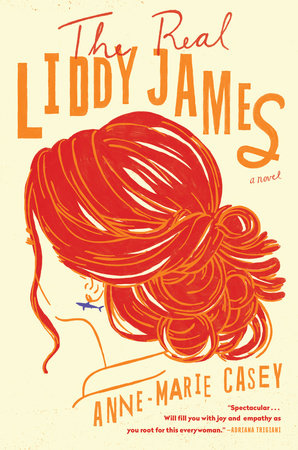
The Real Liddy James: A Book Review
Don't let the confusion of the opening pages stop your reading. It will become clear soon enough, after you've stumbled over the clunky bits of backstory that make for a rough go. Read on, and you'll be glad you stayed around to meet Liddy James and the cast of characters who share her life.
The story of the high-powered divorce attorney is told with a touch of humour, as Liddy's carefully crafted world starts falling to pieces around her head. She has left her hardscrabble, offspring-of-Irish-immigrants-past behind and presents an image of success, albeit one that is grounded in New York City materialism. She has the private car, the driver, the luxurious flat, and a brilliant career, but she comes to see that it isn't all that after all.
Her teenaged son has grown moody and recalcitrant, her second son (paternity backstory is well done) needs his mother but she isn't much of a mother because she has the nanny and her ex-husband and her ex's live-in lover to manage the kids in their way, one that is not in keeping with Liddy's prescriptive book on the subject. And by the way, the live-in lover is pregnant and wants to quit her job to raise the child, much to the horror of Liddy's ex.
Liddy goes off the deep end and runs back to Ireland to find her true self, back to the land of her birth, and it's there that she finds the real Liddy James.
Takes a handsome son of the auld son to push her along, and doesn't prove how brilliant Anne-Marie Casey is as an author?
The story is pure fluff but it's entertaining, and isn't that what you want in a novel?
Read it with your book group, and then argue over the message of the story. Is the key to happiness the abandonment of riches, like the nuns beat into our hard heads? Is the author channeling her inner Roman Catholic with the way she closes the novel? Open up another bottle of wine and discuss.
The story of the high-powered divorce attorney is told with a touch of humour, as Liddy's carefully crafted world starts falling to pieces around her head. She has left her hardscrabble, offspring-of-Irish-immigrants-past behind and presents an image of success, albeit one that is grounded in New York City materialism. She has the private car, the driver, the luxurious flat, and a brilliant career, but she comes to see that it isn't all that after all.
Her teenaged son has grown moody and recalcitrant, her second son (paternity backstory is well done) needs his mother but she isn't much of a mother because she has the nanny and her ex-husband and her ex's live-in lover to manage the kids in their way, one that is not in keeping with Liddy's prescriptive book on the subject. And by the way, the live-in lover is pregnant and wants to quit her job to raise the child, much to the horror of Liddy's ex.
Liddy goes off the deep end and runs back to Ireland to find her true self, back to the land of her birth, and it's there that she finds the real Liddy James.
Takes a handsome son of the auld son to push her along, and doesn't prove how brilliant Anne-Marie Casey is as an author?
The story is pure fluff but it's entertaining, and isn't that what you want in a novel?
Read it with your book group, and then argue over the message of the story. Is the key to happiness the abandonment of riches, like the nuns beat into our hard heads? Is the author channeling her inner Roman Catholic with the way she closes the novel? Open up another bottle of wine and discuss.
Thursday, August 18, 2016
Sic Semper Sears
Don't you think that the first clue should have been fairly obvious? Barnes and Noble plucked their CEO from the management of Sears Canada, and I could swear I'd heard that Sears was dying a slow death.
Ron Boire came in last year as the great saviour of Barnes and Noble. He had the expertise to turn the struggling book vendor around, to boost online sales and get the Nook buzzing and bring people in to the bricks and mortar stores. None of it happened, but should anyone be surprised? Someone ruling over a failing enterprise can't be expected to succeed at doing something in a different location that he couldn't do in his original spot.
Mr. Boire was let go from Barnes and Noble after a brief tenure in which the bottom line of the book store chain continued to sink. Whatever ideas he might have put into action did not result in the desired outcome, and so the great experiment failed. Little wonder, when he came from a culture of dinosaurs.
Sears was once a mighty retailer, but the climate changed and Sears could not keep up. It had become too big and unwieldly to turn around, and now it is shedding real estate and shuttering stores as it succumbs to its failures. Mr. Boire was part of that very environment.
Maybe if he had more time to let his new ideas grow and blossom, the financial picture might have become rosy enough to save his job. He had a limited amount of time, after all, because Barnes and Noble is bleeding cash and the corporation was quite short on time. The decision to go back to the company's roots, to focus some attention on the physical stores, has yet to show what promise there could be. Perhaps it will take a few years to get people to go back to the stores, to discover what Harry Selfridge promoted in his grand venture. Shopping was once recreation, it was seen as a fun activity, but that means a store has to offer that which is not to be found in every other shop.
What would that be in a bookstore? What could Barnes and Noble offer to get people to buy their books from them instead of using the internet and Amazon?
There is the element of personal attention that has saved the independent book vendor, to an extent. It's no easy matter for a chain of shops to offer personal attention, to ensure that the staff is knowledgeable in the latest books and can recommend something based on a client's general description of their interests. That kind of study is usually done by a motivated store owner, not a low-level employee toiling for minimum wage.
Publishers see nothing but turmoil at Barnes and Noble in the coming months, a period of time that includes the all-important holiday shopping season.
Sears. Barnes and Noble. Too big to turn around?
Ron Boire came in last year as the great saviour of Barnes and Noble. He had the expertise to turn the struggling book vendor around, to boost online sales and get the Nook buzzing and bring people in to the bricks and mortar stores. None of it happened, but should anyone be surprised? Someone ruling over a failing enterprise can't be expected to succeed at doing something in a different location that he couldn't do in his original spot.
Mr. Boire was let go from Barnes and Noble after a brief tenure in which the bottom line of the book store chain continued to sink. Whatever ideas he might have put into action did not result in the desired outcome, and so the great experiment failed. Little wonder, when he came from a culture of dinosaurs.
Sears was once a mighty retailer, but the climate changed and Sears could not keep up. It had become too big and unwieldly to turn around, and now it is shedding real estate and shuttering stores as it succumbs to its failures. Mr. Boire was part of that very environment.
Maybe if he had more time to let his new ideas grow and blossom, the financial picture might have become rosy enough to save his job. He had a limited amount of time, after all, because Barnes and Noble is bleeding cash and the corporation was quite short on time. The decision to go back to the company's roots, to focus some attention on the physical stores, has yet to show what promise there could be. Perhaps it will take a few years to get people to go back to the stores, to discover what Harry Selfridge promoted in his grand venture. Shopping was once recreation, it was seen as a fun activity, but that means a store has to offer that which is not to be found in every other shop.
What would that be in a bookstore? What could Barnes and Noble offer to get people to buy their books from them instead of using the internet and Amazon?
There is the element of personal attention that has saved the independent book vendor, to an extent. It's no easy matter for a chain of shops to offer personal attention, to ensure that the staff is knowledgeable in the latest books and can recommend something based on a client's general description of their interests. That kind of study is usually done by a motivated store owner, not a low-level employee toiling for minimum wage.
Publishers see nothing but turmoil at Barnes and Noble in the coming months, a period of time that includes the all-important holiday shopping season.
Sears. Barnes and Noble. Too big to turn around?
Thursday, August 11, 2016
June: A Book Review
There's a story in this novel, a story desperately trying to claw its way out of a prison of flowery prose. A good editor was needed to hack through the thicket of excess verbiage, but alas, JUNE was published in its current form and it is up to a reader to find the good parts.
This being literary fiction, the writing has more metaphors than you're likely to find in some potboiler thriller, and like any other seasoning, a little goes a long way. Too much can spoil a good recipe. There were times when I had to go back and reread a few pages to understand what the author was trying to say, and that is the definition of too much verbal flourishing.
A pity, really, because the plot underneath is quite good. We have Cassie, an artist raised by her grandmother after her parents died in a tragic accident. She returns to her greandmother's home after the old woman's passing, guilt-ridden at not spending enough time with Grandma as the end neared. The old house is a bit magical in that it can invade Cassie's dreams with its past and those who once graced the halls, and while that sounds silly it lends a bit of charm to the story.
Out of nowhere, Cassie learns that she has inherited the fortune of a film star who came to the small Ohio town where Cassie now resides to shoot a movie. It takes a while to get there, through a dense forest of words that you will end up skipping over because they don't help move the narrative. With the introduction of that little mystery, the plot moves forward, with the famous daughter of that movie star arriving to settle things with Cassie rather than contest the will in a public courtroom.
Famous daughter Tate drags along her entourage from Hollywood, bringing in a little sexual tension between Nick the assistant and Cassie. Their interactions don't come about naturally, however, with their sparring and romancing the result of an author propelling them along, rather than the characters coming together.
The novel drags a bit through the middle, but the story fights its way out in the last third and really flows beautifully. Cassie continues on her quest to find out why this movie star left her his fortune, how her grandmother came to be involved in the star's life, and what became of her grandmother's best friend from childhood, the one with most of the answers.
Intertwined in Cassie's narrative is the story of June, the grandmother, and the film star during their short interlude of happiness. June's best friend has her say as the tangled relationship grows into what could be wedded bliss but for a few very deadly encounters that crush June's hopes.
Is the book worth reading, you ask.
For the good bits, yes. You have to work to find them, but when you find them, you will see what promise Miranda Beverly-Whittemore has as an author. If only she could find a good, honest editor to cut out the excess. Literary fiction doesn't have to be dense to be labeled as literary.
With thanks to Blogging for Books for the copy used in this review.
This being literary fiction, the writing has more metaphors than you're likely to find in some potboiler thriller, and like any other seasoning, a little goes a long way. Too much can spoil a good recipe. There were times when I had to go back and reread a few pages to understand what the author was trying to say, and that is the definition of too much verbal flourishing.
A pity, really, because the plot underneath is quite good. We have Cassie, an artist raised by her grandmother after her parents died in a tragic accident. She returns to her greandmother's home after the old woman's passing, guilt-ridden at not spending enough time with Grandma as the end neared. The old house is a bit magical in that it can invade Cassie's dreams with its past and those who once graced the halls, and while that sounds silly it lends a bit of charm to the story.
Out of nowhere, Cassie learns that she has inherited the fortune of a film star who came to the small Ohio town where Cassie now resides to shoot a movie. It takes a while to get there, through a dense forest of words that you will end up skipping over because they don't help move the narrative. With the introduction of that little mystery, the plot moves forward, with the famous daughter of that movie star arriving to settle things with Cassie rather than contest the will in a public courtroom.
Famous daughter Tate drags along her entourage from Hollywood, bringing in a little sexual tension between Nick the assistant and Cassie. Their interactions don't come about naturally, however, with their sparring and romancing the result of an author propelling them along, rather than the characters coming together.
The novel drags a bit through the middle, but the story fights its way out in the last third and really flows beautifully. Cassie continues on her quest to find out why this movie star left her his fortune, how her grandmother came to be involved in the star's life, and what became of her grandmother's best friend from childhood, the one with most of the answers.
Intertwined in Cassie's narrative is the story of June, the grandmother, and the film star during their short interlude of happiness. June's best friend has her say as the tangled relationship grows into what could be wedded bliss but for a few very deadly encounters that crush June's hopes.
Is the book worth reading, you ask.
For the good bits, yes. You have to work to find them, but when you find them, you will see what promise Miranda Beverly-Whittemore has as an author. If only she could find a good, honest editor to cut out the excess. Literary fiction doesn't have to be dense to be labeled as literary.
With thanks to Blogging for Books for the copy used in this review.
Tuesday, August 09, 2016
Too Much Social Media Is Not Wise
Kids today.
They have the fastest thumbs around, with bulging muscles developed with repetitive use. Those two digits just seem to fly when a message needs to be sent to a legion of followers.
Older folks can cluck their tongues and shake their heads in dismay. What is this generation coming to? Does no one talk face to face, person to person?
The lack of human contact must surely have an effect on brain processes, wouldn't it? Some section of the frontal lobe not developing in the same way as happened before man learned how to communicate without speaking?
For Brandon McNeil, that dire possibility was proved true. His malformed neural connections failed him at a most critical time, and now he's behind bars.
Maybe the whole behind bars thing started when he made an earlier bad decision, to run from the cops after he was spotted firing off a few rounds from a gun.
Yeah, okay, the bad decision was before that, when he acquired a gun in the first place, and then decided to use it. But that does not alter the fact that Twitter led to his ultimate downfall.
Mr. McNeil knew that shooting a gun in Chicago was illegal. The city has the toughest gun laws around, and the police do try to clamp down when they can. There aren't enough of them to go around and it's a challenge to be where the guns are at the right time, but in this case, there they were. In Beverly. The nicer part of the city where a lot of cops and firemen live.
Yes, shooting a gun in Beverly, the south side neighborhood favored by city employees who have to live in the city, is also not a smart move. But back to Twitter.
Once the sirens started blaring, Mr. McNeil knew he had to remove himself from the scene. He thought it was clever to live Tweet his dash for freedom, as if the police would be clueless about social media and none of Mr. McNeil's followers would be dumb enough to point out to the authorities that the man was live Tweeting while running.
It's all in the thumbs, of course.
The gunman ran into a home and thought he might amuse his followers, and maybe add a few more, by tweeting out a picture of where he was hiding out while the police dashed around in a panic, knowing they had to track down an armed man who they might have to shoot back at and that's the last thing the cops want these days.
Those tweets? And that picture? That's what a prosecutor would call evidence. Shooters are advised to not tweet things like "I hid the pole, here's my hiding spot" because the police take the phone, look on the social media history, and find the hidden gun with ease. And just like that, the tweeter is arrested for possession of a gun with a filed-off serial number, which is even more illegal than a normal gun.
Gun court is, by and large, a joke in Chicago, but Mr. McNeil helped things out by tweeting and providing enough information to escalate his case beyond simple possession.
If only he'd put down the phone before the urge to tweet struck. He'll have plenty of time behind bars to regret his social media addiction.
They have the fastest thumbs around, with bulging muscles developed with repetitive use. Those two digits just seem to fly when a message needs to be sent to a legion of followers.
Older folks can cluck their tongues and shake their heads in dismay. What is this generation coming to? Does no one talk face to face, person to person?
The lack of human contact must surely have an effect on brain processes, wouldn't it? Some section of the frontal lobe not developing in the same way as happened before man learned how to communicate without speaking?
For Brandon McNeil, that dire possibility was proved true. His malformed neural connections failed him at a most critical time, and now he's behind bars.
Maybe the whole behind bars thing started when he made an earlier bad decision, to run from the cops after he was spotted firing off a few rounds from a gun.
Yeah, okay, the bad decision was before that, when he acquired a gun in the first place, and then decided to use it. But that does not alter the fact that Twitter led to his ultimate downfall.
Mr. McNeil knew that shooting a gun in Chicago was illegal. The city has the toughest gun laws around, and the police do try to clamp down when they can. There aren't enough of them to go around and it's a challenge to be where the guns are at the right time, but in this case, there they were. In Beverly. The nicer part of the city where a lot of cops and firemen live.
Yes, shooting a gun in Beverly, the south side neighborhood favored by city employees who have to live in the city, is also not a smart move. But back to Twitter.
Once the sirens started blaring, Mr. McNeil knew he had to remove himself from the scene. He thought it was clever to live Tweet his dash for freedom, as if the police would be clueless about social media and none of Mr. McNeil's followers would be dumb enough to point out to the authorities that the man was live Tweeting while running.
It's all in the thumbs, of course.
The gunman ran into a home and thought he might amuse his followers, and maybe add a few more, by tweeting out a picture of where he was hiding out while the police dashed around in a panic, knowing they had to track down an armed man who they might have to shoot back at and that's the last thing the cops want these days.
Those tweets? And that picture? That's what a prosecutor would call evidence. Shooters are advised to not tweet things like "I hid the pole, here's my hiding spot" because the police take the phone, look on the social media history, and find the hidden gun with ease. And just like that, the tweeter is arrested for possession of a gun with a filed-off serial number, which is even more illegal than a normal gun.
Gun court is, by and large, a joke in Chicago, but Mr. McNeil helped things out by tweeting and providing enough information to escalate his case beyond simple possession.
If only he'd put down the phone before the urge to tweet struck. He'll have plenty of time behind bars to regret his social media addiction.
Thursday, August 04, 2016
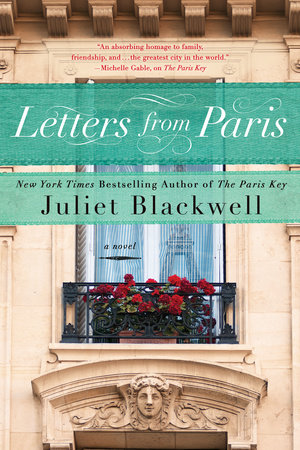
Letters From Paris: A Book Review
Female protagonist at loose ends in her life? Check.
Brooding male love interest with a few secrets in his artistic closet? Check.
Paris locale? Check.
Juliet Blackwell covers all the requisites for a work of romantic women's fiction in her newest release, LETTERS FROM PARIS. She gives her readers Claire Broussard, the orphan girl raised by her grandmother after her mother died and her father proved to be an abusive alcoholic parent. Claire ran from her past, all the way from Louisiana bayou country to Chicago, but she still hasn't found what she's looking for. She is unsatisfied in life, and what self-respecting work of women's fiction doesn't have a main character who isn't satisfied with what she has but feels that more is out there if she just goes looking for it.
While visiting her dying grandmother she reconnects with a mysterious bit of home decor in the form of a popular plaster mask that was shipped from Paris at the close of the Second World War. Inside is a cryptic note and there's the next item on the check list. Claire needs a quest to continue her journey, and that quest is finding out the significance of the note.
So she's off to Paris, the most romantic city in the world, and she meets up with Mr. Darcy as a plaster-caster. While she takes on a little side job as his assistant, the reader is treated to flashbacks told by the woman whose face was used to create the original mask that Claire has long been fascinated by. The story within a story parallels much of Claire's experiences, but it is told in present tense to bring the past more readily into the present.
At any rate, the mystery of the mask is gradually revealed while the relationship between Claire and the Frenchman heats up. It's what you expect in women's fiction, no real surprises or artistic flourishes. Girl meets boy, they dance around, and then they reveal pieces of their past that release the old ghosts and thus ends the haunting. Cue the violins.
For those who consume romances, this is perhaps a more substantial read than most. It's a book that satisfies the cravings for all things sweet and light, seasoned with a touch of life's tearful moments. The ending is happy for everyone, as it should be in this kind of thing. Sometimes it's what you need when everyone else is fretting about what Brexit will mean to the economy.
WIth thanks to Penguin Random House and their First To Read offers.
Brooding male love interest with a few secrets in his artistic closet? Check.
Paris locale? Check.
Juliet Blackwell covers all the requisites for a work of romantic women's fiction in her newest release, LETTERS FROM PARIS. She gives her readers Claire Broussard, the orphan girl raised by her grandmother after her mother died and her father proved to be an abusive alcoholic parent. Claire ran from her past, all the way from Louisiana bayou country to Chicago, but she still hasn't found what she's looking for. She is unsatisfied in life, and what self-respecting work of women's fiction doesn't have a main character who isn't satisfied with what she has but feels that more is out there if she just goes looking for it.
While visiting her dying grandmother she reconnects with a mysterious bit of home decor in the form of a popular plaster mask that was shipped from Paris at the close of the Second World War. Inside is a cryptic note and there's the next item on the check list. Claire needs a quest to continue her journey, and that quest is finding out the significance of the note.
So she's off to Paris, the most romantic city in the world, and she meets up with Mr. Darcy as a plaster-caster. While she takes on a little side job as his assistant, the reader is treated to flashbacks told by the woman whose face was used to create the original mask that Claire has long been fascinated by. The story within a story parallels much of Claire's experiences, but it is told in present tense to bring the past more readily into the present.
At any rate, the mystery of the mask is gradually revealed while the relationship between Claire and the Frenchman heats up. It's what you expect in women's fiction, no real surprises or artistic flourishes. Girl meets boy, they dance around, and then they reveal pieces of their past that release the old ghosts and thus ends the haunting. Cue the violins.
For those who consume romances, this is perhaps a more substantial read than most. It's a book that satisfies the cravings for all things sweet and light, seasoned with a touch of life's tearful moments. The ending is happy for everyone, as it should be in this kind of thing. Sometimes it's what you need when everyone else is fretting about what Brexit will mean to the economy.
WIth thanks to Penguin Random House and their First To Read offers.
Monday, August 01, 2016
Spontaneous: A Book Review
Isn't it difficult to be a teen these days? And isn't it just that much more difficult when your classmates start spontaneously combusting?
There's the premise for SPONTANEOUS by Aaron Starmer.
It's mad, yes, a premise so bizarre that you can't help but keep reading. Where can an author go with a story that opens with a young lady turning into a cloud of blood?
Against a backdrop of unexplained incidents in which students disappear in bloody explosions that come without warning, Mara Carlyle is navigating the typical world of American youth, in which friendships and cliques are all important. At least until students combust. That adds a whole new element to things.
The combustions add an element of uncertainty to life, when a person doesn't know why it's happening, or who will be next. As you'd expect, government experts come in to uncover the cause, but suspicions soon arise. Mara, her best friend, and her new boyfriend are all drawn in to a secretive investigation being conducted by a rogue FBI agent who has her own opinions on the cause and the source of the combusting.
Novels about teen angst abound, but by going absurd the author creates a different way to tell a story about friendship and the importance of relationships during trying times. This book is fresh and creative, a bit draggy at times but otherwise a very entertaining bit of prose.
Even if you don't care about the difficulties of being on the cusp of adulthood, heading off to university, the novel throws in a unique concern as far as getting go university is concerned. What if the characters that you've come to know have the greatest worry of all, that they won't make it to their graduation ceremony because everyone in the class seems to be combusting spontaneously? And there's no escaping the confines of the small town because somehow the government knows where all those senior-level students are hiding.
And thanks to Penguin Random House for the review copy. Much appreciated.
There's the premise for SPONTANEOUS by Aaron Starmer.
It's mad, yes, a premise so bizarre that you can't help but keep reading. Where can an author go with a story that opens with a young lady turning into a cloud of blood?
Against a backdrop of unexplained incidents in which students disappear in bloody explosions that come without warning, Mara Carlyle is navigating the typical world of American youth, in which friendships and cliques are all important. At least until students combust. That adds a whole new element to things.
The combustions add an element of uncertainty to life, when a person doesn't know why it's happening, or who will be next. As you'd expect, government experts come in to uncover the cause, but suspicions soon arise. Mara, her best friend, and her new boyfriend are all drawn in to a secretive investigation being conducted by a rogue FBI agent who has her own opinions on the cause and the source of the combusting.
Novels about teen angst abound, but by going absurd the author creates a different way to tell a story about friendship and the importance of relationships during trying times. This book is fresh and creative, a bit draggy at times but otherwise a very entertaining bit of prose.
Even if you don't care about the difficulties of being on the cusp of adulthood, heading off to university, the novel throws in a unique concern as far as getting go university is concerned. What if the characters that you've come to know have the greatest worry of all, that they won't make it to their graduation ceremony because everyone in the class seems to be combusting spontaneously? And there's no escaping the confines of the small town because somehow the government knows where all those senior-level students are hiding.
And thanks to Penguin Random House for the review copy. Much appreciated.
Thursday, July 28, 2016
Results May Vary: A Book Review
The title of this review will be: The Narcissist As Narrator.
I could not finish this book. The protagonist was so thoroughly engrossed in herself that I could not muster the slightest bit of sympathy for her situation.
Her husband proves to be gay, and has existed In a world of obfuscation to hide his sexuality. Clearly such a man earns sympathy and perhaps encouragement to seek counseling, but not here. Caroline is so wrapped up in herself that she never has a moment to spare in concern for others.
Her sister falls for a man Caroline imagines as her own lover, and promptly feels betrayed. Not joy at Sis finding love. No indeed. It's all about Caroline, all the time.
Never once did the author provide the slightest glimmer of redemption on Caroline's part, that she would snap out of her self-obsession. It was just all about Caroline, whose nickname of "Care" or "Care Bear" sparked recollections of an old Vince Vaughn movie that really has nothing to do with RESULTS MAY VARY but quite a bit to do with narcissism.
A reader looks for a protagonist to grow in knowledge as the story moves forward. I did not find that kind of growth in Caroline, who remained focused on herself. Perhaps the real turning point in my decision to abandon the book came early on, when she discovers that her husband hid his publishing success from her because he had published drivel, rather than the brilliant prose he thought was expected of him. She should have dragged the man off to therapy, but instead she pursues divorce because she just can't trust him.
Is this really what women's fiction is becoming? Instead of being of service to others, the characters serve themselves? Could this be a work of new adult fiction, aimed at the twenty-somethings who have next to nothing and so hoard what little they have? Whatever genre, RESULTS MAY VARY did not prove enlightening as to the human condition.
It was just too hard to cheer for Caroline. She was too unlikeable.
This kind of book will likely appeal to New York-based twenty-somethings who are equally engrossed in their self-described problems. There is so much more going on in the world that needs addressing that this novel feels like a waste of precious time.
Thanks just the same, Penguin Random House. The free review copies can't all be brilliant.
I could not finish this book. The protagonist was so thoroughly engrossed in herself that I could not muster the slightest bit of sympathy for her situation.
Her husband proves to be gay, and has existed In a world of obfuscation to hide his sexuality. Clearly such a man earns sympathy and perhaps encouragement to seek counseling, but not here. Caroline is so wrapped up in herself that she never has a moment to spare in concern for others.
Her sister falls for a man Caroline imagines as her own lover, and promptly feels betrayed. Not joy at Sis finding love. No indeed. It's all about Caroline, all the time.
Never once did the author provide the slightest glimmer of redemption on Caroline's part, that she would snap out of her self-obsession. It was just all about Caroline, whose nickname of "Care" or "Care Bear" sparked recollections of an old Vince Vaughn movie that really has nothing to do with RESULTS MAY VARY but quite a bit to do with narcissism.
A reader looks for a protagonist to grow in knowledge as the story moves forward. I did not find that kind of growth in Caroline, who remained focused on herself. Perhaps the real turning point in my decision to abandon the book came early on, when she discovers that her husband hid his publishing success from her because he had published drivel, rather than the brilliant prose he thought was expected of him. She should have dragged the man off to therapy, but instead she pursues divorce because she just can't trust him.
Is this really what women's fiction is becoming? Instead of being of service to others, the characters serve themselves? Could this be a work of new adult fiction, aimed at the twenty-somethings who have next to nothing and so hoard what little they have? Whatever genre, RESULTS MAY VARY did not prove enlightening as to the human condition.
It was just too hard to cheer for Caroline. She was too unlikeable.
This kind of book will likely appeal to New York-based twenty-somethings who are equally engrossed in their self-described problems. There is so much more going on in the world that needs addressing that this novel feels like a waste of precious time.
Thanks just the same, Penguin Random House. The free review copies can't all be brilliant.
Saturday, July 23, 2016
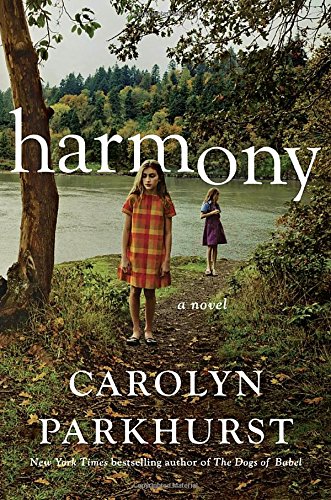
Harmony: A Book Review
How do seemingly intelligent people fall for the purveyors of snake oil? That query lies at the heart of HARMONY.
The novel is told largely through the eyes of Iris, the sibling of an autistic sister, a use of POV that gives the author some space to tell the story from a more naive perspective. She does not understand why her parents, in a quest to find a cure (or a method for coping) with Tilly's anti-social behavior, leave the world behind and follow their autism guru into an isolated wilderness where said guru is completely in charge.
Through flashbacks told by the mother, the lead-up to the relocation is presented. Increasingly desperate, and increasingly whingey, Alexandra tells the reader how alone she was, how desperate for help, but as a reader you might notice how obsessed she is with what the neighbors will think when her daughter acts out in public. Can she not just tell onlookers that her child is autistic? It's not as if the others have never heard of (or met someone with) the condition.
The prologue is a waste of words and you'd do well to skip it, along with the epilogue that reads like an exercise from a creative writing course. The novel itself is filled with tension as Iris and Tilly chafe at the rules of Camp Harmony's regime, while Scott the autism guru comes apart at the seams when his control over everyone's behavior cannot be as absolute as he demands. That alone keeps the pages turning, while skimming over Alexandra's litany of parental torment.
Readers get a sense of impending doom as small things go wrong at Camp Harmony, although the climax feels a trifle forced. Not a bad novel, not a brilliant work of fiction, but entertaining enough for a weekend read.
The review copy was provided by Penguin Random House, for which I thank them.
The novel is told largely through the eyes of Iris, the sibling of an autistic sister, a use of POV that gives the author some space to tell the story from a more naive perspective. She does not understand why her parents, in a quest to find a cure (or a method for coping) with Tilly's anti-social behavior, leave the world behind and follow their autism guru into an isolated wilderness where said guru is completely in charge.
Through flashbacks told by the mother, the lead-up to the relocation is presented. Increasingly desperate, and increasingly whingey, Alexandra tells the reader how alone she was, how desperate for help, but as a reader you might notice how obsessed she is with what the neighbors will think when her daughter acts out in public. Can she not just tell onlookers that her child is autistic? It's not as if the others have never heard of (or met someone with) the condition.
The prologue is a waste of words and you'd do well to skip it, along with the epilogue that reads like an exercise from a creative writing course. The novel itself is filled with tension as Iris and Tilly chafe at the rules of Camp Harmony's regime, while Scott the autism guru comes apart at the seams when his control over everyone's behavior cannot be as absolute as he demands. That alone keeps the pages turning, while skimming over Alexandra's litany of parental torment.
Readers get a sense of impending doom as small things go wrong at Camp Harmony, although the climax feels a trifle forced. Not a bad novel, not a brilliant work of fiction, but entertaining enough for a weekend read.
The review copy was provided by Penguin Random House, for which I thank them.
Thursday, July 21, 2016
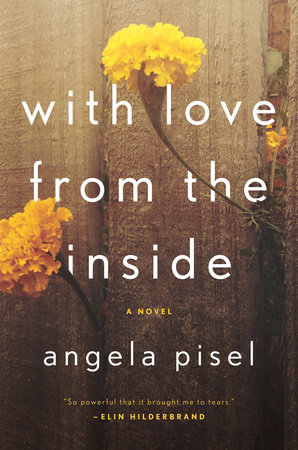
With Love From The Inside: A Book Review
There's a powerful opening for you. The protagonist reveals her current abode is death row in prison. Talk about things blowing up to grab a reader's interest.
The narrative moves between Grace Bradshaw, said inmate, and her daughter Sophie who has made herself a new life far from the scandal of having a mother doing time for infanticide. Grace is preparing for her execution by writing a journal for Sophie, while Sophie is grappling with the lies she has told to hide the fact that her mother was convicted of murdering her baby brother.
There are the usual cruel, insensitive prison guards and the misunderstood fellow convicts to populate the story, while Sophie is keeping a watchful eye on a neighbor with designs on her well-to-do husband. Typical suburban fare, you could say.
But the clock is ticking, with the execution date set and Sophie finally deciding to contact her mother and come clean about her past. In the process, she uncovers evidence that could set her mother free, but will she reach the governor in time? And how is she to tell her husband that he has a mother-in-law, and his wife was not in reality an orphan when they married?
The tension builds up as Sophie and Grace reconnect while the lawyer seeks clemency, making for much turning of pages. Women readers looking for a tale with heart and positive messages about the power of family bonds will enjoy this one. There is a touch of Christian influence spread throughout, what with Grace being the wife of a minister, but it is a light touch that fits with the character. You might get the impression that Grace is passive, yielding endlessly to the dictates of her faith and all those tidbits of advice that you'd get from the Protestant church ladies. She does not come across as a fighter, but as someone resigned to her fate because she's going to be with God so it's not so bad, is it?
Again, in a bow to the average female reader, Sophie's husband is painted as a near saint, madly in love with her even after he finds out she's been less than honest with him. Despite the brief episode of upset, he comes through and supports her efforts to exonerate her mother completely, even if it means damaging his career trajectory. Sometimes you need a simple kind of story without too many complications, right?
So, does Grace get her reprieve and a new trial? You'll have to read the novel to find out.
Thanks, Penguin Random House, for providing this book for review.
The narrative moves between Grace Bradshaw, said inmate, and her daughter Sophie who has made herself a new life far from the scandal of having a mother doing time for infanticide. Grace is preparing for her execution by writing a journal for Sophie, while Sophie is grappling with the lies she has told to hide the fact that her mother was convicted of murdering her baby brother.
There are the usual cruel, insensitive prison guards and the misunderstood fellow convicts to populate the story, while Sophie is keeping a watchful eye on a neighbor with designs on her well-to-do husband. Typical suburban fare, you could say.
But the clock is ticking, with the execution date set and Sophie finally deciding to contact her mother and come clean about her past. In the process, she uncovers evidence that could set her mother free, but will she reach the governor in time? And how is she to tell her husband that he has a mother-in-law, and his wife was not in reality an orphan when they married?
The tension builds up as Sophie and Grace reconnect while the lawyer seeks clemency, making for much turning of pages. Women readers looking for a tale with heart and positive messages about the power of family bonds will enjoy this one. There is a touch of Christian influence spread throughout, what with Grace being the wife of a minister, but it is a light touch that fits with the character. You might get the impression that Grace is passive, yielding endlessly to the dictates of her faith and all those tidbits of advice that you'd get from the Protestant church ladies. She does not come across as a fighter, but as someone resigned to her fate because she's going to be with God so it's not so bad, is it?
Again, in a bow to the average female reader, Sophie's husband is painted as a near saint, madly in love with her even after he finds out she's been less than honest with him. Despite the brief episode of upset, he comes through and supports her efforts to exonerate her mother completely, even if it means damaging his career trajectory. Sometimes you need a simple kind of story without too many complications, right?
So, does Grace get her reprieve and a new trial? You'll have to read the novel to find out.
Thanks, Penguin Random House, for providing this book for review.
Monday, July 18, 2016
The Gentleman: A Book Review
Some books are read for the plot. THE GENTLEMAN is a book you read to enjoy the voice.
There is a plot, of course. It centers on young Lionel Savage, a proper gentleman who runs out of money and so must marry it. While hiding from one of his wife's society parties (he does not love his wife, as he makes plain. He is the narrator, by the way) his solitude is broken by a visit from THE GENTLEMAN, none other than the devil himself.
The next thing Mr. Savage knows, his wife is gone and he's quite sure that he inadvertently sold her to the Devil (of Dev'l as he prefers to say it. He is a poet and only needs the one syllable). He wants to get her back, and in league with his brother-in-law he attempts to organize an adventure to Hell to rescue his wife, whom he suddenly realizes he loves.
Silly? Silly indeed, but told with such over-the-top dialogue and absurb humour that you will thoroughly enjoy this madness. The creativity is striking, as Mr. Savage and his coterie try to figure out how one gets to Hell. Some have compared this novel to the work of P.G. Wodehouse, and that is perhaps the best way to put it.
I highly recommend this book to all who need a break from a world too filled with harsh reality. Take a small vacation and get lost in some witty prose.
With thanks to Penguin Random House for the early review copy.
There is a plot, of course. It centers on young Lionel Savage, a proper gentleman who runs out of money and so must marry it. While hiding from one of his wife's society parties (he does not love his wife, as he makes plain. He is the narrator, by the way) his solitude is broken by a visit from THE GENTLEMAN, none other than the devil himself.
The next thing Mr. Savage knows, his wife is gone and he's quite sure that he inadvertently sold her to the Devil (of Dev'l as he prefers to say it. He is a poet and only needs the one syllable). He wants to get her back, and in league with his brother-in-law he attempts to organize an adventure to Hell to rescue his wife, whom he suddenly realizes he loves.
Silly? Silly indeed, but told with such over-the-top dialogue and absurb humour that you will thoroughly enjoy this madness. The creativity is striking, as Mr. Savage and his coterie try to figure out how one gets to Hell. Some have compared this novel to the work of P.G. Wodehouse, and that is perhaps the best way to put it.
I highly recommend this book to all who need a break from a world too filled with harsh reality. Take a small vacation and get lost in some witty prose.
With thanks to Penguin Random House for the early review copy.
Friday, July 15, 2016
Pokemon Go Meets Urban Reality
![]() |
| Pokemon Go get mugged |
Pokemon Go has been all over the news lately. Wherever you turn, there's some reference to the phone-based game that has taken the techno-savvy world by storm. Everyone's playing it, doesn't it feel that way? You hear chatter constantly about Pokemon Go and catching one or another of the little digital creatures like it's a quest with world consequences.
Pokemon Go has run up against urban reality in Chicago. It isn't the harmless game as portrayed.
One of the problems cited with Pokemon Go is the distraction factor. Players are so totally focused on their cell phone screens in their effort to catch the critter that they are oblivious to their surroundings. You've probably heard stories of players walking into traffic or crashing into fellow pedestrians as they play the game and forget that they are not sitting on their couch.
For one Chicago player, the distraction proved quite painful.
An Edgewater resident went out for a late-night stroll near the lakefront to catch a few Pokemon. What better place than an open park, a wide bike path or a relatively quiet street to play without danger of colliding with fellow players chasing after the same quarry? His partner was previously occupied, and what's a man to do with time on his hands and no one to pass it with?
Off he went, to chase the elusive Pokemon hiding near Lake Michigan. Hot on the trail, he followed the path that Pokemon led him on, right into a pedestrian underpass.
At night.
In the dark.
Alone.
So would anyone familiar with life in Chicago these days be surprised to learn that a gang of three teenagers jumped him?
Phone theft is such a common crime these days. Kids swipe the phone from the hands of a distracted owner and they're gone to the nearest shady phone dealer in their run-down neighborhood. Shady phone dealer wipes the phone before the victim has a chance to locate the iPhone, the kids get a few bucks, and the phone's owner gets to be another statistic.
The Pokemon Go player was engrossed in the game, and never noticed the vultures hovering. If he had been on his usual game, the urban walk with eyes in the back of the head wide open, he would not have made for an easy target.
The thugs used the classic distraction technique of fists to head and torso, took the phone, and would have taken the man's wallet once he was down if not for a few other pedestrians who noticed the commotion.
Instead of capturing Pokemon in the pedestrian tunnel, the player caught a little hell. He went to the hospital to have his injuries seen to, but the phone is gone and he's a bit wiser today.
Forget the tales of people walking off cliffs in a distracted daze. If you dare to play Pokemon Go in Chicago, bring a partner. Or an armed guard.
Why make it easier on the thieves who see Pokemon Go players as so many fools just asking to be robbed?
Thursday, July 14, 2016
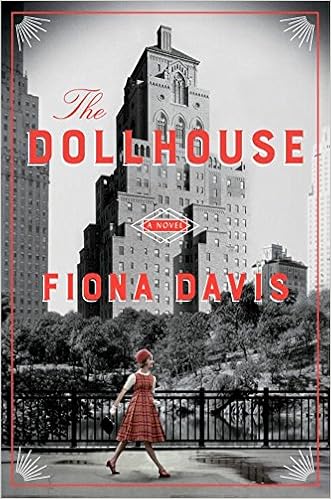
The Dollhouse: A Book Review
Journalist Fiona Davis makes her ficiton debut with THE DOLLHOUSE, and wouldn't you know it but her protagonist is a journalist. Much like herself, would you say?
Fictional journalist Rose Lewin is starting over in both the work and personal spheres when she encounters a mysterious old woman who also lives at the former Barbizon Hotel, now a luxury condominium building with spaces reserved for the oldest tenants. She's a bit of a mystery woman, this Darby McLaughlin, having lived at the Barbizon from the days it housed young single woman in the early 1950's.
Ms. Davis intertwines the narratives of Rose, with her love life in tatters, and Darby the naif who befriends a hotel maid with tragic results. Bits and pieces of the tragedy come to light as Rose investigates the past, and the reader gets to pick up the bread crumbs along the trail as the story unfolds.
In general, the novel is a pedestrian effort that follows the formula of how to write a novel, and it opens strong. After the opening, however, the author demonstrates her background of telling stories, rather than showing them. Much of the action taken by the characters feels directed entirely by the author, rather than the characters.
As the novel reaches its conclusion, the movements felt forced and a bit artificial, almost unbelievable. It's more than a case of an unreliable narrator. It's an issue with telling how untrustworthy a character is, instead of showing it. When the cause of Darby's disfigurement is revealed, the episode plays false. As for the happy reunion of two former lovers, the couple comes together with an amity that is quite fictional as the author wants a happy ending even though the backstory would suggest something else, more complex perhaps but not so pat.
The novel is easy to read, and like a literary version of empty calories it won't fill you up or contribute to your lean, mean intellectual weight. Make it a summer read, light and breezy, and don't scoff too much at the way the loose threads are tied up a bit too neatly at the end.
Thanks to Penguin Random House for providing this review copy.
Fictional journalist Rose Lewin is starting over in both the work and personal spheres when she encounters a mysterious old woman who also lives at the former Barbizon Hotel, now a luxury condominium building with spaces reserved for the oldest tenants. She's a bit of a mystery woman, this Darby McLaughlin, having lived at the Barbizon from the days it housed young single woman in the early 1950's.
Ms. Davis intertwines the narratives of Rose, with her love life in tatters, and Darby the naif who befriends a hotel maid with tragic results. Bits and pieces of the tragedy come to light as Rose investigates the past, and the reader gets to pick up the bread crumbs along the trail as the story unfolds.
In general, the novel is a pedestrian effort that follows the formula of how to write a novel, and it opens strong. After the opening, however, the author demonstrates her background of telling stories, rather than showing them. Much of the action taken by the characters feels directed entirely by the author, rather than the characters.
As the novel reaches its conclusion, the movements felt forced and a bit artificial, almost unbelievable. It's more than a case of an unreliable narrator. It's an issue with telling how untrustworthy a character is, instead of showing it. When the cause of Darby's disfigurement is revealed, the episode plays false. As for the happy reunion of two former lovers, the couple comes together with an amity that is quite fictional as the author wants a happy ending even though the backstory would suggest something else, more complex perhaps but not so pat.
The novel is easy to read, and like a literary version of empty calories it won't fill you up or contribute to your lean, mean intellectual weight. Make it a summer read, light and breezy, and don't scoff too much at the way the loose threads are tied up a bit too neatly at the end.
Thanks to Penguin Random House for providing this review copy.
Friday, July 08, 2016
Guilty Minds: A Book Review
Someone's tried to bring down the Chief Justice of the United States, a web of lies we're told, and in comes Nick Heller to dig into the dirt to expose the truth. A fine start to a thriller, and author Joseph Finder leads his reader in like a roller coaster climbing lazily to the top of a hill that won't be seen until you've crested it.
The novel is a bit of a roller coaster ride, with a bit of excitement at the beginning that is just the beginning. The issue with the potential scandal is quickly dispelled, but that only sends the reader deeper into a more involved scenario with far greater complexity. There are plenty of twists and turns to the narrative as Nick Heller probes beyond the surface question and tries to uncover the real actors who put the scandal into motion, to uncover their motives.
Without getting himself killed, of course. That's what a thriller is all about, after all, creating scenarios of great danger that build up as the mystery gets closer to solution. Joseph Finder does this sort of thing quite well, with tight prose that never falls off into the hard-boiled realm.
There are plenty of techie gadgets and electronic snooping that appear without intruding, the purpose explained just enough to let you know what the device will do, and then what it will not do when the intrepid investigator lands in another tight squeeze.
How can I say more about the plot without giving things away? Let's just say that the action takes place largely in the Washington, D.C. area, some high-powered people are involved in a devious plot that is more intricate than first appears, and the protagonist develops a relationship with the woman journalist who thought she had the scoop of her life when she was handed the story about the morally righteous Chief Justice enjoying the services of a high-priced call girl.
The novel has all the elements you look for in bit of fiction that is designed to engage a reader.
GUILTY MINDS makes for the perfect summer read, a thrill ride that satisfies a craving for something light, entertaining, and well-written.
The novel is a bit of a roller coaster ride, with a bit of excitement at the beginning that is just the beginning. The issue with the potential scandal is quickly dispelled, but that only sends the reader deeper into a more involved scenario with far greater complexity. There are plenty of twists and turns to the narrative as Nick Heller probes beyond the surface question and tries to uncover the real actors who put the scandal into motion, to uncover their motives.
Without getting himself killed, of course. That's what a thriller is all about, after all, creating scenarios of great danger that build up as the mystery gets closer to solution. Joseph Finder does this sort of thing quite well, with tight prose that never falls off into the hard-boiled realm.
There are plenty of techie gadgets and electronic snooping that appear without intruding, the purpose explained just enough to let you know what the device will do, and then what it will not do when the intrepid investigator lands in another tight squeeze.
How can I say more about the plot without giving things away? Let's just say that the action takes place largely in the Washington, D.C. area, some high-powered people are involved in a devious plot that is more intricate than first appears, and the protagonist develops a relationship with the woman journalist who thought she had the scoop of her life when she was handed the story about the morally righteous Chief Justice enjoying the services of a high-priced call girl.
The novel has all the elements you look for in bit of fiction that is designed to engage a reader.
GUILTY MINDS makes for the perfect summer read, a thrill ride that satisfies a craving for something light, entertaining, and well-written.
Monday, June 27, 2016
The Glorious Heresies: A Book Review
There's prose and then there's the dense thicket of words that pricks like James Joyce. THE GLORIOUS HERESIES is more of the latter. But don't let the opening paragraphs put you off. Go on, read it again and again until the words make sense and you realize that Lisa McInerney can't help herself as she's an Irish storyteller and that's just how the sentences fall out of her head.
The novel is a tangle of narratives that are interconnected with cleverness that makes the reading an adventure. From Maureen who kills a shiftless intruder with a Holy Stone, to her son Jimmy the gangster who cleans up the mess, we next meet Tony Cusack the widowed drunk with six kids to feed, and soon thereafter it's Tony's son Ryan the drug dealer and the partner of the dead man, a prostitute who buys her drugs from Ryan. These disparate characters inhabit the poorest section of Cork where the death of the Celtic Tiger is keenly felt. Picture a novel set in the slums of an average American city like Cleveland, that is the sort of place that Ms. McInerney has chosen to present a group with nothing going for them and nothing to look forward to but more difficulty and hardship.
There is murder and a cover-up on one hand, and like ripples in a pond that cover-up touches on the entire cast of characters. Tony gets involved because he's the widowed father of six and desperate for any work that brings in a little money. Ryan is struggling to find his way, madly in love with his girlfriend but unable to build a solid relationship after surviving his dysfunctional father's regime. The cover-up leads to questions that threaten Jimmy, and if it sounds rather "In Bruges", this is a black comedy in that same vein.
The prose is light-hearted in its darkness, the situations devolving into near comedy with a hard edge. The horrors of the old Magdalene Laundries is touched upon by Maureen, who found herself pregnant as the system of incarceration was breaking down, but the resentment she harbours towards the Catholic Church is not unknown to those who have spoken to the women whose lives were destroyed. To understand Maureen's antipathy, you might want to read THE LEAVEN OF THE PHARISEES to gain some insight into how the Church shaped modern Ireland, and women like Maureen.
To enter THE GLORIOUS HERESIES is to enter the world of those who typically end up dead or incarcerated, the denizens of the bottom of the social ladder. The author provides touches of humanity that make for fully realized people, rather than uni-dimensional images of the downtrodden, hopeless masses. As a reader, you may come to care about what happens to them, and so you keep on reading to a conclusion on a high note.
Lisa McInerney has long written a blog that focuses on the very sort of people she has used to populate her first novel. Her experiences writing from Cork show up in her first novel, a book populated by the very sort of characters she portrays in the blog. The note of hope on which the story closes might be a bit of wishful thinking, artistic license, or something that's been seen in the dismal estate housing that Americans would recognize as housing projects, with the same sets of social problems. After all the misery, however, it's a satisfying ending.
My great-grandmother's adage, about being grateful we weren't from Cork because that's where all the poor people are, could be some kind of warning about what you'll encounter as you read THE BLORIOUS HERESIES.
I thoroughly enjoyed this book, more so after I got deeper into it than the opening pages. That dense thicket of words was off-putting at first, but the voice is unique and worth the struggle.
The novel is a tangle of narratives that are interconnected with cleverness that makes the reading an adventure. From Maureen who kills a shiftless intruder with a Holy Stone, to her son Jimmy the gangster who cleans up the mess, we next meet Tony Cusack the widowed drunk with six kids to feed, and soon thereafter it's Tony's son Ryan the drug dealer and the partner of the dead man, a prostitute who buys her drugs from Ryan. These disparate characters inhabit the poorest section of Cork where the death of the Celtic Tiger is keenly felt. Picture a novel set in the slums of an average American city like Cleveland, that is the sort of place that Ms. McInerney has chosen to present a group with nothing going for them and nothing to look forward to but more difficulty and hardship.
There is murder and a cover-up on one hand, and like ripples in a pond that cover-up touches on the entire cast of characters. Tony gets involved because he's the widowed father of six and desperate for any work that brings in a little money. Ryan is struggling to find his way, madly in love with his girlfriend but unable to build a solid relationship after surviving his dysfunctional father's regime. The cover-up leads to questions that threaten Jimmy, and if it sounds rather "In Bruges", this is a black comedy in that same vein.
The prose is light-hearted in its darkness, the situations devolving into near comedy with a hard edge. The horrors of the old Magdalene Laundries is touched upon by Maureen, who found herself pregnant as the system of incarceration was breaking down, but the resentment she harbours towards the Catholic Church is not unknown to those who have spoken to the women whose lives were destroyed. To understand Maureen's antipathy, you might want to read THE LEAVEN OF THE PHARISEES to gain some insight into how the Church shaped modern Ireland, and women like Maureen.
To enter THE GLORIOUS HERESIES is to enter the world of those who typically end up dead or incarcerated, the denizens of the bottom of the social ladder. The author provides touches of humanity that make for fully realized people, rather than uni-dimensional images of the downtrodden, hopeless masses. As a reader, you may come to care about what happens to them, and so you keep on reading to a conclusion on a high note.
Lisa McInerney has long written a blog that focuses on the very sort of people she has used to populate her first novel. Her experiences writing from Cork show up in her first novel, a book populated by the very sort of characters she portrays in the blog. The note of hope on which the story closes might be a bit of wishful thinking, artistic license, or something that's been seen in the dismal estate housing that Americans would recognize as housing projects, with the same sets of social problems. After all the misery, however, it's a satisfying ending.
My great-grandmother's adage, about being grateful we weren't from Cork because that's where all the poor people are, could be some kind of warning about what you'll encounter as you read THE BLORIOUS HERESIES.
I thoroughly enjoyed this book, more so after I got deeper into it than the opening pages. That dense thicket of words was off-putting at first, but the voice is unique and worth the struggle.
Saturday, June 18, 2016
Leaving Lucy Pear: A Book Review
A young Jewish women gives birth out of wedlock and chooses to leave her newborn under a pear tree, where she knows the hardscrabble Irish-Catholic pear stealers will find it. That infant is Lucy Pear, the one who gets left.
The novel is an intimate portrayal of human interactions, with narratives intertwined. After leaving the baby, Bea is expected to go back to her former life as if nothing happened, but nine years after abandoning the infant she is back to call on her elderly uncle who took her in when she was up the stick. The woman who found Lucy ends up as the uncle's nurse, brushing the edges of Bea's life, but each knows the secret of Lucy Pear and that secret hovers over the story.
Anna Solomon does a fine job of creating intersections that ramp up the tension as the reader wonders when Lucy Pear will realize that Bea is her birth mother. At the same time, she weaves a backdrop suited to the setting, with Emma looking at moonshining as a way to make a few dollars during Prohibition. There is tragedy that results from unintended consequences, pitting rich against poor at the same time as Sacco and Vanzetti stand trial at the height of the labor movement, plenty of little subplots to keep a reader's interest.
The ending falls off into literary fiction prettiness, filled with scenes of the future that the omniscient narrator assures us our characters don't yet know will happen, and finally the last chapter jumps into the present tense because, well, you know. Literary fiction.
There is no plumbing the depths of these characters. They float on the surface of the novel, somewhat shallow but entertaining in their diversity. In these modern times, you come to expect a stock gay character (Bea's husband) and an evil industrialist oppressing his workers and trying to bust the stonecutter union. Even Lucy is given the cross-dressing treatment, but it feels more like a girl disguising herself as a boy to live a more full life at a time when girls faced far more restrictions on their activities.
All in all, this was a pleasant read, the sort of book you get lost in and don't regret the time spent in the reading.
The novel is an intimate portrayal of human interactions, with narratives intertwined. After leaving the baby, Bea is expected to go back to her former life as if nothing happened, but nine years after abandoning the infant she is back to call on her elderly uncle who took her in when she was up the stick. The woman who found Lucy ends up as the uncle's nurse, brushing the edges of Bea's life, but each knows the secret of Lucy Pear and that secret hovers over the story.
Anna Solomon does a fine job of creating intersections that ramp up the tension as the reader wonders when Lucy Pear will realize that Bea is her birth mother. At the same time, she weaves a backdrop suited to the setting, with Emma looking at moonshining as a way to make a few dollars during Prohibition. There is tragedy that results from unintended consequences, pitting rich against poor at the same time as Sacco and Vanzetti stand trial at the height of the labor movement, plenty of little subplots to keep a reader's interest.
The ending falls off into literary fiction prettiness, filled with scenes of the future that the omniscient narrator assures us our characters don't yet know will happen, and finally the last chapter jumps into the present tense because, well, you know. Literary fiction.
There is no plumbing the depths of these characters. They float on the surface of the novel, somewhat shallow but entertaining in their diversity. In these modern times, you come to expect a stock gay character (Bea's husband) and an evil industrialist oppressing his workers and trying to bust the stonecutter union. Even Lucy is given the cross-dressing treatment, but it feels more like a girl disguising herself as a boy to live a more full life at a time when girls faced far more restrictions on their activities.
All in all, this was a pleasant read, the sort of book you get lost in and don't regret the time spent in the reading.
Thursday, June 16, 2016
Good Agents Don't Spam Publishers
The submission requirements for Newcastlewest Books are quite simple and straightforward. We don't want nobody nobody sent. Manuscripts are considered by referral only. So it's clear that Faye Swetky of the Swetky Agency didn't bother to read the page on how to submit.
We've received a second submission from her this month. It's apparent that she throws submissions out there to see if any stick. Not exactly the mark of an agent who is working for her client, targeting those publishers most likely to want what she is offering.
Her client Dawn Turzio has written a book about New York fire fighter wives, apparently, and the query came to our office where we specialize in books with an Irish influence. Historical fiction in particular, although our CITY THAT WORKS imprint was set up to publish works set in the Chicago area where the Irish have historically supported the auld sod. So clearly there's no link between a modern work of fiction set in New York City, but Faye Swetky didn't let that small detail stop her.
And I am sure that author Dawn Turzio, with all her credentials, has faith in her agent and expects Ms. Swetky to find her a publisher.
I hope that Ms. Turzio is not paying for the service. If she had done some research and used Google to its full potential, she would have found a thread on the discussion forum at AbsoluteWrite.com in which things are pretty much laid out about how this agent is an agent in name only.If she knew in advance, you would hope that she would have avoided what is sure to be disappointment when nothing comes of the blanket submissions.
Did Ms. Turzio go the traditional route of finding an agent, writing up a query and utilizing beta readers to vet that query? Did she search the internet to find out how to query, for that matter?
There is so much information out there for budding authors that it's almost staggering, but querying is a definite process with its own set of rules and formats. It's work, yes, and frustrating beyond measure, but there are no shortcuts to getting published. Literary agents can't take shortcuts either, and send out queries at random in the hope they get lucky, like the blind squirrel finding a nut.
And speaking of squirrels, you know that if you feed one it will just keep coming around. With that in mind, I won't be replying to Ms. Swetky's missive. It only encourages her to send more, and our submission requirements are simple but stringent. If you aren't recommended to us, we won't consider the manuscript. We are a niche publisher with very particular needs, a very narrow focus.
No matter how brilliant F.D.N Wives might be, it doesn't meet any of our requirements.
Sorry, Ms. Turzio. But you really should find yourself a good agent who can get your book into the hands of a publisher who is looking for mainstream, contemporary women's fiction.
We've received a second submission from her this month. It's apparent that she throws submissions out there to see if any stick. Not exactly the mark of an agent who is working for her client, targeting those publishers most likely to want what she is offering.
Her client Dawn Turzio has written a book about New York fire fighter wives, apparently, and the query came to our office where we specialize in books with an Irish influence. Historical fiction in particular, although our CITY THAT WORKS imprint was set up to publish works set in the Chicago area where the Irish have historically supported the auld sod. So clearly there's no link between a modern work of fiction set in New York City, but Faye Swetky didn't let that small detail stop her.
And I am sure that author Dawn Turzio, with all her credentials, has faith in her agent and expects Ms. Swetky to find her a publisher.
I hope that Ms. Turzio is not paying for the service. If she had done some research and used Google to its full potential, she would have found a thread on the discussion forum at AbsoluteWrite.com in which things are pretty much laid out about how this agent is an agent in name only.If she knew in advance, you would hope that she would have avoided what is sure to be disappointment when nothing comes of the blanket submissions.
Did Ms. Turzio go the traditional route of finding an agent, writing up a query and utilizing beta readers to vet that query? Did she search the internet to find out how to query, for that matter?
There is so much information out there for budding authors that it's almost staggering, but querying is a definite process with its own set of rules and formats. It's work, yes, and frustrating beyond measure, but there are no shortcuts to getting published. Literary agents can't take shortcuts either, and send out queries at random in the hope they get lucky, like the blind squirrel finding a nut.
And speaking of squirrels, you know that if you feed one it will just keep coming around. With that in mind, I won't be replying to Ms. Swetky's missive. It only encourages her to send more, and our submission requirements are simple but stringent. If you aren't recommended to us, we won't consider the manuscript. We are a niche publisher with very particular needs, a very narrow focus.
No matter how brilliant F.D.N Wives might be, it doesn't meet any of our requirements.
Sorry, Ms. Turzio. But you really should find yourself a good agent who can get your book into the hands of a publisher who is looking for mainstream, contemporary women's fiction.
Wednesday, June 01, 2016
This Is Why There Is An Obesity Epidemic
You don't have to hunt down your meal anymore. You don't have to expend calories to acquire more. Watch one of those survivalist TV shows and you'll notice that every contestant loses weight when there isn't a 24-hour McDonald's nearby. Getting something to eat was not all that easy when man first appeared on the planet. Now, it's too easy.
And it isn't as if McDonald's puny burgers are the biggest offenders. Ray Kroc may have started things off, but the burger has ballooned into a trendy venue for culinary expression. The calories just follow right along with the chef's creativity.
After a day of desk-jockeying, you head out for dinner and there's no hunting or gathering involved, short of walking the aisles of the grocery store to scrounge up some grub. No chasing after animals with your spear in these modern times. The protein you crave is right there in a tidy styrofoam tray, shrink wrapped and chilled for freshness.
What if you don't have time to cook, or you want to enjoy a meal that someone else has prepared?
Again, you don't have to hunt down anything. Maybe you walk a block or two from the parking spot, but you aren't exactly burning up the calories you took in at lunch. You grow weary as you traverse the concrete plains of Chicago, but there up ahead is the beacon, the sign that tells you a burger is just up ahead. Unlike the prey of the hunter, this one isn't going to run away when you get close to it. The restaurant just sits there, inviting you in.
If your feet take you to M Burger, you won't be thinking about calories but about taste and flavor and juicy beef between two slices of bread...no, between two other sandwiches!
This is why there is an obesity epidemic. When people think it's a good idea to serve a sandwich made with other sandwiches, there's no hope for coronary arteries or shrinking waistlines.
Who had the idea to take a fried meat patty and combine it with a couple of grilled cheese sandwiches? Someone who didn't like the way the cheese merged with the beef on their cheeseburger?
Was it the same person who felt that the beef wasn't enough, but a nice crispy-fried chicken cutlet would really set things off?
The secret, off-menu creation that has enough calories to fuel a family of five for a week consists of a burger with chicken and of course you have to throw on a couple of slices of bacon, not to forget the slice of cheese that goes on because everyone loves a cheeseburger unless you're keeping kosher (see also 'hold the bacon'). Take all that, and put it between two grilled cheese sandwiches, and you have the Barnyard Burger, Roman style.
It isn't all bad, of course. There's lettuce on the pile of protein and fat. That's a vegetable, if you're more of a carnivore than you realized.
And it is delicious.
That's why we're getting fat. We have access to food that tastes really, really, really good, but we don't have to make any effort to get it. What's the solution? Food that's bland, unpalatable and unattractive, perhaps with some foul odors thrown in.
It's that, or run a few miles and pretend you're hunting buffalo on the open prairie before sitting down to a Barnyard Burger. Just don't make it a habit. Your heart will thank you. Your taste buds? Not so happy with the deprivation..
And it isn't as if McDonald's puny burgers are the biggest offenders. Ray Kroc may have started things off, but the burger has ballooned into a trendy venue for culinary expression. The calories just follow right along with the chef's creativity.
After a day of desk-jockeying, you head out for dinner and there's no hunting or gathering involved, short of walking the aisles of the grocery store to scrounge up some grub. No chasing after animals with your spear in these modern times. The protein you crave is right there in a tidy styrofoam tray, shrink wrapped and chilled for freshness.
What if you don't have time to cook, or you want to enjoy a meal that someone else has prepared?
Again, you don't have to hunt down anything. Maybe you walk a block or two from the parking spot, but you aren't exactly burning up the calories you took in at lunch. You grow weary as you traverse the concrete plains of Chicago, but there up ahead is the beacon, the sign that tells you a burger is just up ahead. Unlike the prey of the hunter, this one isn't going to run away when you get close to it. The restaurant just sits there, inviting you in.
If your feet take you to M Burger, you won't be thinking about calories but about taste and flavor and juicy beef between two slices of bread...no, between two other sandwiches!
This is why there is an obesity epidemic. When people think it's a good idea to serve a sandwich made with other sandwiches, there's no hope for coronary arteries or shrinking waistlines.
Who had the idea to take a fried meat patty and combine it with a couple of grilled cheese sandwiches? Someone who didn't like the way the cheese merged with the beef on their cheeseburger?
Was it the same person who felt that the beef wasn't enough, but a nice crispy-fried chicken cutlet would really set things off?
The secret, off-menu creation that has enough calories to fuel a family of five for a week consists of a burger with chicken and of course you have to throw on a couple of slices of bacon, not to forget the slice of cheese that goes on because everyone loves a cheeseburger unless you're keeping kosher (see also 'hold the bacon'). Take all that, and put it between two grilled cheese sandwiches, and you have the Barnyard Burger, Roman style.
It isn't all bad, of course. There's lettuce on the pile of protein and fat. That's a vegetable, if you're more of a carnivore than you realized.
And it is delicious.
That's why we're getting fat. We have access to food that tastes really, really, really good, but we don't have to make any effort to get it. What's the solution? Food that's bland, unpalatable and unattractive, perhaps with some foul odors thrown in.
It's that, or run a few miles and pretend you're hunting buffalo on the open prairie before sitting down to a Barnyard Burger. Just don't make it a habit. Your heart will thank you. Your taste buds? Not so happy with the deprivation..
Monday, May 30, 2016
The Wicked Boy: A Book Review
![]() |
| True crime and well-researched historical detail |
Author Kate Summerscale examines one such crime in her newest work of history THE WICKED BOY. She uses the case of Robert Coombes, who freely confessed to killing his mother while his father was away at sea, and presents the sort of evidence that made up the prosecution and, more interesting, the defense.
Quoting freely from court records, Ms. Summerscale crafts an intriguing piece of narrative non-fiction, putting the reader into the middle of the case. Bit by bit, she peels away the layers of testimony that described the actual crime. The fact that Robert made no effort to hide his mother's body suggests a lack of real understanding of the gravity of the crime, at least to our modern eyes. The Victorians, however, were just then drawing that sort of conclusion, although Ms. Summerscale demonstrates the lack of consensus through newspaper reports of the day. She also reveals the prejudices of the time that painted a Coombes family friend as a harmless imbecile, the sort of person who today would be labelled as mentally challenged, rather than a cunning aid to murder. The reporting that described Robert and his younger brother, also implicated, is a window to another age, when overblown prose was typical and court artists took great liberties to portray the criminal as an animal.
The reader is able to draw conclusions without being beat over the head with the author's opinion, and like a jury member can read between the lines of evidence that danced around the possibility of extreme child abuse. We have come a long, long way from Queen Victoria's day, when a parent was allowed to do just about anything they pleased to their offspring.
Without giving away the ending, the conclusion of Robert Coombes' life proves to be uplifting and reinforces the theory that he was an abused child, his mother possibly mentally unstable. His experiences did indeed scar him, but he carried on with the sort of resignation one would expect from a boy raised in poverty and struggling to cope with the stress of a hardscrabble life.
This is a book worth reading for anyone interested in criminal justice in the Victorian period, and how the concept of a child as a wanton criminal was starting to give way under the influence of the newfangled theories of psychoanalysis, with mental illness as the driving force behind crimes considered unthinkable. Thanks to Penguin Random House for the opportunity to read this five out of five stars book.
Subscribe to:
Posts (Atom)