Wednesday, April 30, 2014

The Flamingo As A Predictor Of Health

I'm gonna live forever....
If you are middle-aged, you are probably wondering when you are going to die.

Don't feel embarrassed. You've reached the point where you know you are on the down slope of life, that you've gone beyond the halfway point, and it would be nice to have some rough idea of how much longer you have. There's that bucket list to be completed, after all, and perhaps a trip back to the Auld Sod to see the ancient homeland.

Can you stand like a flamingo?

If so, you will live. If not, you're about to die.

That's my interpretation of the latest results from some testing done by real doctors in search of a decent answer for their middle-aged patients asking about the old life expectancy. We can assume that the test subjects were all sober, because everyone knows that standing on one leg is also a test of sobriety as performed by a member of An Garda Siochana (or your local law enforcement service).

Stand on one leg and close your eyes. Can you hold the position for at least three seconds without toppling? If yes, then you've got over thirteen years of life remaining. If no, start making funeral arrangements. Odds are, you'll be dead before those thirteen years are up.

There's also the getting up from a chair and sitting down again repeatedly test, which we all know the average mother with small children can perform for hours on end. But after said mother has become a grandmother, can she still do it with enough grace to pass the test? Her doctor may one day soon have her up and down in the office as a means of determining health, a predictor that adds to the arsenal of blood work and basic tests. Those who fail will be judged as at risk, with further testing and medications to follow.

Things a bit dull at the office? Encourage your fellow employees to try the flamingo test and see how many of them will still be working in thirteen years time. Maybe you could target the weaker ones in your quest to reach a corner office. It's survival of the fittest, after all, and the lions don't go after the strongest in the gazelle herd, do they?

Tuesday, April 29, 2014

The Irish Are A Stubborn People And The Irish Taxpayer Will Pay For It

It's been five years since Lissadell House was closed to the public, after the new owners spent a small fortune to restore one of Ireland's most iconic houses. The Gore-Booth family that resided there at the time of the Rising figured prominently in the rebellion. Poet W.B. Yeats composed odes to the house and the ladies who lived there. That a modern family would invest heavily to restore the home and then open it to the public was of benefit to tourism in Sligo, which doesn't have much else for doing.
Constance Gore Booth, later Countess Markiewicz, scratched her name onto a window pane at Lissadell

Opening the house to the public was one thing, but with the Walsh-Cassidy family in residence, they wanted some portion of privacy that anyone might expect in their home. In other words, they didn't want anyone wandering around, peeking in the windows. You don't feel particularly safe, and you certainly don't feel that your children are secure.

The Sligo County Council determined that certain roads had been used by the public during the years when the house was falling into disrepair and no one much cared about it. The Gore-Booths granted access back in 1867, according to local lore. Therefore, the public had the right to use those same roads even if things had changed and the Walsh-Cassidys were investing heavily in the town. No special favors. Especially for the rich ones with the grand estate, lording their wealth over the local populace like the Protestant Ascendancy of yore.

The Walsh-Cassidys argued that one of those roads went right next to their house, and it made no sense to grant the public access to that degree. The Council stuck to its belief that the rights of way were "inferred", and so the public had to be allowed to walk where it pleased on a privately owned property.

The Sligo County Council would not budge and the Walsh-Cassidy family had no other choice but to turn to the courts for relief, all the way up to the Supreme Court. All five justices determined that the Sligo County Council was completely and utterly wrong. The rights claimed by the council, in fact, did not exist, nor had they ever existed from the 1860's but had commenced in the 1950s. Still, the council clung stubbornly to its belief through round after round of legal hearings and court dates.

Council member Joe Leonard demonstrated the stubborn refusal of the Irish to back down from something believed to be so, refused to back down even as legal opinion demonstrated the falsity of his belief. So stubborn is he that he insists the Supreme Court is wrong, and he is still as right as he was when he first made a motion to declare the rights of way through Lissadell as open to the public.

The taxpayers are now on the hook for some very, very, very hefty legal fees. Not only will they have to pay for the council's costs, but the court decided that they would cover 75% of the Walsh-Cassidy legal expenses.

Joe Leonard is not sorry. He is not apologizing. In fact, he has no regrets for what he did. He is right, and everyone else is wrong.

As for the people of Sligo, they don't have much and their local coffers have long been largely empty. There's a gaping hole that's been opened due to Irish stubbornness, and it will be up to them to fill it.

Meanwhile, the people who put so much into Lissadell, the family that invested with all good intentions, are no longer viewing Sligo through a prism of amity. They are bitter towards the council, for tormenting them for five long years, and all the apologies coming from the councillors cannot drown out Joe Leonard's insistence that he has nothing to apologize for.

The Irish are a stubborn people. Even if it costs the local populace  €88 million that they don't have and don't really have any way to raise. While Joe Leonard stands proud and tall in defeat.

Monday, April 28, 2014

The High Cost Of Infidelity Among The Rich Who Are Different From The Rest Of Us

Image for public consumption
If your wife caught you cheating, would her first reaction be to sue the mistress for expenses incurred?

Not likely, considering the fact that you don't have money to shower on anyone, and a woman fifty years your junior wouldn't look twice at your ugly mug.

And that is how the rich are different than the rest of us.

There's all sorts of talk going around the sports world about Donald Sterling, wealthy owner of the Los Angeles Clippers basketball team. None of Mr. Sterling's personal opinions would be hitting the airwaves if he had kept to the marriage vows he made back in the 1950s.

Mrs. Sterling discovered her husband's infidelity and instead of throwing him out, thereby reducing her social position and personal income, she decided to get even with the wily Vanessa (or, she styles herself, simply V.) Stiviano. The offended party filed a lawsuit against the co-respondent, claiming a violation of California's community property laws. The gifts that Ms. Stiviano received were purchased with jointly held assets, and since Mr. Sterling didn't ask the missus if he could buy his girlfriend a very expensive condo and jewelry and whatnot, Ms. Stiviano has to return the items or turn over the cost of said goodies.

Sweet Jaysus, the mistress could have the old man if she wanted him, but God help the woman who thought she'd get some of the old man's money while the wife stood by wringing her hands.

So Mrs. Sterling sued to keep the money in a place where she had access to it, and Ms. Stiviano responded to the first shot fired by firing a broadside of her own.

Audio tapes of Mr. Sterling yammering about blacks are getting plenty of air time, and with each repetition, another voice cries out for retribution. There is talk of protest and pickets, and the team put on a display of their displeasure on the job floor. Not exactly a downing of tools, but would it be fair to the fans to walk out and not play a game because the owner was shown to be racist?

The racist rant toothpaste is out of the tube and it's not going back. Pressure will be brought to bear on Mr. Sterling to sell the team, and there will be plenty of potential buyers lining up, hoping to get a fire-sale price.

Half of the proceeds will fall to Mrs. Sterling, who has shown no signs of getting a divorce. If anything, she'd look for ways to tie up her husband's money before he strays again with another gold digger in need of a Bentley.

He can run around as much as he likes, as long as he doesn't spend money. And the average pretty young thing? Not interested in anything but the money. And money can't buy you love.

Interpersonal Skills Can Bring You Money

If you had good interpersonal skills, you'd be home now
Where can you find a job that will pay you big money to quit?

Sounds like an impossible dream, to pick up close to half a million dollars just for leaving a job after less than a year toiling behind a desk.

But if you have good interpersonal skills, it could happen to you.

It happened to Illinois State University President....that would be former President...Timothy Flanagan.

The school spent tens of thousands of dollars on consultants to help them find a new president when the old one stepped down after a long tenure. Following a nationwide search for the perfect candidate, it came down to four possible choices, each one selected for their set of certain key talents, including strong interpersonal skills.

The school settled on Timothy Flanagan, and before long the committee was sorry that it had not consulted the faculty as well. Mr. Flanagan, despite his interpersonal skills, just wasn't an ISU people person.

Alumni didn't like his attitude about sports, which is everything to that segment of the alumni population that stays in contact with their alma mater. You see them out there tailgating at football games and sitting in the stands during basketball games, supporting the old school and donating money so that a new generation can fall in love with ISU as well. When the school's new president doesn't show up for games, or worse yet, leaves early, his interpersonal skills are thought to be lacking. If the donating alums aren't donating because of the president, the Board of Trustees sits up very tall and takes full notice.

The faculty didn't like the way Mr. Flanagan conducted school business, whether it was not having enough meetings or not responding promptly to their e-mails. The long knives came out, and you can imagine how much pressure Mr. Flanagan was under to cave in to the meddling faculty while he struggled to gain the upper hand and mold the school in his image.

Unrelenting pressure, constant criticism, and what man wouldn't snap? Snap he did, putting those strong interpersonal skills on display one fine morning when the grounds crew came by to rake up the plugs left behind after they had aerated the president's lawn. Those plugs bear a remarkable visual resemblance to duck droppings, and who wants to look at that first thing in the morning? Maybe Mr. Flanagan thought it was done on purpose to aggravate him, considering all the whining from the faculty and the alumni.

He took out his frustration on the head groundskeeper, going so far as to fire the man. Again, those strong interpersonal skills in action, but it wasn't the sort of action that the school was looking for when they hired Mr. Flanagan.

Mr. Flanagan has agreed to go after seven months on the job, with a lovely parting gift of $480,000 and change.

The university is looking for a new president. Who wouldn't want to sign up for that position, given the precedent that's been set? Polish up your set of interpersonal skills and get your resume in. A big bonus could be in your future, just in time for Christmas.

Saturday, April 26, 2014

Does This TicTac Taste Odd?

There is a recipe for every confection that enters your mouth. Of course there is. You wouldn't expect a firm to manufacture a sweet by letting the employees throw whatever they liked into the bin and mix up their own concoction.

Unless you're snacking on tic tacs from Cork.

A couple of workers at the Cork plant decided to try something new when they were making a batch of the tiny breath mints. Didn't ask permission, didn't run it by the corner office, just changed the recipe that came from candy headquarters in Italy.

As you'd expect, the pair were promptly sacked.

Declan Cotter and Lisa Ryan-O'Connor said they were just trying to keep up with demand and they didn't change the recipe with any bad intentions. Besides, if the equipment was working properly, the incident never would have happened and it's not as if their actions resulted in a massive, and expensive, recall.

The Employment Appeals Tribunal heard their excuse and found merit. It was Italian candy maker Ferrero (of Ferrero Rocher pyramid fame) that was to blame for unfairly dismissing the pair, who had been working at the plant for several years. The head of the union representing Mr. Cotter and Ms. Ryan-O'Connor called the action petty, and let's not forget that Ferrero is making a mint (hah!) off the backs of those poor working slaves.

The former candy makers are now in receipt of several thousand euro by way of compensation, but they won't be getting their jobs back.

There's just something about food production that cries for consistency, and it does not boost confidence in Irish food manufacturing if a couple of employees could change something for any reason, whether it's to keep up production speed or not notify someone higher up about a malfunctioning bit of equipment.

So if that tic tac tastes a bit off? The people who made it are doing their best but demand is high for those little nuggets of flavored sugar. Maybe if you wouldn't buy so many of them?

Friday, April 25, 2014

Scripting A Reality Series

Closer to "Chicago Fire" than "Chicago, City of the Century"
How real is real? In the case of the average television reality program, not real at all.

Look at your own life. Pretty dull, isn't it? Not much happening from day to day. But throw in a scripted argument, one that involves a tremendous amount of shouting and potential violence, and maybe some people would want to watch events unfold.

Not that anyone is watching CNN these days, but producers did try to create an engaging series when they filmed CHICAGOLAND. The series was sold as in inside look at the way that the City that Works works, a reality show that is not actually as real as advertised.

The reporters at the Chicago Tribune got their ink-stained fingers on some e-mails that were sent between the documentary producers and the staff minding the Mayor's office. The bon mots reflect connections that show more about how Chicago works than anything that made it to the small screen, interpersonal connections that go beyond the most obvious. Sure the CHICAGOLAND producers are repped by Ari Emanuel's firm, and sure the Mayor is Ari Emanuel's brother. There are far more interesting ties that lie below the surface, commonalities that demonstrate how much influence Rahm Emanuel had on the creation of this so-called documentary that is more fiction than non-fiction.

Scenes were essentially scripted, as much as any spat between the Mafia princesses or the Real Housewives. The purpose of the documentary, apparently, was more to sell Rahm Emanuel as the hard-fisted leader of a tough town than to show how far Chicago has sunk under the weight of patronage, politics and cronyism.

With gangs at war and murder a common occurrence, it is little wonder that the Mayor would do what he could to paper over the unpleasant aspects of city life, especially when he's trying to woo industry and commerce to set up shop in his town, instead of discovering the joys of Milwaukee or Indianapolis.

The same newspaper that uncovered the e-mails is also reporting on the failing health of the Illinois economy. Problems in Chicago, like crime and massive unfunded pension liabilities are damaging the city's ability to attract and then keep businesses. But show a mayor in charge, a man tackling the issues and getting things done, on the right track, might help skew perception.

Deliver that message with something called a reality show, implying that it's real, and you're on your way to re-election.

What brother wouldn't want to help out a sibling in any way he can? Even if it takes a scripted show disguised as reality? It's someone perception of reality, isn't it?

Thursday, April 24, 2014

Looking For Author Rights In The Bare Cupboard

Attempted to soar but couldn't quite get off the ground
The bankruptcy court told us that the MacAdam/Cage publishing concern is skint. Utterly and absolutely. The cupboard is so bare there's not even a spider or remote crumb to be found.

Print authors saw their rights reverted as part of the proceedings that wound down the once storied publishing house. After MacAdam/Cage declared bankruptcy, those who felt the slap of publishing's door closing on their faces were entitled to those rights after a sixty day waiting period. They are free now to self-publish their book if they wish to reprint it, but the e-book rights are another matter altogether.

At some point, when MacAdam/Cage owner David Poindexter was trying to salvage what he could before he lost it all, the rights to e-book publication for MacAdam/Cage titles was sold to Mark Pearce, a hobbyist who started up a digital publishing company because he loved books. He saw a solid investment opportunity in the MacAdam/Cage backlist, and he snapped it up.

Authors who were published by MacAdam/Cage cannot create e-books of their own works without violating the law. All they can do is continue to promote and then wait for Mr. Pearce to send them a royalty check. And it will continue like that until the copyright runs out, long after the authors are dead.

Some have said they aren't getting those checks, while Mr. Pearce asserts that he is on top of the finances and has paid out all that is owed in a timely manner. The man who loves books will soon be inundated with demands from former MacAdam/Cage writers, looking for all his records that prove his statement is, indeed, true.

He did not ask for this mess, of course. He wanted to buy up digital rights and publish electronically and make a little money while paying the authors what their old contracts said they were to be paid. The royalties went to MacAdam/Cage for distribution, and that is where the trail may veer off and plummet over the fiscal cliff. Just because Mr. Pearce paid MacAdam/Cage doesn't mean MacAdam/Cage forwarded the money, and since MacAdam/Cage is devoid of assets, the money is as good as gone and the authors are out of pocket for past due balances.

Mr. Pearce will also want to line up a smart solicitor because the lawsuits are bound to follow. While he may have entered into a deal with Mr. Poindexter that was of benefit to them both, it may not be entirely legitimate. A judge could determine that the authors were hard done by, and thus the sale of rights was invalid from the start. In which case, the authors get their rights back and they can choose any number of digital publishing platforms to manage their backlists themselves.

To show good faith, Mr. Pearce has stated that he will deal with authors directly, now that MacAdam/Cage is no longer a middleman. Given the level of distrust that was generated, however, they may not be interested in a new relationship. 

Ultimately, Mr. Pearce will end up with a blow to his bottom line, given the expense he'll face to straighten out the mess from his end, even if he has done everything he was supposed to do.

Enough to put a man off his love of books for a good long time.

Wednesday, April 23, 2014

The Confederacy Of Women Creating Dunces

Boys don't like to read. Why is that? How can we reach them? How can we make them want to read?

So many questions. So few answers. Children's author Jonathan Emmett has taken on these mysteries of the universe and come up with an intriguing theory.

He says there are too many women in publishing, and they are skewing the product to favor their own sex.

Hence, men are not readers.

In essence, all the problems of the publishing industry can be laid at the feet of the women who dominate the industry.

An author must first approach a literary agent to gain a representative who will open the gate to the publishing house. The literary agent has to fall in love with the book to take it on, but the majority of literary agents are women. They don't see the world through a boy's eyes. They don't like what boys like, and so, the agents fall in love with books that are aimed at girls like them.

From the start, boys are pushed aside because there simply are not enough men acting as gatekeepers. And it gets no better as a manuscript heads up the ladder towards publication. Women dominate the editorial positions, and it is women making most of the decisions as to which books will make it and which will be rejected.

From top to bottom, it is women making the choices, and those choices are heavily dosed with estrogen.

What's a boy to do?

He goes and plays video games where his interests in action are met. He engages in make-believe in a totally non-feminine sphere, awash in violence and physicality.

When it comes to purchasing books, it's the women again who thumb through the offerings and select things that they find suitable for their children or grandchildren. None of that silly swashbuckling or gunplay or attacks from space aliens. What boys want, they do not get, and so they do not bother to read.

Boys are, in a way, trained to not like reading because their early experiences teach them that books are for girls. The boys grow up to be men and they don't seek out books because they never learned to like reading. As children, the content was not intriguing. They don't expect to find anything different as they mature.

Mr. Emmett is blaming all those women for the current crisis in education, where boys are left behind because their reading skills are weak. The weakness is not some genetic mutation or faulty gene on the Y chromosome, but the actions of an industry that does not have enough of a male influence.

Women control access to publication, and women control what gets published. After that, it's women controlling who wins the book awards that boost marketing. Everywhere he looks, it's women, and they can't see beyond their own preferences to imagine what an active boy would relate to in a work of fiction or a picture book.

He believes that more men need to be involved in manuscript acquisition, to balance the over-feminization of children's books. Men who were once boys have a better idea of what boys like, and would boost young male readership by giving the customer what he wants in reading material. More men are needed, especially in children's publishing, to provide content that the target audience will actually read.

Build it and they will come, someone once said about a sports field. Print it and they will read. When they read, they will learn, and the skills gap will shrink. But only if the ladies step aside and let a man take charge.

Monday, April 21, 2014

Write Something Else

How many novels will you have to write before you write one well enough to get published?

You work hard on that first manuscript. You write. You edit. You polish and edit again. You get shot down by one literary agent after another without the time to edit your work into a publication-ready form because these aren't the 1920s when editors brought along talented writers who just needed a little guidance.

Frustrating, to be sure. But you persist. You think of another story idea and write another novel which you edit, polish, edit. revise, re-write and polish yet again. You get shot down by literary agents who are not impressed with what you thought was lovely prose.

But you're stubborn and you don't give up so you write another novel and go through the whole process all over again, and with the same results.

How many novels do you have to write before you learn how to write something marketable?

Brandon Sanderson wrote twelve books before his novels caught the attention of a reading public that generated buzz and sent his novel to the top of the charts.

His hard work and stubborn refusal to quit paid off with the publication of Words of Radiance, part of a long and involved series that saw his name leading the New York Times bestsellers list.

Can you keep slogging away, putting in the time and effort to create that many books, before you decide it's impossible?

His sixth book found a publisher, but he didn't explode on the scene or become a household name. Instead, he kept honing his craft while promoting himself at book signings and whatever else he could do to get his name in front of the fantasy reading public.

Maybe it helped that he hit the scene around the same time that the Tolkien books were growing in popularity thanks to a series of popular films. If he was writing literary fiction, he might not be published even now, seeing as he lacks the requisite MFA and string of literary journal publications as credentials.

Yet fantasy is a tough sell because it is a small market. Breaking in is no easy task, and if Mr. Sanderson had chosen to give up after trying mightily, no one would fault him.

But he did not give up.

He kept writing. After one failure, he wrote something else. Then he wrote something else again.

There are no guarantees that not giving up will eventually pay off. Even a talented writer could fail if timing is off or luck goes missing. Quitting will guarantee that you'll never get published, however. And what else would you do with all those words tumbling around in your head, demanding to be set down on paper? Isn't it better to write them down so they'll leave you in peace?

Saturday, April 19, 2014

An Agent Speaks To The Slushpile

While a face-to-face meeting with a literary agent is more likely to get your foot in the agency door, Susan Golomb believes in the merits of the slushpile.

You can read an interview with the storied literary agent here, and find hope that if your writing happens to land on her desk at the right time, you just might get your little toe wedged in before the door shuts in your face.

Study carefully and you might get a hint as to what Ms. Golomb is after these days. You would only be disappointed if you submitted something she is not looking for because it would be a rejection outright, no matter how your prose sparkles.

Pay attention to her stories of discovering writers now popular, because those same writers were unknown at one time. Just like you. There might be a suggestion or a phrase that will inspire you to try a new approach.

After you've read all that, you'll want to recall that this is Easter weekend, with the anniversary of Ireland's Easter Rising of 1916 looming. What does it mean, you wonder. What happened and how did things go that far, to see hundreds of people take to the streets and start shooting? You can read all about it here, in a fictional form that avoids the dry dullness of the average history tome. A TERRIBLE BEAUTY is historically accurate but eminently readable.

Enjoy it with a box of Cadbury chocolate eggs on a quiet Easter Sunday night, and fall into a world of espionage, intrigue and double-dealing. You won't be able to put it down once you start, so be sure to lay in plenty of tea before you're wrapped up in the tale of one family and their generation-spanning quest for liberty.

Still hungry for more stories about rebels against the Crown? Katie Hanrahan's third novel, THE LIBERTY FLOWER, is also available for an instant download and an evening of reading pleasure that will keep you turning the pages until you reach the end.

Thursday, April 17, 2014

Crippling Economic Sanctions

Go back to the first colonists in North America meeting up with the natives. They established a relationship based on trade. Someone had something that someone else wanted, and the two parties managed to exchange goods in what they felt was an equitable manner.

Now hold a gun to the head of your potential trade partner and suddenly the equitability shifts very much in your favor.
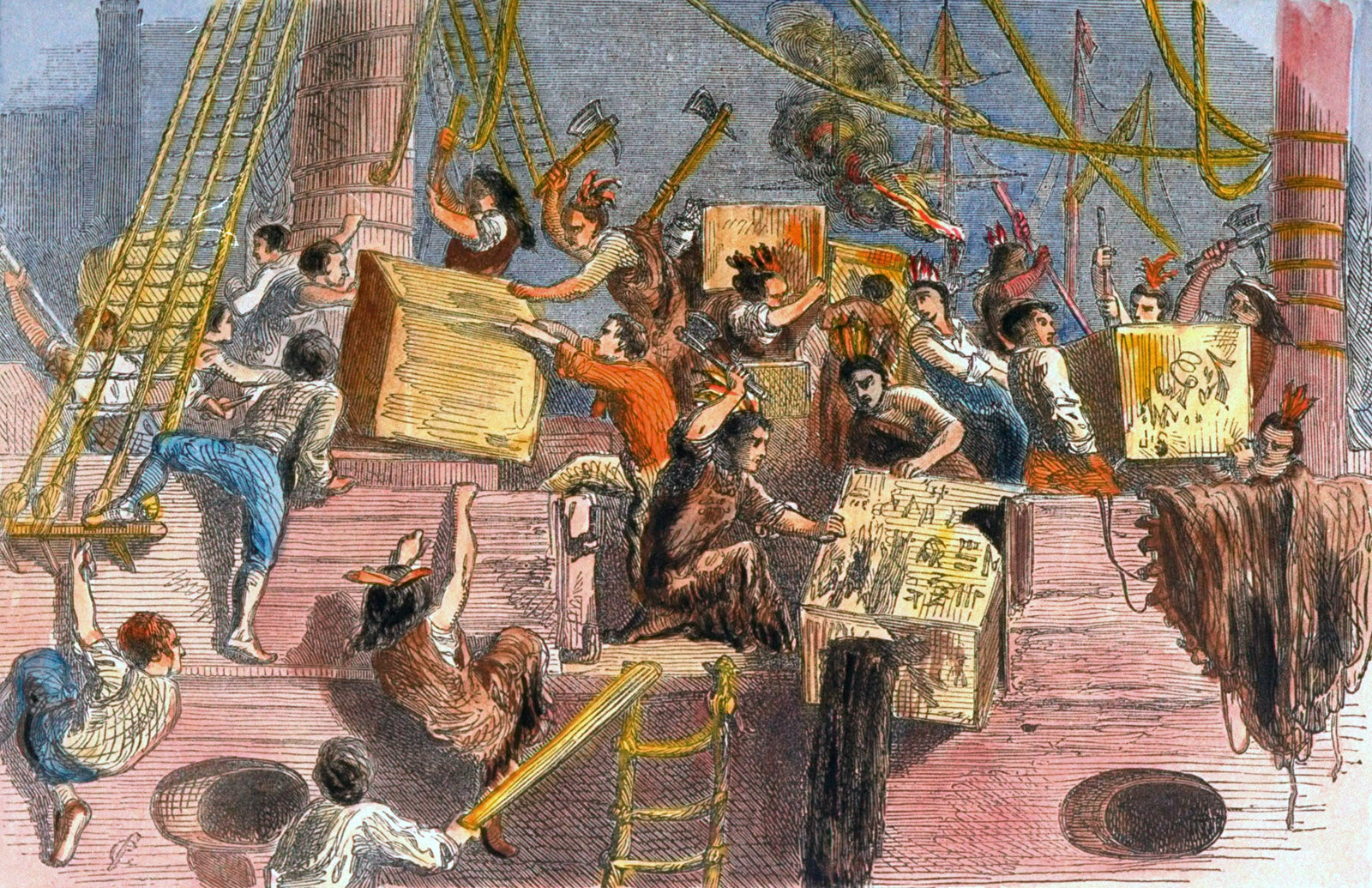
Economic sanctions lead to hardship which leads to reaction. Tea, anyone?

Trade sanctions have long been used to coerce a government to do something it doesn't want to do. It did not just start in the Twenty-first Century, either.

At the moment, there is talk of the United States, a global economic power, using its strength in the marketplace to force Russia to stop doing what it has been doing, which is attempting to take over Ukraine before the European Union gets in there, with all its free markets and liberties and other dangerous notions. Russia is struggling economically due to the usual problems with cronyism and corruption, so the economy is ripe for toppling.

The gun that the U.S. could hold to Russia's head is a figurative one, of course. It is the weapon of economic sanctions that could do just enough damage to Russia before sending the world's economy into a tailspin.

England once did it to the United States when England was a global power and the United States was a collection of former colonies trying to find a way to get along.

How to get the Americans to go along with the plan back in the mid-1700s? Regulate commerce, of course, and control the purse strings. The colonists suffered financially, with businesses hurting due to a lack of free markets to take their goods in exchange for other goods or cash money. As England learned, the locals did not then toe the line scribed by royal decree, but rebelled.

So if the Russian people are made to suffer due to economic sanctions that cripple their personal wealth and ability to feed families, might they then rebel against their leaders and drive them out?

History has shown that it can happen. Wise leaders know it, and so they bend to the demands of the more powerful applying those crippling economic sanctions, but only enough to keep the peons slightly disgruntled. Hold off long enough to make others in the global economy squirm and it's like taking a few bullets out of the economic gun being held to your head.

Wednesday, April 16, 2014

Writer's Retreat, With Birds

Your company for the summer
Bird Watch Ireland is selling a pair of summer jobs in the wrong way.

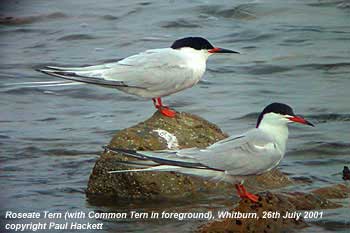
They're almost apologetic about the opportunity to go off to an isolated island, uninhabited by humans, to monitor the roseate tern population. No other people but the two selected for the job. No Internet access. No distractions. Just keep an eye on the birds from time to time and don't get into a holy row with your bird-watching partner because that person is the only other person around to talk to.

This, Bird Watch Ireland, is the perfect writer's retreat.

How long can it take in a day to slap a few rings on bird legs, count a few nests and look for bird eggs? Once you've handled these simple chores, you have nothing but time, and what writer doesn't need time like this to work on a manuscript. The distractions are few, and if you're on this island with another writer, the two of you could be each other's beta readers and really get something accomplished.

While you go about your work, you can mull over sentences in your head and then commit them to paper after the birds have gone to bed. In essence, you would be writing all day, without some boss interfering by giving you a new project or clients ringing you up asking after something you were supposed to get to them ASAP.

And best of all, this is not a retreat where you pay to attend. No indeed. The State will give you money, like a regular employee, a weekly paycheck. Can you imagine getting paid to write? It's like a dream.

There is little time to waste if you're to take advantage of this incredible opportunity. Don't forget to bring lots of paper and plenty of pencils, or pens with an abundance of bottled ink. Night after night, nothing to do but work on a novel, one that might involve the isolation in which we all live despite a crowd of people (or birds) hovering around us. You could find out you're a literary fiction genius before August rolls around and it's time to go back to the madding crowd.

Surrounded by screeching sea birds, you could wax most philosophical. The makings of a great work of literary fiction are to be found here, if you act now to secure your position as tern minder by day, writer by night.

And when you return to civilization and write to a literary agent seeking representation, what could pique more interest than a mention that the manuscript was written on an uninhabited island off the coast of North Dublin? You'd get a few requests for manuscripts with that kind of unique feature, and getting a publishing contract is all about standing out from the mob.

Tuesday, April 15, 2014

Publication Day For THE LIBERTY FLOWER

Congratulations to Katie Hanrahan on the release of her latest novel, THE LIBERTY FLOWER.

You can buy a copy at Amazon, BN.com, Powell's, Waterstones, and just about any other shop that sells books. If it isn't on the shelf, please ask your bookseller to order a copy for you.

And of course you can download a digital edition for any of your electronic devices and be reading this intriguing page turner.

Opening in the tumultuous era of the American Revolution in the prosperous port of Charles Town (later Charleston), South Carolina, THE LIBERTY FLOWER follows the blossoming relationship between an American partisan spy and the British naval officer who sets out to win her heart.

Sarah Mahon and Jack Ashford are torn apart by politics and behind-the-scenes manipulations intended to keep them separated. Life and stubbornness have a way of intruding, however, and as the long war winds down and another begins in France, Sarah and Jack struggle to maintain a tenuous link that binds them together, even if circumstances seem to divide them forever.

A work of historical fiction with a strong romantic element, THE LIBERTY FLOWER is an exciting look at the world in a time of international conflict, when the United States was a weak collection of squabbling states and England ruled the waves, along with commerce and international trade.

On this day when you're paying your Federal taxes, it might ease the sting a bit to read about those who were there when this grand experiment that is American democracy was first born.


Monday, April 14, 2014

The Ongoing War For Independence

Look how civilized we all are. Inviting the Queen to come and celebrate the 1916 Easter Rising with us. No hard feelings, we're all one big happy family here in Ireland.

Except for those less than happy with the 1922 treaty that kept the six northern counties under British rule. There are many residing there who don't see the rebellion as anywhere near finished.

Is This Fighting Necessary?
 What has Professor Diarmaid Ferriter upset about the invitation extended to the Queen is the fact that the government did not consult the committee that is charged with developing a proper and fitting memorial for the centennial of the uprising. This hundred-year remembrance only comes around once, and you wouldn't want to get it wrong. The history happened already, but it's up to the history professors to frame incidents in a context, to study the nuance and put the rebellion into the frame of its era.

What would happen to all that if the Queen of England shows up with some wreath to lay at the tomb of the rebel leaders who were shot down under the orders of her ancestor's government? No hard feelings, Ireland, and can't we all just get along?

Professor Ferriter is particularly concerned that the Queen's presence might give people the idea that the whole thing was totally unnecessary. England was about to grant Ireland some freedom and allow Home Rule, which was the driving issue behind the rebellion. It was coming, some might say, so all those people lost their lives for nothing. A lot of bloodshed, and then the civil war after that, and it was all a waste of human life.

From there, then, would come the belief that those who sacrificed themselves on Easter Monday, 1916, did so to no purpose. They died for nothing.

And what kind of a centennial celebration would it be, to commemorate a complete waste?

Unfortunately, the State cannot very well un-invite the Queen, who has given every indication that she's delighted to attend the upcoming celebration. That leaves damage control to the historians, who very much want to present the past in a way that does not denigrate those who genuinely believed that the British were all talk and no action when it came to Home Rule.

There is a history there as well, a history of Home Rule bills that passed Commons and were killed in Lords, or Home Rule bills postponed for one reason or another.

That's the context in which the historians wish the rising to be seen. Just because the Queen is coming doesn't mean that context has no significance to the events that followed. It just means that what happened in the past should be remembered, but not used as a weapon to keep a feud going far beyond its natural lifespan.

But then again, there is that whole issue of a united Ireland and the counties of the north that still call Elizabeth II their monarch....

Friday, April 11, 2014

To A Friend On The Death Of A Child

I was shocked when your sister rang us up with the news.

In that corner of my head where irrationality and dreaming reside, I hold a hope that you'll be telling me it was a mistake, that the boy who crashed his motorcycle was someone else who borrowed your son's bike. That the lad is back home after spending the night elsewhere.

But we both know that is nothing more than magical thinking.

There will be no words when I see you this evening. What words could be uttered that would ease even a microscopic speck of the pain? There are no words, but we will babble the usual phrases as if expressions of sorrow could mask a deep wound.

You may ask me if I think your son suffered in that brief moment between flying through the air and his head striking the ground. If he felt pain when his neck snapped. That may be the moment our priests describe as the descent into hell, that short span of time when we hover between earth and heaven. I will say that the boy I watched grow up, whose baptism I attended, never knew what happened. Death was instantaneous, painless.

Your wife was against the bike from the start, and don't we all recall how she railed about it over the past two years. But you wanted him to have the things that were denied you, the indulgence and even the attention. For the love of God, don't blame yourself for what happened. She may. She probably will, in her hurt and her anger and her powerlessness. A mother unable to protect her child. She may lash out, and you will have to take it.

The cracks in the foundation of a marriage are tested at times like these, when the oldest child has died in an accident. Your other three children need you to be solid, to be firm, even if you are crumbling. Even if your wife is too shattered to keep it together. What we fear is that this will drive you two apart if you do not make a conscious effort to unite in the face of a profound tragedy. You cannot let that happen.

Some will tell you that time will be a great healer, that life will go on even if you have a gaping hole in your heart. Even if you don't want to go on.

It is true, but right now, you can't see beyond the end of this day.

Tomorrow, the sun will rise and then it will set. Spring will turn to summer and winter will descend, with all the year's reminders of happy times now gone.

Cover your home with photos of your son. Do not be afraid that others will think you mad if you express a fear of forgetting his face, the sound of his voice. This is a time of madness.

It is a time for prayers and fellowship and the support of a community that mourns with you.

Thursday, April 10, 2014

A Character Without Any Redeeming Features

When you create an antagonist for your short story or novel, you can make the character more compelling by making it more human. Yes, this is the enemy of your hero, but everyone has some redeeming characteristic that can be used to tone down the evil. Even those on trial for the most heinous crimes will be depicted as worthy of our sympathy due to some fatal flaw or emotional issue beyond one's control.

Unless, that is, your antagonist is a stockbroker from Davy Group in Ireland. In that case, you'll have nothing redeeming to insert into the character because the firm has proven itself to be so thoroughly ruthless and cold-hearted that even the finest defense counsel in the world wouldn't paint a pretty picture.
Churn and burn the most vulnerable, that's the Davy philosophy
James Haughey was a mentally disabled young man whose parents died far too soon. Stockbrokers with Davy saw an easy mark in the unfortunate orphan, who was so utterly incapable of managing his own finances that he had no idea how much wrong was being done to him.

Mr. Haughey had an inheritance of €5 million to see him through the rest of his life. Davy convinced him to borrow €1.75 million with a portion of his inheritance as collateral. The stockbrokers then invested the loan proceeds into high-risk ventures, after claiming that the client was all in favor of going the high-risk route. At the time, Mr. Haughey was being treated in a psychiatric hospital and wasn't capable of making any sort of financial decisions at all, but when there's a broker's commission at stake, who's to know any different? The man's parents were dead and he wasn't going to kick up a fuss.

Bad investment after bad investment, Mr. Haughey's money was churned and burned through a variety of deals that reportedly could have cost him up to €30 million to get from under the losses.

But the broker made money, so what's the problem?

An Irish court has ordered Davy to reimburse Mr. Haughey in the amount of €2 million, after issuing a scathing rebuke to the firm. It's another black eye for Davy, which already has suffered several bruising over the past few years.

Sure they say they've put safeguards in place to prevent it from happening again, but this was after they claimed in court that they had no idea Mr. Haughey was so bad off as he turned out to be.

Could you write a story and use a Davy stockbroker as an antagonist? What redeeming quality could you find, beyond the fact that a special place in hell is reserved for the crew who covered over a gross abuse of a highly vulnerable individual?


Tuesday, April 08, 2014

Maybe This Time


A theme song is appropriate, to set the mood. Music can give you a clue as to what is about to happen when the event unfolds. So we've chosen "Maybe This Time" as the backdrop to the latest incarnation of Jann Wenner's officially sanctioned biography.

The man who invented Rolling Stone magazine has led an interesting life, and one that the general public would be keen to read. The rag is about to turn fifty, and it's those in the over-fifty demographic who do most of the reading and book buying these days. That same demographic grew up on Rolling Stone, an icon of their youth and a symbol of a lost era. Before there was an AIDS epidemic and smoking weed was highly illegal and thoroughly counter-cultural.

Mr. Wenner has danced at this ball before, however. He sat down with Lewis MacAdams, a longtime friend, and spilled out his heart until about half the book was done. Then the subject decided he couldn't do it after all. As you can imagine, Mr. MacAdams was anticipating literary success and financial benefit, only to lose a great deal of his time at no profit. Mr. MacAdams no longer considers Mr. Wenner a friend.

Then along came Rich Cohen, a contributing editor to Rolling Stone. His literary agent worked up a deal for a reported one million dollars, but again Mr. Wenner couldn't go through with it.

Maybe this time. Joe Hagan will get lucky. Maybe this time Mr. Wenner will stay.

Joe Hagan is also a contributing editor to Rolling Stone, so he's no stranger to Mr. Wenner either. He, too, has signed on a literary agent to shop the potential biography and PJ Mark of Janklow & Nesbit has a writing sample in his office for publishers to peruse. Asking price? Now it's up to around one point five to two million dollars, give or take.

Maybe this time?

Two publishers have been burned on the book. Will a third take a chance with a big advance that may not pay out?

Mr. Hagan swears to Jaysus that it's going to happen. He's already delving into the magazine's archives, with unfettered access. The subject of the bio really, really, really wants his story told because he's getting on in years and doesn't want his story lost to death. So this time, it will happen. No half-finished books, no proposals going nowhere.

But what kind of guarantee can an author give the publisher? A return of the advance after the money is spent? Maybe, if the advance is small enough, with the bulk of the author's pay-out to come from royalties on a finished product that is laid down and selling through before Mr. Wenner again decides that this isn't the time for an unrestricted expose of his life among rock's glitterati.

Monday, April 07, 2014

A Sweeping Saga Of Cold War Spookiness

Brought To You By The CIA
Words have power. If not, there would be no reason to ban books or promote propaganda to achieve political ends. At the same time, words have the power to entertain and captivate an audience. A book can manipulate your thinking and you wouldn't be aware of it, especially if you're caught up in a sweeping epic like War and Peace. Or Dr. Zhivago.

Boris Pasternak was a supporter of the Bolsheviks back in 1914, as were so many others who accepted words as truth, without subtext. In time, he grew disillusioned as the words became deeds that did not fit, while the power-mad prevailed. First Lenin, and then Stalin, and what began as a grand experiment in making all equal turned into a nightmare of suppression. A poet and writer, Mr. Pasternak composed works that spoke of his displeasure with the route the revolution had taken, but he presented a risk to those in charge. Words could move the masses yet again, but in a direction to disrupt the status quo.

Boris Pasternak's sweeping epic, Dr. Zhivago, was banned in his native Russia. It was counter-revolutionary. It gave vent to the hardships faced by the Russian people because of the regime that ruled over them, a capricious lot who used force to bend the nation into a shape that made the Communist Party leaders the new czars and royalty while the people remained downtrodden, hungry and poor.

What better way to covertly undermine the Communist overlords than by promoting the words of Boris Pasternak? Everyone loves a banned book, don't they? There's a curiosity to see what all the fuss is about.

The CIA became Boris Pasternak's literary agent, even if he did not know about it. In 1958, the spy organization promoted the novel behind the Iron Curtain, acting as publisher to get copies into the hands of the disgruntled to make them further disgruntled and perhaps stir up a little counter-revolution.

The book was well-written, which made the task easier. At its core is a love story and adultery in a time of turmoil, with plenty of tension to move the narrative. The novel was deemed so well-written that Mr. Pasternak was awarded a Nobel prize for his efforts. And who wouldn't vote in favor, especially if you particularly relish the idea of poking Stalin in the eye with the sharp stick of banned literature that was read surreptitiously by an eager public.

When David Lean turned the sweeping epic into a sweeping motion picture, the anti-Communist element was impossible to miss. The worldwide audience that flocked to the film was given a hefty dose of Mr. Pasternak's criticism of the demolition of the intelligentsia that threatened the party leaders with contrary opinions and independent thought.

The story of the CIA caper is told in an upcoming book that details the plot to expose the Russians to words that their leaders feared.

If not for a CIA mission to ruffle some Communist feathers, a novel might never have become an important work. In all likelihood, Dr. Zhivago would have faded into obscurity, to be forgotten.

So it isn't all bad, the spookiness of the spooks in espionage. Where would we be without all those little music boxes playing "Lara's Theme"?

Friday, April 04, 2014

The Bare Cupboard

Not even a book?
For a time, David Poindexter tried to sell his storied publishing house, Macadam/Cage, as a going concern. The company had weathered the storms that roiled publishing, with costs rising and the reading public turning increasingly to digital editions that lack the return on investment needed to keep the doors open.

Sadly, Mr. Poindexter was ill at the time and the struggle to keep his dream alive was more than a sick man could manage. No one came forward to buy the publisher, put off perhaps by a history of missed royalty payments and a mountain of debt. Investors did not see the concern as all that going.

Macadam/Cage went into bankruptcy and creditors stood in line, palms out, hoping to recoup some fragment of the debt. A judge has just decreed that the Macadam/Cage cupboard is bare. Utterly and completely bare.

A bank account holds a few hundred dollars, against claims in the thousands. There are a few books scattered about, but books are essentially worthless. All the copies that the public wanted were sold long ago, and remainders are just that. Remainders. The scraps that are usually pulped at a cost to the publisher.

The only remaining avenue for creditors to pursue is the one that pierces the corporate veil. Former employee Dorothy Smith is suing the Poindexter estate, accusing Mr. Poindexter of shifting assets around to shield them from the auctioneer. The Macadam/Cage cupboard may be bare, Ms. Smith says, but all the goodies once stored there were packed up and shipped off to shell companies so that the Poindexters did not suffer from the unfortunate demise of their business. Mr. Poindexter might have been trying to leave something to his widow so that she would not be left destitute upon his demise, but good intentions do not trump fiduciary duty.

Tracing the money trail is a time consuming task and Ms. Smith will not have an answer any time soon. You have to wonder if her legal costs are going to eat up any money she might recover, or if she is pursuing the Poindexter estate on a matter of principle.

For the bulk of Macadam/Cage's creditors, they get nothing but a tax write-off on a bad debt. For readers who enjoyed the quality works of literary fiction that were once the glory of Macadam/Cage, another niche publisher is gone and the literary world is that much worse for it.

Wednesday, April 02, 2014

Further Proof That Men Are Bastards (As If You Needed Any)

Ladies, you all know that men are driven by testosterone and when it comes to sex the male of the species suddenly loses all higher brain functions and resorts to the most primitive of behaviors.

A bath instead of a ciggie after


You know that, but still you'll walk out of a bar with a man you've just met and not even insist on a hotel room with a comfortable bed.

Next time, don't be so amenable to conditions in the field. You might be having if off on a dangerous site and have to call for help. Because you just know that a man won't stick around after he's done. Or before he's done if things, shall we say, slip.

A couple in Ciudad Real, Spain, were struck by a feeling of mutual lust that required immediate coupling. How romantic, she might have thought, when she found herself draped over an old wooden platform, out in the elements, under the canopy of Spanish stars. Perhaps her partner was particularly handsome, or her beer goggles were fogged over, but at any rate, the couple engaged in a bit of shagging on top of a well.

Yes, the kind with water in the bottom of it.

All the motion of the senor's ocean caused said well cover to shift, which can't be totally unexpected. The cover was designed to keep people from falling in from an upright position, not the missionary position.

The rocking and rolling resulted in the cover slipping to such an extent that the lady fell into the well. You can bet that whatever unmet desire Ms. Edelia Aponte might have had was immediately doused with a cold bath.

Her lover promptly....ran. What are the odds that he was a married man who didn't want to get caught cheating?

If not for a passer-by hearing Ms. Aponte's cries for help, she might have died of hypothermia down there. She was pulled out, and then had to explain to the police how she came to be down the well. It's a good bet that she didn't laud her lover's sexual prowess as she mentioned his abandonment. However, it's not clear if she was able to provde a good description of the bastard, as it was dark and she was surely traumatized at falling, and then being left to fend for herself.

Police are now looking for the man who can be charged with conduct unbecoming a gentleman. They're calling it failure to render aid to one in need, such as a woman fallen down a well. If the man does get named and shamed, he'll be facing a lot worse at home. It looks like a long stretch of celibacy in his future.

Tuesday, April 01, 2014

Book At A Discount, No Fooling

Today is the day for pranks and practical jokes, if you're not too busy working like a dog with the boss breathing down your neck to be more productive.

Maybe your notion of April foolery goes no further than sending an e-mail to someone in the workplace that they might think is real, some idle threat about getting the sack or something. Just for a laugh.

But if you are more of the bookish sort, you could send around a notice to your fellow literati that there is a way to save money on an e-book and it's no April Fool's joke.

You really and truly can pre-order THE LIBERTY FLOWER between now and the fourteenth of this month, and use coupon code XU43W at check out. Then you'll only be paying half price for the book you'll receive on 15 April.

You can navigate over to the Smashwords page to read the flap copy, or you can download a sample and read the opening pages.

No joke. You really can save half on the price of an intriguing work of historical fiction with a strong romantic element. Set in the time of the American Revolutionary War, the story of an American partisan spy and the British sailor who she aims to convert to the cause is one that you cannot put down.

In two short weeks, you'll have it on your e-reader, ready to go for a calm weekend of reading and getting lost in a different era.

No fooling. Happy April Fool's Day, and mind the e-mails. You don't want to open something with a virus attached.


Monday, March 31, 2014

Careless Indifference

As you sit in your cubicle on this Monday, feeling put upon by a world that forces you into menial labor when you'd be happier writing, take heart in the early career of Brendan Behan.

Not too early, of course. Not all the way back to the beginning when he was an IRA volunteer trying to blow up British things.

Before the storied author became known as a poet, playwright and novelist, he was trying to get by as a house painter. How could such a dull profession compare to what he had known as a younger man? From an early age he was a courier for the IRA, an activity that led to his arrest and subsequent incarceration in a juvenile detention center in England. Following his deportation and return to Ireland, he kept at his nationalist activities and was arrested again, this time for trying to kill a couple of gardai. He served time in the 'Joy for that one.

After being freed, Mr. Behan had to earn a living, but his head was filled with words that needed to be released. Like you, he went to his job but he was not happy. One of his clients, the lighthouse keeper in County Down, fired off a letter of complaint about the painter's slovenly habits and lack of ability, asking that Mr. Behan be fired. 

The man was no painter. He was a writer.

When he realized that, he lit out for Paris to become a writer. He continued to earn his keep by painting houses, writing in his spare time.

The fact is, unless you have a pool of money to draw from, you have to do something to keep a roof over your head, no matter how much literary talent you have. Until you write your own Borstal Boy, and people pay you for writing instead of slogging away at the day job, you have to slog away at the day job.

You could perform your job with careless indifference, like Brendan Behan, but you'll just have to find another equally dull job if you lose the job for behaving like Mr. Behan at the lighthouse. So, nose to the grindstone. Your writing will have to wait until you get home at the end of a long, dull day.

Saturday, March 29, 2014

Pre-Order THE LIBERTY FLOWER At Half-Price

 
THE LIBERTY FLOWER, the third novel from Katie Hanrahan, will be available on 15 April, 2014.

So maybe you won't have much money left after paying your taxes on that wretched day.

Yet you would not wish to deprive yourself of the enjoyment of reading a remarkable work of historical fiction, set in the opening decade of the great American experiment that is democracy.
Since the fall of Charles Town, Sarah Mahon has found success as a spy for the partisan militia, until Jack Ashford comes ashore. She soon learns that she cannot judge the enemy by the color of his uniform, because a willing man can be made to change his colors by the right woman. It is a discovery that her rebel father does not share. As she is courted by Lt. Jack Ashford of the Royal Navy, those she thinks are allies actively sabotage the relationship that would take Sarah away from the Low Country she longs to escape. A rash act of rebellion meant to cement an engagement will destroy her plans, but Jack is not so easily discouraged. Even after Sarah marries another to save face, the naval officer will not rest until he has claimed Sarah as his own...at any cost.

Spanning the closing decades of the Eighteenth Century, the novel presents the struggle of a woman to gain a small fragment of freedom in an era of enlightened thinking that did not extend to the ladies. Sarah and Jack are separated by politics over which they have no control, their lives diverging and intersecting as an evolving world order sees them wavering between despair and hope. When Sarah is granted a second chance to realize her dream, she will discover that the yearning of a sixteen-year-old girl is radically altered by life's experiences, and the liberty she has gained after years of struggle may be too precious to abandon.  


Pre-order the digital edition of THE LIBERTY FLOWER at Smashwords now, and save half the price. The cash is probably caught under the sofa cushions, and it won't take much. Invest in hours of reading pleasure today and it will only cost you $1.50.

The sale is good until 14 April, 2014, so you'll want to take advantage of the special price soon, before it's gone.

Use coupon code XU43W at checkout to get the special pre-order price.

Friday, March 28, 2014

A University By Any Other Name Would Teach As Sweet

New name, same education
Friends in Chicago take pride in their town's habit of stubbornly refusing to acknowledge a change in name for structures in which they take pride.

The countless Irish who emigrated and sprouted new roots are the source of that mindset. What is happening at Trinity College Dublin proves it.

Ask a true Chicagoan where the Willis Tower is and they'll look at you as if you're in the wrong city. It's the Sears Tower, if you please, because that's what it was called first and nothing's changed about the structure. A foreign entity came in and bought the naming rights but no one asked the average citizen if they approved the change and so, there is no Willis Tower to be found in the city.

For centuries, the collection of buildings dedicated to third level education has been Trinity College Dublin. From the start, it was a Protestant seat of learning. The Catholics created University College Dublin for the faithful, who once found it difficult to gain entry in an era of blatant discrimination against Catholics in the largely Catholic colony of Great Britain.

Universities need to attract students from a broad background in order to flourish, especially if that university is to crank out graduates who go on to become masters of the universe who then donate generously to their alma mater. Public funds are limited, and if a college wants to erect a new chemistry laboratory with state-of-the-art equipment, that takes donations from the alumni.

Then there is the need to have the best and the brightest on campus, to keep the standards high while still filling slots. Employers often base their decision to hire, or not, on where the student went to school. A university with a stellar, worldwide, reputation is more likely to position its graduates in highly desirable jobs.

Where does TCD fit? It is not one of the world's top schools. It is not the worst, either, but it trails several other schools in Europe, from which it seeks to draw students. The average Irish kid knows how the system works. He or she would rather go someplace with a big name than settle for UCD if their parents can handle the expense. That's not the best way to build a brand.

So TCD is going to re-brand. The administration is, at any rate. The professors aren't buying it.

Officially, it will soon be Trinity College, the University of Dublin. Someone must have thought that had a nice ring to it, like Mansfield College, the University of Oxford. And there's no denying that Oxford is far above TCD in the league tables.

Changing the name won't improve academics or boost funding, but it will annoy the professors who have published (rather than perish) as teachers at Trinity College Dublin. They fear a name change will result in their brilliance getting lost in cyberspace as scholars search "Trinity College, the University of Dublin" and do not find those works published under the old name.

They will not use the new name. The administration can splash it over letterhead and website and wherever, but the rank and file will be TCD forever.

Like the Sears Tower in Chicago. There is no TC, the U of D in Dublin, even if the sign in front says something different.

Thursday, March 27, 2014

Dystopia Is So 2013

It's over for dystopia
HarperCollins is delighted that the film version of Divergent raked in over fifty million U.S. dollars in its first weekend at the cinema.

The publisher also took note of the smaller haul as compared to a previous young adult dystopian fantasy film. The Hunger Games far outshone Divergent. Reading those cinematic tea leaves, publishers have determined that YA dystopian is yesterday's hit and today's rejection.

The book fair underway in Bologna, Italy, is the place where children's and YA upcoming titles are bandied about. Literary agents attend to gain insight into what the publishers want going forward, so they know what manuscripts will sell in the near future. What it means for you, the writer, is that your perfect manuscript has become worthless if the theme is a future dystopia.

Hence the advice to write what you love, because you don't really know what the publishers will be looking for when your manuscript is ready for public viewing. If you thought to jump on the dystopia bandwagon when The Hunger Games was all the rage, you were already too late.

If you were persistent and stuck with realistic settings for your novel, you're in the right place at the right time. Agents representing YA or children's lit will return from their meetings in Bologna and hunt through the slush for something that suits the anticipated demand. That means authors who wrote what was not popular when they were doing the writing stand to benefit from either foresight or good luck.

Look back to the Harry Potter era and you'll see the same. Wizards were all the rage for a time, but like any other fad, it came and went. The same thing is happening to the fantasy genre, in which the reading public has seen all they care to see about societal collapse and would like something fresh and new. Publishers believe that fresh and new upcoming fad will center on realism.

Chasing trends never works because you can't hope to catch up. Books appearing now were manuscripts two years ago, not following a trend but starting a new one.

So write your passions and fears. Write what resonates with you, and hope that it will resonate with others at some future time, when publishers at the Bologna book fair issue a call for Middle Grade or Young Adult in your literary niche. If you land in the right place at the right time, you're in. If not, you're out. Which means you have to write something else, and try again.

Tuesday, March 25, 2014

Rock, Paper, Scissors

The thirteen-year-old daughter of Alicia Guerrero met a boy on Facebook and entered into a relationship that Ms. Guerrero did not try to block because she thought her disparaging remarks would drive her daughter closer to an unacceptable relationship.

Paper covers rock.

The boy turned out to be a 21-year-old man who also proved himself abusive. The daughter ran off with Erick Maya, but begged her mother not to press charges when the girl was finally located and returned home. Yielding to a child, Ms. Guerrero did not have the man arrested, but instead sought a court order of protection against him.

Scissors cuts paper.

There might have been a time when a father would confront the young man in question, perhaps in company with various other adult relatives, and use words or fists to convince said young man that he was wise to stay away. Sadly, there was no father to stand up for the girl. Only her substitute father, the anonymous government with its power to use legal words to sway minds and change behaviors.

Rock dulls scissors.

The courts, being overburdened, did not go after Erick Maya in the same way a biological father would go after any man annoying his daughter. The pieces of paper that came out of the various hearings never quite made their way to Mr. Maya because he was too hard to find. Like when he was in another courtroom, on trial for beating up a different girlfriend. And again, when he was being held in jail pending a deportation hearing. He was released because the County of Cook declared it would no longer cooperate with Federal authorities seeking to deport illegal aliens by holding them in confinement.

Paper covers rock.

Ms. Guerrero moved out of the city and into a suburb, to escape Erick Maya and protect her daughter by putting a wall of distance around her. Society is mobile. Erick Maya found the daughter and tried to resume the relationship under his belief that it was not over until he said it was over. One morning, he walked up to Ms. Guerrero's car as she and her daughter were getting ready to leave for school, and shot the daughter dead.

Erick Maya will soon face trial on a charge of murder. There were many opportunities to stop him, to put him away, but the paper that was supposed to be a shield was too easily penetrated by a couple of bullets.

Saturday, March 22, 2014

Hearsay Or Testimony

Oral histories are an essential part of preserving history. What better source than those who were there, who can describe their thoughts and emotions?

Oral histories are stories told to someone conducting an interview, usually the person who intends to use the oral histories to compose an overarching story of what happened when.

Researchers at Boston College spoke to those who were involved, in some manner, with The Troubles that plunged Ireland into a world of terror. Those who agreed to share their thoughts and experiences did so with the understanding that what they revealed was being kept in confidence. Only after they died could anyone know what they said.

So when the courts came knocking, asking after the transcripts and recordings, the researchers at Boston College discovered that their assurance of confidentially held no weight. They were not professional journalists allowed to protect a source. They were just a bunch of academics who could not hold back that which the Police Service of Northern Ireland wanted.

They wanted the words so they could prosecute those who were either fighting for freedom or committing a crime, depending on your side of the divide. An American court determined that the PSNI could have the tape-recorded oral histories, and so Ivor Bell was arrested and charged with aiding the murder an innocent Catholic woman who did not toe the IRA line.

So are those oral histories just hearsay? Conducted by a university researcher, could a jury conclude that the oral histories did not follow proper protocol for a police interrogation? Mr. Bell's solicitor would like the judge to think so, but given the flight risk of the average IRA member, Mr. Bell has been denied bail.

Can he receive a fair trial? The Catholics on the jury might not be willing to convict, swayed by centuries of colonial rule and blatant bigotry so ingrained that no trial will ever be perceived as fair. The Protestants on the jury would convict because Mr. Bell was active in the IRA and they'd like to see him hang on a matter of principal.

Then there is the collection of recordings. Could they be considered nothing more than hearsay? The PSNI can conduct voice analysis to prove it is Mr. Bell doing the talking, but is he giving testimony, making a confession, or relaying things he heard someone else say?

When the peace process was concluded at the close of the Twentieth Century, those in jail for political crimes were let go, with the idea that their release was also the letting go of the past. The past, unfortunately, did not quite go away, and the difficult issue of dealing with illegal activities in the name of rebellion will have to be faced.

Friday, March 21, 2014

We'll See How Much Water You Don't Drink

Transforming doesn't quite say it all
They're a thirsty bunch in Castlerea, County Roscommon. They say they haven't had potable drinking water for years.

Irish Water will just see about that.

The town is about to be blessed with water meters.

Not the water they've been asking after all this time. But meters to monitor how much of the water they say they aren't getting is not flowing through the taps.

The water that does arrive in Castlerea homes has to be boiled prior to use, and many people buy bottled water just to be on the safe side. How can you be sure that you've killed what's in it that would kill you?

So they've been paying for their drinking water all along. It's just the profit doesn't go to Irish Water, but to the shops and the bottlers. On top of that cost, the residents will now have to pay for the polluted water they use to flush their toilets and wash their clothes.

Not exactly the best way to promote water conservation via metering to make people aware of how much they use, and to encourage them to save money by being water-aware. They're aware of the water in County Roscommon. Very aware. But not in the same way as Irish Water.

Repairs are in the works, it's being said, and the folks will be able to drink the water by Christmas.

In the meantime, the meters are going in and it's not quite April. Funny, that. They can install an entire system of meters but they can't fix what's broken in the water delivery system.

Irish Water is proud of the progess they are making in getting water meters installed in every Irish home. No easy task, considering the animosity towards the metering program. That's how it goes. When people are getting something for free, they resent having to pay for it later. Especially when what they're paying for isn't safe and they have to pay for expensive bottled water on top of the newly introduced fees.

Irish Water could reduce usage by repairing all the leaks in the system, which is a large part of perceived usage. All the meters in Ireland won't help that, but it will point out to taxpayers how much of a valuable resource is wasted because Irish Water can't afford to fix the pipes.

Neither can Irish Water manage to provide water.

But it can find a way to charge for that water. So at least there's some progress being made.

Thursday, March 20, 2014

Buy A Lower Tax Rate

Why pay 35% when you can lower that tax rate to 20% or less?

If you're a corporate executive, that's not a question you want the board of directors asking after you've finished your PowerPoint presentation on profit and loss for the annum.

Why not buy into Ireland?

Why not, indeed. Ireland welcomes you. Cead mile failte and if you could see your way to bringing a job or two, it'd be grand, so.

Passion to cut corporate expenses
Horizon Pharma, based in the States, is buying up a similar pharmaceutical firm in Ireland. And they're not shy about the reason. They want a presence in Ireland to take advantage of the lower corporate tax rate. Headquarters will remain in Deerfield, Illinois, a quiet suburb north of Chicago. For taxing purposes, the new entity that combines Horizon with Vidara Therapeutics, will exist in Ireland.

It's all to the good for Ireland, which is counting on CEO Tim Walbert to realize his plan to expand the firm's product offerings. That has the potential to bring in new jobs at the Vidara plant, and jobs are desperately needed. The country would rather accept a smaller slice of corporate profits if it can boost job growth instead, taking a longer term outlook at the benefits and costs of the tax policy.

If Ireland can outcompete on labor costs as well, it would be sound fiscal policy for Horizon Pharma Plc to make more medicines in Irish factories. Again, the return on investing that is this reduced tax rate results in more people working, and the more people finding jobs, the better the chances that Fine Gael can retain power. Why change things to suit the demands of foreign countries like France?

As for Horizon, the company can take the money they don't pay in corporate tax and buy up other companies or other products to further expand their portfolio of drugs. More medicines yields more profits and more profits are invested again and then the stock price goes up. Basic business strategy, and one that Ireland takes advantage of. Hence the nation's stubborn commitment to a low corporate tax rate.

Not that the United States can make too much noise about the issue. There is still no American ambassador in Dublin, over a year after the last one stepped down.

You'd think they didn't care about American firms finding ways to avoid paying American taxes by turning to Irish tax havens. They don't have anyone nearby to voice a complaint.