If the phrase sounds familiar, it's because you've heard it at Mass. You know those long stretches where the priest runs through the litany of saints and he's praying like mad up there at the altar and you're trying not to doze.
At every Mass, the Catholics pray for the good of the Church. Little did they ever guess how far their Church leaders would go to ensure that goodness.
This is no left wing conspiracy. A letter has come out, typed up in perfect Latin by Joseph Cardinal Ratzinger. In plain words, he states that he isn't going to rush right out and defrock a pedophile priest.
Why not?
He had to consider what was best for the good of the Church.
What's best for the abused children? Well, what ever is best for the Church, of course. If it's deemed ideal to swear the victims to secrecy, to shuttle the offending priest from parish to parish and not warn anyone he's coming, then that's the approach to take.
All those years that passed between Father Kiesle's sentencing in an Oakland, California, court and the Vatican's decision to strip the man of his collar, why, that time was needed to reflect and decide how best to react. Wouldn't want to upset the parishioners, after all. Some rash act, like coming down on the priest with fury, might make people turn away from their Church in horror.
Pity that Joseph Cardinal Ratzinger didn't think to poll a group of mothers, to get their opinion. He might have learned that covering up the abuse of children by trusted clerics is considered a worse sin than kicking a convicted pedophile to the curb. Taking quick action to separate abuser and victim would have been a plus, actually. A bunch of old men, noses in prayer books, wouldn't understand such an attitude.
By stalling from 1978, when the crime was prosecuted, until 1987 when the priest was defrocked, the current Pope managed to do the wrong thing while seeking the right path. He needed all those years to figure out what approach was best, for the good of the Church.
And in all that time, he managed to inflict more damage on a Church already crumbling because that which was hidden was revealed, and the faithful were horrified by the Vatican's concern for its image.
So when you're half-listening to the Mass, and the priest makes mention of the good of the holy Church, you might want to insert your own prayer and ask God to look out for the members of the Church. Protect them from their clueless leaders for they know not what they do.
Saturday, April 10, 2010


Friday, April 09, 2010
A Shout-Out For The Home Town
If only I had the money and the time, I'd be heading back.
Alas, it's not to be. The best I can do is promote a literary festival that couldn't have been set in a more beautiful location.
The town of Newcastle West, in the County of Limerick, will celebrate the life and work of their local boy who did good. Except for the part where he drank himself to death, that is, but all the rest is pure brilliance.
From 22 April through the 24th, the town will celebrate the legacy of poet Michael Hartnett.
Popular columnist Fintan O'Toole will deliver the key lecture. In addition, a bevy of poets will be on hand reading poetry, dancers will be dancing, singers will sing, and anyone fortunate enough to attend will be treated to a weekend of Irish culture.
Eigse Michael Hartnett, now in its tenth year, offers the visitor a warm welcome from the small town located in the heart of dairy country. Limerick County Council has a full roster of tourist-related activities, including music and dance. There will be things to do and see in the pubs, church, schools and just about any room available in town that can hold a gathering.
There's golf and hiking and St. Patrick's Well if you're of a mind to unwind rather than be mentally challenged, and you can do it all in the prettiest, greenest part of the island.
Not that I'm biased, of course. And not that I believe the relatives who claim we're related to the poet.
Alas, it's not to be. The best I can do is promote a literary festival that couldn't have been set in a more beautiful location.
The town of Newcastle West, in the County of Limerick, will celebrate the life and work of their local boy who did good. Except for the part where he drank himself to death, that is, but all the rest is pure brilliance.
From 22 April through the 24th, the town will celebrate the legacy of poet Michael Hartnett.
Popular columnist Fintan O'Toole will deliver the key lecture. In addition, a bevy of poets will be on hand reading poetry, dancers will be dancing, singers will sing, and anyone fortunate enough to attend will be treated to a weekend of Irish culture.
Eigse Michael Hartnett, now in its tenth year, offers the visitor a warm welcome from the small town located in the heart of dairy country. Limerick County Council has a full roster of tourist-related activities, including music and dance. There will be things to do and see in the pubs, church, schools and just about any room available in town that can hold a gathering.
There's golf and hiking and St. Patrick's Well if you're of a mind to unwind rather than be mentally challenged, and you can do it all in the prettiest, greenest part of the island.
Not that I'm biased, of course. And not that I believe the relatives who claim we're related to the poet.
Thursday, April 08, 2010
The Catholic Church And The Scandal That Won't Go Away
The latest approach from the Vatican? Turn the tables on those who accuse and accuse them in return.
Call on the Pope to resign? Claim that the plodding German engaged in a conspiracy to cover up the sex abuse scandal run rampant? You're the sinner, not His Holiness.
Maybe you're buying into the line that the leftists are out to destroy the Church.
Maybe you need to read about what went on in Ireland for decades, a scandal that broke over the Church and continues to reverberate.
It's almost laughable, to listen to the higher ups try to push the pedophile priest transfer system under the rug. Blame the New York Times for covering the story and tell the few remaining faithful that the reporter has an axe to grind. The Pope didn't know about the abuser at the school for the deaf in the U.S. even if he was in charge of the office that was supposed to investigate and remove offenders. Those leftists, you see, the atheists and the Jews and the Protestants who would tear down the Dome of St. Peter....
How does a man of the cloth admit that his every action was to protect the Catholic Church from bad publicity, rather than protect an innocent child? He accuses his accusers of spreading gossip and misinformation.
Often, the tactic works. When a group of survivors of Ireland's industrial school system staged a protest recently at the Pro-Cathedral in Dublin, they were highly criticized for daring to confront the bishop himself. Adults who bear the scars of abuse were heaped with abuse from the blind and faithful followers, who won't hear a word of criticism directed at those who could have stopped that abuse decades ago.
They're only trying to destroy the Church, those dedicated parishioners will say. They take it on faith, the words of the priest in the pulpit who criticizes the words of the criticizer.
Shoot the messenger if you like, but the message remains. A new message is delivered with every attempt to demonize those who speak up, a message that reiterates the absolute power of those in charge.
Rally round the Papal Flag, boys. Circle the wagons. Support your local cardinal.
A few are listening and heeding the word. Most are laughing it off, even as they go to Mass on a Sunday. Then they laugh when the basket is passed, collecting money for Peter's Pence, for the Holy Father's use, snickering as they pass it on empty. They've got their own message, you see, one that won't be covered in the New York Times.
The cover-up has been done to death, and all to the same effect. The believers aren't so believing any more.
Call on the Pope to resign? Claim that the plodding German engaged in a conspiracy to cover up the sex abuse scandal run rampant? You're the sinner, not His Holiness.
Maybe you're buying into the line that the leftists are out to destroy the Church.
Maybe you need to read about what went on in Ireland for decades, a scandal that broke over the Church and continues to reverberate.
It's almost laughable, to listen to the higher ups try to push the pedophile priest transfer system under the rug. Blame the New York Times for covering the story and tell the few remaining faithful that the reporter has an axe to grind. The Pope didn't know about the abuser at the school for the deaf in the U.S. even if he was in charge of the office that was supposed to investigate and remove offenders. Those leftists, you see, the atheists and the Jews and the Protestants who would tear down the Dome of St. Peter....
How does a man of the cloth admit that his every action was to protect the Catholic Church from bad publicity, rather than protect an innocent child? He accuses his accusers of spreading gossip and misinformation.
Often, the tactic works. When a group of survivors of Ireland's industrial school system staged a protest recently at the Pro-Cathedral in Dublin, they were highly criticized for daring to confront the bishop himself. Adults who bear the scars of abuse were heaped with abuse from the blind and faithful followers, who won't hear a word of criticism directed at those who could have stopped that abuse decades ago.
They're only trying to destroy the Church, those dedicated parishioners will say. They take it on faith, the words of the priest in the pulpit who criticizes the words of the criticizer.
Shoot the messenger if you like, but the message remains. A new message is delivered with every attempt to demonize those who speak up, a message that reiterates the absolute power of those in charge.
Rally round the Papal Flag, boys. Circle the wagons. Support your local cardinal.
A few are listening and heeding the word. Most are laughing it off, even as they go to Mass on a Sunday. Then they laugh when the basket is passed, collecting money for Peter's Pence, for the Holy Father's use, snickering as they pass it on empty. They've got their own message, you see, one that won't be covered in the New York Times.
The cover-up has been done to death, and all to the same effect. The believers aren't so believing any more.
Wednesday, April 07, 2010
BitTorrent For A Bit More
Once you've signed on for Comcast high speed Internet, you expect to pay a monthly bill and that's the end of it.
Things may soon change.
When Comcast figured out that some of their clients were using BitTorrent to make it easier to download byte-heavy content, they saw a way to increase their profit margins. Why not charge extra for the privilege of being a bandwidth hog?
The case went to court and the end users won, only to lose on appeal. The idea of net neutrality, that anyone who pays the set fee can use as much as they want, is no longer the standard.
Like so many other lawsuits involving the Internet, this one hinges on a technicality. As the law is written, according to the District of Columbia Court of Appeals, the Feds had no legal grounds on which to slap down Comcast. The law hasn't kept up with the fast pace of electronic evolution and it's fallen far behind.
The solution lies in the halls of Congress, where new law would have to be crafted to permit net neutrality. As you'd expect, the heavy hitters in the Internet provider industry are lobbying heavily to get the legislation worded in their favor. They'd very much like to charge a premium for certain content, and charge more for the heavier users.
Unfortunately, the wheeling and dealing over the health insurance overhaul has left Congress so divided that it's unlikely another piece of legislation will come out of the Senate any time soon. Once President Obama came out on the side of net neutrality, you could bet that the regulatory issues wouldn't be considered for years. Expect Google to donate heavily to Democrats while Comcast and Verizon pour contributions into Republican coffers in the meantime.
Some have suggested that the Feds can twist the language around, give it a tweak, and lump Internet regulations into existing law, but it's not an easy task when commissions are not allowed to make law even if Congress can't get its act together to fix things.
Internet providers keep raising their prices anyway, so it's unlikely that anyone would much notice if they take advantage of the Appeals Court ruling and introduce a new fee schedule. What users will notice is a slow-down in download speed if Comcast decides to charge the provider, a Google or a Yahoo for example, for the privilege of a faster download. And Google doesn't cave in to the blackmail.
Things may soon change.
When Comcast figured out that some of their clients were using BitTorrent to make it easier to download byte-heavy content, they saw a way to increase their profit margins. Why not charge extra for the privilege of being a bandwidth hog?
The case went to court and the end users won, only to lose on appeal. The idea of net neutrality, that anyone who pays the set fee can use as much as they want, is no longer the standard.
Like so many other lawsuits involving the Internet, this one hinges on a technicality. As the law is written, according to the District of Columbia Court of Appeals, the Feds had no legal grounds on which to slap down Comcast. The law hasn't kept up with the fast pace of electronic evolution and it's fallen far behind.
The solution lies in the halls of Congress, where new law would have to be crafted to permit net neutrality. As you'd expect, the heavy hitters in the Internet provider industry are lobbying heavily to get the legislation worded in their favor. They'd very much like to charge a premium for certain content, and charge more for the heavier users.
Unfortunately, the wheeling and dealing over the health insurance overhaul has left Congress so divided that it's unlikely another piece of legislation will come out of the Senate any time soon. Once President Obama came out on the side of net neutrality, you could bet that the regulatory issues wouldn't be considered for years. Expect Google to donate heavily to Democrats while Comcast and Verizon pour contributions into Republican coffers in the meantime.
Some have suggested that the Feds can twist the language around, give it a tweak, and lump Internet regulations into existing law, but it's not an easy task when commissions are not allowed to make law even if Congress can't get its act together to fix things.
Internet providers keep raising their prices anyway, so it's unlikely that anyone would much notice if they take advantage of the Appeals Court ruling and introduce a new fee schedule. What users will notice is a slow-down in download speed if Comcast decides to charge the provider, a Google or a Yahoo for example, for the privilege of a faster download. And Google doesn't cave in to the blackmail.
Tuesday, April 06, 2010
Pining For The Fjords
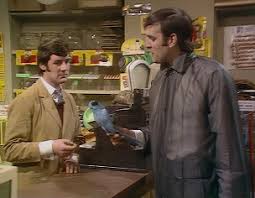 He's not dead, the two women said. He's resting.
He is no more, said the official at John Lennon Airport in Liverpool. He is deceased. He has gone to meet his maker.
He's pining for the fjords, they said. Or perhaps it's the Black Forest Forest he's dreaming of.
If you hadn't propped him up in the wheelchair he'd be pushing up daisies, retorted the official. He is an ex-pensioner.
What had worked so well as a premise in a Hollywood movie didn't play out as expected when a pair of travelers tried to bring a dead man on a plane. The sunglasses didn't fool anyone. Assurances from the two ladies that their companion was asleep flew in the face of the fact that the elderly man was not breathing.
Authorities would like to know how the pair managed to move Grandpa in a taxi from their home to the airport without raising the suspicions of the taxi driver, miscellaneous people standing around at the unloading zone of the airport, and the throngs inside the terminal.
No one asked questions until the women were trying to board the plane to Berlin and someone noticed that the elderly gent was behaving like dead weight rather than a live body.
Everything is so expensive these days, and the airlines aren't so amenable to process changes at no charge. If the old man had a ticket for his return flight to Germany, it made no sense financially not to use that ticket since he had to go back, dead or alive.
Imagine the paperwork and the nightmare involved in reporting his demise. Not that there would be any suspicion attached to the women. The man was 91 years of age, after all, and had enjoyed the blessings of longevity.
Still, there would be delay and then it's three tickets that aren't refundable. Add to that the costs of shipping a body across the English Channel. Processing the request could take who knows how long, and if you're heading back to Germany for a relative's wedding, you wouldn't want to miss it for the sake of some legal mumbo-jumbo.
The simplest solution might have worked, if the dearly departed had looked a bit less moribund. A touch of cosmetics, pass him off as an old queen, and the trio might have arrived in Berlin as planned. Fly the body back home on the cheap, confine all funeral expenses and undertaker's services to German hands, and it's a cost savings all around.
Instead, someone realized that the pensioner had joined the bleedin' choir invisible and the ruse fell apart.
Like so many other cost-saving ventures, this one proved to be a case of false economy. The two women were charged with failing to report a death and they'll have legal fees and court costs on top of the expense of shipping the old man back to Germany.
And all for the sake of not wasting a perfectly good plane ticket.
Monday, April 05, 2010
Pennies On The Eyes Won't Cover The Bill

Pennies aren't going to be near enough cash, thanks to the latest decision from the wise fools running the European Union.
The Value Added Tax, or VAT, applies to burials as well as the needs of the living.
Any Irish citizen wishing to buy a burial plot from their local county council will have to pay a tax of 13.5 per cent. It's not so cheap to plant Granny in the aul' sod.
The additional income will drop into the Exchequer's grasping fingers, while Irish undertakers pass the added cost along to their customers. A piece of ground that cost E1275 yesterday will run an additional E172 on the first of July, and the funeral directors don't have any interest in cutting their profits by that same amount. As always with a VAT, the customer pays the price.
Opting for cremation won't help because there's a VAT of 13.5% on that as well. Once you've got the ashes of your loved one, you might be more inclined to scatter the remains or dig a discreet hole in the cemetery under the cover of night, to avoid paying out even more for burial.
Little wonder that members of the U.S. Congress are pushing for the Value Added Tax. As a source of revenue, it's hard to beat, seeing as how it's applied to every single thing that a person might have to buy, from the beginning of life to its very end.
The only way to avoid paying is to work through the black market economy, where a willing priest will bless a corner of the back garden and a few like-minded friends will help you dig a deep hole. It's that, or stuff the dearly departed in a large trash bag for a bargain burial in the local landfill. With the high cost of living, a person has to do something to alleviate the high cost of dying.
Friday, April 02, 2010
The End Of Times
Should you be one of the fortunate ones, you'll be playing with you iPad today and won't notice that the Earth has trembled.
Turn the pages of that e-book and marvel at the graphics that resemble a page curling to the side. Touch the screen, open applications, and stay up half the night trying it all out.
Could it be a matter of timing, then? Has the pub industry in Ireland taken advantage of a confluence of events to do what's not been done before?
The pubs are open today. Good Friday. The pubs. Open.
Make no mistake about it. There may be immigrants from other countries now residing in Ireland. There may be Muslims and Jews and a mash-up of Christian sects living there, but it's a Catholic country just the same and a Catholic would never think of taking drink on Good Friday.
Should a Catholic harbor a desire for liquor, the Church saw to it that the thought wouldn't be translated into action. Since 1927, it's been illegal, and pubs have closed their doors on every Good Friday since.
Times are changing, or we're reaching the End of Times.
Tourists looking for a meal were always shocked to discover that they had a difficult time finding a casual place to dine on Good Friday. This year, Dublin pubs plan to open their doors to serve food and non-alcoholic beverages. With fewer tourists, no one wants to frighten them away. Besides, it's only a ban on liquor, not food, and there's a chance to make a little money on the dining end of the business.
Tourists must be served, but rugby trumps all.
Leinster plays Munster today. The pubs in Limerick will be open and the beer will be flowing. There's an exemption in the law for 'special events' outside of Dublin, and if the rugby match isn't special, nothing is.
In the mind of noted publican Charlie Chawke, you can go to church if you like and spend the afternoon in prayer, but if someone wants to sip on a pint and watch rugby instead, why should they be denied? He thinks the law should be changed.
Visitors to Ireland should be encouraged to travel to the west, to enjoy the beauty of Country Limerick. It's the only place on the island to get a drink on a Friday night that happens to be a religious holiday. It's the only place in sync with the rest of the world.
Turn the pages of that e-book and marvel at the graphics that resemble a page curling to the side. Touch the screen, open applications, and stay up half the night trying it all out.
Could it be a matter of timing, then? Has the pub industry in Ireland taken advantage of a confluence of events to do what's not been done before?
The pubs are open today. Good Friday. The pubs. Open.
Make no mistake about it. There may be immigrants from other countries now residing in Ireland. There may be Muslims and Jews and a mash-up of Christian sects living there, but it's a Catholic country just the same and a Catholic would never think of taking drink on Good Friday.
Should a Catholic harbor a desire for liquor, the Church saw to it that the thought wouldn't be translated into action. Since 1927, it's been illegal, and pubs have closed their doors on every Good Friday since.
Times are changing, or we're reaching the End of Times.
Tourists looking for a meal were always shocked to discover that they had a difficult time finding a casual place to dine on Good Friday. This year, Dublin pubs plan to open their doors to serve food and non-alcoholic beverages. With fewer tourists, no one wants to frighten them away. Besides, it's only a ban on liquor, not food, and there's a chance to make a little money on the dining end of the business.
Tourists must be served, but rugby trumps all.
Leinster plays Munster today. The pubs in Limerick will be open and the beer will be flowing. There's an exemption in the law for 'special events' outside of Dublin, and if the rugby match isn't special, nothing is.
In the mind of noted publican Charlie Chawke, you can go to church if you like and spend the afternoon in prayer, but if someone wants to sip on a pint and watch rugby instead, why should they be denied? He thinks the law should be changed.
Visitors to Ireland should be encouraged to travel to the west, to enjoy the beauty of Country Limerick. It's the only place on the island to get a drink on a Friday night that happens to be a religious holiday. It's the only place in sync with the rest of the world.
Thursday, April 01, 2010
German Ale For What Ails Us
Belly up to the bar on a Friday afternoon. The week's been murder and you could murder a pint.
Make it a pint of Germany's newest offering. How about a round of Fucking Hell?
The good citizens of Fucking, a town near Salzburg, are not at all amused by the snickers of the English-speaking world. Needless to say, they were resentful of the European Union's need to certify that the beer's label isn't implying anything vulgar. Nor does it insult any particular social or ethnic group, although the people who live there might not agree.
So Fucking Hell doesn't suggest vulgar sex acts or an encouragement to engage in violence. Indeed not.
On further review, the wise men in the Trademarks and Designs Registration Office realized that they couldn't ban the brand since there is a real place named Fucking and it's in Germany which is famous for beer. Just because someone put together the names of two places and created a double entendre can't be considered illegal.
It's only the English speakers who find it hilarious or vile, and that's certainly not the majority of the European Union. So let the Brits and the Irish go snigger in their beer. The French have their fine wines and impeccable manners and they're not going to be roped into the discussion.
That's where the decision currently stands. In all likelihood, a directive will be issued shortly, ordering everyone to use the proper pronunciation. Ask for a "fooking" hell or risk a serious fine.
Make it a pint of Germany's newest offering. How about a round of Fucking Hell?
The good citizens of Fucking, a town near Salzburg, are not at all amused by the snickers of the English-speaking world. Needless to say, they were resentful of the European Union's need to certify that the beer's label isn't implying anything vulgar. Nor does it insult any particular social or ethnic group, although the people who live there might not agree.
So Fucking Hell doesn't suggest vulgar sex acts or an encouragement to engage in violence. Indeed not.
On further review, the wise men in the Trademarks and Designs Registration Office realized that they couldn't ban the brand since there is a real place named Fucking and it's in Germany which is famous for beer. Just because someone put together the names of two places and created a double entendre can't be considered illegal.
It's only the English speakers who find it hilarious or vile, and that's certainly not the majority of the European Union. So let the Brits and the Irish go snigger in their beer. The French have their fine wines and impeccable manners and they're not going to be roped into the discussion.
That's where the decision currently stands. In all likelihood, a directive will be issued shortly, ordering everyone to use the proper pronunciation. Ask for a "fooking" hell or risk a serious fine.
Wednesday, March 31, 2010
What Is The Query's Fate
I've been using WEbook's agent querying service, although the results haven't changed as compared to the old-fashioned, do-it-yourself technique.
To prepare for another round of queries with a re-written letter and a new hook, I looked over the list of who has already rejected the manuscript, and noticed that a few agents have yet to open the submission.
For e-queries, it seems reasonable to wait for a couple of weeks, or maybe a month if the agent has gone totally paper-free. They're not getting to their e-mail any faster than they used to when paper queries were more in vogue.
With that in mind, I'd say it's a good bet that Jesseca Salky at Russell & Volkening isn't interested in getting queries at all. Four months is more than enough time to consider it a rejection without the query even being considered.
Going with the three week cut-off, I wondered if Brandi Bowles was open to queries or just hadn't gotten around to reading the slush pile. It might not be the case at all.
She was working at Howard Morhaim's agency when I submitted the package through WEbook. Since then, she's moved over to Foundry Literary.
I'd like to move the query over to where she is now, but with WEbook, there's no way to do it. Just as well, since I sent the same query to Yfat Reiss Gendell at the same agency. Wouldn't want to query two agents at the same place at the same time and get put in their black book.
Does this mean that the query doesn't count? Can it be a do-over if I wait long enough for Ms. Gendell to not reply? I can't use WEbook, though, since they still have Ms. Bowles with Howard Morhaim, and would have to send the submission through the mail.
Where has the query gone, if the agent has moved? Is it going to hang in there for all time?
I wish I could take it back and pretend it never happened.
To prepare for another round of queries with a re-written letter and a new hook, I looked over the list of who has already rejected the manuscript, and noticed that a few agents have yet to open the submission.
For e-queries, it seems reasonable to wait for a couple of weeks, or maybe a month if the agent has gone totally paper-free. They're not getting to their e-mail any faster than they used to when paper queries were more in vogue.
With that in mind, I'd say it's a good bet that Jesseca Salky at Russell & Volkening isn't interested in getting queries at all. Four months is more than enough time to consider it a rejection without the query even being considered.
Going with the three week cut-off, I wondered if Brandi Bowles was open to queries or just hadn't gotten around to reading the slush pile. It might not be the case at all.
She was working at Howard Morhaim's agency when I submitted the package through WEbook. Since then, she's moved over to Foundry Literary.
I'd like to move the query over to where she is now, but with WEbook, there's no way to do it. Just as well, since I sent the same query to Yfat Reiss Gendell at the same agency. Wouldn't want to query two agents at the same place at the same time and get put in their black book.
Does this mean that the query doesn't count? Can it be a do-over if I wait long enough for Ms. Gendell to not reply? I can't use WEbook, though, since they still have Ms. Bowles with Howard Morhaim, and would have to send the submission through the mail.
Where has the query gone, if the agent has moved? Is it going to hang in there for all time?
I wish I could take it back and pretend it never happened.
Not A Cake Walk

Having worked long and hard to develop a reputation, sisters Brenda and Mary Maher had reached the point where they could charge lofty prices for their baked goods.
They didn't make ordinary cakes that competed with Sam's Club bakery department.
Each cake they made was unique, decorated as only an artist could design, and for that skill and determination, they could turn a comfortable profit and invest in high-end equipment to make their products even better.
A fire that began in the apartment above their shop, Cakegirls, destroyed the entire building and all of their equipment with it.
Customers were expecting their expensive, elaborate cakes for upcoming parties and weddings. Orders taken in advance could not be met, in the blink of an eye, and the bakers are reeling.
Bad enough to lose a business, but to know that a bridal shower will be without a centerpiece of sweet artistry makes it that much worse. Maybe the food isn't great or the soup is cold, but a guest will sit through a lame meal when there's a delicious cake on offer.
How do the Maher sisters tell their clients that the dessert that was expected can't be made? Of course the customers would voice words of sympathy for the ladies' plight, but elaborate cakes take time to make and it isn't an easy matter to find someplace else.
In an effort to be good business people, the bakers will offer full refunds, but they know that it isn't about the money.
There will be those who are so upset at having their dessert plans ruined that they'll grumble about lack of foresight. There will be fury and rage, emotions that the already distraught bakers will have to field because they are in business.
From such grumblings come a loss of goodwill, the lifeblood of a solid reputation in any industry. Sure, the Maher sisters can take their insurance settlement and start again. They've had offers of baking space to get them through until they're back on their feet, but having had their heads bit off by outraged customers, they might very well be wondering if it's all worth it in the end.
Tuesday, March 30, 2010
Where Literary Agents Don't Bother To Tread
Solid writing said the agents who declined to represent the manuscript. No advice can be given, there's nothing wrong with it, not for me.
From Inkwell Management came a piece of advice, to go directly to small indie publishers with the novel.
My first attempt to interest a little publishing house has been turned down after a four month wait.
They're busy, as you'd expect, so there's no editorial suggestions or reasons given. Maybe the book will appeal to a niche audience (those who wish there were good novels to read that tell a story in clear English without gimicks), but it's going to take some doing to find that audience.
I've reached the next stage of the querying process. Having run out of literary agents who are interested in historical fiction filled with characters they've never heard of because it's not their nation's history, I will shift my research to publishers who accept unagented manuscripts.
Where else to turn but the first place I went to when I needed a list of agents sorted by genre preference.
Agentquery.com has a tab that will bring up a list of small publishing houses, some of which accept fiction. One by one, starting with 'A' most likely, I'll prepare sample pages and synopses and start stuffing envelopes.
The cost of postage and the limits of the budget will dictate the schedule of submissions. Needless to say, I can't afford a blizzard of paper so I won't hit them all at once.
In the meantime, I'll work on something else, keep writing, because I keep finding new story ideas where I least expect them, and my head just gets so clogged with words that I have to write or risk an explosion.
From Inkwell Management came a piece of advice, to go directly to small indie publishers with the novel.
My first attempt to interest a little publishing house has been turned down after a four month wait.
They're busy, as you'd expect, so there's no editorial suggestions or reasons given. Maybe the book will appeal to a niche audience (those who wish there were good novels to read that tell a story in clear English without gimicks), but it's going to take some doing to find that audience.
I've reached the next stage of the querying process. Having run out of literary agents who are interested in historical fiction filled with characters they've never heard of because it's not their nation's history, I will shift my research to publishers who accept unagented manuscripts.
Where else to turn but the first place I went to when I needed a list of agents sorted by genre preference.
Agentquery.com has a tab that will bring up a list of small publishing houses, some of which accept fiction. One by one, starting with 'A' most likely, I'll prepare sample pages and synopses and start stuffing envelopes.
The cost of postage and the limits of the budget will dictate the schedule of submissions. Needless to say, I can't afford a blizzard of paper so I won't hit them all at once.
In the meantime, I'll work on something else, keep writing, because I keep finding new story ideas where I least expect them, and my head just gets so clogged with words that I have to write or risk an explosion.
Monday, March 29, 2010
This Evil Twin Scenario Has Been Done To Death
Lisa Scottoline has a new novel coming out soon. The premise of Think Twice is the old evil twin plot device.
How many novels and movies have turned on the notion of an evil twin taking over the good twin's life and causing mayhem?
Ah, yes, but has anyone ever thought about marrying this tired out plot with Jesus?
There are no new stories, just fresh ways to tell them.
Now comes Philip Pullman, the bad boy of British novelists, with his take on the evil twin genre. How very clever and original. Jesus is the good half, and Christ is the bad half, and wouldn't you know it but Christ makes life hell for his brother.
In Lisa Scottoline's new novel, the good twin gets buried alive by the evil twin. What could Mr. Pullman do with that concept, in light of the Easter story? There you go, Christ buries Jesus in Joseph of Arimathea's tomb but he's not dead, see, and then Christ goes around pretending to be Jesus and Jesus has to kill his evil twin before he destroys everything and to hide the crime he claims he's risen from the dead.
A sound explanation for a notion that's taken entirely on faith by the Christian community. But that's not the only reason why Mr. Pullman's book made it into print while your manuscript languishes. The man has a platform and he can promote his novel like nobody's business.
A noted atheist gets attention and being outrageous adds to the lustre. By re-hashing a tired plot device and using the Son of God as the main character, Mr. Pullman was bound to get plenty of press coverage and, yes, mentions all over the blogosphere.
Reviews of Ms. Scottoline's newest product are pretty negative, picking at the evil twin thing because it's so overdone that it's gotten silly.
Mr. Pullman heaps insults onto organized religion with his prose, pokes just about everyone in the eye, and such a fresh approach will help him avoid similar criticism.
There are no new stories. Find a way to tell them again, and drive the reader into a rage so they don't notice how lame the re-telling is. It works for some authors.
How many novels and movies have turned on the notion of an evil twin taking over the good twin's life and causing mayhem?
Ah, yes, but has anyone ever thought about marrying this tired out plot with Jesus?
There are no new stories, just fresh ways to tell them.
Now comes Philip Pullman, the bad boy of British novelists, with his take on the evil twin genre. How very clever and original. Jesus is the good half, and Christ is the bad half, and wouldn't you know it but Christ makes life hell for his brother.
In Lisa Scottoline's new novel, the good twin gets buried alive by the evil twin. What could Mr. Pullman do with that concept, in light of the Easter story? There you go, Christ buries Jesus in Joseph of Arimathea's tomb but he's not dead, see, and then Christ goes around pretending to be Jesus and Jesus has to kill his evil twin before he destroys everything and to hide the crime he claims he's risen from the dead.
A sound explanation for a notion that's taken entirely on faith by the Christian community. But that's not the only reason why Mr. Pullman's book made it into print while your manuscript languishes. The man has a platform and he can promote his novel like nobody's business.
A noted atheist gets attention and being outrageous adds to the lustre. By re-hashing a tired plot device and using the Son of God as the main character, Mr. Pullman was bound to get plenty of press coverage and, yes, mentions all over the blogosphere.
Reviews of Ms. Scottoline's newest product are pretty negative, picking at the evil twin thing because it's so overdone that it's gotten silly.
Mr. Pullman heaps insults onto organized religion with his prose, pokes just about everyone in the eye, and such a fresh approach will help him avoid similar criticism.
There are no new stories. Find a way to tell them again, and drive the reader into a rage so they don't notice how lame the re-telling is. It works for some authors.
No Jews Need Apply
World Relief's Chicago office is taking a stand. They're a Christian organization and from now on, it'll be Christian through and through.
No Jews need apply for openings. Seek employment amongst your own kind.
The evangelicals have a bug up their religious arses when it comes to Jews anyway. They'd like to convert them to Christianity and save their souls. What better way than to exert a bit of financial pressure?
Want a job helping those in need? Think you'd like to counsel refugees from war-torn lands like Darfur? Provide legal counsel to a recent immigrant? Accept Jesus Christ as your saviour and you're on the payroll.
Such a bright picture of salvation is marred by the piles of U.S. Government tax dollars that are dropped into World Relief's coffers. They are a legitimate charity doing the Lord's work and as such they are given aid money to use in their most worthy missions.
It's legal for them to discriminate against Jews and Muslims because World Relief is a church organization. Couldn't have some imam suing the Vatican for the right to be a Catholic priest, after all. Wouldn't make sense.
Legal or not, employees of World Relief are expressing their outrage by walking away from the group. So many have left that the mental health services offered at the Chicago branch were forced to shut down. Candace Embling, director of the Chicago office, was kicked to the curb for complaining about the discrimination.
How very Christ-like.
Non-Christians must sign a loyalty oath and swear to follow Jesus, an option that's been offered to those in hard-to-replace positions. Too many Jews and not enough Christians going in for psychiatry and the law?
Now that the "Christian Only" policy has been made public, World Relief is concerned about a drop in donations. It's not only a case of losing Jewish donations, but Christians who are offended by the hard-line tactic might seek to put their money elsewhere.
Is World Relief a church, or a charity? Those who have found help may not really care. After enduring hardship and fear, what would it be to turn a deaf ear to a proselytizing counselor, nodding and agreeing for the sake of getting settled in America, where you can practice any religion that suits.
No Jews need apply for openings. Seek employment amongst your own kind.
The evangelicals have a bug up their religious arses when it comes to Jews anyway. They'd like to convert them to Christianity and save their souls. What better way than to exert a bit of financial pressure?
Want a job helping those in need? Think you'd like to counsel refugees from war-torn lands like Darfur? Provide legal counsel to a recent immigrant? Accept Jesus Christ as your saviour and you're on the payroll.
Such a bright picture of salvation is marred by the piles of U.S. Government tax dollars that are dropped into World Relief's coffers. They are a legitimate charity doing the Lord's work and as such they are given aid money to use in their most worthy missions.
It's legal for them to discriminate against Jews and Muslims because World Relief is a church organization. Couldn't have some imam suing the Vatican for the right to be a Catholic priest, after all. Wouldn't make sense.
Legal or not, employees of World Relief are expressing their outrage by walking away from the group. So many have left that the mental health services offered at the Chicago branch were forced to shut down. Candace Embling, director of the Chicago office, was kicked to the curb for complaining about the discrimination.
How very Christ-like.
Non-Christians must sign a loyalty oath and swear to follow Jesus, an option that's been offered to those in hard-to-replace positions. Too many Jews and not enough Christians going in for psychiatry and the law?
Now that the "Christian Only" policy has been made public, World Relief is concerned about a drop in donations. It's not only a case of losing Jewish donations, but Christians who are offended by the hard-line tactic might seek to put their money elsewhere.
Is World Relief a church, or a charity? Those who have found help may not really care. After enduring hardship and fear, what would it be to turn a deaf ear to a proselytizing counselor, nodding and agreeing for the sake of getting settled in America, where you can practice any religion that suits.
Friday, March 26, 2010
Swimming Under The Radar
Fifteen years ago, Irish swimmers came forward and lodged complaints against their coach, George Gibney. They said he was a pedophile.
The statute of limitations came into play during his trial in 1994 and the case was dropped. Seventeen counts of sexual abuse were never prosecuted. With all of Ireland knowing what he'd done, trial or no trial, Mr. Gibney chose to decamp for America. As the national coach for Ireland, his face was too well known to even consider hiding in the land of his birth.
You'd think that someone so accused would be tangled up in the immigration safety net, but it's all based on the honor system and Mr. Gibney lied. Who wouldn't? Given the choice between an omission and deportation, it's not much of a puzzle.
At some point during his wanderings, he bought a condo in Orange City, Florida and thought he'd live a quiet life. Someone, however, figured out that the Irishman was not "Jon" but "George", and they let the neighbors know all about the accusations.
Very involved with the Catholic Church and the Knights of Columbus was George Gibney. Hiding in plain sight, acting the part of a devoted parishioner. Who would think that such an upstanding looking fella would be a child molester?
He went to Peru, he said, a volunteer on a mission to treat the eyes of children. Evin Daly of One Child International isn't buying the charity aspect. He's noted that Peru is quite a popular destination for sex tourists interested in children.
The neighbors are keeping a close eye on the former swim coach, close enough to know that he's gone from home most weekends and they'd like to know where the man's off to. The police have him on their radar, his attempt to swim below detection having been spoiled.
Will the Knights of Columbus be stripping him of his ornamental sword and cape any time soon? Or will it be a case of forgive and forget, in keeping with the actions of Pope Benedict himself?
The statute of limitations came into play during his trial in 1994 and the case was dropped. Seventeen counts of sexual abuse were never prosecuted. With all of Ireland knowing what he'd done, trial or no trial, Mr. Gibney chose to decamp for America. As the national coach for Ireland, his face was too well known to even consider hiding in the land of his birth.
You'd think that someone so accused would be tangled up in the immigration safety net, but it's all based on the honor system and Mr. Gibney lied. Who wouldn't? Given the choice between an omission and deportation, it's not much of a puzzle.
At some point during his wanderings, he bought a condo in Orange City, Florida and thought he'd live a quiet life. Someone, however, figured out that the Irishman was not "Jon" but "George", and they let the neighbors know all about the accusations.
Very involved with the Catholic Church and the Knights of Columbus was George Gibney. Hiding in plain sight, acting the part of a devoted parishioner. Who would think that such an upstanding looking fella would be a child molester?
He went to Peru, he said, a volunteer on a mission to treat the eyes of children. Evin Daly of One Child International isn't buying the charity aspect. He's noted that Peru is quite a popular destination for sex tourists interested in children.
The neighbors are keeping a close eye on the former swim coach, close enough to know that he's gone from home most weekends and they'd like to know where the man's off to. The police have him on their radar, his attempt to swim below detection having been spoiled.
Will the Knights of Columbus be stripping him of his ornamental sword and cape any time soon? Or will it be a case of forgive and forget, in keeping with the actions of Pope Benedict himself?
Thursday, March 25, 2010
A Season of Rememberance
Lent is the season of rememberance, a time of somber reflection. A time to seek forgiveness for sins of omission and those commited.
 147 pairs of children's shoes were hung on the fence surrounding the Pro-Cathedral in Dublin yesterday.
147 children died while incarcerated in St. Joseph's Industrial School in Letterfrack, one of the more notorious of the industrial schools that were run by religious organizations. Thousands of other individuals passed their entire childhood, up to the age of sixteen, behind tall stone walls. They were guilty of being poor. guilty of being illegitimate, and for such crimes as those they paid dearly.
This is the season of rememberance, of penance.
Those who made it through came out broken, their heads filled with nightmares that never go away.
The Pope sent a letter to the Catholics in Ireland. Those who have been made to suffer until the day they die were not impressed with his well chosen words. Where was he, where were his bishops, when complaints were lodged about the treatment of the children in the industrial schools?
What was done cannot be undone, but those who paid the price of so many blind eyes turned away would like the laws to be changed so that pedophiles face greater penalties in the future. They would like to see a sex offender registry and enforcement. They are asking to have some input into the disbursement of funds, rather than trusting to the State or the Church to do the right thing.
They tied 147 pairs of children's shoes to the ornamental iron railings. A little reminder, those shoes. Former industrial school inmates haven't gone away just because the Redress Board distributed a bit of cash around and the clergy said they were sorry.
147 children died while incarcerated in St. Joseph's Industrial School in Letterfrack, one of the more notorious of the industrial schools that were run by religious organizations. Thousands of other individuals passed their entire childhood, up to the age of sixteen, behind tall stone walls. They were guilty of being poor. guilty of being illegitimate, and for such crimes as those they paid dearly.
This is the season of rememberance, of penance.
Those who made it through came out broken, their heads filled with nightmares that never go away.
The Pope sent a letter to the Catholics in Ireland. Those who have been made to suffer until the day they die were not impressed with his well chosen words. Where was he, where were his bishops, when complaints were lodged about the treatment of the children in the industrial schools?
What was done cannot be undone, but those who paid the price of so many blind eyes turned away would like the laws to be changed so that pedophiles face greater penalties in the future. They would like to see a sex offender registry and enforcement. They are asking to have some input into the disbursement of funds, rather than trusting to the State or the Church to do the right thing.
They tied 147 pairs of children's shoes to the ornamental iron railings. A little reminder, those shoes. Former industrial school inmates haven't gone away just because the Redress Board distributed a bit of cash around and the clergy said they were sorry.
Wednesday, March 24, 2010
Running Fast To Stay In Place
Amazon changed the way books were sold and every other book seller has had to adjust or die.
Eason's, a venerable establishment in Ireland, has gone live with their very own online shop, to offer to the world what was once available in a limited area.
It may not be quite the same as shopping on O'Connell Street, but the internet location can give you a sense of what you might find if you were to make the trip.
Should you wish to impress your friends and act as though you've traveled, you can stock up on pens and paper with the Eason brand name on the wrapper. The paper sizes are different, too, so scribbling notes to co-workers on A4 rather than 8 x 10 will be sure to get you noticed.
Not to be outdone by Amazon's Kindle, Eason's is offering the Sony e-reader and the digital books to go with it. Their prices are in line with their competitor, with some books available for E8.99.
They've devoted an entire section to Irish literature and books of Irish interest, which gives them a leg up on Amazon. Like all the smaller vendors, Eason's has to carve out a niche that makes it unique in some way. Business will be good if they can appeal to the millions of descendents of the Irish diaspora who are curious about the land of their ancestors.
Who wouldn't want a signed copy of Rachel Allen's Home Cooking on display when friends arrive for some traditional St. Paddy's day fare? You'll find such a treasure at Eason's online, perfect to mount in the kitchen cookbook rack to impress the guests.
There's fiction to be found as well, novels written by Irish authors whose works won't necessarily be found on the far side of the Atlantic. Take a chance and buy something. You may find that the quality of the writing beats out any piece of commercial fiction available in your neighborhood, and you'll be able to travel to Ireland in your imagination. The cost of the novel is far cheaper than the airfare.
Eason's, a venerable establishment in Ireland, has gone live with their very own online shop, to offer to the world what was once available in a limited area.
It may not be quite the same as shopping on O'Connell Street, but the internet location can give you a sense of what you might find if you were to make the trip.
Should you wish to impress your friends and act as though you've traveled, you can stock up on pens and paper with the Eason brand name on the wrapper. The paper sizes are different, too, so scribbling notes to co-workers on A4 rather than 8 x 10 will be sure to get you noticed.
Not to be outdone by Amazon's Kindle, Eason's is offering the Sony e-reader and the digital books to go with it. Their prices are in line with their competitor, with some books available for E8.99.
They've devoted an entire section to Irish literature and books of Irish interest, which gives them a leg up on Amazon. Like all the smaller vendors, Eason's has to carve out a niche that makes it unique in some way. Business will be good if they can appeal to the millions of descendents of the Irish diaspora who are curious about the land of their ancestors.
Who wouldn't want a signed copy of Rachel Allen's Home Cooking on display when friends arrive for some traditional St. Paddy's day fare? You'll find such a treasure at Eason's online, perfect to mount in the kitchen cookbook rack to impress the guests.
There's fiction to be found as well, novels written by Irish authors whose works won't necessarily be found on the far side of the Atlantic. Take a chance and buy something. You may find that the quality of the writing beats out any piece of commercial fiction available in your neighborhood, and you'll be able to travel to Ireland in your imagination. The cost of the novel is far cheaper than the airfare.
Monday, March 22, 2010
Nothing Is Sacred

Guinness, went their slogan, is good for you.
Donate a pint of blood? Good on you, and here's a pint to help build you back up.
Guinness is good for you. Or was good, at any rate. It's not to be proclaimed so anymore.
Diageo, the conglomerate that owns the black stuff, has decided that it's just not in keeping with modern thinking to promote an alcoholic beverage in a way that suggests it's a medicine. Even if the claim is nothing more than a charming old marketing gimmick that no one takes at face value these days.
Blood donors will no longer get their free pint, which will save Diageo some money and that's what big corporations are all about. Not that they're admitting to it, of course. They'll hide behind political correctness and trumpet their ideals of health and wellness and responsible drinking, all while promoting the consumption of alcohol to one and all.
Some swear by Guinness when they travel to high altitudes, taken as an iron supplement with a better taste than the pills your health-nut friend thinks are so brilliant. It's kept Irishmen alive for almost three hundred years, so there's got to be some good in it.
Corporate strategy trumps all, and it's that strategy that is bringing a long-standing promotion to a close.
No longer will Guinness be marketed as "good for you". On the other hand, it isn't bad, either.
Disclaimer: Please drink responsibly.
Saturday, March 20, 2010
Blame On The Secular
If Irish society was more like it used to be, there'd be no clerical sex abuse scandal. Or that's what His Holiness in Rome has said.
He's sent a letter of apology to Ireland, to "propose a path of healing, renewal and reparation."
No magic bullet promised in the letter, of course. All can agree that healing will take a good long time. Getting the behemoth bureaucracy to move won't be a swift undertaking either. Consider how long it took the Holy See to admit that Galileo had it right after all.
But that isn't what really matters to Pope Benedict. It's this rapid secularization that's caused all the trouble.
"Fast-paced social change has occurred, often adversely affecting people’s traditional adherence to Catholic teaching and values" he says. Translation? When it was "pay, pray and obey", everyone was happy. There wasn't all this fuss about bishops resigning in disgrace and people refusing to allow their children to serve at the altar out of fear of what might happen in the sacristy.
Going to confession and daily mass and annual retreats kept the priests on their toes and kept them from straying from the Gospel. Once the parishioners slacked off, so too did the priests. When you get right down to it, the Second Vatican Council is at the core of the entire scandal.
Nice in theory, but anyone who's read about the goings-on Ireland's Magdalen laundries and industrial schools before anyone even thought about a Second Vatican Council would realize how bizarre and disconnected the Pope is from reality.
If not for secularization, the victims of the abuse that went on for decades would never have found the support and courage to come forward. The changes wrought by the Second Vatican Council had nothing whatsoever to do with bishops being mistaken in their interpretations of Canon Law. The fact that the clergy stonewalled the authorities and shifted pedophiles from parish to parish has nothing to do with Masses being said in languages other than Latin.
While the Pope comes down on the perps, he fails to slap down the higher-ups. The bishops who hid the pedophiles don't have to worry about facing God, to read the Papal letter to the Catholics of Ireland. It's as if they didn't do a thing wrong.
St. Peter didn't live in a fine house, with lovely red shoes to cover his feet. Perhaps the Church needs to emulate Christ and His Disciples a bit more closely, and keep in mind that while they are the Princes of the Church, they are royalty in a kingdom that's not of this earth.
He's sent a letter of apology to Ireland, to "propose a path of healing, renewal and reparation."
No magic bullet promised in the letter, of course. All can agree that healing will take a good long time. Getting the behemoth bureaucracy to move won't be a swift undertaking either. Consider how long it took the Holy See to admit that Galileo had it right after all.
But that isn't what really matters to Pope Benedict. It's this rapid secularization that's caused all the trouble.
"Fast-paced social change has occurred, often adversely affecting people’s traditional adherence to Catholic teaching and values" he says. Translation? When it was "pay, pray and obey", everyone was happy. There wasn't all this fuss about bishops resigning in disgrace and people refusing to allow their children to serve at the altar out of fear of what might happen in the sacristy.
Going to confession and daily mass and annual retreats kept the priests on their toes and kept them from straying from the Gospel. Once the parishioners slacked off, so too did the priests. When you get right down to it, the Second Vatican Council is at the core of the entire scandal.
Nice in theory, but anyone who's read about the goings-on Ireland's Magdalen laundries and industrial schools before anyone even thought about a Second Vatican Council would realize how bizarre and disconnected the Pope is from reality.
If not for secularization, the victims of the abuse that went on for decades would never have found the support and courage to come forward. The changes wrought by the Second Vatican Council had nothing whatsoever to do with bishops being mistaken in their interpretations of Canon Law. The fact that the clergy stonewalled the authorities and shifted pedophiles from parish to parish has nothing to do with Masses being said in languages other than Latin.
While the Pope comes down on the perps, he fails to slap down the higher-ups. The bishops who hid the pedophiles don't have to worry about facing God, to read the Papal letter to the Catholics of Ireland. It's as if they didn't do a thing wrong.
St. Peter didn't live in a fine house, with lovely red shoes to cover his feet. Perhaps the Church needs to emulate Christ and His Disciples a bit more closely, and keep in mind that while they are the Princes of the Church, they are royalty in a kingdom that's not of this earth.
Friday, March 19, 2010
Blame It On March Madness
We're all hit with the gloom and doom clouds from time to time.
I'm feeling as if I'll never make any forward progress. Treading water here, staying afloat but not getting anywhere near shore.
Rejections pile up, literary agents say it's not the writing but the material that isn't marketable, and to top it all off, Irish-style health care is taking a step closer to infecting the American system. I'll end my life on a trolley in the hallway of a packed, dirty hospital where the only physicians available are those who aren't quite skilled enough to enjoy a bountiful private practice.
Why so depressed? Is it what's happening in the world, in my life, in my business? No, it's the losses that have left my NCAA tournament bracket a mass of cross-outs.
No one can judge which team will have a stellar afternoon and triumph over adversity to beat a team they weren't supposed to beat. The best you, the punter, can do is try to guess which group of young men is riding a wave of momentum and which might lose their cool in the heat of battle.
Every day I check the post, to see if the small publisher I submitted to last November has made a decision on my manuscript. I monitor my e-mail to see if the agent who's reading the full will call me to offer representation...or reject the thing.
The one bright spot would be a circle on my chart, a sign that I'm not a complete failure and I could at least pick a winning team. After yesterday's round of upsets, I don't even have that for comfort.
This writing life is a misery sometimes, but like a drug addict, I can't seem to stop.
I'm feeling as if I'll never make any forward progress. Treading water here, staying afloat but not getting anywhere near shore.
Rejections pile up, literary agents say it's not the writing but the material that isn't marketable, and to top it all off, Irish-style health care is taking a step closer to infecting the American system. I'll end my life on a trolley in the hallway of a packed, dirty hospital where the only physicians available are those who aren't quite skilled enough to enjoy a bountiful private practice.
Why so depressed? Is it what's happening in the world, in my life, in my business? No, it's the losses that have left my NCAA tournament bracket a mass of cross-outs.
No one can judge which team will have a stellar afternoon and triumph over adversity to beat a team they weren't supposed to beat. The best you, the punter, can do is try to guess which group of young men is riding a wave of momentum and which might lose their cool in the heat of battle.
Every day I check the post, to see if the small publisher I submitted to last November has made a decision on my manuscript. I monitor my e-mail to see if the agent who's reading the full will call me to offer representation...or reject the thing.
The one bright spot would be a circle on my chart, a sign that I'm not a complete failure and I could at least pick a winning team. After yesterday's round of upsets, I don't even have that for comfort.
This writing life is a misery sometimes, but like a drug addict, I can't seem to stop.
Thursday, March 18, 2010
Not Resonating On The Same Wavelength
In order to target agents, I choose my reading material based on the acknowledgement page.
Not enough hours in the day to do all that needs doing, so I pick up novels that tell me who thought the words were of such quality that the manuscript was one worth representing.
With my latest venture, I think I may have figured out why Elizabeth Weed never responds to my queries. It also has me wondering if my problem lies in the way that I write and what I think is worth reading.
Clearly, we're not resonating.
 The flap copy of Therese Walsh's The Last Will of Moira Leahy promises a debut novel about sisterhood. That's classic fodder for women's fiction, upmarket no doubt as that's what Ms. Weed is after.
Authors know that they have to hook the reader's interest straight off, and Ms. Walsh opens with her narrator telling us all that she lost her twin. How in the world did she lose the girl, you the reader asks. I've got to turn the page to find out.
Turn that page and you'll find lots of dialogue. Line after line of dialogue. I'm not particularly chatty, but I understand that conversations can be used to move things along. In fact, dialogue moves the narrative quite a bit faster than internal dialogue and descriptions, so the second and third pages fly by.
Another tease presented itself. The narrator seemed to be hallucinating, imagining that the child she was talking to bore a marked resemblance to her sister as a child.
Keep turning the pages, and there's more.....more dialogue. Do people really talk so much and say so little?
From a first person narrative, the second chapter switches to third person and goes back in time. I find that I have to turn back, since I can't seem to remember the name of the surviving twin, and with that, my interest in the book begins to wane.
I plow on, through all the "As you know, Bob" moments that I skim over to save time. Authors know that they should research facts, even in a novel, but they shouldn't dump all that info. Yet Elizabeth Weed was untroubled by this violation of story-telling etiquette.
Often, agents ask for the first fifty pages as a sample of the writing, so I struggled through fifty pages before I gave up.
Just in case, I thumbed through the remainder, looking for a page that wasn't heavily peppered with quotation marks. Talk, talk, and more talk. I lost track of who the characters were, what role they played, and which one was supposed to provide the romantic element. I lost the thread of the story, but I don't think I ever really had a grasp of it to begin with.
Whatever Ms. Weed found in the manuscript, I don't see the attraction. Was she swayed by the author's website? The author's degree in psychology and residence in New York? As a reader, I look for a good story, an engaging tale that I can get lost in and escape from the pressing concerns of the day. Is this not what literary agents think will sell?
What matters is that Elizabeth Weed thought this sort of thing would sell, hence she would take a pass on my manuscripts. Colm Toibin's The Master wouldn't have stood a chance with her.
Not enough hours in the day to do all that needs doing, so I pick up novels that tell me who thought the words were of such quality that the manuscript was one worth representing.
With my latest venture, I think I may have figured out why Elizabeth Weed never responds to my queries. It also has me wondering if my problem lies in the way that I write and what I think is worth reading.
Clearly, we're not resonating.
Authors know that they have to hook the reader's interest straight off, and Ms. Walsh opens with her narrator telling us all that she lost her twin. How in the world did she lose the girl, you the reader asks. I've got to turn the page to find out.
Turn that page and you'll find lots of dialogue. Line after line of dialogue. I'm not particularly chatty, but I understand that conversations can be used to move things along. In fact, dialogue moves the narrative quite a bit faster than internal dialogue and descriptions, so the second and third pages fly by.
Another tease presented itself. The narrator seemed to be hallucinating, imagining that the child she was talking to bore a marked resemblance to her sister as a child.
Keep turning the pages, and there's more.....more dialogue. Do people really talk so much and say so little?
From a first person narrative, the second chapter switches to third person and goes back in time. I find that I have to turn back, since I can't seem to remember the name of the surviving twin, and with that, my interest in the book begins to wane.
I plow on, through all the "As you know, Bob" moments that I skim over to save time. Authors know that they should research facts, even in a novel, but they shouldn't dump all that info. Yet Elizabeth Weed was untroubled by this violation of story-telling etiquette.
Often, agents ask for the first fifty pages as a sample of the writing, so I struggled through fifty pages before I gave up.
Just in case, I thumbed through the remainder, looking for a page that wasn't heavily peppered with quotation marks. Talk, talk, and more talk. I lost track of who the characters were, what role they played, and which one was supposed to provide the romantic element. I lost the thread of the story, but I don't think I ever really had a grasp of it to begin with.
Whatever Ms. Weed found in the manuscript, I don't see the attraction. Was she swayed by the author's website? The author's degree in psychology and residence in New York? As a reader, I look for a good story, an engaging tale that I can get lost in and escape from the pressing concerns of the day. Is this not what literary agents think will sell?
What matters is that Elizabeth Weed thought this sort of thing would sell, hence she would take a pass on my manuscripts. Colm Toibin's The Master wouldn't have stood a chance with her.
Wednesday, March 17, 2010
It's About The Story
Sorry, said Melissa Jeglinski of the Knight Agency. While she's looking for historical fiction, my particular story didn't resonate.
Not the writing, but the subject matter. The story didn't meet up with her requirements.
It could have been the setting that didn't appeal to her. No English castles or Regency drawing rooms in Hampshire could be found in my manuscript.
Just as likely at fault is the era in which the story takes place. The Regency period is huge, and you might have noticed an avalanche of books set in Elizabethan times. That leaves a lot of years unwanted by Ms. Jeglinski.
Not that all the agents who reject via WEbook give a clear and decisive response. Can't say what Miriam Altshuler didn't like, since she opened up the submission on WEbook and then didn't respond. Neither did Lorin Rees. Marcy Posner took one look at the log line on the submission and didn't go any further.
Busy agents, searching for the next blockbuster that will put Phillipa Gregory to shame. That's the subject matter that resonates with agents who are in business to make money, not art.
All I can hope is that some day, some well-established author will introduce the time period that interests me, and there's my manuscript, all ready to go.
But it's St. Patrick's Day. I'd be better off spending the day with a steady stream of well-poured Guinness and a few curry chips to ward off potential hunger.
Not the writing, but the subject matter. The story didn't meet up with her requirements.
It could have been the setting that didn't appeal to her. No English castles or Regency drawing rooms in Hampshire could be found in my manuscript.
Just as likely at fault is the era in which the story takes place. The Regency period is huge, and you might have noticed an avalanche of books set in Elizabethan times. That leaves a lot of years unwanted by Ms. Jeglinski.
Not that all the agents who reject via WEbook give a clear and decisive response. Can't say what Miriam Altshuler didn't like, since she opened up the submission on WEbook and then didn't respond. Neither did Lorin Rees. Marcy Posner took one look at the log line on the submission and didn't go any further.
Busy agents, searching for the next blockbuster that will put Phillipa Gregory to shame. That's the subject matter that resonates with agents who are in business to make money, not art.
All I can hope is that some day, some well-established author will introduce the time period that interests me, and there's my manuscript, all ready to go.
But it's St. Patrick's Day. I'd be better off spending the day with a steady stream of well-poured Guinness and a few curry chips to ward off potential hunger.
Monday, March 15, 2010
To The Letter Of The Law
It's all right there, in black and white.
The clergy weren't obliged to tell the gardai about the pedophiles in their midst. So for those of you calling on Cardinal Brady to resign, keep in mind that he followed the letter of the law back in 1975 when he helped to cover up the heinous crimes of Father Brendan Smyth.
It wasn't his job to dial the phone after he interviewed two victims and found their reports highly credible. Someone else above him could have made the call, but there was no law per se that required such action.
Father Smyth was nabbed eventually. And convicted on 74 counts of abusing children. Over the course of 35 years. Who could fault the eminent Cardinal for not acting in his capacity as a decent human being to bring the priest's reign of terror to a halt? Granted, the abuse went on for another 18 years after the Cardinal learned of the situation, but by law he wasn't required to do a thing. So he didn't.
No, he wasn't trying to protect the Church. He was merely following the law. To the letter.
As for Christ's teachings in regard to the importance of the spirit of a law, of the sins of omission....Cardinal Brady would much prefer that you ignore all that catechism business until you're sitting in the church, being asked to donate money to help pay for the lawsuits that resulted from the decades of child abuse that went on without anyone lifting a finger to stop it. Then it's pray, pay and obey.
Cardinal Brady won't step down unless the Pope himself tells him it's time to go.
Catholics aren't waiting for the word. They're fleeing in droves, voting with their feet since they have no say in Church business.
The clergy weren't obliged to tell the gardai about the pedophiles in their midst. So for those of you calling on Cardinal Brady to resign, keep in mind that he followed the letter of the law back in 1975 when he helped to cover up the heinous crimes of Father Brendan Smyth.
It wasn't his job to dial the phone after he interviewed two victims and found their reports highly credible. Someone else above him could have made the call, but there was no law per se that required such action.
Father Smyth was nabbed eventually. And convicted on 74 counts of abusing children. Over the course of 35 years. Who could fault the eminent Cardinal for not acting in his capacity as a decent human being to bring the priest's reign of terror to a halt? Granted, the abuse went on for another 18 years after the Cardinal learned of the situation, but by law he wasn't required to do a thing. So he didn't.
No, he wasn't trying to protect the Church. He was merely following the law. To the letter.
As for Christ's teachings in regard to the importance of the spirit of a law, of the sins of omission....Cardinal Brady would much prefer that you ignore all that catechism business until you're sitting in the church, being asked to donate money to help pay for the lawsuits that resulted from the decades of child abuse that went on without anyone lifting a finger to stop it. Then it's pray, pay and obey.
Cardinal Brady won't step down unless the Pope himself tells him it's time to go.
Catholics aren't waiting for the word. They're fleeing in droves, voting with their feet since they have no say in Church business.
Saturday, March 13, 2010
The Minnow Recruits
From a tweet via @irishpublishing comes this most intriguing posting on Monster.com.
HMH is hiring!
All those synergies realized have now proven to be too much synergy for the Dublin office. Perhaps Mr. John Paulson has noticed that there are too many empty desks, or too much work not getting done.
You might think that Riverdeep had plenty of techies on hand to manage all that digital interfacing, but it looks like Mr. Paulson is ready for more.
If you currently reside in a city where Houghton Mifflin and Harcourt once employed you, or have lost your home due to a synergy realization, you might want to consider a move. Dublin is lovely, really. Of course you would be competing with thousands of Irish tech types who were all laid off when the Celtic Tiger expired, so it would be wise to have the job in hand before setting sail.
HMH is hiring!
All those synergies realized have now proven to be too much synergy for the Dublin office. Perhaps Mr. John Paulson has noticed that there are too many empty desks, or too much work not getting done.
You might think that Riverdeep had plenty of techies on hand to manage all that digital interfacing, but it looks like Mr. Paulson is ready for more.
If you currently reside in a city where Houghton Mifflin and Harcourt once employed you, or have lost your home due to a synergy realization, you might want to consider a move. Dublin is lovely, really. Of course you would be competing with thousands of Irish tech types who were all laid off when the Celtic Tiger expired, so it would be wise to have the job in hand before setting sail.
You're Very Welcome From Dublin

He'll walk in the parade, along the wide expanse of Columbus Drive that parallels the lakefront. From underneath the protection of a black umbrella, he may notice the tall boxes distributed at precise intervals along the curb, standing guard over every single square inch of available car-parking space.
Ireland is flat broke. There's not enough money coming in to meet the high cost of a government that wants to meet the citizen's every need. The non-descript payment centers may provide a much needed spark for Mr. Cowen's ponderings on the red ink spilling out of the Exchequer.
Not a penny of revenue drops into Chicago's coffers from those parking meters. Instead, Mayor Richard Daley leased the rights to collect the fees to a private company, which in turn paid the city many millions of dollars for the seventy-five year contract.
Chicago is flat broke. There's not enough money around to meet the high cost of corruption and sweetheart deals in the City That Works. Taxes are astronomical and people are moving out, to other states. An Taoiseach Brian Cowen can well relate to that scenario.
As he dodges the rain drops, he'll consider the possibility that the private parking meter firm would be interested in the concession for all of Ireland. Pay to park on every road in the island; in front of every shop and pub from Donegal to Youghal. What might that be worth? A billion euros perhaps? Enough to put the slightest dent in the deficit?
Mayor Daley could take Mr. Cowen for a tour of the Chicago Skyway, a toll road that has been leased for ninety-nine years. A much needed billion dollars arrived in the city's treasury with that clever scheme. Why not install electronic tolling along every major road in Ireland and lease the streets?
This junket may be all about boosting tourism and perhaps enticing a business or two to set up a tax shelter in Ireland. Mr. Cowen may very well come away with some fresh ideas to ease the burden on his ministers, all under fire as one budget cut after another is announced.
What do the people of Chicago think of the lease arrangement?
Parking fees skyrocketed, and so did the tolls on the Skyway. But it wasn't their taxes being raised, was it?
Wednesday, March 10, 2010
Welcome But Not Going Unnoticed
The Irish tourism industry is promoting the whole cead mile failte business during this most Irish of seasons. Plenty of good deals, you're all very welcome from America and Europe and Asia.
Welcome, yes, but don't think the neighbors aren't aware of the strangers in their midst.
Ireland's population is, by and large, pale of complexion. Excepting the black Irish, of course, but they're only on the swarthy side. And they tend to be rather hairy. But they look Irish. They blend in with the crowds.
The seven jihadists who were arrested might have felt welcome in Ireland. The purported ringleader was said to have arrived from Algeria about ten years ago and had quietly resided without drawing attention. Don't imagine for a minute that the native born locals weren't aware of the presence of a foreigner in their neighborhood.
So many black faces on the streets. I've heard that muttered many a time, the tone not filled with cead mile failte at all. So many Polish, so many strangers, there's no room for us Irish. The newly arrived from Croatia, Libya and Palestine could never blend in with the crowd.
Neither could a blond-haired Yank lacking the less-than-chiseled features of a potato-eating populace. The gardai have reason to believe that Jihad Jane spent some time on Irish soil during a recruitment drive. Just the fact that Americans are presumed to have plenty of money to throw around, she didn't stand a chance of not being noticed.
Maybe in Dublin there is more diversity, but the would-be assassins set up shop in Waterford and Cork, where the local mindset is a bit more insular. Grannies up and down the streets where they lived would have been aware of their comings and goings, of how many cars parked in the road near their flats or how many other strangers came to their doors.
Welcome to Ireland, but the gardai in the station probably know you're there from the minute you arrived. Gossip travels fast.
Welcome, yes, but don't think the neighbors aren't aware of the strangers in their midst.
Ireland's population is, by and large, pale of complexion. Excepting the black Irish, of course, but they're only on the swarthy side. And they tend to be rather hairy. But they look Irish. They blend in with the crowds.
The seven jihadists who were arrested might have felt welcome in Ireland. The purported ringleader was said to have arrived from Algeria about ten years ago and had quietly resided without drawing attention. Don't imagine for a minute that the native born locals weren't aware of the presence of a foreigner in their neighborhood.
So many black faces on the streets. I've heard that muttered many a time, the tone not filled with cead mile failte at all. So many Polish, so many strangers, there's no room for us Irish. The newly arrived from Croatia, Libya and Palestine could never blend in with the crowd.
Neither could a blond-haired Yank lacking the less-than-chiseled features of a potato-eating populace. The gardai have reason to believe that Jihad Jane spent some time on Irish soil during a recruitment drive. Just the fact that Americans are presumed to have plenty of money to throw around, she didn't stand a chance of not being noticed.
Maybe in Dublin there is more diversity, but the would-be assassins set up shop in Waterford and Cork, where the local mindset is a bit more insular. Grannies up and down the streets where they lived would have been aware of their comings and goings, of how many cars parked in the road near their flats or how many other strangers came to their doors.
Welcome to Ireland, but the gardai in the station probably know you're there from the minute you arrived. Gossip travels fast.
Monday, March 08, 2010
Exit The Tough Market
These days, you're likely to get a rejection from a literary agent that mentions the tough market for fiction. Not much demand, that sort of thing, and you move along knowing that you're not about to write some scholarly tome. Which you'd never be able to sell either because you don't have a platform.
What's a literary agent to do when the publishers aren't interested so much in fiction?
Quit accepting fiction submissions, as agent Kathi J. Paton has done.
Her agency specializes in non-fiction, according to her revised Publishers Marketplace page.
Fiction's gone. There's no market for it. Why take on an author, spend valuable time promoting and pushing, only to be told by the acquisitions editors that there's no market for today's fiction?
Ms. Paton is looking for writers who are specialists in the field in which they write. No amateurs need apply. Only those with a strong and sturdy platform are welcome to submit.
One less agent to query. One less rejection to field.
Less opportunity for writers who can tell a good story to get their product to market.
What's a literary agent to do when the publishers aren't interested so much in fiction?
Quit accepting fiction submissions, as agent Kathi J. Paton has done.
Her agency specializes in non-fiction, according to her revised Publishers Marketplace page.
Fiction's gone. There's no market for it. Why take on an author, spend valuable time promoting and pushing, only to be told by the acquisitions editors that there's no market for today's fiction?
Ms. Paton is looking for writers who are specialists in the field in which they write. No amateurs need apply. Only those with a strong and sturdy platform are welcome to submit.
One less agent to query. One less rejection to field.
Less opportunity for writers who can tell a good story to get their product to market.
Saturday, March 06, 2010
Unemployment Insurance
The argument began in the usual form.
He gets in the way because he has nothing else to do. He putters around, looking for things to dismantle and reassemble so that he can say he's 'working around the house'.
So he gets in the way, lumbering to and fro, moving directly into my path.
With time on his hands, he surfs the web on our one computer, unaware that my home-based business requires the use of the computer. He is out of work. He keeps me from working.
The petulance, the self-pity were there in his voice but I'd heard it so often already that I cracked. There was silence for the rest of the afternoon, extending past dinner.
I didn't care. There was nothing to say. He's out of work. He gets in the way.
Let's get out of the house, he said in the morning. He's cooped up, with nothing to do. Let's get out of the house. I can't drop what I'm doing to walk around the hardware store, listening to his grand plans of home remodeling when I know we can't possibly afford to invest in a new kitchen.
He's out of work. He's looking for something to do but he's driving me out of my mind.
I smoke more these days. I run errands in the middle of the day to get a break from the constant togetherness that is forced on us by his unemployment.
If we can get through this, I think, but I know that our relationship has been strained beyond repair. We will carry on as a family, while the space between us will grow as I drift away in search of a quiet place where I can think and imagine and craft stories.
The unemployment insurance will see us through, until his boss calls him back when the weather improves. We'll get by while I deny every request to buy one thing and another, leading to more arguments that strain my patience beyond endurance.
There is no government subsidy that insures against the stress of so much time together. There are no unemployment benefits that can patch up what's broken.
He gets in the way because he has nothing else to do. He putters around, looking for things to dismantle and reassemble so that he can say he's 'working around the house'.
So he gets in the way, lumbering to and fro, moving directly into my path.
With time on his hands, he surfs the web on our one computer, unaware that my home-based business requires the use of the computer. He is out of work. He keeps me from working.
The petulance, the self-pity were there in his voice but I'd heard it so often already that I cracked. There was silence for the rest of the afternoon, extending past dinner.
I didn't care. There was nothing to say. He's out of work. He gets in the way.
Let's get out of the house, he said in the morning. He's cooped up, with nothing to do. Let's get out of the house. I can't drop what I'm doing to walk around the hardware store, listening to his grand plans of home remodeling when I know we can't possibly afford to invest in a new kitchen.
He's out of work. He's looking for something to do but he's driving me out of my mind.
I smoke more these days. I run errands in the middle of the day to get a break from the constant togetherness that is forced on us by his unemployment.
If we can get through this, I think, but I know that our relationship has been strained beyond repair. We will carry on as a family, while the space between us will grow as I drift away in search of a quiet place where I can think and imagine and craft stories.
The unemployment insurance will see us through, until his boss calls him back when the weather improves. We'll get by while I deny every request to buy one thing and another, leading to more arguments that strain my patience beyond endurance.
There is no government subsidy that insures against the stress of so much time together. There are no unemployment benefits that can patch up what's broken.
Friday, March 05, 2010
Timely Edits
James Joyce was all artsy and cutting edge and experimental when he penned Finnegan's Wake.
Written during the Great Depression, it's no wonder that he was trying to find a new form. At the time, many were questioning the old forms of government and economic policy, with socialism and communism glittering brightly on the far distant horizon. Surely there had to be a better way, the downtrodden cried, and Mr. Joyce went off to find a better way to write the novel.
It's pure gibberish, of course. No one can make their way through it, yet the book remains in the great pantheon of great books. I suppose if you've made your mark in the literary world and then produce a pile of shite, no one would dare call you on it lest they risk looking the eejit.
Not many would dare to call out the Emperor on his lack of clothes.
In an effort to repair some of the experiments gone wrong, scholars Danis Rose and John O'Hanlon have made some much needed corrections to the original.
By poring over manuscripts and notes by the author, they crafted 9,000 edits that should make the prose a bit less dense. Although any author making up his own words and rules of punctuation can't be helped by minor edits. Some experiments simply don't work and need to be scrapped.
The new edition, available for E300 at a book shop near you soon, is said to make the syntax more clear, in the way that Mr. Joyce intended and which the original printer failed to replicate from the original manuscript.
So the Joycean scholars can merrily doublin their mumper all the time, with fresh fonts and trusses on the ruptured syntax.
Finnegan's Wake will be more readable, which isn't saying much. You'll still want your crib notes and reader's guides at hand to make sense of it.
Written during the Great Depression, it's no wonder that he was trying to find a new form. At the time, many were questioning the old forms of government and economic policy, with socialism and communism glittering brightly on the far distant horizon. Surely there had to be a better way, the downtrodden cried, and Mr. Joyce went off to find a better way to write the novel.
It's pure gibberish, of course. No one can make their way through it, yet the book remains in the great pantheon of great books. I suppose if you've made your mark in the literary world and then produce a pile of shite, no one would dare call you on it lest they risk looking the eejit.
Not many would dare to call out the Emperor on his lack of clothes.
In an effort to repair some of the experiments gone wrong, scholars Danis Rose and John O'Hanlon have made some much needed corrections to the original.
By poring over manuscripts and notes by the author, they crafted 9,000 edits that should make the prose a bit less dense. Although any author making up his own words and rules of punctuation can't be helped by minor edits. Some experiments simply don't work and need to be scrapped.
The new edition, available for E300 at a book shop near you soon, is said to make the syntax more clear, in the way that Mr. Joyce intended and which the original printer failed to replicate from the original manuscript.
So the Joycean scholars can merrily doublin their mumper all the time, with fresh fonts and trusses on the ruptured syntax.
Finnegan's Wake will be more readable, which isn't saying much. You'll still want your crib notes and reader's guides at hand to make sense of it.
Thursday, March 04, 2010
Celebrating World Book Day

People have been asked to put a book out in a public place so that others can share in the pleasure of the written word.
You might have access to a rack of paperbacks at your local commuter train station. Help yourself. Leave another book behind, in place of the one that caught your eye.
Read.
Running out to the shopping mall? Take along a book and put it down on a bench, with a note that invites anyone passing by to turn the pages. Sharing the pleasures of reading may go a long way to reminding those who don't think they have the time that it's worth while to slow down sometimes and get lost in the fantasy of fiction.
Concerned about the weather? Pop the book into a clear plastic bag and zip it up. Books can go anywhere and never need to be re-charged.
In Ireland, the free-form book exchange program is to run the month of March. Why not join in? If you like, you can register your book at www.bookcrossing.com and track its progress, to follow it along on its journey from hand to hand.
What aspiring author wouldn't want to promote reading?
Wednesday, March 03, 2010
Another Grand Slam For Denny's

No indeed.
They're celebrating.....The Great Famine.
Brilliant.
Two million people either starved to death or had to risk their lives on an ocean voyage to a strange land, to start again in America where they had nothing. Now that's a cause for celebration.
The Hibs (that's the Ancient Order of Hibernians for those of you keeping score at home) threatened a boycott (another Irish invention) and Denny's retreated as quickly as a landlord facing a gang of irate tenant farmers armed with scythes.
The advert has been pulled, but not before Denny's left a bad taste in many an Irish mouth.
I don't think an offering of all-you-can-eat green eggs for St. Patrick's Day would do a thing to make amends with the Irish community and the descendants of the diaspora. The best hope for Denny's at this point is to trust that few saw the commercials in the first place, having avoided viewing with a touch of the remote control.
They had problems a few years back with racial discrimination. Perhaps they could show how much they really care and celebrate something like, oh, say, slavery?
Tuesday, March 02, 2010
Someone Else's Responsibility

No, it might be the warm glow of a brass neck.
Having railed against the guilty clerics in his own fold, the Bishop of Ferns has now asked his faithful to dig deeper into their pockets and come up with the money needed to pay the victims of clerical abuse.
It's their responsiblity, you see. Given by God Himself.
The insurance company finds that their God-given responsibility reached its conclusion after they'd paid out about one-seventh of the costs incurred thus far. So, parishioners of the Ferns Diocese, it's up to you to pay the remainder. God said so.
Not asking much, this bishop. It breaks down to E60,000 per year for twenty years from the 100,000 members of the diocese. Just drop a few extra euros in the collection basket and we're good to go.
Considering the current state of Ireland's economy, it isn't likely that many have extra cash lying about, let alone enough cash to meet the mortgage payment and buy food for the week.
Then there's the change in attitude that faces the Catholic Church. The days of "pray, pay and obey" are long gone, and the congregations are asking questions of the religious board of directors. The shareholders were never allowed to look at the books before, and they're less likely to throw good money after bad now that they've had a glimpse into the inner workings that saw pedophiles shunted from parish to parish in a shell game.
So, no, Bishop Brennan. The diocese can go into receivership, as happens to all other mismanaged companies. Sell property at a loss, lay off employees, and act under the direction of the likes of Deloitte and Touche until the bill can be paid. The parishioners didn't incur one penny of that debt, the Church leaders did, and it's their responsibility entirely.
Sunday, February 28, 2010
Growing To Death

For over twenty years, the airport shops in Dublin and Cork provided reading material and snacks for the countless visitors who were just passing through. The book seller turned a nice profit during the boom years, when everyone was traveling and Ireland was a prime destination for the descendants of the Irish Diaspora.
Not content with their niche, the bookseller saw greater profits beyond the boundaries of the airport and they expanded.
What else is a firm to do but grow and expand? To sit back would be foolish, leaving money on the table.
The posh new shopping malls in Swords and Dundrum hosted Hughes & Hughes shops. No captive audience there, however. No travelers with little better to do and time weighing heavy. Those who might purchase a book at the Pavilions Shopping Centre could just as easily buy from Amazon at a lower price. They weren't there to pick up reading material for a flight that was about to leave, and having the time needed to wait on an on-line order made a difference.
Posh shopping mall owners charge posh rents, and that was fine when money was no object. With the collapse of the Celtic Tiger, the money's not coming into the till and meeting high rents has become impossible for several Irish merchants. Hughes & Hughes is not the only business enterprise to seek a new rental agreement with the landlord. In their case, however, the landlord didn't see any need to lower the rent.
Now the bookseller is in receivership and there won't be any rent money coming in at all. The store will be empty, unless someone else comes along to rent the space. You can bet that they will be renting at a level in line with current demand, so the landlord will end up with less anyway. It just won't be coming from Hughes & Hughes.
Fewer people pass through Ireland's airports these days, but they may represent enough foot traffic to keep Hughes & Hughes alive in their original location, selling books and such to tourists. A few clerks will manage to keep their jobs, while those who arrived late to the party will be on the dole.
All that growth killed Hughes & Hughes. The good times didn't last very long at all.
Friday, February 26, 2010
A Song To Suit The Mood
From a live performance by Pierce Turner comes a classic Irish song, a lament straight out of the Famine era that fits a gloomy frame of mind.
Somehow it makes you feel better in comparison to the poor lad who finds no other solution to an impossible love than to leave all behind and hope for something better in America.
Somehow it makes you feel better in comparison to the poor lad who finds no other solution to an impossible love than to leave all behind and hope for something better in America.
Thursday, February 25, 2010
Is It A Rejection Or A Long Pause
So much detail, so much to ponder.
I haven't been submitting much through WEbook.com because I am running out of agents there to query. The letter or the hook aren't doing the job and I have to keep revising, which takes time, which I don't seem to have much of these days.
Not having a supportive family, the writing has to be done when no one is around to ask me what I'm doing and since I'm not busy can I run to the hardware store or find the drill bit or any other task that disrupts the flow of words.
I do sometimes check the status of the unopened submissions, though. If you want to find out how long it takes a literary agent to get to the cold calls, WEbook.com is the place to follow along at home.
Following all the rules and regulations, I put together a package for a few agents who are seeking historical fiction but only want a query letter. No manuscript samples, no five pages or three chapters.
What does it mean, then, if a literary agent opens the WEbook submission and reads the hook and then goes to the manuscript sample page that only lists the word count as per the WEbook submission rules?
To be more specific, what does it mean if this agent reads the hook and then does nothing? For two weeks and counting?
Is it a rejection? Is it a variation on the "no reply means no" theme?
Do I tally the submission as yet another rejection and move on, to maybe query the agent again next year if I have another manuscript finished?
Is it a case of the agent putting something aside because it's a maybe if time opens up or some editor at a publishing house happens to mention a need for some historical fiction that doesn't deal directly with the famous folks but with those who might have been around them?
No answers to be found in the tea leaves.
Better to pack up a pen and some paper and wander over to the public library where I can write in peace, without interruptions.
I haven't been submitting much through WEbook.com because I am running out of agents there to query. The letter or the hook aren't doing the job and I have to keep revising, which takes time, which I don't seem to have much of these days.
Not having a supportive family, the writing has to be done when no one is around to ask me what I'm doing and since I'm not busy can I run to the hardware store or find the drill bit or any other task that disrupts the flow of words.
I do sometimes check the status of the unopened submissions, though. If you want to find out how long it takes a literary agent to get to the cold calls, WEbook.com is the place to follow along at home.
Following all the rules and regulations, I put together a package for a few agents who are seeking historical fiction but only want a query letter. No manuscript samples, no five pages or three chapters.
What does it mean, then, if a literary agent opens the WEbook submission and reads the hook and then goes to the manuscript sample page that only lists the word count as per the WEbook submission rules?
To be more specific, what does it mean if this agent reads the hook and then does nothing? For two weeks and counting?
Is it a rejection? Is it a variation on the "no reply means no" theme?
Do I tally the submission as yet another rejection and move on, to maybe query the agent again next year if I have another manuscript finished?
Is it a case of the agent putting something aside because it's a maybe if time opens up or some editor at a publishing house happens to mention a need for some historical fiction that doesn't deal directly with the famous folks but with those who might have been around them?
No answers to be found in the tea leaves.
Better to pack up a pen and some paper and wander over to the public library where I can write in peace, without interruptions.
Tuesday, February 23, 2010
Swim With The Sharks And Get Eaten
After making a fortune in the grocery business, Feargal Quinn cast his financial net in search of bountiful investments.
He hauled in a piece of Barry O'Callaghan's mighty minnow's dream of swallowing a publishing house whale.
Mr. Quinn swam with the sharks, only to get swallowed down himself.
With 400 million euros in profit from the sale of the SuperQuinn chain, he sank approximately 16 million into the deal that saw Riverdeep merge with Houghton Mifflin. Now comes word of a planned restructuring of the mountain of debt, and Mr. Quinn has seen his stake in Riverdeep-Houghton Mifflin-Harcourt-EMPG sink like a stone.
He's not the only Irish millionaire to fall victim to a dream of grandeur. Even a savvy banker like Sean Fitzpatrick tossed a bit of his cash into the pot. Now he's lost his investment in EMPG, and that coming on the heels of the failure of Anglo Irish Bank. No one knows for certain how much Anglo Irish cash was invested in Mr. O'Callaghan's projects, or how much he might owe the bank. The Irish people now own Anglo Irish, and the bank is insolvent.
Clients of Davy Stockbrokers were eaten by the debt shark as well, and they're in good company with the likes of financier Domhnail Slattery, who has also lost big.
Like a private club, the Irish millionaires invested in each other's schemes, only to find themselves all together at the bottom of the financial sea.
As for HMH, the whale of a publishing firm, it looks to be smoother sailing in the future. Thanks to a massive debt restructuring scheme that has seen so many Irish investors wiped out, the end product of the merger frenzy is in a stronger position going forward, and may very well survive the storm-tossed seas.
Barry O'Callaghan will be hoping to set up a nice little deal for himself, to recoup some of his spectacular losses. Surely the CEO of such a large firm as HMH is deserving of stock options and a hefty salary?
He hauled in a piece of Barry O'Callaghan's mighty minnow's dream of swallowing a publishing house whale.
Mr. Quinn swam with the sharks, only to get swallowed down himself.
With 400 million euros in profit from the sale of the SuperQuinn chain, he sank approximately 16 million into the deal that saw Riverdeep merge with Houghton Mifflin. Now comes word of a planned restructuring of the mountain of debt, and Mr. Quinn has seen his stake in Riverdeep-Houghton Mifflin-Harcourt-EMPG sink like a stone.
He's not the only Irish millionaire to fall victim to a dream of grandeur. Even a savvy banker like Sean Fitzpatrick tossed a bit of his cash into the pot. Now he's lost his investment in EMPG, and that coming on the heels of the failure of Anglo Irish Bank. No one knows for certain how much Anglo Irish cash was invested in Mr. O'Callaghan's projects, or how much he might owe the bank. The Irish people now own Anglo Irish, and the bank is insolvent.
Clients of Davy Stockbrokers were eaten by the debt shark as well, and they're in good company with the likes of financier Domhnail Slattery, who has also lost big.
Like a private club, the Irish millionaires invested in each other's schemes, only to find themselves all together at the bottom of the financial sea.
As for HMH, the whale of a publishing firm, it looks to be smoother sailing in the future. Thanks to a massive debt restructuring scheme that has seen so many Irish investors wiped out, the end product of the merger frenzy is in a stronger position going forward, and may very well survive the storm-tossed seas.
Barry O'Callaghan will be hoping to set up a nice little deal for himself, to recoup some of his spectacular losses. Surely the CEO of such a large firm as HMH is deserving of stock options and a hefty salary?
Monday, February 22, 2010
Boost Your Credentials
If your dream literary agent is Lisa Grubka of Foundry Literary, you can't just send her a cold query and expect results.
No, it takes credentials. You have to have a platform from which to launch your debut novel.
Samuel Park is represented by Ms. Grubka, and she's sold his manuscript to Simon & Schuster. Not a bad start to a writing career.
But it isn't Mr. Park's start, exactly. You see, he teaches literature at Columbia College in Chicago. That's where noted author Audrey Niffenegger was teaching when she found fame and fortune as a novelist.
Mr. Park is a bit of an expert on Asian American literature, so when he writes a story about a Korean woman, literary agents figure that he knows what he's talking about. Like most college professors, he's published so that he wouldn't perish, although such scholarly works aren't the stuff that short story collections are made of, but his writings do add to his luster as an expert in ethnic literature.
So there you have it. You want Lisa Grubka to seriously consider your query? Get your Master's degree in Fine Arts and land a teaching position at a major university with an outstanding writing program.Write a good book that dovetails with your area of expertise.
It's one of the best ways to stand out in a crowded field.
No, it takes credentials. You have to have a platform from which to launch your debut novel.
Samuel Park is represented by Ms. Grubka, and she's sold his manuscript to Simon & Schuster. Not a bad start to a writing career.
But it isn't Mr. Park's start, exactly. You see, he teaches literature at Columbia College in Chicago. That's where noted author Audrey Niffenegger was teaching when she found fame and fortune as a novelist.
Mr. Park is a bit of an expert on Asian American literature, so when he writes a story about a Korean woman, literary agents figure that he knows what he's talking about. Like most college professors, he's published so that he wouldn't perish, although such scholarly works aren't the stuff that short story collections are made of, but his writings do add to his luster as an expert in ethnic literature.
So there you have it. You want Lisa Grubka to seriously consider your query? Get your Master's degree in Fine Arts and land a teaching position at a major university with an outstanding writing program.Write a good book that dovetails with your area of expertise.
It's one of the best ways to stand out in a crowded field.
Saturday, February 20, 2010
The Unused Passport
Five Irish nationals did not travel to Dubai to kill a senior leader of Hamas.
The passports used by the secret agents who went to Dubai to assassinate Mahmoud al-Mabhouh were very good forgeries that used real identification numbers.
Of course, if anyone at Dubai's airport had done anything to verify the name and number on the passports, the game would have been up. The names and photographs on the forgeries didn't match up to the people who held the real passports.
There are five Irish people who never once traveled to the Middle East who had their identities stolen, to a limited extent. Their passport numbers were lifted and used on fake passports, with different names and pictures, but the fact that those passport numbers are now in Interpol's line of sight means those five people can't travel anywhere.
Bad news for the two who had plans to travel this weekend. If the Department of Foreign Affairs hadn't notified them in a timely manner, they most likely would have been promptly arrested at the airport and tossed into a truly Kafka-esque situation.
On the other hand, the forged British passports that were also used in the caper were identified as having been stolen from British nationals living in Israel.
That part of the story has a far more interesting twist, with its hint of Mossad intrigue at the local level. But why did they mix in five Irish passports as well?
The passports used by the secret agents who went to Dubai to assassinate Mahmoud al-Mabhouh were very good forgeries that used real identification numbers.
Of course, if anyone at Dubai's airport had done anything to verify the name and number on the passports, the game would have been up. The names and photographs on the forgeries didn't match up to the people who held the real passports.
There are five Irish people who never once traveled to the Middle East who had their identities stolen, to a limited extent. Their passport numbers were lifted and used on fake passports, with different names and pictures, but the fact that those passport numbers are now in Interpol's line of sight means those five people can't travel anywhere.
Bad news for the two who had plans to travel this weekend. If the Department of Foreign Affairs hadn't notified them in a timely manner, they most likely would have been promptly arrested at the airport and tossed into a truly Kafka-esque situation.
On the other hand, the forged British passports that were also used in the caper were identified as having been stolen from British nationals living in Israel.
That part of the story has a far more interesting twist, with its hint of Mossad intrigue at the local level. But why did they mix in five Irish passports as well?
Friday, February 19, 2010
Income Wasted On Stocks
Davy Stockbrokers has come out firing at the Irish public for wasting their money. Those who followed Davy's advice and invested in Barry O'Callaghan's high seas adventure must surely be shaking their heads in amazement.
That's why Ireland was never a wealthy nation, says the report. Money flowed in to workers and they turned around and cast it to the four winds. What greater waste of money was there than buying into an excessively leveraged corporate buy-out of publishing giant Houghton Mifflin? All that cash is gone in the restructuring and it's unlikely that Davy's clients will see a penny back from their investment.
What of those who didn't care to become a part of Riverdeep's school of publishing fishes?
Davy believes that they paid over-the-top prices for housing, which of course isn't the most productive use of anyone's assets. Better by far to keep living in your Gran's box room, paying minimum rent and stashing your cash in a bank account where it's safe to grow at a slow but steady pace.
What of the ladies and their shopping trips to New York City? Now there's a true waste of money, what with women's fashions changing every few months and an expensive pair of shoes no longer in style after one wearing.
Did Ireland get anything right? As far as Davy is concerned, the investment in the nation's roads was money well spent, since better travel conditions allowed for economic expansion, to say nothing of the explosion of home construction in what was once the quiet countryside. Building was once a booming industry and tradesmen were rolling in dough.
Education was the other bright spot in an otherwise gloomy report, but now that all the money has gone away, even education will have to take a hit and university fees will have to be raised.
The trick will be to learn from the past and its flurry of excess while finding the safest places to make deep cuts in the budget.
Does that mean that anyone flying to New York City for a long weekend should stock up on textbooks rather than Manolos?
That's why Ireland was never a wealthy nation, says the report. Money flowed in to workers and they turned around and cast it to the four winds. What greater waste of money was there than buying into an excessively leveraged corporate buy-out of publishing giant Houghton Mifflin? All that cash is gone in the restructuring and it's unlikely that Davy's clients will see a penny back from their investment.
What of those who didn't care to become a part of Riverdeep's school of publishing fishes?
Davy believes that they paid over-the-top prices for housing, which of course isn't the most productive use of anyone's assets. Better by far to keep living in your Gran's box room, paying minimum rent and stashing your cash in a bank account where it's safe to grow at a slow but steady pace.
What of the ladies and their shopping trips to New York City? Now there's a true waste of money, what with women's fashions changing every few months and an expensive pair of shoes no longer in style after one wearing.
Did Ireland get anything right? As far as Davy is concerned, the investment in the nation's roads was money well spent, since better travel conditions allowed for economic expansion, to say nothing of the explosion of home construction in what was once the quiet countryside. Building was once a booming industry and tradesmen were rolling in dough.
Education was the other bright spot in an otherwise gloomy report, but now that all the money has gone away, even education will have to take a hit and university fees will have to be raised.
The trick will be to learn from the past and its flurry of excess while finding the safest places to make deep cuts in the budget.
Does that mean that anyone flying to New York City for a long weekend should stock up on textbooks rather than Manolos?
Monday, February 15, 2010
Prime Time For Kindle
As rumours go, it's an intriguing one. Amazon is said to be considering a give-away that could see more Kindles out there in the world.
It's being reported that those who sign up for Amazon Prime might find a Kindle in their mail box.
If you buy a lot of books, you may already be a member, taking advantage of the free shipping while convinced that $79 per year is a bargain to get your books a few days faster than the rest of the non-Prime readers.
Yet the Kindle sells for far more than $79, so how could Amazon afford to give them away?
The price of any new device usually goes down, in no small part because the manufacturer knows there's an eager audience lusting for new toys. Some people will pay just about anything to have the latest device, and cost is no great barrier. Once that market is saturated, it's time to appeal to the rest of the book-reading public, and that may be where Amazon is coming in.
Kindles may not cost as much to produce as their current price would suggest. Find a price point that would allow Amazon to break even and why charge someone for the Kindle?
Go buy razor blades and you'll see the marketing angle. Wasn't Gillette quick to send out free samples of their latest razor, all for free? Once you used it, however, you had to buy sharp new blades for the thing, and there you were.
Even cell phones fall into that particular scheme. Give someone a device that they find they must have, and charge for the privilege of using the thing. Calling plans, minutes, monthly fees---the carriers make more down the line from a free phone than they could in selling the things without the two-year contract and monthly bills.
Amazon could assume that someone who was paying $79 per year to get their books faster would love to get their books instantly through a download. Give that person a Kindle and they'd buy more books. After a certain number of titles are purchased, Amazon would hit the break even point on their give-away, and further purchases would be pure profit.
That sort of thinking only works, of course, if the people who get the free Kindles find that they like them and can't get along without them. There's the danger for Amazon that the free Kindles won't have the desired impact, and without titles being purchased for the Kindle, it's a losing proposition.
Which makes you wonder, if Amazon is hearing the patter of little Apple feet and feeling the heat of iPad competition. Better to get a Kindle into everyone's hands and crowd out iPad's potential sales, or it's all over for the Kindle monopoly on e-books.
The last thing that Jeff Bezos wants is for his Kindle device to end up in the back of the box room, stored away with the Betavision VCR or the Sega Genesis game system.
It's being reported that those who sign up for Amazon Prime might find a Kindle in their mail box.
If you buy a lot of books, you may already be a member, taking advantage of the free shipping while convinced that $79 per year is a bargain to get your books a few days faster than the rest of the non-Prime readers.
Yet the Kindle sells for far more than $79, so how could Amazon afford to give them away?
The price of any new device usually goes down, in no small part because the manufacturer knows there's an eager audience lusting for new toys. Some people will pay just about anything to have the latest device, and cost is no great barrier. Once that market is saturated, it's time to appeal to the rest of the book-reading public, and that may be where Amazon is coming in.
Kindles may not cost as much to produce as their current price would suggest. Find a price point that would allow Amazon to break even and why charge someone for the Kindle?
Go buy razor blades and you'll see the marketing angle. Wasn't Gillette quick to send out free samples of their latest razor, all for free? Once you used it, however, you had to buy sharp new blades for the thing, and there you were.
Even cell phones fall into that particular scheme. Give someone a device that they find they must have, and charge for the privilege of using the thing. Calling plans, minutes, monthly fees---the carriers make more down the line from a free phone than they could in selling the things without the two-year contract and monthly bills.
Amazon could assume that someone who was paying $79 per year to get their books faster would love to get their books instantly through a download. Give that person a Kindle and they'd buy more books. After a certain number of titles are purchased, Amazon would hit the break even point on their give-away, and further purchases would be pure profit.
That sort of thinking only works, of course, if the people who get the free Kindles find that they like them and can't get along without them. There's the danger for Amazon that the free Kindles won't have the desired impact, and without titles being purchased for the Kindle, it's a losing proposition.
Which makes you wonder, if Amazon is hearing the patter of little Apple feet and feeling the heat of iPad competition. Better to get a Kindle into everyone's hands and crowd out iPad's potential sales, or it's all over for the Kindle monopoly on e-books.
The last thing that Jeff Bezos wants is for his Kindle device to end up in the back of the box room, stored away with the Betavision VCR or the Sega Genesis game system.
Saturday, February 13, 2010
Don't Come Around Here No More
The rejection was short and to the point.
According to Evan Goldfried at Jill Grinberg's literary management firm, they're not looking for whatever genre I'm selling.
No mention of the genre in the rejection, however. A rather generic rejection at that, one size fits many in case there's more than one genre that's been cast off. In my case, the genre in which I write falls into that particular category.
If you write historical fiction, you've been advised. Don't waste agency time and don't query Ms. Grinberg. She's not interested.
What other genres has she abandoned?
Hard to say. You can hope that someone at the agency has updated their preferences at Webook.com, which will save a few headaches.
I won't be coming around Ms. Grinberg's inbox any time soon. I know where I'm not wanted.
According to Evan Goldfried at Jill Grinberg's literary management firm, they're not looking for whatever genre I'm selling.
No mention of the genre in the rejection, however. A rather generic rejection at that, one size fits many in case there's more than one genre that's been cast off. In my case, the genre in which I write falls into that particular category.
If you write historical fiction, you've been advised. Don't waste agency time and don't query Ms. Grinberg. She's not interested.
What other genres has she abandoned?
Hard to say. You can hope that someone at the agency has updated their preferences at Webook.com, which will save a few headaches.
I won't be coming around Ms. Grinberg's inbox any time soon. I know where I'm not wanted.
Friday, February 12, 2010
Blame It On Tax Season
There's always a season for literary agents to explain away their slow response time to your query.
Summers are slow in publishing, with Friday afternoons cut out of the work week so that publishing tycoons can get to their weekend retreat in the Hamptons. The end of August is impossible, with all the vacations shutting up the entire industry for a couple of weeks. As for the Christmas and New Year's holiday weeks, forget it. No one's in the office.
I've noticed a definite increase in the time that passes between query and response, and I've come to find out that it's tax season for the agents and their clients.
Financial statements have to be prepared and mailed in January so that the clients can file their tax returns in time to beat the deadlines for financial aid applications for their college-age children. Actually, by law the forms have to be mailed early in the year, and agents are under the gun to get the things done. On top of that is their usual work of contacting editors, preparing submissions to publishers, etc. and there's no time for reading query letters.
Waiting on a publisher to get back to me about a submission is bad enough, and I already know that it could be many more months before I find out if my novel is worth their while.
It's miserable waiting to hear from literary agents who, in the past, have responded within days. Maybe it's the hectic pace of tax season. Maybe it's because my query letter and manuscript sample were so intriguing that they had to be set aside, saved for a time when IRS forms are cleared away and the agent can devote some quality time to some quality writing.
Quite the vivid imagination I have.
Summers are slow in publishing, with Friday afternoons cut out of the work week so that publishing tycoons can get to their weekend retreat in the Hamptons. The end of August is impossible, with all the vacations shutting up the entire industry for a couple of weeks. As for the Christmas and New Year's holiday weeks, forget it. No one's in the office.
I've noticed a definite increase in the time that passes between query and response, and I've come to find out that it's tax season for the agents and their clients.
Financial statements have to be prepared and mailed in January so that the clients can file their tax returns in time to beat the deadlines for financial aid applications for their college-age children. Actually, by law the forms have to be mailed early in the year, and agents are under the gun to get the things done. On top of that is their usual work of contacting editors, preparing submissions to publishers, etc. and there's no time for reading query letters.
Waiting on a publisher to get back to me about a submission is bad enough, and I already know that it could be many more months before I find out if my novel is worth their while.
It's miserable waiting to hear from literary agents who, in the past, have responded within days. Maybe it's the hectic pace of tax season. Maybe it's because my query letter and manuscript sample were so intriguing that they had to be set aside, saved for a time when IRS forms are cleared away and the agent can devote some quality time to some quality writing.
Quite the vivid imagination I have.
Thursday, February 11, 2010
Got A Feeling
Something's going to happen.
I have a feeling tickling the back of my brain, next to the place where the stories are stored up for later use. What exactly will happen I can't define, but it has something to do with writing and acceptance.
Utter nonsense, to be sure. I get this sensation from time to time, usually when I'm about ready to chuck the whole business and stop wasting my time at writing.
This feeling vanishes when literary agents mention in the rejection letter that the writing just didn't grab them. It flashes red hot when another agent lets me know that the story isn't right for him, but the writing's strong and the narrator has something. Another rejection, yes, but phrased in such a way that I can't help but feel that something is going to happen.
This morning I woke up with the thought in my head, that I was close to getting a novel published. Was it due to the fact that the pressure switch on the furnace had gone during the night and the house was freezing cold? Or am I tuned in on a psychic level with the small press that's reviewing the manuscript?
More likely it's a figment of an overactive imagination, the result of some residual alcohol fumes lingering well past the previous night's cocktail hour.
Whatever the cause, I have this feeling that something is happening, somewhere out there in the publishing world, and it will be good news for me one day.
And that is why I can't seem to stop writing and submitting and hoping.
I have a feeling tickling the back of my brain, next to the place where the stories are stored up for later use. What exactly will happen I can't define, but it has something to do with writing and acceptance.
Utter nonsense, to be sure. I get this sensation from time to time, usually when I'm about ready to chuck the whole business and stop wasting my time at writing.
This feeling vanishes when literary agents mention in the rejection letter that the writing just didn't grab them. It flashes red hot when another agent lets me know that the story isn't right for him, but the writing's strong and the narrator has something. Another rejection, yes, but phrased in such a way that I can't help but feel that something is going to happen.
This morning I woke up with the thought in my head, that I was close to getting a novel published. Was it due to the fact that the pressure switch on the furnace had gone during the night and the house was freezing cold? Or am I tuned in on a psychic level with the small press that's reviewing the manuscript?
More likely it's a figment of an overactive imagination, the result of some residual alcohol fumes lingering well past the previous night's cocktail hour.
Whatever the cause, I have this feeling that something is happening, somewhere out there in the publishing world, and it will be good news for me one day.
And that is why I can't seem to stop writing and submitting and hoping.
Tuesday, February 09, 2010
What Part Of Na Caitear Tobac Don't You Understand

As far as guns drawn and shots fired, and that's going to extremes over a nasty habit.
A couple of Irishmen were in a Queens bowling alley and by all accounts, they were committing the egregious crime of smoking cigarettes. Indoors. God help us all. The world is surely coming to an end.
The bowling alley is situated in Jackson Heights, not what anyone would call a posh neighborhood. No fancy wines by the glass at the 34th Avenue Lanes. Odds are good that Gerard Hourigan and Justin Donaghy were drinking beer. Possibly too much beer. Mr. Hourigan is from Limerick. A bad combination, all in all.
A security guard at the bowling alley, a former cop, told the pair to leave because there's no smoking indoors. The guard once worked in the prison ward of Kings County Hospital. He's most likely not one to take any guff, and certainly not from a pair of drunken Irishmen.
The lads wouldn't leave peacefully and Michael Iavecchio, ex-cop, drew his weapon and fired. Either he's not a good shot or he was only trying to scare the men off. Their wounds aren't life-threatening.
After they get out of hospital, they'll be properly arrested for smoking indoors and have their day in court. A judge will decide if a bullet in the stomach is sufficient punishment for the misdemeanor, or if the gentlemen will face further penalities.
So it looks like smoking doesn't actually kill you.
I'm going out for a smoke.
Monday, February 08, 2010
Oh Canada
Things have gotten bad when the oh so polite Canadians laugh at the Irish ambassador.
You can't talk about the financial crisis in Europe without bringing up Ireland, a nation that experienced actual prosperity for the first time in centuries and now struggles to deal with a downturn. They've had to nationalize a bank or two, cut back on spending, and find a way to get spending in line with reduced revenues.
No surprise, then, that even the Canadians find it laughable that the ambassador's residence in Ottawa is being renovated, at a cost approaching seven million Canadian dollars. Even converted to euros, it's a lot of money.
Other residents of the area are upset that some mature trees were cut down to make way for additions and perhaps a swimming pool. Their outrage resulted in a slight alteration to the over-all plan, saving a few trees that were chopped up to accomodate construction. What kind of shape will those trees be in come spring?
Micheal Martin, Ireland's Minister for Foreign Affairs, realizes that it's a lot of money, but Ireland needs to maintain its embassies, after all. Yes, people do need hospitals and schools and libraries, but the citizens need fine accomodations to house their ambassadors just as much. How would it look, if some Canadian firm considering investment in Ireland had to be entertained in shabby surroundings? Makes the whole country look bad, and aren't first impressions of critical importance?
Wine cellars, billiard rooms, and panelled libraries are the trappings of wealth and success, and that's the image Ireland wants to present to Canada.
So many famine immigrants landed in Canada with literally nothing, not even clothes on their backs. Who wouldn't want to show off a bit when they've gone from abject poverty to wealth, even if that wealth is fleeting?
You can't talk about the financial crisis in Europe without bringing up Ireland, a nation that experienced actual prosperity for the first time in centuries and now struggles to deal with a downturn. They've had to nationalize a bank or two, cut back on spending, and find a way to get spending in line with reduced revenues.
No surprise, then, that even the Canadians find it laughable that the ambassador's residence in Ottawa is being renovated, at a cost approaching seven million Canadian dollars. Even converted to euros, it's a lot of money.
Other residents of the area are upset that some mature trees were cut down to make way for additions and perhaps a swimming pool. Their outrage resulted in a slight alteration to the over-all plan, saving a few trees that were chopped up to accomodate construction. What kind of shape will those trees be in come spring?
Micheal Martin, Ireland's Minister for Foreign Affairs, realizes that it's a lot of money, but Ireland needs to maintain its embassies, after all. Yes, people do need hospitals and schools and libraries, but the citizens need fine accomodations to house their ambassadors just as much. How would it look, if some Canadian firm considering investment in Ireland had to be entertained in shabby surroundings? Makes the whole country look bad, and aren't first impressions of critical importance?
Wine cellars, billiard rooms, and panelled libraries are the trappings of wealth and success, and that's the image Ireland wants to present to Canada.
So many famine immigrants landed in Canada with literally nothing, not even clothes on their backs. Who wouldn't want to show off a bit when they've gone from abject poverty to wealth, even if that wealth is fleeting?
Friday, February 05, 2010
The Age Of Miracles
After much prodding from Dublin and London, an agreement has at last been reached between the warring parties in Northern Ireland.
Home Rule has finally come to pass. Take that, Sir Edward Carson. Stand in front of Stormont while you can, with your clenched fist in the air.

Granted, the man is very, very dead, but he may be spinning in his grave at this moment.
He dedicated his political career to preventing Irish Catholic participation in government, taking a side against Home Rule. After the Easter Rising in 1916 and the subsequent Civil War, he sided with partition of the island, keeping a gerrymandered collection of counties under British rule.
Catholics and Protestants sit side by side in Stormont these days, governing those same six counties. They've now reached an agreement that will see justice and policing powers fall into their hands, given up by the government in London.
Sinn Fein will have a hand in running the courts that were used against Irish nationalists. Sinn Fein will be involved in the Police Service of Northern Ireland. Catholics will be telling Protestants what to do.
Yet the Irish aren't fully satisfied with the changes, nor have they given up on their dream of a united Ireland, free of British rule. They may be one step closer to realizing their ambitions. They may be one step closer to putting chains around the statue in front of Stormont and pulling it down.
Home Rule has finally come to pass. Take that, Sir Edward Carson. Stand in front of Stormont while you can, with your clenched fist in the air.
Granted, the man is very, very dead, but he may be spinning in his grave at this moment.
He dedicated his political career to preventing Irish Catholic participation in government, taking a side against Home Rule. After the Easter Rising in 1916 and the subsequent Civil War, he sided with partition of the island, keeping a gerrymandered collection of counties under British rule.
Catholics and Protestants sit side by side in Stormont these days, governing those same six counties. They've now reached an agreement that will see justice and policing powers fall into their hands, given up by the government in London.
Sinn Fein will have a hand in running the courts that were used against Irish nationalists. Sinn Fein will be involved in the Police Service of Northern Ireland. Catholics will be telling Protestants what to do.
Yet the Irish aren't fully satisfied with the changes, nor have they given up on their dream of a united Ireland, free of British rule. They may be one step closer to realizing their ambitions. They may be one step closer to putting chains around the statue in front of Stormont and pulling it down.
Thursday, February 04, 2010
For A Literary Valentine
Roses and chocolates have been done to death. To really impress, you have to come up with something unique, something fresh and unusual for that special someone in your life.
The ladies are said to enjoy soaking in the tub. They like a glass of wine from time to time when they need to unwind. Put all that together with a good book and you'll want one of these:
 Available from the Victorian Trading Company, purveyors of romantic accessories, the tub caddy is complete with book rack, wine glass and candle holders, and there's a spot there for a bar of scented soap. Or a small box of chocolates if you're sticking with tradition.
What lady wouldn't fall in love with you when you show such consideration for all her relaxing needs?
Offer to watch the kiddies while she enjoys a few pages of erotica and she'll return your gift many times over.
Cheaper than a Kindle or an iPad, both of which would fry if they slipped out of m'lady's hand if she tried to read in the bath. Less fattening than dinner in a fine restaurant. What's not to like.
Time is running out. Valentine's Day is right around the corner.
The ladies are said to enjoy soaking in the tub. They like a glass of wine from time to time when they need to unwind. Put all that together with a good book and you'll want one of these:
What lady wouldn't fall in love with you when you show such consideration for all her relaxing needs?
Offer to watch the kiddies while she enjoys a few pages of erotica and she'll return your gift many times over.
Cheaper than a Kindle or an iPad, both of which would fry if they slipped out of m'lady's hand if she tried to read in the bath. Less fattening than dinner in a fine restaurant. What's not to like.
Time is running out. Valentine's Day is right around the corner.
Wednesday, February 03, 2010
John Paulson Tests His Fins
Where will HMH Riverdeep EMPG WhatHaveYou go, now that Barry O'Callaghan is no longer the biggest fish in the sea?
John Paulson, the man who saw a bargain in EMPG debt and sucked it up on the cheap, does not need to know a great deal about publishing educational materials. There are plenty of people already in place at Houghton Mifflin Harcourt who can handle the business.
And handle it they are.
The iPad is but newly born, and already HMH is on board with ScrollMotion Inc. to develop software applications for the tablet device. They are banking on the iPad doing far more than the Kindle ever could. Seeing a possibility for the iPad in the classroom, perhaps replacing bulky textbooks, HMH will do what it takes to make their materials iPad ready.
No one can predict what the future of textbook publishing will be. Perhaps the iPad will be rejected by students who prefer hardbound books that can hold bookmarks to note key pages, and bright yellow highlighter that springs off the page when it's time to cram for a test.
Yet students are welded to their iPods, and it isn't much of a stretch to imagine that they are loyal to Apple devices because Apple meets their needs in very cool ways. If any company is going to have a shot at attracting the school-going public, it would be Apple.
A business has to take risks if it is to grow and survive into the future. HMH is only doing what a well-run firm would do in the same situation, and it's no surprise that their competitors are swimming in the same lane.
John Paulson, the man who saw a bargain in EMPG debt and sucked it up on the cheap, does not need to know a great deal about publishing educational materials. There are plenty of people already in place at Houghton Mifflin Harcourt who can handle the business.
And handle it they are.
The iPad is but newly born, and already HMH is on board with ScrollMotion Inc. to develop software applications for the tablet device. They are banking on the iPad doing far more than the Kindle ever could. Seeing a possibility for the iPad in the classroom, perhaps replacing bulky textbooks, HMH will do what it takes to make their materials iPad ready.
No one can predict what the future of textbook publishing will be. Perhaps the iPad will be rejected by students who prefer hardbound books that can hold bookmarks to note key pages, and bright yellow highlighter that springs off the page when it's time to cram for a test.
Yet students are welded to their iPods, and it isn't much of a stretch to imagine that they are loyal to Apple devices because Apple meets their needs in very cool ways. If any company is going to have a shot at attracting the school-going public, it would be Apple.
A business has to take risks if it is to grow and survive into the future. HMH is only doing what a well-run firm would do in the same situation, and it's no surprise that their competitors are swimming in the same lane.
Tuesday, February 02, 2010
There's Always Time To Read A Story

What a terrible loss for those children.
Only 71% of mothers take the time to tuck in the little ones with a story. Only 71% of the children are developing a love of books at an impressionable age.
The study was commissioned by Kellogg's as part of a promotion that ties in with Rice Krispies cereal and The O'Brien Press which is looking to foster reading. Children who are read to before bed are the ones who become readers as they get older, and it's readers who buy books. And cold cereal, we are to assume, given that Kellogg's is involved.
Of those who don't read at bedtime, it was a hectic schedule that was to blame. Mammy is just too busy or too tired after a long day at work. They're busy providing for the child's physical needs, and missing out on the first step towards excellence in the classroom.
Those same 71% of mothers who read bring their children to the public library to borrow books. Shelf after shelf of colorful picture books, yards of chapter books with fewer illustrations because pictures are for babies, and on to the young adult section for the big kids who don't need pictures at all.
Good thing that mothers are taking the time, because the librarians in Lucan have gone on strike and they won't be reading to the children. Forget about story-time, that much loved event. You see, Ireland's going broke and everyone's been asked to take a pay cut, and the librarians represented by Impact aren't about to accept it without expressing their grievances.
For 71% of Ireland's children, it won't make much difference. They have their mothers to weave literary magic at the end of the day. It's the rest of the children who are getting short-changed.
Subscribe to:
Posts (Atom)