Monday, May 30, 2016

The Wicked Boy: A Book Review

True crime and well-researched historical detail
In the Victorian era, children were considered adults in miniature, the teenager unknown as we look on them today. But attitudes were changing, and when a thirteen-year-old boy murdered his mother in a run-down district of London, citizens debated the reason why. Not unlike today, when teens commit murder and it's the violent video game taking the blame. In 1895, it was the penny dreadful, the cheap literature filled with violence and gore that was seen as the terrible influence on malleable young minds.


Author Kate Summerscale examines one such crime in her newest work of history THE WICKED BOY. She uses the case of Robert Coombes, who freely confessed to killing his mother while his father was away at sea, and presents the sort of evidence that made up the prosecution and, more interesting, the defense.


Quoting freely from court records, Ms. Summerscale crafts an intriguing piece of narrative non-fiction, putting the reader into the middle of the case. Bit by bit, she peels away the layers of testimony that described the actual crime. The fact that Robert made no effort to hide his mother's body suggests a lack of real understanding of the gravity of the crime, at least to our modern eyes. The Victorians, however, were just then drawing that sort of conclusion, although Ms. Summerscale demonstrates the lack of consensus through newspaper reports of the day. She also reveals the prejudices of the time that painted a Coombes family friend as a harmless imbecile, the sort of person who today would be labelled as mentally challenged, rather than a cunning aid to murder. The reporting that described Robert and his younger brother, also implicated, is a window to another age, when overblown prose was typical and court artists took great liberties to portray the criminal as an animal.


The reader is able to draw conclusions without being beat over the head with the author's opinion, and like a jury member can read between the lines of evidence that danced around the possibility of extreme child abuse. We have come a long, long way from Queen Victoria's day, when a parent was allowed to do just about anything they pleased to their offspring.


Without giving away the ending, the conclusion of Robert Coombes' life proves to be uplifting and reinforces the theory that he was an abused child, his mother possibly mentally unstable. His experiences did indeed scar him, but he carried on with the sort of resignation one would expect from a boy raised in poverty and struggling to cope with the stress of a hardscrabble life.


This is a book worth reading for anyone interested in criminal justice in the Victorian period, and how the concept of a child as a wanton criminal was starting to give way under the influence of the newfangled theories of  psychoanalysis, with mental illness as the driving force behind crimes considered unthinkable. Thanks to Penguin Random House for the opportunity to read this five out of five stars book.

Sunday, May 22, 2016

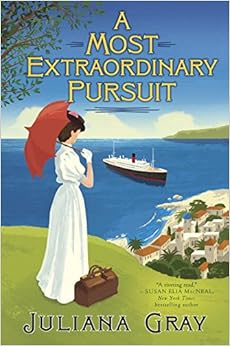
A Most Extraordinary Pursuit: A Book Review

Author Julianan Gray lost me when she had her character Rose Truelove speak to the dead Queen Victoria.

Rose chats with her dead father as well, besides the Queen, and if you compare the actual novel to the advertising copy from Penguin Random House, you'd be thinking a mistake was made somewhere. A MOST EXTRAORDINARY PURSUIT is not an historical mystery but a very silly book.

I'm at a disadvantage with this one, being a university graduate and burdened with an education that makes this sort of reading impossible. I think there was a story in there, plodding along, but the writing was so over the top in an attempt at levity that I felt as if I was sitting in a music hall watching talentless actors mug across the stage. Rose is supposed to be on the hunt for the heir of her late employer (to whom she does not speak, more's the pity) but I really did not care if she ever found him or not.

The mystery lies in the heir's location, as he has disappeared from some archaeological dig somewhere that requires Rose to take a steamship to reach. There was a rather long stretch about seassickness in there that I skimmed over because it was boring and did not move the narrative. That was about all I could take, despite my best efforts to finish so I could write a proper review.

Perhaps the recently past-teenage female set would find this one amusing, but not being one of those I can't say for certain. If you hunger for a good historical mystery, this novel will leave you famished. It's all empty prose calories that I gave up on after 116 pages.

Thanks, I think, to Penguin Random House for the free copy in exchange for a review. Thanks for saving me the expense of buying a book I'd regret wasting the money on.

Wednesday, May 18, 2016

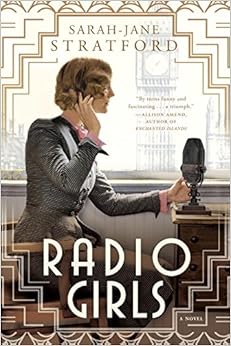
Radio Girls: A Book Review

Fans of Downton Abbey were made aware of the sweeping changes that washed over England after the First World War, ushering in an era of modern flappers and somewhat liberated women. RADIO GIRLS is a natural offshoot of that theme.

Maisie is the plucky heroine of the novel, making her way in the world after a difficult childhood filled with bullying and parental disinterest. She lands at the BBC as the radio service is just starting to grow, and over the course of the narrative she grows in wisdom and comes out of her shell.

But wait, there's more!

Maisie and her boss, the indomitable Hilda (based on the actual Hilda Matheson), tackle misogyny and general discrimination with steely resolve, making their marks on BBC programming in a way unheard of for women of the day. The author lays the mysogyny on a bit thick and it gets tiresome, but let the heavy application of sexism roll past your eyes and concentrate on a well-crafted bit of prose.

While fighting for the opportunity to rise up the ranks, Maisie blunders into a remarkable scoop and is soon involved in a shadowy bit of espionage thanks to HIlda, who may or may not be involved in MI5. Fascism was indeed on the rise in the 1920s and Maisie discovers evidence of upper-class involvement in a plot to take over the newspapers and the BBC so that all media could become a venue for spreading fascist propaganda.

The author tries a little too hard to equate our modern conservative politicians to the budding fascists in a way that pulls a reader out of the story, like hitting a speed bump when the ride is otherwise smooth. Other than that minor flaw, the story uses real-life characters and imagines the story behind the early years of the BBC, where women could find employment on an almost equal footing as men.

Readers looking for well-told historical fiction will enjoy this one.

Thansks once again to Penguin Random House for the opportunity to read an advanced review copy.

Thursday, May 12, 2016

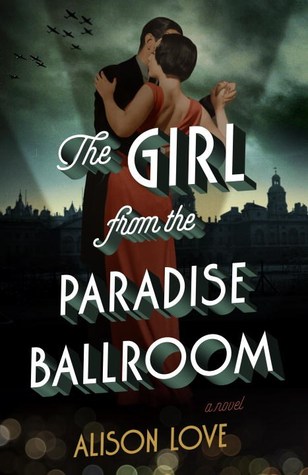
The Girl From The Paradise Ballroom: A Book Review

There's nothing to see here, move along
I usually don't look at the author bio when I'm reading a book. Where that person comes from, or what's been done in the past, is not important, as long as I am captivated by the writing or the plot.

Soon after cracking open THE GIRL FROM THE PARADISE BALLROOM, however, I had to find out what compelled someone at Broadway Books (a division of Crown, one of the Random Penguins) to buy the manuscript.

Ah, yes. There it is. Alison Love has had short stories published. Therefore, she must be a writer who can capture a reader's interest.

A novel is not a short story. And in THE GIRL FROM THE PARADISE BALLROOM, it's evident. The chapters read like short stories, disconnected to each other, and maybe things will fall into place later in the novel. I've given up reading after twelve chapters. I have found the book too boring to continue.

The main characters of Antonio and Olivia brush up against each other early, but then their lives run off on different trajectories as the novel focuses on their experiences quite apart from each other. Those experiences are not all that exciting, given the stereotypical nature of Antonio's Italian immigrant family with its hackneyed interpersonal conflicts. As for Olivia, she meets and marries a wealty gentleman and if you can believe that a dance hall hostess recovering from an abortion could end up well placed, you're better at suspending disbelief than me.

The book opens with a prologue that's designed to pique interest, but the pages that follow do not maintain whatever curiosity is aroused. A story about Italian immigrants in London in the tumultuous years just before the first shots of World War II were fired should have some element of tension, but the only tension in the first 94 pages has nothing to do with that theme but falls back on ordinary family conflict. Even the presence of a pro-Mussolini social club agitating for fascism doesn't provide the power needed to drive the narrative forward. Too often the tension is teased but then the author pulls back to provide another glimpse into the life of Antonio or Olivia and the mood is lost.

The premise of the novel does not meet the execution, making for a disappointing experience. I tried to push on but my eyes kept closing, lulled to sleep by a plodding pace with no action.

Thanks to Blogging For Books for the copy, which I will donate to the library's used book fundraiser. Someone will enjoy it, I'm sure, but this one is not for me.

Tuesday, May 03, 2016

An Unfortunate Choice Of Words When Your Skin Is Of A Pale Hue

So it was perfectly fine for comedian Larry Wilmore to call the President of the United States his nigger, but Gerry Adams is not to use the n-word.

The rules of engagement are complex indeed when it comes to certain words that have the power to trigger strong emotions.

The debate wages on, and not all black folks are in agreement that using the n-word amongst themselves is acceptable. Let the rappers drop all sorts of profanity, but to some in the community it is part of a negative culture. Taking control of a word does not diminish its negative connotation, as far as they are concerned. If it is wrong for white people to use the word, it is wrong for blacks to refer to one another as nigger.

What's Gerry Adams of Sinn Fein to think, so, when he sees Larry Wilmore use the word in such a public forum? The annual Correspondents' Dinner is full of jokery and humour, the President joins in the fun, and there goes the n-word flying. No one jumped up and shouted Mr. Wilmore down, or called him out for not only using a slur but for applying it to the leader of the free world, as if Barack Obama is just another gangsta from the 'hood.

The tweet - a force for good or the road to hell
The Provos have long equated the treatment of Catholics in Northern Ireland to the treatment of slaves in the Deep South, and there have been a few equivalencies made between the civil rights movement and The Troubles.

Not nearly equal, of course. The Catholics were an oppressed minority and were denied their rights, much like the blacks who lived under the Jim Crow laws designed to keep them oppressed. Maybe a man could make something of the similarities, but to paint Northern Irish Catholics as slave-like is going a bit too far.

Poor Mr. Adams went and tweeted without thinking after seeing the film Django Unchained, with its theme of revenge against a backdrop of carnage. His blood was up, apparently, because his fingers typed out a message that included the phrase "A Ballymurphy Nigger". His heart was leading while his head was far behind.

More words had to jump in to explain the context of his 140-character thought bubble, and the next thing you know it's all Cromwell and Penal Laws and 800 years of British perfidy. Still not the stuff of slavery. So more words had to come to the rescue and that's how deep holes get dug, with word upon word dredged up until you've buried yourself deep in rhetoric.

Tweets are fine for short messages, but when you're trying to explain your entire political philosophy, you'll find that some thoughts can't be compressed down to a few characters without losing the essence of the argument.

Too few words can be just as difficult to repair as too many.

Just ask Gerry Adams, who is out there trying to convince everyone that he's not a racist or a white supremacist, just a Catholic politician doing battle with a Protestant government that doesn't much like him or his kind.

Monday, May 02, 2016

The Haves And The Have Nots: Transportation Edition

If you have to ask, you can't afford it
Money may not buy happiness but it does get you a very nice apartment with some nice conveniences thrown in.

Those who cower in the face of gentrification have long been pointing their collective fingers at the cost of rent, which has been rising in certain parts of Chicago that are popular with the young millenials. The kids aren't all out of work, despite the stories you might have heard. Sure there are plenty who come out of college with a degree in psychology and no marketable skills, destined to live in the parental home for all eternity.

For others, however, it is a different story. There are a lot of 20-somethings who went into finance, medicine, accounting or law and managed to land decent-paying jobs. Maybe it was Mom or Dad who pulled some strings to get that job, but at any rate the kids are working and they have money to spend.

They spend it on rent, so they can live in vibrant neighborhoods like Wicker Park or Pilsen, filled with good restaurants and bars that craft exotic cocktails (or throwbacks to the Mad Men era). Music venues abound, there is plenty to do, and the working professionals enjoy their youth in apartments that were once housing the urban poor until someone rehabbed the place and raised the rent beyond the reach of the average manual laborer.

What could be worse, then, for those who have not and feel that they are losing what little they have?

The young millenials don't want to own cars because cars cost too much to keep, especially in Chicago where fees are high and gasoline is even higher.

That being the case, they have to live near transportation, and that transportation has to take them into the Loop where they work in tall office towers.

Put it all together, and the have nots are losing access to cheap transportation, which they also need to get to work, because those with financial means are pricing them out of the convenience.

Them that's got shall get to work with a minimum of fuss, hopping on an 'L' car that is close to home. No need to transfer to multiple buses, which they don't want to do. The train system is close at hand for those who can pay the cost of living near the tracks.

Them that's not are losing out. Landlords can command higher rent, so they take it. Considering the rising cost of property taxes in Chicago, to say nothing of the nickel-and-diming that empties a pocket with remarkable speed, the folks who own properties are cashing in while they can, before the next round of tax increases takes a bite.

When you're not making much money, you either move or pay up until it hurts so much that you move. And when you move, you find that the places you can afford are farther away from convenient transportation. You have to take the bus, and if it means taking several to get to the 'L' stop or the factory where you toil, you're the one getting up hours earlier to manage a longer commute.

Transit-oriented development, as they call it, is cashing in on the phenomenon. Young millenials want what the developer is offering, and the developer can build to suit and get his investment back because the young millenials will pay the price. The poor can't, and so there is no incentive to put up a swanky new tower next to the 'L' stop. The money just isn't in it unless people with money buy in.

What's an anti-gentrification activist to do?

Talk and complain, sure, and demand that aldermen do something to stop the onslaught, but money talks louder. The developers are the ones paying the cost of aldermanic election expenses, after all, and the poor guy who votes for the alderman doesn't have much pull. What's one vote, when there's money to be had?

Wednesday, April 27, 2016

A Nightmare Of Amazonian Scale

Available for pre-order at Barnes and Noble. Not Amazon in the US
Newcastlewest Books is preparing for the launch of our newest release, and as usual the bookselling sites online pick up our information from Bowker's catalogue.

It's all quite neat and tidy. We assign an ISBN, fill in the pertinent information, and the next thing you know it's popping up where it should. MERCY FIRST AND LAST, a brilliant piece of historical fiction, will drop on the 213th anniversary of Robert Emmet's death.

That Robert Emmet, yes, the hero of Ireland, whose adoration of Sarah Curran spelled his doom.

MERCY FIRST AND LAST is Sarah's story, and what a story it is. A fascinating family riddled with dysfunction, tragedy and sorrow, and to follow Sarah Curran through it all is the stuff that keeps a reader turning the pages.

At any rate, the page at Amazon.com showed the novel as available for pre-order, shipping 20 September 2016. So what better thing to do than submit the usual file that allows a potential buyer to sample the opening pages and peruse the covers? Done and done.

Then the book suddenly became unavailable, with an unknown date of availability in the United States, our largest market. Why, Amazon, why did the book abruptly lose an important and critical element? Pre-orders are key to generating buzz, especially with reviews appearing prior to the book being laid down. It's how publishing works.

Except when it's Amazon, apparently.

After several tries to get someone to help, and getting a response back that claimed I was trying to cancel a debit card (amazing, right?), someone at the Seller Support Center got back to me, all the way from India where English is not a first language.


Greetings from Amazon Seller Support,

Thank you for contacting us.

I understand your concern is regarding for PER-ORDER for ASIN:0996713123 which is available on the UK site. I have checked using our tools and found that this book is still not releases on Amazon.com site.

In researching ASIN: 0996713123, I see that this Books item is listed with a release date of September 20, 2016. This item is currently ineligible for listing on Amazon.com.

Delayed shipment or pre-sales of Books, Music, Video or DVD products are not allowed on Amazon.com. All items offered for sale in these categories must be shipped within two business days of the date the order confirmation is made available to you.

Really? Does this make the least bit of sense, considering the fact that previous Newcastlewest Books titles were available for pre-sale prior to the official sale date?

Of course it doesn't. But wait, there's more. I had the audacity to point out that the book is available for pre-order in every other country around the globe, and it would be helpful if the US of A was part of that book-selling world order. The cheek of me, to dare to make the comparison.

 I would also like to inform you that, on Amazon, sellers should not list or match against Books, Music, Video, or DVD products that Amazon designates as pre-orderable. BMVD Products offered through Amazon must be shipped within two business days of the date the order confirmation is made available to you.

So we've reached an impasse. Amazon has failed spectacularly, and their staff at the Seller Support Center can do nothing more than rattle off a set piece.

Looking to pre-order MERCY FIRST AND LAST? You can find it anywhere books are sold (like Waterstones, Amazon in CanadaAmazon in the UK and Ireland, BN.com),  available for pre-order everywhere except Amazon.com.

Monday, April 25, 2016

Learning How To Write: The Real Life MFA

The late, great Kurt Vonnegut is considered one of America's finest authors.

So where did he earn his MFA, you might ask. Isn't that what it takes to get published these days?

The proliferation of MFA graduates getting publishing deals has expanded as the publishing houses search for ways to cut costs. Take on a manuscript from a professional writer and there's no need to bring in a staff of editors to polish the prose. That was fine for the good old days, when authors had a favorite editor to whom they gave all the credit for their success.

This is the 21st Century and there's not enough money for all that staff when the hedge fund managers are determined to recoup their investment in their purchase. Publishing is just another widget to them, meant to turn a profit. They could be noticing that sales are down, with fewer people buying books, but it's the economy, isn't it? Not enough entertainment dollars to go around? People preferring to spend on movies or video games or Netflix or whatever?

Back to Kurt Vonnegut. He studied writing at Chicago's former City News Bureau. Not exactly the University of Iowa Writers' Workshop, is it.

He learned how to write by writing stories for publication in an industry that was fiercely competitive. A lot of budding writers wanted to get jobs at newspapers and it took a skilled writer to shine in a crowded field. Hunger being the best sauce, Mr. Vonnegut had to hone his craft, with his beta readers being those he sought to impress with his clever word play.

His story ideas came from real life all around him. He didn't write books about college graduates struggling to find love or meaning in New York City in the publishing industry, like so many budding writers of our modern era. He interviewed cops and coroners and bystanders and got the best education possible. Through experience and a pair of open ears he picked up on the nuance of human experience, a very important element to any novel.

Are we harming the publishing industry by leaning so heavily on MFA graduates?

Should an MFA program take its students and stick them outside of the university walls, make them work at hardscrabble jobs so that they learn about life instead of learning about the structure of a novel?

There are no Kurt Vonneguts on the shelves of new fiction these days. There are no fresh faces inspiring readers to use their limited resources on a book instead of another beer. Maybe it's because readers aren't all twenty-somethings trying to make it big in Big Publishing in the Big Apple. Books don't speak to them because the books aren't saying much of interest to the average reader.


Tuesday, April 19, 2016

King Canute In Avondale

There are neighborhoods in Chicago where Hispanic gangs once roamed. These days, those same gang bangers could not hope to afford the rents on rehabbed apartments, let alone the mortgage on a million dollar restored mansion that once was cut up into cheap housing.

Gentrification is swallowing up neighborhoods, beginning with the artists looking for cheap space and soon followed by hipsters looking for artsy places to live. The next thing you know there's a Starbucks on every corner and Whole Foods is building a new store where a clutch of carnicerias and cell phones shops once stood.

Some residents of neighboring sections are taking action.

Not unlike King Canute, who once famously commanded the tide to not roll in, and showed to one and all that even he could not command forces of nature.

Diversity: Going, going, gone.....
With gentrification comes more property tax as land values rise on a tide of improvements. For all the chatter of sympathy from the aldermen, they really prefer that a place gets gentrified because the city of Chicago is desperate for funds. So what if the poor people are pushed out to the suburbs? Bring in the 20-somethings with their desire to work in the city and the income that follows. They spend their cash on food at the trendy restaurants in Logan Square or Wicker Park, unlike the poor residents who don't have enough to go around.

Housing activist Daniel La Spata wants to keep Avondale from going the way of nearby Logan Square. He wants to command the sea of change from sweeping over his territory, to keep the current residents in place and maintain low rents. Its all about a neighborhood's diversity, and those who were there first not getting the boot because they're not as rich as the barbarians at the gate.

What Mr. LaSpata cannot do is demand legislation that would prevent a property owner from selling to someone looking to rehab a place.

Not exactly possible in the United States. From the start, it was denigrated as a nation of merchants, chasing profit. It hasn't changed.

Alderman Carlos Ramirez-Rosa talks about forcing property developers to include a few affordable units in each new building, but that does little when so much low-income housing is lost when someone buys up an old brownstone and converts it to a single family home.

Neither can he bar a landlord from fixing up his two-flat and then jacking up the rent, leaving the low-income resident to either pay more or get out. As it is, those who are trying to stay in the area are spending more and more of their funds on housing, a practice that is not sustainable. Eventually, you run out of cash and can't pay the electric bill or buy a few groceries, and then it's time to renew the lease and the rent's going up yet again. No other choice, in that case, then to go elsewhere.

That group of hipsters working in finance in the Loop can easily pay what a family cannot, and who is going to win out? There's no incentive for the landlord to keep the rent low while property taxes keep climbing and sales taxes are the highest in the country. Why should someone go broke so that a neighborhood can remain more diverse?

As long as the city remains an attraction to kids coming out of college, there will be pressure on housing. The poor will be relegated to pockets without access to the things that the young set want, like public transportation that gets them downtown.

King Canute showed his people that he had no power to hold back the sea. Avondale is no less vulnerable to the flood.

Monday, April 04, 2016

There's No Longer An App For That

Whatever you want to do on your smartphone these days, there's an app for it.

You can play games, any sort of game you like, or you can do productive things like schedule your time or sort documents or practice for the pub quiz if you're so inclined.

For a time, if you were keen on joining the Taliban, you could find an app for that as well. It was developed for the Android system, which may speak to the lesser popularity of Apple devices among the terrorists. But at any rate, you could find your Taliban content, in Pashto, right there on your Android device.

If you're looking to attract the younger set, you'd go with the latest technology, right? The Taliban may be run by a gaggle of old megalomaniacs, but they can see where the recruits are to be found. If the kids are all attached to their mobile phones, that's where you go to entice them to do something besides sit around wasting the day when they could be murdering innocent women and children.

Of course, having an app out there in the Google Play store means anyone can find it, not just would-be jihadists. The United States, ever vigilant against terrorist tech, uncovered the app and kindly asked Google to remove the app. It's bad enough that the thugs are tweeting and facebooking at will, getting their message out. The use of an app to play videos glorifying death and the Taliban is just not acceptable.

For now, there's no app for the budding Talibanista. He's just got to find his desired content elsewhere, which isn't all that difficult to do. In time, and probably not too far into the future, the Taliban will create yet another app and draw in a few more disgruntled youth before that, too, gets pulled. It's a never ending game, one where you don't have to buy more playing time when you're hooked.

Because once you're in, there's no getting out. Like any other criminal gang.

Friday, April 01, 2016

An Gorta Mor On The Rebound

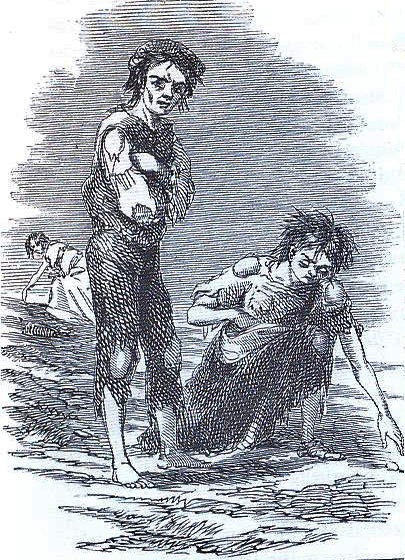
1847
Once upon a time, the Irish were starving. Literally starving to death.

Hundreds of thousands died in those dreadful days, the worst year forever labelled as Black '47. So where are the Irish today, 169 years on from the most devastating period in its history?

On track to become the most obese folk in the world, that's where.

Well done, Ireland! Top of the charts, on the rebound from the depths of hunger.

There's competition for the position, however. The UK is trending up in weight class, along with a few other countries who took in thousands of Irish fleeing An Gorta Mor. Could there be a trend, something for the scientists to consider? New Zealand, Australia, the United States; waistlines are expanding and buttons are busting as more and more become obese in these prosperous nations.

Sure food is readily available in these places, and in general the population has the financial means to acquire more nutrients than a body needs. Add to that the ability to buy transportation that lets a person ride in lazy comfort instead of walking, burning up calories, and it's more going in than expended.

But the people in France don't show this marked uptick in Body Mass Index. They're all thin as saplings. And the scientists can't quite understand why this is happening.

Blame the spuds.

The Irish survived on potatoes while farming fertile land, the fruits of their labors being paid to the landlord for excessively high rent. The spuds grew themselves so that the tenant farmers could focus their attention on the crops that kept a roof overhead. At the height of the famine, the nation exported a tremendous amount of edibles and all the poor Catholics could do was watch it sail away while they dined on potatoes and buttermilk if they were lucky.

2016
They are still consuming spuds to this day, mashed and fried and mixed with cabbage on occasion. Maybe the French did indeed invent the chip but they don't eat much of it. They don't have a cuisine based on boiling things to a grey pulp, either.

Ireland can't escape the obesity epidemic unless its culinary offerings become more French, and how is such a drastic change to take place? You have your comfort food that you turn to, and it's something your mother or grandmother made, something she found comfort in as a child, and so it goes. When you find it soothing to down a portion of curry chips, washed down with a pint or two of Guinness, how are you ever going to find equal relief from life's stress in a salad?

The obesity epidemic is being driven by the descendants of those who once were starving. It's the history that's creating a problem, and you can't change history.

You can't really change people's eating habits, either. Not when they've been raised with that spectre of skeletal, raggedy children who would have killed for so much as a bite of that boiled bacon with all its greasy fat.

Eating like a bird, that's fine for the French. They have all that fashion in their blood, after all. Ireland and its diaspora have their spuds. It's no contest.


Wednesday, March 30, 2016

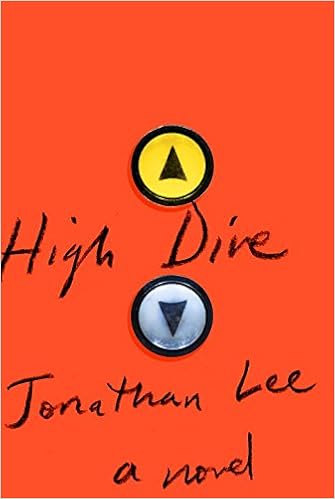
High Dive: A Book Review


When first we meet Dan, he is undergoing an initiation into the Irish Republican Army. Interesting enough start to a novel, and one that sets up a series of character studies that form the skeleton of a novel. As a short story, the first chapter of HIGH DIVE works so well that you start thinking maybe you should read more short stories after all.

That first chapter is more prologue, perhaps, than essential opening to what is a story about the IRA attempting to bomb a British hotel at the height of The Troubles. Author Jonathan Lee takes his readers into the heads of a few ordinary people whose lives will be changed by the event, ordinary people who are far from political operatives. The collateral damage, as it were, in an act of war.

Moose Finch hopes to become the manager of the hotel where Margaret Thatcher will be attending a conference, the same conference that the IRA sees as a golden opportunity to destroy their nemesis and bring in a new government that would do something about the oppression of Catholics in Northern Ireland. His daughter Freya, finished with secondary school but at loose ends, is working at the hotel for the summer.

Along with Dan, the novel revolves around these three characters who live in quiet desperation, seeking meaning in an uncaring world. The prose is so lyrical that you might not be aware of what you are reading, floating along on a breeze of words. There is not a great deal of action in this book, but the tension hangs over your head as you move along towards the fateful evening when the planted bomb is set to go off.

Even if you don't know the tangled history of the IRA and Margaret Thatcher, you likely know she was not killed in a bombing but you don't read on to confirm that fact. You turn the pages because you care about the characters, fully formed individuals that are well-crafted by Mr. Lee. Once Dan has planted his explosives you know something will happen to Dan or Freya or Moose, three ordinary types who are looking for love and wondering where they are headed. You want to go along on life's journey with them to see who comes out the other end a wiser person.

At times the writing gets a little wordy and you may find yourself skimming over passages to get on to the more interesting bits. In general, the novel feels a bit like a collection of short stories linked together, rather than a single story, and dwells too long sometimes on a character's inner thoughts that drag on occasion. Other than that, it is an enjoyable read.

Tuesday, March 15, 2016

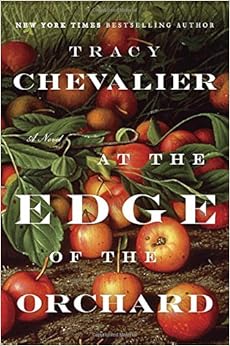
At The Edge Of The Orchard: A Book Review

James Goodenough is a hardscrabble pioneer who loves his apple trees. Those trees he lovingly tends are his last connection to the family farm back east while he tries to carve out a homestead in 1840's Ohio. His wife Sadie is a hardscrabble farmer's wife who also happens to be an alcoholic, shiftless and lazy, and fiercely jealous of those apple trees.

Tracy Chevalier paints a clear picture of a family on the brink, battling against nature and each other. The parental dysfunction drips down to the four Goodenough children as well, a pack of near-animals who are made to bear the brunt of the work while their mother sleeps it off.

Just when you get to feel some sympathy for this sad clan, and manage to plow through the author's decision to present Sadie's POV through a first person narrative that lacks punctuation because she's illiterate, you see, uneducated and that's showing not telling, right? So you're settled in to their story, waiting like the Goodenoughs for Johnny Appleseed to pay them another visit, when the narrative is taken over by their oldest son James.

The story is not told in a linear fashion, jumping ahead in time as James makes his way to California with his narrative compressing a few years into a series of letters that are never answered. You'll turn the pages to find out why he's on the move, and what he's running from after he puts Ohio behind him.

Like any Californian, he re-invents himself in a career as a tree man, collecting specimens for the wealthy elites of England who are avid collectors of exotic plant life. Lingering in the back of his tale, however, is his deep dark secret, one that will not be explained until his sister suddenly appears in California, long after James game up on ever hearing again from his family.

There is tragedy but then there is triumph, and an uplifiting ending that ties up all the loose strings.

All in all, the novel is a pleasant piece of fiction with a cohesive story.

If only the author had seen fit to show Sadie Goodenough's lack of book learning through a means easier for the literate to read. There's something about stumbling through a character's thoughts when you know that shed is a storage building but for Sadie it's her version of she'd. The technique proved to be a distraction that spoiled the otherwise smoothly flowing prose.

Fans of Tracy Chevalier will not be disappointed with this latest release of historical fiction.

Thursday, March 10, 2016

The Quiet Car

The rich people, the ones who commute to work on comfortable trains, they get quiet cars. They don't have to listen to people yammering on and on about nothing. The people with the deep pockets, they get peace and quiet in the morning. All Dennis Nicholl wanted was a little equality in the commuting world.

Chicago's public transit system does not provide quiet rail cars like the Union Pacific or the Burlington Northern. There are no comfortable padded seats, either, but you get what you pay for when you're getting to work on the cheap by riding the elevated or subway trains in the city. Why can't the poor, who rely on cheap transportation, have at least one of the pleasant amenities that the wealthy commuters take for granted?

Dennis Nicholl wanted a quiet car but did the transport system pay him any mind? Not for a minute. He could complain all he liked but they weren't listening. Too busy yacking on their cell phones probably, ignoring the mild-mannered financial analyst whose daily commute was a torment of dissonence. Voices, so many voices, disturbing his morning. He could no longer endure.

Making the world quiet, one rail car at a time
Surely others wished for a quiet car, like he did, but too many would be afraid to act. Afraid to ask that selfish bastard sitting next to him or her to shut the fuck up for twenty minutes out of fear that said selfish bastard would pull out a gun and start shooting.

A bold man took a stand. Dennis Nicholl purchased a device that blocked cell phone signals. He sat in his spot on the train and turned it on, and just like that, the car descended into relative peace. Once the riders jabbering away were cut off from cell service and got over the shock, that is. They were whining mightily while Mr. Nicholl relaxed to admire his handiwork, but once the shock wore off, it was an end to the chatter. Ah, heaven.

For well over a year he spared his fellow riders from the misery of mundane, one-sided conversations. His commute became as quiet as that of the well-heeled business executive who paid far more for his fare. Equality of treatment at last!

But alas, it could not continue in blissful silence. The device that ended every phone conversation was illegal, and using it is just as illegal. Mr. Nicholl was arrested and charged with a felony for interfering with a public utility.

All he did was bring equality to his morning commute.

Where's Bernie Sanders now, to speak out against this outrage, this class-based privilege?

Tuesday, March 08, 2016

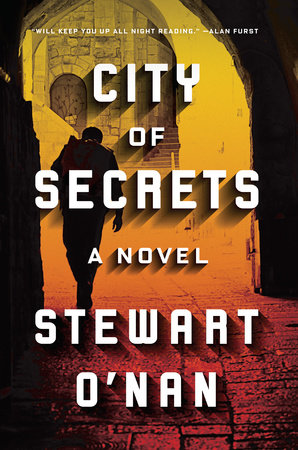
City Of Secrets: A Book Review

A man with no ties to the world, the protagonist Brand drifts through the world like a dead leaf blown by the wind. He has landed in Jerusalem after the Second World War, a Latvian Jew who survived the concentration camps because he was handy.

We meet him as he goes about his business as a taxi driver with a false identity, and vehicle, provided by the Jewish underground that is fiercely battling against the British government of Palestine. He is a survivor, however, and author Stewart O'Nan does a fine job of showing a survivor's guilt as Brand cannot stop remembering his wife and parents and sibling who all perished. He is haunted by a camp mate whose life he did not save so that he might save his own. A bleak tale? It is indeed, but one that is well written.

The pace of the story is slow, given over largely to internal dialogue as Brand wrestles with the meaning of his survival. Also slow-moving is the development of his relationship with a prostitute (and survivor like himself) as he veers dangerously close to love. She is also his contact in the underground, also broken by the Holocaust, and drifting with a purpose that Brand fails to recognize until too late. Perhaps he is unwilling to fully abandon the memory of his late wife, for to lose memories is to lose his last link with his past. As for Eva, known as The Widow, she keeps herself to herself, but such reticence may have more to do with her dedication to the mission or a sense of fatalism. Why did one person survive a camp while others perished? It is the question that torments those who populate CITY OF SECRETS.

Detached, Brand goes where he is told and follows orders as an operative of the movement that sought to create a Jewish homeland in the Levant. His curiosity in a world of secrecy and paranoia takes him to dangerous places when he wonders too much about the identity of a very attractive woman who often appears with disguised members of the Jewish freedom faction. His timing could not be worse, but again, he is so focused on daily survival that he fails to recognize signals from Eva that are meant to warn him.

The tension builds towards the end as the guerrilla fighters increase their terrorist activities and Brand fears that he is under suspicion as an informer. Without giving away the ending, the conclusion follows all that goes before, and while it may be as bleak as the rest of the novel, you are left with the slightest tinge of hope emanating from a survivor who knows how to survive.

It is a grim bit of prose, and one that is easy to put down and pick up again. The story is depressing, with its unflinching look at the scars that remained after a war ended and entire communities were obliterated. In our modern era of Middle Eastern politics and wavering support for Israel, this is a timely read that would foster a great deal of discussion among the book group members.

As always, thanks to Penguin Random House for the chance to read the novel before it is released.

Monday, February 29, 2016

Another Publisher Shuts The Door

You've heard it many times before. There is no money in publishing.

There isn't much, to be sure, and if you are a small independent press, there very much is no money in publishing. To break even, at the least, requires a lot of unpaid hours. A labor of love, so.

Samhain is the latest loss to the publishing world. They were never huge, never one of the big five houses. They did not crank out blockbuster bestsellers or celebrity tell-alls. Their mission was to bring good stories to life while filling some particular niche that the major publishers thought too small to notice.

The financial climate being what it is, the readers that Samhain reached are no longer able to buy up all the books they might otherwise have purchased if they had extra cash for luxuries. Their audience was largely romance readers, who are known to consume novels as if they are starving for release from life's stresses. When one of those stresses becomes an overdue electric bill, well, there you are. You have to keep your lights on. There are other places to find cheaper entertainment than what you'd find from Samhain.

Self-publishing has produced a bounty of romance titles, and a self-publishing author enjoys much lower overhead than a small publisher with any staff on salary. It is easy enough to churn out an e-book without requiring much outside help, and if that author wants to generate some buzz there will be copies given away to reach potential readers.

How can a publisher compete with free books, or books offered at a discount?

Samhain lasted for just over a decade, a time in which self-publishing changed the environment radically. A business model that worked in 2005 has stopped working because things have changed, and Samhain's model simply doesn't work any longer. They could retool, perhaps, but would a full re-organization make a difference, or would it mean nothing more than giving all but a few employees the sack and then expecting the last remnants to work without respite, and compensation, to keep the house open?

Those who might once have looked to Samhain to get their romance novel published are more likely to turn to Amazon's Kindle Publishing platform or Smashwords. All proceeds then flow to the author, who is free to hire their own marketing and publicity people if they want, or do their own promotions. They can tweet and Facebook and round up friends to help spread the word. Whether or not they sell as many copies as they would have if Samhain had been their publisher is a point of debate that can no longer be settled by trying both methods of publishing.

Samhain has been forced to shutter its operation. There just is not enough money in publishing on a small scale when the small scale competition is so very strong and the reader's wallet is largely empty.


Saturday, February 27, 2016

Daredevils: A Book Review

Loretta is a young woman in a polygamist sect who longs for the outside world. How does she know about that world if she's living in a closed society? That's fiction for you. Suspend disbelief and carry on.

Jason is a young man in a standard-issue Mormon farm family who longs for the outside world. And all things Evel Knievel, the daredevil who inspires the boy to push against the forces that seek to hem him in.

You know these two are going to collide at some point because that's how a novel works. The problem is, you first have to get beyond the author's decision to insert fictional memoir-type paragraphs from the aforementioned Evel Knievel. The paragraphs don't do a thing to move the narrative, and in truth act like a brake on an otherwise gripping story.

For some reason, Shawn Vestal also felt compelled to include a couple of chapters told from the point of view of Ruth, the first wife in a polygamist family who does not welcome the arrival of wife number two, Loretta. Again, the prose does nothing to move the narrative and we don't really care all that much about Ruth because she's a minor character.

If you skip the two chapters told by Ruth and ignore anything that is ascribed to Evel Knievel, you stand a better chance of making it through a rather choppy format that shifts POV with rapidity at the end. It's grand, however, because Shawn Vestal teaches creative writing so he knows what he's about. He didn't need an editor, apparently, under the assumption that he must surely know how to put a novel together.

Would he have allowed one of his students to get away with the old trope of a boy growing in wisdom by meeting his idol and discovering that the hero is a mere mortal? Was it not enough for Jason to become disillusioned by events that spiraled away from his dream?

A good editing would have worked wonders on what might have been a brilliant bit of prose. The novel is worth reading for some insight into the mindset of two people striving to be more than society holds for them. Just skip over the parts that should have been cut out and you'll have an enjoyable read.

Thanks to Penguin Random House for the copy provided.

Tuesday, February 23, 2016

Self-Publishing Without Internet Access

Out of print as quickly as it was laid down
The Royal Canadian Mounted Police don't understand how serial killer Robert Pickton was able to self-publish a book when he does not have access to the Internet.

They seem to think that self-publishing requires a person to do all the work, when in fact anyone can publish a book and never do a single thing online. All you need, in that case, are friends with computers who share your love of literature.

Mr. Pickton is currently serving a life sentence in British Columbia, and as part of his punishment, he cannot surf the Net. No googling, no e-mail, no electronic connection to the outside world. Yet he still managed to get his memoir published by Outskirts Press in far-away Colorado. Their web page, which Mr. Pickton could not have seen from his cell, boldly proclaims that it exists to help the self-publisher achieve his goal. So how could a man without the World Wide Web do such a thing?

As far as the Mounties can determine, the author wrote out his manifesto by hand, using good old-fashioned paper and pen. There are those (myself included) who really believe that the first draft comes out better when handwritten. The slower pace forces a writer to think a bit longer about each word and sentence, making for a stronger start to a long process.

With his drafts edited to his satisfaction, Mr. Pickton had only to turn to his cellmate for help. Michael Chilldres smuggled the manuscript out of the prison somehow, and it found its way to Outskirts Press. Being a criminal, the concept of honesty never came into play so whoever helped him just said that Mr. Chilldres was the author, or said they were Michael Chillldres and they were self-publishing the manuscript.

Except he wasn't the author, but again, these are men in prison we are dealing with.

Unfortunately, it's very difficult to do a book tour when you're behind bars. Getting publicity and generating buzz was never going to be easy. Did the writing duo of Pickton and Chilldres even sell a single copy? Maybe they did, to someone connected with Mr. Pickton's murder victims, who would be very likely to keep an eye on the Internet to make sure the murderer didn't profit from his crimes.

The book was discovered and a petition was launched to have Amazon pull the book from its listings. Amazon being the biggest book seller, it's only natural that the petition was directed there.

Amazon responded by removing the book, and if you try to buy direct from Outskirts, you'll come up empty. They aren't going to carry the title any more either. They wouldn't want to be getting any bad publicity about publishing any and all shite that comes their way, especially when it's shite scribed by a convicted killer who isn't allowed to visit their website to see his work available for sale.

His future as an author, even one off the grid, has come to a screeching halt.

The authorities in British Columbia are now busy crafting legislation that would prevent convicts from profiting off their crimes. Currently there is no law on the books to stop Mr. Pickton from selling his prose in the province, even though other provinces bar the practice. The law exists in the U.S. as well, and when you've lost the greatest part of your market, your future in writing looks quite dismal.

Until such laws are enacted, however, the prison authorities will have to monitor phone calls and visits, to be sure that criminals are not dictating their memoirs to their visitors, who can then go home to their computers and complete the process of self-publishing. It's not as if publishing on your own really requires you to do it all yourself. You can always get by with a little help from your friends.

Monday, February 22, 2016

Dodgers: A Book Review

East is a feral child, living rough, a product of the Los Angeles streets. He lives by his wits, which in DODGERS means he scratches a living as a watchman at a crack house. All he knows is his neighborhood, and that proves to be little when his underlings fail at their posts and East must make amends to the gang leader by murdering a judge who has angered the gang.

The book provides a well-described journey through foreign territory as East and his colleagues drive from LA to Wisconsin to whack their intended victim. He travels with his violent and unpredictable half-brother, an equally feral child who has no emotional connection to East. There are no children here, nor are there families as you might know them.

Along the way, the gang has various adventures that force East to rely on his wits to escape, all of which make for page-turning fiction. What happens after he reaches Wisconsin and a once simple plan falls to pieces is compelling reading.

The ending is a bit too 'deus ex machina' and I suspect that Bill Beverly would have given one of his writing students a dose of criticism for using the same technique, but other than that the prose is believable.

Granted, it is white people bringing in the element of salvation as East works his way home, a place that he realizes does not exist in the traditional sense that he sees all around him as he wanders through the upper Midwest. Some might quibble about the lack of black influence, wondering why some middle class black man could not have represented the world outside of the drug dens of Los Angeles. Could the narrative have flowed in the same way if so strong a contrast was not made between what East knows and what he sees for the first time outside of some television programme? Did he not leave Los Angeles wearing Dodgers team shirts to make him appear more in tune with white culture, and less threatening?

That's something for the book group to discuss.

What East discovers about the world beyond the borders of his neighborhood alters him completely, and that makes for a satisfying conclusion to a very modern tale. The prose is dense and is meant to reflect the language of the streets, making for a slow read, but the reader's effort is rewarded.

Thanks to Penguin Random House for the review copy. I thoroughly enjoyed the novel.

Monday, February 15, 2016

FanFic For The Literati

So many...
In publishing circles, fiction written by fans of a particular book is normally looked at like so much detritus. How clever they are, those dedicated readers, imagining other scenarios and plots in which to insert their favorite characters.

There are all sorts of fanfic written for Harry Potter, Hunger Games or what have you. In general, the prose is not taken seriously because it's silliness from people overly obsessed with fictional characters.

Unless, of course, it's an acceptable author doing the fanfic dance. Then it's something more literary. It's worth publishing.

Rochesters...
Why else would some Jane Austen fanfic make it to the big time? What was Jo Baker's Longbourn but a bit of fanfic that took its characters from Jane Austen's Pride And Prejudice? We all know the story of the people upstairs, goes the reasoning, but what is happening below when Mr. Darcy and Miss Bennett are circling each other? It's fanfic but with a more literate bent, the fanfic label avoided by the imprimatur of a genuine publisher.

The world can never seem to get enough fanfic, and now there's to be another. Did you ever create imaginary scenarios to fill in the back story for Jayne Eyre? Did you not use your flights of fancy to write a novel because you laughed it off as so much silly fanfic?

Sarah Shoemaker did not dismiss the notion. No one is calling her upcoming novel fanfic, however, but it has taken on a shiny gloss of respectability by being labeled a re-imagining of the Bronte novel. Let Ms. Bronte tell her story from the perspective of the downtrodden governess. Ms. Shoemaker takes the story and puts her own twist on it, narrating events through the eyes of Mr. Rochester.

so little time
Mr. Rochester will hit the shelves next year some time, with the deal just announced. Literary agent Jennifer Weltz did not see the manuscript as fanfic, or would she have taken it on and then sold it to Grand Central? Of course she would not market the thing as fanfic for those who adore the Bronte novel, even if that is what it is. No indeed, this is a re-imagining.

Because we can't have too much original storytelling these days.

The bean counters at the publishing houses get terribly nervous with original works that are unlike what is selling. They want the tried and true, and fanfic has a definite market among those who liked the original, even if it was originally released over one hundred years earlier. It's stood the test of time, hasn't it? More than one movie version made, still being read, so why not ride on the fanfic wagon as it travels to profitable places?

How much longer before we get a novel about Heathcliff's version of events at Wuthering Heights? What about the whale that was pursued to the ends of the earth by Captain Ahab, what were his (or her) feelings at being persecuted? After all, we've already heard it all from Ahab's wife. Let's give the whale its turn in the fanfic sun.

Hollywood is living off re-makes of old popular films. Why should the publishing industry not try the same trick? And then wonder why sales are sliding and no one seems to be reading books. Like they aren't flocking to the cinemas.