Four former Borders employees were tracked down by Ben Freed, to see what they were up to after losing their jobs one year ago.
What does a person do when their career has revolved around books and there isn't much need for such work skills in the world?
If you're Peter Drogaris, a veteran of Waldenbooks before moving over to Borders, you don't have a full time job. Twenty years at Borders. It gives you a hint as to his age, which isn't twenty-something.
Older people, especially those in their fifties, simply haven't had any luck landing jobs because no one wants to invest in training, only to have the new employee retire a few years down the road. He is a member of the demographic that is hurting in the downturn, those who haven't looked for a job for decades because they thought they were secure.
Susan Aikens used to buy books for the Borders chain. She would have been courted by publishers who wanted their titles in the shops, the one who made the decisions on which children's books would be available and which would not.
Now she's buying camping gear for Dunham's. The new job isn't easy. She knew books, of course. She had to learn about camping gear, and learn fast. Imagine the stress of such a job, after losing the previous one. The fear of making mistakes, of getting fired, again, and there's the unemployment rate in Michigan above the national average.
Her husband, also once with Borders, landed a spot with a firm that connects farmers with consumers in an "eat local" movement. Unfortunately, their jobs are miles apart and Ms. Aikens faces a commute that can consume four hours of her day.
What is life like after Borders? A lot like any life after a company goes out of business. A lot like life for so many people, over 300,000 per week, who have to start over and oftentimes re-invent themselves.
Friday, July 20, 2012


Thursday, July 19, 2012
Pearson Takes It To Amazon
So the gatekeepers that are literary agents and acquisitions editors are keeping the gate closed just a bit too much.
With the likes of Amazon's CreateSpace and Kindle Direct Publishing, with Barnes & Noble operating PubIt, to say nothing of Smashwords, there have been a few books published via these self-publishing venues that have become hits.
That means there were books available to the gatekeepers but they didn't see what the reading public came to see, and that means income lost to the traditional publishing house.
How to capture that niche, in which the author takes on all the work and the publisher has minimal risk?
Pearson has acquired Author Solutions, a self-publishing platform based in Indiana. Already it is touting itself as a member of the Penguin Publishing Group, lending a certain cachet with ties to a major player in the book world.
The merger will increase business at Author Solutions because writers know they will have a chance, albeit a wee tiny one, to maybe achieve their goal of getting a publisher's attention.
While Author Solutions will be useful to Pearson in the areas of online marketing and the like, Pearson will be of more use to Author Solutions just by allowing the firm to paste the name Penguin all over its promotions.
Increasing traffic to Author Solutions will increase the odds that a break-out novelist will come into the fold, in which case Penguin Publishing can pick up that author under its own terms. Said author is half way in the door, so to speak, and won't be eager to let that door hit their arse on the way out if they aren't completely in love with the contract terms offered by Penguin.
By acquiring Author Solutions, Penguin is adding a new gatekeeper to the acquisition process. The reading public will become part of the selection process, with the author becoming their own marketing department (at their own expense) to reach that public.
Even without a gem mined from the slushpile, it's all about profit and Author Solutions brings income to Pearson. Those who self-publish will usually market their book to family and friends, who make purchases out of love, rather than a desire to read the book. What matter is that they buy, and pay, and like the average supermarket, Pearson can turn a profit on slim margins through quantity.
So Amazon will find more competition on its pitch.
They've shown how it can be a profitable venture, to offer both hard copy and e-book publishing with a portal to the market.
Now Pearson will take Amazon's example and run with it, in their own direction, and hope to find more financial success than can be had under the old model.
The publishing industry is changing, but where the carousel stops is anyone's guess. But you have to get on and ride if you're to get anywhere at all.
With the likes of Amazon's CreateSpace and Kindle Direct Publishing, with Barnes & Noble operating PubIt, to say nothing of Smashwords, there have been a few books published via these self-publishing venues that have become hits.
That means there were books available to the gatekeepers but they didn't see what the reading public came to see, and that means income lost to the traditional publishing house.
How to capture that niche, in which the author takes on all the work and the publisher has minimal risk?
Pearson has acquired Author Solutions, a self-publishing platform based in Indiana. Already it is touting itself as a member of the Penguin Publishing Group, lending a certain cachet with ties to a major player in the book world.
The merger will increase business at Author Solutions because writers know they will have a chance, albeit a wee tiny one, to maybe achieve their goal of getting a publisher's attention.
While Author Solutions will be useful to Pearson in the areas of online marketing and the like, Pearson will be of more use to Author Solutions just by allowing the firm to paste the name Penguin all over its promotions.
Increasing traffic to Author Solutions will increase the odds that a break-out novelist will come into the fold, in which case Penguin Publishing can pick up that author under its own terms. Said author is half way in the door, so to speak, and won't be eager to let that door hit their arse on the way out if they aren't completely in love with the contract terms offered by Penguin.
By acquiring Author Solutions, Penguin is adding a new gatekeeper to the acquisition process. The reading public will become part of the selection process, with the author becoming their own marketing department (at their own expense) to reach that public.
Even without a gem mined from the slushpile, it's all about profit and Author Solutions brings income to Pearson. Those who self-publish will usually market their book to family and friends, who make purchases out of love, rather than a desire to read the book. What matter is that they buy, and pay, and like the average supermarket, Pearson can turn a profit on slim margins through quantity.
So Amazon will find more competition on its pitch.
They've shown how it can be a profitable venture, to offer both hard copy and e-book publishing with a portal to the market.
Now Pearson will take Amazon's example and run with it, in their own direction, and hope to find more financial success than can be had under the old model.
The publishing industry is changing, but where the carousel stops is anyone's guess. But you have to get on and ride if you're to get anywhere at all.
Wednesday, July 18, 2012
From The World Of The Thoroughbred
Maybe all you know about the thoroughbred horse industry is what you pick up from watching the Kentucky Derby.
There's a lot of money in thoroughbred horses, as you might guess from observing the owners at the iconic race.
It is an industry with its own language and rules. Did you know that all horses are born on the first of January? Even if they actually drop to the ground on the fifteenth of February, or the sixth of June, they are yearlings on the following New Year's Day.
 A yearling that is actually one year old is more valuable than one that is chronologically six months old. A buyer can better judge an animal's physical attributes when it's had a chance to grow a bit.
The problem is, the industry conducts yearling sales on a given date, and if your foal isn't as big as that other fella's, you'll go home with less money.
Brood mare owners are known to rush the breeding season by tricking the mares into thinking it's later in the year than it is. Mares are in tune with day length, so when it's the middle of December, with the shortest days, they aren't about to go into estrus.
Hence the use of artificial light, with the girls kept indoors so they think it might as well be spring when it isn't. Naturally, the use of lighting requires electricity which costs money, and maintaining horses indoors requires bedding and stable-mucking, adding to the breeder's costs that have to be recouped at the yearling sale.
 Little wonder that veterinarian Barbara Murphy won Enterprise Ireland's One to Watch award for her brilliant invention that will surely revolutionize the thoroughbred industry.
She has invented the Equilume light mask that does what all those artificial lights are meant to do, but the horse wears the little thing while it's out frolicking in the paddock. For the breeder, it will be a cheaper alternative to indoor lighting, more efficient and easier to induce estrus.
With the financial backing of Enterprise Ireland, Dr. Murphy plans to start up a company to manufacture and market the device.
She hopes to have the item available in time for the 2013 breeding season, and being knowledgeable in the horse breeding industry, she'll be selling the Equilume masks in Kentucky and Ireland---where the finest thoroughbred horses are found.
There's a lot of money in thoroughbred horses, as you might guess from observing the owners at the iconic race.
It is an industry with its own language and rules. Did you know that all horses are born on the first of January? Even if they actually drop to the ground on the fifteenth of February, or the sixth of June, they are yearlings on the following New Year's Day.
A yearling that is actually one year old is more valuable than one that is chronologically six months old. A buyer can better judge an animal's physical attributes when it's had a chance to grow a bit.The problem is, the industry conducts yearling sales on a given date, and if your foal isn't as big as that other fella's, you'll go home with less money.
Brood mare owners are known to rush the breeding season by tricking the mares into thinking it's later in the year than it is. Mares are in tune with day length, so when it's the middle of December, with the shortest days, they aren't about to go into estrus.
Hence the use of artificial light, with the girls kept indoors so they think it might as well be spring when it isn't. Naturally, the use of lighting requires electricity which costs money, and maintaining horses indoors requires bedding and stable-mucking, adding to the breeder's costs that have to be recouped at the yearling sale.
She has invented the Equilume light mask that does what all those artificial lights are meant to do, but the horse wears the little thing while it's out frolicking in the paddock. For the breeder, it will be a cheaper alternative to indoor lighting, more efficient and easier to induce estrus.
With the financial backing of Enterprise Ireland, Dr. Murphy plans to start up a company to manufacture and market the device.
She hopes to have the item available in time for the 2013 breeding season, and being knowledgeable in the horse breeding industry, she'll be selling the Equilume masks in Kentucky and Ireland---where the finest thoroughbred horses are found.
Tuesday, July 17, 2012
The Complexity Of An American South's Editor
Back in 1992, Marc Smirnoff decided to publish a magazine that would focus on the American South, an area considered complex and vital by Mr. Smirnoff. Hence, a magazine dedicated to all things Southern.
The Oxford American enjoys a fine reputation, never creating any controversy in the quiet publishing stream.
So it comes as a huge surprise to learn that Mr. Smirnoff was given the sack.
The founder. The editor. Shown the door.
Managing editor Carol Ann Fitzgerald joined her boss in the departure. No surprise there. They dated and lived together. Might as well get fired together.
In the meantime, publisher Warwick Sabin will sit in as editor to keep the magazine running, with the existing contingent of interns putting things together so that the 1 September issue can be published on time.
Why were two key employees let go so abruptly? Considering that Mr. Smirnoff is the only editor that the Oxford American has ever had, it is particularly shocking.
It's all confidential, according to Mr. Sabin.
Employees noted that something was up when they found their office at the University of Central Arkansas locked. As far as anyone knows, some sort of personnel audit was underway, but what that might mean exactly is anyone;s guess.
And it's a situation that's ripe for guessing.
Mr. Smirnoff thinks he's been set up by a disgruntled former employee seeking payback. He bases his assumptions on the sort of questions he was asked by the Oxford American Literary Project board at a recent hearing. It was after that hearing that he was summarily sacked.
Mr. Smirnoff and Ms. Fitzgerald have hired attorneys to fight back for them in what they see as an unfair dismissal.
The case will drag on, of course, as legal cases do, and accusations will fly. Reputations will be sullied.
And the entire scenario will demonstrate the complexity and vitality of university politics in the State of Arkansas, in the heart of the American South.
But we all love a good scandal, wherever we may live.
The Oxford American enjoys a fine reputation, never creating any controversy in the quiet publishing stream.
So it comes as a huge surprise to learn that Mr. Smirnoff was given the sack.
The founder. The editor. Shown the door.
Managing editor Carol Ann Fitzgerald joined her boss in the departure. No surprise there. They dated and lived together. Might as well get fired together.
In the meantime, publisher Warwick Sabin will sit in as editor to keep the magazine running, with the existing contingent of interns putting things together so that the 1 September issue can be published on time.
Why were two key employees let go so abruptly? Considering that Mr. Smirnoff is the only editor that the Oxford American has ever had, it is particularly shocking.
It's all confidential, according to Mr. Sabin.
Employees noted that something was up when they found their office at the University of Central Arkansas locked. As far as anyone knows, some sort of personnel audit was underway, but what that might mean exactly is anyone;s guess.
And it's a situation that's ripe for guessing.
Mr. Smirnoff thinks he's been set up by a disgruntled former employee seeking payback. He bases his assumptions on the sort of questions he was asked by the Oxford American Literary Project board at a recent hearing. It was after that hearing that he was summarily sacked.
Mr. Smirnoff and Ms. Fitzgerald have hired attorneys to fight back for them in what they see as an unfair dismissal.
The case will drag on, of course, as legal cases do, and accusations will fly. Reputations will be sullied.
And the entire scenario will demonstrate the complexity and vitality of university politics in the State of Arkansas, in the heart of the American South.
But we all love a good scandal, wherever we may live.
Monday, July 16, 2012
Even Microsoft Has Bailed
It's the low budget cable news station that everyone likes to mock, and a rather popular portal for news content online.
It's the polar opposite of Fox News, in political spin and ratings.
And now, it's not part of Microsoft any more.
MSNBC has lost the MS and become, for now, plain old NBC News.
Comcast, which owns NBC, will buy Microsoft's share for $300 million, according to reports, and leave the computer software pioneer behind. It was a fairly long relationship, going on 16 years, but the online news industry has changed over that time period. Everyone has a site, every newspaper and every local station and if you want it organized for easier viewing there are countless compilation sites.
Microsoft wanted some of that sort of variety, and it became an issue.
Microsoft was not happy to be locked in to NBC's content, but the marriage did not allow for outside interests to have a place on the website. Over the years, NBC gradually shifted into a position as the anti-Fox News, which made for an increasingly liberal bias that did not sit well with the less than left-wing corporate types in Redmond, Washington.
Corporations don't want to be seen as having any political leanings at all, because that's the easiest way to lose half the clients. Being tied to a website that was seen as far left became a detriment, rather than a positive way to market Microsoft and keep its name out in front of the public.
The fact that Microsoft plans to launch its own web portal is a strong indication that the firm wants to have a presence, just not one tied in to any particular leanings.
NBC says they are happy to be quit of Microsoft because they can now tie in with all their affiliates, which was an issue when Microsoft was on board. At the same time, Microsoft is sounding confident about their new site which will have the variety of content the firm wanted all along.
Who will win and who will lose?
There's the gamble that is the free market.
Meanwhile, Rupert Murdoch's little news empire keeps on keeping on, sailing along at the top of the television news ratings heap. Making money. Which is what it's all about, isn't it.
It's the polar opposite of Fox News, in political spin and ratings.
And now, it's not part of Microsoft any more.
MSNBC has lost the MS and become, for now, plain old NBC News.
Comcast, which owns NBC, will buy Microsoft's share for $300 million, according to reports, and leave the computer software pioneer behind. It was a fairly long relationship, going on 16 years, but the online news industry has changed over that time period. Everyone has a site, every newspaper and every local station and if you want it organized for easier viewing there are countless compilation sites.
Microsoft wanted some of that sort of variety, and it became an issue.
Microsoft was not happy to be locked in to NBC's content, but the marriage did not allow for outside interests to have a place on the website. Over the years, NBC gradually shifted into a position as the anti-Fox News, which made for an increasingly liberal bias that did not sit well with the less than left-wing corporate types in Redmond, Washington.
Corporations don't want to be seen as having any political leanings at all, because that's the easiest way to lose half the clients. Being tied to a website that was seen as far left became a detriment, rather than a positive way to market Microsoft and keep its name out in front of the public.
The fact that Microsoft plans to launch its own web portal is a strong indication that the firm wants to have a presence, just not one tied in to any particular leanings.
NBC says they are happy to be quit of Microsoft because they can now tie in with all their affiliates, which was an issue when Microsoft was on board. At the same time, Microsoft is sounding confident about their new site which will have the variety of content the firm wanted all along.
Who will win and who will lose?
There's the gamble that is the free market.
Meanwhile, Rupert Murdoch's little news empire keeps on keeping on, sailing along at the top of the television news ratings heap. Making money. Which is what it's all about, isn't it.
Friday, July 13, 2012
It Is Illegal To Look At Nuns
The Carmelite nuns don't want to be seen, even by someone over one hundred meters away, and an Irish judge has found in their favor.
The cloistered Sisters sold off a portion of their real estate in Stillorgan, County Dublin back in the 1970's. Like so many religious groups, they were running short of funds and what better way to raise capital than to part with unused ground?
When the property was sold off, it was known that it would be used for housing. But the nuns also wanted to maintain their privacy. You aren't supposed to see one of them. That's how the Carmelites operate. So forty years ago, they arranged things to suit their unusual rules.
Houses are bought and sold over the years. John and Ita Murray came to own one of the homes that happened to back up to the Carmelite property.
Like so many homeowners, they modified their digs to suit their lifestyle. They tacked on an addition to enlarge their living space, and they came up against restrictions and covenants that they didn't know existed.
Forever and into perpetuity, no home could have a window more than ten feet above grade if said home were overlooking the convent grounds. Unfortunately for the Murrays, their remodeled space included a master bedroom with a window on the upper floor...looking out upon the convent's property.
God in Heaven, the eyeballs of the laity!
It was off to court, to put an end to the horror of possibly being seen.
Mr. Murray knew nothing of the covenant. No one picked up on the restrictions when they granted him permission for the construction. He wasn't interested in looking at cloistered nuns when he had the window installed, either. It's the only source of light for the en suite.
No matter. A binding covenant is a binding covenant.
The judge has ordered the Murrays to block up the window. Mr. Murray has noted that by blocking up the window, he is in violation of the fire codes, and cannot use the room for anything besides storage.
Couldn't the Murrays just agree to don blindfolds when entering their bedroom? Wouldn't that accomplish the same thing?
How about if they draw the curtains? Or build a very, very, very tall fence?
The cloistered Sisters sold off a portion of their real estate in Stillorgan, County Dublin back in the 1970's. Like so many religious groups, they were running short of funds and what better way to raise capital than to part with unused ground?
When the property was sold off, it was known that it would be used for housing. But the nuns also wanted to maintain their privacy. You aren't supposed to see one of them. That's how the Carmelites operate. So forty years ago, they arranged things to suit their unusual rules.
Houses are bought and sold over the years. John and Ita Murray came to own one of the homes that happened to back up to the Carmelite property.
Like so many homeowners, they modified their digs to suit their lifestyle. They tacked on an addition to enlarge their living space, and they came up against restrictions and covenants that they didn't know existed.
Forever and into perpetuity, no home could have a window more than ten feet above grade if said home were overlooking the convent grounds. Unfortunately for the Murrays, their remodeled space included a master bedroom with a window on the upper floor...looking out upon the convent's property.
God in Heaven, the eyeballs of the laity!
It was off to court, to put an end to the horror of possibly being seen.
Mr. Murray knew nothing of the covenant. No one picked up on the restrictions when they granted him permission for the construction. He wasn't interested in looking at cloistered nuns when he had the window installed, either. It's the only source of light for the en suite.
No matter. A binding covenant is a binding covenant.
The judge has ordered the Murrays to block up the window. Mr. Murray has noted that by blocking up the window, he is in violation of the fire codes, and cannot use the room for anything besides storage.
Couldn't the Murrays just agree to don blindfolds when entering their bedroom? Wouldn't that accomplish the same thing?
How about if they draw the curtains? Or build a very, very, very tall fence?
Thursday, July 12, 2012
Taking A Page From The Catholic Playbook
The report on the Pennsylvania State University child abuse scandal repeats what the Irish people have heard before.
 Those in positions of authority stood by and did nothing.
Change "university leaders" to "Vatican leaders" and it's the clerical sex abuse scandal in a track suit. Change "Jerry Sandusky" to "Father Sandusky", change "Joe Paterno" to "Bishop Paterno", and it's the same cast of characters.
Consideration was given to afford the abuser a level of humane consideration. A coach? A priest? The same concern for the perpetrator runs like a common thread.
Investigator Louis Freeh didn't have to go far in determining who knew what, when and who failed to act.
He had only to peruse some existing reports that were prepared by the Ferns diocese and the Dublin archdiocese to get a complete blueprint.
Sadly, what Mr. Freeh has revealed is nothing new.
There was no concern for the children, who were troubled or marginalized by society. Like the countless children who were cycled through the industrial schools or the enormous population of women who were locked away in Magdalene laundries, the victims of abuse were of little or no importance to those who were supposed to be protecting them.
Calls resound for an end to the sports program that employed the pedophile. Threats of lawsuits spring up, accompanied by concern for the financial stability of a fine institution.
The victims of clerical sex abuse in Ireland have yet to be compensated. The women from the Magdalene laundries can't even get a pension in their old age, because they were slave laborers and the Church didn't pay into the pension fund.
The concern is often voiced that the Catholic Church cannot afford to pay compensation. The financial stability of a fine institution is at risk.
Some people are considered untouchable. A priest. A bishop. A coach.
But not the children.
Change "university leaders" to "Vatican leaders" and it's the clerical sex abuse scandal in a track suit. Change "Jerry Sandusky" to "Father Sandusky", change "Joe Paterno" to "Bishop Paterno", and it's the same cast of characters.
Consideration was given to afford the abuser a level of humane consideration. A coach? A priest? The same concern for the perpetrator runs like a common thread.
Investigator Louis Freeh didn't have to go far in determining who knew what, when and who failed to act.
He had only to peruse some existing reports that were prepared by the Ferns diocese and the Dublin archdiocese to get a complete blueprint.
Sadly, what Mr. Freeh has revealed is nothing new.
There was no concern for the children, who were troubled or marginalized by society. Like the countless children who were cycled through the industrial schools or the enormous population of women who were locked away in Magdalene laundries, the victims of abuse were of little or no importance to those who were supposed to be protecting them.
Calls resound for an end to the sports program that employed the pedophile. Threats of lawsuits spring up, accompanied by concern for the financial stability of a fine institution.
The victims of clerical sex abuse in Ireland have yet to be compensated. The women from the Magdalene laundries can't even get a pension in their old age, because they were slave laborers and the Church didn't pay into the pension fund.
The concern is often voiced that the Catholic Church cannot afford to pay compensation. The financial stability of a fine institution is at risk.
Some people are considered untouchable. A priest. A bishop. A coach.
But not the children.
Education Is A Losing Proposition
With the recent bankruptcy proceedings of Houghton Mifflin Harcourt, you might think that there's no money to be made in education.
Back in the bad old days when they were publicly struggling, there was talk of splitting off the trade division and selling it as a going concern to raise funds to keep the conglomerate afloat.
Now McGraw-Hill has gone and split off their educational publishing division, to keep it separate from the non-fiction and financial publishing. What's the point of that? The stockholders don't like how education is looking these days. There's just no money in it.
As HMH showed us, the market for textbooks is down. School boards have to pare expenses, and there isn't much room to maneuver. Teachers, janitors and lunchroom monitors are holding to their contracts, so there's no cutting of salaries. It's the supplies that have to go, and that includes books.
Now comes word that the spin-off isn't so much a spin off as a split, the sort of thing that HMH considered but dropped because trade publishing was making money.
McGraw-Hill may be planning to dispose of the drag on the bottom line that is educational publishing, assuming that someone would want the thing.
Certainly Barry O'Callaghan might have lusted after it at one time, but his little minnow of an educational publishing materials company choked to death and the dream of building the world's biggest education publisher expired.
Given what happened to Houghton Mifflin, Harcourt, Riverdeep, Greenwood, et al., you'd think that hedge fund managers might be hesitant to dip a toe into such dangerous waters.
Even if countless synergies were realized (countless employees shown the door), could McGraw-Hill's education unit be made profitable enough to appeal to investors? Is it really worth $3 billion, given the decline in sales?
All you hear about these days is that textbooks and other educational materials are going digital, getting downloaded onto e-readers and iPads and tablets. The book is going the way of the dinosaur.
There's something in that notion. The public's appetite for new, updated textbooks every couple of years has declined and isn't likely to build any time soon. Why not just download the new material and be done with it?
The buyers are looking to save money, while the likes of McGraw-Hill are looking to make money. If an investor could find the place where the two conflicting notions meet, the education division could make it.
But the return on investment won't be high.
There's just no money in education.
Back in the bad old days when they were publicly struggling, there was talk of splitting off the trade division and selling it as a going concern to raise funds to keep the conglomerate afloat.
Now McGraw-Hill has gone and split off their educational publishing division, to keep it separate from the non-fiction and financial publishing. What's the point of that? The stockholders don't like how education is looking these days. There's just no money in it.
As HMH showed us, the market for textbooks is down. School boards have to pare expenses, and there isn't much room to maneuver. Teachers, janitors and lunchroom monitors are holding to their contracts, so there's no cutting of salaries. It's the supplies that have to go, and that includes books.
Now comes word that the spin-off isn't so much a spin off as a split, the sort of thing that HMH considered but dropped because trade publishing was making money.
McGraw-Hill may be planning to dispose of the drag on the bottom line that is educational publishing, assuming that someone would want the thing.
Certainly Barry O'Callaghan might have lusted after it at one time, but his little minnow of an educational publishing materials company choked to death and the dream of building the world's biggest education publisher expired.
Given what happened to Houghton Mifflin, Harcourt, Riverdeep, Greenwood, et al., you'd think that hedge fund managers might be hesitant to dip a toe into such dangerous waters.
Even if countless synergies were realized (countless employees shown the door), could McGraw-Hill's education unit be made profitable enough to appeal to investors? Is it really worth $3 billion, given the decline in sales?
All you hear about these days is that textbooks and other educational materials are going digital, getting downloaded onto e-readers and iPads and tablets. The book is going the way of the dinosaur.
There's something in that notion. The public's appetite for new, updated textbooks every couple of years has declined and isn't likely to build any time soon. Why not just download the new material and be done with it?
The buyers are looking to save money, while the likes of McGraw-Hill are looking to make money. If an investor could find the place where the two conflicting notions meet, the education division could make it.
But the return on investment won't be high.
There's just no money in education.
Wednesday, July 11, 2012
It's Not The Writing, It's The Story
Even after you've done all that you are supposed to do to make your manuscript marketable, you'll be rejected.
It's not your writing. It's your story.
Publishers want to buy manuscripts for things that they believe will sell. Which is why avid readers start to think that they are reading the same thing over and over, as publishers pick up the same story over and over because that's their business model.
 When it comes to fiction, they can be right as much as they are wrong. Considering the decline in book sales, they've been mostly wrong of late.
But sometimes, the big publishing houses get it right.
In the case of Rielle Hunter's tell-all memoir, the majors didn't want anything to do with it. They didn't think it would sell.
And they were spot on.
There are a lot of women in publishing, and all those ladies recognized the animosity that the average female book purchaser would feel towards a woman who carried on an affair with a married man whose wife was dying of cancer.
Of course Ms. Hunter justified her reasons in her book, but her lame excuses weren't going to win readers to her side. The proof lies in the sale of 8,000 copies sold to date. It's no blockbuster.
The critics largely panned it, citing the memoir as a string of excuses for conduct that is seen as morally reprehensible.
BenBella Books took a chance but they paid out a pittance of an advance. Even they didn't expect much return on a book with a limited market.
The brief book tour is done. The round of talk shows has been completed, and all those appearances did nothing to boost sales for a book that nobody much wanted to read. It's back to obscurity for Rielle Hunter, published author with a poor history of sales.
Of course, there's always the fiction market to be cracked. It's just a matter of finding the right plot and then getting the manuscript to a literary agent at the right time, who will then deliver it to an acquisition editor in need of that particular story at just that very time.....
Or maybe she should get herself an MFA.
It's not your writing. It's your story.
Publishers want to buy manuscripts for things that they believe will sell. Which is why avid readers start to think that they are reading the same thing over and over, as publishers pick up the same story over and over because that's their business model.
When it comes to fiction, they can be right as much as they are wrong. Considering the decline in book sales, they've been mostly wrong of late.But sometimes, the big publishing houses get it right.
In the case of Rielle Hunter's tell-all memoir, the majors didn't want anything to do with it. They didn't think it would sell.
And they were spot on.
There are a lot of women in publishing, and all those ladies recognized the animosity that the average female book purchaser would feel towards a woman who carried on an affair with a married man whose wife was dying of cancer.
Of course Ms. Hunter justified her reasons in her book, but her lame excuses weren't going to win readers to her side. The proof lies in the sale of 8,000 copies sold to date. It's no blockbuster.
The critics largely panned it, citing the memoir as a string of excuses for conduct that is seen as morally reprehensible.
BenBella Books took a chance but they paid out a pittance of an advance. Even they didn't expect much return on a book with a limited market.
The brief book tour is done. The round of talk shows has been completed, and all those appearances did nothing to boost sales for a book that nobody much wanted to read. It's back to obscurity for Rielle Hunter, published author with a poor history of sales.
Of course, there's always the fiction market to be cracked. It's just a matter of finding the right plot and then getting the manuscript to a literary agent at the right time, who will then deliver it to an acquisition editor in need of that particular story at just that very time.....
Or maybe she should get herself an MFA.
Tuesday, July 10, 2012
Giving It All Away

Literally a fortune.
At the same time, he lived modestly. No big mansion, no expensive fleet of cars. His neighbors would have thought him to be an average man, and he was of blue-collar stock.
No one heard much about Chuck Feeney of the Asian string of duty free shops. He wasn't in the newspapers, being seen at fabulous parties surrounded by celebrities.
What does a man do with a fortune, if he's not spending it?
He could leave it behind to ungrateful relations, of course, or he could leave it behind to charities and hope that it's distributed as planned.
Instead, Mr. Feeney decided to make his donations while he was living, to put money where he saw the biggest need. And he saw that need in his ancestral homeland.
To date, the Irish-American billionaire has given over one billion euro to improve third level education and promote the cross-border peace process.
His charitable organization, Atlantic Philanthropies, has nearly completed the task of relieving Mr. Feeney of the burden of his wealth. The group plans to shut down by 2012 after disbursing the remaining funds.
In the Bible it says that a wealthy man will find a difficult time of it, trying to enter the kingdom of Heaven. Give away all you have, Jesus said, and there's Chuck Feeney following the suggestion that few, if any, could actually do.
And he's done it without making big announcements. The charity has been done quietly, without the donor seeking anything beyond the satisfaction of knowing that he's doing the right thing for those who need help. He doesn't need public acclaim or accolades or a trip to the White House to receive some honorarium.
Just under 2 billion euro remains, and Mr. Feeney plans to target his giving to areas he feels are most keenly in need.
Quietly. Without fanfare.
A rare man indeed.
Monday, July 09, 2012
Authorities Suspect Drink Was Involved
The party was held on an exclusive estate in a very posh area of New York, where publishing moguls like to relax on a hot summer weekend.
 Security was tight. Access to the fete was closely guarded. No one who was not invited was to be allowed in.
How then is one to crash such a doing?
David Fink and Simon Kinsella were familiar with the area. They realized that there was one access point not so tightly controlled, and they wanted to get in.
Not that they were on the guest list. The two men in question wanted to barge into Mitt Romney's fundraiser in East Hampton and create mayhem. So clearly, they are not not supporters of this particular candidate.
 Off they went in a boat across Georgica Pond, putt-putting over water towards the estate of cosmetics mogul Ronald Perelman.
Hearts beating with excitement, breathless with anticipation, they imagined what they might do with their protests against all things Republican. So close to their goal. Almost there.
And then...
Security personnel aren't so dense as all that. The police had their own boats out there on Georgica Pond, and they intercepted the crafty boatmen well before they could reach their destination.
Mr. Fink and Mr. Kinsella did their best to evade capture, but alas, they ended up running into a police boat which was not a wise maneuver on their part. Authorities reported that one of the miscreants attempted to swim for it, but one man's Australian crawl is no match for a motor.
The lads have been charged with resisting arrest (see running into police boat), along with disorderly conduct (that would be attempting to crash a party to which they were not invited).
A pair of eejits, you say? Thinking that they could sail into a party with tight security?
Authorities ought to do a quick blood alcohol test on these two. A sober man would never have come up with such a stupid idea, and it would require a big feed of drink to encourage someone to even attempt such a scheme.
There'll be a fine paid, and Mr. Fink and Mr. Kinsella will return to their friends as heroes, to a hero's welcome. Will there be toasts and more drinks, so?
Security was tight. Access to the fete was closely guarded. No one who was not invited was to be allowed in.How then is one to crash such a doing?
David Fink and Simon Kinsella were familiar with the area. They realized that there was one access point not so tightly controlled, and they wanted to get in.
Not that they were on the guest list. The two men in question wanted to barge into Mitt Romney's fundraiser in East Hampton and create mayhem. So clearly, they are not not supporters of this particular candidate.
Hearts beating with excitement, breathless with anticipation, they imagined what they might do with their protests against all things Republican. So close to their goal. Almost there.
And then...
Security personnel aren't so dense as all that. The police had their own boats out there on Georgica Pond, and they intercepted the crafty boatmen well before they could reach their destination.
Mr. Fink and Mr. Kinsella did their best to evade capture, but alas, they ended up running into a police boat which was not a wise maneuver on their part. Authorities reported that one of the miscreants attempted to swim for it, but one man's Australian crawl is no match for a motor.
The lads have been charged with resisting arrest (see running into police boat), along with disorderly conduct (that would be attempting to crash a party to which they were not invited).
A pair of eejits, you say? Thinking that they could sail into a party with tight security?
Authorities ought to do a quick blood alcohol test on these two. A sober man would never have come up with such a stupid idea, and it would require a big feed of drink to encourage someone to even attempt such a scheme.
There'll be a fine paid, and Mr. Fink and Mr. Kinsella will return to their friends as heroes, to a hero's welcome. Will there be toasts and more drinks, so?
Saturday, July 07, 2012
A Book Trailer Falls In The Forest And...
...does it make a sound if no one is there to hear it?
Publishers advertise their wares to entice readers to buy their books. It's basic business.
Keep your eyes open on Twitter and you'll find all sorts of give-aways of books about to be laid down. You'll be directed to websites for the author being hyped, to the publisher's website where you can read a sample chapter, and on and on and on.
Often, you'll be given a link to a book trailer.
It's a commercial, in essence, the sort of thing you'd see on television if you weren't clicking past it to avoid the annoyance of watching commercials when all you want to see is The Mentalist.
So why would a publisher spend money to produce a commercial when people don't want to watch commercials? Does anyone really pay attention to book trailers? Has anyone thought to do a market survey to find out if a book trailer helps to sell books?
Nina Metz thinks people would watch them, if the trailers were done well.
The problem is, they're not much to look at. Marketing budgets are small, and when a publisher is throwing everything at the wall to see what sticks, there isn't a lot of cash in the kitty to produce something that's more along the lines of a well-crafted music video.
But even if production quality was high, would a visual help to promote a product that has to be filtered through the reader's imagination?
As Ms. Metz has noticed, book trailers aren't a big part of book promotion. You get the sense that publishers are going through the motions, not convinced that the bright young lights in marketing really know what they're doing, but maybe they do, because they're young and in touch with their demographic so let's try it.
A video can't show you an author's voice. Nor can it create the feeling a reader has when absorbing prose and developing a personal picture of the characters and the setting.
As readers, do we really want someone else doing that for us? How often have you been disappointed by Hollywood's treatment of a book you've read? Not how you pictured the room, the character's reaction, the dress---that's part of the beauty of reading.
The few book trailers I've seen have done nothing to inspire me to go out and pick up a particular novel. It's the book itself that does the selling, the opening pages or the jacket copy.
A commercial for a book?
No thanks. We're used to cable television. We don't watch commercials anymore.
Publishers advertise their wares to entice readers to buy their books. It's basic business.
Keep your eyes open on Twitter and you'll find all sorts of give-aways of books about to be laid down. You'll be directed to websites for the author being hyped, to the publisher's website where you can read a sample chapter, and on and on and on.
Often, you'll be given a link to a book trailer.
It's a commercial, in essence, the sort of thing you'd see on television if you weren't clicking past it to avoid the annoyance of watching commercials when all you want to see is The Mentalist.
So why would a publisher spend money to produce a commercial when people don't want to watch commercials? Does anyone really pay attention to book trailers? Has anyone thought to do a market survey to find out if a book trailer helps to sell books?
Nina Metz thinks people would watch them, if the trailers were done well.
The problem is, they're not much to look at. Marketing budgets are small, and when a publisher is throwing everything at the wall to see what sticks, there isn't a lot of cash in the kitty to produce something that's more along the lines of a well-crafted music video.
But even if production quality was high, would a visual help to promote a product that has to be filtered through the reader's imagination?
As Ms. Metz has noticed, book trailers aren't a big part of book promotion. You get the sense that publishers are going through the motions, not convinced that the bright young lights in marketing really know what they're doing, but maybe they do, because they're young and in touch with their demographic so let's try it.
A video can't show you an author's voice. Nor can it create the feeling a reader has when absorbing prose and developing a personal picture of the characters and the setting.
As readers, do we really want someone else doing that for us? How often have you been disappointed by Hollywood's treatment of a book you've read? Not how you pictured the room, the character's reaction, the dress---that's part of the beauty of reading.
The few book trailers I've seen have done nothing to inspire me to go out and pick up a particular novel. It's the book itself that does the selling, the opening pages or the jacket copy.
A commercial for a book?
No thanks. We're used to cable television. We don't watch commercials anymore.
Friday, July 06, 2012
First You Say You Will, Then You Say You Won't

HBO was said to be picking up an option on an unflattering biography of Roger Ailes, the man who put Fox News on the map. Gabriel Sherman already made his name as an Ailes nemesis with "The Elephant In The Green Room". HBO's special was said to be based on a biography that Mr. Sherman was writing, to be published by Random House (not owned by Rupert Murdoch. Yet).
Then words trickled out about the project, about who was producing, about their current employer being MSNBC. And then HBO said they wouldn't be making that HBO special about Mr. Ailes after all.
It didn't help HBO that they're affiliated with CNN, which is losing badly in the 24-hour news ratings.
Critics would be quick to dismiss the Ailes event as highly partisan and largely fictitious, a product of jealousy and liberal bias from producers Joe Scarborough and Mike Brzezinski. Critics on Fox News, which has the largest audience, would certainly make a great deal of who was behind the program, and that wouldn't do much to bring in an audience.
Who would want to sign up for HBO with their cable provider, just to get a show that's been lambasted and mocked? Given the current state of the economy, HBO wouldn't much want the more conservative customers cancelling their subscriptions, either.
According to reports from those who were trying to put the deal together with HBO, the cable movie channel was doing its best to keep things quiet. Then they could spring this program on the public at just the right time in the election cycle, and make people think that Fox News isn't all that so turn your dial to MSNBC or CNN.
Some have suggested that HBO pulled the plug without first telling the MSNBC-affiliated producers who thought they had a brilliant plan to undermine their chief competitor.
No matter.
It's all about the money, and HBO would have carried on if they could have scored a ratings winner and turned a nice profit.
Think Boardwalk Empire, but news instead of booze.
Instead, the Ailes bash started looking like a potential fiasco that would have lost money, a bad deal, and that's the end of it.
Given that MSNBC is on a tighter budget than HBO, it's not likely that they'd produce the biopic.
Maybe someone at Cinemax would take it on? If the writers can put in a little more skin, maybe? How about Showtime, anyone there up for a movie treatment that's already gotten some negative publicity?
Thursday, July 05, 2012
Online Advertising And Profits

It's people like you (okay, like all of us), not paying attention to the online ads, who have caused Microsoft to take a hit on their investment in online advertising.
I'm sure that when aQuantive was invented, there was all kinds of hype about the vast sums of money to be made in product promotion on the Internet.
Huge audience, easy access to market share, get your stuff out there in front of countless eyeballs....but no one ever thought to consider human behavior when it comes to advertising.
No one will watch an ad if they can avoid it, and with a computer, it's easy to avoid.
Microsoft got burned so badly on their acquisition of aQuantive that the write-down on the loss will wipe out the corporation's profits for the year. That means that Microsoft spent big to get the best of Google, and it lost big. Lost it all. aQuantive ended up having no value.
What would anyone expect, considering how poorly Facebook has done?
The money-making potential of Facebook rested in its advertising revenue, but it hasn't taken long for vendors to realize that their ads are ignored there and they're throwing away money in marketing campaigns without an audience.
Google sells ads and makes money, but if you're looking for something and the vendor selling that something pops up, you'll click on it. You are a more active participant when you use a search engine. The rest of the time, it's too much like television commercials.
Sadly, even the Bing search engine isn't generating the revenue that Microsoft had hoped for. It can't beat out Google, hasn't gotten any traction, and may be a drag on Microsoft's bottom line as well.
Oh, and Microsoft's writedown? $6.2 billion. So they're still making money at what they do best. It's the expansion element that's a struggle. But then again, that's the free market at work.
Wednesday, July 04, 2012
When The Moment Arrives
Those of us lucky to still have jobs find that we are working more than before. Or so it seems.
At any rate, whether the hours are up or down, there are not enough hours in the day to work full time and put as much time into writing as is needed to accomplish anything.
That being the case, I have some bonus time that I will gather up and hoard today. I can write for a full hour, with no interruption. Guarantted.
I'm off to work on a manuscript of my own, to lose myself in the past.
There's a manuscript to be edited for Newcastlewest Books, but that feels too much like work and this is my hour to not work.
Go read a book.
And don't forget the big sale going on over at Smashwords. Use that 50% off coupon and get some intriguing fiction that you won't be able to put down.
Enter offer code SSW50 and take advantage of a deal that's running through the month of July.
At any rate, whether the hours are up or down, there are not enough hours in the day to work full time and put as much time into writing as is needed to accomplish anything.
That being the case, I have some bonus time that I will gather up and hoard today. I can write for a full hour, with no interruption. Guarantted.
I'm off to work on a manuscript of my own, to lose myself in the past.
There's a manuscript to be edited for Newcastlewest Books, but that feels too much like work and this is my hour to not work.
Go read a book.
And don't forget the big sale going on over at Smashwords. Use that 50% off coupon and get some intriguing fiction that you won't be able to put down.
Enter offer code SSW50 and take advantage of a deal that's running through the month of July.
Tuesday, July 03, 2012
It's For The Children, Is It?

You go out and spend it.
Yes, but, that money they've given you is to be spent on the children. It's the Children's Allowance that's arrived.
So it's not to be spent on beer, no matter what it says in the sales flyer from Centra.
Centra has been made to apologize for their latest advertising campaign, which features a variety of foods that are marked down in price to celebrate Benefit Day.
It looks bad, to put beer into the mix when every responsible shop owner should be promoting the use of government funds to benefit the children, as intended.
Just because it's Ireland doesn't mean that the under-16s are drinking beer instead of milk. Although in some homes, it's certainly possible. And I'm not referring to the use of Guinness as an iron supplement, either.
What Centra's ad has done is to point out the fact that once the government lets go of the money, the recipient is free to spend it as they wish. All the fuss and flutter about cutting the benefit allowance as part of an austerity budget becomes a comedy when the taxpayers can point to the Centra advert and claim that the cuts are justified.
People don't work hard at their jobs to have their money given away to slackers for beer, when those hard-working taxpayers can't afford to buy beer themselves.
Regina Doherty, Fine Gael TD from Meath East, is upset with the advertisement, choosing to blame the industry. They've ignored the standards set by the government, she says, and implies that further regulation may be needed.
But consider the fact that it's the adults who have to go into a shop to buy the food that's being paid for by the benefit allowance. What shopkeeper doesn't know that you have to attract the adults, and not the children?
What vendor isn't aware that the adults don't spend every penny of the allowance on the children, but use some of it for themselves because there's nothing to stop them from doing so?
When the children are the ones to take responsibility for their own food purchases, Centra can be castigated for promoting cheap beer. But if children are taking responsibility for their own food purchases, it speaks of a far graver problem than an advertisement aimed at their parents.
Monday, July 02, 2012
The Expense Of A Grand Gesture
The household charge that is part of the new austerity budget in Ireland is, as you would imagine, highly unpopular.
Who has a spare hundred euro to toss back at the State that needs the extra money because it was reckless?
Socialist Party member Clare Daly has certainly been vocal in her opposition to the new tax. So vocal, in fact, that she had to travel around the country to express her opposition.
At taxpayer expense, of course.
Ms. Daly claimed she was over 22,000E out of pocket for all her many travel expenses, and she doesn't see why her expense claims should be investigated, let alone questioned.
It's important work she's doing, campaigning against an unpopular tax. She's entitled to be compensated in this quest, undertaken not as a private citizen but as a sitting member of Dail Eireann.
And all this travel, the equivalent of a salary for someone laid off because the government can't afford to employ everyone due to the need for austerity, is to be compensated so that Ms. Daly doesn't have to pay for her official duties out of her official salary.
No, she wishes to turn over a large part of her salary to the Socialist Party so that they can further their advance into Irish government and one day create the People's Republic of Ireland! Workers of the world, unite! You have nothing to lose but....your hard-earned income. Hand it over so Ms. Daly can roam the country without having to use her own hard-earned income. It's for your own good. Ms. Daley and her fellow socialists know what's best. Don't question.
Hasn't socialism worked well every place else it's tried? For those who are in charge it has, and there's Clare Daly leading the troops to march against the household charge that's been levied because the non-People's Republic of Ireland is skint.
And why should the Socialists be pushed away from the trough when Sinn Fein's Pearse Doherty has been gorging himself on taxpayer money? He claimed travel expenses for the cost of renewing his driving license. For the tires on his car. For the oil.
How is that those who are the loudest in barking about the worker and worker's rights and entitlements are those who feel most entitled to help themselves while the rest can go hungry?
None so blind as those who will not see, or something along those lines.
Who has a spare hundred euro to toss back at the State that needs the extra money because it was reckless?
Socialist Party member Clare Daly has certainly been vocal in her opposition to the new tax. So vocal, in fact, that she had to travel around the country to express her opposition.
At taxpayer expense, of course.
Ms. Daly claimed she was over 22,000E out of pocket for all her many travel expenses, and she doesn't see why her expense claims should be investigated, let alone questioned.
It's important work she's doing, campaigning against an unpopular tax. She's entitled to be compensated in this quest, undertaken not as a private citizen but as a sitting member of Dail Eireann.
And all this travel, the equivalent of a salary for someone laid off because the government can't afford to employ everyone due to the need for austerity, is to be compensated so that Ms. Daly doesn't have to pay for her official duties out of her official salary.
No, she wishes to turn over a large part of her salary to the Socialist Party so that they can further their advance into Irish government and one day create the People's Republic of Ireland! Workers of the world, unite! You have nothing to lose but....your hard-earned income. Hand it over so Ms. Daly can roam the country without having to use her own hard-earned income. It's for your own good. Ms. Daley and her fellow socialists know what's best. Don't question.
Hasn't socialism worked well every place else it's tried? For those who are in charge it has, and there's Clare Daly leading the troops to march against the household charge that's been levied because the non-People's Republic of Ireland is skint.
And why should the Socialists be pushed away from the trough when Sinn Fein's Pearse Doherty has been gorging himself on taxpayer money? He claimed travel expenses for the cost of renewing his driving license. For the tires on his car. For the oil.
How is that those who are the loudest in barking about the worker and worker's rights and entitlements are those who feel most entitled to help themselves while the rest can go hungry?
None so blind as those who will not see, or something along those lines.
Friday, June 29, 2012
Adios Modelo

The conglomerate that brews Budweiser (is it right to even call it beer?) has sucked down the rest of Grupo Modelo, makers of that fine flavored water commonly known as Corona.
Grupo Modelo also makes Modelo beer, which is quite tasty and makes an excellent chaser for a pitcher of margaritas. Paired with guacamole and chips, Negro Modelo is the beer that made Mexico famous.
AB InBev will pay over $21 billion American for the Mexican brand, to make for a more international selection of beverages, to add to the likes of Stella Artois and Bud. And of course they'll take on a debt load of $14 billion to fund the purchase, with an expectation of turning enough profit to cover the cost.

That's code for firing people left and right, to squeeze more work out of each employee so that fewer employees are needed. They can merge sales forces, accounting departments, marketing, etc. and cut down on salary expenses.
For those who get synergized, well, I guess AB InBev figures you can go cry in your beer. Make it a Busch. It's cheaper.
Grupo Modelo is growing, which made it a tasty target for acquisition. For some reason, and it's probably clever advertising, Corona beer is wildly popular. It's the segment of the beer market that isn't declining, in spite of difficult economic times.
As the money rolls in and the synergies get realized, AB InBev can then move along and buy up another brewer, and then another, until the only beer you can buy is made by them.
Unless, of course, the Feds take note and slap AB InBev for trying to create a monopoly. No one likes a lack of competition, unless it's in the health care insurance industry. That's because monopolies drive up prices as they're the only game in town.
For now, AB InBev can dream big beer dreams and set their sights on swallowing their competition. At some point, they will reach a limit, whether it be financial or legal.
And at some point, too many people will be out of work and sales will drop off as drinkers make the hard choice between paying the mortgage or buying a six-pack.
Thursday, June 28, 2012
E-Borrowing From The Library
Last week, I had to ride the train for an hour, but I didn't think about taking a book along until I was on my way to the station.
Not that I had time to stop if anything were even open, either a shop or even the public library.
Except for the e-library, that is.
The public library has long been a place to access technology for those without funds to buy their own computers, and libraries have not slacked off when it comes to bringing in the latest gadgets. Librarians also know that many of their patrons use e-reading devices, whether it's a Kindle, a Nook or a smartphone.
What the librarians are encountering from big house publishers, however, is a refusal to allow borrowing. E-books are fairly cheap as it is, and it would hurt the bottom line if libraries took to purchasing more copies in digital and fewer hard-bound books. So even though patrons like and want e-books, the library cannot provide them.
Leave it to Smashwords, a cutting edge source of digital reading material, to pair up with a consortium of California libraries. Via Smashwords, those libraries will soon have access to an enormous collection of e-books once the system is operational.
Authors want people to read their books. That's why they wrote them. Smashwords authors are excited about the prospect of making their stories available to a wider audience.
You don't live in California?
If you can wait until July, you can purchase Newcastlewest Books' offerings at 50% off on Smashwords. It's a great way to get to know some brilliant authors and enjoy some excellent entertainment in the high heat of summer (or the cool of winter for those of you in the Southern Hemisphere.)
That's The Leaven of the Pharisees, A Terrible Beauty, and Lace Curtain Irish, all at 50% off list price. Enter coupon code SSW50.
Read.
Not that I had time to stop if anything were even open, either a shop or even the public library.
Except for the e-library, that is.
The public library has long been a place to access technology for those without funds to buy their own computers, and libraries have not slacked off when it comes to bringing in the latest gadgets. Librarians also know that many of their patrons use e-reading devices, whether it's a Kindle, a Nook or a smartphone.
What the librarians are encountering from big house publishers, however, is a refusal to allow borrowing. E-books are fairly cheap as it is, and it would hurt the bottom line if libraries took to purchasing more copies in digital and fewer hard-bound books. So even though patrons like and want e-books, the library cannot provide them.
Leave it to Smashwords, a cutting edge source of digital reading material, to pair up with a consortium of California libraries. Via Smashwords, those libraries will soon have access to an enormous collection of e-books once the system is operational.
Authors want people to read their books. That's why they wrote them. Smashwords authors are excited about the prospect of making their stories available to a wider audience.
You don't live in California?
If you can wait until July, you can purchase Newcastlewest Books' offerings at 50% off on Smashwords. It's a great way to get to know some brilliant authors and enjoy some excellent entertainment in the high heat of summer (or the cool of winter for those of you in the Southern Hemisphere.)
That's The Leaven of the Pharisees, A Terrible Beauty, and Lace Curtain Irish, all at 50% off list price. Enter coupon code SSW50.
Read.
Wednesday, June 27, 2012
A Little Something For Jimmy To Run
Rupert Murdoch built up his news empire and then gave bits of it to his children to run.
And son James has run himself into trouble.
The phone-hacking scandal at the dear departed News of the World created a firestorm that threatens to burn through Mr. Murdoch's entire conglomerate. Things got so bad that James had to step down from his senior post and disappear into the shadows.
Murdoch's News Corp started as a little newspaper but it has grown. At present, newspapers make up a smallish percentage of the overall profits, while cable television, including Fox News, is where the money comes from.
Rumour has it that the Murdochs may divide the company, although splitting off entertainment from publishing may not be enough to salvage Mr. Murdoch's attempts to gain control of British cable provider BSkyB.
A savvy businessman, Mr. Rupert Murdoch is well aware of which side his bread is buttered. He let the scandal-plagued newspaper die, but he very much wants the entertainment venue for its profit-making potential.
Why is he splitting his company now, to separate publishing and television?
He has to put Jimmy somewhere, doesn't he? What safer place for a tainted executive than at the head of something harmless like HarperCollins?
The publishing house doesn't generate enormous profits. Indeed, the bits of News Corp that would be lumped together with the publisher make up a small part of the corporation's overall income.
It would be a good place to hide the prodigal son who wandered off the reservation and became a focal point for Parliament's ire. It would confine son James and his errors in a neat package that will be the publishing arm of NewsCorp, all the newspapers and books held at a distance from the entertainment arm.
That way, BSkyB could be shown to be well outside of James Murdoch's influence, to make the regulators happy and allow the stock purchase to go forward.
And the employees of HarperCollins could answer to a chastened Murdoch, who will no doubt be focused on increasing profits and making his daddy proud.
Just imagine the future at HarperCollins, turned into the print version of Fox News and the New York Post.....more E.L. James and less Anthony Bourdain (who's with FoxNews rival CNN)?
And son James has run himself into trouble.
The phone-hacking scandal at the dear departed News of the World created a firestorm that threatens to burn through Mr. Murdoch's entire conglomerate. Things got so bad that James had to step down from his senior post and disappear into the shadows.
Murdoch's News Corp started as a little newspaper but it has grown. At present, newspapers make up a smallish percentage of the overall profits, while cable television, including Fox News, is where the money comes from.
Rumour has it that the Murdochs may divide the company, although splitting off entertainment from publishing may not be enough to salvage Mr. Murdoch's attempts to gain control of British cable provider BSkyB.
A savvy businessman, Mr. Rupert Murdoch is well aware of which side his bread is buttered. He let the scandal-plagued newspaper die, but he very much wants the entertainment venue for its profit-making potential.
Why is he splitting his company now, to separate publishing and television?
He has to put Jimmy somewhere, doesn't he? What safer place for a tainted executive than at the head of something harmless like HarperCollins?
The publishing house doesn't generate enormous profits. Indeed, the bits of News Corp that would be lumped together with the publisher make up a small part of the corporation's overall income.
It would be a good place to hide the prodigal son who wandered off the reservation and became a focal point for Parliament's ire. It would confine son James and his errors in a neat package that will be the publishing arm of NewsCorp, all the newspapers and books held at a distance from the entertainment arm.
That way, BSkyB could be shown to be well outside of James Murdoch's influence, to make the regulators happy and allow the stock purchase to go forward.
And the employees of HarperCollins could answer to a chastened Murdoch, who will no doubt be focused on increasing profits and making his daddy proud.
Just imagine the future at HarperCollins, turned into the print version of Fox News and the New York Post.....more E.L. James and less Anthony Bourdain (who's with FoxNews rival CNN)?
Tuesday, June 26, 2012
Financial Liposuction
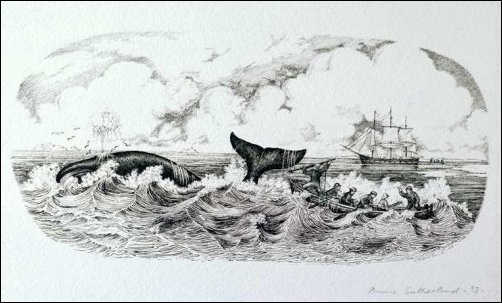
They wanted those whales for their fat, which could be melted down into oil for lamps. And many, many children studied their textbooks by the warm glow of the whale oil lamp.
The bloated whale that was Riverside-Houghton Mifflin-Harcourt-Greenwood-what have you has undergone a very quick process that resembles liposuction, although the publishing whale's blubber isn't convertible into oil.
It was convertible into warrants that reduced the debt load of Houghton Mifflin Harcourt.
As if by magic, HMH dropped 3.1 billion US dollars of debt, and if you've ever tried to diet, you know how hard it is to shed that much excess baggage.
With less debt to pay interest on, the slimmed down publisher expects that the reduced drag on the bottom line will help the firm to swim along through educational publishing materials waters, determined to remain on its fiscal diet.
There won't be any more publishing houses swallowed up by HMH any time soon.
The over-arching problems, however, remain.
Sales are down because local school boards have no money with which to buy new textbooks. In trade, there has been a decline in purchases as the general public hangs on to its cash to put petrol in the car, rather than a book on the shelf.
Employees have been paid while HMH undertook the Chapter 11 Cure, but there can be no guarantees that they all will continue to be employed if demand doesn't increase. At some point in the future, depending on the state of the global economy, there may be yet another restructuring.
There may be a need to shed a few more pounds, in the form of synergies to be realized (giving employees the sack, in standard parlance). And then there's the more desperate tack of radical surgery, in which large sections of assets are sliced off the HMH whale and sold as going concerns to other publishers, with the proceeds bringing in needed cash to pay off a stubborn debt load.
Yes, anyone who's had to diet to save their life can tell you how hard it is to lose weight, in spite of the most drastic actions.
I mean, have you seen Carnie Wilson? She's undergone a second weight loss procedure herself, after the first one proved ineffective.
We're all hoping that this time it sticks.
Monday, June 25, 2012
Follow The Tweet
Twitter may not be good for much beyond wasting time, but every now and then there's something that pops up that is worth knowing.
Literary agents who are active on Twitter often send out a tweet announcing that they are open (or closed) to queries. Getting yours under an interested nose at just the right time, when interest is high, can be enough to get a request for the manuscript.
It's all about timing, after all.
The same can be said of publishers. There are plenty of them out there, both small and large, and many of them maintain a twitter feed.
By and large, they use the Twitterverse to broadcast new releases or display little pieces of good reviews. It's all about sales. Twitter is just another marketing venue.
But at the same time, an editor might use those precious few characters to mention a shortage of some particular type of manuscript, or a certain genre that would be hot if they could find the right story right now.
Thanks to Publishers Weekly, you can browse a list of publishers on Twitter and find those that might be of some use to you.
You never know what someone might tweet, unless you follow.
As for all that Pinterest blather, there's got to be a limit to how much time you waste online.
You're supposed to be writing, don't forget.
Literary agents who are active on Twitter often send out a tweet announcing that they are open (or closed) to queries. Getting yours under an interested nose at just the right time, when interest is high, can be enough to get a request for the manuscript.
It's all about timing, after all.
The same can be said of publishers. There are plenty of them out there, both small and large, and many of them maintain a twitter feed.
By and large, they use the Twitterverse to broadcast new releases or display little pieces of good reviews. It's all about sales. Twitter is just another marketing venue.
But at the same time, an editor might use those precious few characters to mention a shortage of some particular type of manuscript, or a certain genre that would be hot if they could find the right story right now.
Thanks to Publishers Weekly, you can browse a list of publishers on Twitter and find those that might be of some use to you.
You never know what someone might tweet, unless you follow.
As for all that Pinterest blather, there's got to be a limit to how much time you waste online.
You're supposed to be writing, don't forget.
Thursday, June 21, 2012
The Retirement Party
Hard to believe, but literary agents are human and they do the things that all of us do...or would like to do if we could afford it.
Literary agents can choose to work until they drop, slumping to the desk in death. Or they can retire.
Nancy Coffey has chosen retirement.
What's to become of her clients, in that case?
Chances are, some of them will migrate to other representation. But those who were signed on for their ability to write marketable young adult fiction will shift sideways.
Some time ago, Joanna Volpe went to work with Ms. Coffey, introducing such things as the blog, the twitter, and the e-query. She introduced some new clients, of course, though at first she was the YA agent while Ms. Coffey kept to her usual fare of adult works.
The once single-agent agency expanded again with the addition of two more agents, further edging towards books for the under-sixteen set.
Who would have guessed that Ms. Coffey was not expanding, but pulling back? Her namesake agency is about to be no more.
Ms. Volpe has joined up with her fellow Coffey-ites in forming a new agency. Turning over a new leaf, the team has called their business New Leaf Literary & Media.
There is, as yet, no website up and running. They are not accepting queries while they get themselves organized and sorted. It's a good season for that sort of thing, considering how little work is done in the publishing industry over the summer.
In essence, this is an old agency under new management. It isn't likely that they'll be any more interested in your query two months from now than they were two months ago.
But after the dust settles, and your query is fresh, you might consider giving them a try. Things always look different when you're the one paying the bills. Taking on another client or two, or twenty, might have more appeal by then.
Literary agents can choose to work until they drop, slumping to the desk in death. Or they can retire.
Nancy Coffey has chosen retirement.
What's to become of her clients, in that case?
Chances are, some of them will migrate to other representation. But those who were signed on for their ability to write marketable young adult fiction will shift sideways.
Some time ago, Joanna Volpe went to work with Ms. Coffey, introducing such things as the blog, the twitter, and the e-query. She introduced some new clients, of course, though at first she was the YA agent while Ms. Coffey kept to her usual fare of adult works.
The once single-agent agency expanded again with the addition of two more agents, further edging towards books for the under-sixteen set.
Who would have guessed that Ms. Coffey was not expanding, but pulling back? Her namesake agency is about to be no more.
Ms. Volpe has joined up with her fellow Coffey-ites in forming a new agency. Turning over a new leaf, the team has called their business New Leaf Literary & Media.
There is, as yet, no website up and running. They are not accepting queries while they get themselves organized and sorted. It's a good season for that sort of thing, considering how little work is done in the publishing industry over the summer.
In essence, this is an old agency under new management. It isn't likely that they'll be any more interested in your query two months from now than they were two months ago.
But after the dust settles, and your query is fresh, you might consider giving them a try. Things always look different when you're the one paying the bills. Taking on another client or two, or twenty, might have more appeal by then.
Wednesday, June 20, 2012
Wake Me Up When They've Gone, Gone
"Rock Of Ages" not doing it for you?
Fear not. Wham!!!!!! is going to re-unite for a single performance that will commemorate the 30th anniversary of their debut.
Wake me up when it's over.
I don't think I much want to return to the 80's, actually.
Wham! made cute, bubbly, happy little pop tunes, totally unlike the sort of music featured in that other rock musical starring Tom Cruise. The leader singer was a pretty boy who turned out to be gay but didn't come out because it would have hurt the band's financial success. Young, record-buying girls wouldn't be so enamored of the group if they thought the lead singer was crooning to their boyfriends and not them.
Even he wasn't planning on going solo (ironic lyrics there), George Michael has been performing on his own for some time, albeit with less success than he saw as part of a duo.
The pop band claims they won't do a big tour, but if that one-off performance sells out quickly, you'd have to believe that they'd add another show, and then another venue, and before you know it they're on the road and coming to a town near you.
If you should go, you'll watch a couple of guys who are now thirty years older, which will make you depressed as you realize that you, too, are thirty years older. Of course, there is always that moment in such reunion concerts when your mind takes you back to those happier times when you were young and innocent, without a care.
That's the bit that sells the tickets.
Tuesday, June 19, 2012
A Day Off
Once a year, the siblings gather from near and far, to visit the parents and take note of how rapidly they are aging.
More frail than ever this year, we noticed. Still holding their own, just the same.
The big day of our meeting is today. Our work schedules have been adjusted, no one will be expecting us at the office. No phones. No questions about when a project is going to be done. No complaints from obsessive-compulsive clients.
If anyone is looking for me, I'll be in a pub.
Which one? Depends on what time you go searching.
We've done with the visiting, you see. It's time for our annual pub crawl.
I'm off. There's a pint with my name on it, and after that there's another, and another, and don't worry. I'm not driving anywhere.
More frail than ever this year, we noticed. Still holding their own, just the same.
The big day of our meeting is today. Our work schedules have been adjusted, no one will be expecting us at the office. No phones. No questions about when a project is going to be done. No complaints from obsessive-compulsive clients.
If anyone is looking for me, I'll be in a pub.
Which one? Depends on what time you go searching.
We've done with the visiting, you see. It's time for our annual pub crawl.
I'm off. There's a pint with my name on it, and after that there's another, and another, and don't worry. I'm not driving anywhere.
Monday, June 18, 2012
Someone New To Read Your Query
Any time someone new arrives at a literary agency, it's time for you to submit.
New hires want to make their mark. They want to find something brilliant in the slush pile that proves their worth.
Start polishing your query letter. Shine up the opening pages of your manuscript.
Susan Golomb is in the market for a new assistant whose duties include manuscript evaluation. Yes, it just might be your manuscript that gets evaluated, and by a fresh pair of eyes.
Sounds easy, but what you don't know is when that new assistant will be on the job, so you don't really know when to hit 'send'.
Too soon, and it's an overtaxed Ms. Golomb reading the thing, and rejecting it because she just doesn't have the time to consider another client. Too late, and that new assistant will already be jaded, with eyes falling out of his or her head from reading so much jibberish.
So polish the query, shine up the manuscript, and rub your lucky rabbit's foot. There's always an element of luck involved on the rocky road to publishin'.
New hires want to make their mark. They want to find something brilliant in the slush pile that proves their worth.
Start polishing your query letter. Shine up the opening pages of your manuscript.
Susan Golomb is in the market for a new assistant whose duties include manuscript evaluation. Yes, it just might be your manuscript that gets evaluated, and by a fresh pair of eyes.
Sounds easy, but what you don't know is when that new assistant will be on the job, so you don't really know when to hit 'send'.
Too soon, and it's an overtaxed Ms. Golomb reading the thing, and rejecting it because she just doesn't have the time to consider another client. Too late, and that new assistant will already be jaded, with eyes falling out of his or her head from reading so much jibberish.
So polish the query, shine up the manuscript, and rub your lucky rabbit's foot. There's always an element of luck involved on the rocky road to publishin'.
Saturday, June 16, 2012
Last Chance For A Bloomsday Purchase
As you wander about Dublin today, viewing the sites that once were seen by James Joyce or following the footsteps of his most famous character, Leopold Bloom, stop by the Dublin Woollen Mills shop and buy something.
It's the last chance at the family-owned shop that's been open since 1888. The Roche family is shutting it down.
Fans of all things Joycean know that the author once worked as a salesman for the firm, selling quality Irish haberdashery abroad.
Sadly, times have changed to such an extent that the owners cannot, or care not to, keep it going. The shop is profitable, they say, and they have seen an uptick in interest since the financial crisis struck with a vengeance, but government bureaucracy is too heavy a burden to carry any longer.
For all those women who started up home-based businesses that produced hand-knit items or one-off hats, they will have to go elsewhere for their supplies. Dressmakers who earned a little money from their skill and an ability to buy fabric cheap and sell finished garments at a profit may find that their business model no longer works.
Depending on wholesale costs, those craft industries just might go the way of Dublin Woollen Mills. In tough economic times, you cannot raise your prices and expect to keep your clients. And when you've started up your little cottage industry because you couldn't find any other job, it's not a positive outlook.
So cross the Ha'penny Bridge and walk up to the shop. Touch the knob that James Joyce once touched, walk the floors where the author once walked, and wonder why a government that says it's all for jobs fails to notice the little places that don't make a lot of noise.
It's the last chance at the family-owned shop that's been open since 1888. The Roche family is shutting it down.
Fans of all things Joycean know that the author once worked as a salesman for the firm, selling quality Irish haberdashery abroad.
Sadly, times have changed to such an extent that the owners cannot, or care not to, keep it going. The shop is profitable, they say, and they have seen an uptick in interest since the financial crisis struck with a vengeance, but government bureaucracy is too heavy a burden to carry any longer.
For all those women who started up home-based businesses that produced hand-knit items or one-off hats, they will have to go elsewhere for their supplies. Dressmakers who earned a little money from their skill and an ability to buy fabric cheap and sell finished garments at a profit may find that their business model no longer works.
Depending on wholesale costs, those craft industries just might go the way of Dublin Woollen Mills. In tough economic times, you cannot raise your prices and expect to keep your clients. And when you've started up your little cottage industry because you couldn't find any other job, it's not a positive outlook.
So cross the Ha'penny Bridge and walk up to the shop. Touch the knob that James Joyce once touched, walk the floors where the author once walked, and wonder why a government that says it's all for jobs fails to notice the little places that don't make a lot of noise.
Friday, June 15, 2012
The 'Women In Publishing Losing The Job' Genre
Whether or not you think the economy is improving, the turmoil of late has spawned a new genre in women's literature.
All over the fiction world, women in publishing are losing jobs.
To read the latest crop of novels, you'd have to think that the industry is being gutted. So many novels lately turn on the premise of a high-placed female executive getting the boot because sales are down or a new manager is taking over.
Fanny Blake's upcoming What Women Want is the latest in this new genre. No surprise that Ms. Blake is writing about the work world she knows well. She was an editor herself, before sitting down to write her own piece of fiction.
Her debut novel (is it really a debut when someone's got industry connections?) has been featured this week by St. Martin's Press Read-It-First program.
Within the first twenty-four pages, the readers are right in the middle of the changing of the guard at a fictional publishing house in England. Move that location to Boston and anyone working for Houghton Mifflin Harcourt would relate to the trauma of lay-offs.
But they'd find commonality in The Jane Austen Marriage Manual as well. Kim Izzo's novel is all about---a woman in publishing, in this case magazines, losing her job.
Oh, yes, and Ms. Izzo used to work at a fashion magazine, just like her protagonist.
Why the eruption of a new genre?
Can't you just picture all those editors in New York City, watching sales drop as corporate suits prowl the halls, looking for fresh meat to toss to the accountants? A book about someone like them being shown the door? Instantly relate-able.
So there's two authors who've cracked the paper ceiling by writing about a subject they know. Makes you wish you could get a more exciting job and get fired from it.
Strictly for research, of course.
Real life isn't like the fiction that's written about the unemployed. It isn't always a happy ending.
All over the fiction world, women in publishing are losing jobs.
To read the latest crop of novels, you'd have to think that the industry is being gutted. So many novels lately turn on the premise of a high-placed female executive getting the boot because sales are down or a new manager is taking over.
Fanny Blake's upcoming What Women Want is the latest in this new genre. No surprise that Ms. Blake is writing about the work world she knows well. She was an editor herself, before sitting down to write her own piece of fiction.
Her debut novel (is it really a debut when someone's got industry connections?) has been featured this week by St. Martin's Press Read-It-First program.
Within the first twenty-four pages, the readers are right in the middle of the changing of the guard at a fictional publishing house in England. Move that location to Boston and anyone working for Houghton Mifflin Harcourt would relate to the trauma of lay-offs.
But they'd find commonality in The Jane Austen Marriage Manual as well. Kim Izzo's novel is all about---a woman in publishing, in this case magazines, losing her job.
Oh, yes, and Ms. Izzo used to work at a fashion magazine, just like her protagonist.
Why the eruption of a new genre?
Can't you just picture all those editors in New York City, watching sales drop as corporate suits prowl the halls, looking for fresh meat to toss to the accountants? A book about someone like them being shown the door? Instantly relate-able.
So there's two authors who've cracked the paper ceiling by writing about a subject they know. Makes you wish you could get a more exciting job and get fired from it.
Strictly for research, of course.
Real life isn't like the fiction that's written about the unemployed. It isn't always a happy ending.
Thursday, June 14, 2012
A Day For The Poet
DOWN by the salley gardens my love and I did meet;
She passed the salley gardens with little snow-white feet.
She bid me take love easy, as the leaves grow on the tree;
But I, being young and foolish, with her would not agree.
In a field by the river my love and I did stand,
And on my leaning shoulder she laid her snow-white hand.
She bid me take life easy, as the grass grows on the weirs;
But I was young and foolish, and now am full of tears.
But William Butler Yeats' poetry is not only read, but the average non-Joycean scholar can understand and appreciate it.
 Yet until now, it's been James Joyce and Bloomsday that's been celebrated, with tourists and lovers of Ulysses (have even half of them read the thing?) tromping across Dublin, tracking the path of the book's protagonist.
Eating lamb kidneys and savoring the slight tang of urine---give me Yeats any day and keep the offal.
The folks in Sligo have decided that their man is worth a day of honor as well. Let's face facts. There are many who have read Yeats, people of all ages, and they've enjoyed the poet's works.
Reading Joyce is the literary equivalent of climbing Mount Everest. Many have tried but few have succeeded, and then there are the countless millions who think it's mad to even consider such an impossible feat.
They celebrated Yeats Day in Sligo, with tours and exhibits throughout the town. Poetry was recited at the Yeats Memorial Building. While Bloomsday tourists can follow Joyce's footsteps through Dublin, the Yeats crowd boated to the island of Innisfree on Lough Gill in commemoration of a Yeats poem.
This being the first year, most of the attendees were locals who appreciate William Butler Yeats. Unlike James Joyce, who decamped for the Continent, Mr. Yeats resided in Ireland and his words played a role in the Irish independence movement that began well before Easter, 1916.
The town of Sligo would like to expand on Yeats Day, so that in three years, they will be ready for a real party to celebrate the poet's 150th birthday.
Had I the heaven's embroidered cloths,
Enwrought with golden and silver light,
The blue and the dim and the dark cloths
Of night and light and the half-light,
I would spread the cloths under your feet:
But I, being poor, have only my dreams
I have spread my dreams under your feet;
Tread softly because you tread on my dreams.
Happy Yeats Day.
Tuesday, June 12, 2012
The Line Gets More Blurry By The Day
According to the rules of the Association of Authors' Representatives, a literary agent cannot taint their spotless fingers with ink.
Clearly, it's a conflict of interest for an agent to take on a writer when there's the possibility that the agent is only taking on the author to make money from publishing a manuscript rather than earning their income from representing that author.
You can't very well be a gatekeeper if you leave the gate open all the time.
Things have gone blurry of late. More and more agents are also acting as publishers for their clients, slipping into e-book publishing to get books out to the public.
Returning backlist, out-of-print works to readers doesn't really qualify as publishing, and so it has gone largely unchallenged.
But lately, agents like Ed Victor are using e-book publishing to put out something brand new that just didn't resonate with the traditional publishing houses. In these cases, the literary agent really believes in the value of the manuscript, and see a way to share their love with the rest of the world.
Now literary agent Andy Zack has taken things to the next level, although he may have invited a storm of criticism.
He has branched out into publishing in a slightly different way, by inviting authors who have considered self-publishing to consider his services.
Endpapers Press aims to do a bit more than something like CreateSpace or Lulu.com. Which are free, so you'd not expect much for nothing.
Instead, Endpapers Press will sell the services of a traditional publisher to aspiring authors who haven't gotten anywhere via the standard route. Right, have you ever tried to figure out if an editor is worth the money or doesn't know a dangling participle from the subjunctive?
And not just anyone can publish through Endpapers....assuming that the financial model works and the owner isn't tempted to reach deeper into the slushpile for clients.
But is it ethical, under the guidelines of the AAR?
No one seems to know exactly, because the publishing industry is changing in ways that don't give clear indications about where things are headed.
Maybe the time will come when literary agents have the option of two different tracks, either going with the big publishing house or keeping things in-house. Or maybe they won't.
Quite blurry, that future outlook. Any hope of clarity some time soon?
Clearly, it's a conflict of interest for an agent to take on a writer when there's the possibility that the agent is only taking on the author to make money from publishing a manuscript rather than earning their income from representing that author.
You can't very well be a gatekeeper if you leave the gate open all the time.
Things have gone blurry of late. More and more agents are also acting as publishers for their clients, slipping into e-book publishing to get books out to the public.
Returning backlist, out-of-print works to readers doesn't really qualify as publishing, and so it has gone largely unchallenged.
But lately, agents like Ed Victor are using e-book publishing to put out something brand new that just didn't resonate with the traditional publishing houses. In these cases, the literary agent really believes in the value of the manuscript, and see a way to share their love with the rest of the world.
Now literary agent Andy Zack has taken things to the next level, although he may have invited a storm of criticism.
He has branched out into publishing in a slightly different way, by inviting authors who have considered self-publishing to consider his services.
Endpapers Press aims to do a bit more than something like CreateSpace or Lulu.com. Which are free, so you'd not expect much for nothing.
Instead, Endpapers Press will sell the services of a traditional publisher to aspiring authors who haven't gotten anywhere via the standard route. Right, have you ever tried to figure out if an editor is worth the money or doesn't know a dangling participle from the subjunctive?
And not just anyone can publish through Endpapers....assuming that the financial model works and the owner isn't tempted to reach deeper into the slushpile for clients.
But is it ethical, under the guidelines of the AAR?
No one seems to know exactly, because the publishing industry is changing in ways that don't give clear indications about where things are headed.
Maybe the time will come when literary agents have the option of two different tracks, either going with the big publishing house or keeping things in-house. Or maybe they won't.
Quite blurry, that future outlook. Any hope of clarity some time soon?
The Experts Don't Always Know It All

The experts said that dingoes did not take babies, and so Ms. Chamberlain was sentenced to life in prison for murder.
In fact, further research into dingo behavior showed that Australia's wild dog was perfectly capable of attacking humans, and had done so in the past.
It's just that the experts weren't so knowledgeable as they led the court to believe.
But those experts were quite useful to the local authorities, who had set their minds on the murder theory and they wanted a conviction no matter what.
It's not unlike the case of Dr. David Heimbach, considered an expert on the critical need for flame retardant chemicals in household furnishings. In his practice as a burn doctor, he's seen children who could have been saved if only the couch hadn't caught fire.
Except that Dr. Heimbach isn't quite so expert as all that. But his touching, albeit partially fabricated testimony, served the purpose of the chemical flame retardant industry, which put up Dr. Heimbach as its expert when Congress was debating a bill that would force foam manufacturers to include the chemicals in their products.
As it turns out, those chemicals do absolutely nothing to make furniture fire-proof because it's the outer fabrics that burn first, and the coverings burn hot enough to render the chemicals in the foam useless.
The chemicals are good for causing several health issues, however, and every time you drop into the sofa you're sending a cloud of carcinogens into the air you're breathing.
Next time you hear an expert speak on a given topic, consider their agenda. What's in it for them? Chances are, they may not be the absolute expert in their field and they are there to convince you of something that isn't true.
Trust everyone. But always cut the cards.
Monday, June 11, 2012
They Gave A Party And Nobody Came
The last time that a Eucharistic Congress was held in Ireland, it is estimated that half a million people came for the Mass.
 At the opening of yesterday's Eucharistic Congress in Dublin, there were plenty of empty seats.
 The Catholic Church in Ireland is giving a party this week, but no one is coming.
Fifty years ago, children were routinely removed from homes that the Church deemed unsuitable, and locked away in industrial schools until they were of age. Now adults, many of them are struggling to cope with the after-effects of horrific sexual, mental and physical abuse that took place behind closed, locked doors.
Fifty years ago, girls who were pregnant outside of marriage, girls who were classified as too pretty, and girls who had been raped were locked up in Magdalene laundries. Now adults, those woman are dying in poverty and obscurity, former slave laborers with no pensions, debilitated emotionally because of all that they suffered at the hands of the nuns.
Everyone knows what went on, and they've turned their backs on the Church. The bishops who were supposed to protect the children have been shown to be complicit as they shifted pedophile priests from parish to parish to hide them, rather than expose them.
So when those same bishops throw a party and make mention of healing, of forgiveness, there are few in attendance to listen to the words.
It's just that there's been so many words thrown about, and talk of forgiveness, but there's been no concrete action. More than anything, there has been an attempt by the clergy to get out from the financial burden of lawsuits brought by those who were victims of the Church.
Fifty years ago, when things could be hidden, half a million people went to Mass. Now that all has been revealed, they've gone to watch the football match.
Fifty years ago, children were routinely removed from homes that the Church deemed unsuitable, and locked away in industrial schools until they were of age. Now adults, many of them are struggling to cope with the after-effects of horrific sexual, mental and physical abuse that took place behind closed, locked doors.
Fifty years ago, girls who were pregnant outside of marriage, girls who were classified as too pretty, and girls who had been raped were locked up in Magdalene laundries. Now adults, those woman are dying in poverty and obscurity, former slave laborers with no pensions, debilitated emotionally because of all that they suffered at the hands of the nuns.
Everyone knows what went on, and they've turned their backs on the Church. The bishops who were supposed to protect the children have been shown to be complicit as they shifted pedophile priests from parish to parish to hide them, rather than expose them.
So when those same bishops throw a party and make mention of healing, of forgiveness, there are few in attendance to listen to the words.
It's just that there's been so many words thrown about, and talk of forgiveness, but there's been no concrete action. More than anything, there has been an attempt by the clergy to get out from the financial burden of lawsuits brought by those who were victims of the Church.
Fifty years ago, when things could be hidden, half a million people went to Mass. Now that all has been revealed, they've gone to watch the football match.
Friday, June 08, 2012
The True Price Of Cutting Education Budgets
States are looking for ways to pare costs in order to survive.
What is expendable, what is critical? Sadly, education is not as critical as many of us would believe.
Teachers are left with gaping holes in their personal budgets, but credit must be given to those who are clever enough to find other ways to make money.
Being off for the entire summer might once have been looked on as a time for an extended vacation, but at least one teacher is putting the time to good use by taking on a second job.
Unfortunately for University of Georgia professor Max Roland Reinhart, the niche he thought needed filling is not one that can legally be filled.
Not to blame the man. He's a college professor, not a legal scholar. He's been living comfortably in his ivory tower for so long that he could not have known that offering sex acts for money is against the law.
 Prof. Reinhart made the common mistake of advertising online, not realizing that the first place the cops will go to find out where the prostitutes are is online.
Charging $120 per hour as a transsexual escort, the professor could have padded his income quite comfortably without having to put in an eight-hour day....or should that be night? Wouldn't you know, but it was an officer of the law who contacted Reinhart and agreed to meet at a Georgia motel. Once price was agreed, that was all it took to justify an arrest.
What disciplinary action will UGA impose? After all, they're all aware of how hard it is for college professors to make a living in this era of state budget cuts to education. Can they really fault the man for trying to pick up a little extra cash on his own time?
While he was working under the name "Sasha", but somehow it would be more fitting if he had called himself Lola Lola and agreed to meet his john at Der Blaue Engel. I mean, if you're a noted scholar of all things Goethe, shouldn't you market yourself with an eye on more modern aspects of German culture?
Funny how there's all this talk about the current economy being the worst since the Great Depression. Makes those movies from 1930 that much more pertinent to modern times, doesn't it?
What is expendable, what is critical? Sadly, education is not as critical as many of us would believe.
Teachers are left with gaping holes in their personal budgets, but credit must be given to those who are clever enough to find other ways to make money.
Being off for the entire summer might once have been looked on as a time for an extended vacation, but at least one teacher is putting the time to good use by taking on a second job.
Unfortunately for University of Georgia professor Max Roland Reinhart, the niche he thought needed filling is not one that can legally be filled.
Not to blame the man. He's a college professor, not a legal scholar. He's been living comfortably in his ivory tower for so long that he could not have known that offering sex acts for money is against the law.
Charging $120 per hour as a transsexual escort, the professor could have padded his income quite comfortably without having to put in an eight-hour day....or should that be night? Wouldn't you know, but it was an officer of the law who contacted Reinhart and agreed to meet at a Georgia motel. Once price was agreed, that was all it took to justify an arrest.
What disciplinary action will UGA impose? After all, they're all aware of how hard it is for college professors to make a living in this era of state budget cuts to education. Can they really fault the man for trying to pick up a little extra cash on his own time?
While he was working under the name "Sasha", but somehow it would be more fitting if he had called himself Lola Lola and agreed to meet his john at Der Blaue Engel. I mean, if you're a noted scholar of all things Goethe, shouldn't you market yourself with an eye on more modern aspects of German culture?
Funny how there's all this talk about the current economy being the worst since the Great Depression. Makes those movies from 1930 that much more pertinent to modern times, doesn't it?
After All That, I Forgot BEA
Sometimes the muse tickles your brain and you come up with a new query letter hook.
You can't wait to try it out.
I know I wasn't supposed to send out any query letters this week. All the literary agents are busy. And judging by their tweets, they're busy partying at the Javits Center in New York.
The book sellers are in town, promoting their wares to those who do the buying, and of course agents are there pushing their stock of manuscripts and tweeting about their clients who are signing books at Booth XYZ so stop by and say hello.
Book Expo America is done.
I'm hoping that the queries I sent yesterday, which will appear in the agent's inbox today, post-BEA, will not fall victim to a hangover, sleepiness, or a desire to start the weekend early so why go to work on a nice summer Friday when everyone will be taking the extra day off because who's going to the office after finishing up a big convention?
BEA is finished for this year.
Back to querying.
I know it's summer and the week in publishing is shorter, the days not quite as long, but I have this new query letter, and a revised opening to the manuscript. It's all a matter of blind luck, isn't it. Getting copy under someone's nose at the right time, but you can't predict when that right time is.
So it's always the right time. Especially now that BEA is done and it's one less distraction.
You can't wait to try it out.
I know I wasn't supposed to send out any query letters this week. All the literary agents are busy. And judging by their tweets, they're busy partying at the Javits Center in New York.
The book sellers are in town, promoting their wares to those who do the buying, and of course agents are there pushing their stock of manuscripts and tweeting about their clients who are signing books at Booth XYZ so stop by and say hello.
Book Expo America is done.
I'm hoping that the queries I sent yesterday, which will appear in the agent's inbox today, post-BEA, will not fall victim to a hangover, sleepiness, or a desire to start the weekend early so why go to work on a nice summer Friday when everyone will be taking the extra day off because who's going to the office after finishing up a big convention?
BEA is finished for this year.
Back to querying.
I know it's summer and the week in publishing is shorter, the days not quite as long, but I have this new query letter, and a revised opening to the manuscript. It's all a matter of blind luck, isn't it. Getting copy under someone's nose at the right time, but you can't predict when that right time is.
So it's always the right time. Especially now that BEA is done and it's one less distraction.
Thursday, June 07, 2012
Return Of The Medici
The intrigue that led Niccolo Macchiavelli to write The Prince is not relegated to the distant past.
Centuries later, another round of intrigue, complete with stolen documents and blackmail, is playing out in the Vatican.
The days of the Medici are back, and you half-expect to find Dan Brown on the scene somewhere, penning a work of non-fiction.
Like any good suspense novel, this story opens quietly, with the arrest of the Pope's butler. Documents, stolen from the private correspondence of His Holiness, are found in the possession of a man described as mild-mannered.
Obviously, he's a patsy, he's been set up by someone higher up.
You read on, to discover who done it, but in this case, there's a real person or persons out to undermine the current Papacy, or attempting to exert powerful influence to have their choice elected by the College of Cardinals.
Not too Angels and Demons, is it?
According to the Vatican, someone is now trying to blackmail the Pope, who is thought to be nearing the end of his reign.
Perfect timing for a little Macchiavellian subterfuge, isn't it?
The blackmailer has called for the sacking of Cardinal Tarcisio Bertone, the Vatican's secretary of state, and the Pope's secretary Monsignor Georg Ganswein.
What is the Cardinal doing, if not studying the history of the Medici and Borgia clans? How does a man with his eye on those charming red Prada shoes go about putting himself on the throne of St. Peter when others are doing their best to keep him off the seat?
Supposedly, there are documents in the possession of Cardinal Bertone's enemies, and they have threatened to release the material which will, of course, be so shocking that the Church will shake to its very foundation. Thus far, what has been released all seems to be aimed at toppling the Cardinal.
Rumour has it that the men who stole the documents in the first place are a couple of Cardinals, but could they be power hungry themselves, or are they using devious means to save the Church from certain destruction at the hands of the evil Prince of the Church?
There's a novel in all this, one of those complex thrillers with twists and turns and the occasional red herring. You just know that Dan Brown is all over it.
Centuries later, another round of intrigue, complete with stolen documents and blackmail, is playing out in the Vatican.
The days of the Medici are back, and you half-expect to find Dan Brown on the scene somewhere, penning a work of non-fiction.
Like any good suspense novel, this story opens quietly, with the arrest of the Pope's butler. Documents, stolen from the private correspondence of His Holiness, are found in the possession of a man described as mild-mannered.
Obviously, he's a patsy, he's been set up by someone higher up.
You read on, to discover who done it, but in this case, there's a real person or persons out to undermine the current Papacy, or attempting to exert powerful influence to have their choice elected by the College of Cardinals.
Not too Angels and Demons, is it?
According to the Vatican, someone is now trying to blackmail the Pope, who is thought to be nearing the end of his reign.
Perfect timing for a little Macchiavellian subterfuge, isn't it?
The blackmailer has called for the sacking of Cardinal Tarcisio Bertone, the Vatican's secretary of state, and the Pope's secretary Monsignor Georg Ganswein.
What is the Cardinal doing, if not studying the history of the Medici and Borgia clans? How does a man with his eye on those charming red Prada shoes go about putting himself on the throne of St. Peter when others are doing their best to keep him off the seat?
Supposedly, there are documents in the possession of Cardinal Bertone's enemies, and they have threatened to release the material which will, of course, be so shocking that the Church will shake to its very foundation. Thus far, what has been released all seems to be aimed at toppling the Cardinal.
Rumour has it that the men who stole the documents in the first place are a couple of Cardinals, but could they be power hungry themselves, or are they using devious means to save the Church from certain destruction at the hands of the evil Prince of the Church?
There's a novel in all this, one of those complex thrillers with twists and turns and the occasional red herring. You just know that Dan Brown is all over it.
Wednesday, June 06, 2012
A Grand Gesture In A Nation Of Tea Drinkers

You've come to a nation of tea drinkers and introduced Seattle-style burnt coffee and fancy beverages with Italian-ish names, but someone back in corporate headquarters really needs to study their geography before tweeting.
It was a grand gesture, to tweet an offer to win a free frappuccino. Everyone's doing something to celebrate the Queen's Golden Jubilee. The ubiquitous coffee vendor just wanted to join in the marketing mania.
Except that Starbucks asked its Irish followers to tweet back about what made them proud to be British.
Not since 1922, Starbucks, and even before that there was no pride.
Once the caffeine buzz died down, and someone at Starbucks.ie read the replies, the company issued an apology.
Sorry. The tweet was supposed to go to followers in Great Britain only.
Starbucks has several stores spread across the island, but over-all they operate at a loss. The idea is to convince the Irish that a cuppa doesn't have to be tea, and that an iced blend of coffee, sugars, syrups and miscellaneous flavors is just what you need on a chilly June morning.
Thus far, the message isn't penetrating deep into Irish culture. Then again, the brews are pricey and who has that kind of money to throw away on a coffee these days?
The faux pas about British pride won't put a dent in the business. If anything, it might spark a little curiosity. After all, it's become a topic of discussion, with tweets and retweets and replies generating some free publicity.
And as any marketer will tell you, all publicity is good, even if it appears bitter, strong and in need of a great deal of sugar and cream to make it palatable.
Tuesday, June 05, 2012
God Help Me I've Flunked The Test
The question of how Catholic a person might be never came up in polite conversation before, so none of us ever considered it.
Sure we studied the catechism all those years ago, but who remembers those things that we had to memorize? It's not as if we used the knowledge. How many of us don't remember a word of Irish, and didn't we all have to learn that as well?
So the Irish Times has to go and ask us how Catholic we are.
Wouldn't you know it but I flunked the test.
Does that make me some sort of Protestant, or just a heathen?
Apparently, we're all fine with believing in the Resurrection, and we go to Mass....maybe not every Sunday, but we're there more than twice a year. No one is calling us Chr-Easter Catholics.
After that, it's all downhill.
When asked if they believed in the virgin birth, the average Irish Catholic paused.
Go on, really, a virgin birth? If you've done much historical research, you'd realize that the notion of virgin birth comes to us from the ancient Egyptians, who had a strong influence on the Mediterranean culture in Biblical times. So maybe the Apostles lifted the tale and did a bit of a revision to fit the narrative they were telling, and Isis became Mary.
That's one point off.
How about the Magisterium? Do we all believe that only the bishops and the Pope can teach the faith?
In light of the incomprehensible scope of the clerical sex abuse scandal, not only in Ireland but worldwide, who would trust the bishops when they open their mouths? And we're supposed to believe that women don't have the capacity to teach the faith because they're not bishops, but they can't be bishops because it's a men-only club.
Two points gone. I've lost forty percent with one question to go.
The Protestants decided long ago that the Eucharist isn't the real body of Christ, but symbolizes the sacrifice made to atone for our sins. Let's face it, that sort of concept makes far more sense than believing we commit acts of cannibalism at every Mass.
And so I've flunked.
But there's one aspect of Catholicism that I try to follow, and in my non-Magisterial opinion, it's the most important.
Don't worry about the details, about the nit-picking that goes on among a group of men with nothing better to do with their time than ponder minutiae. It comes down to loving one another. Isn't that what being a Catholic really means?
Sure we studied the catechism all those years ago, but who remembers those things that we had to memorize? It's not as if we used the knowledge. How many of us don't remember a word of Irish, and didn't we all have to learn that as well?
So the Irish Times has to go and ask us how Catholic we are.
Wouldn't you know it but I flunked the test.
Does that make me some sort of Protestant, or just a heathen?
Apparently, we're all fine with believing in the Resurrection, and we go to Mass....maybe not every Sunday, but we're there more than twice a year. No one is calling us Chr-Easter Catholics.
After that, it's all downhill.
When asked if they believed in the virgin birth, the average Irish Catholic paused.
Go on, really, a virgin birth? If you've done much historical research, you'd realize that the notion of virgin birth comes to us from the ancient Egyptians, who had a strong influence on the Mediterranean culture in Biblical times. So maybe the Apostles lifted the tale and did a bit of a revision to fit the narrative they were telling, and Isis became Mary.
That's one point off.
How about the Magisterium? Do we all believe that only the bishops and the Pope can teach the faith?
In light of the incomprehensible scope of the clerical sex abuse scandal, not only in Ireland but worldwide, who would trust the bishops when they open their mouths? And we're supposed to believe that women don't have the capacity to teach the faith because they're not bishops, but they can't be bishops because it's a men-only club.
Two points gone. I've lost forty percent with one question to go.
The Protestants decided long ago that the Eucharist isn't the real body of Christ, but symbolizes the sacrifice made to atone for our sins. Let's face it, that sort of concept makes far more sense than believing we commit acts of cannibalism at every Mass.
And so I've flunked.
But there's one aspect of Catholicism that I try to follow, and in my non-Magisterial opinion, it's the most important.
Don't worry about the details, about the nit-picking that goes on among a group of men with nothing better to do with their time than ponder minutiae. It comes down to loving one another. Isn't that what being a Catholic really means?
Monday, June 04, 2012
Some Of My Best Friends Are Publishers

It was a case of bringing back that which was out of print and might have a little life left in it.
Putting together an e-book is relatively inexpensive, and publishing one couldn't be easier. So the agent gathered up the titles he thought would sell again, and published those that a traditional publisher didn't think were worth the bother.
His little publishing house, Bedford Square Books, started out with six titles. Then Mr. Victor added the option of providing hard copies via print on demand, for those who prefer their books made of wood pulp.
Ed Victor recognized the changes to the book industry that came about when e-books became acceptable to the reading public.
With the invention of the smart phone, it's possible to carry several books around, all neatly tucked into an electronic device that provides instant access to reading material. We can all read the latest novel on the train heading to work, in the car while waiting for the kiddies to be released from school, or even when waiting for the train to pass at a level crossing.
But Mr. Victor has fallen.
He had a couple of manuscripts that he loved. He was sure they were books that would sell. His publisher friends disagreed and didn't buy them.
So he published them himself through Bedford Square Books.
Sure he went the traditional route and followed protocol and all the rest. But when he was turned down, he thumbed his nose at those too blind to see the quality of Dead Rich, a novel by Louise Fennell which has sold nicely by the way.
The rise of e-books and print on demand has changed the industry, which Mr. Victor thinks is not responding to those changes. He's become pro-active for his clients, acting as literary agent and publisher to get their words out there.
As he stated in a recent article, Mr. Victor sees the shift in publishing, but like everyone else, he can't predict which direction things will go.
He feels that he is a better agent now that he's dipped a toe in publishing. He's certainly more aware of the commercial end of things, the selling aspect that was a publisher's concern.
And he can look at a manuscript through a different lens. If he loves a new work, it doesn't matter if a traditional publisher does or not. There's always Bedford Square Books.
Friday, June 01, 2012
Resist The Urge To Query
In case you have a fresh query letter or a fresh roster of literary agents to be queries, you are advised to put all of that aside for the next week.
No, it's not the usual summer hiatus to the Hamptons, although that can be an issue and it's true that most people in publishing disappear early on Fridays.
The literary agents are soon to be leaving their offices, to migrate to the Javits Center in New York.
You've noticed that they're still in the city, but there's no time for your query. Or your manuscript submission, if you're that lucky.
Full literary agent attention will be given over to Book Expo America, and not to you.
BEA, as it is called, is all about selling books. That's what a literary agent does. Ergo, the agents will be at the Javits Center trying to sell their clients' wares, while the publishers they sell to will be trying to sell their wares to book buyers and librarians.
It's a big deal in the publishing industry.
Your query, in comparison is not.
So don't waste a good query on an absent agent. Wait until they're back, and hope that you submit at the right time to get their maximum attention.
And hope the agent you're submitting to is in a good mood, maybe had a successful week at the expo, and knows a publisher who is looking for exactly the book that you've written.
No, it's not the usual summer hiatus to the Hamptons, although that can be an issue and it's true that most people in publishing disappear early on Fridays.
The literary agents are soon to be leaving their offices, to migrate to the Javits Center in New York.
You've noticed that they're still in the city, but there's no time for your query. Or your manuscript submission, if you're that lucky.
Full literary agent attention will be given over to Book Expo America, and not to you.
BEA, as it is called, is all about selling books. That's what a literary agent does. Ergo, the agents will be at the Javits Center trying to sell their clients' wares, while the publishers they sell to will be trying to sell their wares to book buyers and librarians.
It's a big deal in the publishing industry.
Your query, in comparison is not.
So don't waste a good query on an absent agent. Wait until they're back, and hope that you submit at the right time to get their maximum attention.
And hope the agent you're submitting to is in a good mood, maybe had a successful week at the expo, and knows a publisher who is looking for exactly the book that you've written.
The Devil Wears Second-Hand Prada Knock-offs
When Lauren Weisberger wrote The Devil Wears Prada, the world was a different place. So different that I don't know that we'd recognize it anymore.
The author has penned a sequel to the blockbuster novel, but ten years later, is the devil wearing Prada or has the economy taken its toll? Does the devil pick up inexpensive Prada knock-offs from the street vendors in New York City?

There was something about the original novel that fit the times, with the economy booming. It was the era of "Sex and the City", buy buy buy and don't forget the shoes.
Too many of those who read the first installment don't have jobs now and they can't even begin to care about fashion trends or nasty bosses. They'd be happy for any sort of boss at all, handing them some sort of paycheck.
Times have changed, drastically. Even so, Simon & Schuster is taking a chance that the audience that made The Devil Wears Prada a hit will come back for a second round.
The publisher is betting that women readers are more in need of escape than ever, and they're willing to look back ten years to find some rest from modern-day worry over paying the bills.
And there's no mistaking Ms. Weisberger's sequel as anything but escape reading. There's nothing to be taken seriously when the narrative revolves around a bridal magazine editor planning her own wedding while dealing with her former devil of a boss.
Fans of the original roman a clef will be waiting for the lay-down. But this time around, they just might be waiting in front of the shelf of new fiction at the local public library, where the price of two week's worth of entertainment is available at no extra cost.
The author has penned a sequel to the blockbuster novel, but ten years later, is the devil wearing Prada or has the economy taken its toll? Does the devil pick up inexpensive Prada knock-offs from the street vendors in New York City?
There was something about the original novel that fit the times, with the economy booming. It was the era of "Sex and the City", buy buy buy and don't forget the shoes.
Too many of those who read the first installment don't have jobs now and they can't even begin to care about fashion trends or nasty bosses. They'd be happy for any sort of boss at all, handing them some sort of paycheck.
Times have changed, drastically. Even so, Simon & Schuster is taking a chance that the audience that made The Devil Wears Prada a hit will come back for a second round.
The publisher is betting that women readers are more in need of escape than ever, and they're willing to look back ten years to find some rest from modern-day worry over paying the bills.
And there's no mistaking Ms. Weisberger's sequel as anything but escape reading. There's nothing to be taken seriously when the narrative revolves around a bridal magazine editor planning her own wedding while dealing with her former devil of a boss.
Fans of the original roman a clef will be waiting for the lay-down. But this time around, they just might be waiting in front of the shelf of new fiction at the local public library, where the price of two week's worth of entertainment is available at no extra cost.
Subscribe to:
Posts (Atom)