Thursday, January 15, 2015

As Irish As Paddy's Pig (No Offense Intended)

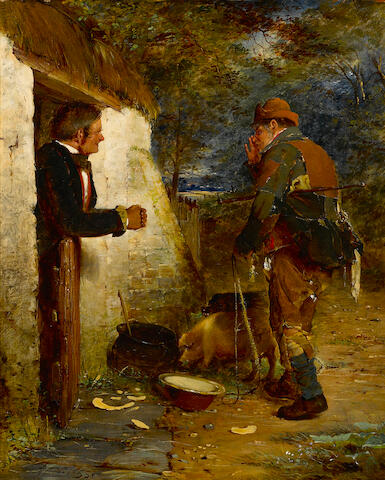
Paddy's Pig - an offensive image to be eradicated
We're not to mention pork anymore. It might offend.

In the wake of the slaughter of journalists in Paris, authors who write educational materials have revealed their marching orders when it comes to writing educational content. They are not to mention pork in their paragraphs because it offends some people. The people who don't eat pork, and who will kill you because you do. Just like they killed the journalists for using words and images that the killers decided were deserving of murder.

Writers have been creating educational materials under stringent guidelines for quite some time, but no one paid much heed to the tight restrictions that were in place so that a book could pass muster in Middle Eastern markets. For that reason, the characters used in books to demonstrate ordinary activities had to be living as if they were Islamic. No mingling of the sexes like there is in the western world that makes up the bulk of the educational publishing materials market. No pork or sausages, no pig in the farm yard. No Israel.

It was HarperCollins making Israel disappear from a map in a textbook that started the exposure of political correctness gone mad. The publisher just didn't put Israel in the world atlas because, well, the people buying the book don't want Israel to exist so why even teach the children that it does?

For the same reason, outrage was stoked in Great Britain when an author dared to expose the political correctness that rules Oxford University Press.

Any material for education will not include any mention or image of co-habiting, such as is common in any university dormitory. There can be no alcohol, either, which would make it impossible to show that people in France drink wine while sitting at outdoor cafes and Irish people drink beer while sitting in pubs where they socialize with neighbors. No one in the world drinks alcohol, goes the message, or eats pork, because the whole world is just like you there in Qatar.

It must be a tremendous shock for the children of the Middle East to discover that there is a whole different world out there. Is it any wonder that they chafe at western culture when they emigrate and try to settle in to a new life? What they thought they would find does not actually exist, even though their teachers and the teaching material used indicated that things would not be so different between Algeria and France.

It is the governments of the Middle Eastern countries that demand the content, and publishers are only giving them what they ask for. The publishers could say no, of course, and refuse to participate in a whitewash that is largely the opposite of education.

As long as someone is willing to pay for propaganda, there is no incentive to not keep producing it. Competition is fierce in the educational publishing materials game. If not us, a publisher will say, then the profit goes to a rival who can use that money to grow bigger and stronger. As for the writers, they are largely freelancers who know that there is little enough money in their livelihood. Turning down a commission to make a stand against illiteracy is not economically feasible.

So what do the stockholders of these publishing companies think?

Wednesday, January 14, 2015

More Characters Than A Russian Novel


One reason why Russian novels, like Anna Karenina or War and Peace, are so long is that half the population of Russia gets inserted into the story. You need a roster at hand, or some sort of family tree at least, to keep track of them all. Anyone following the latest round of changes in corporate structure at the Random Penguin publisher would like to have a roster of key players as well, to keep track of the endless procession of executives shifting duties.

Is there a big map of the corporate structure in some war room where the Penguin generals met to plot out a complex strategy?

At Penguin Random House, there is a great deal of realignment and reassignment going on, and it's not possible for any one person to have moved players around without using the sort of system that military men use to keep tabs on their battalions. The four-star general at PRH would be Madeleine McIntosh, more properly called the president of the new enterprise, and she has been very busy indeed.

Dutton feints right, Viking moves forward, Gotham is lost
Ms. McIntosh was hired to put her mark on the publisher, while at the same time combining two separate companies with two separate corporate cultures. Her job is to realize synergies, as they say, and cut the excess while streamlining the entire operation. Mergers cost money, and that money has to be recouped. That recouping must go on while the firm increases profits to provide nice little dividends for the stockholders, or the general gets demoted. No one likes losing a star.

So there she is with all these imprints and all these people running these imprints but not every imprint can make the cut. Which means not every executive is going to be needed, but at the same time, the imprints aren't really going away completely but will be absorbed in a sort of mini-merger. Say farewell to Clare Ferraro who once headed Viking but is being replaced by Brian Tart who is moving from Hudson Street which is ending its run as a separate imprint. Someone had to be sacrificed. War is cruelty and you cannot refine it.

It only gets more complex from there, with execs moving from one battalion to the next to reinforce the lines and rally the troops and lead them into battle against the competition. Editors fly to and fro, dragging their authors with them because authors are fiercely loyal to their editors. Write on, authors, write blockbusters that bring acclaim to Penguin Random House. Acclaim being profit, of course.

The whole scheme is so convoluted that Ms. McIntosh had to send a letter to employees to explain the revised chain of command, but all the troops really want to know is who their boss is, and do they still have a job as the merger takes hold and the corporate leaders trim away what they see as excess expense but the soldiers on the front line see as their financial life.

Monday, January 12, 2015

Finding Help On YouTube

You can't figure out how to do something, like remove the faucet from the kitchen sink. The first thing you do is try YouTube for an instructional video.

The video you bring up is, of course, free. That's why you're checking YouTube instead of running down to the library for a free book that will tell you with words and a few pictures how to get that odd-looking wrench around the nut. If you have to pay to learn how to fix it, you start calculating the cost of your investment versus the cost of your buddy the plumber who'd do it as a side job at a reduced rate.

If you are having problems living your life, however, you tend to turn to books for guidance. The self-help section of any bookstore is packed with volumes of advice from those who are considered experts in their field. There are enough Ph.D.s on the spines to fill a university. So you read up and think you have your answer, but what if your particular question isn't covered in enough depth? It's not as if you can call the self-help author on the phone and ask. And a counselor would cost a small fortune, so what's left?

Simon and Schuster have the solution to your self-help problems. It's YouTube, but without the free part.
Call me and I will fix your life with sage advice

The publisher plans to launch a new service that will bring you and your problems into contact with a problem-solver whose book you have read. It's not free, but it's not like an hour on a psychiatrist's couch, either.

Taking a page from online education, S&S will offer courses to those who wish to study under one of the publisher's self-help authors. Sign up and you'll get your workbook, just like the University of Phoenix but without the degree-seeking aspect. Then you watch the video, do your homework, and take advantage of the option of a question-and-answer session with your instructor.

Via YouTube outreach, the author can interact with more readers than they are likely to meet at a book signing event, and without the travel expense. Those who find help through the course would then go on to tell their friends about how much light they've seen thanks to the course, and those friends then go on to try the course themselves. Buying the book to go along with the course, and boosting the publisher's bottom line in the process.

A YouTube video is cheap to produce, which is a critical factor in finding ways to plug books when the marketing budget is tight. All an author needs is a suitable backdrop, something like a panelled office and a big desk that says "I am an expert", and a friend to work the camera. A friend who is handy with their iPhone or iPad would be perfect. Then it's a matter of downloading and posting and Simon & Schuster can accept payments online. Pay with PayPal!

Anything to sell books, and attract a few eyeballs that are going to YouTube anyway. The question is, will all those eyeballs pay for the privilege, or are they all looking at cute kitten videos that are available for free?


Friday, January 09, 2015

Outline The Plot And Keep Careful Records

When a writer gets lazy
As a writer of non-fiction, Lee Israel understood the importance of research. If you want to write a biography of a famous person, such as Estee Lauder, you cannot make mistakes. Readers will find those errors and call them out, creating the impression that the book you've written is not well-written at all. Sales slide on that kind of negative result.

Ms. Israel managed to write three biographies during her career, all well-received. At some point, she ran out of inspiration or the subjects she thought were worthy of a biography were not subjects her publisher thought were worth being written about.

What's a writer to do? If you don't have a secure job in teaching, you have to make a living somehow. The rent will come due whether your muse is guiding your pen or sitting in another room ignoring you.

How about trying some fiction? The work ethic is there. The understanding of outlining a plot and researching a topic are there.

Of course, it helps if you label your work as fiction, which is where Ms. Israel went wrong.

She used a collection of typewriters to invent letters composed by literary elites. Rather than use them in an epistolary novel, however, she marketed her prose as newly discovered correspondence from the likes of Edna Ferber or Dorothy Parker. Rather than sell her work to readers, she sold it to collectors. In short, Ms. Israel turned to forgery to earn her keep.

Forgery being illegal, the author came to regret her mis-identification. Friends rushed to her defense and claimed that Ms. Israel was an alcoholic, unemployable in any other field than freelance writing.

Is freelance writing so filled with drinkers? How does anything get written?

The author had a talent for making things up. She could have tried for a new career as a writer of historical fiction, but that's a pretty hard sell, even for someone with a decent publication history. Instead, she went for the quickest payout and put her writing skills to work in crafting letters that mimicked the writing style of whatever famous author she wanted buyers to think had written those letters.

Perhaps there was a rush that became addictive, the thrill of pulling a fast one and getting away with it again and again. Preparing each new forgery would have been fuel to that addiction, and to feed the habit Ms. Israel used her ability to write what were essentially short stories. Nothing she wrote was real, whether it was supposed to a letter from Noel Coward or one of Hemingway's missives. Far more exciting than slogging away working on a biography, fact checking and poring over documents. She got into a character's head and let the words flow, the mark of a writer but one too lazy to do the work involved in preparing a full manuscript worthy of publication.

Now Lee Israel has died, but her legacy will not be the biographies she wrote legitimately. Instead, she will be remembered as a forger who wasted her talent. And what is even more tragic is that she remained proud of her forgeries even after she was caught and convicted.

Tuesday, January 06, 2015

Referencing The Wrong Author

It's a new year and time to send out new queries to agents who received the old query at the start of a different new year. The characters are historical so the names have not been changed, but there's a new title and a complete rewriting of the sample chapters. Who'd remember after fourteen months, especially when agents see hundreds of queries every week?

I decided to start with three queries, to get a feel for the effectiveness of the query and/or the opening pages. To get that required feedback, I selected agents who had rejected the previous query. Of course, three agents isn't exactly the best sample size, but I could get three queries done in the short time available and something is better than nothing.

No wait, this book is most like my manuscript
If only I had not selected Michelle Brower at Folio Literary, who prefers her queries via an online form.

I hate those forms, with those impossible questions. How did I hear of her? she asks, and it's only to find those who were recommended by existing clients. Like everyone other writer querying her, I found her name in the acknowledgements of a novel. The book was a work of historical fiction and that's what I write. No one sent me, unfortunately. I can only hope that something in my novel's title is enough to get past that first barrier.

What other book is like mine? Another difficult question because I read so much that nothing really sticks. My reading is more about the craft of writing, a study of how to write an opening that gets a reader to turn the page. As for the rest, any novel is about a quest and the protagonist's journey to succeed. It could be a woman seeking Mr. Right. It could be a man doing battle with his demons, or a female fighting the strictures of society. So my novel could be compared to just about any other piece of historical fiction that features a female protagonist searching for independence from male domination.

As for the query, well, this latest one is a bit of plagiarism. Why re-invent the wheel, when there is plenty of cover flap copy out there that was written by professional marketers? My novel somewhat fit into the description of a different novel, and with a few tweaks, I had a query letter that sounded more exciting than anything I had crafted before.

The online form mocked me in its blank spaces but I was not giving up. My opening pages were compelling enough to get three other agents to ask for the full manuscript. I had something to offer.

One space after another, I clicked away on the keyboard. Name, address, phone, title. It was easy. I was flying through the form.

What book resembles mine, the blank space demanded to be filled. The one I used to create the query letter, of course. It most resembled my theme and was somewhat close in historical time.

Submit, and wait.

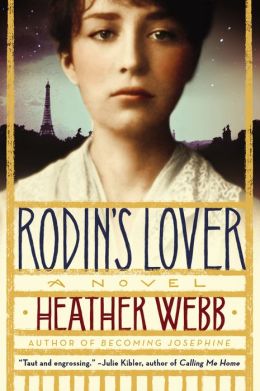
Only to realize after hitting the submit button that the book most resembling mine should have been RODIN'S LOVER by Heather Webb. Heather Webb, who is represented by Michelle Brower.

The rejection should be following shortly.

Monday, January 05, 2015

Emerald Green And Hormone Free

From those of us with relatives in the cattle business, thank you, America, for buying Irish beef.

It's been a long time, going back to the mad cow days when the food safety regulators in Washington decreed that Irish beef was not safe. We've come a long way, apparently. Now our beef is not only safe, but it's preferable to the farmed slabs of bovine flesh that pass for meat in the average McDonald's franchise.

Cows in Ireland eat grass, and that grass is always green. Green means organic or sustainable to many consumers, so when you hear about Irish beef you'll hear the word 'green' constantly. There are no massive feed lots in Ireland. There's no room for them, to begin with, and then there's the cost of corn to feed the cattle. The grass is always there, growing merrily in Limerick, Mayo and Clare. How much more sustainable could you get than that?

Apparently, grass-fed beef is all the rage in some American circles, and Irish beef fits the requirement. Now that it's also certified free of mad cow disease, it will be in high demand by those who must have organic, sustainable food that hasn't been exposed to hormones. The Irish don't pump up their cows with hormones. It costs too much.

Bord Bia is putting together a marketing campaign to heavily promote Irish beef in all its sustainable, grass-fed deliciousness. They'll be dancing in the streets in Kilmallock once the notion catches on about Irish beef being 'green' and safe to eat.

So look for it in your nearest butcher's display case, genuine Emerald Green Irish beef. Sure it costs more. But you're willing to pay extra for the security of knowing that your dinner was grown in the same way that beef has been raised for countless generations in Ireland's cattle country. The Irish certainly can't afford that kind of luxury.

Times are still quite hard, but we're expecting a boom once the cattle industry makes inroads into American markets. And about time, too.

Wednesday, December 31, 2014

Rodin's Lover: A Book Review

I received this book through Penguin's First to Read program:

Camille Claudel was a remarkable artist who had the great misfortune to live in a time when a woman had no other life than that of wife and mother. Even the title of Heather Webb’s novel reduces the tormented artist to society’s view of her place in the world.

RODIN'S LOVER is a fictional treatise of the relationship between Camille Claudel, who studied under Rodin, and the famed sculptor. The sexual tension crackles as the headstrong young girl pursues her art with passion while the old master lusts after youth and beauty. Claudel must contend not only with her own raging hormones but with a mother who wholeheartedly disapproves of a daughter doing anything outside of the norm.

The reader feels Claudel’s frustration as her art is rejected because it was created by a woman. Ms. Webb paints Rodin as a weak man who ultimately failed his lover, oblivious to the impossibility of defying French society while pursuing its acclaim for himself.

Reading the novel was a bit of a slog, a march through bloated prose. A single description of Rodin’s hair color would have sufficed, instead of the numerous references to auburn, rusty, ginger et al. Superfluous adjectives abound, usually color references. These are artists as characters, of course, but for those who worked in sculpture it was a rather colorless world of marble, plaster or clay. Often the dialogue devolved into modern speech patterns that landed hard on the ear. Many times the prose felt forced, as if the author was trying to prettify things that were well-written without the added verbiage.

Those looking for a more nuanced view of Camille Claudel’s mental state, or even a bold approach that could explain her reported insanity as the suppositions of a stifling society, will not find that here. The novel is well worth reading nonetheless, but the historical context of Claudel’s battles against misogyny is somewhat lacking. Was she put away in a lunatic asylum because she was mad, or was she another of the many inconvenient women who tried to break the mold and were instead broken by those who fashioned the mold?

In the end, was her fate sealed like the Irish women who were locked up in Magdalene laundries to hide them away from a world that would not tolerate any woman achieving? The novel does not examine other avenues, relying instead on older historical narratives that were written by those who saw Claudel as a madwoman, rather than someone driven to the brink by complete and total rejection.

Monday, December 29, 2014

Still On Hiatus

Christmas is behind us but publishing is still on holiday.

It is still too soon to send off a query. And don't even think about following up on some partial submission you sent six weeks ago. You'll get either no response, or a quick rejection for being so ignorant of publishing customs.

As far as publishing is concerned, the holiday is far from over. No one will be back at their desk until the Monday after New Year's Day, and there are some who extend the hiatus for a few extra days. The skiing might be particularly good in Gstaad this year, or the sun too warm to depart the south of France.

Don't do anything this week beyond writing or editing. Don't wonder about the state of your submission.

Unless you plan to query one of those agents who happens to be working while the rest of the publishing world plays.

Just don't get it wrong. Literary agents will put you on the black list if you query someone who is on holiday. They keep a permanent record, you know, like the nuns. Too many black marks and your publishing soul will be sent straight to rejection hell.

Saturday, December 27, 2014

Of Course, Monkeys Don't Use Words

It takes some doing to craft a really brilliant verbal barb. Mastery of vocabulary always helps, but the speaker would be wise to have a bit of general knowledge or risk saying something bizarre.

For example, if you wish to insult someone by comparing them to any primate lower than Homo sapiens, you should not include words about words. Everyone knows monkeys don't use words.
After the DoS attack --- U.S. to fat-shame Kim Jong Un to bring the regime to its dimpled knees

The North Koreans are looking fairly ignorant with their latest attempt to retaliate against the United States. Via hacking, they managed to get Sony to pull the Christmas Day release of a film that the Dear Leader didn't care for, but then the President of the United States had to go and suggest that Sony release the film anyway. And they did, both in theatres and online, where the thing has taken off on bit torrent sites. More people are seeing "The Interview" than would otherwise have watched it.

What can be done after a hack? What display of ferocity can put fear into a presidential heart?

The North Korean National Defence Commission tried to compose a stinging retort, but made a fatal error. "Obama always goes reckless in words and deeds" like a "monkey in a tropical jungle" was the official response to the release of "The Interview". Calling a black man a monkey is so Nineteenth Century, but beyond the dust-coated lexicon was the mixing of metaphors. Monkeys don't go reckless anywhere with words, whether they live in a tropical jungle or the snows of some lofty peak. Monkeys don't talk, let alone write sentences or paragraphs.

There's nothing like nonsense phrases to wash the danger right out of the threat. You won't be taken seriously if your message is a garble of gibberish or incorrect usage. Of course, English literature isn't likely to be an area of study in the reclusive country, which tends to limit the ability of official spokespeople to speak coherently.

North Korea also accused the U.S. of shutting down its Internet, which requires little more than a simple Denial of Service attack on the two or three PCs in the country. America came under verbal attack for that as well, earning a comparison to children playing a juvenile game of tag. Judging by the blistering tone, it's a fair bet that Kim Jong Un was planning to watch "The Interview" online and his plans were seriously disrupted. So take that, America. Reckless words from a reckless psychopath who doesn't look at all like a monkey.

More like a moon-calf.

Friday, December 26, 2014

Only 41 Million More To Go

Ticket holders outside the cinema where "The Interview" is playing
Sony would like to thank those who turned out on a Christmas night. Sure most people had family events to attend that involved dull things like eating festive foods and drinking to excess, but for those with nothing better to do than see a film, Sony thanks you.

In an opening that received more buzz and hype than any publicity agent could have concocted, "The Interview" made one million dollars in its debut. Limited debut, that is. After all the threats, most theatres chose not to show the film out of fear that one of Kim Jong Un's minions would detonate a bomb or otherwise engage in mass slaughter.

A plot line that involves the assassination of North Korea's Dear Leader was bound to irritate someone, such as the Dear Leader, but Sony never expected things to go quite as far as they did. When the scheduled release turned into a run for cover and movie theatres cancelled plans, Sony was looking at a very serious problem that seemed to be resulting in a very, very large loss. But then all the chatter became something of a cause, and the buzz became self-generating and interest in the film grew by the hour. 

A few select locations defied danger and openend their doors, welcoming the paying customers.

Sony appreciates their bravery. Like noble samurai, those owners, risking all for the sake of a principle. No one tells an American what to watch or not watch, or decides what movies are playing on the screen.

Not to appear ungrateful, but this particular film costs $42 million to make, and getting back $1 million of that investment is grand. However. To at least break even would be so much better.

Keep up the stubborn refusal to be cowed, America, and pay no attention to the less than stellar reviews. It will only take another 41 nights to reach the golden ideal of the break-even point. DVD sales and overseas showings would be pure profit, a state highly prized by the executives of Sony.

Fight for freedom of speech!

Thursday, December 25, 2014

Wednesday, December 24, 2014

If You're Traveling To Italy This Holiday Season

Modern tourists like to consult review websites to decide where to stay or where to eat when abroad. If you are heading to Italy for a year-end holiday, be warned. The Italian government believes that TripAdvisor will mislead you.

Or some truly miserable hovels have enough political influence to make things difficult for a website that serves to help the weary traveler avoid places not worthy of their business.

Italy's competition authority determined that TripAdvisor wasn't doing enough to ensure that false reviews were blocked from being posted, as if the hotel down the street was bombarding the site with negative comments about a neighboring establishment to drive them out of business. There were not enough guarantees for the authority to be satisfied that reviewers' identities were checked to be sure that a review was written by the person listed, rather than a bunch of sock puppets concocted by one hotelier looking for an advantage. For such lack of oversight, TripAdvisor will be fined heavily, unless they can come back to the authority and prove they aren't negligent.

Take the reviews of the Hotel Acropoli Rome. Could Pamela K. of Enfield , Ireland, be a genuine Irishwoman complaining of a stinking room, or is the dire warning to avoid the hotel an attempt by nefarious individuals to besmirch the place?
Terrible is in the eye of the beholder

What of the Airport Palace Hotel? Is it really as terrible as most of the reviewers say, or has a competitor been filing false reports? Can TripAdvisor prove that all those people who say "don't stay there!!!!" actually stayed there? And found the place genuinely terrible?

TripAdvisor stands by its reviews, but proving that the people are real individuals and not paid shills could be a difficult task.

What's a consumer to do?

Take TripAdvisor with a grain of salt, perhaps, or consider the number of negative reviews as compared to the positives. It's caveat emptor out there in Italy.

Monday, December 22, 2014

Writing Prompt For The Holiday: Non-Festive Version

You get tired of family after too much time together, but if you closet yourself away for an hour or so to escape, you'll get squirrelly without something to keep your mind occupied. It's escape you're looking for, so how about finding that escape in the making of a story?

This prompt is for the mystery writer looking for an historical setting. Which means you'd better bring some kind of computer-related device with Internet access along when you claim you're just running out to find a liquor store that's open late on Christmas Day. If there's a full supply of alcohol, then make an excuse about some bargain you have to take advantage of at some local emporium that's running a sale for the last of the last minute shoppers.
The unmarked grave in the desolate woods of Wisconsin

The setting for this story you are about to write is Wisconsin, in the 1920s. And it's winter. There's nothing like winter in Wisconsin to set a mood for action that is cold and callous. Cold-hearted murder fits with a snowy scene, a little showing that helps to keep you from too much telling.

A pregnant girl leaves her family home in the dead of night. Her family does not know that she is pregnant, but she's six months gone and the baby bump is going to be impossible to disguise before long. She writes her family a little letter so they don't worry, but then they never hear from her again.

There is a boyfriend in the picture, of course, a boy from a wealthy clan who has been seeing this girl whose own background is one of hardscrabble farming. He's a suspect from the start, but he says he knows nothing. In fact, he claims he was at a dance the night that his girl went missing. As if it is all just a sad mystery, the boy returns to college and gets on with his life, for a few months at any rate.

Start your research here. This is a real case, with a real mystery that has yet to be solved.

Clara Olson was murdered but the killer has never been found.

Was it a murder-for-hire case, in which the boyfriend feared that his life would be ruined if he was forced to marry the girl he impregnated? Did his family help him escape from what they saw as a scheme concocted by a gold-digger?

Erdman Olson went underground after charges were filed against him for murder. Back in the 20's it was not all that difficult to disappear, to start up again with a new identity. His parents had the means to give him a fresh start.

There's all sorts of narrative arcs that a writer could create. Tell the story from Clara's point of view, perhaps as if she is speaking posthumously. Explore Erdman's emotions of fear, a la AN AMERICAN TRAGEDY, but with bootlegging thrown in to add that element of tension as he runs from the law and falls in with hoodlums.

You have far more than an hour's worth of writing to keep you busy while the rest of your extended clan go about whatever it is they like to do on Christmas.

Just don't forget to come back with something to solidify that lame excuse you used to get out of the party in the first place.

Friday, December 19, 2014

Sliding Towards The Holiday At The End Of The Literary Road

Your query is being ignored while the literary agent goes shopping
All across New York City, literary agents are preparing for the year-end holiday. Publishing is about to shut down for the next two weeks, to arise again in early January.

It is not a good time to query.

You should have done that in November, before the glut of NaNoWriMo hopefuls inundated e-mail inboxes with unedited first drafts masquerading as polished manuscripts. Your agent of choice has already selected the potential manuscripts to read while on holiday in some sunny locale while you sit in the December gloom and wonder if your words are good enough to sell.

You have no doubt noticed that the best books of 2014 are getting a listing wherever literary critics are found.

Have you read any of them?

Have you made a point of seeking out debut novels, to get some idea of what sort of opening it takes to get an agent to take notice and ask for more pages?

Other than that, pay no attention to the genre du jour. The best books for this past year were in the works a few years earlier. What is going to make the cut for 2015 has yet to be laid down.

In other words, write what you like rather than writing to match a market that is already out of date by the time you're ready to submit.

This is not the time to query, with agents busy partying and packing. It is a time for you to polish your manuscript and read the debut novels of other writers. Learn from the past. But don't go repeating it.

Thursday, December 18, 2014

Life And Death Decisions, The Bureaucracy Version

A woman in a vegetative state is being kept alive in an Irish hospital because the State is not sure what is to be done about her.

The State is making a decision on pulling the plug for a woman in a vegetative state. Not the woman's family. The State.

And why does the Irish government hold this power of life and death? Because the woman is pregnant and her unborn, unviable foetus may have some rights under the Irish Constitution but it's not entirely clear. This being a bureaucratic decision, it will take time to sort out the legal technicalities and such, so in the meantime, the woman who is brain dead must be kept artificially alive. Whether her loved ones think that is the best course or not.

It's all there in the eighth amendment. The unborn have a right to life. Sure the mother has a right to life as well, but that doesn't say a thing about her right to be allowed to die, does it? Should a doctor turn off the machine, well, he'd likely be sued by some ardent pro-life organization and nobody wants to wallow in that particular swamp.

So the respirator pumps away and the feeding tube slurps and you might think it would be a mercy to let the poor thing go but this is a bureaucracy. Mercy has not been written into the law.

Brain trauma is seen often enough in traffic accidents or falls. When the Irish Constitution was written, it was not unknown. What has changed is medicine's ability to treat brain trauma and extend the life of the injured. The family of the victim is typically consulted, however, because the ability to extend life may not be desirable if that life is one lacking any quality. In this case, the victim just happened to be in the early stages of pregnancy, and God help us if the medical community did anything that might be considered an abortion. That's breaking the law right there.

The respirator maintains its rhythm to no good end. The woman is essentially dead already. Her body is being preserved as a containment vessel for the developing foetus, too small and undeveloped to be delivered so that the mother can be put to rest.

Her family is seeking legal counsel, to find out what rights they might have in regard to the care of a loved one who was so unfortunate as to fall pregnant before suffering a traumatic brain injury and then even more unfortunate as to be treated successfully.

While the case winds through the courts and government ministers and bureaucrats debate the fine print of the law, an innocent woman and her family is made to suffer.

The bureaucrats are making a life and death decision that should not be theirs to make, let alone consider.

But that is health care in today's Ireland.

Some are calling for a change in the country's highly restrictive abortion laws that have doctors second-guessing treatments, afraid that they might do something illegal and so they do nothing. Women have died because of the dithering.

Too many will not hear of making changes because that just opens the door and the next thing you know women are deciding on their own if they want to continue a pregnancy and they have no right to make such decisions. Neither do their doctors, for that matter.

Health care in today's Ireland. It's a dangerous place to be a woman.

Wednesday, December 17, 2014

Genius Crosses The Fine Line

How does that old saying go? Something about a fine line between madness and genius, or something like that.

That fine line may have been crossed by Marsha Mehran, an acclaimed author who threw herself into writing but slipped into madness. She died in solitude, in a self-imposed isolation that was supposed to be about writing a book.

Ms. Mehran took a house in Lecanvey, in Mayo, telling the estate agent that she wanted to reside in that area while writing a book. The area would seem well suited to writing, providing inspiration during a long walk on the beach. Watching the waves and listening to the ocean can be very relaxing, allowing an author to delve deep into their mind and work out plot devices or dialogue. No one would have questioned Ms. Mehran's decision.

Some time in April, Ms. Mehran texted the agent with what sounded like a serious medical emergency. The author was vomiting blood, and reached out to the only person she knew in the small town, but she did not ask for directions or even a lift to the nearest hospital. She did not ask about nearby doctors or clinics.

When the estate agent tried to contact Ms. Mehran, she was ignored. There was no response, despite repeated attempts. When someone tells you they are vomiting blood, you'll make some effort to contact them, which led the estate agent to enter the house after Ms. Mehran failed to answer the door.

The writer had been dead for approximately six days at that point. Her body was found in what was described as a messy place. More disturbing, there were pans of urine around the place. Even if you throw yourself into your writing, you'll make the effort to use the toilet.

No cause of death has been found, according to the coroner. There was no foul play. She may have died as a result of inflammatory bowel disease which can lead to eloctrolyte imbalance. If she had gone to a hospital, they would have been able to detect such an imbalance and then work to correct it.

But instead, Ms. Mehran wrote as if there was nothing else in the world but the words in her head.

That is the world where genius has crossed over the fine line.

Monday, December 15, 2014

A Money-Losing Venture Only Matters In The Real World

Last week the literary world was buzzing with New Republic news, a swirl of bad feelings and angst and outrage. And all that for a journal that was losing money, but had the sort of editorial content that the staffers liked.

In part, the issue revolved around politics, and not of the office variety. The news journal is based in Washington DC and the current administration is a liberal one. The people who worked for the rag were also liberal in their views, and those views were being expressed when the New Republic was owned by a bunch of rich men who didn't mind pouring money into a losing venture. Until, of course, they did mind.

The journal was sold to Chris Hughes, a man steeped in social media. That's not New Republic, and once Mr. Hughes began running his piece of the old media, the staff grew increasingly disgruntled. They were as hide-bound as the most staunch Republican conservative, unwilling to change, seeing Mr. Hughes as a danger to their way of doing things.

Because Mr. Hughes bought it, he could do what he liked with it, and he liked to shift operations to New York City where the publishing industry lives. The staffers were alarmed. Politics happens in DC, and the journal is all about politics. How could they keep doing what they were doing if they were to be doing it far from the source?

Even more upsetting was the talk of turning the journal into a digital-media operation. Much of that talk came from the new CEO, who was formerly with Yahoo News.

Chris Hughes made his money in Facebook. Facebook makes money in the real world, while New Republic was losing money. The staff thought he was buying a trinket and would continue to pump in the cash to keep things as they were, a money-losing venture. They were wrong. So they quit.

Everyone who could, those who did not need the income, left the magazine rather than go along with Mr. Hughes' plan to remake the old brand. The journal was all about political thought, had been for the past one hundred years, and they would not be part of any attempt to alter the status quo. The concept of "journalism" was replaced by "content" that was marketable. It became all about turning a profit rather than turning a phrase.

Without the old guard, can the New Republic survive? Can a century-old name be made relevant to the Millennial generation who might be thinking that the journal is something their parents or, worse yet, their grandparents are fond of reading?

Clearly something had to change because in the real world, a publication has to at least break even to remain alive. Owners with deep pockets are few and far between, and such an owner with a passion for liberal politics would be the most rare of all.

This being the real world, the New Republic was dying, and drastic change may just be the final nail in its non-digital coffin.

Wednesday, December 10, 2014

Black Diamonds: A Book Review


Once England was an economic powerhouse, fueled by coal. Within living memory, Margaret Thatcher shut down the nationalized coal industry as a financial drain. Coal was no longer king, nor had it been for many years. Catherine Bailey's BLACK DIAMONDS takes us back to the day when British coal made the country a manufacturing power, when the sun was not setting on the Empire.

The book focuses on the very intriguing Fitzwilliam family, made rich by the coal that existed under the land they received for supporting the dismantling the Catholic Church in England. Fans of Downton Abbey are aware of the great changes in fortune that ensued after the end of the First World War. BLACK DIAMONDS is an accounting of the decline in the Fitzwilliam family's fortunes, a story that is centered on the family's estate and the mining towns that were part of it.

Ms. Bailey describes the lifestyles of the people who made the place run, from the social activities of a peer of the realm to the ordinary existence of the miners. She brings the reader from the Edwardian era when the money was rolling in, through the Great Depression when Earl Fitzwilliam made an admirable effort to help his employees when the coal industry went into a decline. The book provides insight into the change that British society underwent after the war, with the rise of socialism that doomed the coal-funded aristocrats. The labor unrest that began at the close of the Nineteenth Century provides a backdrop to the entire book, and helps to explain the actions that followed through the years. Nationalization of the coal industry comes as no surprise.

Readers may find the story-telling a bit choppy, with long anecdotes interrupting the flow of the narrative. The inserts are of interest, however, because the Fitzwilliam clan brushed shoulders with British royalty and America's version of royalty, the Kennedys of Boston. Throughout the book, the reader will watch the earls decline in quality, and the great house that was built on coal is presented as a suitable analogy to the end of an aristocratic line. In general, the book is well worth reading for its portrayal of a radically shifting political landscape that saw the end of a traditional way of life, but failed to substitute a new industry for the dying trade of coal mining.

Tuesday, December 09, 2014

Not That Kind Of Memoir

And once again a memoir hyped beyond reason has proven to be largely a work of fiction.

This time it's Lena Dunham, of the pleasing plumped-up platform. Her book tour was a masterful bit of marketing, garnering news which in turn provided free publicity to further boost sales.

NOT THAT KIND OF GIRL has been sold as a memoir. The Random Penguins paid a fat advance for it, in large part because Lena Dunham's television programme draws the right kind of audience. It's all about the millenials these days, those twenty-somethings who are filled with the sort of angst that Ms. Dunham cultivates. Who wouldn't buy her memoir, to learn where her outlook and humour come from?

The first difficulty arose shortly after the book was laid down and someone looked at Ms. Dunham's relationship to her younger sister. The prose smacked of child sexual abuse and some less-than-acceptable curiosity. Just like that, the author appearances at book signings were cancelled. The author did not back down from her recollections, maintaining that her book was definitely a memoir. She apologized, of course, and the book continued to be featured in the non-fiction section.

Ms. Dunham's memoir also touched on her earliest sexual awakening, which she said included rape.

That sort of accusation will make a reader sit up and take notice. It will also see the fact-checkers arise to check what facts they can uncover. If it's a memoir, you see, the facts must be checkable. Otherwise, it's a work of fiction and should be called a novel, which does not have the same cachet as a genuine accounting.

Did Ms. Dunham name her rapist? Why yes, she did, and wouldn't you know that it was a man of radically different political views than her own.

That's the sort of thing that creates tension in a novel, and it doesn't hurt when a memoir has a bit of tension to get the readers turning the page.

The fact-checkers figured out fairly easily who she was accusing. As many have noted, conservatives at the ultra-liberal Oberlin College are rare. Conservatives named "Barry" who were in university at the same time would be even more rare. The former Oberlin College student named Barry was found. He was a real person. The memoir was verified.

Until Barry made noise about a libel suit because the rape accusation levelled at him was fictional. He never met Ms. Dunham.

Now Ms. Dunham and her publisher are scrambling to avoid an expensive lawsuit and a legal demand that all copies of the book be pulped, with sales discontinued. No e-books. No paperbacks. It must all disappear.

Penguin Random House hopes very much that Barry will accept their apology and their attempt to fix things by putting a note into the e-books that Barry is a pseudonym for the rapist. And the mustache and purple cowboy boots worn by Barry are also pseudonyms, we must presume, because the description of the invented Barry just happens to fit the real Barry.

Will the publishers ever learn to check the facts of the memoirs they publish before they put themselves into these situations? It's gotten to the point where you can't be sure if that memoir you're reading is just a work of pure fiction that wouldn't otherwise sell if it couldn't be touted as a litany of real events.

Monday, December 08, 2014

Isn't It Ironic

There is no love lost between Amazon and the publishing community that calls New York City home. The traditional publishing houses feel the financial pressure from that upstart in Seattle, and it wasn't that long ago that Amazon was locked in a cold war with Hachette Book Group, a battle that was waged on the editorial pages of the New York Times.

The employees of those big five publishers pay taxes in New York, whether they pay as residents or people who work in the Big Apple. The fruits of their labor fill the state's coffers, but they have no real say in what happens to that hard-earned money. If they do not vote in New York, say, if they reside in New Jersey or Connecticut, the matter is entirely out of their hands. And for those publishing folk who do vote, they are too few in number to have any significant effect on the elected representatives who are hard at work attracting new jobs to New York.
Albany, New York, where they feel the love for Amazon

Isn't it ironic, that the publishers who would like Amazon to go away, are seeing their tax money go to Amazon?

The state of New York is trying to attract new jobs, but it's tough to compete with cheaper places like Texas where the cost of doing business is lower, and therefore serves as a large incentive. Businesses exist to turn a profit, and if locating in Place A as compared to Place B would boost the bottom line by 2%, it's not hard to figure out where said business is going.

So New York offers tax incentives to level the field, while the difference is made up by those already there. The residents of New York, whether they like Amazon or not, are going to be donating $5 million in incentives to a behemoth that has likely driven their local independent book shop out of business via predatory pricing.

How does it feel, to be in fear of losing your job because of Amazon's pressure on your employer to offer steeper discounts on books, and to know that your elected officials are going to use your tax money to help Amazon expand in Manhattan? You don't much want Amazon to grow, especially not in your own back yard, but there it is, right across from the Empire State Building for the next seventeen years.

Amazon is renting space, so the cost of starting up does not entail the expenses of building. There is a lack of permanence in renting, meaning Amazon can pull out any time if things don't work out, and then be out some small penalty to the state for backing out of the deal.

Amazon says they will create 500 new jobs over ten years, which sounds like a fairly rosy projection. What might those 500 souls be about?

Will the attempt to become a player in the publishing game be pursued in the belly of the publishing beast? Or will this additional office space be utilized for procurement operations or distributions?

Whatever the space is used for, it cannot be good for the publishers who are paying taxes that are turned over to their enemy to help that enemy grow bigger and stronger.

Isn't it ironic.

Any authors or publishing executives out there preparing letters of outrage to their state representative?

Saturday, December 06, 2014

"If Your Mother Says She Loves You" Is So Twentieth Century

Once upon a time, the City News Bureau instructed its young reporters in the ways of the real world, where people were known to lie or misrepresent or exaggerate or simply be so mentally confused that they couldn't tell a story straight. Their motto became: "If your mother says she loves you, check it out." In other words, trust but verify.

So last century, that hoary old adage.
The days of black and white photos - when reporters checked facts to avoid writing fiction

Journalists of today don't have time to do something like "check it out" when they have to beat some other journalist to a story. Time is of the essence in a hyper-competitive world, made even faster by the speed of the Internet. If the subject of your story tells you something, just run with it.

After all, if a woman says she was raped, how can you dare to question her? How could you even think of doubting her story, especially when she asks you not to go "check it out" by interviewing the men she claimed were rapists? Of course she must be telling the truth. Her friends trust her. Isn't that enough?

As Rolling Stone magazine has learned, no, it is not enough. The old saw about verifying a story still holds, and for very good reason.

They ran with a story that was told by a student at the University of Virginia, a prestigious and posh sort of place where the children of privilege are educated. The woman at the heart of the interview, a freshman new to the ways of university life, described a night of utter horror. She was gang-raped, she said, by a group of fraternity members at a house party. 'A Rape On Campus' went the headline and the story that followed was shocking. Reporter Sabrina Rubin Erdely had a blockbuster of a story under her byline. She was on her way in the world of investigative journalism.

Except for the investigative bit. As it turned out, the whole story was a work of fiction. And Ms. Erdely is left to deal with the humiliation of being made a fool, of not doing the basic footwork needed for genuine journalism.

The woman known as Jackie insisted that Ms. Erdely not verify her tale with the men she says attacked her. Too traumatic, she said. And it was indeed traumatic when the men of the fraternity picked the story apart and pointed out the impossibilities. There was no party on the night described. There was no member named Drew who worked at the aquatic centre. 

Ms. Erdely should have done the picking apart, but no one teaches journalism in the City News Bureau style these days. It's all about googling and writing pretty prose with literary aspirations.

Focus has shifted from the fictionalized account of a rape to the very real possibility that someone could be sued for libel. But that is not the worst outcome of this failure to check things out.

A woman claimed she was raped as part of a fraternity initiation ritual, and it was not true. The turmoil created by the false story disrupted campus life, had the school's administration scrambling to find and punish the non-existent perpetrators, and caused a great deal of angst among those who court the alumni who endow the school with large donations.

Anger was stirred up, and it is now aimed directly at a woman who may have some emotional issues. So the next time a woman is raped and comes forward, she will be quizzed mercilessly and not believed because of the actions of one fragile woman and one reporter who never learned "If your mother says she loves you, check it out."

Thursday, December 04, 2014

In Praise Of Boolean Strings

George Boole of Boolean fame
We would not have computers if not for a self-educated man of humble origins, who made good while living in Ireland.

The year 2015 will mark the 200th birthday of George Boole, whose name is memorialized in the computer-speak term "Boolean".Mr. Boole never attended university, and his mathematical education was largely of his own making. Perhaps it was because of the times in which he lived. There were far fewer distractions in the early Nineteenth Century, no video games to keep a lad from his studies.

There wasn't much schooling for the son of a shoemaker, either. What Mr. Boole had were books, and he used them.

He went on to become the first mathematics professor at Queen's College, Cork, where he continued his pursuit of demonstrating that human thought could be defined in numerical terms. In other words, we think in logical ways that can be calculated with numbers. Today, his ideas are incorporated in the machines that do much of our thinking, but without George Boole, the electronic engineers would not be creating the circuitry that does such thinking and relies on maths to operate.

In Boole's philosophy, it is either yes or no. On or off. 0 or 1. Just like a computer circuit, it is open or closed. And all that open or closed-ness is what makes the machine work.

University College Cork is planning a series of events to commemorate the big day in November. Professor Desmond MacHale's biography of George Boole is again available. It is told from a mathematician's point of view, a not unexpected outlook as Mr. MacHale is himself a mathematics professor at UCC. The Life And Work Of George Boole will give you some insight into how a child prodigy turned himself into a respected university teacher who changed the world of the future while linking algebra with logic.

If you'd like more information on the year of Boole, UCC has set up a website where you can learn about the man who helped give rise to that smartphone in your hand, long before anyone had invented a telephone at all.

Wednesday, December 03, 2014

Book Cover Design Principles To Avoid Lawsuits

With the ease of self-publishing these days, any author can put together a book, but at some point they have to create a book cover that will be appealing to readers. The cover has to say something in keeping with the book's content, whether it is the shirtless man with rippling muscles on the front of a romance novel or the image of a gun on the cover of a murder mystery.

These simple principles are used by professional cover designers, as well as other marketing types who probably know more about how to promote your book via a well-crafted cover than you know. Independent authors often turn to a professional to handle the cover design. Not everyone is handy with Photoshop or InDesign, and not everyone has a tech-savvy family member available to handle the artwork that you have so cleverly concocted in your head.

Warning: Do not use random pictures pulled off the Internet unless you know the subjects are all dead
Not all professional book cover designers are immune from making mistakes, however.

Professor Diarmaid Ferriter wrote a history book, as is the habit of the "publish or perish" set in academia. His treatise on the origins and development of a tea-totaling movement placed the drinkers and non-drinkers as "extremes" in Irish society. The whole world associates Ireland with drinking, after all, and you'll find an Irish pub in every corner of the globe. The professor thought it would be intriguing to look at the collision of those two extremes, by exploring the Pioneer Total Abstinence of the Sacred Heart organization as it existed within a boozy country.

His publisher, Irish Academic Press, turned over cover design to Jarlath Hayes, a professional cover designer who arranged some old snapshots in a way intended to portray the two sides side by side. The book was published, the professor sat back to rest on his laurels, and out of nowhere came a lawsuit.

Unfortunately for Mr. Hayes, who died before the suit was filed, he used a photograph on the cover that depicted a man who is very much alive and who very much did not appreciate the image that was created by the designer. Trad singer Tim Lyons was depicted as part of the alcoholic extreme, juxtaposed against the tea-totaling Pioneers in two other images.

Mr. Lyons did not like the way his picture, worth one thousand words, suggested that he was an alcoholic. Being a traditional singer, Mr. Lyons would often perform at pubs, and the photograph alone, without context, certainly did him no favors. There he was in his younger days, standing at the bar with two pints and a tumbler of whiskey before him. It appeared that the drinks were his, not one, but three, the mark of a drunkard with no shame.

He sued Professor Ferriter and Irish Academic Press for casting aspersions on his character. The poor professor tired to get himself removed from the suit, stating quite accurately that he wasn't the one who created the book cover and it was the publisher who controlled its acceptance and use.

The judge didn't dismiss the writer two years ago when Prof. Ferriter pleaded for mercy. He was but the author, a reasonable defense that failed, and the legal proceeding continued grinding through the courts. 

The two sides have now settled, although details have not been announced. You can be sure that someone is paying real money as part of that settlement.

Take this as a cautionary tale. When you design your book cover, or have it designed for you, do not forget to Google the images in use and be sure that the faces appearing on your labor of love are those of people very much dead.

Tuesday, December 02, 2014

Merry Christmas, Back Office Synergies!

The pharase "realizing synergies" was heard often when Barry O'Callaghan was merging his little Riverdeep with the unwieldly Houghton Mifflin and Harcourt publishers. Those who lost their jobs discovered that "realizing synergies" meant "you're fired".

Those who are given the sack are often the little people who work behind the scenes, shuffling papers, answering phones, or clacking away on keyboards processing data. A merged company ends up with two people doing similar jobs, and when it's time to find ways to cut costs so that the expense of the merger can be recouped, it isn't the suits in the corner offices letting themselves go.

Ari Emanuel (brother of a mayor and an influential doctor) merged his talent agency WME with talent agency IMG, and OMG there's too much going out and not enough coming in. The investors want the return on their investment, which costs money. Where to cut? Where is the excess expenditure that can be eliminated without killing the patient?

The bottom line experts have completed their interviews and analyses and determined that a few foreign outposts can be shuttered completely. Duplicate jobs can be combined into one, thereby cutting an expense. There isn't enough income to support the costs, so the costs will have to go. Costs like salaries, you see, and it's all about realizing synergies.

Sorry that it's three weeks before Christmas, but here's your pink slip, back office synergies. You're fired.

The rumour has 100 jobs being eliminated, and out of a staff of 3,000, that isn't a huge number. Unless you're one of those 100, and future employment prospects are rather grim.

Someone has to pay the price of the merger, an investment somewhere in the $2 billion range, and that will take a lot of talent promotion to bring in some considerable commissions. It will also take some synergies getting realized right out the door, to try their luck elsewhere.

Have yourself a Merry little Christmas.

Monday, December 01, 2014

No Humans Need Apply

For those without a job, even a chance to work part-time during the holiday shopping rush is welcome.

They are now competing with robots for the available positions. We are entering an era in which no humans need apply.


Robots cost money, of course. Such advanced electronic devices do not come free. Amazon was surely aware of this fact when it purchased Kiva Systems. Which is why they bought the robotics firm. When you own a manufacturer, you've cut out one middleman who gets a slice of the financial pie. That's an extra piece for you.

Investment in robotics won't pay off for Amazon this quarter, but in time the robots scooting about the warehouse picking orders will pay for themselves.

Because robots don't need breaks, they can be run continuously for extended hours before powering down for maintenance. No robots will be seen at the outer door with a ciggie and a cup of coffee, wasting time. The robots don't break for lunch, either. They just keep scooting up and down the aisles in the warehouse, taking what is requested and delivering it to the packing machine.

The modernized Amazon warehouse needs a few human bodies to manage the robots, but the warehouse had human managers managing the humans before robotics were introduced. The order pickers are gone, and those jobs are gone as well.

Shelves are arranged for the convenience of the machines, with narrow aisles that allow for a larger stock to be held on hand. The machines go faster than people, and as long as the items are where they are supposed to be, the machine can't pick the wrong thing. The robots won't be showing up for work hung over from a party the night before, either.

The robots can carry more weight and move faster, which speeds up the order processing and allows for more material to be shipped per day. To achieve the same level of production, Amazon would have to hire a small army of humans. That sort of mass seasonal hiring is a thing of the past.

We have arrived at Huxley's Brave New World, where machines do the work and people sit around smoking marijuana---isn't that our version of the author's "Soma" drug that calmed the masses?

What will society do with all those who need work but are pushed out by machines?