Monday, December 16, 2013

The Pot Of Gold At The End Of The Rainbow

In a field somewhere in County Limerick
The Little People are said to safeguard their gold at the end of the rainbow, and it's a rare person indeed who can find it. So if the gardai come upon you digging up a field in County Limerick, you'd better have your excuse, or your captured leprechaun, handy. Or you'll find yourself under arrest.

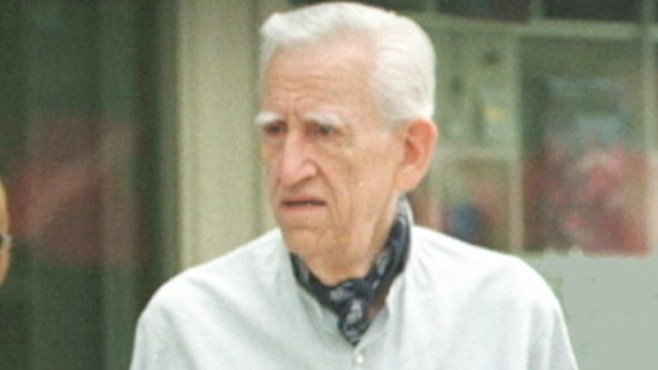
A convicted drug dealer was spotted in a field near Portcrusha, operating a digger. It's not all that odd, to see a digger being operated on farmland, but only if it's being operated by a farmer and not a man who is known to have made a small fortune selling drugs but gardai haven't located his stash.

As it turns out, the stash of over one million soggy euro was sitting in a pot. Or a container of some sort. At any rate, all that money was buried where the criminal thought the authorities would never find it.

The gardai had been watching the man for some time, what with his history and their desire to ensure that no one profits from criminal activity. They knew that he hadn't bought anything large, like land or a mansion or a posh car, so the money had to be somewhere and eventually their target would need a little something to pay a few bills and then they'd have him.

And have him they did. As the drug dealer was attempting to dry off some of the cash, he was nabbed. It is the biggest recovery of drug money in the history of the State.

The drug dealer is under arrest and is being questioned. It's not likely that the gardai will believe a story about catching a leprechaun and thereby gaining rightful ownership to the pot of gold. The man has some explaining to do, what with the Criminal Assets Bureau very interested in how he came to acquire that much money, and then there's the other branch of government that will want proof that he paid taxes on his business enterprise.

Maybe it's the government that's caught one of the little people in the drugs trade, and they've laid claim to the pot of gold at the end of a narcotics rainbow.

The old story needs a bit of revising, it appears.

Sunday, December 15, 2013

The Butler, Retired

James Gray earned his keep as a butler.

For his entire career, he looked after others and kept other people's households running smoothly. He never had the time to start up his own home, what with the demands on his time. So involved was he in the lives of his clients that he never took the time to create his own life.

At the age of 85, Mr. Gray has outlived his relatives, or at least those he might have kept in touch with. Now living on his old age pension in London, he is quite thoroughly alone.

Surely, Mr. Gray thought, there are others just like him. Others who went into service when that was the best job an Irish immigrant could find, others who threw thremselves into their work and lost the links to those they left behind. To find them, Mr. Gray took out adverts in London newspapers, seeking the solitary who would rather not spend another Christmas alone.
Mr. Gray's advert

Until the newspapers and the BBC picked up his query, he received one reply, and that from a person who had someplace else to go and would not be joining him after all.

He is willing to prepare a nice Christmas lunch for any guest who would like to share a holiday meal with someone like themselves, someone who is alone and in need of a bit of company on a holiday that is all about family and friends getting together. Given his experience as a butler, it's a reasonable assumption that Mr. Gray could prepare a respectable repast. It's also possible that he has a lifetime's worth of stories to share, a trove of juicy gossip from below stairs. No names will be named, of course. A good butler keeps secrets.

It would be grand if a few other singles could take up his offer of gathering at the hotel in Sutton, to offer each other a bit of companionship for a few hours of the day. 

The Irish Post, London's voice of the Irish, is accepting Christmas cards and will send them along to Mr. Gray, who hasn't received a card in ages.

Wednesday, December 11, 2013

The Words Were Spoken But The Actions Spoke Louder

Important people from all over the world gathered in South Africa to celebrate the life and legacy of Nelson Mandela. They made speeches, spewed forth a tsunami of rhetoric that washed over the assembled crowd and moved the listeners to cheers as the dignitaries behaved like restless children. The words brought forth reactions that did not match precisely what was being said.
The missus is not laughing

The man who inherited the mantle from Nelson Mandela was soundly derided as he spoke, his words lacking the power to pull the wool over the collective eyes of the masses. The cameras in FNB Stadium pointed at the American president and the crowd cheered his image on the big screen. When their own president was featured, they expressed their disapproval. They are the ones living the legacy, and the ones who are discovering that not all men are created equal when it comes to leadership and talent.

For the deaf, the South African government that Nelson Mandela helped to birth provided an interpreter. It turns out that the interpreter was a fraud. The hand gestures were nothing more than random movements that said nothing but expressed the government's inability to perform the most basic and simple task. The government is run by those who followed Mandela. The government is a part of his legacy, in spite of the lofty praise heaped upon him.

The former archbishop of South Africa, the storied Desmond Tutu, gave the closing speech to a thinning crowd. He had to shout at them to sit still and listen, when the crowd indicated that it had had its fill of words piled on words. While he spoke, his home in Cape Town was being robbed. It was not the first time someone had broken in to help themselves to the Anglican minister's possessions.

For all the glory and accolades, the lasting legacy of Nelson Mandela depends on what happens now that he is gone. He started something he could not finish because none of us are granted enough time to do all that we would like to accomplish in our lifetime. His enduring legacy will not be shaped by the words spoken over his dead body, but by the actions of those who carry his flag.

Those people now have the right to select their leaders, even though those leaders are unlikely to be part of the political party that Mandela founded.

That, ultimately, could become the greatest success realized from his years of struggle.

Tuesday, December 10, 2013

Happy Now, You Great Cow? or, A Message From Chip Wilson

You there, with your enormous arse, are you happy now? I've resigned my post and I won't be heading Lululemon anymore. Satisfied?

The yoga pants weren't made for you, but who am I to stop you from committing a fashion sin? The board of directors wouldn't try to limit purchases of our lovely yoga pants to those with the body to carry them off. They are all about the profit, you see, and if some cow trots in to a shop and buys a pair she can just barely squeeze in to, it's money in the bank.

When your oversized and lard-filled buttocks stretched the fabric beyond normal limits you complained that the fabric was too sheer. It was your own fault, for spreading it until it was like tissue paper. And your fat thighs rubbing together made the fabric pill. The pants were not designed to endure that much friction, for feck's sake.

All I did was state the facts and the next thing I know, there's outrage from the oversized. Listen, just because the pants have stretch built in doesn't made the pants stretch to fit your body. The stretch is there for thin women doing yoga, not for a tub of lard bending a knee to walk a dog to the nearest chipper for a snack of curry chips to tide her over for the walk back home.

I was simply being honest with you. Someone has to tell you how bad you look in Lululemon yoga pants, and suggest that you not wear them out in public. If you'd seen my comment in the light it was given, you'd be thanking me for sparing the rest of the world the sight of your enormous arse jiggling down the public right-of-way, every roll of fat and lump of cellulite accentuated.

For that, I have been hounded out of my job, so I hope you're satisfied. The pants aren't going to get any less sheer just because I'm gone. It's up to you to lose a few stone, and then you'll understand why Lululemon pants are all the rage in the tonier districts, where the women are model thin because they can afford to be.

Aspire to that, and don't think an outfit that costs a small fortune is going to do it for you. Instead of yoga, why not try something a bit more strenous, and wear sweatpants. Or a burqa. Cover up until you've met Lululemon standards for body type.

Monday, December 09, 2013

This Is A Case For Kickstarter

Where do you go when you need a small amount of money to start up your new business when you don't have a chance of getting so much as a cent from any bank?

That's where former drug kingpin John Gilligan finds himself.
The handcuffs are gone but so is the fortune

He's apparently never heard of it, but you'd think that someone would explain things and help him launch a Kickstarter campaign.

John Gilligan made so much money by selling drugs, and grew so powerful, that he was able to order the murder of journalist Veronica Guerin because she threatened his empire. He was not powerful enough to escape public outrage over the murder, and the authorities managed to tumble his criminal enterprise to the ground. The State even laid claim to his beloved Jessbrook Equestrian Centre, and when Mr. Gilligan was recently released from prison, he couldn't go home again.

So he's lost all that he built up (illegally) and he's looking for a fresh start, but he's in need of seed money to jump start his next venture.

Thus far, asking around among his former associates for the loan of 20K has done nothing but get him targeted for death. Asking for cash personally is clearly not the best approach for a man with an oversized ego and no underpinnings to support it. That's where Kickstarter would be the perfect venue for this form of begging.

Money is tight these days, and by going through Kickstarter, Mr. Gilligan would not have to pressure a few big men for the whole sum. His many friends and associates could donate what they have on hand, perhaps a five or a ten or as much as ten thousand euro, depending on their circumstance. They could give without having to explain, face to face, why they aren't giving more to a man who is clearly capable of killing those who stand in his way.

And considering the demand for illegal drugs around the world, those who donate could expect a return on their investment, unless the gardai are keeping a particularly close watch on Mr. Gilligan's comings and goings, in which case he'd be arrested again and there goes the 20,000 euro. Aren't there always risks in any new investment?

The man's just out of prison after ten years and he's behind when it comes to modern technology and all that the Internet has to offer. But it's only a matter of time until he discovers the wonders of crowdsourcing, and then he'll be back on his feet in no time. Or laid out on a slab in the mortuary.

Anyone starting up a new business could tell you there's risks involved.

Saturday, December 07, 2013

Your Fast / Diet Plan Does Not Move Me

If you wander over to the National Mall in Washington, D.C., you'll see a group of people who are trying to shame the Congress into changing a law. They are following in the footsteps of Bobby Sands. Up to a point, that is.
Northern Ireland memorial mural
Bobby Sands was a member of the Irish Republican Army during The Troubles of the 1970's. A resident of Northern Ireland, he did not want to be a British citizen. The treaty that was signed to end the Irish rebellion in 1922 left a border that is contentious to this day, but more so in the 1970s when armed insurrection was seen as the only way to reunite the Six Counties to the rest of the island nation.

For his actions, he was jailed, along with several others of like mind. They saw themselves as soldiers, not common criminals, and their determination to have the conflict recognized led them to a hunger strike.

Ten men died of starvation to make their point and alter public opinion. Many believe it worked, in a way, and resulted in the current form of government in which loyalists and nationalists share power. Just as many see the hunger strike deaths as pointless. The political changes did not happen overnight, but took decades, and may have occurred anyway, without loss of life.

Assuming it was a successful gambit, it is no surprise that another group of oppressed people are calling for attention to their plight, a mirror image of the cause for which Bobby Sands gave his life. While the IRA men starved to escape citizenship in the UK, these modern hunger strikers are not eating so that they can become citizens.

They are the illegal immigrants who came to America looking for the American dream, only to find that Americans see them as law-breakers who should be sent back from whence they came. Congress ignores their demands for a change in status, to remove the illegality of their residence, but to no avail. But surely the Congress will be moved by the hunger strike diet plan.

Not eating for a few days is not life threatening. Not eating for three weeks, subsisting on water, is a diet plan that you'd find promoted among the Hollywood glitterati. To say you've gone on hunger strike, only to tag out and be replaced by someone else after a week, is not a hunger strike.

Not eating until you're dead, that's making a statement. Not eating until you've lost twenty pounds? That's almost laughable, considering the lengths to which the IRA went, and the sacrifice that ten of its members made to make the world notice what was going on in Northern Ireland.

Too many Americans have been on fad diets that left them weak, hungry and cranky, to feel much sympathy for someone doing the same thing for whatever cause. They know that after you end your diet, you put all the weight back on and wonder why you struggled so hard for no real, lasting, results.

Friday, December 06, 2013

Spring 2014 Release From Newcastlewest Books

We're pleased to present the cover for Katie Hanrahan's third novel, scheduled for publication in Spring, 2014.

It's a slight departure from some of her earlier works, although her theme of strong women facing the limits of their freedom and overcoming obstacles continues. In THE LIBERTY FLOWER, Katie presents a romance of two well-matched individuals, one the daughter of an Irish immigrant who found success in Colonial South Carolina, and the other the son of a British peer who secretly supports the rebels.

Readers will be transported back to an era of revolution and unrest, with the novel spanning the years between the American and the French Revolutions. Through it all, Sarah Mahon and Jack Ashford maintain connections that are sometimes tight but often tenuous, their future together all but erased by one rash act of rebellion that alters the course of their lives.

More to come as we get closer to the publication date, including free book giveaways and sample chapters posted at Newcastlewest Books.

Until then, why not pick up a copy of THE LEAVEN OF THE PHARISEES or A TERRIBLE BEAUTY? They make lovely Christmas gifts, tucked into an e-reader of your choosing. And they are available in hard copy for those who enjoy the feel of real books.

Wednesday, December 04, 2013

A Museum If Someone Else Pays For It

Walt Disney slept here
It's an ordinary house, as houses go. Walt Disney did not come from wealth, and his childhood home is a reflection of his humble origins. That's how it goes. When you don't have much, you use your imagination to create what you can't possess, and so the Disney empire was born.

The neighborhood has always been working class, a place to get a foothold on the American dream. These days, the residents are Hispanic. When Walt Disney's father built the house in a newly developed section of a growing city, the residents were also immigrants who came in search of opportunity. The World's Columbian Exposition was under construction and there were jobs for anyone willing to work hard.

The house where Walt Disney grew up was on the market for a long time. Those who might have jumped at the chance to own a piece of Disney's past were not jumping to buy once they took a look at the neighborhood.

It has taken a couple from California to see beyond the run-down surroundings and envision a tourist attraction.

Brent Young and Dina Benadon have a dream, something they might have concocted while working at their animation studio. They bought the home and would like to turn it into a museum that celebrates imagination and creativity, a place to bring children to fire up their imaginations and inspire them to dream big dreams. If a boy could make up Mickey Mouse in such a humble place, so could anyone from equally meager beginnings start up an entertainment empire.

So if you're on board, how about a nice little donation to their dream? The museum won't happen unless someone else pays for it.

There might not be a return on your investment. The place could fail and the museum fold in short order, and the house could be put back on the market with the profit (or loss) to the couple holding the deed for the property.

Mr. Young and Ms. Benadon are turning to Kickstarter to raise half a million dollars to pay for the renovations.

They must have a lot of friends, or a few with a lot of money. Maybe they're relying on all those Disney-philes who might want to see the home preserved as a museum, rather than allowed to decay and fall to pieces.

Even so, it is a great deal of money to get from strangers. The city of Chicago and the State of Illinois are flat broke and deep in debt, so there's no public funding to be had.

The California couple have big dreams, like Walt Disney. Whether or not they can make them come true is another matter, in a time when there isn't any extra money to go around no matter how worthwhile the project.

Tuesday, December 03, 2013

And Your Protagonist Is An Escaped Convict

Your story opens with a woman and her younger lover attempting to rob a petrol station with a knife, and failing.

It's not all that easy to commit a crime with a knife, especially if the victim has another weapon, like a hurley, which would knock the knife right out of your hand and then where are you? Or the station attendant could just lock himself in the station and ring up the police, leaving you with nothing but a free tank of gas if you drive off, but you can't buy anything with that.

The woman has a small child, perhaps in need of milk or a bag of crisps and that is the reason why the desperate mother goes along with her lover to steal money. You could make her motivation one of fear, with the lover a particularly cruel man who threatens the child with bodily harm if the mother doesn't participate.

In your first chapter, you skim over the arrest and the pre-trial stress of sitting in a British jail, the protagonist fretting about the care of her little girl. The chapter closes with the couple being granted bail and then skipping out. A taste of incarceration has convinced your lead character that jail is not to her taste. And there's the daughter to consider.

Naomi Mothersoul did just that. She took part in a botched robbery, and then made a dash across the Irish Sea with her partner as soon as she bonded out. That was in 1994. She was not found until this past August, when she was returned to England where the warrant for her arrest had been collecting dust.

For most of the time she was hiding from British justice, she lived quietly in a small Kerry town, keeping to herself and raising her three children. As you'd expect, the relationship between Ms. Mothersoul and her partner deteriorated under the strain of the fugitive's life, and she became a single mother. The Irish taxpayers funded her housing, which Ms. Mothersoul decorated with some privacy shrubs. You can't be too careful when you're hiding from the authorities.

If you find this real life incident useful as a writing prompt, you could generate a thrilling bit of fiction by imagining Ms. Mothersoul's nerve-wracking life, never knowing if someone was going to discover her presence. You would have her move cautiously at first, jittery at the most innocuous question from the lady behind her in the queue at the local market. Then she would shift a bit, straining at the self-imposed cage of fear, and volunteer at a local charity bookshop just to get out of the house. At the same time, she would be trying to raise her children in as normal an environment as possible, adding further strain to her mind.

There is a strong story in there. And how does it end?
Naomi Mothersoul's home for the next several months

Ms. Mothersoul was found out, by a British detective who never gave up on his quest to bring the guilty to justice. He was cleaning up his outstanding cases prior to retirement, and Ms. Mothersoul was a loose end to be tied up. The woman lived under her own name, and twenty years removed from The Troubles, there is cooperation between An Garda Siochana and their English counterparts. An international warrant was issued and that took care of that as far as the detective was concerned.

She went to trial and was given eighteen months. It's not so bad now, since her children are largely grown and don't need their mammy at their side. Ms. Mothersoul plans to return to Kerry after her time is served, to live freely, without fear of the gardai knocking on the door.

Your story could have a happy ending. Everyone likes a happy ending.

Monday, December 02, 2013

It's Cyber-Monday. Buy A Book And Read

Today is the big day for online shopping, according to all the news reports. All those people who went out to the shops on Friday and Saturday are now going to buy the items they saw on display through online sites offering steeper discounts and free shipping.

It's stressful, all this holiday preparation. There's too much pressure to find the best prezzies.

So take a break from the mad world. Buy yourself some books online, sit back with a nice cup of tea, and escape the modern era in the pages of a good book.

Newcastlewest Books has four to offer, each book set in the past when there was no cyber-Monday or large screen televisions to fight over.

Maybe you're thinking of a trip to the local movie theatre complex, to see what Dame Judy Dench is up to in her latest film, PHILOMENA. Before you go, you'd want a little background into the world that the Judy Dench character moved through. You'll find an intriguing story in THE LEAVEN OF THE PHARISEES, a tale of a young woman returning to her father's past to uncover his family's dark secrets. You'll find yourself in another world, the world of the industrial schools and Magdalene laundries that were designed to shape Irish children into model citizens, a nightmare world that actually existed.

Fond of spies and well-researched historical fiction? For next to nothing, you could download a copy of A TERRIBLE BEAUTY and wander the streets of Freemantle, Western Australia, and Dublin, Ireland, as the island nation churns with unrest, labor strife and rebellion. Experience events through the eyes of a family deeply entrenched in rebellion and espionage, where you won't know who is on what side until the stirring conclusion. That's more fun than clicking your way through a series of online shops looking for the best price.

There is LACE CURTAIN IRISH for those of you with Irish roots who wonder what it was like to be the first generation in America, trying to break free of the old ways but not sure where the new ways were taking you. Set in Chicago in the closing decades of the Nineteenth Century, you'll be moved by the heartwarming tale of sibling bonds that endure down the years of struggle and success and decline.

Fans of real life crime will enjoy THE KING OF THE IRISH, which is based on an infamous and still unsolved
Chicago murder that captivated a nation engulfed in rampant bigotry against the Irish and the Catholics. Coupled with dirty politics and a struggle for control of the Irish vote, the story of Dan Coughlin and his quest for justice will keep you turning the virtual pages. You'll forget all about the dilemma of what to buy Granny, and isn't that the kind of escape that we all need on this cyber-Monday of shopping insanity?

Friday, November 29, 2013

A Recluse In The Internet Age

Author J.D. Salinger was known for his withdrawal as much as his classic work of fiction, THE CATCHER IN THE RYE. His retreat from publicity has now met the age of the Internet and he can roll over in his grave all he likes, but there is no going back.
J. D. Salinger

By most accounts, Mr. Salinger did not enjoy fame once it came to him after his debut novel was published, and he essentially went into hiding. He kept writing, of course, but did not publish everything, perhaps in an effort to maintain control over the product, or perhaps due to psychological issues relating to self-confidence. For whatever reason, some of his stories were never put into print, but ended up in Princeton's library for examination by scholars. The stories were not to be published until 2060, when the author's children would be long dead and anyone resembling one of the characters would be equally deceased.

In 1999, a collection of stories was published without Salinger's permission, but back in 1999, it was possible to go to court and order publication halted. The few books that existed became collectibles, for the enjoyment of those who could get their hands on a physical copy, but that was largely the extent of it.

One such copy was auctioned on eBay, and was purchased by someone who did not want the words of J. D. Salinger to be hidden.

Books are regularly scanned these days in the age of Google, and at some point, the unauthorized story collection was scanned and then turned into a pdf. Three stories in that file were posted on the Internet, and it is not just scholars at Princeton Library who can read them.

Suddenly, the illegally published works could be seen by anyone with Internet access, and as we all know, once something is in the ether, it's there forever, no matter how many court decrees ban publication.

Before Mr. Salinger died, he stipulated that those stories were not to be published, but how can his estate control what is uncontrollable? Sue the Internet?

It's possible that the author's estate could go after whoever posted the stories, but there is no erasing things in the digital world. No matter that Mr. Salinger wanted to delay the release of his words. The three short stories are released, unofficially, but there for the reading by anyone who wants to read more Salinger.

Thursday, November 28, 2013

Snidely Whiplash As Played By Clayton Pullins

Since the day she was born, Dolores Pittman has lived in the same house. She knows it well, every nook and cranny, the number of steps from her door to the places she needs to go. It's the number of steps, and the locations of things, that are so important to her because she is blind.

The land on which her home stands was owned by a church that rented ground space to the Pittman family. The Pittmans owned the house itself. The rent was next to nothing, and Dolores kept up the payments long after her mother passed away. She kept up the payments after the land went into receivership and the county took over, the local government that accepted her check without question.

Or warning. Or even a notice that the land was going to be sold for back taxes and she could bid on it if she wanted. They must have been too busy in Cedar Lake, Indiana, to take a few minutes to explain how the process worked. There's just so much going on in the tiny town. Like, sitting around drinking coffee and cashing Ms. Pittman's rent checks.

The land was sold at auction for back taxes, but no one bothered to tell Ms. Pittman. For the sum of $43, she could have bought up the property under her floor and been well set for the rest of her days. She was getting by on her small pension. She was comfortable with her house and her cats and the security of knowing exactly where everything was.

Clayton Pullins bought the parcel and promply issued an eviction notice to an old blind woman.

One of the vulnerable in our society, Ms. Pittman has no choice but to leave what she knows and find someplace else. At her age, she will have to learn a new lay-out, find her way to her favorite stores and church by different routes, and all because Clayton Pullins doesn't give a flying fuck about her hardship.

It's his property now. It's too bad for Ms. Pittman that she wasn't reading the tax auction notices. Yes, and it's too bad she's blind so she couldn't read them if she even knew about them. It's all too bad, but the land in Cedar Lake, Indiana, is valuable and cold-hearted Clayton Pullins has every intention of realizing that value as soon as possible.

On this Thanksgiving day, let us give thanks that we are not in Ms. Pittman's position, forced out of our homes because we have no advocates to look after our interests when we are disabled. Let us thank God that we are not blind and poor. And let us thank God that our families are not cursed with someone like Clayton Pullins to bring shame to the family name, an individual so heartless that we would be embarrassed to acknowledge kinship.

Friends of Dolores Pittman are holding fundraisers to pull together enough cash to help her out as she searches for a new home. Donations are being accepted at the DeMotte State Bank, 10119 W. 133rd Ave., PO Box 683, Cedar Lake, IN 46303.

Wednesday, November 27, 2013

A Divorce In Bad Taste

A very public marital dispute in Mayfair
You knew it would get ugly when photographers snapped noted television cook show host and cookbook author Nigella Lawson being choked by her husband.  Within days of the incident, Ms. Lawson moved out and Charles Saatchi declared he was making an end of the marriage.

Follwing the airing of those antics, the upcoming divorce proceeding cannot be done quietly, discretely or tastefully.

Mr. Saatchi looked very bad indeed, with his big hand around the throat of a distraught woman, and that sort of negative image is not easily erased. His name besmirched, he has thrown a counter punch to tarnish his ex-wife's image. If he manages to destroy her cooking career, all the better. This is war.

According to Mr. Saatchi, the woman is off her head on drugs, with a fierce cocaine habit. It's a miracle that the inside of her nose exists at all, so heavy a user is she. Ten years of snorting, and managing to disguise it while doing her job.

The accusation of drug use was revealed as a related lawsuit is beginning, a case which has been suggested as the reason behind the choking episode. Mr. Saatchi claims that sisters Francesca and Elisabetta Grillo, working as personal assistants to Ms. Lawson, used Mr. Saatchi's business credit card for a lavish spending spree that included bundles of designer goods and air fare to New York City. Post-choking, the women were given the sack and Mr. Saatchi filed charges.

We are to assume, apparently, that he choked his wife in anger because she would not discipline her trusted assistants when the evidence of their fraud was so obvious to Mr. Saatchi.

So not only did she not listen to him, the voice of reason, but then she drew him into an unflattering position over his attempt to straighten out a financial mess. Perhaps he held her by the throat because she refused his demand that she testify against her beloved employees. We shall all have to wait for the divorce trial to find out how he rationalizes the rather violent attack in Mayfair that was splashed all over the tabloids.

The judge hearing the fraud case allowed the drug abuse accusation to be heard. Mr. Saatchi is concerned that his case will be lost because the Grillo sisters will claim that they are innocent and it's all on Ms. Lawson who was high and spending without knowing what she was about. Or Ms. Lawson was paying them off, using a business credit card, to keep quiet about her drug use.

The sisters could just as easily accuse Ms. Lawson of shopping under the influence of Ambien, I suppose, and clear themselves that way, but too many jokes have been made about people doing strange things after taking Ambien and that's not going to tarnish Ms. Lawson's image in the least. She'd be that much more sympathetic, and anyone getting a divorce knows that the other party has to be made out to be a demon.

The divorce is just beginning. Like the throttling, it will play out in public, the very definition of a display in bad taste.

Tuesday, November 26, 2013

The New Breed of Navvies

Once upon a time, the Irish had no work. Right, they have no work now, but this was another time before the current era. No work, and no social welfare. The boss was rich and the workers were slaves, before Big Jim Larkin came to town.
Amazon appears great because we are on our knees! Let us rise!
Faced with starvation, the Irish emigrated in droves and went across the Irish Sea to England, to do the work that the English did not want to do because those jobs were back-breaking and grueling. It is said that the Irish built the British Empire. They did the manual labor that laid the train tracks and dug the ditches and laid the pipes and paved the streets and on and on.

The money was not great but it was better than the nothing at home, so the Irish put their backs into it and supported those they left behind.

No one did any documentaries or explorations into their working conditions. No one much cared that they were treated like animals and routinely abused because they were Irish.

How things have changed. Times are hard in Ireland, but not so bad that the young are flying off in droves to take whatever miserable jobs they can find in England. The poor British have to do the heavy lifting themselves, at the Amazon warehouse, and the public is shocked to learn that life as a factory hand is not an easy one.

The BBC sent an investigative reporter into the Amazon fulfillment center and filmed his arduous night shift. Adam Littler, an educated man, played at being a working class drone and discovered that he did not like it at all, at all. Unlike sitting at a desk typing up reports, his Amazon stint required physical effort of a sort that would make a navvy laugh off as a day at the park. But there are no more navvies working the hard jobs and the hard jobs are now worthy of a BBC probing.

The shift lasted ten and one-half hours in which Mr. Littler had to walk from place to place, picking an order with an electronic monitor to guide him along. Poor man walked his feet off. This was not anything like the treadmill at the health club, clocking five miles. No indeed. This job required him to walk up to eleven miles, and the damn monitor kept beeping at him if he didn't go fast enough because time is money and Amazon is all about money.

Why, those conditions are stressful, according to an expert selected by the BBC. Workers will suffer from stress and mental illness. It was all right when those workers were poor Irish migrants, but these days, we cannot allow it.

Amazon defended their practices, saying they have consulted their own experts and the warehouse pickers are not put under excessive stress. The time schedule is all perfectly legal, and the pressure to perform tasks in a given amount of time is no different than any other factory position that uses people like machines.

Perhaps Mr. Littler would next like to work an assembly line at an automobile manufacturing plant. He would realize why his parents urged him to get a good education so he could get a good job and never have to skivvy like a navvy, like the Irishmen who built the British Empire with their sweat and blood and toil.

Monday, November 25, 2013

Considerations When Selecting A Library Site

Architects consider the site before they design the building that will sit on it. Vistas must be considered. Ease of access, availability of roads, and the presence of necessary infrastructure all go into site selection.

When it's a library that's going to be built, those considerations have to be examined and discussed, with every site getting a thorough analysis. You wouldn't build a library that was difficult to get to, nor would you want to start construction when there was no existing sewer service in the area.

And all that is just for an ordinary library. It gets more complicated when it's a presidential library to be situated.

For all the hoopla surrounding the notion, presidential libraries don't get all that many visitors. Scholars might take a look at the presidential papers contained in the stacks, and sometimes an ordinary visitor will show up to look at a display of presidential memorabilia, but the facility is more of an ego-boost for the former president and a status symbol for the library's host.
Better for poker than presidents

So if there won't be a lot of visitors, the City of Chicago would just as soon not have the library committee consider the valuable undeveloped property on the city's south side, the former Michael Reese Hospital grounds that were originally purchased for Olympic housing. Well, the Olympics didn't come, and the area is unused, but a Barack Obama Presidential Library is not the sort of facility that Chicago needs at that place.

They'd much rather see a casino there. People actually go to casinos, in large numbers, and they gamble, which the city gets a cut of. Presidential library? There's no money in it.

The University of Illinois at Chicago, formerly known as Circle Campus, would very much like to add an Obama library to its collection of buildings. The new building could sit right next to the Mayor Daley library, adjacent to Hull House. Or what's left of the old Hull House complex. Most of it had to go, to make room for the new university that Richard Daley was determined to build in his city, even though it displaced thousands of Italian-Americans and destroyed a vibrant neighborhood. It was put up as part of the great urban renewal push in the 1960's, and stands today as one of the ugliest college settings in the nation.

But it also sits at the conjunction of several major highways. The infrastructure is there. The space to build is there.

Granted, there is no connection whatsoever between President Obama and Circle Campus, except for a friendship with William Ayers who was a long-time professor of education at UIC. Mr. Obama is associated with the University of Chicago, well to the south of UIC, a fact that UIC must somehow counter if they are to win the coveted collection of memorabilia associated with America's first African-American president.

So while the University of Chicago and UIC fight it out with the University of Hawaii, the city of Chicago will step back and let them have at it. The former Michael Reese Hospital site, with all its acreage, is not going to become a presidential library any time soon. Unless Mr. Obama would not object to having his important papers housed next to the banks of slot machines and video poker games?

Friday, November 22, 2013

The Book Collector In The Library

Bank robbers rob banks because that's where the money is. So it stands to reason that a book collector would work in a library because that's where the books are.
So many books, so little time

The National Library in Ireland was employing one such book collector, up until the time someone noticed that valuable, and highly collectible, books were missing. That's the thing with national libraries that are stuffed full of old books. Until some scholar comes looking for a paticular volume, it sits on the shelf among scores of other equally valuable books, largely ignored. One fine day, someone wants it and the librarian can't find it where it's supposed to be and then the game is up.

The as-yet-unnamed librarian who collected books took advantage of the lack of oversight for a couple of years. He lifted a book here, a pamphlet, there, and put a considerable dent in the Sean O'Casey collection. The National Library was quite proud when it acquired the papers of the famed Irish playwright. They were not delighted to find that much of it was gone, found in the flat of one of their trusted employees.

Like many avid collectors, the now-disgraced librarian shared his passion for antiquities with other collectors, who were not so fortunate as to have unrestricted access to the holdings of the National Library. He sold some of the books, although it will take the gardai a bit of time to determine the extent of the theft and the benefit derived by the book collector who became a seller of rare antiques and collectibles.

You would think you could trust a librarian, one of those mild-mannered book worms who love books. But didn't your mammy always tell you that you can't judge a book by its cover?

Thursday, November 21, 2013

Creative Writing

No one guessed that Nora Connolly was such a prolific and creative writer. Her prose moved a woman to tears...and on to a nervous breakdown.

The author of a ream of hate mail has now discovered that creative writing doesn't pay. Indeed, it's going to cost her a considerable amount of money.

Ten years ago, Ms. Connolly was considered a close friend by Eileen Nestor, residents of Gort in County Galway. Their relationship changed when Ms. Nestor started a new job, and suddenly she was the recipient of anonymous hate mail that suggested she was actually a man in drag, among other bizarre accusations. Some of Ms. Nestor's superiors at her place of employment also received letters disparaging the woman, who naturally became distraught. She felt helpless to stop the harassment, and had no idea who was behind the letter writing campaign.

Over the course of two years of constant bombardment, Ms. Nestor worried herself into poor health and a nervous breakdown. It was enough to drive anyone mad, to receive a letter every six weeks, to wonder what sort of job security she had when her bosses were getting hate mail and no doubt wanted it stopped. She held the job for two years before she was so broken that she had to give it up. And it wasn't as if she and her husband were so well off that they didn't need the income.
And a great place to write

Mr. Nestor went to the gardai to put a stop to the campaign, and a stroke of luck broke the case. Ms. Connolly sent a downloaded picture in one of her epistles and the guards were able to determine what website the photo had come from, which allowed them to determine which computer in Ireland had been used to obtain it. As simple as that, they traced the letters back to Ms. Connolly.

From there, it was a matter of searching the Connolly home to find the offending computer, and then lodging charges against Ms. Connolly.

Technically, there was no way to verify without question that Ms. Connolly had actually done the writing, and no one could figure out why Ms.Connolly would want to harass Ms. Nestor.

It is clear that Nora Connolly is a frustrated writer who, like so many others, cannot get her words published because it is near impossible to break into publishing. The woman has word-crafting talent, given the evidence at trial. Her prose drove a reader to the brink, which shows how compelling her sentences were.

Ms. Connolly was levied a very heavy fine, a sum of money that could have gone far if she'd used it to earn a master's degree in fine arts. Literary agents would have taken notice if she'd had such a stellar credential. She might have channeled her ability for good, instead of wasting her skill.

Epistolary novels are quite popular. Perhaps Ms. Connolly can channel her mania for writing and produce something for the masses, rather than an audience of one neighbor.

Wednesday, November 20, 2013

The Nun's Testimony

Sister Ugbome is not believed
There was a time when the word of a nun was a step away from the word of God Himself. Those days, clearly, are over.

Sister Ugbome claimed that she had been rear-ended by another driver one fine morning as she was driving home from her job at Connolly Hospital in Blanchardstown. Minding her own business, and then, boom, someone crashed into her. The Sister suffered injuries to her neck and shoulder and back, likely whiplash caused by the force of the impact.

Ms. Edel Macklin says she never hit the nun's car. In fact, she was just sitting in her car waiting for the traffic light to change when Sr. Ugbome approached her and asked for her particulars because there'd been a collision. Ms. Macklin may have thought that the nun was a bit deranged, but she did give out the information so that she could get on her way and put some distance between herself and the addled nun. There had not been any sort of collision, Ms. Macklin said. Not the slightest tap, not at all.

Back in the days of the industrial schools, nuns often testified in court when the children were on trial, making claims that would see the child in the dock removed from its home and brought to one of their facilities for re-training. For decades, nuns swore that children were begging when they had done no such thing, but the word of the nun was good enough to tear families apart. In time, the victims found the courage to speak out and the truth was exposed. These days, the word of a nun is far from sacrosanct and more likely to be questioned. They lied back then, the thinking goes, so what's to stop them from lying now?

Rather than accept Sr. Ubgome at her word, the judge heard evidence that the sister had called at a garage a month prior to the alleged collision with Ms. Macklin's vehicle, to get an estimate on repairs to the rear end of her car.

Putting things in a most diplomatic fashion, Judge Jacqueline Linnane decreed that she "preferred" Ms. Macklin's testimony. Well, there's still that glimmer of respect for the clergy out there, isn't there? The judge couldn't just state that Sr. Ugbome was flat out lying, now, could she?

Possibly Judge Linnane took into consideration the fact that Sr. Ugbome is from Nigiera, which is over-run with former government ministers and deposed royalty seeking the world's help in removing millions of euro from various banks accounts if only the person receiving their e-mail could send them a bank account number and varioius identification requirements and then all can share in the vast wealth. What can you expect from a native of a country that has made the scam such a fine art?

But what does it say about the Holy Family Sisters of the Needy that one of their own can't seem to remember the commandment against bearing false witness?

Monday, November 18, 2013

Libraries Also Have Books If You Don't Just Want To Look At Pictures

The movement to build public lending libraries was intended to bring literacy to the masses. Back when Andrew Carnegie donated his millions for the construction of buildings to house books, there was a notion that the poor who couldn't afford to buy books could find knowledge and the means to improve their lives.

We've sure come a long way since then, haven't we?

Does anyone use the library to get their hands on a free book anymore?

Libraries are places for kids to go after school because no one is home, sort of a free baby-sitting service that turns librarians into study hall monitors.

The homeless find libraries useful because they are quiet and warm. If you need a place to sleep, it beats the streets.

You can borrow music of all sorts from a library. You can borrow DVDs and watch old movies, new movies, television programs, travel shows, and all sorts of things that you'd otherwise have to pay for if you used Netflix. 

More and more, libraries are a place for the public to have access to computers and the Internet because those are a couple of fairly expensive luxuries, especially when you don't have a job. The job hunting function of public libraries often surpasses the book lending function.

Still, all those books. All those representations of an American's right to speak freely without government censorship. Libraries are now at the forefront of a debate on what constitutes that free speech and what constitutes an offense to the community in which the library and its computer terminals sit.

The suburb of Orland Park, Illinois, is in the midst of such a debate. It doesn't seem to have all that much to do with free speech, however. It's more about free online pornography.

Anyone can sit at the computer in the Orland Park library and bring up whatever they like, and that includes online pornography.

Mothers who bring their children to the library to introduce them to the marvels of reading are less than pleased to see men hunched over computer screens, entranced by images that the mothers deem obscene. They don't want their little ones to be exposed to filth, and they sure don't want their teenage sons to be wandering through the library and catch a glimpse of smut. They want the Internet access to be filtered so that porn doesn't stream in so very public a place.

The library, however, is all about free speech and, apparently, free porn falls into that category. When the complaints came in, they were brushed aside as violations of First Amendment rights. It's not as if some creep was masturbating right there in public, and none of the mothers went into the men's room to see if there was anything lewd going on so they had no proof that the children were being harmed.

Those mothers vote, however, and the mayor of Orland Park has now weighed in. He informed the library board's president that it was perfectly legal for the library to limit access to porn on the public computers, and if someone really wanted to watch it, they had only to ask a librarian to remove the restriction. In other words, the mayor told the library to install filters and stop making the town look stupid because it's not healthy for anyone's political health.

If you want to watch pornography at Orland Park Public Library in the future, you'll have to go ask the librarian.

You'll have all your First Amendment rights. It's the right to privacy that was once enjoyed that has to go away.

Never underestimate the determination of a woman with children and an agenda. Porn-loving men don't stand a chance.

Friday, November 15, 2013

It's Where The Children Are

Alarming, according to Toronto police inspector Joanna Beaven-Desjardins. After cracking an international child pornography ring, she found it alarming that many of those arrested were in positions that put them into contact with children.

Where else would they be? And why is that fact alarming when it makes perfect sense?

Thieves looking for large amounts of cash target banks because that's where the money is. It follows that child abusers would choose professions that grant them access to as many children as possible.

In Ontario, Canada, about fifty people have already been arrested for possessing or creating child porn, including graphic videos for distribution over the Internet. The vast majority of those arrested were school teachers, who spend days and months in the company of our children, days and months of developing trusting relationships and establishing control.

The police inspector was alarmed. She must not be familiar with Ireland's industrial school system, in which vulnerable children were placed into State care and left in the hands of the clergy. The abuse was horrific, although it's not thought that anyone took photos to share. All that remained to document the decades of horror were the survivors themselves, who were not believed initially because they accused people in positions of respect. Like school teachers.

The Canadians are particularly troubled because one of their own was running a business specializing in the production of child pornography videos, right there in Toronto. Brian Way, now under arrest, is thought to have run a massive operation that netted him around four million in profits.

The police also noted that nearly four hundred children had been rescued, but this was a world-wide sting and they did not offer further specifics beyond a suggestion that Mr. Way was paying operatives in Eastern Europe to produce child pornography videos.

Even at that, Canadians must wonder if any of the nearly four hundred children were found in Toronto, and why no one noticed anything amiss or troubling. And you can be sure that every parent is looking at their child's teacher and fearing that their son or daughter is not safe in the classroom. When they drop the little ones off at some after-school activity led by a volunteer, they will not be so keen to leave, not sure if that volunteer is present to protect the children or find vulnerable individuals to explot. Is that coach all right, they will ask each other, and they will realize that child abusers do not have any outward scars or marks to identify them as dangerous.

Thursday, November 14, 2013

Somebody's Somebody

It's been nine years since David Koschman was killed outside of a Chicago nightclub. The man who killed him has been free for those nine years, because he's somebody's somebody.

Richard Vanecko, who threw the punch that sent Mr. Koschman to the pavement where he struck his head, is the nephew of former mayor Richard M. Daley. That would make him the grandson of the previous mayor, Richard J. You can't get more connected than that.

Clout held the police at bay when it was time to investigate the incident that led to the death of a young man out celebrating with friends. Clout kept the facts from being revealed in court, so that the fault for the death could be assigned entirely to Mr. Koschman. Nobody said nothing about the disparity in size, that the mayor's nephew was built like a linebacker while the victim was short and skinny. The facts didn't matter because somebody's somebody never goes to jail.

The lack of justice is nothing new in Chicago. The murder case described in Jack O'Malley's THE KING OF THE IRISH was a case of injustice with strong political overtones. And like that 1889 incident, there were those who did not accept the verdict that came from influence and manipulation. After nine years, the Koschman family is finally getting some justice.

Investigative reporters could smell something bad about the way the initial investigation was handled, and they didn't stop making noise until a special prosecutor was appointed to look into things.

The police line up that made Richard Vanecko (2nd from left) look smaller
Dan Webb, who used to be the U.S. Attorney in the city, was given the task of conducting an investigation into what happened, a probe that required the granting of immunity to witnesses who would not much care to be prosecuted for perjury. The judge hearing the case has refused to release the report. Judge Michael Toomin fears that the Daley nephew would not get a fair trial if the potential jury pool was exposed to the facts contained in that document, so he won't let the public see what clout can do for somebody's somebody when he should have been charged with murder or manslaughter.

To no one's surprise, the police union wants the judge to seal that report for all times. So you know that there are cops who did what they are supposed to do, which is to protect those with clout because they'd get fired if they did not. They managed to manipulate the line up to confuse the witnesses, just like the cops did in 1889 when Daniel Coughlin was charged with murder. The union does not want the general public to know how easily the rank and file are manipulated by forces beyond their control, a situation the union bosses allow to flourish because that makes it easier to work out new contracts with plenty of nice benefits. Don't rock the boat and everybody gets a chance to wet their beak.

The Daleys are no longer running Chicago and they can't protect their family members like they used to. Judge Toomin wants to ensure that somebody's somebody gets a fair trial, same as anyone else, but that isn't likely no matter what he does.

The mess that Daley left behind is too fresh in people's minds. Unless Mr. Vanecko's attorneys can pluck carefully from the jury pool, it's likely that there will be a majority sitting in judgment who resent all that the Daley name represents. They'd see Mr. Vanecko hanged if it was possible, just to express their outrage at the clout and the protection and the favors that they are left to pay for.

Wednesday, November 13, 2013

A Welcome To Australia

The land down under has been overrun by Irish migrants seeking work, just as it was overrun by Irish convicts when England used Australia as a large penal colony.

Now Australia is about to be overrun by Amazon.

Fremantle Gaol as featured in A TERRIBLE BEAUTY
Readers in Perth and Sydney and Melbourne can now buy all that Amazon has to offer in their Kindle store, including the latest incarnation of the company's e-reader. All the books published by small presses, independents, or authors will be available for the entertainment of those who might have felt forgotten, far away in the back of beyond.

Just in time for Christmas gift-giving, the descendants of Ireland's diaspora can purchase books that have been available to their distant relations back in Ireland. At last, they can enjoy all the novels from Newcastlewest Books, featuring characters or authors with Irish roots, works of historical fiction that resonate in our modern times.

It's great news for readers, and better news for publishers on a tight budget who could not crack the Australian market until Amazon opened a Kindle store there.Australians will no longer feel left out of the niche markets that are filled by independent publishers, as if they did not matter.

Brick and mortar shops, however, will not celebrate the entry of Amazon's Kindle store. They will have a difficult time competing against a behemoth that can set prices to suit the corporate bottom line, leaving those with rents and utility bills struggling to keep the doors open while clients reap the short-term rewards of Amazon's low, low prices.

Yet there are many, many books that are available in digital format only, including those produced by literary agents who believe in their authors even if the big five publishers don't.

Good news for Australian readers, or bad news for Australian book shops?

Tuesday, November 12, 2013

Abridging The Freedom Of Speech

According to the First Amendment, Congress shall make no laws abridging the freedom of speech, which is why the law does not apply to Chicago State University. Congress isn't running the school. Therefore, the professors have to shut up and stop beefing about the administration.

As a college, CSU is geared towards the unprivileged who don't have the background for rigorous university-level study. Graduation rates are low, and the incoming freshman class shrinks year after year. For a long time, it was the pet project of former State Senator Emil Jones, who directed millions of dollars in state funds to prop up the institution. Those who found jobs thanks to Mr. Jones returned the favor by voting him into office again and again, which is not how you expect the average four-year university to operate. But this is Chicago.

Chicago State has been in turmoil for years, going back to an attempt to replace the university's president that was followed by Illinois Governor Pat Quinn's changing of the board. Clout-heavy Chicagoans were inserted into place, and the school's president was suddenly given a vote of confidence.

With that kind of political shenanigans going on, it's little wonder that the faculty of CSU is fed up with the way things are run. They're all about education and intellectual pursuits, which is not the primary function of the school. CSU serves as a source of employment in an impoverished neighborhood, and a source of patronage jobs. When such widely divergent functions collide, the result is a public airing of complaints.

The university's lawyers sent a cease and desist order to political science professor Phillip Beverly to stop him from blogging about the problems and gripes of the faculty. There can be no freedom of speech at CSU. It's making the policians nervous.

Mr. Beverly and several of his colleagues are using their blog to expose the cronyism and chicanery that goes on behind the scenes. He was called out by the school's attorneys for using what they called trademarks, which would be the CSU logo. In response, Mr. Beverly adjusted the school's name to something more appropriate: Crony State University.

That will not satisfy the administration, however, which longs to silence Mr. Beverly and his fellow beefers. The powerful who run the school do not want the general public to know how their tax dollars are being wasted on clouted hiring practices that reward the connnected and leave the school without sufficient money to improve and, well, teach those most in need of education.

The university's spokesman, Tom Wogan, wants everyone to know that the administration is not threatening Professor Beverly to shut him up. No, not at all. It's that misuse of trademarks that must be stopped. And the professor cannot represent himself as an employee of the institution either. There's a rule in place that forbids all the school's employees from using any and all social media to air the school's dirty laundry without permission of the administration, but other than that, they can blog all they like.

The First Amendment doesn't explicitly say anything about censorship, right?

Monday, November 11, 2013

Consider Graduate School

You'd think that the only way you could get a literary agent's attention would be to go back to school and acquire a master's degree in fine arts to prove that you can write a coherent paragraph.

Somewhat new authors are making their debut soon, with deals inked by agents who are no doubt aware of who is winning what writing award or writing fellowship. It's almost a shorthand, a way to separate the trained writers from the rest without having to spend time reading manuscripts. Agents don't have a great deal of time to spare, and if you can put something in a query letter that signals your abilities, why wouldn't they be more likely to ask for your manuscript as opposed to someone who just has raw talent?

Katherine Heiny earned her MFA from Columbia University, which has a stellar reputation among New York's literati. It's a known commodity, located in the city where all the publishers hang their shingles. Then there are her short stories that have appeared in various literary journals, along with the Henfield/Transatlantic award she added to her roster. It wouldn't be a surprise to find that Kim Witherspoon of Inkwell Management approached Ms. Heiny, rather than the other way around.

It's easier to sell a manuscript when the agent can show the author's platform, constructed of solid credentials.

Whether the public will agree with the assessment of literary scholars who teach creative writing and grant prizes is part of the gamble that is publishing. All the editors can know for certain is that the manuscript is highly polished and ready to go. The best they can do to hedge their bet is to regulate the size of the advance, with more paid up front for a manuscript that seems highly marketable. Based, again, on the publishers' best guess as to what people will pay money to read.

Not to be outdone, P.J. Mark at Janklow and Nesbit worked a nice publishing deal for Valerie Brelinski, whose MFA was granted by the University of Virginia. Here again is a writer who is assumed to have the ability to write a complete novel that doesn're require a great deal of expensive editing, just as someone with a degree in accounting could be trusted to write up a profit and loss statement. It's what was taught in school, studied and practiced and tested.

Ms. Brelinski won a fellowship, an indication to Mr. Mark that she knows a thing or two about creative writing, above and beyond the MFA. The fellowship is another plank in the platform, one that separates the average MFA holder apart from the rest of the herd.

You, too, could get more attention from literary agents if you had a graduate degree to flesh out your weak biography. It would cost a small fortune, and in the end, there are no guarantees that you could land a nice publishing deal. In which case you'd have spent a lot of money with no return on the investment.

The publishers are taking a gamble on these two writers. The reading public may not be craving a novel about jealousy in marriage or the effect of extreme religious beliefs on two sisters who break away from the overly-faithful family. You'd be gambling as well, if you went back to school for more education in the writing arts.

Life is one big gamble, isn't it?

Saturday, November 09, 2013

To Be Reclassified As Fiction

When news breaks, there are publishers who stand ready to produce the first account of that incident and then rush the book to print. It's a matter of riding on a brief spurt of public interest before something else attracts everyone's attention and the book is as dated as yesterday's news.

The attack on the American embassy in Benghazi, Libya, is exactly that sort of topic. Threshold Editions, which just happens to be a branch of the CBS empire, took on a manuscript written by a man who said he was an eyewitness to the devastating events that left four Americans dead. It was sure to be a big seller, with the author featured on a CBS news program to talk about his book. Author Dylan Davies had a strong platform from which the parent company of CBS and Simon & Schuster could launch a guaranteed best seller.

Marry in haste, repent in leisure?
British security contractor and fiction writer Dylan Davies

Threshold is pulling Mr. Davies' book after his interview on "60 Minutes" because it became clear that Mr. Davies was a fraud.

The author was on "60 Minutes" because of the tie-in with CBS and Threshold, a marriage that led to humiliation for news anchor Lara Logan. She was doing her job as a reporter, but had been handed a subject who was not who he claimed to be, and no one vetted him because he had this book to hawk and Viacom had a vested interest in the success of the publication. Since Viacom owns both Simon & Schuster, of which Threshold Editions is a part, and CBS, the whole mess was tied up in one nasty package that Lara Logan got to open.

Surprise!

In their haste to get a blockbuster book into the grasp of paying readers, Threshold did not thoroughly investigate Mr. Davies' bona fides. After the "60 Minutes" story, it came out that he was not really an eyewitness to the Benghazi attack. In fact, Mr. Davies told the FBI that he was not at the diplomatic compound on the night of the attack, even though in his book he says he was there and did some very dramatic things.

No one at Threshold bothered to check the facts, if it was indeed possible to check them. If the members of Congress can't get answers about what happened, how likely is it that a publisher could follow up with the other survivors to see if Mr. Davies was really the first person to identify the ambassador's dead body in a Libyan hospital?

Instead of waiting, Threshold went right ahead because they recognized how narrow the window of opportunity is for sensational reports on real events. Then there was the whole stonewalling of Congress issue, in which information was being withheld but here was Dylan Davies with a timeline of events, the eyewitness account that was not forthcoming from standard sources.

The book is being pulled from publication and Threshold is inviting all the booksellers who stocked it to return unsold copies.

At some point, it's likely that someone will sue Threshold and/or Mr. Davies for fraud, not unlike previous lawsuits lodged against other memoirists who proved to be fantasists. Refunds will be issued while Threshold issues apologies and the acquisitions editors skulk around the office trying to hide from retribution. When a company loses money because of employee error, the employee can count on being fired. Fingers will be pointing in multiple directions at Threshold, at least until the story dies down and something new comes to take its place.

But will someone do a better job of fact checking next time, or will the rush to publish a blockbuster and catch a profitable comet by the tail override the lessons learned by the Dylan Davies incident? Or could Threshold reissue the book as a work of fiction and hope nobody notices?

Friday, November 08, 2013

Writing Prompt For NaNoWriMo 2013

If you want to join the madness that is National Novel Writing Month, but didn't know what to write about, here is a prompt to get you started.

Thrillers are popular, so you need a tale with skullduggery and underhanded dealings. Having the main characters in clerical garb can't hurt. Dan Brown made a fortune off the clergy so why shouldn't you indulge?

Using a real life incident makes the plot evolution a bit easier because it's already been done. All you have to do is flesh out the narrative arc and you're on your way.

Your novel opens in Italy, in a charming town in the Roman hills called Arricia. They are famous for their wild boar pasta sauce, a fact you might want to insert at some point to add local color to your story. Ladle that on a pile of polenta on a cold day, sip a glass of red wine, and you could hike for hours in the bitterest cold and never feel the chill.

But that's the fluff that goes in between the action.

Back to your opening in Arricia. Two priests arrive on the train and walk to town, where they have been summoned by someone claiming the priests have been engaging in some financial shenanigans. This happens on the same day that their fellow clerics of the Order of St. Camillus are meeting in Rome to elect their new superior general, a man who will hold great financial power once he is elected because he will be in charge of a collection of hospitals that buy expensive supplies. The contracts are lucrative and the temptation to influence the election is great.
A vote for Father Salvatore is a vote for corruption

While the priests are grilled for hours, your scene shifts to the Rome conclave where a seemingly innocuous accountant appears, to whisper in the ear of the leading candidate who happens to be Italian. The other priest in the running is an Irishman, capable enough but not "one of us" as the accountant might put it.

As the story unfolds, you insert bits of backstory that show the accountant is not the least bit harmless. Indeed not. He has been implicated in other schemes, such as misuse of public funds and acting as the bagman for Silvio Berlusconi in a plot to hide bribes. Paolo Oliverio, the accountant, is trying to fix the election so that he can manipulate the hospital contracts and get kickbacks from those he selects as vendors to the network of Camillan hospitals in the south of Italy.

Your protagonist could be an undercover carabinieri or a priest assigned by Pope Francis who is responding to the complaints of those two Camillan priests who were mysteriously detained in Arricia while the vote was being taken in Rome. They would have voted for the Irishman, you see, and their detention was all part of the plot to get Father Renato Salvatore elected.

It's your novel so you can go where you like, but if you're following the real escapades of the Order of St. Camillus, you'll have Father Salvatore arrested along with four other priests and the accountant. The Pope could make an appearance in your novel, if you felt so inclined, perhaps meeting secretly with the protagonist who uncovered the evil in the heart of a man of God. Of course, you'd want the Pope to select the Irishman to the post of superior general while Father Salvatore rots in prison, and that would be a fine place to end your book.

In the middle you'll put in a Vespa chase or two through Rome, and perhaps a foot chase through the hills, around the volcanic lakes near Arricia. Don't forget a few red herrings to throw your reader off track so they can't guess right off who is conniving and who is innocent.

Now go sit down and write.

Thursday, November 07, 2013

The First Thing We Do, Let's Kill All The Law School Applications

Matthew Willens is a personal injury attorney. He will pay you not to go to law school.
Matthew Willens and his team---no job openings available

In a case of "do as I say not as I do", Mr. Willens is offering a scholarship of $1000 to someone who is considering law school if they will apply to some other post-graduate program. Any program. As long as it isn't law school.

Don't look at his website that lists the millions in settlements he's won, because you'll only start calculating his cut and you'll be blinded. A successful personal injury lawyer can make a very comfortable living, you'll start thinking, and then your rational brain will shut down. Mr. Willens wants to catch you before you see those dollar signs dancing because he knows it won't be like that for you coming out the other end.

It's long been known that there are too many lawyers in the United States. Far more are being churned out of law schools than society needs, which means law school graduates won't find jobs after all those years of hard work. They are left with a crushing burden of student loan debt that has to be paid off, and when all you can find for work is a job as a minimum wage barista at Starbucks, you won't be getting your life on track much before you've reached retirement age.

Mr. Willens wants to catch students before they make that fateful step. He admits that his offer is selfish, in part. The profession he loves is being damaged by fresh graduates who can't get positions at existing firms to learn the business, so they go into business on their own but they don't really know what they're doing. Sure, they know the law, but they lack experience in practicing it. Then they screw up, and the general public gets an even more negative impression of lawyers, and that isn't good for the profession.

So if you're thinking of law school, and could use $1000 to help pay some of the expense of graduate school, here is your chance to save yourself from yourself.

How about a master's degree in library science? Or maybe you have some creativity in you and a master's in fine arts would send you along the road to being a teacher in a graduate program while working on your novel at night. Mr. Willens has $1000 to help you reach that goal.

Doesn't the world always need physicists? Or hedge fund managers? Maybe a degree in finance or business would be of more use than that law school diploma. At least you could be $1000 to the good on your debt load. And you still get to wear a suit to work.