Thursday, March 28, 2013

The Art Of Welfare Fraud

Creativity is required if an artist is to succeed, and by all accounts Sybil Montague was creative. She was named an emerging visual artist only last year, and Wexford Arts Council does not toss out such awards to those not deserving.
The Irish-born graduate of the Chelsea College of Art proved to be remarkably creative when it came to living as an artist, a profession not known for high salaries.

Ms. Montague got her creative juices flowing and concocted a most creative way to claim dole payments from Ireland while living in London, which has a far more vibrant art scene than Wexford and Cork put together.

All she had to do was present herself to the offices of the Department of Social Protection in Cork on schedule and they gave her money to live on.

Sure she wasn't living in Ireland, but she'd really have a difficult time of it if she did. She's an artist, not a checker at the local Spar market. Hard enough to profit by art, and near impossible in the back of beyond.

But like any artist, Ms. Montague soon learned that her form of artistic expression was not appreciated by all. DSP discovered that she was not residing in Ireland, and that she was gaming the system with her four years of fraudulent claims.

She was arrested in March when she arrived in Cork to go through the motions of pretending to be a needy resident of Ireland.

The authorities had records of her round-trip flights from London to Cork, and that left the artist no room in which to wriggle. She pleaded guilty, and to avoid further difficulties with such Philistines as An Garda Siochana, Ms. Montague replaced the 43,000 euro she had received.

Sadly, another unrefined member of the legal system found that the size of the fraud was so great that it was not a simple matter to adjudicate.

The artist is going to face criminal charges and will no doubt be levied some significant fines and penalties for her crime. How she will come up with the money to pay, however, will require another flash of brilliant inspiration.

Vermeer and Van Gogh died penniless. It's the nature of the business, when one is creative in a time when some talent is not fully appreciated.

Now Available:

THE KING OF THE IRISH --- "History and politics buffs will appreciate the novel’s blending of research on the real-life Cronin murder trials with fictional forays that highlight the discrimination and legal duplicity of the era." --- Kirkus Reviews

When a British spy turns up dead in a Chicago sewer, police detective Daniel Coughlin is swept up in a power struggle between warring factions of the Irish nationalists, a fight that could see him hanged for a murder he did not commit. If his politicial clout does not come through for him, he is a dead man.

Drawn from court records and historical archives, THE KING OF THE IRISH presents the infamous Cronin murder trials of 1889 and 1893 from the perspective of an innocent man caught up in a nightmare from which there is no waking. A gripping tale of political chicanery, politics and greed, the novel examines the price of loyalty and honor in a city long known for dirty politics and crooked politicians.

Also available as an e-book in all formats.

Wednesday, March 27, 2013

Why Your Textbooks Are So Expensive

Parents tend to examine the cost of tuition when their teenaged darling is hunting for the perfect university.

It is assumed that the incidentals, such as textbooks, are going to be expensive wherever the child lands. At the end of the semester, however, the books can be sold back, easing the sting a bit. Companies like Follett buy used textbooks and then sell them to university bookstores, and so the circle goes around.

In turn, Follett pays the buy-back source a commission, so that the flow of used textbooks continues. There is an incentive, therefore, for a university bookstore to offer the buy-back program.

The university is supposed to get their cut from Follett, which would help to fund the bookstore so that the students would not have to cover the entire cost through their miscellaneous fees.

At Missouri State University, the bookstore didn't see those profits and the unfortunate parents paying the bills did not see the benefit of the used book buy-back program.

How much profit went missing, that had to be passed along to already strapped students and their families?

Initially, the bookstore at the university could not find $400,000 that was supposed to be in its accounts. Mark Brixey, who managed the bookstore, was sacked last August on the heels of an internal audit that raised some questions he could not answer.

As it turns out, he was far more adept at lifting profits than previously thought. He will soon plead guilty to fraud in excess of $1 million over a ten year period.

That's an enormous sum.

How many scholarships could have been awarded with that money? How many students had to drop out because they couldn't afford the fees any longer, while Mark Brixey enjoyed himself?

Mr. Brixey ran the buy-back program and pocketed the money paid out by Follett because he could. There was no one looking over his shoulder, and it was easy enough to convince Follett to give him cash for the used books, which he then kept.

The university has learned a lesson, as has any company that discovers an employee has been embezzling funds.

The moral of this and every other story of employee theft is: Trust everyone, but cut the cards.


Now available in all digital formats as well as hard copy Get your copy of THE KING OF THE IRISH ---

From Kirkus Reviews: "History and politics buffs will appreciate the novel’s blending of research on the real-life Cronin murder trials with fictional forays that highlight the discrimination and legal duplicity of the era."

Monday, March 25, 2013

Following Footsteps In The Wrong Direction

As Barry O'Callaghan swallowed more educational publishing material debt than he could digest, so too did Cengage match him deal for deal, all in an effort to keep pace.

Keep pace Cengage did.

Except the pace they kept has brought them to the same place as the old Education Media and Publishing Group. Cengage is looking at a massive restructuring to deal with a fatal dose of debt with the interest about to come due. a repeat of the demise of Mr. O'Callaghan's empire.

Not that there is no interest among investors in forming a mighty conglomerate. The same hedge fund that bought up McGraw Hill Education is now buying Cengage's commercial paper. Apollo Global Management sees the possibilities in such a merger as Mr. O'Callaghan once envisioned. They intend to do it on the cheap, which is always the best way to buy something for investment.

Like EMPG's sad story, Cengage is falling from a decline in textbook sales that is linked to the current economic decline. Schools are as strapped for cash as the parents who support them, and textbook purchases have been cut drastically.

What looked good in 2008 is now proving to be a very wrong path for a firm to be on, and Cengage is trying to steer a new course to avoid disaster.

Apollo would like to pick up Cengage at a discount, and then realize all the more synergies by merging it with McGraw-Hill, creating a massive educational publishing materials behemoth that would take it to what's left of O'Callaghan's dream at HMH.

There are no guarantees that such a deal would take place, of course. Given that mass lay-offs would surely ensue (call it synergies realized if you like but the U.S. Congressional Republicans won't), and there would be little appetite in Washington, D.C., for that sort of news on the job front.

Anti-trust questions come into play, particularly in light of what was permitted when little Riverdeep Publishing swallowed up a few publishing whales. What did not work then, and has not worked for Cengage, would not appear to be so harmless a merger after all.

Cengage would like to restructure its debt to take the heat off and buy some time, in the hope that the educational publishing market shows improvement. Investors buying up the bonds at a discount would prefer to merge with McGraw-Hill to ensure a better return.

The people who keep Cengage running, the sales staff and the editors and the administrative assistants, would just like to keep their jobs. Their odds are probably worse than the likelihood of Cengage convincing its bondholders that a restructuring is in everyone's best interest, especially with Apollo holding so many of those bonds.

Friday, March 22, 2013

Do You Know The Way To San Jose?

There's precious little room in an airplane's overhead cargo bin, so you take care in packing your carry-on bag.

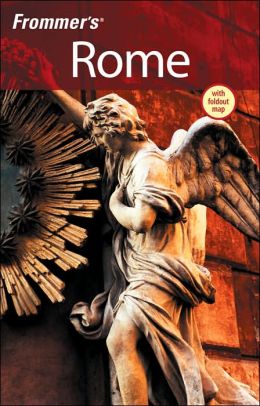
No room for a guidebook, apparently. Google is going to stop printing up the Frommer guides, and that after they spent $22 million to buy the franchise.

New editions are not in the works, and as anyone who has travelled is aware, there's nothing more useless than an outdated travel guide. Especially if you're in Europe, where the economic crisis has resulted in shortened hours of operation for museums and the demise of various restaurants.

So will Google just write off their investment in Frommer as a loss and move on?

Is Google Books going to pick up the slack?

Sure, a guidebook could be turned into an e-book, and the benefit there would be the ease of updating the information. The Roman Forum is closing for a strike on a Thursday? A few keystrokes and your online guide has the latest information.

But have you ever tried to use the Internet in Europe if you're traveling?

It isn't all that easy to access, and if you're in Italy, you have to register and sign on to an account so that the government can keep an eye on things.

Then there is the cost. Data charges are astronomical. If you're traveling on a budget, you'd be happy to give up cyberspace. If you need a map or an address, you would refer to your print edition of Frommer's.

Not any more.

Google is leaving the print market to other publishers. They may be giving up on that particular niche entirely. They may be anticipating a digital-only form for Frommer's.

But it's looking like Frommer's is going the way of Baedeker's. Then one day it will be a touchstone in a novel, some future work of fiction akin to Forster's A Room With A View.

Thursday, March 21, 2013

Weekend Reads

Your mind craves a vacation from work-induced stress. You can't afford a vacation to get away from it all.

But you can afford to buy an e-book that will take you far from your troubles. For a small amount of money, you can lose yourself in a tale of politics and the struggle of one man to survive being caught up in events he cannot control.

THE KING OF THE IRISH is based on real events that received world-wide coverage in 1889. No less a literary luminary that William Butler Yeats figured into the debate over the guilt or innocence of an ordinary man who supported Ireland's quest for liberty and ended up fighting for his life.

False testimony fills the pages of THE KING OF THE IRISH, lies and obfuscations that buffeted Daniel Coughlin. A pawn in the hands of powerful men, he faced the choice between loyalty to his cause or self-survival, and every move he made was documented by a press that reviled the Irish.

A fascinating tale, THE KING OF THE IRISH will bring you into Daniel Coughlin's world, where immigrant dreams met the desire of the Protestant majority in the United States to resist any and all social change.

The story resonates in today's climate of immigration control, the debates of what it means to be an American and how best to force the newest arrivals to melt into the pot that is American society.

Spend a weekend with Daniel Coughlin and the men who changed politics in Illinois.

You won't see things in the same light come Monday morning.

Wednesday, March 20, 2013

They Grow Up So Fast These Days

Book banning is a surefire way to draw a lot of attention. The Chicago Public School system has found this to be true.

In a bureaucratic faux pas, the board looked at Marjane Satrapi's graphic novel and found a single panel that they deemed offensive to young minds.

Therefore, as the guardian of said young minds, CPS decreed that Persepolis had to go.

Kids grow up so fast these days. Who would have imagined that high school students could actually be mature enough to handle a picture suggesting the torture of women in Iran?

The students did what students do with all their free time because they can't find part-time jobs. They protested. They caused a commotion. They drew attention to the issue.

Our bad said CPS. We meant the seventh grade curriculum should not include the book. It's fine for the eleventh grade, those kids who are old enough to drive a car.

But re-installing the book in the high school curriculum was not enough to end the discussion.

It's the content of the book, you see. Ms. Satrapi writes of a young girl coming of age during the Iranian revolution, and how she views the hypocrisy of religious fascism. The book deals with the concept of women's rights against a backdrop of brutal misogyny.

The average seventh grader is not unfamiliar with the themes. They aren't living in protected bubbles, not in a city where children their own age are getting shot and killed in the crossfire of gang warfare.

And they can understand the drawings and follow the plot of Persepolis visually. Considering the fact that most kids in the Chicago public school system never learn how to read at an advanced level, it's a rare chance for them to learn something that is presented in an accessible way.

Is it any wonder that the students are protesting the removal of a book from the grade school library?

Tuesday, March 19, 2013

The Genesis Of A Cold-Blooded Politician

War is a dirty business in which casualties are unavoidable. Politics is dirty, in its own way, and there are casualties to be found there as well.

So should it come as a surprise that a cold-blooded soldier could morph into a cold-blooded politician?

Martin Corry represented the people of Cork once Ireland's internal wrangling after the 1916 Rising was settled in a bloody fashion. Just another farmer, like so many in the largely rural country, and he had proved himself as a volunteer in the Irish Republican Army.

How many soldiers trumpet their patriotic war record to get elected? It's so common it's expected.

As it turns out, Mr. Corry wasn't exactly an ordinary soldier, but then again, civil wars aren't exactly ordinary military actions.

Not just a soldier was Mr. Corry, Fianna Fail TD, but also the chief executioner for the IRA brigade in Cork.

His job was to root out spies from the other side, other Irishmen who believed that they had the best vision for the future of Ireland. Find those who were enemies, who endangered an IRA victory, or supported the other side.

After he found them, he killed them and had the bodies buried in a bog near Knockraha in County Cork. Some Black and Tans, some enemies to the IRA, a fifteen-year-old boy, an elderly woman...the list goes on, as many as 56 bodies perhaps.

And after all that killing, Mr. Corry ran for office, was elected, and sat in the Dail for years and years. No one knew what he did in the IRA until recently, when some tape recordings surfaced.

Mr. Corry might as easily have been chatting about the prospects for barley, so matter-of-fact was he as he told local historian Jim Fitzgerald about his actions. Torture, murder, and the men assigned to do the burials complaining about so many bodies put into the bog it would curse the place.

War is a dirty business. Politics isn't much cleaner. Do you really know much about the person you've elected to public office?

Monday, March 18, 2013

The Curse Of The Informant

Looking back on Irish history, you will find an informant in every plot.

It was informers who tipped off the British to the planned Fenian uprising in 1867, which in turn led to a complex plot to spring the incarcerated Fenians from an Australian penal colony. Somehow, those who concocted the plans managed to keep it to themselves and the Fenians arrived safely in America, to foment revolution from afar.

But the success of that plot brought on more British agents to infiltrate the ranks of those who schemed to free the rebels. That resulted in a murder in Chicago, a trial riddled with perjury, and a flurry of activity in the Illinois State legislature to amend laws that created a case of injustice.

An Garda Siochana has reason to believe that they are now on the receiving end of informers in the ranks, and even though they are guardians of the Irish people, they're being treated like the old Royal Irish Constabulary.

Fuel laundering plant
Slab Murphy is a known supporter of armed insurrection against England, which continues to hold six Irish counties within the United Kingdom. He makes money by removing dye from diesel fuel intended for use in farm machinery on site, and then sells it on as government-sanctioned fuel for automobiles.

The English then miss out on the taxes due on motor fuel. The people who don't care to send their Irish money to England are not in sympathy.They're more than happy to pay less for their petrol, knowing that a hated government is getting burned on the deal.

A plan to catch Mr. Murphy in the act of laundering fuel was upended last week when authorities showed up at his isolated farm and found that some other laundering had gone on.

Computer records, documents and the like were all gone, destroyed in a jolly bonfire only days before the raid.

Someone tipped off Mr. Murphy, and that someone could only be an employee of the very authorities who planned the raid.

On a positive note, other raids carried out at the same time netted ill-gotten gains, a quantity of laundered fuel, and bank accounts with false names that were part of a money-laundering scheme intended to hide the proceeds of the fuel laundry.

Authorities on both sides of the border will have to scrub their staff clean of moles, not an easy procedure when the IRA enjoys a grudging support among the descendants of those who were ethnically cleansed when the border was created in 1922.

It's a dirty business, this espionage game.

Saturday, March 16, 2013

A Shout-out To The Entrants

Our giveaway at Goodreads has ended and the winners have been selected.

Congratulations to the five who beat out the other 795 to win a novel that will keep them turning the pages until they reach the end.

THE KING OF THE IRISH is work of historical fiction that is based entirely on facts, set in an era when Chicago was the last outpost of civilization on the edge of the frontier that was America's Wild West.

In 1889, the Irish in Chicago were coming to the fore of politics, immigrants freed from the constraints placed on them by their English overlords. They took to it readily, with a knowledge that political power was what stood between liberty and tyranny in the Old Country.They had every intention of using their newfound might to support a rebellion in Ireland.

They were ready to assassinate Queen Victoria on the day of her Golden Jubilee to as an act of war.

With their fondness for secret societies, their Papist religion and their customs that allowed for drinking on a Sunday, the Irish were not welcome in Chicago.

Pick up a copy of THE KING OF THE IRISH and enter that world, where an Irishman had no chance of justice because the packed jury sitting in judgment presumed his guilt because he was Irish. Put yourself in Daniel Coughlin's shoes as he fights against prejudice, fights to save his neck while struggling to remain loyal to his people and their cause.

The novel is an intriguing read, and one you won't be able to put down.

Thursday, March 14, 2013

The Irish And Chicago

The Irish came to Chicago in droves, searching for a better life and prosperity and freedom and all the things that any other ethnic group sought.

Those who study such things claim that no city has more Irishness than Chicago when it comes to celebrating St. Patrick. They dye the river green, and that's an indication of some serious Irishness on the 17th of March.

Immerse yourself in Chicago-style Irishness this year with a copy of THE KING OF THE IRISH, available in all formats and ready for download. You could buy a trade paperback if you jump on it quickly, but to really get into the spirit of St. Paddy's Day in the Midwest, download the novel that features Chicago's Irish in the infancy of their political might.

Follow the journey of Daniel Coughlin as he grapples with the immigrant's dilemma, a position unique to the Irish. The son of a fierce nationalist, Coughlin had to find his place in a city that loathed the Irish newcomers and their foreign religion. For Dan, it will become a question of loyalty, to his adopted homeland or the land of his ancestors, a country yearning to be free if British rule.

In 1889, Chicago was the center of Irish nationalism, with its secret societies pushing for rebellion in Ireland. It was the Irish in Chicago who supported insurrection with money and influence, with the covert backing of the Archdiocese. This is the world that Daniel Coughlin inhabited as a police detective whose job depended on clout, and whose vehement support of the cause of Irish liberty may cost him his life.

THE KING OF THE IRISH is an engrossing story that readers cannot put down, an intriguing novel of double-dealing, espionage and the determination of the city's Irish population to control City Hall.

It won't be a proper St. Patrick's Day without this incredible debut from Jack O'Malley.


Wednesday, March 13, 2013

A Jury Of His Peers

Chicago politician William Beavers is about to face a jury.

Charged with failing to pay income taxes on the money he helped himself to from his campaign funds, he will be tried in court and his guilt or innocence determined by a panel of twelve citizens who are his peers.

Except that his legal team doesn't believe that the pool of jurors selected is representative of Mr. Beavers' peers at all.

How was that pool selected? Was it rigged, as attorney Sam Adams, Sr., claims? How could there not be a single African-American male drawn, and only two black women?

That's how it used to be done. The judge sent his bailiff out to round up a group of potential jurors, to select those who would guarantee a conviction in a hot case.

That's how Daniel Coughlin was convicted of murder back in 1889.The story is told in THE KING OF THE IRISH, a work of debut fiction by Jack O'Malley.

Within the pages of the novel is a tale of political chicanery that reflects the origins of the Democratic machine that runs Chicago, and which coincidentally allowed Mr. Beavers to take what was not his without paying the Feds for it.

Mr. Adams, Sr., attorney for the disgraced Mr. Beavers, would like us all to believe that the sort of shenanigans that packed the jury for Daniel Coughlin's murder trial is being put to evil use once again, to ensure a conviction of Mr. Beavers.

Because of Daniel Coughlin's railroading, and the public outcry of the Irish-American voters who took exception to one of their own being mistreated, laws were changed to ensure that juries were made up of those selected entirely at random.

Unless Mr. Adams can prove that the fifty selected were not randomly pulled from the pool of prospective jurors, he will have to make the best of the situation in which he finds himself and his client.

The laws on jury selection were changed before the Nineteenth Century closed. Politics in Chicago, however, hasn't changed much at all.

THE KING OF THE IRISH will be released on March 17, in both hard copy and digital editions. It is a tale of greed, corruption and the quest for power. Set in 1889, it could just as easily be taking place in 2013.

Monday, March 11, 2013

Preparing For THE KING OF THE IRISH Launch

With the release of Jack O'Malley's debut novel coming up fast, we are in the process of finalizing the formatting of the digital version of this page-turner.

Don't miss the chance to enter the free ARC giveaway over at Goodreads.

You can buy the paperbook wherever books are sold, or online at Amazon or Barnes and Noble or Powell's, to name a few.

St. Paddy's Day is coming and you'll want a copy of THE KING OF THE IRISH to go with that tall whiskey you'll be sipping.

Saturday, March 09, 2013

Lipstick On A Pig

Under the lipstick, that pig is still a pig.

Under the umbrella of Random House, the new imprint known as Hydra looks like a vanity publisher with all the same undesirable practices.

Random House bought Author Solutions, and why not? The publisher's executives could not help but notice that self-published authors like Hugh Howey were pulling in big money, all on their own, and all for themselves.

What publisher wouldn't want a piece of that action?

And so, Random House opened up a department for digital-only publishing. If an author should break out of the pack, like Mr. Howey, Random House would be there to offer a traditional print contract.

Where Random House went off track was in crafting a contract that drew too heavily on the Author Solutions model. Author Solutions is more about selling services that cost a lot of money, such as marketing or editing or cover design, than it is about actually publishing. It's the author paying up front, rather than the publisher investing in the author.

Did they think that the tech-savvy sci-fi author community wouldn't notice that the contract Random House developed for their Hydra imprint was too much like an Author Solutions contract?

Random House is not at all pleased to have Hydra de-listed from the Science Fiction and Fantasy Writers of America list of approved publishers. SFWA looks out for its members, and while looking, they noticed that Hydra's contract was painfully similar to the sort of exploitative agreements used by non-traditional publishers. What made it worse was that Hydra bore the Random House label, implying legitimacy while not doing things in a traditionally legitimate manner.

In short, SFWA felt that authors were being duped, and so they advised sci-fi authors to avoid Hydra.

Sure, Hydra's contract is different, as a Hydra executive proclaimed in response to SFWA's lambasting. But different is not good when different is more like a fee-charging vanity press and quite the opposite of a traditional publisher. Things like not paying advances, or placing the burden of publishing costs on the author, are not practices that SFWA will condone.

Random House has veered off into well-charted territory, but they are only just learning how well that territory has been charted by groups of writers who won't sit on their hands while future writers are getting ripped off.

Tuesday, March 05, 2013

There Was A Time When They Could Keep A Secret

In the terrible days of the Second World War, a group of scientists were gathered at the University of Chicago. Under the stands of the football stadium, in a squash court, a laboratory was built and no one breathed a word about the project that required the facility.

The atomic bomb was born at the University of Chicago where Enrico Fermi held a faculty position.

The staff did not walk around campus boasting of their accomplishment. They didn't call a press conference.

In 1942, the University of Chicago knew how to keep a secret.

Sadly, they have lost that talent. Or at least the school's police department isn't highly skilled in the covert arts.

A recent protest brought out security, as anyone would expect. The surrounding community has been after the University's hospital to expand its trauma unit to accept victims up to the age of 21, rather than cutting off entry to those over the age of 16.

There are more than enough gunshot victims in the region to warrant the need, but the U of C hospital is not exactly noted for its desire to welcome patients who cannot pay the bills.

The police who keep the university safe thought it would be wise to closely monitor those protesters, just in case someone developed an urge to loot and pillage. So they popped a couple of their officers into the crowd, all incognito, and kept in touch via text messages.

Not so incognito as Enrico Fermi blending into the faculty on campus. Some clever protester believed that the disguised cop was, in fact, a disguised cop, and took plenty of pictures to bolster a complaint to the university.

Busted, as they say.

The university's higher ups claim they knew nothing and are conducting a full and thorough investigation.

The police department is reviewing their costume department and may need to call in a Hollywood designer to help them better craft believable disguises.

Monday, March 04, 2013

Vanity Publisher Chasers

Author Solutions is hardly a new venture.

It is one of the early entrants in the vanity publishing world, taking advantage of developments in print-on-demand technology to make it possible for authors to get their words out there in public.

Unlike a traditional publisher, all of its products were done on a paid basis. The author purchased various services, such as editing or publicity, and then had to sell the book on their own. It was possible to buy a marketing package from Author Solutions, and in the end, it was a fairly expensive proposition.

Then Amazon came along and offered free print-on-demand publishing for anyone who wanted to put out their own book. The author would handle edits, design, marketing, etc., and then have their work added to Amazon's list.

Getting into the world's largest bookstore (remember those days, when Amazon was young?) was a huge plus that helped propel Amazon's POD service.

As it turned out, the POD offerings were not a vast wasteland of literary ramblings and recipe collections.

Traditional publishers, like Penguin, took notice.

And so it came to be that Penguin bought up Author Solutions. Any self-publisher who managed to break out via Author Solutions would thus have a pipeline to Penguin and all that a traditional publisher has to offer.

Penguin would get access to writers who failed to intrigue a literary agent because query letter writing wasn't a strong suit, or the reading public defined a new niche that Penguin otherwise would have missed until it was too late.

So after all this time, with Author Solutions doing their thing, dodging the shady reputation and complaints of less-than-honest practices, only now is an attorney seeking victims for a lawsuit.

In a bid to keep up with the times, Giskan, Solotaroff, Anderson & Stewart have chased the vanity publishing ambulance. Have you been injured in a book release? Call the law offices of GSAS. Or simply fill out the simple form online and get added to the class.

But if Author Solutions was always doing this sort of thing, why start now?

Maybe because Penguin, new owner of Author Solutions, has much deeper pockets than the little Indiana firm, and maybe Penguin would be more likely to settle the case out of court to make the problem go away.

That's how personal injury attorneys make all their money.

It's just a question of defining an injury and then finding someone who might have gotten hurt.

Friday, March 01, 2013

Repent All Ye Sinners

Travel to the borders of Cook County in Illinois and you'll find signs.

Lots of signs, all saying about the same thing.

Those who continue to live and smoke cigarettes in Cook County will be looking for those signs as they drive around searching for a cheaper smoke.

To raise more revenue, the Cook County Board added another dollar in tax to a pack of cigarettes, one of the so-called sin taxes that penalize activities that are viewed as evil, especially when the majority of those who indulge are the poor.

It's not unlike the days of "No Irish Need Apply", when government authorities tried to shut down the saloons on Sundays because it was a sin to drink on the Sabbath. That which the Puritans found sinful continues to be punished, but now it's a tax that is meant to ding the sinner in the wallet and force them to amend their ways because you can't afford a pack a day and still feed your family.

Of course it's for the smokers' own good.

Just like Sunday closing laws were done for the good of the immigrant families, falling into poverty due to drunkenness and immorality according to the overblown hype.

The poor don't have the means to do much protesting against the added expense, and when they have to turn to the government for their health care, the government is going to make them pay for getting smoking-related diseases by coercing them to stop smoking.

Historically, the tax increases in the past have brought in additional revenue for a short period of time, during which smokers either quit or find another source. And you don't have to go far to find another source in one of the collar counties, or even Indiana if you're on the South Side of Chicago.

Then the Cook County Board will have to come up with some other way to generate the money they need to function and continue to provide no-work jobs for the politically connected.

In the meantime, enterprising Chicago business owners, particularly those who sell to the impoverished residents of the inner city, will continue to smuggle in smokes from Indiana to sell at "discounted" prices to the sinners who find that repenting isn't as easy as just saying no to that nicotine craving.

Wednesday, February 27, 2013

Engaging Additional Synergies

Schools are not buying enough textbooks to support as many educational publishers as are currently fighting for market share.

Barry O'Callaghan's whale-swallowing minnow Riverdeep found that out the hard way.

He set out to create a monolithic publisher but instead created a debt-riddled behemoth that suffocated under its own weight.

In the process, countless employees of Harcourt and Houghton Mifflin were given the sack, becoming "realized synergies" as the educational publishing materials firm tried to cut costs to save money and pay what was owed to its creditors.

One side effect of all that acquiring was the decision by other publishers in the same industry to match Mr. O'Callaghan.

Cengage thought it had to meet the challenge head on, rather than go off on some road less traveled, and today the firm is being crushed by a debt load it cannot sustain.

As in the dismantling of O'Callaghan's creation, so too is Cengage beholden to the hedge funds, like Apax Partners, that are buying up all that debt. Those hedge funds are increasing their influence, because they have only to call in the loans and force Cengage to obey their commands.

When a hedge fund that gobbled up McGraw-Hill's educational publishing unit starts buying big pieces of Cengage debt, the pundits on Wall Street take note.

Like O'Callaghan's pile o' debt, Cengage bonds are near junk status because the outlet for their niche in publishing is not promising.

Like O'Callaghan's notion to cut costs by merging companies and eliminating overlapping employees, Apax could combine Cengage with McGraw Hill and realize round after round of "synergies" in an effort to cut costs and put the money into paring down debt instead of paying people to work.

One employee can do the work of three, if they want to keep their job. And you have only to ask those who remain at HMH how well that is working out for them.

The merger would be good for shareholders who would see their stocks rise in value. As for the employees of Cengage and McGraw-Hill, well, consider yourself a synergy to be realized, a bit of collateral damage.

If You Have To Ask The Price, You Can't Afford It

Are there any young urban professionals left alive out there in these hardscrabble times?

Aston Martin is betting that there are, and they are counting on that socially competitive set to be just as keen to spend money on luxury as ever, just like those long gone days when money was abundant.

Sleak, black, it screams out "This is NOT a Perego it's much more dear than anything the Italians are touting."

It's the perfect accessory if you like your martinis shaken, not stirred. Odd, there's no attached cupholder on the handle to stow your martini as you promenade with baby comfortably ensconced in Aston Martin luxury, your own little Baby Bond.

If you have to ask how much this necessary accessory is, you can't afford it.

If, however, money is no object when spending sends a certain message, this pram could be yours for 2300 British pounds. A good investment for those who like to use their offspring to display financial success, or at least create the image. When people are noticing that you're pushing an outrageously expensive pram, they won't notice that you have no furniture in your house because you can't afford it.

Only 800 of these junior roadsters will be manufactured, so you know the pram will be exclusivity on wheels.

And you can be sure that one of those 800 will be gifted to Will and Kate, which will only drive up demand.

You want your bundle of joy to experience that which royalty experiences, don't you? Would you deny your little angel the comfort of the Alcantara lined seat pad and aluminum alloy wheels that are designed for the roughest of terrain?

Why, you could climb The Reek at Croagh Patrick with baby in tow and the child would never feel a single bump!

Queues are forming up at Harrod's, where the pram will be offered for sale beginning in April.

A Silver Cross air ride suspension for baby. An ergonomic pushing handle for you. How can you even wonder if it's worth that kind of money? Don't you love your child?

Tuesday, February 26, 2013

The Last Will And Testament

The bachelor farmer is the stuff of Irish lore, the lone man existing in the back of beyond with nothing for company but his cows and sheep and fields. It was for him that the laws against driving after taking drink were nearly voided for country locales where the local pub is the only social outlet.

They are a species in decline, with the isolation of Ireland's backwaters fading. Electricity, the Internet and mobile phones are available to all, and a man no longer needs to live in solitude to pursue his career as a farmer.

During Ireland's land boom, the bachelor farmers were courted by business men who wanted to buy the land and grow houses. For men with no children to leave the land to, it was a reasonable solution. With all the cash from the sale, a man could find himself a little place in a town with people to talk to and a pub to walk to.

Matthew Hayes died a bachelor farmer, perhaps not expecting to pass away at the young age of 82 or perhaps waiting for the right price for his Wexford holdings.

Who stood to inherit the property of the man who never had a family of his own?
Noel Hayes

As luck would have it, a distant relation appeared with Mr. Hayes' last will and testament, which declared that said distant relation got it all. The land, the savings in the bank, the lot.

Noel Hayes took possession of his legacy in 1998, but he came to learn that an unequal sharing of the wealth fostered bitterness and ill will among a group of conspirators.

The millionaire owner of South-East Vegetables turned to Willie O'Leary for assistance in forging a will that made him the sole legatee. Mr. O'Leary's brother, who was given a lump sum payment for his help, told the authorities all about the scheme to forge the will and steal the land.

At some point, the O'Leary brother might have noticed that Mr. Hayes was already rich and could easily afford to give him more, but extortion doesn't always work as one would like.In the end, Charlie O'Leary was sentenced for his role, although the courts recognized his assistance by suspending the eighteen-month sentence.

Mr. Hayes was convicted by a jury that believed Charlie's story. He plans to appeal his six-year sentence and Eu200,000 fine.

It should be noted that Noel Hayes is not, in fact, a bachelor. But he does appear to be quite greedy.

Monday, February 25, 2013

The Nugget Of Truth In A Rumour Denied

The Vatican is a bit perturbed at all the scandalous chatter being emitted by the Italian press.

There are articles about the reason the Pope is resigning, giving air time to speculation that the clerical sex abuse revelations weighed too heavily on thin German shoulders.

Hints and innuendo about homosexuality among the higher-ups, however, brought on the fiercest of denials. There won't be any of this power of the press thing going on, to influence the selection of the next Pope. Cardinal Lombardi has quashed those tall tales in no uncertain terms.

So don't even dare to suggest that important clergymen are in danger of being blackmailed by their secular, and homosexual, lovers.

That being the case, Cardinal Lombardi, then why has Cardinal Keith O'Brien so abruptly tendered his resignation?

And how is it that he stands accused of innapropriate sexual contact with at least four priests?

Clearly, Cardinal Lombardi cannot be accused of making a false statement. His colleague from Northern Europe, the leader of the Catholic Church in Scotland, is not being blackmailed by the laity but by the clergy, so there you have it.

The rumours, therefore, are wholly untrue.

In a bureaucracy as Macchiavellian as the Holy See, you would expect all sorts of skullduggery, with plenty of backstabbing as those seeking power waltz through the steps of a courtly but lethal dance.

The first steps were taken some time ago, when the Pope's butler stole documents and letters which reflected a thoroughly dysfunctional government, complete with banking irregularities, power struggles and petty bickering. The cardinals not in power started the process of toppling those with too much power, while those with power, like Cardinal Lombardi, do all they can to hang on.

Remember the scene in The Godfather, where a rash of murders was juxtaposed with the baptism of an innocent baby? That's what the Vatican would look like if the Cardinals' vendetta used guns instead of words. In the halls of the city-state, however, no blood flows across the floor, but one Cardinal's career has been snuffed out with equal ferocity.

So that would make Cardinal O'Brien the Barzini of the Holy See. Now who will portray Tattaglia or Moe Greene? Which Cardinal thinking he's going to Rome to elect the next Pope will instead be pushed off his pedestal?

Thursday, February 21, 2013

Decorating The Congressional Office

It's the little things that often trip up the most clever fraudster.

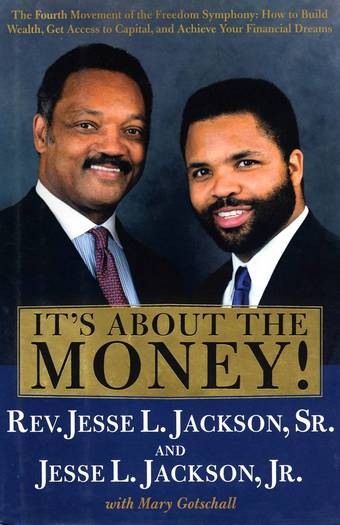
In the case of Jesse Jackson Jr., it was the elk heads he purchased to decorate his Congressional office. What African-American man from a big city like Chicago would even think to use taxidermy to decorate his digs?

Then he went and returned them for a cash refund, but he got the cash while his campaign funds covered the original bill. The Justice Department couldn't help but notice.

We can't discount Mr Junior's senior, who has accumulated a fair share of enemies over the years. You just know that there were plenty of other political operatives who were lined up and ready to take a swing, to bring down a competitor and move their own into a position of power.

Mr. Jackson is merely the next in a steady chain of corrupt politicians, but that chain stretches back over one hundred years. He fell victim to his own hubris, unaware that he was far from untouchable. Yet the same could be said of those who came before him, those who helped to construct the machine that is Chicago politics.

That's why THE KING OF THE IRISH, a debut novel from Chicagoan Jack O'Malley, is so pertinent today.

In this intriguing work of historical fiction, you will experience the infighting and all-out warfare that was waged to gain influence and power. It's the same thing that goes on today, with lessons from the past thoroughly forgotten and thus repeated.

It is a tale of those associated with the powerful who are made to pay the price of the endless struggle for supremacy.

THE KING OF THE IRISH is very much a tale of our modern times, even if it is set in 1889.

Chicago wasn't ready for reform back then.

Is it ready now? The leading candidate poised to replace Mr. Jackson is being investigated for her own fraudulent activity.

Apparently it ain't ready for reform just yet.

Wednesday, February 20, 2013

And Some Were Too Pretty

Acclaimed author Hilary Mantel is under fire for daring to criticize the Duchess of Cambridge for being nothing more than a pretty face, among other things.

A pretty face can be a curse, making it more difficult for a woman to be taken seriously. Particularly by other women.

There was a time in Ireland when a pretty face could get a woman locked away for life.

But you won't get that fact if you read today's article in the New York Times about Enda Kenny's apology to the forgotten Maggies. According to the newspaper, women in Ireland were put away in laundries run by the nuns and made to slave for no wages. What did they do wrong? According to the article:

"Many of the women were consigned to the laundries for petty criminal convictions. Some were the victims of abusive family relationships, and many had mental health problems."

True, in part. But the bigger crime was the incarceration of women who were deemed too attractive to men by their parish priest.There is a well known case in which a woman was tricked into leaving her family farm, where she lived with her brothers, only to find herself in a laundry. If not for the persistence of another family member, she would have died in the laundry. She never knew why she had been put away. She could never have imagined that the priest thought she would tempt her brothers into incest, and so she had to be locked up.

There were many girls in the laundries who were the offspring of women put there because they were pregnant and unmarried. They were the ones who were not adopted, who survived a wretched childhood in an industrial school and then were moved to a laundry, so thoroughly institutionalized that they could never survive in the outside world.

THE LEAVEN OF THE PHARISEES is a novel that presents such cases as fiction, but the book is based on the words of survivors of the laundries and the industrial schools.

You can accept the cleaned-up version presented by the New York Times, or you can dig a little deeper and discover that the collusion between the Church and the State, combined with the power of those who think they know best, is a dangerous force. And the victims are always the weakest among us.

Tuesday, February 19, 2013

When The Cash Flows Away

The cost of a book is based on things like the cost of paper, the salary of the editor, the royalty to the author, and a litany of other expenses.

The price of a book is set in order to recoup all costs, and then turn a profit.

Employee embezzlement is one of those non-fixed costs that no one anticipates and never gets calculated into the end price. That's how a company that is thought to be doing well suddenly goes under.

At book wholesaler Bertram Books, an employee managed to lift nearly two million British pounds through fraud and deception.

Graham Goble helped himself to Bertram money, beginning some time in 2005.

He had a gambling problem, it's been said, and he started out taking a little, thinking he had a brilliant scheme to boost his salary. After winning a bet, he'd pocket the gain and then repay his employer, and no one would be any the wiser.

But like any gambler, he kept throwing money into the kitty, losing and losing but believing that the next wager would win it all back.

It took Bertram Books until 2011 to really notice, when year-end financial reports seemed a bit skewed. After all, the bean counters had determined how much should be coming in, based on their knowledge of expenses versus income, and the bottom line was not where it should have been.

Bertram was insured against such losses of theft by deception, but not every business carries that sort of policy. If not for the insurance, the missing funds could have sunk the firm, just as if they had priced their books far below cost.

Because in essence, the embezzlement was an added expense that was not calculated.

Mr. Goble is looking at some serious jail time, while Bertram Books will be looking at an uncomfortable uptick in the cost of their insurance coverage.

That, however, is an expense that can be figured into the cost of the product. Unfortunately, such additional expenses do nothing to boost the bottom line when book sales are in decline.

If only another J. K. Rowling would appear, to create blockbuster novels that fly off the shelves of the Bertram Books warehouse...

Monday, February 18, 2013

A Kiss Is Just A Kiss

Valentine's Day is supposed to a day for love, but human beings are not perfect and it's also a day for some major arguments.

Elaine Cook and her beau had a little squabble. Maybe he didn't bring her roses like she'd expected. Maybe he thought it would be romantic if she cooked him dinner, which is grounds for a well-placed frying pan to the head.

Like so many other couples on so many other Valentine's Days, they got into a fight and the end result was Ms. Cook telling her boyfriend to get out. Go, leave. They were finished as a couple.

She was dating a man who didn't take no for an answer, apparently, because instead of leaving as requested, Mr. Isn't-It-Romantic decided they could just kiss and make up.

Didn't pick up on the clues that Ms. Cook had placed in her conversation, or the man with a plan just plain didn't understand the language of not love.

A kiss isn't always just a kiss.

On St. Valentine's Day of 2013, a kiss became a domestic assault.

Gentlemen, if you've just had an argument with the girl of your dreams and you're trying to smooth over those rough spots, a kiss might help.

But don't try to slip her the tongue.

Ms. Cook has been charged with domestic battery, rather than assault with a deadly weapon, i.e, her teeth. Her former lover now speaks with a slight impediment.

The make-up kiss became an occasion for Ms. Cook to bite off a piece of his tongue, which she promptly deposited on the kitchen counter while he bled profusely into the sink. He wisely placed the fragment in a bag of ice and paramedics brought it, and him, to the hospital.

Unfortunately, doctors were unable to reattach the piece, and the man will forever have a partial tongue, a lasting memory of a St. Valentine's Day gone wrong.

Ms. Cook is currently incarcerated while her paramour is home, recovering from surgery.

She'll be out soon enough, and her attorney will argue in court that she told the man to leave so it's largely his fault that his tongue is permantly deformed.

And the women on the jury will agree.

French kissing to make up after a fight, really? It's his own damn fault, and if anyone should be locked up, it's the one currently portrayed as the injured party. Especially if he suggested that she make him dinner for St. Valentine's Day.

Friday, February 15, 2013

Another Agent Turns Publisher

How much longer will it be before literary agents are all opening up their own publishing houses?

In the U.K., Andrew Lownie has joined the parade.

That bit of news may explain why Random House released a short video in which several of its U.K.-based authors tout the benefits of publishing with Random House.

The fight, apparently, is on.

Mr. Lownie believes that his authors are not getting the full financial benefits of digital publishing, so he has created Thistle to level the field. Not only will the new imprint handle e-book publishing, but it will also create print-on-demand editions of hard copy books.

He plans to use Amazon's platform, which is fairly easy to use and absolutely free.

Given that Amazon sells the most books, it seems like a good fit, as long as the author is not concerned with the hard feelings that this price-controlling powerhouse has generated among brick and mortar book shop owners, to say nothing of Barnes & Noble.

Will Thistle help or hurt Mr. Lownie's credibility with the traditional publishers?

He's holding the option of e-publishing with his own imprint when he heads into negotiations. The editors would know they have to come up with big money, or lose the digital rights. Or, they can simply not offer to publish something Andrew Lownie is selling.

In Mr. Lownie's view, what he will do with Thistle is offer an opening for authors whose books fill some small niche that is not profitable enough for the big houses. With costs at a minimum, he will not need to sell a large number of copies to turn a profit.

The old conflict of interest bogeyman raises its head once again, with the concern that an agent would not push as hard for a publishing contract when he could do better as the publisher himself.

What remains to be seen is, will this new form of competition in publishing lead to better contracts for the authors, or even fewer authors getting an opportunity because the cost of risk would become too great?

The party is only just getting started.

DON'T MISS THE ARC GIVEAWAY AT NEWCASTLEWEST BOOKS. ENTER HERE for a chance to win a free copy of Jack O'Malley's debut novel, THE KING OF THE IRISH.

Wednesday, February 13, 2013

You Can Lead A Child To The Lunchroom But You Can't Make Him Eat

The children of Arlington Heights, Illinois, will no longer be subjected to such adult-oriented entrees as black bean burgers or grilled salmon.

Those who run the school lunch program there have discovered that they can lead the children to the most nutritional foods, but they cannot make them eat it.

And the kids were not eating it.

So it's back to the hot dogs and chicken nuggets for those who buy a hot lunch at school. It's likely that the number buying instead of bringing from home will increase, now that there's something the kids like to eat.

Healthy foods were introduced by a trained dietician, looking at all those important factoids like calories, protein density, fiber, and all the things that dieticians like to measure.

The number of children buying lunch at school began to decline. Those who continued to buy avoided the healthy entrees as if they were poison.

The school district, which must be run like a business, could not afford to keep putting the recommended food items out there, only to throw them away at a loss. To save money, they chose to abandon the program and return to the good old days.

How can a school convince the students to change their diets?

Remarkably, it must begin at home. The school lunchroom just doesn't have the same cachet, the same influence as the home environment.

And it's clear that the parents weren't adhering to the government's mandate to make kids eat healthy. Instead, they gave in to the little ones and sent them to school with a lunch from home, where who could say if the ingredients were suitable to the dieticians who know what's best?

What can be done?

It's time to send a dietician to every home, someone to prepare the family meal every evening. A dietician who will make everyone sit there until they've cleaned their plate, while reminding them of the starving children in China who can only dream of eating four ounces of grilled salmon. A dietician who would not let them have dessert if they didn't finish dinner.

The students of the Arlington Heights school district need June Cleaver and Harriet Nelson at home. Today's modern parent just isn't doing things the right way.

DON'T MISS THE ARC GIVEAWAY AT NEWCASTLEWEST BOOKS. ENTER HERE for a chance to win a free copy of Jack O'Malley's debut novel, THE KING OF THE IRISH.

Tuesday, February 12, 2013

ARC Give-Away

Newcastlewest Books is giving away FIVE free copies of Jack O'Malley's debut novel, THE KING OF THE IRISH.

Winning could not be easier. Click on the link here, which will bring you to the entry form, and be sure to include your mailing address in the "Comments" section.

Winners will be randomly selected on the first day of March, with advance review copies arriving prior to the official publication date of 17 March, 2013.

Go on. Give it a go. The novel is brilliant.

Curioser And Curioser

Kevin McGeever recovered enough from his ordeal at the hands of his kidnappers, or at any rate enough that he could walk away on his own.

Or he had an urge to remove himself from the hospital where he was brought by gardai after the property developer was found abandoned on the side of the road in a distressed condition.

He left the hospital in such a rush that he forget to tell authorities where he was going. If they wish to question him further as to his whereabouts for the past several months, during which time he says he lived on one sandwich per day and a bit of water, they'll have to track him down.

They didn't manage to find him from May, when he disappeared, until January when he resurfaced, so there isn't much confidence in that claim.

There isn't much confidence in Mr. McGeever's claim that he was kidnapped, either.

In his glory days, Mr. McGeever flaunted his wealth throughout Mullingar, boasting that he was making money hand over fist in all sorts of schemes.

But ask those who invested with him and you'll find another story altogether, that of the classic con man who took other people's money and failed to pay a return because he was using those funds to flaunt his wealth.

There were supposed to be properties in Dubai being purchased, but often the same property was sold to more than one person and in some cases, the property didn't even exist.

Some lost entire life savings, so it's no stretch of the imagination to picture one of them holding Mr. McGeever for a ransom equivalent to what was owed. There's no evidence, however, that any ransom was paid.

But would a man be so desperate as to hide himself away and essentially torture himself with starvation, and to what end? He's still facing potential lawsuits by those investors and the builders who were constructing his mansion that was never finished.

There would be no avoiding jail time, whether he was kidnapped or not. Juries don't have a great deal of sympathy for defendants who cheat people out of hard-earned savings, and a kidnapping wouldn't soften those feelings.

Who can say, but perhaps Mr. McGeever staged his disappearance with a mind to get out of Ireland, but then failed to pay his purported kidnappers. Promises of future rewards, the life blood of his method of operation, would not be believed by criminals who know all the angles. Without immediate payment, Mr. McGeever's treatment would not have been the best.

Having left no forwarding address, it is clear that Kevin McGeever wishes to really disappear, as if his first stab failed but he's trying a new angle.

After living a splashy lifestyle, however, his face is well known and he's not likely to find success running a Ponzi scheme elsewhere. It's hard to have confidence in a confidence man when he's already known as a thief.

The strange case of the property develope grows curioser and curioser.

Will he surface somewhere else, with a new way for the gullible to get rich quick? Or is he going to try his hand at some other, less visible, form of crime to earn his keep?

Monday, February 11, 2013

The Gatekeeper's Password

Literary agents are considered the gatekeepers of publishing, standing at the velvet rope and allowing entry only to those they deem worthy.

You approach, but no matter what you try, you are rejected.

What is missing is the approval of someone already inside the publishing club.

Christine Sneed is on the cusp of having her first novel published, but she has been slogging away in the trenches for a decade. She is no overnight wonder, no stellar talent suddenly discovered in the slush pile.

Like you, she went the query route, submitting to literary agents who didn't find that her prose was adequate. She fired off short stories to literary journals and rarely saw an acceptance.

So how did Lisa Bankoff come to realize that a writer she otherwise would have turned down was all that?

It surely didn't hurt that Ms. Sneed was teaching creative writing at several Chicago private universities. That's the sort of credential that tells an agent you know how to structure a manuscript and there won't be the expense of an editor needed.

In today's modern publishing world, run by accountants and corporate executives with eyes firmly fixed on the bottom line, that's no small consideration.

But what really mattered was that someone on the inside of the publishing club spoke for Ms. Sneed.

Salmon Rushdie read one of her short stories and decided it was good enough to be put into an anthology.

If the likes of Salmon Rushdie thinks you're good, what literary agent would accuse him of not knowing what he's going on about?

So if you're looking for a high-powered agent, you have some work to do.

First, get a job teaching.

Good luck with that. The universities are watching their bottom lines as well. Maybe they'd take on a volunteer?

Friday, February 08, 2013

A Boost For The Locavore Movement

When you purchase that colorful box of Italian entrees from the freezer at Tesco, you have no idea where the contents come from, do you?

Anyone who feasted on Findus beef (so-called) lasagne or spaghetti bolognese for the past, oh, say, year, would never have known that they were enjoying something so far removed from the Emerald Isle.

The horse meat as beef scandal has taken another step up the ladder of spew-inducing news with the abrupt withdrawal of Findus Italian cuisine from stores all across Ireland and the U.K.

Turns out that the amount of beef in the lasagne and spaghetti was in the range of 100%, which as even the most mathematically challenged can determine, is not at all within the range of reasonable error.

The worst of it isn't even the fact that horse was put in place of beef without warning the client.

It's the fact that horses are treated with drugs not fit for human consumption, under the assumption that the horses wouldn't be eaten by humans.

So did your lasagne or pasta bolognese contain phenylbutazone, or not?

Grand that we've been advised to examine our homes for the presence of Findus products, and to return those not eaten.

What about all that was consumed already?

You wouldn't be worrying about this if you subscribed to the locavore philosophy, which preaches that you buy from local suppliers. That way, you know where things come from and can be aware of the sorts of practices that the farmer follows.

You wouldn't be purchasing ground beef from a cattle farm that has a large contingent of horses. Why take a chance that the meats could be co-mingled?

Know your supplier. Eat local. Buy local.

And stay away from convenience foods, especially anything originating in a country like France where they eat horses, don't they.

Stick with the boiled bacon and cabbage. Eat local. Eat Irish.

Thursday, February 07, 2013

An Airport Rendezvous

You meet someone at the bar in an airport terminal.

Killing time, waiting for a flight, you strike up a conversation. Buy a drink. Share a laugh.

Flights are delayed. You don't want to have another drink, but what else is there to do?

Sex would be nice, but you can't wander into a public bathroom and risk an embarrassing arrest.

Fly into or out of Chicago's O'Hare Airport and you can enjoy your leisure time in comfort and privacy.

Not that the City of Chicago will acknowledge this unintended benefit of the Minute Suites.

Naturally, there is money to be made and so Chicago's aldermen are all in favor of introducing a new service to the weary traveler. On the surface, we're being told that Minute Suites are meant for an airline passenger who can rent a small room, complete with daybed, work station and TV, for some nominal fee. It's a place to rest, to catch up on lost sleep while hopping from one plane to the next.

It's perfect for a layover. Better for a lay, but we're not supposed to talk about that.

For those business people who need a place to conduct an illicit affair, what could be better? The spouse would never know, since you could honestly say you were at the airport. Your cell phone would be pinging the nearest tower. You'd have copies of your e-ticket. All the evidence you'd need to point to fidelity while cheating.

But if a Chicago alderman should ask what you used the Minute Suite for, just say you took a nap. And that other person in the room? They were using the workstation.

That means you would have an excuse for a third party, who just came in to watch television.

I sense a plot for a Vivid Video here. (No, I'm not putting in a hot link that's NSFW).

Wednesday, February 06, 2013

Government Paving Project

The Irish government has finally admitted, after years of denial, that the State colluded with the Catholic Church to incarcerate women for the crime of being too pretty, of being attractive to men, of being raped, of being sexually abused, of being the child of an unwed mother, or of being poor.

It was done with the best of intentions.

The government wanted to create a better society, one in which poverty could be wiped out be removing children from their parents and re-training them. They wanted to eliminate immorality by locking up the women who were deemed immoral, so that the ladies could see the error of their ways and repent.

It was done with the best of intentions.

So when someone from the government tells you what is best for society, that some nameless bureaucrats are the ultimate arbiters of how you should eat, of how you should be treated by a physician, of how you should live your life, remember the fate of the thousands of Irish women who marched along the road to hell that was paved by the Irish government.

It was done with the best of intentions, putting women away for not living as the government believed they ought to. For not toeing the line that Irish society had drawn, guided by the teachings of the Catholic Church.

The story is told in the pages of THE LEAVEN OF THE PHARISEES. The cold, harsh facts are detailed in the report on the Magdalene Laundries that was released yesterday.

It is a tale of the government trying to control a portion of the population, and it is a sad litany of all the unintended consequences that were ignored until the victims of the abuse could not be ignored any longer.

All done with the best of intentions. The unintended consequences, however, are devestating.

Tuesday, February 05, 2013

The Explosive Report On The Magdalene Laundries

After much delay and numerous promises, the Government will soon release its extensive report into the Magdalene laundries that were little more than slave labor camps for vulnerable Irish women, from the founding of the Irish Free State in 1922 through the 1980s.

Keep in your prayers the women who survived the brutal regime, who will now re-live all the horror as their truth is exposed for all the world to see and hear.

Justice for Magdalenes has been fighting for many long years to have the story told.

In what is a touch of justice for those women, those who were brave enough to come forward and tell their stories to an unbelieving public will be vindicated. Those who cowered in fear, who hid in the shadows out of shame, will know that their experiences can no longer be kept from view by the Catholic Church or the Irish government.

The next step, however, will require more struggle, and it is hoped that the report prepared by Senator Martin McAleese will grant the former Magdalenes the public support they need to obtain redress for their many years of slavery. The women who scrubbed the sheets from Mountjoy Jail or posh Dublin hotels never received a penny for the labor, and so, they now receive no old-age pensions.

Suffering from psychological problems related to post-traumatic stress, without the funds to pay for medical care, without money to provide the basics when they are too old to work, the forgotten Maggies have their best chance of turning some of that around.

The abusive system is spelled out in fictional form in THE LEAVEN OF THE PHARISEES. Read the novel. Read the report. You'll find that fiction did not stray from the truth, no matter how unbelievable it might seem.


Guest Blogger Jack O'Malley On Cook County Justice

We are less than two weeks away from the start of our free book giveaway at Goodreads. Author Jack O'Malley is here to provide a little more insight into the way that justice is served in Cook County, Illinois, home of the city of Chicago.


An important element to THE KING OF THE IRISH is the state of the Cook County court system in 1889.

The novel touches on the fate of the Haymarket Anarchists, a trial that took place three years prior to the murder trial that forms the narrative. In the Haymarket case, as in the trial of the novel's protagonist Daniel Coughlin, it was common practice to select jurymen who were certain to vote for a conviction.

In time, with the Irish ascendant in Chicago politics, and political power-broker Alexander Sullivan exerting his influence, the laws were changed to curtail the practice.

Imagine the sense of doom that must have pervaded the heart of a man who knew he was innocent, but also knew that the judge hearing his case was not without bias, that the jury was stacked and empanelled to guarantee a conviction.

Imagine how you would feel if you walked into court and discovered that your judge was bat-shit crazy.

It has happened in the past, in the Cook County court system.

More amazing, it is still going on.

Cynthia Brim has been a judge since 2000, running on the Democratic ticket and returned to office by dutiful patronage workers who vote the straight ticket as if their jobs depended on it. Okay, their jobs do depend on it. That is the only logical explanation anyone can give for Ms. Brim being retained in the last election, even though she was declared insane.

Ms. Brim had a history of odd behavior at the bench, all of it related to a bipolar disorder. She was prone to delusions and hallucinations, and once was carried out when she turned catatonic.

So how much justice can you expect to be served by a judge who should have been removed?

Her most recent escapade had her assaulting a deputy, which led to her suspension, but not her removal from the bench. In spite of numerous instances of mental illness that impaired her ability as a judge over the years, she has never been brought up before the Judicial Review Board. The Democratic Party backed her retention this past November, despite a day in March that was filled with delusions that ended in her arrest.

She has recently been found not guilty by reason of insanity. She has not been shown the door, but continues to collect her six-figure salary while on a leave of absence.

Justice may be blind, thanks in part to laws that were enacted after Daniel Coughlin's trial for murder. Judges and prosecutors can't pick the jury pool, which is now a random selection.

Public outcry from the once critical Irish-American voting bloc helped to turn things around for Coughlin. Where is the public outcry over an insane judge being allowed to parcel out justice?

Working for the City of Chicago or the County of Cook, most likely, and therefore not willing to rock the boat that keeps a roof over their heads and food on the table.

Monday, February 04, 2013

Pave Paradise And Put Up A Parking Lot, or, My Kingdom For A Car

In time, all things are forgotten.

Richard III, once king of England, would seem to be important enough of a man to have his burial place remembered. It's not as if he's some fictional character that Will Shakespeare concocted for some drama. He was a real man, of real flesh and blood. And a real curvature of the spine.

Poor Richard fell to the forces of Henry Tudor, and don't we all know that history is written by the winners.

Being a wise playwright, Shakespeare chose to portray Richard as the bad guy in the power struggle that was won by the Tudors, who just happened to still be ruling when all those plays were getting written and performed in London.

What supporters Richard might have had were not enough to keep his resting place alive in common memory. All that remained was speculation and rough estimates, all of it growing muddled as the city of London spread beyond its boundaries.

It's now official.

Richard III has been found. Buried under the concrete of a car park.

Ignominious ending, indeed.

Through scientific tests, a skeleton that was uncovered during excavation was determined to be that of the former ruler of England. The curved spine was the first clue, and then there was the gap in the skull where the King's head was split during the battle. DNA analysis using a descendant of Richard's sister Anne of York provided further proof.

Not that Richard was buried where he fell at Bosworth Field. He was interred at a friary, a suitable religious burial ground.

But those Tudors just wouldn't leave things be. Henry Tudor's descendant, the eighth Henry, destroyed all the Catholic institutions he could when he started up his own religion, and without the monks or the church there, with the mania to eradicate Catholicism, the site slipped away until it was just another empty field filled with stones and bits of foundation.

No more hard feelings between the Tudors and Plantagents, as neither house is in existence.

Perhaps the present Queen of England, of noble Germanic stock, will organize a little memorial service and have those old bones laid to rest with other ancient British royalty.

Although she may not attend the Mass.

Richard III was, after all, a Catholic. And we wouldn't want to send the wrong message to the hard-pressed loyalists in Northern Ireland who would start up a new round of rioting if their Queen were to set foot in a Catholic church.