Thursday, July 30, 2015

The Fickleness Of The Female

You put your heart into wooing a lady and just when you think the feelings might be mutual, she's gone.

Ah, women.

A fickle bunch. Especially the mentally unstable ones.

As if things are not bad enough for Graham Dwyer, now serving a life sentence for murdering child minder Elaine O'Hara, he's been jilted. His girlfriend has left him for another thug.

Victoria Andreenkova garnered all the attention she was seeking when she declared that she was the girlfriend of Mr. Dwyer. She was visiting him in prison, wearing the sexy outfits he liked. The prison authorities did not much care for her fashion choices, however, and she was told to stop arriving in anything less than suitable clothing. She made the newspapers with that little dust-up.
Victoria Andreenkova wants five more minutes of fame

Having tasted the heady brew that is publicity, Ms. Andreenkova must have grown quite thirsty after the initial buzz died down. Five minutes of fame was not enough, to the detriment of Mr. Dwyer. He enjoyed her visits. He would most likely not have minded terribly much if she showed up in a wool suit, or even a track suit for that matter.

But Ms. Andreenkova took the prison's banishment to heart. She took her name from Mr. Dwyer's visitor's list.

And promptly added it to the list of the most vicious criminal in Portlaise.

She has found herself a new beau among the incarcerated. Ms. Andreenkova is madly in love with Leon Wright, who will also not be able to take her out for any kind of meal. No, their dating won't be quite so active. No walks on the beach or catching the newest Hollywood release. Just the opportunity to gaze into each other's eyes through Plexiglas.

Ah, love.

Mr. Dwyer can only sit in his cell and stew while his rival enjoys the female companionship provided by the fickle Ms. Andreenkova.

The guards are likely to grant her a bit more leeway when it comes to sartorial splendor, considering the fact that Mr. Wright was given a video game console to keep him from attacking his guards. If Ms. Andreenkova in leather calms him down, she'll be parading through the visitor's room in dead cow hide.

Where did Mr. Dwyer go wrong? Was he too passive? Too submissive?

Mr. Wright has gotten some of what he wants by being more aggressive. Perhaps Mr. Dwyer has already forgotten what it takes to be the dominant one. And he was so keen on bondage, at one time.


Wednesday, July 29, 2015

What Does An Agent Want?

To avoid rejection, writers are advised to approach agents looking for the sort of thing that the writer has written. You have to research the literary agent's likes, but basing your search entirely on what has already been published is not the best approach.

Literary agents are in on what is coming in the next few years, and that is something you don't know unless you're in publishing. In which case you have connections that will get you published, so you don't need to fret over who represents what.

For the rest of the non-published world, it's a shot in the absolute darkest dark. The agent might say they are looking for historical fiction, but the next thing you know your query is rejected and it isn't your writing but the era you  write about. Sorry, no World War II sagas need apply. We only want regency, but it has to have romance, or they're done with romance but you don't know that because you're a few years behind the industry curve.

Literary agent Jessica Sinsheimer, along with other like-minded publishing types, has created an entire website dedicated to the mysterious Manuscript Wish List. What does an agent want? They are revealing their true desires.

Manuscript Wish List: A gathering of the tweets into cohesive sentences
The agents themselves provide their list of current interests. They have space to be as specific as they can, with allowances for the inexpressible. They want what they can sell, but often that is not something easily defined.

The idea behind the expose of the collected desires of participating literary agents began with a twitter hashtag. Agents would pick a day and tweet out what they were looking for at that moment, and authors could then shoot off a query letter mentioning the unmet need. Twitter being what it is, the system was not perfect and the haphazard nature of the thing made it less effective than it needed to be.

Literary agents make their money by selling manuscripts, and they sell more manuscripts if they meet the wish list of the publishers. It makes sense to inform writers, who will then try to get their words under the nose of the gatekeeper, rather than plow through a slushpile that may or may not contain some nugget of profitable material.

It isn't about the art of writing. It's all about the business of publishing.

If all goes well, the Manuscript Wish List will be kept updated by the agents who have joined in the effort. Publishing changes, of course, as the industry attempts to meet the public's demand, and literary agents have to keep pace with a shift from YA to New Adult, for example. All those kids who loved Harry Potter are older, right? If the publishers want to keep selling them books, they have to change with the changing times and the characters of a novel have to reflect that aging process.

The list is a good starting point to find an agent who wants your genre. It beats querying someone who has no interest in magical realism, although they might have represented one in the past but that was a favor but you don't about that and the next thing you know, that rejection is stinging so painfully. Why set yourself up for another thrust of the literary knife?

Friday, July 24, 2015

Free Speech Versus Cheap Advertising

Signs are speech, but sometimes signs are just cheap advertising.

Communities dealing with appearance issues face this very dilemma, and now the little suburb of Downers Grove in Illinois is coming to grips with the way things look. One businessman who wants to hang on to his cheap advertisement does not see things in the same light, and he's ready to go to court.
Not suitable for Downers Grove

He's likely to lose.

As local shops compete with big box retailers or large malls for consumer traffic, the town starts to look at the general appearance of the buildings that house those shops. A lot of garish signage does not attract shoppers, and so ordinances must be put in place to regulate how much is enough. It's a question of esthetics, which can be rather subjective. One man's art is another's eyesore, as they say.

In Downers Grove, the elected officials looked around and saw some hand-painted signs on the sides of buildings, and decreed that such signage was ugly. Big block letters, no artwork to delight the eye. No, just the name of the place, what they were selling, and the phone number, and all of that splattered on a big brick wall.

It's the sort of sign you'd see in the inner city, and the last thing a business district wants is for potential shoppers to associate it with cheap goods. No one is going to stop if they assume they'll find nothing but cheap knock-offs made in China when they want Ralph Lauren. Any town that allows such amateurish artwork is not a town where those with money wish to stop. Not Our Kind, Dear.

Mr. Bob Peterson thinks his sign is fine because it's been there for decades and it's maintained. No peeling paint. No extraneous graffiti. He says he needs the sign to draw in business, but that's the same reason given by every other business man who finds an inexpensive way to advertise and doesn't want to relinquish it in favor of other methods that are more expensive and much more attractive. It's a question of money. Some will send around flyers or coupons. Others slap their name up on an available wall, relieved that they don't have to pay a printer or a distributor to get the word out.

He is suing the city for the right to keep his existing sign. He says it is free speech, and he has a right.

No one is stopping him from advertising his business, however. It's the way he's doing it.

He can advertise all he likes, but the people of Downers Grove also have a right to not have to look at eyesores. Courts typically grant cities some leeway in regulating signs for esthetic purposes, just like they allow regulations on facades and architectural design elements. As Mr. Peterson will discover, he's free to advertise his business, but he can't choose the cheapest form because he doesn't want to spend the money. An ugly sign is not about free speech, it's about looks, and the people who elected those who designed the new sign ordinances don't want to look at ugly signs.

Make it attractive. Say what you like within the bounds of good taste, advertise away, but First Amendment rights don't extend to the right to advertise on the cheap.

Thursday, July 23, 2015

Let's Go Back In Time

For those who remember the good old days, this will be a trip down memory lane. There are those who long for those good old days of the Catholic Church, when nuns wore costumes that reflected a notion of excessive modesty. The religious walked around like a bunch of Muslims, covered from head to toe, not a single hair showing. They could have strolled through Tehran and not drawn the ire of the modesty police.

You went to Mass and if you had not studied Latin you had no idea what was being said. Instead, you repeated sounds you had learned at school. It was part of a ritual, with all the mystery inherent in a service offered up in a dead language. Did it matter what the priest was saying up there on the altar, with his back to you? You mouthed noise at key times, and you felt good about the whole thing. Ignorance is bliss, isn't it?

Jean Marie Roger Kozik wanted to go back in time, to those glory days before the Vatican made changes to bring the Catholic Church into the modern world. Things were simpler then. People were happier then. They went to Mass regularly, and obeyed their priests and bishops, and there was no shortage of religious to serve the community.

He founded the Fraternite Notre Dame, and invited fellow travelers to go back in time with him. Back to the days when pray, pay and obey was the order of the day. Except that he did it without getting approval from the Vatican, which runs the whole Catholic show. The religious group is not officially recognized by the Catholic Church, and as such is operating independently.

No matter to those who think the Church erred by modernizing. They donated to the group anyway, and the little community grew. A branch was set up in the Chicago area to serve the poor, and the nuns went about their typical fundraising activity of bake sales at local farmer's markets to generate the capital needed to maintain themselves, with a little left over to buy a piece of land out in the country.

That little piece of land where they built their chapel and housing is now being promoted as the perfect place to go back even further in time. The Fraternite Notre Dame wants to go all medieval, and rejuvenate the monastery model. They want permission to build a brewery and wine-making facility so they can be like the monks of old, who brewed beer and fermented grapes and sold the product as a way to be self-sustaining.

Would that be the order of religious who cried poor when their boiler broke down this past winter? Yes, indeed, that is the same group that tugged heartstrings until those hearts donated over $200,000, while the Fraternite can boast of millions of dollars of assets.

Not exactly the way to generate trust, is it?

So it is not surprising that those who live near the rural outpost of the Fraternite are less than supportive of the group's plan to expand their mission and become more like the monasteries of history. A big concern involves paying for such a massive project, when the nuns have little income beyond farmer's market stalls and an outpost in a shopping mall.

It's all well and good for a recognized order of religious, who have to answer to the local bishop, who has to answer to his parishioners, to set up shop in a community. The Fraternite is a free agent, operating on the fringes of Catholicism, and seen as a cult by some. They are not exactly welcome.

The nuns cry religious persecution and the neighbors call foul. The land is not zoned for the use the nuns wish to make of it, and the people living in the area want the area to stay the way it is, which is undeveloped.

If only Bishop Kozick could take everyone back in time, to the days when no one dared to question a bishop. He'd have his monastery up and running by now.

There just aren't enough fellow travelers who want to return. They don't see the good old days as particularly good, let alone worthy of a return visit.

Monday, July 20, 2015

The First Draft Of The First Novel

The modern publishng era is awash in Masters of Fine Arts, who never actually sit down to write a first novel. No, they spend their university years in writing bits of this and that, learning how to construct a novel before actually doing it. The idea of just writing in one's spare time, sacrficing a social life for the sake of words, is a foreign concept in academia where the writers come from.

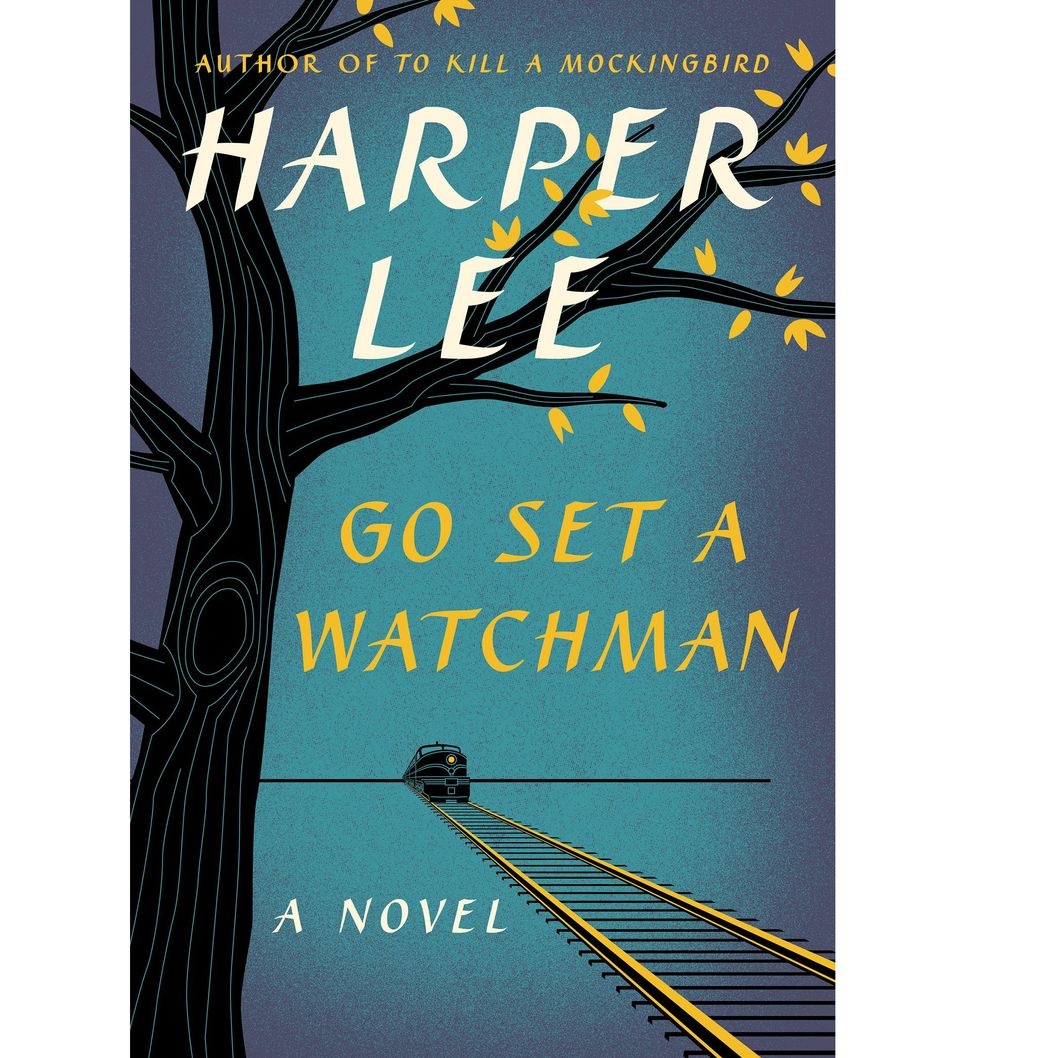
So the discovery of Harper Lee's first draft of her first novel is treated like the discovery of a brand-new work.

GO SET A WATCHMAN is the first draft of the first novel that the writer who did not study writing ever wrote.

Most first novels, at least those penned by someone with a spark of creativity and a deep desire to say something, tend to be bad on some level. The tone may be too preachy. The action may veer into melodrama. The narration may be chunky or awkward in that initial effort.

The first time that Harper Lee thought to use her life's experiences to compose a novel that said something about the way we live, she put it together based on her current living situation at the time. She was a bit older and had left the small Alabama town of her childhood for the bright lights of New York City. She went home to visit, and found that her perspective was a bit skewed by new experiences as an adult living on her own, in a very different place.

The first draft of the first novel reflected that feeling of going back and seeing through fresh eyes. The first novel is told from the point of view of the female character who comes back to her home town, just like Nelle Harper Lee once did. She created characters who were a bit more harsh, like the father who is a racist. The original version of Atticus Finch is probably more accurate and representative of the people Ms. Lee grew up with. She had something, with that first draft, but it was not quite right.

Back in the old days, a writer with talent could attract the attention of a publisher who would be willing to work with that author to hone the craft. Such development takes money, but there was a time when publishers thought it worth the investment. Ms. Lee was telling a story deserving of publication, but she was not telling it in a way that was ready for print.

An editor would have come on board, to find what was good and what needed to be cut. At some point, that clever editor might have suggested a little change, say, to lose the flashbacks and have the girl tell the story as the child in the original flashbacks. Instead of chopping up the narrative, let it flow. It meant re-writing the book, but that's how it is with first drafts. The rawness must be cooked out, and sometimes it involves a full overhaul.

TO KILL A MOCKINGBIRD is the result of a talented writer working with an editor to polish prose and rearrange the pieces so that a readable, sell-able novel is pulled from the first draft. And once an author starts revising, all sorts of things start to change. The father figure evolves into a champion instead of a racist, but when you tell a story in a new way, the characters develop in different ways.

The first draft of the first novel was tucked away because it was not the best version of a tale out of the racist south.

There is money to be made, unfortunately, and so the first draft is now marketed as a brilliant new novel, previously undiscovered until Ms. Lee's sister and protector died. The story of how the manuscript was discovered, involving a lawyer who came into the picture after Ms. Lee's sister and protector died, grows shadier by the day.

If you get this feeling that people are taking advantage of an old, infirm lady, you have plenty of company. While some extol the glories of Ms. Lee's brilliant prose, there are plenty who see the book's publication as elder abuse. Not that her literary agent beat her about the head, but a pushy salesman, like your average literary agent, could make a persuasive argument to get their hands on that 15% commission of a best seller.

GO SET A WATCHMAN is worth reading if you are interested in writing. By studying the first draft as compared to the final version, you can see how a book comes to life. It will help you conquer your fear of making major revisions to your own first effort, as you learn how very much a narrative can be changed without losing the heart of the story.

Saturday, July 18, 2015

Under The Dock Leaves In The Ground

O would, beloved, that you lay
Under the dock-leaves in the ground,
While lights were paling one by one.

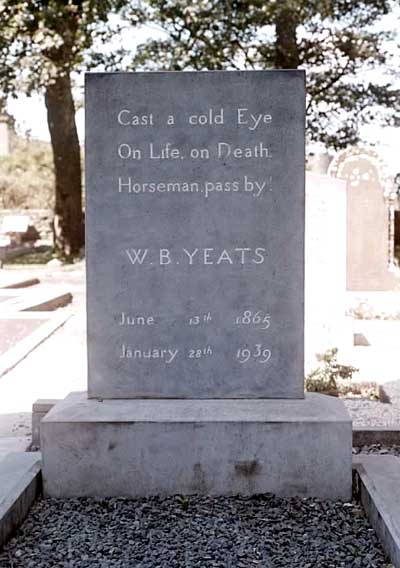
Thus spoke the great Irish poet, William Butler Yeats, who would die in France in 1939. He lived during a tumultuous time in Ireland's history, and recorded his impressions of the Easter Rising of 1916 in poetry that lives on.

He was highly acclaimed in his day, and asked his wife to plant him in French soil for a year or so, until all the buzz died down about his passing. Then she was to dig him up and bring him home to Sligo, where he could rest in peace and have a peaceful burial as well.

When you're dying, it's no easy task to hold off the inevitable end, even if the world is plunging into war and your last request is going to have to be delayed. Hitler started doing his invading and by 1940, there was no disinterring dead Irish poets for transport out of France. The French had plenty of other things to worry about, and Mr. Yeats' desire to have his final resting place in his homeland was not a priority.

After the war, Mrs. Yeats thought that she would honor her late husband's wish, but nine years post-mortem, there would be nothing but dust and bones to be dug up. She wanted it done just the same, and the orders came down from the authorities.
W. B. Yeats et al.
Except, you see, there was this demand for burial space in the French cemetery. So many young men to be interred, to say nothing of the normal contingent of corpses, and room must always be made for the next batch. It is not uncommon for bones of the deceased to be dug up and stored in an ossuary, a sort of warehouse for the last bits. A final resting place in Europe is not always final, unless you are wealthy or very important. No one is emptying the sarcophagi in The Pantheon, now, are they, but some Irish poet underground? Make room for the next one, out you go William Butler.

But Mrs. Yeats was not to be deterred, so the French in charge asked the local coroner to put together a skeleton with whatever parts he might find that could have come from W. B. Yeats. The man had a large head, so a big skull was selected. He wore a truss due to a hernia, so they found some hip bones that were entangled in a medical device. Close enough, right, and a nice box of bones was shipped back to Sligo.

No one said a word about the lack of authenticity. Ireland wanted to bury one of its heroes, and that was all that mattered. Just because some of the bones might have belonged to a British gentleman who was buried next to Mr. Yeats did not matter, except to that gentleman's family. A flurry of letters followed, the heated exchange kept largely from the public because, well, Ireland in 1948.....

So who is buried in Yeats' tomb in Sligo?

Not Mr. Yeats. Perhaps pieces of him, but the rest of the bones are a miscellaneous gathering of body parts. Papers recently turned over to Ireland by France explain the whole sordid mess, and the cover-up that followed. What makes the matter particularly pertinent is the fact that Prince Charles and his consort Camilla paid their respects at Yeats' grave recently, so it would appear that they paid their respects to the remains of several others, all of whom shared the communal grave with the famous poet.

Once you're dead, though, does it really matter where your bones are lodged? You'd be more concerned with where your soul is heading.

Wednesday, July 15, 2015

I'm Too Sexy For My Book, Too Sexy....

Tart with a cart
Too sexy for my cockles and mussels, alive, alive-o, I might add.

Molly Malone has been selling her seafood in the heart of Dublin for an age, but those who decide what is fit to post on Facebook are obviously quite unaware of the statue.

She represents the pretty girls of Dublin's fair city, and artist Jeanne Rynhart created the iconic sculpture to express in bronze what a lyricist put into song. Ask an ordinary Dubliner and they're likely to refer to the statue as the tart with a cart, so yes, the sexiness of Molly Malone is generally recognized.

But no one in conservative Ireland is roaring about removing the buxom wench, either, so it can't be all that offensive.

Except to Facebook.

Too sexy for a book on Facebook
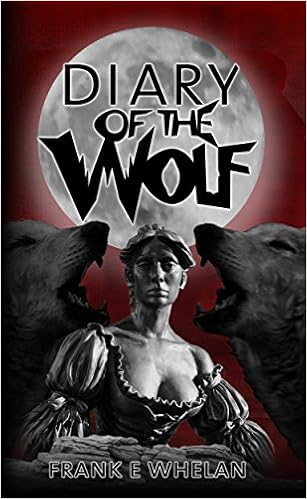
Frank Whelan thought that Molly would make for a nice image on the cover of his book. Once the cover was designed, he needed to promote his prose and he thought of posting the information on Facebook. It's free, it's marginally effective, but it's a way to get the word out that you're selling your book so your friends and family can make the required purchase to keep the peace.

Whoever monitors morality over at Facebook took one look at Mr. Whelan's cover and found it shocking. Not in the artistic quality of the thing, or the curious composition.

No indeed.

Facebook's authority on good taste thought that Molly's bosom was heaving a wee bit too much for a post on a family-friendly website.

According to news reports, Facebook thought Mr. Whelan was actually advertising a dating site. Right, don't ask. It makes no sense whatsoever, even in Ireland where women were locked up in slave labor camps for the crime of being too pretty and tempting to the male eye.

Facebook would not allow the image to be posted, and Mr. Whelan was quick to point out that the lady on the cover is just a statue that's been in Dublin since the 1980s, right there out on the street in the public view, and you can hardly walk past the thing for the tourists snapping photos. With their children, in fact.

Facebook has thus far refused to budge, not unlike the parish priest whose word was once law in the back of beyond. The website would look doubly foolish to backtrack after learning the facts, right? So the ruling must stand and Mr. Whelan cannot promote his book cover, which makes it rather difficult to promote the book.

So let that be a warning to all you authors who think you can include noted statuary on your book covers.

Can you imagine the uproar if Michelangelo's 'David' was to grace some novel about Renaissance Italy? At least Molly here has a dress on to cover her more than the average bit of carved marble that you'll find just about everywhere art is housed.

Keep your models covered. Photoshop in some critically placed fig leaves or risk the censure of Facebook.

Monday, July 13, 2015

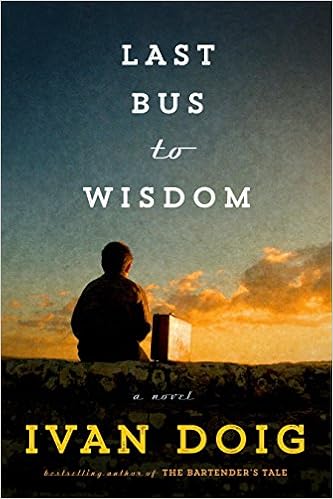
Last Bus To Wisdom: A Book Review

As told through the eyes of 11-year-old Donal Cameron, life can be quite an adventure, and so LAST BUS TO WISDOM makes for a fascinating read.

The orphan protagonist is shipped off, alone, across the country when his grandmother must put him in the care of his great-aunt. A Montana boy accustomed to the wide open spaces meets a great-uncle who is obsessed with America's West, as learned through the pages of fiction. When boy and man decide that there is no living with "the Kate", they set off to discover what lies on the far side of the Mississippi.


Herman the German becomes Donal's sidekick as they ride the bus from sleepy Wisconsin towards the sunset, so that Herman can see what the West really looks like. Along the way, Donal collects autographs for his memory book, thinking that he'll compile an impressive collection that would earn him a mention in Ripley's Believe It Or Not. His naivete forms part of the charm of the novel, the innocent viewing the world through eyes not yet clouded by experiences.


The novel is a delight, a beautifully crafted bit of yarn spinning that takes in a remarkable number of threads and weaves them into a book that cannot be put down. The cast of characters that Donal and his great-uncle Herman the German encounter are true characters that feel real, as if you'd see such riders on a cross-country bus if you took a trip yourself. 

The people who populate the novel are ordinary folk, the commoners who know a thing or two about hand-to-mouth existence and how to survive in a harsh world when you don't have much money. It is a pleasure to spend some time with those who are not obsessed with Manhattan real estate valuations or the latest fashion trends. Those who scrape for a living tend to be more interesting people, and Ivan Doig's characters are all quite interesting.

Over the course of the novel, as life hands them setbacks and assistance, Donal discovers what it is to love and be loved as the kindess of strangers helps him escape from one harrowing escapade after another. This is, of course, the wisdom that he acquires on his travels as he progresses from boy to (almost) man.

The ending is happy, the premise nearly improbable, but the writing so sparkling that you are happy to suspend disbelief and go along for the ride. This was one of the best books I have read in a very long time.

Friday, July 10, 2015

Hitting The Best Seller List: A Strategy

Truth in sales figures questioned by the New York Times
What more do you need to get your book on the New York Times best-seller list than book sales? It's rather obvious, right? If your book sells many copies, more than all the other books, it is by definition a best seller.

So your strategy to achieve this lofty goal is to sell books. Or, if you cannot find enough readers willing to pay money for your prose, you will have to buy the books yourself. They make lovely gifts at Christmas, after all, and it's never too early to shop for the holidays.

That particular attempt to game the system is not foolproof, apparently.

U.S. Senator Ted Cruz wrote himself a biography, which seems to be the thing to do when one is running for the office of President. His colleagues Rand Paul and Marco Rubio have also penned books, and let us not forget the success that Barack Obama found in writing his memoirs. Twice.

By the numbers, his book was a best-seller. He went out, like any clever author, and signed books in book stores where readers could buy the book to be signed. As you would expect, sales of his tome would have peaked on the day he appeared. The same would hold true of the next stop on the tour, with sales peaking in coincidence with his appearance.

Sales figures showed that the book reached the #3 position, a level that should have earned inclusion on the storied list, but such is not the case.

HarperCollins was informed by the New York Times that they were not including Mr. Cruz's book on their list because they had reason to believe he had manipulated the numbers. It wasn't just general public interest that drove sales. No, the New York Times determined that the big numbers were due to "strategic bulk purchases."

Apparently the New York Times can analyze sales and determine how many books were sold where at a given time, and their analysis demonstrated some questionable purchases. No one is providing any details, but you would have to guess that Mr. Cruz may have snapped up cases of his own book to make the numbers look good, or his political campaign cleared out the shelves at every Barnes and Noble for miles around. 11,000 copies sold in one week? Not to 11,000 individuals, according to the newspaper's investigation.

The lesson is simple. If you are going to manipulate your sales figures to push yourself ahead of the queue, don't buy cases of books yourself from one location.

Go online and hit up the independents. You can order from almost all of them through a single website. Spread the wealth around, and scatter the sales locations at the same time. You can still give out cash to family and friends to buy multiple copies locally, but don't get greedy and have them buy dozens at a time.

The system can be manipulated, but it takes some effort. If it's worth doing, it's worth doing well, isn't it?

Tuesday, July 07, 2015

The In-Between Doldrums

It's a sad day when you finish a manuscript and have to say good-bye to the characters. You've created them but they take on a life of their own as you spin them into a yarn. Then you write "The End" and it's over. Off they must go to Dust Bunny Land, under the bed or in the deep recesses of some desk drawer.

Figuratively speaking, of course. Your manuscript is most likely stored on your computer hard drive, and a thumb drive if you're being cautious. And it's to be found in one of your e-mail folders as well, stored on the provider's server as an added precaution.

But at any rate, the manuscript is tucked away to rest so that when you go back to start the edits, you have fresh eyes.

You've edited the previous manuscript, which didn't need much work because you've been at it for the past five years with that one. You can't think of anything else to be done to make it better, so you start thinking about query letters to try the literary agents again. Of course the query letter needs to sit a bit, to rest before it, too, gets an edit.

You are in between manuscripts. It is time to start another one, to keep you busy while you query the oldest work, but there's research to be done. Reading up on the subject that inspired you when you first read about Historical Incident C does not have the appeal of writing prose, and so you put it off a bit.

The urge to write, however, is prodding you. The issue? You don't actually have anything to write at the moment.

So there you sit, all glum and morose, a bit edgy if approached by those who think you're not doing anything when in fact your head is very busy. There are voices there, quite soft but insistent. It's the people who piqued your interest, the ones who appear in the source books you picked up last year. They want their story written, and you intend to write it, but it's not all that much fun to study a topic or a time period.

It's work, which is not to say that writing isn't work, but when the words are flowing it doesn't feel like a slog through tar. Making time lines, uncovering small details about life in the era of your upcoming Work In Progress, that takes effort.

How can you make the effort when you're missing your characters that you've spent the past year with?

About all you can do is make yourself sit down in the chair with a notepad and a pencil, and get to it.

What is the alternative, after all, but to polish a query letter? Can you think of anything more nerve-wracking and soul-killing than that?

Wednesday, July 01, 2015

You Read Too Much

It sounded almost too good to be true when it was first introduced. Imagine paying a flat monthly fee, something quite affordable, and then being able to read as much as you liked.

What could be better? Read three or four e-books a week, and not have to pay for each title? Read hundreds of books a year, fulfill your cravings for delicious words, and still have money left to pay the electric bill. And so Scribd found a willing audience to buy into the notion of subscription e-books.

The problem is, dear romance reader, that you read too much.

Scribd may be good in theory, but in practice, the romance readers are killing it.

Romance readers are voracious. They go through one e-book after another, reading and reading until you'd think their eyes would fall out of their heads but they just go and read another book.

The subscription fees, however, don't cover Scribd's costs to acquire those books. Publishers aren't giving things away for free very much, and if they can sell one hundred books to those voracious romance readers, they have no desire to make less by selling at a steep discount to Scribd because Scribd has this business model it wishes to maintain.

You read too much, you romance fancier. Scribd has just culled the most money-losing part of their business and removed a huge quantity of romance titles. They've axed erotica as well, which is understandable. Those titles are a few short words of graphic porn and it doesn't take long to read one of them. A particularly sex-obsessed individual could easily manage one a day, or more if they have a quick recovery period. When you have unlimited porn catering to every fetish, you may go a bit overboard and stuff your head with filth because, well, it's there for the taking.

In the short term, Scribd will see a drop in expenses as the romance readers find that what they want is not to be had via Scribd. The lending will drop and the publishers won't be owed quite so much.

And then?

Then the avid romance readers cancel their subscriptions and use their eight euros (more or less) to buy fewer titles from suppliers like Smashwords, which was providing much of Scribd's romance content.

Scribd will then take in less money, even while shelling out less. The question to be answered will then become, is the business model viable at the current price? Without the voracious romance readers signing up, who would replace that large population? Can there be enough non-romance fanatics to support a smaller catalogue if those readers are more selective and don't read as much?

One can theorize all day, and cost accountants can make all sorts of calculations and projections. Only time and experience will tell, but while waiting for that time to generate the experience, Scribd will continue to burn through investor money. Investors are not known to wait forever. Scribd hangs in the balance, an experiment undergoing some adjustments as test results come in.

But is it on life support, or can it recover?

Tuesday, June 30, 2015

Family Ties That Restrain

The average criminal is stupid, but there's a special level of stupidity for those who would steal from their own family members. Especially when the family members are criminals themselves.

John Verdino fits the picture. He thought it would be a brilliant idea to steal a safe from his brother-in-law's house.

How did he know about the safe? Well, his sister told him, according to Mr. Verdino. Why did she say such a thing? Because she was mad at her husband for some reason, and told her brother that said husband was abusive. Oh, and he had a safe stuffed with untaxed income, why not take it.

As if anyone's sister would mention the untaxed income. If your husband has a safe stuffed with cash, and you wanted your little brother to steal it as a way to extract revenge, would you really bother telling the kid that no taxes have been paid on the money he's to steal? Do you think anyone would much care about meeting Internal Revenue Service rules about declaring income?

So young John gets a buddy to help him lift the safe, and what robbery could be easier when you know your sister will let you into the house or leave a key for you to make it look like she wasn't home and it was a break-in. They take the money, and immediately head to the nearest Federal building to pay the government what is due....
The buddy and the brother-in-law will face kidnapping charges

Seems they weren't worried about tax issues once the money was in their hands, and they missed the part about the taxes. Instead, they went and bought a couple of motorcyles. Would anyone ask questions of a 19-year-old who suddenly appears on a motorcycle? Like, where he got the money for it, and where his buddy got the money for his bike?

Brother-in-law Joseph Van De Carr didn't ask questions, he just used his powers of intution and logic to conclude that his wife's brother had taken the safe and was in possession of the cash. $80,000 was missing, but the two bikes did not cost all that much, so the remainder of the cash was around somewhere. Mr. Van De Carr decided to go retrieve it.

He, in turn, called up a buddy and they kidnapped John. Pulled him off the bike, in fact, and then threw him in the trunk of the car. They used his cell phone to trap Verdino's pal, and once they had the two miscreants, they beat the youngsters silly until the location of the money was disclosed.

Mr. Verdino was upset at the rough treatment, so the police were called. He lodged a complaint against his brother-in-law, who then turned himself in and told the cops about the burglary and theft.

The money? That will be evidence for a while, and then it goes to the public coffers as the proceeds of crime, unless Mr. Van De Carr can show that he earned every penny of it, and he put his savings in a safe because he doesn't trust banks. Unfortunately for the victim of the burglary, he sports a neck tattoo. It's hard to look completely innocent with ink creeping over your shirt collar.

Now everyone can go to jail.


The family that preys together, isn't that how that old joke goes?

Monday, June 29, 2015

On This Day In Greece

Journals are great sources for writers of historical fiction, giving the author a personal insight into some important event. Where would we be without Josephs Plum Martin's jottings about his days as a soldier in the Continental Army during America's revolution? What of Anne Frank's diary? Can you find a journal that would give you a better sense of what life was like for a Jewish girl closeted in an attic, living in hiding from the Nazis?

A journal entry is an impression on a given day, without knowing what will come tomorrow. Day by day, the journal writer chronicles events, and it is only much later that we can look back at the collection of information and piece together a picture.

Today's journal entry should make mention of the monetary crisis in Greece.
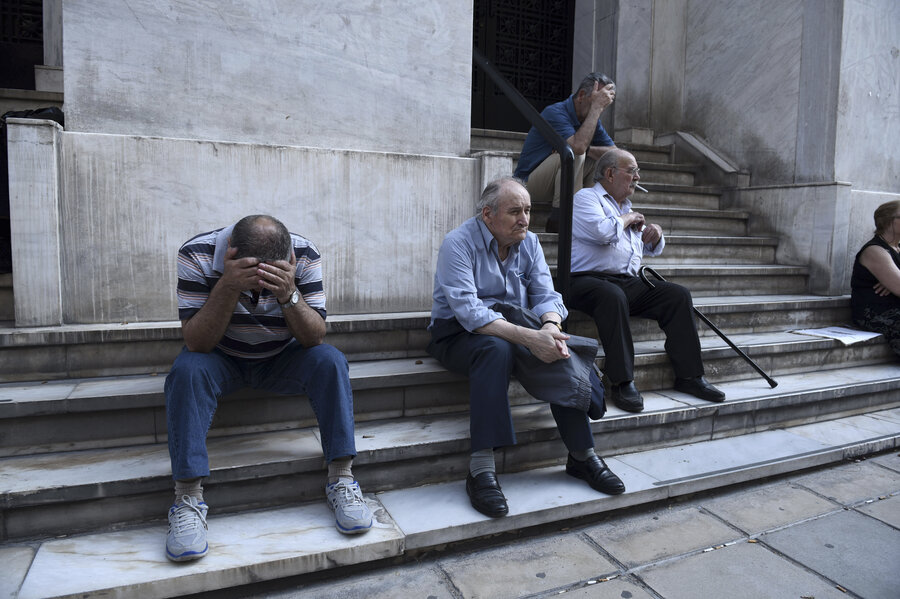
Pensioners wait for money that is not there

Something is going to break in the world, but at this moment, there's no telling where the crisis will go. So let us note the aged pensioners sitting outside of the closed banks, in need of their stipend but unable to get a euro because the money has run out. They arranged their lives around a promise, that they would have a certain income for the rest of their lives, and suddenly that promise is broken because there is no more money. Elderly, with no means of support, are sitting in front of banks wondering how they will buy food.

Some are desperate. Some are resigned. Some may be thinking of what items they have at home that they might sell to raise money. Perhaps they will have to turn to their children for help, unless they are supporting their children who cannot find work.

The tourists will jot in their journal, describing their worry about getting cash to pay for meals or taxis to the airport. Uncertainty clouds the holiday, along with concern for the nice maid or the friendly waiter whose livelihood depends on tourism. What becomes of them, the tourist inscribes in their journal, what becomes of those who lose their jobs and cannot rely on government subsidies because the government is skint?

For some, today's journal entry will indicate a sense of their world ending. There will be mentions of desperation, strong emotions that some future writer of historical fiction can tap into to flesh out a character.

There is talk of last minute deals, and there is talk of economic collapse. Bankruptcy or salvation.

For those not living in Greece, the diary page for Monday, the 29th of June, 2015, might note that the stock market is expected to plummet due to concerns of default. Someone loaned Greece all that money, and if they do not get it back, it's gone. It isn't there to loan to others, who would pay it back with interest. Others like other EU countries who are finding it difficult to keep promises made to citizens about pensions and paid leave and early retirement.

Emotions are bubbling up all across the globe. As a writer, you should have your ears open, and then put your impressions down in your journal. Or your blog. Keep those initial sensations for later, when your historical research takes you to some financial crisis of old. The emotions are the same over the generations. It's just the actors who change, along with the scenery. They are speaking the same lines.

Observation is at the heart of a journal. Writers are good at observing, and then storing away those observations. Like a rainy day fund, except it doesn't hold money.

But neither do the Greek banks, apparently.

Thursday, June 25, 2015

Those Wild And Crazy Victorians

You've heard the shocking news by now. Miley Cyrus did not invent twerking. Not only that, but the person who taught her to twerk didn't invent it either.

Women have been twerking for almost two hundred years.

You know what that means. Yes. The Victorians were twerking.

Imagine Queen Victoria, dropping it like it's hot for Prince Albert. No wonder she had so many children!
Queen Victoria gets into her groove with Albert
It's a troubling image, to picture those staid and prim ladies shaking their money-makers. And in what context might the ancestral twerking have been performed?

The editors of the Oxford English Dictionary are, of course, concerned only with words, so when they studied the word 'twerking' for possible inclusion in the dictionary, they found that it was not a new word at all. Grand, so, but what were our ancestors doing, and are we all wrong in thinking that there wasn't all that much sex beyond that required to procreate?

They are saying the word originated as a way to describe a twist or jerking motion. Sounds harmless enough, without any sexual context at all, but back in 1820 when 'twerk' cropped up, the world was still in the throes of the Regency and the King wasn't exactly the loyal, stay at husband his father George III had been. The OED editors have said, in not so many words, that twerking then is the same as twerking now. The word was put to a particular action and somehow fell out of everyday use until Miley Cyrus put on a show and everyone started talking.

Western films will have to update their dance hall sequences, given this new evidence. The ladies weren't just kicking up their heels, no indeed, they were twerking under all those layers of clothing.

What of the average housewife, would she have been aware of twerking and felt compelled to twerk for her husband to keep him from seeking titillation elsewhere? There must have been a lot of action in your average log cabin in the wilds of the American frontier, where entertainment options were few and a wandering husband would have to wander for days to find the nearest brothel and who would plow the fields in the meantime?

So there it is. The young generation hasn't discovered sex or invented anything that their ancestors weren't doing two hundred years ago.

But who would have guessed that the Victorians were so wild and crazy?

Wednesday, June 24, 2015

The Pricing Strategy

Once upon a time, the local public library bought a book and put it on the shelf. The taxpayers who funded the purchase of that book would then go to the library and take the book from the shelf, check it out, and read it.

Big blockbuster books would be in demand, and there would be many taxpayers arriving at the library thinking they would borrow the latest craze in fiction, only to find it was "checked out" and they had to wait. Well-funded libraries might buy additional copies of that sort of book, so that the taxpayers would not have to wait so long to read the blockbuster best-seller.

Publishers priced books so that they made a profit after covering expenses. Authors got their little piece of the paper pie, and so the industry stumbled along for generations.

E-books do not need physical printing, so the perception exists that the book is very cheap to produce. Next to nothing, in fact. Except for paying the author, the editor, the copy-editor, the clerical help, the accountant, the billing clerks, etc. etc. Publishers saw a way to turn a profit through volume selling, and the price of an e-book resembled that of the paperback when paperbacks first appeared. The profit margin could be higher than that of physical books, with the consumer getting only part of the cost-savings.

The local public library saw an advantage in e-books, in part because they were cheaper. There is no shelf space needed to store the digital books. A library could hold thousands of books and not need more space than a small office for the librarian who would be fielding requests from library users for the latest blockbuster best-seller.

However, buying an e-book for a library is not the same as buying a physical book from a publisher. But why is it not?

Not all e-books are overpriced for library use

Sure the digital copy can sit in the library's database forever, never wearing out and never needing replacing. But many of those best-seller books have a short shelf life anyway, and are out of fashion before the covers are falling off.

Digital books can only be viewed by one borrower at a time, just like the hard copy. If a library wants to satisfy demand, it has to buy additional copies of the same book, just like it did when the additional copies came in a box from a distributor.

Canadian librarians are complaining loudly about the pricing strategy that publishers utilize to price digital editions for library use. That $12.99 e-book you can pick up on Amazon? The publisher asks the library to pay $114.00. There are no five or six copies available to users at those prices.

The price reflects the publisher's belief that the perpetual nature of e-books means the library is buying a single copy that will never have to be replaced, as if every hardcover purchased received such rough treatment that three new books would be purchased as replacements over the life of the book.

The price reflects the publisher's belief that the average library user has no idea how much the e-books are actually costing the library, and they can get away with it because the public wants e-books and the libraries are public institutions serving the public demands.

Newcastlewest Books, on the other hand, sells e-books to libraries at a discount, in large part because we realize that the money to pay for those books comes from taxpayers who are hard-pressed to pay the rates as it is. Why should they not get a break somewhere? Libraries link into Overdrive, and their patrons have access to an enormous collection of books that can be downloaded at any time, any place, you might wish to read but can't make it to the library building.

Public libraries serve the public good, which is why Andrew Carnegie was so keen to fund the construction and outfitting of public libraries.

Modern day publishers, apparently, are not quite so philanthropic. Gouging may be a more apt description of their pricing strategy.

Wednesday, June 17, 2015

The Use Of Words To Express Sensitivity

A balcony collapses and throws a dozen young people to the ground four stories below, a fall to their death.

Truly a tragedy, this horrific accident that took the lives of six Irish students, young people of 21 years, their lives just beginning. How is such a thing to be spoken of? What words can be used by a journalist to describe an incident that has touched the hearts of so many?

If you are the New York Times, you look at the pictures of that collapsed balcony hanging from the facade and you think of the J-1 visa program that brought those poor people to their death in a foreign land.

Five of the dead were in San Francisco thanks to the special visa that allows foreign students to work in America without having to go through all the red tape and paperwork required of those who wish to settle more permanently. They come for a summer to experience a little of adult life, on their own, and then go home to finish up schooling or embark on a career.

It sounds like a grand opportunity, but if you are the New York Times, you don't do sunshine and happiness. You probe the dark underbelly of the J-1 program. You look at the bits of balcony dangling and you think about the many complaints lodged by property owners who rented to J-1 students and found their flats wrecked.

Sure that balcony could represent the same kind of destruction, right? There's a powerful link if you just focus on the right area.

The once-proud newspaper is today backtracking on a story that ran earlier. Writers Adam Nagourney, Mitch Smith and Quentin Hardy managed to demonstrate a remarkable lack of compassion and a very poor choice of words with their piece that has come under fire. The authors opened their article with an attack on the J-1 program, describing the visa users as a "source of embarrassment for Ireland" because the Irish students misbehave so terribly and drink all the time and destroy private property and make a nuisance of themselves altogether.

What could be more sensitive to the hearts of those whose children died? Those six deaths touched on a great many people. The Dail, Ireland's version of Congress or Commons, has suspended its session out of respect for the dead.

So, thanks a million, Grey Lady, for being so very sensitive.

Because when tragedy strikes, we all like to hear about other young adults who, in one instance, were an embarrassment. The word play in the article certainly had that certain magical quality that only can be created by the sparkle of well-crafted prose. Well done indeed.


Monday, June 15, 2015

Crazy Love

Victoria Andreenkova is in love.

What a heady feeling, those first stirrings of emotion. Especially for a former citizen of Russia, where there is precious little reason to fall in love. Everyone's miserable in Russia, with poor job prospects, poverty, lack of resources, and most every man in the nation a raging alcoholic.

Ms. Andreenkova has fallen in love with an Irishman. Her move to Dublin was, in that case, a blessing.
Victoria Andreenkova: From Rusia, For Love
But she is Russian by birth, the tragedy of Russian history ingrained in her psyche. She is in love, but there is an element of drama.

She is in love with Graham Dwyer who is now serving a life sentence for the sado-masochistic killing of child minder Elaine O'Hara. Their love, in this case, can never be. They cannot be together, snuggling on a beach or sharing a quiet dinner in some trendy bistro in Dublin. The best she can hope for is to gaze lovingly into Mr. Dwyer's eyes through the Plexiglas that separates them for thirty minutes, once per week.

The rest of her time is spent in Dublin, pining for her beloved. He is in Midlands Prison in Portlaoise, so far away.

It was during his trial that she fell for the handsome dominant, pushing her way into the courtroom to gain a front-row seat. So smitten was she that she had to contact him, to let him know that she, too, recognized his innocence. She knew he didn't kill Elaine O'Hara because some mysterious garda had done the deed. Not a city-based officer, however, but one of those from the countryside. There's not many people about in the farming communities, you see, and the guard could just slip in and out of Dublin without anyone noticing.

Perhaps she is thinking of the same mysterious garda who she says she was involved with some time ago in Ballymun. The man didn't have the decency to rent a hotel room, either, but used his car, the bastard. Public property and he's not concerned about leaving a stain on the seat. And he's a married man, so. He tried to make her take abortion pills after she fell pregnant, illegally purchased tablets that he bought on the Internet but she was too clever for him. Just put the pills in her mouth and pretended to swallow.

So clearly she has it in for the police service.

Nor is she a great friend of Fine Gael or the Irish government in general. It was Fine Gael that stole her breast pump, you see. And she went right to the top with her complaint. She rang up Enda Kenny himself to let him know how displeased she was that Fine Gael was after stealing her breast pump.

Now the crazy in love young woman has been banned from further visits with her dear Graham because she was not dressing appropriately for a prison visit. She was only wearing what he ordered her to wear, it turns out. Once a dominant, always a dominant, I suppose. But the attire was not deemed suitable and she won't be allowed back in.

Ms. Andreenkova has lost her heart. Seems like she's lost her head as well, but maybe that's been gone for quite some time.

Thursday, June 11, 2015

The Trouble With Nobel Scientists Being Unattractive To Girls

Sir Tim Hunt has gone and resigned from his post as a university professor. He's won a Nobel Prize for his scientific work, but he's without a brain when it comes to women. He expressed his opinion about ladies working in the sciences and came under fire that he never expected.

Not so very smart, his quip.

The trouble with girls in the laboratory, he told an assembly in South Korea, is that you criticize them and they burst into tears. So emotional. It's those blasted emotional entanglements that make it so difficult to work with them because science is pure and science has no emotion.
I am studying why girls are not attracted to me and I find the problem lies with the girls

He thought he was being funny.

Of course he wasn't funny. He's a Nobel Prize winning scientist. He doesn't know how to be funny to the wider world because he is a complete and total geek.

Can we not give the poor man a little understanding?

He is socially inept, that's all. He should be treated as one would treat any slightly anti-social being who is extremely intelligent but otherwise stupid. Ignore the stupidity. Put him someplace where he can't annoy normal people and let him do his research, surfacing occasionally with some major breakthrough before retreating to his lair.

That is the problem with our modern society. No one studies the sciences much anymore. So they don't know how bizarre the average scientific genius can be.

Sure they might have heard tales of some brilliant type who cannot remember to bathe with any regularity. But they have not shared time with such a creature, and are unaware that such people tend to make ridiculous comments that they think are hysterically funny but are not the least bit humourous.

Would someone call out an autistic individual for their inability to interact with others?

Sir Tim's girl trouble probably started when he was in university, trying to attract the attention of some pretty co-ed and failing miserably. How could they not be drawn to him, he wondered, with his capacious brain power? He could flex with the best of them in a contest of smarts. Through careful observation he deduced that emotion was at fault, and he noted that the fault resided with the women. It clouded their judgment and rendered him undesirable.

All those raging hormones and no opportunity for relief.

Is it any wonder that he's still bitter about it? For all his intelligence he cannot figure out what women want.

It stands to reason that he would lash out at the symptom of his ineptitude. That's easier than tackling the thorny issue of rejection.

Monday, June 08, 2015

The Memoir Is Fiction With Added Fiction

When you think of memoirs these days, you think of all those memoirs that turned out to be fiction with an extra dose of fiction. There was the million pieces of fictionalized memoir, and the three cups of fictionalized tea and the novel about surviving the Holocaust that was sold as memoir but it wasn't real at all.

Memoirs are not quite non-fiction, according to the definition. Books labelled as memoir are recognized as someone's collected memories of certain events. So there's a little leeway granted for creativity. But only a little.

If you are a writer and you want to get your manuscript slotted in the most marketable slot, you'd want to be selling a memoir as opposed to a novel, which is a much tougher sell. So you write about what you know, make up most of it, and then tell a literary agent that it's the best you can recall of your time living in, say, Manhattan, among the, let's make it the wealthy and socially prominent. Literary agent Miriam Altshuler certainly believed one particular author.

Everyone loves a tell-all about the posh in their exclusive homes in exclusive areas that none of us will ever see. What could be bigger blockbuster than an expose from someone who entered that world like an anthropologist, to study the culture for six years and then report back to us?

Wendy Martin apparently had an idea for a book that was based on what she knew, or at least on what she had experienced for a time. But when you approach literary agents with a novel about life on Manhattan's Upper East side, a book about motherhood among the mean girls of means, you may not get far without a degree in creative writing or a long list of literary awards to open a few doors.

Ah, yes, but send your query off and claim that you've penned a memoir about your time in the Upper East Side, mingling with the very people you are exposing, and you're getting requests for pages and drawing some serious interest.

Who could fact-check what you've written, anyway? It's your memoir. It's not as if the legal department at Simon & Schuster could ring up Socialite A or Patron Of The Arts X and ask them to verify some unseemly conduct involving them.

Primates of Park Avenue was published as a memoir but the New York Post has done the fact-checking that the publisher did not do and it turns out that yet another memoir is just a work of fiction.

Wendy became Wednesday when she became an author, but who can argue with a woman who wants to use a pen name? That's but one minor course correction on this long journey through the parenting skills of the Upper East Side dweller.

Wednesday 'Wendy' Martin was a denizen of the region for a much shorter time period than her memory, clearly flawed, would indicate. She was not pregnant when meeting with the board of the co-op where she hoped to reside, and so it's not possible that she met with the co-op's board while confined to her bed under the obstetrician's orders. Shops she mentioned did not exist when she recalls their presence. She uses Uber's taxi service before it came into being. Memory's a tricky thing, isn't it.

You would think that a 'mean girls' oriented story would sell without an author having to resort to false advertising, but for whatever reason Ms. Martin thought she could use her experiences, expand them as a novelist would use life experiences to flesh out a story, and then sell it as a memoir. The novel that Ms. Martin called a memoir is said to be witty and fun, but is it as witty and fun if you understand that the tale is fictional and not an actual account of life among the elites? Does it then become just another novel like so many others?

The publisher has pulled back a bit and will add a corrective note to future editions, to warn the reader that some objects in Ms. Martin's mirror are actually much further from the truth than they might appear.

How long will it take publishers to cop on and treat memoir like fiction? It's become a type of fiction, hasn't it? Or do authors have to resort to trickery to get their work published because the publishers can't figure out what's good and what's drivel?

Saturday, June 06, 2015

Urban Renewal

Before
Chicago's version of New York City's High Line opens today, but this is not about creating park land for local residents. It does not matter that the original name for the former railroad right of way was the Bloomingdale Trail, named after the street along which the tracks ran. Bloomingdale sounded far too New York-like and you'll see references to the "606" which represents Chicago, to avoid confusion. The zip code starts with 606, you see, and this trail is going to unite neighborhoods and yada, yada, yada.

This is about the neighborhoods that are supposed to become as one. Right now, the areas in question are two, as in rich and poor.

Bucktown used to be a rough part of the city. Crime was high and the residents were barely scraping by. The homes they owned were old, having been built at the turn of the Nineteenth Century when Bucktown was a new area. Then the hipsters discovered Bucktown and it became the hot part of town, relatively inexpensive and affordable for those looking to open a boutique or a restaurant serving food not found in Lincoln Park.

Housing values went up as speculators snatched up the old homes and refurbished them. Property taxes went up as well, because it's all about the home values when figuring the bill.
After gentrification - a little whiter?

The poor had to sell because they could not afford to live in their neighborhood. Not that they were delighted at the increasing property values. They got more for their house than they would have if not for the gentrifying, but they did not want to sell and move away.

Then Wicker Park became trendy as Bucktown became too expensive, and the people who lived there for generations were forced out because they could not afford to keep their homes. Logan Square is in the process of gentrifying now, and the same thing is happening. Residents simply cannot pay the property taxes due. They don't know where to go, and they resent the fact that strangers with money are coming in and causing them misery.

The Bloomingdale Trail will unite a fourth community to this gentrifying pocket of Chicago, and the largely Hispanic population of Humboldt Park is up in arms. They know what's coming. They'll be the next to get booted out, to find something affordable in some other part of the city where the Humboldt Park gangs will have to fight the existing gangs to re-establish their turf. Who wants to put up with that?

Local aldermen talk about property tax freezes for those in danger of being exiled from the land of plenty, but it's never been done before and it likely is not legal, but talk is cheap and can get a person re-elected if enough voters believe the flurry of words.

They don't mean it.

Gentrification is good for Chicago's bottom line, and this is a time when the bottom is falling out. Hipsters taking over an area and making changes that bring in diners and other hipsters with deep pockets benefits the city with the added tax income. When they rehab the old homes and make them more valuable, property tax income goes up, and there's no voter outrage because the voters are delighted to see the value of their property investment climb. They'll turn around and flip that parcel to someone else with money, someone who wants to live in a trendy area with a nice mix of unique shops and dining experiences.

The original residents are in the way. They have to go. And the city is not sorry to see them go because money follows behind their departing moving vans.

They have no choice but to find a way to pay higher taxes if they want to stay put. Either way, the city is going to get more income that does not involve voter outrage over tax increases because property taxes are based on property values.

Urban renewal is the cleanest way for Chicago to raise taxes. If the downtrodden get trodden down a little further, it's sad but inevitable. Chalk it up to progress, but it's all about the money.