Tuesday, June 30, 2015

Family Ties That Restrain

The average criminal is stupid, but there's a special level of stupidity for those who would steal from their own family members. Especially when the family members are criminals themselves.

John Verdino fits the picture. He thought it would be a brilliant idea to steal a safe from his brother-in-law's house.

How did he know about the safe? Well, his sister told him, according to Mr. Verdino. Why did she say such a thing? Because she was mad at her husband for some reason, and told her brother that said husband was abusive. Oh, and he had a safe stuffed with untaxed income, why not take it.

As if anyone's sister would mention the untaxed income. If your husband has a safe stuffed with cash, and you wanted your little brother to steal it as a way to extract revenge, would you really bother telling the kid that no taxes have been paid on the money he's to steal? Do you think anyone would much care about meeting Internal Revenue Service rules about declaring income?

So young John gets a buddy to help him lift the safe, and what robbery could be easier when you know your sister will let you into the house or leave a key for you to make it look like she wasn't home and it was a break-in. They take the money, and immediately head to the nearest Federal building to pay the government what is due....
The buddy and the brother-in-law will face kidnapping charges

Seems they weren't worried about tax issues once the money was in their hands, and they missed the part about the taxes. Instead, they went and bought a couple of motorcyles. Would anyone ask questions of a 19-year-old who suddenly appears on a motorcycle? Like, where he got the money for it, and where his buddy got the money for his bike?

Brother-in-law Joseph Van De Carr didn't ask questions, he just used his powers of intution and logic to conclude that his wife's brother had taken the safe and was in possession of the cash. $80,000 was missing, but the two bikes did not cost all that much, so the remainder of the cash was around somewhere. Mr. Van De Carr decided to go retrieve it.

He, in turn, called up a buddy and they kidnapped John. Pulled him off the bike, in fact, and then threw him in the trunk of the car. They used his cell phone to trap Verdino's pal, and once they had the two miscreants, they beat the youngsters silly until the location of the money was disclosed.

Mr. Verdino was upset at the rough treatment, so the police were called. He lodged a complaint against his brother-in-law, who then turned himself in and told the cops about the burglary and theft.

The money? That will be evidence for a while, and then it goes to the public coffers as the proceeds of crime, unless Mr. Van De Carr can show that he earned every penny of it, and he put his savings in a safe because he doesn't trust banks. Unfortunately for the victim of the burglary, he sports a neck tattoo. It's hard to look completely innocent with ink creeping over your shirt collar.

Now everyone can go to jail.


The family that preys together, isn't that how that old joke goes?

Monday, June 29, 2015

On This Day In Greece

Journals are great sources for writers of historical fiction, giving the author a personal insight into some important event. Where would we be without Josephs Plum Martin's jottings about his days as a soldier in the Continental Army during America's revolution? What of Anne Frank's diary? Can you find a journal that would give you a better sense of what life was like for a Jewish girl closeted in an attic, living in hiding from the Nazis?

A journal entry is an impression on a given day, without knowing what will come tomorrow. Day by day, the journal writer chronicles events, and it is only much later that we can look back at the collection of information and piece together a picture.

Today's journal entry should make mention of the monetary crisis in Greece.
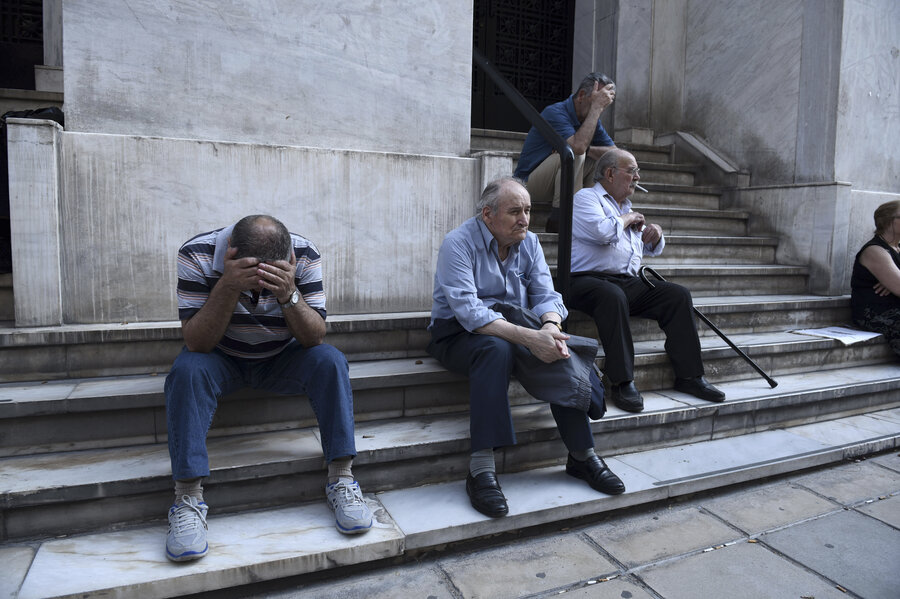
Pensioners wait for money that is not there

Something is going to break in the world, but at this moment, there's no telling where the crisis will go. So let us note the aged pensioners sitting outside of the closed banks, in need of their stipend but unable to get a euro because the money has run out. They arranged their lives around a promise, that they would have a certain income for the rest of their lives, and suddenly that promise is broken because there is no more money. Elderly, with no means of support, are sitting in front of banks wondering how they will buy food.

Some are desperate. Some are resigned. Some may be thinking of what items they have at home that they might sell to raise money. Perhaps they will have to turn to their children for help, unless they are supporting their children who cannot find work.

The tourists will jot in their journal, describing their worry about getting cash to pay for meals or taxis to the airport. Uncertainty clouds the holiday, along with concern for the nice maid or the friendly waiter whose livelihood depends on tourism. What becomes of them, the tourist inscribes in their journal, what becomes of those who lose their jobs and cannot rely on government subsidies because the government is skint?

For some, today's journal entry will indicate a sense of their world ending. There will be mentions of desperation, strong emotions that some future writer of historical fiction can tap into to flesh out a character.

There is talk of last minute deals, and there is talk of economic collapse. Bankruptcy or salvation.

For those not living in Greece, the diary page for Monday, the 29th of June, 2015, might note that the stock market is expected to plummet due to concerns of default. Someone loaned Greece all that money, and if they do not get it back, it's gone. It isn't there to loan to others, who would pay it back with interest. Others like other EU countries who are finding it difficult to keep promises made to citizens about pensions and paid leave and early retirement.

Emotions are bubbling up all across the globe. As a writer, you should have your ears open, and then put your impressions down in your journal. Or your blog. Keep those initial sensations for later, when your historical research takes you to some financial crisis of old. The emotions are the same over the generations. It's just the actors who change, along with the scenery. They are speaking the same lines.

Observation is at the heart of a journal. Writers are good at observing, and then storing away those observations. Like a rainy day fund, except it doesn't hold money.

But neither do the Greek banks, apparently.

Thursday, June 25, 2015

Those Wild And Crazy Victorians

You've heard the shocking news by now. Miley Cyrus did not invent twerking. Not only that, but the person who taught her to twerk didn't invent it either.

Women have been twerking for almost two hundred years.

You know what that means. Yes. The Victorians were twerking.

Imagine Queen Victoria, dropping it like it's hot for Prince Albert. No wonder she had so many children!
Queen Victoria gets into her groove with Albert
It's a troubling image, to picture those staid and prim ladies shaking their money-makers. And in what context might the ancestral twerking have been performed?

The editors of the Oxford English Dictionary are, of course, concerned only with words, so when they studied the word 'twerking' for possible inclusion in the dictionary, they found that it was not a new word at all. Grand, so, but what were our ancestors doing, and are we all wrong in thinking that there wasn't all that much sex beyond that required to procreate?

They are saying the word originated as a way to describe a twist or jerking motion. Sounds harmless enough, without any sexual context at all, but back in 1820 when 'twerk' cropped up, the world was still in the throes of the Regency and the King wasn't exactly the loyal, stay at husband his father George III had been. The OED editors have said, in not so many words, that twerking then is the same as twerking now. The word was put to a particular action and somehow fell out of everyday use until Miley Cyrus put on a show and everyone started talking.

Western films will have to update their dance hall sequences, given this new evidence. The ladies weren't just kicking up their heels, no indeed, they were twerking under all those layers of clothing.

What of the average housewife, would she have been aware of twerking and felt compelled to twerk for her husband to keep him from seeking titillation elsewhere? There must have been a lot of action in your average log cabin in the wilds of the American frontier, where entertainment options were few and a wandering husband would have to wander for days to find the nearest brothel and who would plow the fields in the meantime?

So there it is. The young generation hasn't discovered sex or invented anything that their ancestors weren't doing two hundred years ago.

But who would have guessed that the Victorians were so wild and crazy?

Wednesday, June 24, 2015

The Pricing Strategy

Once upon a time, the local public library bought a book and put it on the shelf. The taxpayers who funded the purchase of that book would then go to the library and take the book from the shelf, check it out, and read it.

Big blockbuster books would be in demand, and there would be many taxpayers arriving at the library thinking they would borrow the latest craze in fiction, only to find it was "checked out" and they had to wait. Well-funded libraries might buy additional copies of that sort of book, so that the taxpayers would not have to wait so long to read the blockbuster best-seller.

Publishers priced books so that they made a profit after covering expenses. Authors got their little piece of the paper pie, and so the industry stumbled along for generations.

E-books do not need physical printing, so the perception exists that the book is very cheap to produce. Next to nothing, in fact. Except for paying the author, the editor, the copy-editor, the clerical help, the accountant, the billing clerks, etc. etc. Publishers saw a way to turn a profit through volume selling, and the price of an e-book resembled that of the paperback when paperbacks first appeared. The profit margin could be higher than that of physical books, with the consumer getting only part of the cost-savings.

The local public library saw an advantage in e-books, in part because they were cheaper. There is no shelf space needed to store the digital books. A library could hold thousands of books and not need more space than a small office for the librarian who would be fielding requests from library users for the latest blockbuster best-seller.

However, buying an e-book for a library is not the same as buying a physical book from a publisher. But why is it not?

Not all e-books are overpriced for library use

Sure the digital copy can sit in the library's database forever, never wearing out and never needing replacing. But many of those best-seller books have a short shelf life anyway, and are out of fashion before the covers are falling off.

Digital books can only be viewed by one borrower at a time, just like the hard copy. If a library wants to satisfy demand, it has to buy additional copies of the same book, just like it did when the additional copies came in a box from a distributor.

Canadian librarians are complaining loudly about the pricing strategy that publishers utilize to price digital editions for library use. That $12.99 e-book you can pick up on Amazon? The publisher asks the library to pay $114.00. There are no five or six copies available to users at those prices.

The price reflects the publisher's belief that the perpetual nature of e-books means the library is buying a single copy that will never have to be replaced, as if every hardcover purchased received such rough treatment that three new books would be purchased as replacements over the life of the book.

The price reflects the publisher's belief that the average library user has no idea how much the e-books are actually costing the library, and they can get away with it because the public wants e-books and the libraries are public institutions serving the public demands.

Newcastlewest Books, on the other hand, sells e-books to libraries at a discount, in large part because we realize that the money to pay for those books comes from taxpayers who are hard-pressed to pay the rates as it is. Why should they not get a break somewhere? Libraries link into Overdrive, and their patrons have access to an enormous collection of books that can be downloaded at any time, any place, you might wish to read but can't make it to the library building.

Public libraries serve the public good, which is why Andrew Carnegie was so keen to fund the construction and outfitting of public libraries.

Modern day publishers, apparently, are not quite so philanthropic. Gouging may be a more apt description of their pricing strategy.

Wednesday, June 17, 2015

The Use Of Words To Express Sensitivity

A balcony collapses and throws a dozen young people to the ground four stories below, a fall to their death.

Truly a tragedy, this horrific accident that took the lives of six Irish students, young people of 21 years, their lives just beginning. How is such a thing to be spoken of? What words can be used by a journalist to describe an incident that has touched the hearts of so many?

If you are the New York Times, you look at the pictures of that collapsed balcony hanging from the facade and you think of the J-1 visa program that brought those poor people to their death in a foreign land.

Five of the dead were in San Francisco thanks to the special visa that allows foreign students to work in America without having to go through all the red tape and paperwork required of those who wish to settle more permanently. They come for a summer to experience a little of adult life, on their own, and then go home to finish up schooling or embark on a career.

It sounds like a grand opportunity, but if you are the New York Times, you don't do sunshine and happiness. You probe the dark underbelly of the J-1 program. You look at the bits of balcony dangling and you think about the many complaints lodged by property owners who rented to J-1 students and found their flats wrecked.

Sure that balcony could represent the same kind of destruction, right? There's a powerful link if you just focus on the right area.

The once-proud newspaper is today backtracking on a story that ran earlier. Writers Adam Nagourney, Mitch Smith and Quentin Hardy managed to demonstrate a remarkable lack of compassion and a very poor choice of words with their piece that has come under fire. The authors opened their article with an attack on the J-1 program, describing the visa users as a "source of embarrassment for Ireland" because the Irish students misbehave so terribly and drink all the time and destroy private property and make a nuisance of themselves altogether.

What could be more sensitive to the hearts of those whose children died? Those six deaths touched on a great many people. The Dail, Ireland's version of Congress or Commons, has suspended its session out of respect for the dead.

So, thanks a million, Grey Lady, for being so very sensitive.

Because when tragedy strikes, we all like to hear about other young adults who, in one instance, were an embarrassment. The word play in the article certainly had that certain magical quality that only can be created by the sparkle of well-crafted prose. Well done indeed.


Monday, June 15, 2015

Crazy Love

Victoria Andreenkova is in love.

What a heady feeling, those first stirrings of emotion. Especially for a former citizen of Russia, where there is precious little reason to fall in love. Everyone's miserable in Russia, with poor job prospects, poverty, lack of resources, and most every man in the nation a raging alcoholic.

Ms. Andreenkova has fallen in love with an Irishman. Her move to Dublin was, in that case, a blessing.
Victoria Andreenkova: From Rusia, For Love
But she is Russian by birth, the tragedy of Russian history ingrained in her psyche. She is in love, but there is an element of drama.

She is in love with Graham Dwyer who is now serving a life sentence for the sado-masochistic killing of child minder Elaine O'Hara. Their love, in this case, can never be. They cannot be together, snuggling on a beach or sharing a quiet dinner in some trendy bistro in Dublin. The best she can hope for is to gaze lovingly into Mr. Dwyer's eyes through the Plexiglas that separates them for thirty minutes, once per week.

The rest of her time is spent in Dublin, pining for her beloved. He is in Midlands Prison in Portlaoise, so far away.

It was during his trial that she fell for the handsome dominant, pushing her way into the courtroom to gain a front-row seat. So smitten was she that she had to contact him, to let him know that she, too, recognized his innocence. She knew he didn't kill Elaine O'Hara because some mysterious garda had done the deed. Not a city-based officer, however, but one of those from the countryside. There's not many people about in the farming communities, you see, and the guard could just slip in and out of Dublin without anyone noticing.

Perhaps she is thinking of the same mysterious garda who she says she was involved with some time ago in Ballymun. The man didn't have the decency to rent a hotel room, either, but used his car, the bastard. Public property and he's not concerned about leaving a stain on the seat. And he's a married man, so. He tried to make her take abortion pills after she fell pregnant, illegally purchased tablets that he bought on the Internet but she was too clever for him. Just put the pills in her mouth and pretended to swallow.

So clearly she has it in for the police service.

Nor is she a great friend of Fine Gael or the Irish government in general. It was Fine Gael that stole her breast pump, you see. And she went right to the top with her complaint. She rang up Enda Kenny himself to let him know how displeased she was that Fine Gael was after stealing her breast pump.

Now the crazy in love young woman has been banned from further visits with her dear Graham because she was not dressing appropriately for a prison visit. She was only wearing what he ordered her to wear, it turns out. Once a dominant, always a dominant, I suppose. But the attire was not deemed suitable and she won't be allowed back in.

Ms. Andreenkova has lost her heart. Seems like she's lost her head as well, but maybe that's been gone for quite some time.

Thursday, June 11, 2015

The Trouble With Nobel Scientists Being Unattractive To Girls

Sir Tim Hunt has gone and resigned from his post as a university professor. He's won a Nobel Prize for his scientific work, but he's without a brain when it comes to women. He expressed his opinion about ladies working in the sciences and came under fire that he never expected.

Not so very smart, his quip.

The trouble with girls in the laboratory, he told an assembly in South Korea, is that you criticize them and they burst into tears. So emotional. It's those blasted emotional entanglements that make it so difficult to work with them because science is pure and science has no emotion.
I am studying why girls are not attracted to me and I find the problem lies with the girls

He thought he was being funny.

Of course he wasn't funny. He's a Nobel Prize winning scientist. He doesn't know how to be funny to the wider world because he is a complete and total geek.

Can we not give the poor man a little understanding?

He is socially inept, that's all. He should be treated as one would treat any slightly anti-social being who is extremely intelligent but otherwise stupid. Ignore the stupidity. Put him someplace where he can't annoy normal people and let him do his research, surfacing occasionally with some major breakthrough before retreating to his lair.

That is the problem with our modern society. No one studies the sciences much anymore. So they don't know how bizarre the average scientific genius can be.

Sure they might have heard tales of some brilliant type who cannot remember to bathe with any regularity. But they have not shared time with such a creature, and are unaware that such people tend to make ridiculous comments that they think are hysterically funny but are not the least bit humourous.

Would someone call out an autistic individual for their inability to interact with others?

Sir Tim's girl trouble probably started when he was in university, trying to attract the attention of some pretty co-ed and failing miserably. How could they not be drawn to him, he wondered, with his capacious brain power? He could flex with the best of them in a contest of smarts. Through careful observation he deduced that emotion was at fault, and he noted that the fault resided with the women. It clouded their judgment and rendered him undesirable.

All those raging hormones and no opportunity for relief.

Is it any wonder that he's still bitter about it? For all his intelligence he cannot figure out what women want.

It stands to reason that he would lash out at the symptom of his ineptitude. That's easier than tackling the thorny issue of rejection.

Monday, June 08, 2015

The Memoir Is Fiction With Added Fiction

When you think of memoirs these days, you think of all those memoirs that turned out to be fiction with an extra dose of fiction. There was the million pieces of fictionalized memoir, and the three cups of fictionalized tea and the novel about surviving the Holocaust that was sold as memoir but it wasn't real at all.

Memoirs are not quite non-fiction, according to the definition. Books labelled as memoir are recognized as someone's collected memories of certain events. So there's a little leeway granted for creativity. But only a little.

If you are a writer and you want to get your manuscript slotted in the most marketable slot, you'd want to be selling a memoir as opposed to a novel, which is a much tougher sell. So you write about what you know, make up most of it, and then tell a literary agent that it's the best you can recall of your time living in, say, Manhattan, among the, let's make it the wealthy and socially prominent. Literary agent Miriam Altshuler certainly believed one particular author.

Everyone loves a tell-all about the posh in their exclusive homes in exclusive areas that none of us will ever see. What could be bigger blockbuster than an expose from someone who entered that world like an anthropologist, to study the culture for six years and then report back to us?

Wendy Martin apparently had an idea for a book that was based on what she knew, or at least on what she had experienced for a time. But when you approach literary agents with a novel about life on Manhattan's Upper East side, a book about motherhood among the mean girls of means, you may not get far without a degree in creative writing or a long list of literary awards to open a few doors.

Ah, yes, but send your query off and claim that you've penned a memoir about your time in the Upper East Side, mingling with the very people you are exposing, and you're getting requests for pages and drawing some serious interest.

Who could fact-check what you've written, anyway? It's your memoir. It's not as if the legal department at Simon & Schuster could ring up Socialite A or Patron Of The Arts X and ask them to verify some unseemly conduct involving them.

Primates of Park Avenue was published as a memoir but the New York Post has done the fact-checking that the publisher did not do and it turns out that yet another memoir is just a work of fiction.

Wendy became Wednesday when she became an author, but who can argue with a woman who wants to use a pen name? That's but one minor course correction on this long journey through the parenting skills of the Upper East Side dweller.

Wednesday 'Wendy' Martin was a denizen of the region for a much shorter time period than her memory, clearly flawed, would indicate. She was not pregnant when meeting with the board of the co-op where she hoped to reside, and so it's not possible that she met with the co-op's board while confined to her bed under the obstetrician's orders. Shops she mentioned did not exist when she recalls their presence. She uses Uber's taxi service before it came into being. Memory's a tricky thing, isn't it.

You would think that a 'mean girls' oriented story would sell without an author having to resort to false advertising, but for whatever reason Ms. Martin thought she could use her experiences, expand them as a novelist would use life experiences to flesh out a story, and then sell it as a memoir. The novel that Ms. Martin called a memoir is said to be witty and fun, but is it as witty and fun if you understand that the tale is fictional and not an actual account of life among the elites? Does it then become just another novel like so many others?

The publisher has pulled back a bit and will add a corrective note to future editions, to warn the reader that some objects in Ms. Martin's mirror are actually much further from the truth than they might appear.

How long will it take publishers to cop on and treat memoir like fiction? It's become a type of fiction, hasn't it? Or do authors have to resort to trickery to get their work published because the publishers can't figure out what's good and what's drivel?

Saturday, June 06, 2015

Urban Renewal

Before
Chicago's version of New York City's High Line opens today, but this is not about creating park land for local residents. It does not matter that the original name for the former railroad right of way was the Bloomingdale Trail, named after the street along which the tracks ran. Bloomingdale sounded far too New York-like and you'll see references to the "606" which represents Chicago, to avoid confusion. The zip code starts with 606, you see, and this trail is going to unite neighborhoods and yada, yada, yada.

This is about the neighborhoods that are supposed to become as one. Right now, the areas in question are two, as in rich and poor.

Bucktown used to be a rough part of the city. Crime was high and the residents were barely scraping by. The homes they owned were old, having been built at the turn of the Nineteenth Century when Bucktown was a new area. Then the hipsters discovered Bucktown and it became the hot part of town, relatively inexpensive and affordable for those looking to open a boutique or a restaurant serving food not found in Lincoln Park.

Housing values went up as speculators snatched up the old homes and refurbished them. Property taxes went up as well, because it's all about the home values when figuring the bill.
After gentrification - a little whiter?

The poor had to sell because they could not afford to live in their neighborhood. Not that they were delighted at the increasing property values. They got more for their house than they would have if not for the gentrifying, but they did not want to sell and move away.

Then Wicker Park became trendy as Bucktown became too expensive, and the people who lived there for generations were forced out because they could not afford to keep their homes. Logan Square is in the process of gentrifying now, and the same thing is happening. Residents simply cannot pay the property taxes due. They don't know where to go, and they resent the fact that strangers with money are coming in and causing them misery.

The Bloomingdale Trail will unite a fourth community to this gentrifying pocket of Chicago, and the largely Hispanic population of Humboldt Park is up in arms. They know what's coming. They'll be the next to get booted out, to find something affordable in some other part of the city where the Humboldt Park gangs will have to fight the existing gangs to re-establish their turf. Who wants to put up with that?

Local aldermen talk about property tax freezes for those in danger of being exiled from the land of plenty, but it's never been done before and it likely is not legal, but talk is cheap and can get a person re-elected if enough voters believe the flurry of words.

They don't mean it.

Gentrification is good for Chicago's bottom line, and this is a time when the bottom is falling out. Hipsters taking over an area and making changes that bring in diners and other hipsters with deep pockets benefits the city with the added tax income. When they rehab the old homes and make them more valuable, property tax income goes up, and there's no voter outrage because the voters are delighted to see the value of their property investment climb. They'll turn around and flip that parcel to someone else with money, someone who wants to live in a trendy area with a nice mix of unique shops and dining experiences.

The original residents are in the way. They have to go. And the city is not sorry to see them go because money follows behind their departing moving vans.

They have no choice but to find a way to pay higher taxes if they want to stay put. Either way, the city is going to get more income that does not involve voter outrage over tax increases because property taxes are based on property values.

Urban renewal is the cleanest way for Chicago to raise taxes. If the downtrodden get trodden down a little further, it's sad but inevitable. Chalk it up to progress, but it's all about the money.

Tuesday, June 02, 2015

Welcome The Powerhouse Agency

The Formidable Four Of Agenting
Search for who represents whom and you're likely to find that certain agents pop up with some frequency. They are the successful ones, the agents who have a strong record in selling manuscripts in your genre.

They often start out in smaller agencies and move on up to the big time, where the resources are greater and the ability to place manuscripts is smoothed by connections. The rising agent develops a circle of editors who will take their calls, and once they have a posse, they feel comfortable striking out on their own.

Alone, however, the free-standing agency has to meet expenses that are not shared among an office filled with agents. And with book sales declining and editors only interested in the big blockbuster novel, it is getting increasingly difficult to meet those fixed costs and still have enough left over to pay the rent on a small Manhattan studio flat. Then there is the changing landscape in publishing, with digital rights and the power of Amazon and authors doing things themselves so should the agent maybe help with the self-publishing.

Julie Barer, Faye Bender, Brettne Bloom and Elizabeth Weed are names that are well-known to those who have queried a fiction manuscript. They are well established in their industry, with a wealth of experience and a bevy of editors who will consider what they have to offer.

They have gathered together fromt their individual agencies and formed their own, and isn't that the powerful sort of agency that you'd like to be part of.?

The Book Group is open for business.

Is your book comparable to the work of Michael Crummey? Maybe you could compare your novel to an Amy Brill piece. Then you'd want to send your e-query off to Julie Barer, no longer at her own eponymous agency but toiling among three other colleagues who will share expenses like office rent and clerical help. Maybe you're more of an equivalent to Elyssa East, in which case you'd want to attract Brettne Bloom's eye. She's there at The Book Group, pooling resources.

These being important literary agents, however, and quite in tune with the times, they won't respond if they are not interested. So if you don't have a degree in creative writing and a long list of literary awards, you may not stand a chance.

But they will have interns clamoring for entry and access to the inner circle of publishing, and in time possibly a junior agent starting at the bottom where the powerful four began. Maybe one of them might be looking to pick up their first clients and that could be you if your query is there at the right time.

When is the right time? If anyone could predict that they'd have the answer to the question plaguing all unpublished writers: What does it take to get a literary agent to sign you?

Friday, May 29, 2015

Among the Ten Thousand Things: A Book Review

White People Problems
Julia Pierpont is a graduate of the NYU Creative Writing Program.

That is all you need to know. It explains a great deal.

She was a Rona Jaffee Foundation Graduate Fellow. She was a Stein Fellow. She has won awards for her writing. So she must be a brilliant writer, yes? Literary agents went looking for her.

AMONG THE TEN THOUSAND THINGS is her work of debut fiction. The prose is, indeed, very pretty. The sentences are well crafted. The paragraphs sing with the rhythm of syllables and pauses.

Agent Elyse Cheney sold the book to Random House (which provided the review copy in use here) for six figures. Clearly the publishing industry expects big things from Julia Pierpont.

What is the novel about?

The blurbs will tell you it is the story of a marriage falling apart. As a reader, I will tell you it is a narrative of New York City whingers. Ah Christ, the angst and the mental suffering. Everyone in the novel is so in tune to themselves that a reader cannot like them. Unless you are part of the New York City whinging crowd, in which case you'll find their portrayals brilliant.

Did I mention that the prose is lovely? It's a beautifully written novel.

The problem comes in the entertainment factor. There isn't much storytelling to speak of.

So we have Deb and Jack and their two teenage cartoon children. He's a serial adulterer and she's a failed ballerina who found herself up the stick and Jack did the right thing. The children do and say what stereotypical teens do and say. They're as self-centered as their parents, and equally dull.

Jack's latest piece on the side sends Deb a litany of sexting and assorted emails and the daughter reads it and then the son and then Deb and then Jack's art installation goes bad and the marriage is just falling apart. Then we get to the middle of the novel and the author shifts to "too cute by half" mode with a series of staccato sentences that reveal the fates of the characters.

Well, so, no need to read the rest when you know what's going to happen and when the daughter runs away from home you know she'll be found because the author told us earlier so you flip through to see if anything important happens but it doesn't. The whinging carries on to the end.

You read a book and wonder how such shite gets published. The publishers are pursuing students of creative writing who write about people like those in the publishing industry, characters that the publishing industry can relate to. The rest of us, the common readers, are supposed to see the brilliance, or be considered Philistines who don't know good literature when it smacks them in the face.

So I must be a knuckle-dragging Neanderthal because I found nothing to like about this novel. The writing is there. But it isn't enough to make a full-length novel. Tell me a story.

Wednesday, May 27, 2015

Another Reason To Dislike Football

For the good of what? The game?
They call it soccer in America, to distinguish the sport from their version of mayhem, and it is growing in popularity. Suburban children can be seen swarming pitches in every well-heeled community, kicking the old football around.

Now the soccer-despising among us will have further reason to kick the sport itself around.

What's sauce for the Olympic committee is apparently good for the footballers as well. The culture of bribery that formed the backbone of the group that was charged with finding venues for Olympic games has infected football's governing body as well. Police in Switzerland raided the offices of the Federation Internationale de Football Association and arrested several of the group's officials. Police in the US staged a raid on FIFA offices there as well, arresting a few important people on charges of corruption.

So it seems that you aren't the only one wondering how the World Cup match was awarded to a country like Qatar, where the climate in summer is less than ideal for an outdoor sport, and where the matches played always in the peak of summer were miraculously rescheduled to a cooler time of year in the Arabian desert.

You want your sports honest and free of bribery. It's supposed to be a skills contest, with the best team coming out the winner.

Like the Olympics, the World Cup site is coveted for the tourism it brings, and when a country wants something bad enough it will offer a little cash incentive. Our sports officials are supposed to be above that sort of thing. Judging by the raid on FIFA offices, they are not. According to the indictment, the officials not only were down in the gutter, but they had the audacity to ask for illegal payments.

The raid came as the FIFA officials gathered for their meeting in Zurich. It's that time of the sports schedule, when FIFA's president is to be elected, and if you're going to nab an international crime ring, it's easier to gather them up at a gathering. Those arrested in Switzerland are to be sent on to America to face trial for crimes that the Federal Bureau of Investigation alleges were conducted over a span of decades.

So if you despise soccer, you have even more reason to hate the sport that is played all over the world but not so much in America where it is seen as a game suitable for children or girls, but not real men.

Now the governing body has shown that there is another game being run in addition to FIFA's namesake sport. It's a game played by adults, and it is an international game with high stakes but a comfortable pay-out for the winners.

And as the un-arrested officials gather to elect their president, and decide if the man who led FIFA through all those years of bribery, extortion and money-laundering, is deserving of a fifth term. Authorities have pointed out that Sepp Blatter, the king of football, has not been arrested or charged with any wrongdoing, but the seeds of doubt have been sown.

He'll just have to buy his votes if he's keen to keep his lofty position.

Which should not be difficult. It's a way of life for those who control the sport of football.

Saturday, May 23, 2015

Sherlock Holmes: The Light And The Legal Fury

A slight trick of copyright law
Thou shalt not put Sherlock Holmes in a comfortable chair if the narration makes mention of lighting or a guest's discomfort.

That about sums up the latest legal fury around the estate of Arthur Conan Doyle.

Isn't Sherlock Holmes now in the public domain, you ask as you pause in your writing, the fanfic piece nearly complete and images of dollar signs dancing in your head. The copyright expired long ago and anyone can use the Holmes character. It's perfectly legal to write a short story or a full-length novel with Sherlock Holmes solving a case.

To an extent that is true, but lawsuits filed by the descendants of Mr. Doyle have carved out a little block of Holmes-ian details that were published late enough to still fall under copyright law. You may write a Sherlock Holmes story if you wish, but you have to watch what you have Mr. Holmes say or do.

Filmmaker Miramax is discovering the headaches of this splitting of hairs issue. The Doyle estate has sued them for copyright infringement because they have made a movie based on a novel that features Sherlock Holmes in retirement, called out to solve another case.

Sorry, the estate's lawyer says, but that story contains 1923-1927 material you've lifted and you owe us money for the right to use our property.

The novel on which this upcoming film is based was published in 2005, but only now that the book has gone to film has the estate given notice. They are suing author Mitch Cullin, as well as Penguin Random House. The publisher is already dealing with lawsuits filed by those who felt defrauded by the Penguin's Author Solutions branch, so the legal department is really earning its keep these days.

As it turns out, Arthur Conan Doyle did not write about the retired Sherlock Holmes until the 1920s. Like any author, he added various elements to the character to make Sherlock Holmes move with the times, and those elements if included in a new work using Holmes would fall under the copyright law.

Mitch Cullin's version of Holmes is the retiree, which the estate admits is fine because Holmes was retired in stories that have fallen out of copyright. What Mr. Cullin did that brought on the heat was to set a scene based on a description written by Doyle in the 1920's, in which Holmes sits in a chair and puts his guest in a chair opposite, where the light shines full on the guest's face and obscures Holmes. In both Doyle's version and Cullin's version. the guest is rendered somewhat speechless. The passages sited in the lawsuit are so similar, in fact, that it's bordering on plagiarism.

The estate wants their cut of the profits from both book sales and movie box office receipts. No need to pull the film or the book. What benefit to anyone in that case? Just send the check and we'll bestow the official Arthur Conan Doyle stamp of approval after the fact.

Sherlock Holmes is still a popular fictional character, and still draws movie-goers into the theaters. With Ian McKellin in the starring role, it's sure to be a blockbuster hit. Miramax wouldn't want to pass that up if they can come to a reasonable agreement. After all, they've already spent a lot of money to make the film in the first place. A few more dollars won't hurt. As long as the estate doesn't get greedy.

Tuesday, May 19, 2015

Publishing In The Prehistoric Era

We used to do it that way. Long ago, when computer technology was not as advanced as it is today. Like some single cells organizing themselves in the primordial ooze, that's what it was. You wrote a book and you made the rounds of the literary agents, hoping to get published but getting nothing but rejections.

The chances were good that your book did not fit into the particular slot that publishers thought needed filling, so you put the manuscript away and wrote another one. You did that again and again, using your computer for its word processing capabilities because there wasn't much Internet back then. Things were still evolving, and the database of literary agents was in its infancy. You'd be hard-pressed to find a list of publishers willing to accept manuscripts not sent by literary agents.

There were rogue elements that arose back in those days. Some saw an opportunity to be tapped. All those manuscripts, written by all those authors who wanted to see their book in print. Sure there's a sucker born every minute and out of the morass came Author Solutions.

We'll publish your book, they said. And you'd have to buy boxes and boxes of your opus, to sell yourself. There was no getting the book on Amazon. Amazon was just a little thing back then, and most people bought their books in a store.

We'll help you get your books in those stores, they said. For a price. We'll help you market your book, and here is a list of paid services we offer that will lead to best-seller status. We're just like those major publishers who won't even glance at your manuscript. We'll help you. For a price.

While vanity publishers like Author Solutions expanded, so too did the Internet. Writers could search for publishers, and they could find information from those who knew about publishing and what constituted a scam. It was the end for some of those old dinosaur vanity presses. Authors were getting wise, and taking advantage of an evolving technology.

Information became readily available, and at the same time, the publishing industry shifted. A writer didn't need Author Solutions. Amazon was offering a platform to create a book from a manuscript, and the book would appear on sale at Amazon.com. The revolution of digital publishing altered the landscape yet again. If you wanted to publish your manuscript that fit a smaller niche ignored by the major publishers, you could do so at Amazon or BN.com or Smashwords.You could market your book on Facebook, Twitter, a blog or Internet advertising.

You could search for scams and complaints cited by authors who had tried Author Solutions and felt that they had been deceived. Warnings appeared, but those warnings came too late for some.

Even with all that available, there were those who did not have Google skills or did not think they could do it on their own. Those who believed the marketing and trusted that Author Solutions was a real publisher, not just some vanity press. They came to see that the services offered did not meet expectations. A law suit was filed against Author Solutions, citing deceptive practices and fraud.

The suit has worked its way through the American legal system, while Author Solutions has worked its way up the evolutionary ladder. It is now a subsidiary of Penguin Random House, a respectable publisher that picked up the vanity press as a way to get a toehold in the burgeoning self-publishing industry.

Penguin Random House wanted an evolved platform for self-publishing. They ended up with all the evolutionary detritus that clung to Author Solutions from its prehistoric past.

Attorneys for the Penguin are planning to show Judge Denise Cote that Author Solutions was not doing anything deceptive and it's just a bunch of disgruntled authors whose expectations were unrealistic and it wasn't Author Solutions' fault. There's no pattern, which is required to demonstrate deception as corporate policy.

The plaintiffs are seeking to make the suit a class-action undertaking, gathering a group of victims together under a single umbrella to show the pattern of misleading behavior.

The wheels of justice continue to turn slowly, while technology races ahead. Fewer authors will be ensnared by Author Solutions because there is so much information available about potential scams, dissatisfied customers, and other complaints about the expensive services. It's not all that difficult to develop an alternative plan based on advice that is readily available in countless forums dedicated to those who want to publish their words.

Authors can be forewarned these days. If they fall for the promises of Author Solutions, they have only themselves to blame. Which is what Penguin Random House's legal team would like the judge to consider before she decides if the plaintiffs have a legitimate case.


Monday, May 18, 2015

Writing Prompt: Aquatic


It looks like a lovely little cottage, doesn't it? A humble abode, with a bright red door. The front garden could be populated with children playing, or you could imagine a gathering of friends.

What inspiration do you draw from this photograph?

Let's throw in another picture of this same house, and see where your imagination takes you.

Not what you expected?

AirBnB is now legal in London, and a couple of architects designed this floating house to draw attention to the modern version of holiday accommodations. The cottage on a raft is floating up and down the Thames, and as you can imagine it is drawing a great deal of attention. It isn't every day that you see a houseboat this elaborate. And you could rent it, if you had an urge to see London as Anne Boleyn might have seen it for the last time.

A house floating downstream might suggest some sort of catastrophic flood, lifting a whole house and carrying it away. There is something of a children's story in this picture as well, a sort of magical journey in a floating house.

You have the pictures. Now it's your turn to write those thousand words. Or more, if inspiration strikes.

If you aren't much of a writer, you could just navigate over to London's AirBnB site and book a stay at someone's home. Who knows, but you might find a little inspiration abroad, poking around in a stranger's things. There might be a travel writer in you, if you find the right inspiration.


Saturday, May 16, 2015

Finding A Pattern In Book Sales

Two new books have risen to the top of the bestseller list, and the titles demonstrate a clear pattern.

Kim Kardashian is a celebrity, a person famous for doing nothing except being famous. Her book is a collection of pictures that she took of herself, but rather than call her book "Selfies", the publisher decided that "Selfish" was more clever.

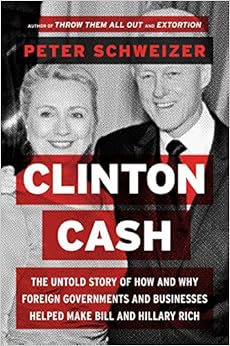
Selfish. Self-obsessed. It sounds like a promotion for Peter Schweizer's book "Clinton Cash". If you've seen him being interviewed, you'd realize that selfishness lies at the heart of his premise.

Is there a pattern developing here? Are book buyers intrigued by selfishness in prominent members of our society?

Mr. Schweizer has been doing plenty of book promoting, while Ms. Kardashian has no need to promote her book. Her platform is larger than her hind quarters, and fans of her family's reality series are already well aware of the book. Come to think of it, Mr. Schweizer has a nice little platform, but it was constructed by conservative-leaning media and those who don't much like Hilary Clinton. That's a fairly substantial number of planks right there.

Readers want to know all about the Clintons and their foundation, how they manage to live so lavishly after coming up from nothing, and so the Schweizer book becomes a bestseller. The Kardashian book being a collection of pictures, it's clear that there's no interest in reading among that particular demographic, but a picture is worth thousands of words and provide visual access into the Kardashian world.

Don't you wonder where all the Kardashian Kash comes from? And you're very curious about the source of the Clintons' wealth.

Politics and entertainment are often intertwined. Some will tell you that politics is the celebrity industry for the unattractive, a submission to a level of egotism. You wouldn't say that former President Clinton is a shrinking violet, avoiding the cameras. Kim Kardashian is followed by cameras constantly. Is there any difference?

The difference is, one book's subject is not involved in politics while the other is.

There is something about people with money that intrigues, and that fascination is what drives book sales. "Clinton Cash" outsold "Selfish" by a wide margin, so there is hope for our society.

When a celebrity photo shoot sells more copies than an examination of finances and potential conflicts of interest, you'll know that Armageddon is just around the corner.

Wednesday, May 13, 2015

What You Know, Who You Know And Who Sent You

Do you like 'Chicago Fire'? Can you spot the mob influence in all those scenes that are filmed entirely in Chicago?

No?

Once upon a time, Oprah had a studio in the city so that she could have a place to put on a (talk) show, and her presence revitalized a neighborhood that was more than rundown until the Big O attracted hordes of ladies who lunch. Local political tops took notice. Urban renewal is always a good thing, especially if it brings in people from out of town who spend money and pay entertainment taxes and parking fees and such.

The State of Illinois, like so many other states, has an office dedicated to enticing Hollywood to come and film in the state, with an emphasis on the city of Chicago. Tax incentives are always popular, and Chicago has been known to provide some funding as further incentive to directors looking for new scenery to serve as backdrops.

What was missing was a big sound stage where sets could be built. It was one thing for big-name stars to be seen dining in Chicago restaurants, but they came and went in a few days. The interiors had to be shot elsewhere. Having to move a lot of equipment around becomes a logistics issue because it costs money to load, unload, set up and take down those semi-loads of stuff. If you could go to Toronto and angle the camera so it sort of looked like Chicago, and you had a place in Toronto to film the rest of the movie, and you were still getting incentives to boost your profit margin, why not just take your movie to Canada and skip Chicago altogether?

Nick Mirkopoulos owned a studio in Toronto, which doesn't look at all like Chicago to Chicagoans. He decided to build a studio in Chicago, sold the idea to local officials, and they kicked in with taxpayer funding to get the project up and running. If you build it, the tourists will come to watch movies being made and they have to eat lunch, right?
Operation Family Secrets: Mob bosses dropping names

He selected a small bank to handle his local financial affairs. The bank's board includes four eminent Chicagoans whose names came up during the trials of five Chicago mob bosses. Not that the four were ever charged with anything. Nobody could prove the allegations that the bank was used as a conduit to channel bribe money to crooked cops, or that one of those four eminent Chicagoans took part in a firebombing meant to intimidate a business owner into cooperating with the Outfit.

Cinespace and its owners have contributed to the campaigns of local elected officials, the same elected officials who voted in the tax breaks and incentives for Cinespace.

Chicago Studio City, in the other hand, has not matched the level of funding.

So it comes as no surprise that they are also not getting the business that flows to Cinespace.

Chicago Studio City has sued the State of Illinois, alleging the sort of shenanigans that is typical of Chicago political greed. The suit claims that their rival Cinespace is getting all kinds of taxpayer funds because the unions are exerting their influence. In Chicago, that means the Outfit is leaning on the pols in their pockets so that the mob bosses can line theirs. In short, Chicago Studio City is getting cut out of the action by a newcomer with power, and they don't like it. They want the playing field leveled so they have a chance to at least bid on projects that are handed to Cinespace with a nod and a wink.

In Chicago, it's all about who you know, and the owners of Cinespace have made sure that they know the most important people to be known. Campaign donations open a lot of doors, and the more you give, the wider the door opening. It's all about who sent you, and if nobody sent you, well, you're standing on the outside looking in, barred from entry.

Chicago Studio City is being run out of business by corruption. It isn't the first victim. It won't be the last. A federal lawsuit won't help their cause, because the federal judge is nobody when it comes to power politics in one of the most corrupt states in the union.

Tuesday, May 12, 2015

It Wasn't My Poor Driving That Caused The Accident

Isn't that exactly what every driver involved in a crash would say?

You don't even need to Google that one. The dogs in the street know the usual excuse given after a couple of motorized vehicles come together in ways not intended by the manufacturer.

So when you read about the driverless Google cars being involved in numerous collisions, you won't be at all surprised that Google is saying its car did not cause all those collisions.

Where is there room for a backseat driver?
The driverless car is not at fault. It's the other driver, not paying attention or texting or applying lipstick. You've seen them, those other drivers, all careless and reading the newspaper that they've opened across the steering wheel so they can be up to date on all the latest celebrity gossip. The driverless car isn't doing any of that. It's just driving from Point A to Point B as programmed.

According to Chris Urmson's post on the Google-mobile, it's the drivers in traditional modes of transportation who cause the accidents by striking the Google car from the rear at places where cars are supposed to come to a complete halt. Like those intersections where signs are posted, stating "Stop". Sometimes drivers are so distracted by their morning coffee or a cat video on their smartphone that they don't notice the driverless car in front of them obeying all traffic regulations and actually stopping.

If you are in the lead car in that sort of situation, you might have a split second available to move your own car forward and avoid a collision from the rear. Time things right and the fool trailing behind you, the one who doesn't know what "Stop" means, is more likely to get T-boned by the car that is driven by someone who thought it was their turn to proceed through the intersection. But it won't be your car getting damaged, so there's a small glimmer of good news for you.

The driverless car cannot react to abrupt changes in human behavior that defy expectations of a computer programme.

And there you have the best reason given for developing the driverless car. People make mistakes. Stupid, dangerous mistakes. They get distracted. God help us but they get drunk and think they're fine before turning the key in the ignition and heading for home.

Human eyes do not see all that well in the dark, which results in people, especially the older set, entering motorways on the wrong side.

It's a problem with tourists of any age who cannot seem to fully accept that the Irish and English drive on the left side of the road, so when you're out motoring around the Ring of Kerry and the road narrows, you don't want to veer right to avoid that farmer barreling towards you.

Technology could save lives, at least in Mr. Urmson's opinion. He's involved in developing the driverless car, so he'd say that of course.

All those accidents? Those were the fault of the other drivers. His machine doesn't do foolish things or make mistakes that leave the other driver wondering if the person who smashed into them is brain-dead or high.

But what happens if this technology gets adopted and we still have collisions? We'll be blaming the other computer for crashing, I suppose.

Thursday, May 07, 2015

A Reason To Master The Irish Language


How did it happen? How did Irish men come to be riding the top of the league tables of sexy men?

The old Carlsberg beer ad might explain some of it. There's something magical about the Irish language. Magical, and nearly impossible to learn after years of schooling, but you might think differently about those lessons now that you stand a chance with the ladies thanks to your Irishness.

The survey says it all. When it comes to dating, American women prefer Irish men.

Sure they're all mad.

Men raised in a country where sex is almost illegal are considered the sexiest? Maybe if you're not considering the actual, physical sex when it comes to being sexy. If it's only a question of appearances, or first impressions, that's another matter.

Your average American single female could very well be swept up in the dark eyes of the swarthy black Irishman. They seem to like Colin Farrell's looks, with all the black hair and black eyes. Some are drawn to the ginger sort, or the fair set with their blue or grey eyes and sandy hair.

Irish men being raised to be afraid of scheming women and sex in general will likely appear rather shy on first meeting, and there's a certain air of vulnerability to a man who stumbles about like his tongue is tied in knots in the presence of a female.

Be aware, men of Ireland. American women are wandering over to MissTravel.com to find the sexiest men abroad, and they like their beefcake Irish. They look for company when traveling, and if you can show how Irish you are, they just might approach you and save you the stress of speaking to a pretty girl you haven't known since childhood.

If they hear you speaking Irish to your mates, they'll know you're the one. The sexy nationality, all Colin Farrell-y and Jamie Dornan-esque.

Just don't think you can look like Brendan Gleeson and see the same results. The language will only take you so far.


Wednesday, May 06, 2015

Spinster: A Book Review


SPINSTER could also have been titled WHITE GIRL PROBLEMS, ENGLISH MAJOR EDITION. As I read of Kate Bolick's inner turmoil over the dilemma of marriage or singlehood, I wanted to look at the author's photo on the back cover to see if she was in reality a person I know well. But alas, my review copy was provided by the publisher's "Blogging For Books" program and there was no cover available.

Ms. Bolick is another English major with a penchant for writing, a dreamer who wants to live independently in New York City and write full-time. Her memoir is essentially her analysis of other women with the same dream who went before her, and the book contains plenty of the author's research into the lives of such literary lights as Edith Wharton and others known only to English majors.

That some of them ended up destitute and alone provides the author with food for thought, adding to her concerns over the desired lifestyle choice. Must we all pair up for comfort in our old age, or can good friends provide all the emotional support we will need? Are women allowed to be people, as in individual entities, like men?

The history lesson is not quite as interesting as Ms. Bolick's personal experiences, for some reason, but that may be due to the fact that many of her role models lived in a very different era than our own. Then again, the author's rapture about the writing life is not new to me, having heard the same enthusiasms from a friend for years. That could be Leanne, I kept thinking as I read the memoir. The writing workshops, the editing jobs, the freelancing, all with eyes on the ultimate prize.

The author uses the book to justify her life choice, which is to remain unmarried, but still have a great social life, plenty of casual sex, and the financial means to pay rent on an apartment in the most expensive city in the nation. No children to steal away time from literary pursuits. No husband making demands on the writer's time. Is it any surprise that her circle of friends consists of others like herself? They share the same problems that would not trouble single women in banking or finance. The spinster issue that Ms. Bolick addresses is one that she examines through her writer's lens, without venturing beyond the limited territory of her personal experiences.

SPINSTER is a New York publishing industry story that will resonate with all those other English majors like Kate Bolick who flock to the city with the same dream and the same worry about making the wrong choice as the biological clock ticks down. For those of a more practical bent, who would never consider English as a major because you went to college to prepare for a real career, the discussion of White Girl Problems can be surprisingly entertaining. 

And I know just the friend who would love to receive a copy of this book for her birthday. SPINSTER could be Leanne's biography, relocated to the Midwest. Now she can know that she is not alone in her alone-ness.