Monday, September 07, 2015

America's Bank: A Book Review


With all the current chatter about banks and bank bail-outs, Roger Lowenstein's AMERICA'S BANK is a timely read.

The book is not for everyone, diving into the deep end of the financial pool as it does, but for those who wonder how America's banking system got to where it is today, the book is highly informative. Mr. Lowenstein presents the decade-long political struggle to re-introduce a federal bank, something that Europeans take for granted but one that was lacking in America for most of its existence.

On the heels of yet another financial panic in 1907, a regular occurrence in a nation that was adamantly anti-centralism, several influential bankers and politicians came together to battle against that attitude. The author does a fine job of showing how big egos collided as financiers wrangled with America's elected representatives to bring about a central bank to organize monetary policy in the European mold. The story is intriguing, although perhaps too inclined to look to our modern era as the backdrop for the Edwardian period prior to the First World War.

In general, I found the book fascinating, with its explanation of how disparate lines of thought were brought together for disparate reasons, with all the give and take expected of legislative combat. The drive to win credit after the successful introduction of the Federal banking system is not forgotten in the epilogue, and caps off a tale of ambition and a burning desire for acclaim that saw the many authors of the bill all proclaiming themselves the sole winner who had to vanquish his foes.

I am left with one question, however, that Mr. Lowenstein does not address. With so much of the anti-central bank animus ascribed to President Andrew Jackson, why, then, is it Alexander Hamilton's image that's suggested to be removed from the currency to make room for a woman?  

Disclaimer: Penguin provided a free copy of the book through the First to Read programme, so there you go.

Monday, August 31, 2015

City That Works: Our New Imprint

It may be a quiet time for publishing as summer winds down, but we have not rested.

Newcastlewest Books is growing.

Our focus has been on historical fiction, but as we reviewed manuscripts submitted for consideration we realized that history is being made all around us. Society is changing, and are we missing something by not including history making in our catalogue?

We are pleased to introduce "CITY THAT WORKS", an imprint that will house contemporary fiction. Still with that Irish influence, of course, but we will publish fiction that explores issues that will be discussed far into the future.

The imprint name is a salute to the city of Chicago, where so many Irish found homes over the centuries. The novels we plan to release may largely be set in Chicago, the city that works, and will feature characters who work. Ordinary people in extraordinary situations will feature in books published under the CITY THAT WORKS imprint, but the situations could explore such divisive issues as gay marriage or dealing with the disabled.

All in all, it is an exciting new venture that we are sure will resonate with readers looking for quality fiction.

More news will come as we move forward, with our first release planned for the 2015 holiday season.
 

Thursday, August 27, 2015

A 'No Response' Is A 'No Longer An Agent' Rejection

Have you been waiting for new literary agent Cara Mannion to respond to your query?

Wait no more.

Ms. Mannion has left the building, as they say. Less than a year into the ruthless world of publishing, and she's gone off to be a lawyer.

She started at Harold Ober Associates at the beginning of 2015, having fallen in love with the industry. Or perhaps it was just a powerful infatuation that took hold after a summer at New York University. Summer publishing camps can do that to a mind, bend it into odd shapes that snap back as the weather cools.

Former agent, still loves books
For two years she worked in the editorial department of Entangled Publishing, where romance is always in the air. It's no surprise, then, that a young woman might fall in love with words. Some of those words get pretty steamy over at Entangled, and there's that mind-warping business taking hold. All those lovely stories coming across her desk, and at some point the notion dawned. Why not become a literary agent and champion authors who write such things? Find all those golden nuggets in the slag heap, polish them up, and sell them to publishers, work around authors, be in the midst of all that creativity....at least that was the image pictured.

In reality, a literary agent is more of a salesperson than a finder of hidden gems. An agent might fall in love with a manuscript, but if that agent can't convince an editor at a publishing house that the manuscript is worthy of adoration, they aren't going to make much money. Not everyone is good at the marketing angle, lacking the ability to convince another person to do something that they may not really want to do.

Apparently, agenting was not all that it appeared to be, and Ms. Mannion decided to call it a day. She isn't completely off the word game, however, because she's decided to pursue a career in copyright law. Given the amount of online piracy these days, she'll be kept very, very busy.

You should always be on the look-out for new agents to query because they are looking for new clients and are often more open to reading your pages and considering debut fiction. We all have to start somewhere, after all, and what agent wouldn't want to find the next big thing? Develop a strong relationship with some unknown writer who is on the way up and financial success is all but guaranteed. Those writers who are already successful sure aren't in need of some newbie agent just developing relationships with editors.

Agents come and go. Sometimes you query one and they go. Keep moving forward, find another rookie, and write a new novel while you're waiting to hear from someone who may or may not be there in a year.

Life's a gamble. Take a chance.

Monday, August 24, 2015

The Premise Of A Thriller

Don't know what to write about? Looking for the core of a plot but coming up empty?

Blackmail is a good starting point for a thriller, but who might blackmail whom and for what? Well, doing something illegal is always a good start. You need a character whose done something that might get them some jail time, or a hefty fine, and then you get your villain discovering the act. What better villain could you have than a lawyer, right?

Your next book could be, as they say, ripped from the pages of current events, but you'll have to use your imagination a little to make a really exciting book. The real-life incident turned out to be rather ordinary, in the end.

Copyright law is not the stuff of legal thrillers, but a clever lawyer in Chicago managed to play the game in a way that could be the inspiration you need to get that novel written. Mr. John L. Steele (sounds like a porn name, doesn't it?) and his law firm was hired, or so he claims, by porn movie producers whose content was being illegally downloaded. It doesn't take much to acquire the ISPs of computers used to download the smut films without paying. Mr. Steele then took those digital signals and backtracked, finding the owner of the computer in question. And then he fired off letters from his law firm, Prenda Law.
Eyes as cold as steel --or is it Steele?

Who doesn't get nervous when they see a letter from an attorney? You don't want anyone to know you're looking at porn, let alone stealing it, so when Mr. John. L. Steele, Esq., threatens you with litigation if you don't come up with some cash, you pay up and hope that it all goes away. By all accounts, millions of dollars passed hands in an effort to wipe the record clean.

But what if the person who stole the movies was an Outfit boss doing what hoodlums have always done, which is steal from others and then sell it on as their own?

Write that story, imagining the twists and turns as the lawyer discovers he has tangled with the wrong miscreant. It will take all your talent to turn a Don Corleone into a sympathetic figure, unless you found a way to insert a third character to be the hero in the story who brings the entire evil empire down. A whip-smart female detective, for example, would be a great addition to the tale, and offers you several potential subplots to flesh out your novel of skulduggery and danger.

You wouldn't want to use the actual event as it unfolded because there is little that is thrilling about the conclusion of Mr. Steele's little profit center. The Feds caught on when someone complained about being shaken down by an attorney, which is going to happen when someone gets a threatening letter about illegal porn downloads when they didn't download anything. Tracing ISPs is not a perfect science, and many who own computers know that just because a computer was used it doesn't mean they did the crime if others have access to that computer. Like your housekeeper, for example, or someone who knows how to hack into your computer because your firewall is inadequate.

And of course, not everyone is cowering in a corner, afraid of their secret getting out. Some would rather be exposed than part with a penny.

Prenda Law is, of course, no more. Mr. Steele was charged with extortion and various other crimes related to the shakedown. He's fired back, as lawyers will do, in an attempt to use the courts to his advantage. At the moment, he is facing a disciplinary hearing that could strip him of his law license, which is pretty dull stuff if you compare it to your fictional version in which some Mafia hit man is hunting him down. What's the loss of a law license as compared to the loss of your life by drowning in Lake Michigan?

So there's your writing prompt to take you through the last days of summer. You should have a polished manuscript all ready to go by the start of next summer, when you can query the agents before they drift off to their vacation homes and ignore the pleas of would-be authors seeking representation.

Tuesday, August 18, 2015

Christmas Comes But Once A Year

All year, in some locations. It's starting to feel that way.

Brown Thomas is going to open its Christmas store on Thursday. If you check the calendar, you'll see that it's August, which is generally considered to be summer. Christmas, of course, is part of the winter scene. Unless you happen to be a retailer, in which case, Christmas is all year round.

Will we really buy more things if we start early, or do our purchases just get spread out over time if there is more time to make those purchases?
Back to work already? It feels like I just finished my rounds

There is something to be said for ginning up the enthusiasm for decorating as soon as you can. Those keen to feather their Christmas nest will browse and plan, and then start in to saving up. They'll hold off on buying other baubles, or find things to eliminate from their lives so that they have more money to spend on a single holiday. If all the Christmas-y items were only to appear on the first of December, there'd be no time for such careful financial planning, and that's just lost income for the shop owner, right?

So you're out and about getting the back-to-school kit in order and you're met with a reminder that in a few short months you'll be needing some spare change to cover the holiday traditions. Will you feel resentful towards Brown Thomas for reminding you of a sorry fact that causes you worry and sleepless nights?

Possibly. But we're all human and we can't resist a shiny object. Maybe in our prehistoric brain segments we think we have found water or something when we spot a display that glistens. There might be some neurological positive re-inforcement that follows, telling us to move forward and reach that which glitters. A blast of a morphine-like substance triggers the pleasure sensors and the thought of Christmas intruding too early is eased.

But honestly, do we need to drag Christmas into the late summer?

Can we not hold off until September at least?

At this rate, it's just a matter of time until Brown Thomas or one of their competitors decides that August is grand but July would be better, to get a leg up on the other shops. And then it will be June, and give it a few years and Christmas will indeed come once a year, but it will be all year.

And then it won't be so very special at all, will it?

Friday, August 14, 2015

Only The Protagonist Is Gay

Tipping the Velvet: Can it be a one-off for an author?
What makes for literature aimed at the non-straight crowd? It's a question for those who write novels that feature ordinary people as characters. The sort of people you know, or the sort you encounter in everyday life. If you put one of them into your manuscript and that person is gay, does it make your book something more LGTB than general fiction?

If you are looking to be published by one of the Christian houses, it's quite straightforward. That is to say, everyone must be straight if you want to see your book in print. Maybe they would accept someone converting from the homosexual lifestyle to happy heterosexual marriage, but not everyone writes fantasy.

Those who use New York City as their setting can toss in the requisite gay character with ease, and never consider the genre dilemma. For these novels, the homosexual character is part of the wallpaper, a bit of scenery to add authenticity or show support for the equality movement. See, here's high-end New Yorkers socializing with the owner of the art gallery. So hip. So trendy.

But what happens when that art gallery owner is made the focus of the story? Do you have something of LGTB interest? Can you query agents who say they are looking for such things?

It is always best to check the agents' websites to help clarify a murky situation.

Some will tell you that they are looking for that piece of erotica featuring two studly males, and that would mean your romantic comedy isn't at all what said agent is seeking. Others will include LGTB as a genre they accept, and there you are. What do they mean, exactly?

You don't want to be pigeon-holed and become the popular author of LGTB fiction if you have other stories to tell that don't include a subset of society. Sure it's grand to land a publishing contract but do you want to be squeezed into one particular box when that box does not fit your long-term plans for your writing career? Sarah Waters has done well with lesbian historical fiction, but not everyone wants to write about the same types of people over and over again.

Traditional romantic comedies can be given a fresh perspective if told from the point of view of a lesbian couple, but in reality you are still writing general fiction aimed at women. The plot is essentially the same, if it's girl meets boy or girl meets girl and the formation of a couple runs through the narrative. There's no need for hot steamy sex in such books, which are not romances in the mommy porn vein. The characters are just people facing some challenge to be overcome. Bridget Jones could have kept a diary about Ms. Darcy as well as Mr. Darcy, and the story would have been essentially the same.

Would such a small tweak make such a big difference to an author trying to figure out which agent to query?

Ask literary agents that question and you'll likely get as many answers as agents responding. It's all so subjective, isn't it?

Wednesday, August 12, 2015

The Book Donald Jensen Would Have It Written If He Wanted To Write About Putin

Thinking about writing a book about Putin
The Internet has brought us many thing, and plagiarism is one of them. Publishers are monitoring cyberspace to find sites that sell stolen prose in an ongoing battle against theft of intellectual property.

In Russia, oppression is rife and no one dares to speak their mind for fear of being executed. When your country is run by a former KGB agent, you assume that your death would be easily arranged and made to look like an accident, so you tend to keep yourself to yourself, head down as you move through another miserable day.

So let's combine these two seemingly unconnected events and what do we have?

For Donald Jensen of the Institute of Modern Russia, we get a raging case of identity theft, his name, reputation, and work co-opted.

Mr. Jensen is an expert on Russia, and if you were to find a book written by him, you would expect to find factual information, the result of careful research. You would believe what he writes because he knows what he's going on about.

What if you were a Russian whose publishing company was known for putting out controversial works and you wanted a big series of books about Vladimir Putin but you didn't want to be gunned down while walking down a Moscow street? How about publishing a book under Donald Jensen's name, using his old articles as material?

Brilliant.

The book is in Russian so who in America would figure it out? And while you're at it, why not borrow the names of some other well-respected types and really flood the Russian market with books critical of Putin. Bring the words of the West to the oppressed East and make some money from those thinking they were getting the real thing.

Algoritm is the Russian publisher that created a series of books that were ascribed to Western writers, including Luke Harding of the Guardian. On the surface, a reader would assume that the publisher went about its publishing work and released this collection of anti-Putin material in the usual way. Books by noted Russian scholars have that certain cachet of authenticity, and when you are a Russian citizen you look for things produced by outsiders who are not feeling the Putin heat.

Except, of course, it was not Mr. Harding or Mr. Jensen creating the books, but someone looking to cash in on their fame and the things they had written previously. Algoritm wanted to produce a collection of books on Putin, but did not want to go to all the trouble a publisher usually goes through to get permission and then come to a financial agreement. Why, that's less money in the publisher's till if he has to go and pay an author.

Mr. Jensen has stated that the book being touted in Russia as his own is likely nothing more than a collection of articles he has written. He did not give Algoritm permission to use his work, however, and you can be sure that he is not receiving a ruble in royalties.

Now that the scam has been exposed, Algoritm's Sergei Nikolayev says that Mr. Jensen can come to him any time and they can work out a fee for the stolen work. And the same goes for American journalist Michael Bohn, who found his name on a book filled with his prose that was reprinted without his permission.

Not all pirates fly the Jolly Roger or look like Jack Sparrow. Modern pirates sit in front of computers and stroll through the Internet in search of content that they can steal. Are the authors any more likely to recover their intellectual property than our ancestors were able to recover their stolen cargo?

Not likely. How do you stop a pirate if his home country is making a profit from the thieving?

Monday, August 10, 2015

A Place We Knew Well: A Book Review

The Cold War era is now far enough in the past to be considered historical, making A PLACE WE KNEW WELL a work of historical fiction.

Set in Florida during the period of the Cuban Missile Crisis, the novel puts us into the heart of a single family that lies in the crosshairs of those Cuban missiles, portraying the stress and madness of ordinary people in extraordinary circumstances. The book opens with the only child of this family, Charlotte, making a last visit to her father's garage in the present day. There she finds some odd treasures in his safe, and with that author Susan Carol McCarthy pulls her readers into the story. What do the keepsakes mean, you'll wonder, and you'll turn the page.

The story then returns to the past, to the very beginning of military manuevering at a nearby army base. The locals realize that something unusual is up. Charlotte's father Wes, the proud owner of the garage, fought in the Second World War and flew over the remains of Hiroshima. He's fervently against war, you see, and if you don't see it at first you'll get the point repeatedly. The novel gets a bit preachy about the anti-war message.

Charlotte's mother Sarah is teetering on the edge of nervous collapse, the stress of her very existence numbed by prescription drugs. Mother's little helper, the Rolling Stones called those pills. It's a touch of authenticity, to have Sarah popping little yellow pills to deal with her disappointments in life. Those miseries are many, from crushed dreams of a musical career to infertility and misguided medical treatment.

The book starts slow as the military build-up escalates, but most of the action revolves around the ordinary activities of this Florida-based family. There are school functions, business matters to attend to, dresses to buy and meals to eat. Halfway through the author introduces a surprise character from the family's past, and suddenly a deep dark family secret is thrown into the mix. Will the new arrival blow up the family's peaceful existence, and will the Russians deliver those nuclear warheads to Cuba?

The tension ramps up and the novel moves at a more enjoyable pace through the second half. Personal interactions become more complex and the character of Wes develops very nicely as he notices things that the average man did not notice in the early 1960's, like the fact that his wife is falling apart mentally.

After the slog through the first half I was not sure that I liked the novel all that much, but the second half was well-written and held my attention. The book is a short one, a nice weekend read that I would recommend to anyone. The emotional core of the story is fleshed out with incidents of madness as the local populace react to the possibility they could be vaporized at any moment, and the author does a fine job of presenting the atmosphere through which her characters move towards a fitting resolution.

By the way, I received a copy of the book from Penguin's First To Read programme. In case anyone should ask.

Thursday, August 06, 2015

I Identify As A Man

Before
There are more male than female authors.

You can explain the disparity in the population of writers in any number of ways. Men have more time to write, what with the supportive wife managing the house while they slip off to their writing place and focus on words. Women have more to balance, and are less likely to have a husband who will mind the children so they can have an hour or two to compose brilliant prose.

Or maybe it's nothing more than unintended bias.

Catherine Nichols had a feeling that maybe that was the problem she was experiencing when she could not get a literary agent to pay her any mind. She did the querying to no avail. No one asked to read her manuscript. Then she thought that her sex might be the problem, not her writing.

She submitted the same query she had been submitting, only she signed the letter with a man's name and sent it from a gmail account that matched. From the very first, the agent would have assumed the querier was male.

It should not have made any difference, but Ms. Nichols was shocked to discover that agents suddenly wanted to see more of her writing.

After --- or if an author, before
Not only did she get a response, but she had requests for pages from five of the six queries she sent. From nothing to excitement, and all because she tried something different. A good scientist knows that you need a decent data set to draw conclusions, so she fired off fifty queries as a man and found that seventeen garnered positive responses. Under her own name, which would be the control group, she never did better than one request out of twenty-five.

After the story hit, literary agents took to Twitter and denied that they were biased at all.

But surely the hypothesis is worth further testing.

Is it true, that literary agents have an unknown prejudice towards male writers? Is there some unconscious thought lurking, telling them that more men are authors than women so it will be easier to sell a man's manuscript than a woman's? After studying literature at university, do they have a preference for masculine writing, even though they tell themselves that it makes no difference?

Look, if Bruce Jenner could identify as a woman and be accepted, why can you not identify as a man and be equally celebrated for bravery? Query as a man, and gather some data. How much better of a response do you get as compared to your queries you submitted as a biological female?

Let's experiment, and see if there is a bias in the minds of literary agents. And if they call you out on it, well, there's Caitlin Jenner to fall back on as an example. You self-identify as a man. Does the agent have a problem with that? Are they prejudiced against those who self-identify as something they are not on the outside?

Tuesday, August 04, 2015

My Invitation Must Have Gotten Lost

When a publisher is keen on some new author, they will put money into promotions to generate buzz. Those who get six-figure advances are expected to become money-makers for the publisher, and the publisher will therefore invest in that author. Get them out there to meet the public, sign books, be interviewed about the book, etc. etc., and hope that the reading public sees the brilliance that the publisher did.

Not every author on a book tour gets to attend a special dinner party, however.

I am assuming my invitation to the recent Dinner Lab fest was lost in the mail. Fell out of the mail plane or something.....

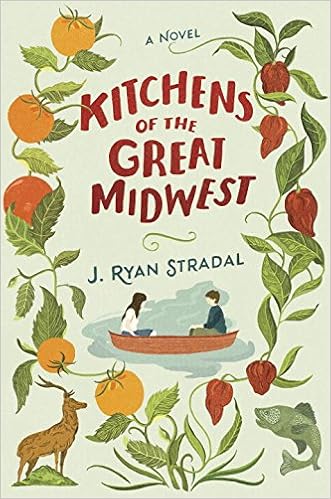
Viking is heavily promoting KITCHENS OF THE GREAT MIDWEST as it is laid down, and so author J. Ryan Stradal is on the road to hawk his prose. The book is food-oriented, with the protagonist described as a woman with a unique palate who becomes an acclaimed chef. Further adventures follow, which I will have to wait to discover as I cannot afford brand-new books and did not win one when Viking held an ARC giveaway.

At any rate, due to the theme of fine dining and chef-dom, Mr. Stradal ended up at a dinner in Chicago. Not in your normal restaurant, but in a temporary space that exists just long enough to create the one meal. His novel reflects this notion of pop-up dining, so it was appropriate that he be in attendance to discuss his novel. Living the fiction, in a way, and so the members of Chicago's branch of the Dinner Lab were treated to a unique menu that reflected the cuisine described in KITCHENS OF THE GREAT MIDWEST.

Those with the financial means to become members of the select group are also those who could afford to buy a novel. They are also the types to belong to book groups who will talk about a novel, and generate buzz amongst themselves which then vibrates through their social circle. Like ripples in a pond, as they say, news of this exciting new book spreads and Viking's parent (the Random Penguin) doesn't have to pay more for the added publicity.

Perhaps it is just as well that I missed this particular get-together.

No matter how acclaimed the chef who does the preparation, I cannot believe that anyone can make lutefisk palatable. Mr. Stradal may have been demonstrating the classic Minnesotan tendency to be very nice and polite when he later claimed that it was the best lutefisk he'd ever had. All things considered, it may not be all that much of a compliment.

But what's a man to do after a food-centric group sits politely through his sales pitch? The chef used the recipes mentioned in the novel as a starting point for his menu creation, bringing fact and fiction together in an otherwise delicious blend of tastes and textures.

I could have skipped the fish course. If I had been invited.


Thursday, July 30, 2015

The Fickleness Of The Female

You put your heart into wooing a lady and just when you think the feelings might be mutual, she's gone.

Ah, women.

A fickle bunch. Especially the mentally unstable ones.

As if things are not bad enough for Graham Dwyer, now serving a life sentence for murdering child minder Elaine O'Hara, he's been jilted. His girlfriend has left him for another thug.

Victoria Andreenkova garnered all the attention she was seeking when she declared that she was the girlfriend of Mr. Dwyer. She was visiting him in prison, wearing the sexy outfits he liked. The prison authorities did not much care for her fashion choices, however, and she was told to stop arriving in anything less than suitable clothing. She made the newspapers with that little dust-up.
Victoria Andreenkova wants five more minutes of fame

Having tasted the heady brew that is publicity, Ms. Andreenkova must have grown quite thirsty after the initial buzz died down. Five minutes of fame was not enough, to the detriment of Mr. Dwyer. He enjoyed her visits. He would most likely not have minded terribly much if she showed up in a wool suit, or even a track suit for that matter.

But Ms. Andreenkova took the prison's banishment to heart. She took her name from Mr. Dwyer's visitor's list.

And promptly added it to the list of the most vicious criminal in Portlaise.

She has found herself a new beau among the incarcerated. Ms. Andreenkova is madly in love with Leon Wright, who will also not be able to take her out for any kind of meal. No, their dating won't be quite so active. No walks on the beach or catching the newest Hollywood release. Just the opportunity to gaze into each other's eyes through Plexiglas.

Ah, love.

Mr. Dwyer can only sit in his cell and stew while his rival enjoys the female companionship provided by the fickle Ms. Andreenkova.

The guards are likely to grant her a bit more leeway when it comes to sartorial splendor, considering the fact that Mr. Wright was given a video game console to keep him from attacking his guards. If Ms. Andreenkova in leather calms him down, she'll be parading through the visitor's room in dead cow hide.

Where did Mr. Dwyer go wrong? Was he too passive? Too submissive?

Mr. Wright has gotten some of what he wants by being more aggressive. Perhaps Mr. Dwyer has already forgotten what it takes to be the dominant one. And he was so keen on bondage, at one time.


Wednesday, July 29, 2015

What Does An Agent Want?

To avoid rejection, writers are advised to approach agents looking for the sort of thing that the writer has written. You have to research the literary agent's likes, but basing your search entirely on what has already been published is not the best approach.

Literary agents are in on what is coming in the next few years, and that is something you don't know unless you're in publishing. In which case you have connections that will get you published, so you don't need to fret over who represents what.

For the rest of the non-published world, it's a shot in the absolute darkest dark. The agent might say they are looking for historical fiction, but the next thing you know your query is rejected and it isn't your writing but the era you  write about. Sorry, no World War II sagas need apply. We only want regency, but it has to have romance, or they're done with romance but you don't know that because you're a few years behind the industry curve.

Literary agent Jessica Sinsheimer, along with other like-minded publishing types, has created an entire website dedicated to the mysterious Manuscript Wish List. What does an agent want? They are revealing their true desires.

Manuscript Wish List: A gathering of the tweets into cohesive sentences
The agents themselves provide their list of current interests. They have space to be as specific as they can, with allowances for the inexpressible. They want what they can sell, but often that is not something easily defined.

The idea behind the expose of the collected desires of participating literary agents began with a twitter hashtag. Agents would pick a day and tweet out what they were looking for at that moment, and authors could then shoot off a query letter mentioning the unmet need. Twitter being what it is, the system was not perfect and the haphazard nature of the thing made it less effective than it needed to be.

Literary agents make their money by selling manuscripts, and they sell more manuscripts if they meet the wish list of the publishers. It makes sense to inform writers, who will then try to get their words under the nose of the gatekeeper, rather than plow through a slushpile that may or may not contain some nugget of profitable material.

It isn't about the art of writing. It's all about the business of publishing.

If all goes well, the Manuscript Wish List will be kept updated by the agents who have joined in the effort. Publishing changes, of course, as the industry attempts to meet the public's demand, and literary agents have to keep pace with a shift from YA to New Adult, for example. All those kids who loved Harry Potter are older, right? If the publishers want to keep selling them books, they have to change with the changing times and the characters of a novel have to reflect that aging process.

The list is a good starting point to find an agent who wants your genre. It beats querying someone who has no interest in magical realism, although they might have represented one in the past but that was a favor but you don't about that and the next thing you know, that rejection is stinging so painfully. Why set yourself up for another thrust of the literary knife?

Friday, July 24, 2015

Free Speech Versus Cheap Advertising

Signs are speech, but sometimes signs are just cheap advertising.

Communities dealing with appearance issues face this very dilemma, and now the little suburb of Downers Grove in Illinois is coming to grips with the way things look. One businessman who wants to hang on to his cheap advertisement does not see things in the same light, and he's ready to go to court.
Not suitable for Downers Grove

He's likely to lose.

As local shops compete with big box retailers or large malls for consumer traffic, the town starts to look at the general appearance of the buildings that house those shops. A lot of garish signage does not attract shoppers, and so ordinances must be put in place to regulate how much is enough. It's a question of esthetics, which can be rather subjective. One man's art is another's eyesore, as they say.

In Downers Grove, the elected officials looked around and saw some hand-painted signs on the sides of buildings, and decreed that such signage was ugly. Big block letters, no artwork to delight the eye. No, just the name of the place, what they were selling, and the phone number, and all of that splattered on a big brick wall.

It's the sort of sign you'd see in the inner city, and the last thing a business district wants is for potential shoppers to associate it with cheap goods. No one is going to stop if they assume they'll find nothing but cheap knock-offs made in China when they want Ralph Lauren. Any town that allows such amateurish artwork is not a town where those with money wish to stop. Not Our Kind, Dear.

Mr. Bob Peterson thinks his sign is fine because it's been there for decades and it's maintained. No peeling paint. No extraneous graffiti. He says he needs the sign to draw in business, but that's the same reason given by every other business man who finds an inexpensive way to advertise and doesn't want to relinquish it in favor of other methods that are more expensive and much more attractive. It's a question of money. Some will send around flyers or coupons. Others slap their name up on an available wall, relieved that they don't have to pay a printer or a distributor to get the word out.

He is suing the city for the right to keep his existing sign. He says it is free speech, and he has a right.

No one is stopping him from advertising his business, however. It's the way he's doing it.

He can advertise all he likes, but the people of Downers Grove also have a right to not have to look at eyesores. Courts typically grant cities some leeway in regulating signs for esthetic purposes, just like they allow regulations on facades and architectural design elements. As Mr. Peterson will discover, he's free to advertise his business, but he can't choose the cheapest form because he doesn't want to spend the money. An ugly sign is not about free speech, it's about looks, and the people who elected those who designed the new sign ordinances don't want to look at ugly signs.

Make it attractive. Say what you like within the bounds of good taste, advertise away, but First Amendment rights don't extend to the right to advertise on the cheap.

Thursday, July 23, 2015

Let's Go Back In Time

For those who remember the good old days, this will be a trip down memory lane. There are those who long for those good old days of the Catholic Church, when nuns wore costumes that reflected a notion of excessive modesty. The religious walked around like a bunch of Muslims, covered from head to toe, not a single hair showing. They could have strolled through Tehran and not drawn the ire of the modesty police.

You went to Mass and if you had not studied Latin you had no idea what was being said. Instead, you repeated sounds you had learned at school. It was part of a ritual, with all the mystery inherent in a service offered up in a dead language. Did it matter what the priest was saying up there on the altar, with his back to you? You mouthed noise at key times, and you felt good about the whole thing. Ignorance is bliss, isn't it?

Jean Marie Roger Kozik wanted to go back in time, to those glory days before the Vatican made changes to bring the Catholic Church into the modern world. Things were simpler then. People were happier then. They went to Mass regularly, and obeyed their priests and bishops, and there was no shortage of religious to serve the community.

He founded the Fraternite Notre Dame, and invited fellow travelers to go back in time with him. Back to the days when pray, pay and obey was the order of the day. Except that he did it without getting approval from the Vatican, which runs the whole Catholic show. The religious group is not officially recognized by the Catholic Church, and as such is operating independently.

No matter to those who think the Church erred by modernizing. They donated to the group anyway, and the little community grew. A branch was set up in the Chicago area to serve the poor, and the nuns went about their typical fundraising activity of bake sales at local farmer's markets to generate the capital needed to maintain themselves, with a little left over to buy a piece of land out in the country.

That little piece of land where they built their chapel and housing is now being promoted as the perfect place to go back even further in time. The Fraternite Notre Dame wants to go all medieval, and rejuvenate the monastery model. They want permission to build a brewery and wine-making facility so they can be like the monks of old, who brewed beer and fermented grapes and sold the product as a way to be self-sustaining.

Would that be the order of religious who cried poor when their boiler broke down this past winter? Yes, indeed, that is the same group that tugged heartstrings until those hearts donated over $200,000, while the Fraternite can boast of millions of dollars of assets.

Not exactly the way to generate trust, is it?

So it is not surprising that those who live near the rural outpost of the Fraternite are less than supportive of the group's plan to expand their mission and become more like the monasteries of history. A big concern involves paying for such a massive project, when the nuns have little income beyond farmer's market stalls and an outpost in a shopping mall.

It's all well and good for a recognized order of religious, who have to answer to the local bishop, who has to answer to his parishioners, to set up shop in a community. The Fraternite is a free agent, operating on the fringes of Catholicism, and seen as a cult by some. They are not exactly welcome.

The nuns cry religious persecution and the neighbors call foul. The land is not zoned for the use the nuns wish to make of it, and the people living in the area want the area to stay the way it is, which is undeveloped.

If only Bishop Kozick could take everyone back in time, to the days when no one dared to question a bishop. He'd have his monastery up and running by now.

There just aren't enough fellow travelers who want to return. They don't see the good old days as particularly good, let alone worthy of a return visit.

Monday, July 20, 2015

The First Draft Of The First Novel

The modern publishng era is awash in Masters of Fine Arts, who never actually sit down to write a first novel. No, they spend their university years in writing bits of this and that, learning how to construct a novel before actually doing it. The idea of just writing in one's spare time, sacrficing a social life for the sake of words, is a foreign concept in academia where the writers come from.

So the discovery of Harper Lee's first draft of her first novel is treated like the discovery of a brand-new work.

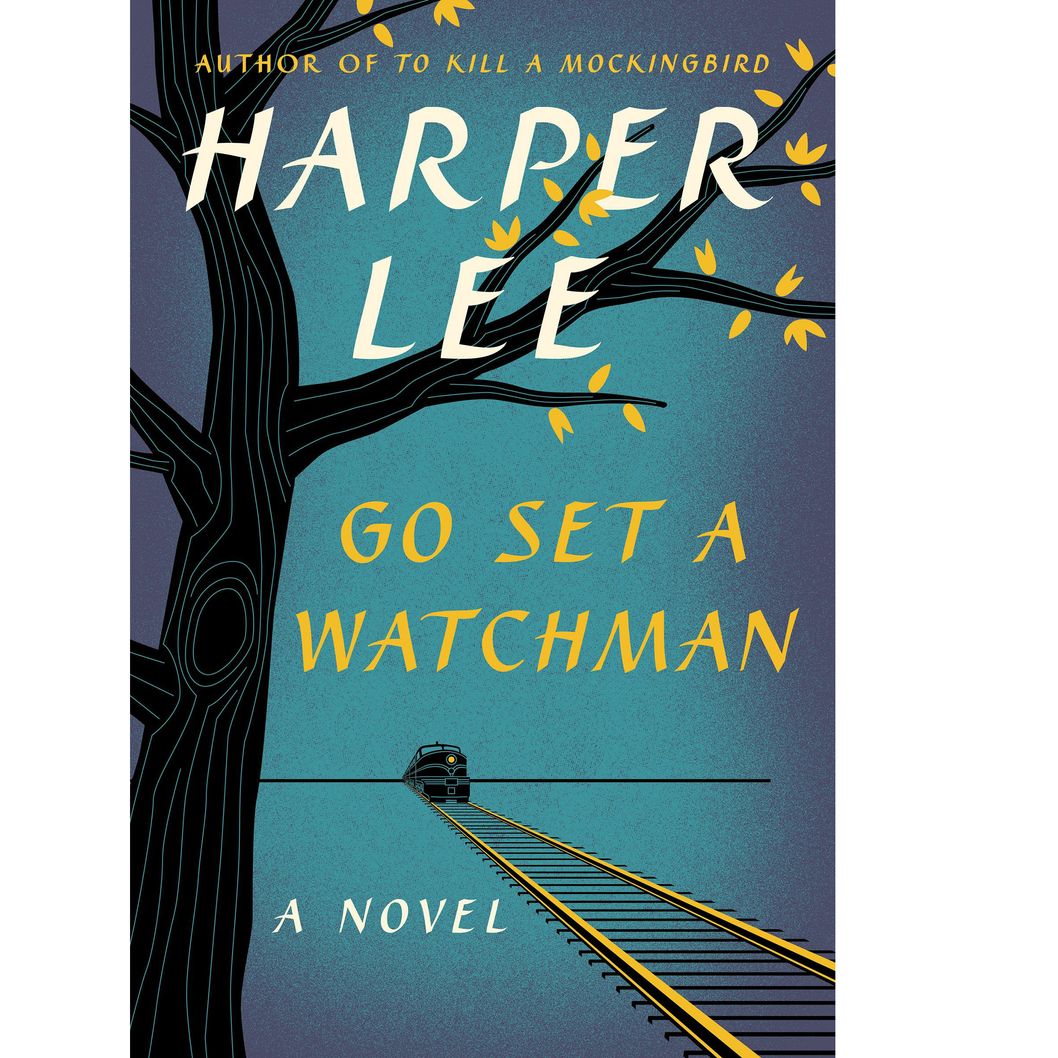
GO SET A WATCHMAN is the first draft of the first novel that the writer who did not study writing ever wrote.

Most first novels, at least those penned by someone with a spark of creativity and a deep desire to say something, tend to be bad on some level. The tone may be too preachy. The action may veer into melodrama. The narration may be chunky or awkward in that initial effort.

The first time that Harper Lee thought to use her life's experiences to compose a novel that said something about the way we live, she put it together based on her current living situation at the time. She was a bit older and had left the small Alabama town of her childhood for the bright lights of New York City. She went home to visit, and found that her perspective was a bit skewed by new experiences as an adult living on her own, in a very different place.

The first draft of the first novel reflected that feeling of going back and seeing through fresh eyes. The first novel is told from the point of view of the female character who comes back to her home town, just like Nelle Harper Lee once did. She created characters who were a bit more harsh, like the father who is a racist. The original version of Atticus Finch is probably more accurate and representative of the people Ms. Lee grew up with. She had something, with that first draft, but it was not quite right.

Back in the old days, a writer with talent could attract the attention of a publisher who would be willing to work with that author to hone the craft. Such development takes money, but there was a time when publishers thought it worth the investment. Ms. Lee was telling a story deserving of publication, but she was not telling it in a way that was ready for print.

An editor would have come on board, to find what was good and what needed to be cut. At some point, that clever editor might have suggested a little change, say, to lose the flashbacks and have the girl tell the story as the child in the original flashbacks. Instead of chopping up the narrative, let it flow. It meant re-writing the book, but that's how it is with first drafts. The rawness must be cooked out, and sometimes it involves a full overhaul.

TO KILL A MOCKINGBIRD is the result of a talented writer working with an editor to polish prose and rearrange the pieces so that a readable, sell-able novel is pulled from the first draft. And once an author starts revising, all sorts of things start to change. The father figure evolves into a champion instead of a racist, but when you tell a story in a new way, the characters develop in different ways.

The first draft of the first novel was tucked away because it was not the best version of a tale out of the racist south.

There is money to be made, unfortunately, and so the first draft is now marketed as a brilliant new novel, previously undiscovered until Ms. Lee's sister and protector died. The story of how the manuscript was discovered, involving a lawyer who came into the picture after Ms. Lee's sister and protector died, grows shadier by the day.

If you get this feeling that people are taking advantage of an old, infirm lady, you have plenty of company. While some extol the glories of Ms. Lee's brilliant prose, there are plenty who see the book's publication as elder abuse. Not that her literary agent beat her about the head, but a pushy salesman, like your average literary agent, could make a persuasive argument to get their hands on that 15% commission of a best seller.

GO SET A WATCHMAN is worth reading if you are interested in writing. By studying the first draft as compared to the final version, you can see how a book comes to life. It will help you conquer your fear of making major revisions to your own first effort, as you learn how very much a narrative can be changed without losing the heart of the story.

Saturday, July 18, 2015

Under The Dock Leaves In The Ground

O would, beloved, that you lay
Under the dock-leaves in the ground,
While lights were paling one by one.

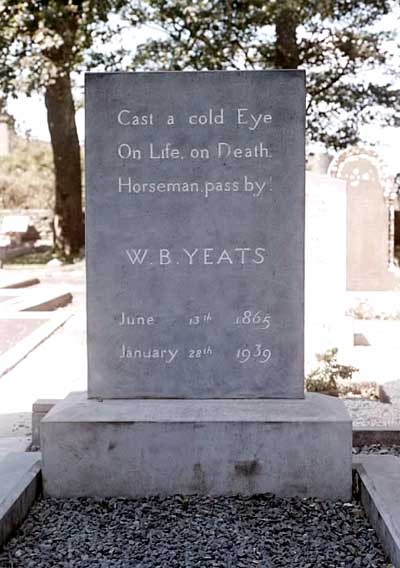
Thus spoke the great Irish poet, William Butler Yeats, who would die in France in 1939. He lived during a tumultuous time in Ireland's history, and recorded his impressions of the Easter Rising of 1916 in poetry that lives on.

He was highly acclaimed in his day, and asked his wife to plant him in French soil for a year or so, until all the buzz died down about his passing. Then she was to dig him up and bring him home to Sligo, where he could rest in peace and have a peaceful burial as well.

When you're dying, it's no easy task to hold off the inevitable end, even if the world is plunging into war and your last request is going to have to be delayed. Hitler started doing his invading and by 1940, there was no disinterring dead Irish poets for transport out of France. The French had plenty of other things to worry about, and Mr. Yeats' desire to have his final resting place in his homeland was not a priority.

After the war, Mrs. Yeats thought that she would honor her late husband's wish, but nine years post-mortem, there would be nothing but dust and bones to be dug up. She wanted it done just the same, and the orders came down from the authorities.
W. B. Yeats et al.
Except, you see, there was this demand for burial space in the French cemetery. So many young men to be interred, to say nothing of the normal contingent of corpses, and room must always be made for the next batch. It is not uncommon for bones of the deceased to be dug up and stored in an ossuary, a sort of warehouse for the last bits. A final resting place in Europe is not always final, unless you are wealthy or very important. No one is emptying the sarcophagi in The Pantheon, now, are they, but some Irish poet underground? Make room for the next one, out you go William Butler.

But Mrs. Yeats was not to be deterred, so the French in charge asked the local coroner to put together a skeleton with whatever parts he might find that could have come from W. B. Yeats. The man had a large head, so a big skull was selected. He wore a truss due to a hernia, so they found some hip bones that were entangled in a medical device. Close enough, right, and a nice box of bones was shipped back to Sligo.

No one said a word about the lack of authenticity. Ireland wanted to bury one of its heroes, and that was all that mattered. Just because some of the bones might have belonged to a British gentleman who was buried next to Mr. Yeats did not matter, except to that gentleman's family. A flurry of letters followed, the heated exchange kept largely from the public because, well, Ireland in 1948.....

So who is buried in Yeats' tomb in Sligo?

Not Mr. Yeats. Perhaps pieces of him, but the rest of the bones are a miscellaneous gathering of body parts. Papers recently turned over to Ireland by France explain the whole sordid mess, and the cover-up that followed. What makes the matter particularly pertinent is the fact that Prince Charles and his consort Camilla paid their respects at Yeats' grave recently, so it would appear that they paid their respects to the remains of several others, all of whom shared the communal grave with the famous poet.

Once you're dead, though, does it really matter where your bones are lodged? You'd be more concerned with where your soul is heading.

Wednesday, July 15, 2015

I'm Too Sexy For My Book, Too Sexy....

Tart with a cart
Too sexy for my cockles and mussels, alive, alive-o, I might add.

Molly Malone has been selling her seafood in the heart of Dublin for an age, but those who decide what is fit to post on Facebook are obviously quite unaware of the statue.

She represents the pretty girls of Dublin's fair city, and artist Jeanne Rynhart created the iconic sculpture to express in bronze what a lyricist put into song. Ask an ordinary Dubliner and they're likely to refer to the statue as the tart with a cart, so yes, the sexiness of Molly Malone is generally recognized.

But no one in conservative Ireland is roaring about removing the buxom wench, either, so it can't be all that offensive.

Except to Facebook.

Too sexy for a book on Facebook
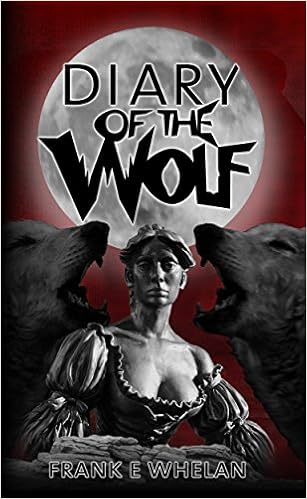
Frank Whelan thought that Molly would make for a nice image on the cover of his book. Once the cover was designed, he needed to promote his prose and he thought of posting the information on Facebook. It's free, it's marginally effective, but it's a way to get the word out that you're selling your book so your friends and family can make the required purchase to keep the peace.

Whoever monitors morality over at Facebook took one look at Mr. Whelan's cover and found it shocking. Not in the artistic quality of the thing, or the curious composition.

No indeed.

Facebook's authority on good taste thought that Molly's bosom was heaving a wee bit too much for a post on a family-friendly website.

According to news reports, Facebook thought Mr. Whelan was actually advertising a dating site. Right, don't ask. It makes no sense whatsoever, even in Ireland where women were locked up in slave labor camps for the crime of being too pretty and tempting to the male eye.

Facebook would not allow the image to be posted, and Mr. Whelan was quick to point out that the lady on the cover is just a statue that's been in Dublin since the 1980s, right there out on the street in the public view, and you can hardly walk past the thing for the tourists snapping photos. With their children, in fact.

Facebook has thus far refused to budge, not unlike the parish priest whose word was once law in the back of beyond. The website would look doubly foolish to backtrack after learning the facts, right? So the ruling must stand and Mr. Whelan cannot promote his book cover, which makes it rather difficult to promote the book.

So let that be a warning to all you authors who think you can include noted statuary on your book covers.

Can you imagine the uproar if Michelangelo's 'David' was to grace some novel about Renaissance Italy? At least Molly here has a dress on to cover her more than the average bit of carved marble that you'll find just about everywhere art is housed.

Keep your models covered. Photoshop in some critically placed fig leaves or risk the censure of Facebook.

Monday, July 13, 2015

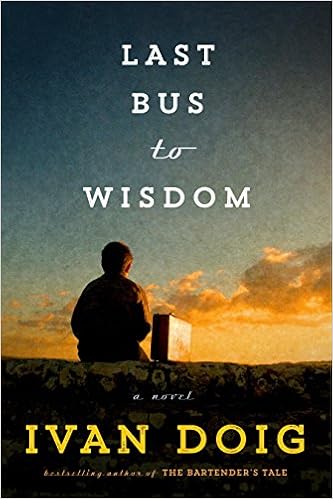
Last Bus To Wisdom: A Book Review

As told through the eyes of 11-year-old Donal Cameron, life can be quite an adventure, and so LAST BUS TO WISDOM makes for a fascinating read.

The orphan protagonist is shipped off, alone, across the country when his grandmother must put him in the care of his great-aunt. A Montana boy accustomed to the wide open spaces meets a great-uncle who is obsessed with America's West, as learned through the pages of fiction. When boy and man decide that there is no living with "the Kate", they set off to discover what lies on the far side of the Mississippi.


Herman the German becomes Donal's sidekick as they ride the bus from sleepy Wisconsin towards the sunset, so that Herman can see what the West really looks like. Along the way, Donal collects autographs for his memory book, thinking that he'll compile an impressive collection that would earn him a mention in Ripley's Believe It Or Not. His naivete forms part of the charm of the novel, the innocent viewing the world through eyes not yet clouded by experiences.


The novel is a delight, a beautifully crafted bit of yarn spinning that takes in a remarkable number of threads and weaves them into a book that cannot be put down. The cast of characters that Donal and his great-uncle Herman the German encounter are true characters that feel real, as if you'd see such riders on a cross-country bus if you took a trip yourself. 

The people who populate the novel are ordinary folk, the commoners who know a thing or two about hand-to-mouth existence and how to survive in a harsh world when you don't have much money. It is a pleasure to spend some time with those who are not obsessed with Manhattan real estate valuations or the latest fashion trends. Those who scrape for a living tend to be more interesting people, and Ivan Doig's characters are all quite interesting.

Over the course of the novel, as life hands them setbacks and assistance, Donal discovers what it is to love and be loved as the kindess of strangers helps him escape from one harrowing escapade after another. This is, of course, the wisdom that he acquires on his travels as he progresses from boy to (almost) man.

The ending is happy, the premise nearly improbable, but the writing so sparkling that you are happy to suspend disbelief and go along for the ride. This was one of the best books I have read in a very long time.

Friday, July 10, 2015

Hitting The Best Seller List: A Strategy

Truth in sales figures questioned by the New York Times
What more do you need to get your book on the New York Times best-seller list than book sales? It's rather obvious, right? If your book sells many copies, more than all the other books, it is by definition a best seller.

So your strategy to achieve this lofty goal is to sell books. Or, if you cannot find enough readers willing to pay money for your prose, you will have to buy the books yourself. They make lovely gifts at Christmas, after all, and it's never too early to shop for the holidays.

That particular attempt to game the system is not foolproof, apparently.

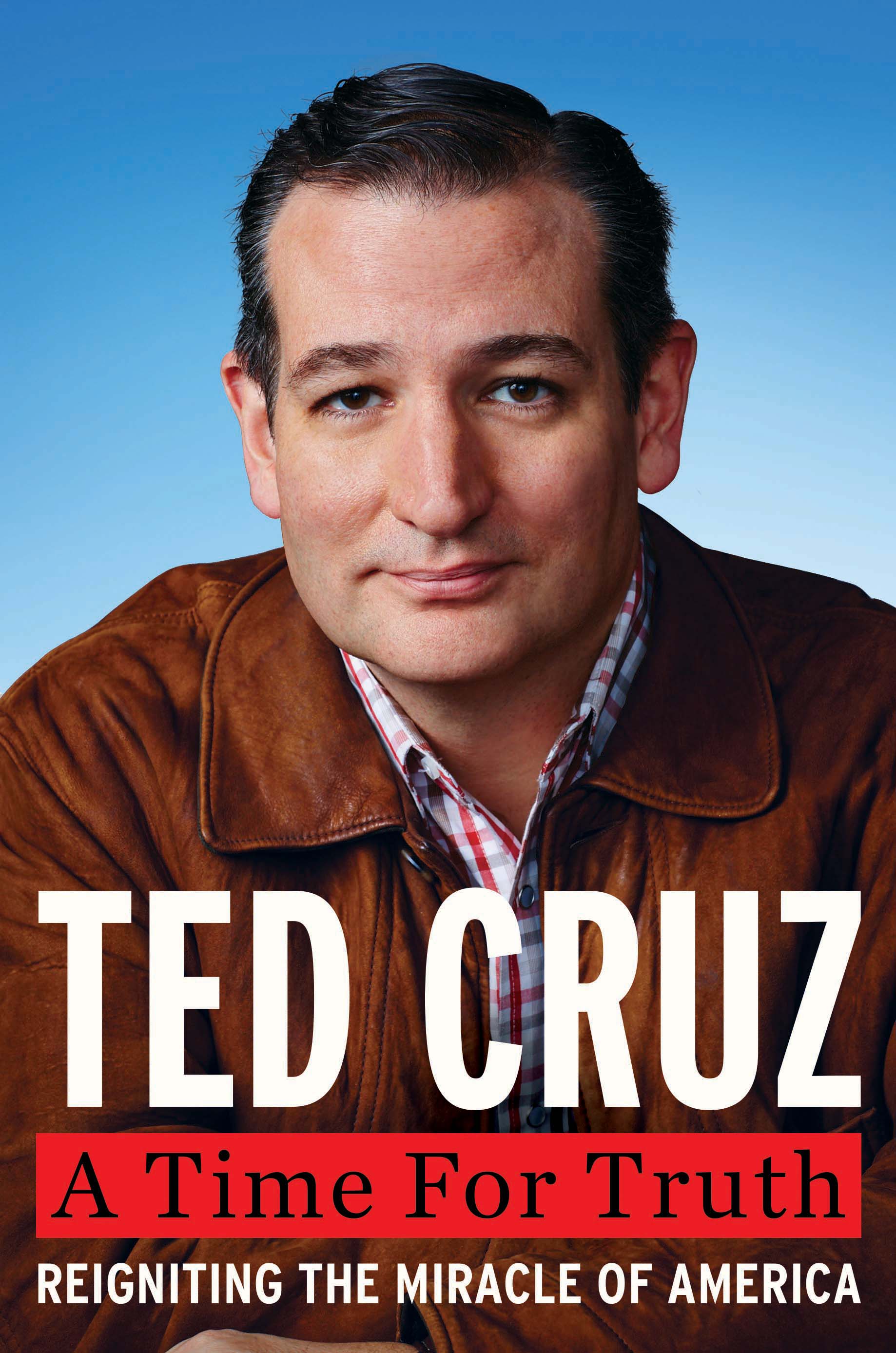
U.S. Senator Ted Cruz wrote himself a biography, which seems to be the thing to do when one is running for the office of President. His colleagues Rand Paul and Marco Rubio have also penned books, and let us not forget the success that Barack Obama found in writing his memoirs. Twice.

By the numbers, his book was a best-seller. He went out, like any clever author, and signed books in book stores where readers could buy the book to be signed. As you would expect, sales of his tome would have peaked on the day he appeared. The same would hold true of the next stop on the tour, with sales peaking in coincidence with his appearance.

Sales figures showed that the book reached the #3 position, a level that should have earned inclusion on the storied list, but such is not the case.

HarperCollins was informed by the New York Times that they were not including Mr. Cruz's book on their list because they had reason to believe he had manipulated the numbers. It wasn't just general public interest that drove sales. No, the New York Times determined that the big numbers were due to "strategic bulk purchases."

Apparently the New York Times can analyze sales and determine how many books were sold where at a given time, and their analysis demonstrated some questionable purchases. No one is providing any details, but you would have to guess that Mr. Cruz may have snapped up cases of his own book to make the numbers look good, or his political campaign cleared out the shelves at every Barnes and Noble for miles around. 11,000 copies sold in one week? Not to 11,000 individuals, according to the newspaper's investigation.

The lesson is simple. If you are going to manipulate your sales figures to push yourself ahead of the queue, don't buy cases of books yourself from one location.

Go online and hit up the independents. You can order from almost all of them through a single website. Spread the wealth around, and scatter the sales locations at the same time. You can still give out cash to family and friends to buy multiple copies locally, but don't get greedy and have them buy dozens at a time.

The system can be manipulated, but it takes some effort. If it's worth doing, it's worth doing well, isn't it?

Tuesday, July 07, 2015

The In-Between Doldrums

It's a sad day when you finish a manuscript and have to say good-bye to the characters. You've created them but they take on a life of their own as you spin them into a yarn. Then you write "The End" and it's over. Off they must go to Dust Bunny Land, under the bed or in the deep recesses of some desk drawer.

Figuratively speaking, of course. Your manuscript is most likely stored on your computer hard drive, and a thumb drive if you're being cautious. And it's to be found in one of your e-mail folders as well, stored on the provider's server as an added precaution.

But at any rate, the manuscript is tucked away to rest so that when you go back to start the edits, you have fresh eyes.

You've edited the previous manuscript, which didn't need much work because you've been at it for the past five years with that one. You can't think of anything else to be done to make it better, so you start thinking about query letters to try the literary agents again. Of course the query letter needs to sit a bit, to rest before it, too, gets an edit.

You are in between manuscripts. It is time to start another one, to keep you busy while you query the oldest work, but there's research to be done. Reading up on the subject that inspired you when you first read about Historical Incident C does not have the appeal of writing prose, and so you put it off a bit.

The urge to write, however, is prodding you. The issue? You don't actually have anything to write at the moment.

So there you sit, all glum and morose, a bit edgy if approached by those who think you're not doing anything when in fact your head is very busy. There are voices there, quite soft but insistent. It's the people who piqued your interest, the ones who appear in the source books you picked up last year. They want their story written, and you intend to write it, but it's not all that much fun to study a topic or a time period.

It's work, which is not to say that writing isn't work, but when the words are flowing it doesn't feel like a slog through tar. Making time lines, uncovering small details about life in the era of your upcoming Work In Progress, that takes effort.

How can you make the effort when you're missing your characters that you've spent the past year with?

About all you can do is make yourself sit down in the chair with a notepad and a pencil, and get to it.

What is the alternative, after all, but to polish a query letter? Can you think of anything more nerve-wracking and soul-killing than that?

Wednesday, July 01, 2015

You Read Too Much

It sounded almost too good to be true when it was first introduced. Imagine paying a flat monthly fee, something quite affordable, and then being able to read as much as you liked.

What could be better? Read three or four e-books a week, and not have to pay for each title? Read hundreds of books a year, fulfill your cravings for delicious words, and still have money left to pay the electric bill. And so Scribd found a willing audience to buy into the notion of subscription e-books.

The problem is, dear romance reader, that you read too much.

Scribd may be good in theory, but in practice, the romance readers are killing it.

Romance readers are voracious. They go through one e-book after another, reading and reading until you'd think their eyes would fall out of their heads but they just go and read another book.

The subscription fees, however, don't cover Scribd's costs to acquire those books. Publishers aren't giving things away for free very much, and if they can sell one hundred books to those voracious romance readers, they have no desire to make less by selling at a steep discount to Scribd because Scribd has this business model it wishes to maintain.

You read too much, you romance fancier. Scribd has just culled the most money-losing part of their business and removed a huge quantity of romance titles. They've axed erotica as well, which is understandable. Those titles are a few short words of graphic porn and it doesn't take long to read one of them. A particularly sex-obsessed individual could easily manage one a day, or more if they have a quick recovery period. When you have unlimited porn catering to every fetish, you may go a bit overboard and stuff your head with filth because, well, it's there for the taking.

In the short term, Scribd will see a drop in expenses as the romance readers find that what they want is not to be had via Scribd. The lending will drop and the publishers won't be owed quite so much.

And then?

Then the avid romance readers cancel their subscriptions and use their eight euros (more or less) to buy fewer titles from suppliers like Smashwords, which was providing much of Scribd's romance content.

Scribd will then take in less money, even while shelling out less. The question to be answered will then become, is the business model viable at the current price? Without the voracious romance readers signing up, who would replace that large population? Can there be enough non-romance fanatics to support a smaller catalogue if those readers are more selective and don't read as much?

One can theorize all day, and cost accountants can make all sorts of calculations and projections. Only time and experience will tell, but while waiting for that time to generate the experience, Scribd will continue to burn through investor money. Investors are not known to wait forever. Scribd hangs in the balance, an experiment undergoing some adjustments as test results come in.

But is it on life support, or can it recover?