Debut author Kristen Wolf holds a Master's degree in creative writing, so she's been trained in the art of the sentence. Even so, she says she had a difficult time finding herself a publisher for her first novel.
All she did was to take an old story and tell it in a new way. It's the new way that created a bit of a snag. Ms. Wolf's debut novel, The Way, tells the story of Jesus...except Jesus is a woman.
It's a literary twist that has all the makings of a controversy. However, controversy creates buzz and buzz sells books, so we're good here.
Her reason for writing on such a topic?
Like so many Catholic women, she felt pushed off to the side by a male hierarchy that forbids a female to preach the gospel. The liturgy that Ms. Wolf followed was overrun by males, and the few females that were allowed into the story were heavily marginalized. After all, it was Mary Magdalene who was reduced to the role of repentant prostitute when the historical record holds an entirely different set of facts.
The author's imagination filled in the gaps of the "what if" scenario, and a novel was born. A retelling like this is fodder for book groups (those that actually discuss books rather than use the time to down a couple of pints). Debating the preachiness factor could fill a couple of hours with ease, and those who didn't read the book on time just might be compelled to finish it after all, to see what the fuss is about.
Write what you know. Add a unique twist.
And remember, there are more things known to you than you might realize at first glance. Sprinkle in a dash of imagination, and your next novel is already forming up in your head.
Thursday, August 18, 2011


Wednesday, August 17, 2011
Ready, Steady, Publish
Former literary agent turned Amazon publishing mogul Larry Kirshbaum has put his enterprise into motion.
His first offering from Amazon Publishing? Mr. Kirshbaum has snagged a self-help guru who's proven himself as a writer published by Crown.
Self-help has long been a popular genre, as evidenced by the many spin-offs from the old Oprah Winfrey talk show. Thanks to her, we have Dr. Oz and Dr. Phil et al. What better genre to open with, in that case?
Timothy Ferriss is the creator of the four-hour body and the four-hour workweek. Whether you live by his creed or mock his ideas, you can't deny that the man has sold books.
Reportedly, Mr. Ferriss is well-schooled in technology and knows how to use it to promote himself. All to the good for an Amazon author, who will need to do plenty of promotion to get the publishing venture off to a healthy start.
Amazon's foray into publishing has made a lot of traditional publishers nervous. After all, Amazon has deep pockets and a distribution network like no other. Those deep pockets might pay generous advances for popular authors, who would leave the likes of Random House or Houghton Mifflin Harcourt for Jeff Bezos' greener pastures. Such a scenario would be painful for the trad publishers, who often rely on income from big sellers to offset the loss on a bad gamble.
As for brick and mortar shops, some owners have said they won't carry Amazon published books because Amazon's might is crushing the life out of them. Why help the anaconda tighten its grip on your chest?
No one can predict what will happen to the publishing industry going forward. Amazon might end up like all the rest, with winners and losers, not enormously profitable but not going under. Perhaps more books will be published, giving readers a better selection and encouraging more literacy.
The system is evolving, and who can say who's the dinosaur and who's the fittest that's going to survive?
His first offering from Amazon Publishing? Mr. Kirshbaum has snagged a self-help guru who's proven himself as a writer published by Crown.
Self-help has long been a popular genre, as evidenced by the many spin-offs from the old Oprah Winfrey talk show. Thanks to her, we have Dr. Oz and Dr. Phil et al. What better genre to open with, in that case?
Timothy Ferriss is the creator of the four-hour body and the four-hour workweek. Whether you live by his creed or mock his ideas, you can't deny that the man has sold books.
Reportedly, Mr. Ferriss is well-schooled in technology and knows how to use it to promote himself. All to the good for an Amazon author, who will need to do plenty of promotion to get the publishing venture off to a healthy start.
Amazon's foray into publishing has made a lot of traditional publishers nervous. After all, Amazon has deep pockets and a distribution network like no other. Those deep pockets might pay generous advances for popular authors, who would leave the likes of Random House or Houghton Mifflin Harcourt for Jeff Bezos' greener pastures. Such a scenario would be painful for the trad publishers, who often rely on income from big sellers to offset the loss on a bad gamble.
As for brick and mortar shops, some owners have said they won't carry Amazon published books because Amazon's might is crushing the life out of them. Why help the anaconda tighten its grip on your chest?
No one can predict what will happen to the publishing industry going forward. Amazon might end up like all the rest, with winners and losers, not enormously profitable but not going under. Perhaps more books will be published, giving readers a better selection and encouraging more literacy.
The system is evolving, and who can say who's the dinosaur and who's the fittest that's going to survive?
Tuesday, August 16, 2011
The Women Will Have Their Revenge

As for the gentlemen, gravity and a fondness for beer do significant damage to the sleek physique.
Ladies have their shapewear, uncomfortable and tight and constricting.
Now they've gone and developed the same misery for men. Introducing Spanx For Men, a line of undergarments that will have you looking fit without the need of a gym membership.
Suck in that gut? No need if you're wearing Spanx For Men.
Take a deep breath? Not entirely possible, by the look of things.
Men possessed of a vain streak have long had their corsets and girdles to slim a figure. Spanx For Men is merely the latest incarnation.
Having a flat stomach is a sign of youth and vigor, and we'd all like to look young for as long as possible. It's just that it's so much work as you age. Women have long known this. On top of that, the poor dears have the added burden of pregnancy, which stretches out the belly in a manner that becomes more permanent as the years slide by. Little wonder that they'd be at the forefront of creating illusions.
So now men can hide their lack of fitness behind a constricting undergarment, and face the same dilemma that women face when it's time to remove said garment as a moment of intimacy approaches. For centuries, the lasses have been fretting over the man's reaction to discovering the naked truth about a less-than-perfect body. Men will be facing that same moment of truth in their Spanx For Men.
They're getting even, the ladies. Leveling the field.
Monday, August 15, 2011
What's The Rush
The hierarchy of the Catholic Church moves at a snail's pace. We all know that.
So we shouldn't be upset with Bishop Robert Finn for moving at normal Vatican speed. He's a busy man, over there in Kansas City and St. Joseph, Missouri. And accusations of pedophilia require careful consideration. Profound and deep reflection.
 To say nothing of the critical shortage of priests. Can't go tossing them out the door with undo haste.
It's a long, long way, from May to December. But the days grow short.... It turns out that Bishop Finn knew one of his priests was taking photos of little girls. Obscene photos.
He knew about it in December. He didn't inform the police until the following May.
Not ony did he not inform the police, he also failed to remove the offender from ministry. Not only did he fail to remove the offender from ministry, but he gave his approval to the pedophile priest to officiate at a little girl's First Communion.
It's the modus operandi of those who destroyed childrens' lives in Ireland over a period of decades.
Sadly, it's nothing new. The bishops are clinging to the old ways, and it doesn't much matter if the parishioners are harmed. It's all about protecting themselves and those above them, maintaining their power base.
The parishioners of Bishop Finn's diocese have had enough and there are calls for his ouster. Those who haven't already left the church, that is.
The Vatican isn't listening, is it?
So we shouldn't be upset with Bishop Robert Finn for moving at normal Vatican speed. He's a busy man, over there in Kansas City and St. Joseph, Missouri. And accusations of pedophilia require careful consideration. Profound and deep reflection.
To say nothing of the critical shortage of priests. Can't go tossing them out the door with undo haste.It's a long, long way, from May to December. But the days grow short.... It turns out that Bishop Finn knew one of his priests was taking photos of little girls. Obscene photos.
He knew about it in December. He didn't inform the police until the following May.
Not ony did he not inform the police, he also failed to remove the offender from ministry. Not only did he fail to remove the offender from ministry, but he gave his approval to the pedophile priest to officiate at a little girl's First Communion.
It's the modus operandi of those who destroyed childrens' lives in Ireland over a period of decades.
Sadly, it's nothing new. The bishops are clinging to the old ways, and it doesn't much matter if the parishioners are harmed. It's all about protecting themselves and those above them, maintaining their power base.
The parishioners of Bishop Finn's diocese have had enough and there are calls for his ouster. Those who haven't already left the church, that is.
The Vatican isn't listening, is it?
Kiwis And Hobbits
Forget Australia.
You want to work in the land of the kiwis and the home of the Hobbits.
New Zealand wants you, Irish construction worker.
Ireland doesn't want you, in case you haven't noticed. There's essentially no work to be had in any corner of the land these days. When a major builder goes into receivership, you know it's time for you to pack up your bags and head to Christchurch.
 The city was devastated by an earthquake and rebuilding will require far more workers than currently reside on the tiny island. This is your chance for a fresh start.
You saw the scenery in the Lord of the Rings films, didn't you? How would you like to be seeing it for real, every day for the rest of your life?
The Building Industry Federation is all in favor of importing Irish workers, and why wouldn't they be? A tremendous number of homes and buildings are in urgent need of immediate repair to make them liveable. Plans are in the works to rebuild Christchurch, to make it more green and sustainable and all that, and the project goes nowhere without skilled labor to make it happen.
Besides, you speak English, and don't think the contractors aren't biased towards those who are easily communicated with.
There's no work in Ireland. How about New Zealand (don't mind the ground shaking beneath your feet).
You want to work in the land of the kiwis and the home of the Hobbits.
New Zealand wants you, Irish construction worker.
Ireland doesn't want you, in case you haven't noticed. There's essentially no work to be had in any corner of the land these days. When a major builder goes into receivership, you know it's time for you to pack up your bags and head to Christchurch.

You saw the scenery in the Lord of the Rings films, didn't you? How would you like to be seeing it for real, every day for the rest of your life?
The Building Industry Federation is all in favor of importing Irish workers, and why wouldn't they be? A tremendous number of homes and buildings are in urgent need of immediate repair to make them liveable. Plans are in the works to rebuild Christchurch, to make it more green and sustainable and all that, and the project goes nowhere without skilled labor to make it happen.
Besides, you speak English, and don't think the contractors aren't biased towards those who are easily communicated with.
There's no work in Ireland. How about New Zealand (don't mind the ground shaking beneath your feet).
Because It Wouldn't Sell
 Will publishers never learn?
Here's a way to get published. Make up a story, fill it with sensational anecdotes, and market it as your memoir.
That's what Nicolai Linin did.
His English-language publisher put together quite a long string of adjectives to sing the book's praises, but they must have drained the budget because there wasn't anything left over for fact-checking. That was supposed to be done by Einaudi, the original publisher based in Italy.
Einaudi says they published a novel, and if anyone believed half of what happened in the book, they're nuts. So no, they didn't fact check. It's fiction, as far as they're concerned.
The author doesn't care how the book is catalogued. He readily admits that he more than embellished his story so he could sell more books. And why not?
After all, he'd found some success by faking another memoir about his life. So much success that the movie rights were sold and John Malkovich is slated to star.
What comes next? Lawsuits by disgruntled book buyers who believe they've been had? Lawsuits from the publisher, to recoup the advance because the publisher's been had? Lawsuits from the movie people because they can't market the film as real life anymore because the author's been outed as a fraud?
Send a query letter to a literary agent and they'll send you a rejection letter that notes how tight the fiction market is. Publishers aren't buying much fiction, they say. Maybe you should be pushing a memoir, instead of a novel.
Saturday, August 13, 2011
In Dublin? Looking For Antiques?

Don't be put off by the derelict buildings or the generally depressed air about the place. The global economy is struggling and Dublin's Francis Street is showing it more than most. If you enjoy antiquing, this is the place to shop.
Mr. Fennelly is doing all he can to promote the area, which isn't on the beaten path of tourists who cling to the tour bus and the organized route.
Like any shopping district, Francis Street needs people walking around. Tourists are more likely to wander if they believe they're safe and not strolling through some seedy, crime-ridden part of town. And foot traffic leads to purchasers entering stores to buy things.

What kinds of things? Mr. Fennelly has a store full he'd be delighted to sell to you, like the ashtray (circa 1930s) pictured to the right. That would fit nicely in your suitcase.
Of course you can find a wide selection of Georgian and Victorian furniture, the remnants of the ruling Protestant Ascendancy, along with bits of handmade Irish woodcraft that is perfect for the collector of folk art.
If you're visiting Ireland, you want to take back some souvenirs as a reminder of the good time you had. Why not head to Francis Street, and pick up something more unique than a modern piece of boredom that was probably made in China?
Friday, August 12, 2011
Potboiler Fiction
The book group chose Michael Harvey's The Fifth Floor this month. It has served as my introduction to potboiler fiction, a genre I've never read before.
This turned out to be a good choice for a summer read. This time of year, it's hot, the electric bill is so high it's like getting Tasered to look at it, and I don't need to think deep thoughts or be moved by elegant prose.
The prose ain't elegant, it's noir-ish and filled with metaphors that strike with the force of a sledgehammer. Like the chapters, the sentences are short. There's far more dialogue than exposition, and there certainly isn't much internal thought going on.
Radically different from others who set their scenes in Chicago, like Willa Cather or James Farrell.
As it turns out, this particular novel is the second in a series that follows narrator Michael Kelly, a disgraced cop turned private investigator. He smokes. He drinks. He probes the seedy underbelly of Chicago. Who needs uplifting, inspirational characters when you're hiding in air conditioned comfort to avoid sweating?
Having not read the first, there were times when I felt a bit lost when action from the first installment was referenced and I was not in the know. Even so, it was easy enough to follow the simple plot. The author uses the Chicago Fire as the jumping off point, creating a fictionalized scam perpetrated by a politician's ancestor back in 1871 and then using that scam as a potential scandal to derail the politician's career.
All in all, that's pure Chicago politics.
This being my first foray into the genre, I was a bit annoyed every time the narrator said or did something without letting me, the reader, in on it. I realize that this is a device meant to get me to turn the page, to keep reading until the narrator is good enough to fill us all in. For someone who's never read this sort of thing, it was a device that got under my skin, until I accepted it as the way these things are put together.
The characters are a bit more cartoonish than what you might find in a piece of literary fiction, but that's what this genre is all about, in a way. There's a place for comic books in this world, and a steady diet of great literature isn't exactly a well-rounded reading diet.
The point of the story is to figure out who-done-it, with a domestic dispute and a political scandal serving as separate story lines that become intertwined over the course of the narrative. The author skims over the surface, never diving too deep, because these novels aren't about depth. They're just stories for our entertainment and amusement.
As I said, perfect summer fare.
Naturally, I'll have to pick up the first in the series, The Chicago Way, to fill in the blanks caused by reading out of order.
And I'll want to verify that Mr. Harvey hasn't gone and spoiled my favorite dive bar by mentioning its location in books three and four. Wouldn't want the place filling up with literary tourists like Dublin's pubs on Bloomsday.
This turned out to be a good choice for a summer read. This time of year, it's hot, the electric bill is so high it's like getting Tasered to look at it, and I don't need to think deep thoughts or be moved by elegant prose.
The prose ain't elegant, it's noir-ish and filled with metaphors that strike with the force of a sledgehammer. Like the chapters, the sentences are short. There's far more dialogue than exposition, and there certainly isn't much internal thought going on.
Radically different from others who set their scenes in Chicago, like Willa Cather or James Farrell.
As it turns out, this particular novel is the second in a series that follows narrator Michael Kelly, a disgraced cop turned private investigator. He smokes. He drinks. He probes the seedy underbelly of Chicago. Who needs uplifting, inspirational characters when you're hiding in air conditioned comfort to avoid sweating?
Having not read the first, there were times when I felt a bit lost when action from the first installment was referenced and I was not in the know. Even so, it was easy enough to follow the simple plot. The author uses the Chicago Fire as the jumping off point, creating a fictionalized scam perpetrated by a politician's ancestor back in 1871 and then using that scam as a potential scandal to derail the politician's career.
All in all, that's pure Chicago politics.
This being my first foray into the genre, I was a bit annoyed every time the narrator said or did something without letting me, the reader, in on it. I realize that this is a device meant to get me to turn the page, to keep reading until the narrator is good enough to fill us all in. For someone who's never read this sort of thing, it was a device that got under my skin, until I accepted it as the way these things are put together.
The characters are a bit more cartoonish than what you might find in a piece of literary fiction, but that's what this genre is all about, in a way. There's a place for comic books in this world, and a steady diet of great literature isn't exactly a well-rounded reading diet.
The point of the story is to figure out who-done-it, with a domestic dispute and a political scandal serving as separate story lines that become intertwined over the course of the narrative. The author skims over the surface, never diving too deep, because these novels aren't about depth. They're just stories for our entertainment and amusement.
As I said, perfect summer fare.
Naturally, I'll have to pick up the first in the series, The Chicago Way, to fill in the blanks caused by reading out of order.
And I'll want to verify that Mr. Harvey hasn't gone and spoiled my favorite dive bar by mentioning its location in books three and four. Wouldn't want the place filling up with literary tourists like Dublin's pubs on Bloomsday.
Thursday, August 11, 2011
Why Writers Shouldn't Reproduce
Being a writer and being a good parent must be entirely contrary occupations. If the children of some famous writers are to be believed.
Today's New York Times profiles three offspring of wildly successful writers, three offspring who have written memoirs about growing up with a famous parent.

If I'd have to trade my relationships for the fame of Joseph Heller, I'd prefer to labor in obscurity.
By his daughter's account, the man was a bastard of the first order who didn't seem to much like the wee lass he helped create. Mr. Heller was too busy loving himself, even though he had the love of the reading world heaped upon him when Catch-22 became the stuff of American Lit classes.
What sort of choices did the author of Sophie's Choice make in regard to his daughter?
He picked his writing, a solitary, intensive occupation that acted like a wall to keep everyday life away.
If you've done much writing, you know about that wall. You block out some time to focus on words, on sentence structure and narrative flow, and you get so wrapped up in the story you're creating that you don't have a family. You have your novel, coming together via your own thoughts and imagination. There's no room in there for sibling rivalry, skinned knees or the oil change your car needs.
Given the demands of writing well, it comes as no surprise that William Styron and Joseph Heller were distant parents. The family was sacrificed for the sake of the writing.
Can someone come out with a biography of a writing parent that casts a positive light on this absurd hobby so many of us are pursuing with near obsession? One happy child, anyone? Or is it a given that writers shouldn't reproduce?
Today's New York Times profiles three offspring of wildly successful writers, three offspring who have written memoirs about growing up with a famous parent.
If I'd have to trade my relationships for the fame of Joseph Heller, I'd prefer to labor in obscurity.
By his daughter's account, the man was a bastard of the first order who didn't seem to much like the wee lass he helped create. Mr. Heller was too busy loving himself, even though he had the love of the reading world heaped upon him when Catch-22 became the stuff of American Lit classes.
What sort of choices did the author of Sophie's Choice make in regard to his daughter?
He picked his writing, a solitary, intensive occupation that acted like a wall to keep everyday life away.
If you've done much writing, you know about that wall. You block out some time to focus on words, on sentence structure and narrative flow, and you get so wrapped up in the story you're creating that you don't have a family. You have your novel, coming together via your own thoughts and imagination. There's no room in there for sibling rivalry, skinned knees or the oil change your car needs.
Given the demands of writing well, it comes as no surprise that William Styron and Joseph Heller were distant parents. The family was sacrificed for the sake of the writing.
Can someone come out with a biography of a writing parent that casts a positive light on this absurd hobby so many of us are pursuing with near obsession? One happy child, anyone? Or is it a given that writers shouldn't reproduce?
Wednesday, August 10, 2011
Getting Burned By The Comet's Tail

There was a time, in the first decade of the 21st Century, when anything to do with real estate was golden.
If only Garrett Kelleher had conceived of his grand dream when the comet of prosperity burned brightly. Instead, he grabbed hold and came to find that he had grasped the tail and the comet was heading out into the cold of deep space.
The Chicago Spire was supposed to be a statement, a show of pride and a testament to an Irish immigrant's ability to work hard and succeed in America.
Unfortunately, the timing was off. Just when things were getting up and running, the market went south and there weren't enough buyers around who wanted a condo unit in a thoroughly unique skyscraper.
Loans came due, with Mr. Kelleher personally responsible for repayment. The developer pleaded for more time, praying that the downturn was of short duration.
His prayers weren't answered. Bank of America wanted their money back. He sued the bank, hoping to buy enough time or raise enough capital, but Judge Amy St. Eve has put an end to that lifeline.
The Kelleher home in Chicago, located in the uber-posh Gold Coast is on the market for $16 million, which would go a long way to paying Bank of America the $5.1 million owed.
Even with that action settled, there's still the construction loan from Anglo Irish Bank that's in default. How does a man come up with $77 million when he's in the property development game and there's no property getting developed because no one has the money for risky ventures?
It would have been a magnificent building, if....
Tuesday, August 09, 2011
Same Plot, Different Narrators

Showing requires a picture painted with words, while telling is the direct approach that makes for dull reading.
There's a lot of showing and telling going on in London these days, as rioting and looting continues, spreading to other cities.
Pundits turn to knowledgeable folks to find out why these young people are expressing such rage, and the pundits tell us that these people are without jobs and without hope of advancement. Add to that a rather rigid class structure in England, where the young are not expected to eclipse their parents in earning power or social position, and you've got an underclass seething.
That's the telling.
The showing comes in the pictures like the one above, and the words of the looters themselves. People were getting things for free, said a young man in a baseball cap, so why not us? Let's get some watches, said another example of misunderstood youth, running past a news reporter doing a live feed.
The telling of the rioters' reasons was dull, plodding, and a rehash of the usual thoughts. The showing created an entirely different story, one that does not foster a sense of sympathy in those who are following the plot with rapt attention.
So this is all a protest over a police shooting?
That's a story that's told. The looting is the story being shown, and it's not the same story at all, is it?
Monday, August 08, 2011
Art That Says Sorry For The Child Abuse

The Ryan Report, which detailed a long litany of child abuse at the hands of the Irish State and the Catholic Church, has also recommended that E500,000 be budgeted for the creation of a monument near the Garden of Remembrance, the sacred ground of Irish liberty.
Read The Leaven of the Pharisees and you'll understand the scope of the scandal that continues to roil the Catholic Church.
The Office of Public Works will manage a contest and they are calling on artists to submit their ideas.
It will take a great deal of creativity.
How does a government apologize to countless thousands of its citizens for the decades of destruction? How might a sculptor encompass so much pain in a piece of bronze or a block of stone?
Interested parties can find information about the contest through the Department of Education or PublicArt.ie.
A Story To Be Told
Every day, another veteran of the Second World War (or The Emergency if you're in Ireland) dies. As writers, we can keep alive some of their memories.
 If you write of the 1940's, you could find no more intriguing heroine than Nancy Wake. Her biography is filled with the danger and excitement of the French Resistance as it battled against the German overlords.
Ms. Wake was a feisty woman from the land down under.
If you were to read The Tin Ticket, you'd get a very good idea of what sort of woman was created by transportation, hardship, and the opportunity to fashion a decent life once given the chance.
Married to a Frenchman, Ms. Wake found herself trapped in France when war broke out. Being a true Aussie, she didn't just go cower in the cellar. She went out for blood.
So skilled and clever was Ms. Wake that she earned the nickname 'The White Mouse' for her ability to conduct covert operations without being seen. The Germans wanted her dead, and Ms. Wake eventually had to make an escape to England to survive, but she did return. Via parachute. To finish what she'd started.
Real life provides all the dramatic plots that we need. Re-telling such stories reminds us that we are capable of doing far more than we might otherwise imagine, when faced with the unimaginable.
Ms. Wake has passed away at the age of 98. Her past, her actions and her bravery, will remain behind, recorded in written words.
Ms. Wake was a feisty woman from the land down under.
If you were to read The Tin Ticket, you'd get a very good idea of what sort of woman was created by transportation, hardship, and the opportunity to fashion a decent life once given the chance.
Married to a Frenchman, Ms. Wake found herself trapped in France when war broke out. Being a true Aussie, she didn't just go cower in the cellar. She went out for blood.
So skilled and clever was Ms. Wake that she earned the nickname 'The White Mouse' for her ability to conduct covert operations without being seen. The Germans wanted her dead, and Ms. Wake eventually had to make an escape to England to survive, but she did return. Via parachute. To finish what she'd started.
Real life provides all the dramatic plots that we need. Re-telling such stories reminds us that we are capable of doing far more than we might otherwise imagine, when faced with the unimaginable.
Ms. Wake has passed away at the age of 98. Her past, her actions and her bravery, will remain behind, recorded in written words.
Saturday, August 06, 2011
Advantage In, Advantage Out
As 2011 opened, as many as 200 Irish artists had signed a pledge to boycott Israel.
Then there's the Ireland Palestine Solidarity Campaign, championing the rights of the Palestinians and calling out the Israelis for inhumane treatment.

You might believe that it's far more inhumane to lob missiles into Israeli homes and schools, but you probably think Israel doesn't have a right to protect its citizens by any means at the country's disposal. Being constantly on guard against attack does tend to warp the sensibilities.
Clearly, there's not much love between the Israelis and the Irish. As you'd imagine, they'd have even less love for an Israeli Jew (granted, his parents were Iraqi immigrants) who's campaigned on behalf of the Palestinian cause in Ireland.
Ezra Yitzhak Nawi is aware of the bad blood, because he's convinced that he's become a victim of the political tennis match.
Ad in, Mr. Nawi. The activist gave the Israeli government headaches when the cameras were rolling as he tried to block Israeli bulldozers that were demolishing homes built illegally by Arabs as part of their protest against the very existence of Israel.
Ad out, Mr. Nawi. The openly gay thorn in Israel's side once served time in an Israeli prison for raping a teenage boy, and the twenty-year-old case suddenly became huge news in Ireland.
It's how the game is played, with one side serving and the other returning until one player misses the ball. It isn't unreasonable to accuse the Israelis of leaking details of the case to Irish journalists as they served up a little retribution that would make ordinary, open-minded people look at Mr. Nawi in a different way. Homosexuality is one thing, but pedophilia is quite another.
In Ireland, however, the story had greater resonance because Mr. Nawi was once the lover of Irish politician David Norris, who actively sought clemency from the Israeli judges on behalf of his sweetie, convicted of statutory rape. Mr. Norris' campaign for the Irish presidency was going quite well, until letters he'd written in support of Mr. Nawi were made public and the campaign came crashing down.
Mr. Norris has gone home in disgrace, while Mr. Nawi is left to hiss in powerless fury.
Service, Mr. Nawi. Playing for game point, with a cloud of inappropriate sexual conduct hanging over his head. A definite disadvantage for a human rights campaigner.
Then there's the Ireland Palestine Solidarity Campaign, championing the rights of the Palestinians and calling out the Israelis for inhumane treatment.
You might believe that it's far more inhumane to lob missiles into Israeli homes and schools, but you probably think Israel doesn't have a right to protect its citizens by any means at the country's disposal. Being constantly on guard against attack does tend to warp the sensibilities.
Clearly, there's not much love between the Israelis and the Irish. As you'd imagine, they'd have even less love for an Israeli Jew (granted, his parents were Iraqi immigrants) who's campaigned on behalf of the Palestinian cause in Ireland.
Ezra Yitzhak Nawi is aware of the bad blood, because he's convinced that he's become a victim of the political tennis match.
Ad in, Mr. Nawi. The activist gave the Israeli government headaches when the cameras were rolling as he tried to block Israeli bulldozers that were demolishing homes built illegally by Arabs as part of their protest against the very existence of Israel.
Ad out, Mr. Nawi. The openly gay thorn in Israel's side once served time in an Israeli prison for raping a teenage boy, and the twenty-year-old case suddenly became huge news in Ireland.
It's how the game is played, with one side serving and the other returning until one player misses the ball. It isn't unreasonable to accuse the Israelis of leaking details of the case to Irish journalists as they served up a little retribution that would make ordinary, open-minded people look at Mr. Nawi in a different way. Homosexuality is one thing, but pedophilia is quite another.
In Ireland, however, the story had greater resonance because Mr. Nawi was once the lover of Irish politician David Norris, who actively sought clemency from the Israeli judges on behalf of his sweetie, convicted of statutory rape. Mr. Norris' campaign for the Irish presidency was going quite well, until letters he'd written in support of Mr. Nawi were made public and the campaign came crashing down.
Mr. Norris has gone home in disgrace, while Mr. Nawi is left to hiss in powerless fury.
Service, Mr. Nawi. Playing for game point, with a cloud of inappropriate sexual conduct hanging over his head. A definite disadvantage for a human rights campaigner.
Friday, August 05, 2011
New To The Neighborhood

That new neighbor might not want you to get to know him too well.
People in Trooperstown, Co. Wicklow, are shocked to discover that the man who said he was from Wales turns out to be a convicted murderer who killed his own grandmother to get money to pay drug-related debts.
Who would have guessed that the owner of a damp-proofing business had such a dark past? Who is happy to learn that a British criminal was able to relocate to Ireland with such ease?
The murder was committed in 1991 and Ian Kentzer of Yorkshire was allowed to go free in 2005. Apparently, his literary talent swayed the judge. Mr. Kentzer was the proud author of a book of poetry that he penned while penned.
While on probation, he discovered that his family in Yorkshire had it in for him and things weren't comfortable at home. He moved to Wales, changed his name to Ioan Thomas (a shout-out to famed Welshman Dylan Thomas, perhaps?), but he still didn't find peace.
In 2008, he went on the run and landed in a remote corner of Ireland, where he related a fine fable about his origins, faked a Welsh accent, and started up a business.
Like a poorly written novel, his story unravelled when he veered off the plot and got caught speeding. It didn't take the gardai long to discover that Mr. Kentzer/Thomas was wanted in England.
There's the makings of good novel in his tale.
As an author, you could make him a persecuted victim of a family vendetta, a man who turned himself around through poetry. Or you could make it more of a thriller, with a brave garda investigating a man whose Welsh accent is a bit off.
There's your writing assignment for the weekend. The real story concludes with Mr. Kentzer/Thomas being extradited back to England to face charges on violating his probation. As an author, you can have the story end any way you like. That back-to-jail thing is too dull for a good novel.
Thursday, August 04, 2011
You Can Dress Them Up, But You Can't Change The Price

Change the can.
Because clearly it's the design of the label that's putting people off Budweiser and on to Busch Light or Coors.
So very clever, those Belgians.
Now owned by an international conglomerate, the Annheuser-Busch brand won't be featuring the old red, white, and blue color scheme. Too Yankee-ish. It's red, white, and gold in the future.
Ask any college student and they'll tell you that Busch Light is their beer of choice because it's cheap. The average adult doesn't take all that long to figure that one out as well.
So if you're watching your expenses carefully, and who isn't these days, you'll switch to a cheaper brand rather than do without a cold one at the end of a long day. InBev could make the cans green and purple and it wouldn't change the simple fact that times are hard, beer drinkers are cutting back, and so Busch Light is winning the race.
According to Rob McCarthy, vice president at Budweiser, the new look is an update that incorporates the design elements that loyal Bud drinkers know and love. One look at the modern version of the old label and those Bud fans will be yearning for the crisp, refreshing taste that, sadly, is a bit out of their price range at the moment.
A new label on the can or bottle won't fix what's wrong with declining sales. Only a rebound in the economy can make Budweiser once again affordable to the masses. A new price, rather than a new color scheme, would help sales. That, however, wouldn't do a thing for InBev's bottom line.
Wednesday, August 03, 2011
More Profitable Digital Content

No, they didn't jack up the prices on their product.
They sold more e-books.
Digital content, i.e. e-books, don't cost as much to produce. There's no paper, no ink, no union-wage-earning typesetter, no binder, no packager, no box.
There's also a smaller royalty for the author, and that's all to the good for the publisher.
For Simon and Schuster parent CBS Corporation, the fact that 15% of their revenues came from digital sales suggests a swing towards e-books and away from hard copies.
When times are hard, as they are now, people who crave reading material will gravitate to the lower-priced e-book, even if it means waiting a short time until the electronic edition is available. CBS will be studying ways to minimize their costs of producing digital content because it's apparent that digital is becoming an important source of profit. And it's that profit that covers the loss on other CBS products, including all the books that turn out to be less than blockbusters.
For authors, and their agents, it means smaller advances and royalties as e-books outpace the more lucrative hard copy.
A few literary agents have put on e-publisher hats of late, betting on the increasing popularity of e-books. They're all about increasing their clients' income, and their own along with it.
Electronic rights are trending higher in importance as the e-book grows in popularity.
You can bet there's a battle ahead, as traditional publishers hear the patter of little literary agent footsteps following close behind.
Tuesday, August 02, 2011
Not Hating The Catholic Church As Much As That
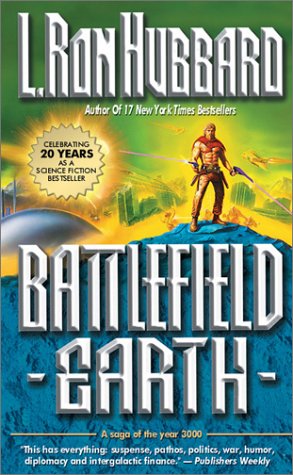
They're not so disgusted, however, as to turn to Scientology as a substitute.
The Church of L. Ron Hubbard in Dublin is not exactly drawing crowds. No one has any solid numbers, or so says Gerard Ryan, the non-executive director.
His reticence is to be expected. When you're looking at what he claims to be "several hundred" in a country of several million, you'd not be crowing about a grand success in recruiting.
With few parishioners in the pews (so to speak), it's not a surprise to hear that the Dublin branch is drowning in red ink. After all, if no one signs up for expensive seminars, there's no income, and without income, there's no profit. If it weren't for the generosity of the main office, Mr. Ryan would have been forced to shut the doors long ago.
No one should be surprised that Ireland isn't embracing Scientology. It isn't just that the nation is so thoroughly imbued with Roman Catholicism that they won't take a look elsewhere. Any literary agent can tell you that science fiction is a very tight market and demand just isn't there.
Monday, August 01, 2011
Hopping On A Growing Bandwagon
Us too, says Deidre Knight of her Knight Agency.
First the Brits, then Dystel & Goderich dipped a toe into the e-book water, and before long, the ladies of BookEnds LLC were taking the plunge.
The e-book bandwagon has been driving through the halls of the literary agencies in the States and it's a serious business decision as to whether the agent should jump on or walk away.
Literary agents adhere to a code of ethics that was formulated by the Association of Authors' Representatives. Even agents who choose not to join the organization tout their adherence to the group's ethical requirements, which include avoidance of any conflict of interest that would harm the author.
In the past, there have been lapses. You can read all about them at Writers Beware.
With literary agents now looking at acting as publishers for their clients' electronic editions, the line between literary representation and publisher is becoming blurred. The e-book industry is new and not yet settled into defined boundaries.
In England, a few literary agents are acting as publishers of existing clients' backlists. There's been hints that they might also publish manuscripts that were rejected by the blockbuster-only major publishing houses, rather than allow an author's perfectly good but smaller market novel to gather dust under the bed.
So here comes Ms. Knight, who's looked out over the landscape and seen a possible business opportunity that would benefit her clients, and herself (to the tune of the standard 15%). Like Dystel & Goderich, her people will aid the author in formatting, cover art, etc., etc., and most likely do some promoting to get the book into the public's eye.
The Knight Agency does not see itself as a publisher, in spite of the e-book publishing service. They'll help an author re-print a backlist title in which rights have reverted, which isn't much of a publishing venture.
But isn't it publishing when they take a fresh manuscript and turn it into digital images?
For readers who are tired of the same old, same old from the major publishing houses, it sounds like the literary agents are still acting as gatekeepers at the slush-pile door. The difference comes in when the gatekeeper culls the leavings pile so that a book they consider publish-worthy doesn't have to die.
The question that AAR-adherents ask? Will the agent work so hard to get a manuscript into a major house if they have an easy option available? After all, with the choice of e-publishing in the background, the agent has a little cushion when it's time to push something on an aquisitions editor.
Like any changing business model, the agent as e-publisher may or may not prove to be the wave of the future. Some agents, like Deidre Knight, are gambling that it will. Others will wait it out and see how things develop.
Someone will win and make some money. Someone will pick wrong and lose. That's the nature of free enterprise. And as always, it's caveat author.
First the Brits, then Dystel & Goderich dipped a toe into the e-book water, and before long, the ladies of BookEnds LLC were taking the plunge.
The e-book bandwagon has been driving through the halls of the literary agencies in the States and it's a serious business decision as to whether the agent should jump on or walk away.
Literary agents adhere to a code of ethics that was formulated by the Association of Authors' Representatives. Even agents who choose not to join the organization tout their adherence to the group's ethical requirements, which include avoidance of any conflict of interest that would harm the author.
In the past, there have been lapses. You can read all about them at Writers Beware.
With literary agents now looking at acting as publishers for their clients' electronic editions, the line between literary representation and publisher is becoming blurred. The e-book industry is new and not yet settled into defined boundaries.
In England, a few literary agents are acting as publishers of existing clients' backlists. There's been hints that they might also publish manuscripts that were rejected by the blockbuster-only major publishing houses, rather than allow an author's perfectly good but smaller market novel to gather dust under the bed.
So here comes Ms. Knight, who's looked out over the landscape and seen a possible business opportunity that would benefit her clients, and herself (to the tune of the standard 15%). Like Dystel & Goderich, her people will aid the author in formatting, cover art, etc., etc., and most likely do some promoting to get the book into the public's eye.
The Knight Agency does not see itself as a publisher, in spite of the e-book publishing service. They'll help an author re-print a backlist title in which rights have reverted, which isn't much of a publishing venture.
But isn't it publishing when they take a fresh manuscript and turn it into digital images?
For readers who are tired of the same old, same old from the major publishing houses, it sounds like the literary agents are still acting as gatekeepers at the slush-pile door. The difference comes in when the gatekeeper culls the leavings pile so that a book they consider publish-worthy doesn't have to die.
The question that AAR-adherents ask? Will the agent work so hard to get a manuscript into a major house if they have an easy option available? After all, with the choice of e-publishing in the background, the agent has a little cushion when it's time to push something on an aquisitions editor.
Like any changing business model, the agent as e-publisher may or may not prove to be the wave of the future. Some agents, like Deidre Knight, are gambling that it will. Others will wait it out and see how things develop.
Someone will win and make some money. Someone will pick wrong and lose. That's the nature of free enterprise. And as always, it's caveat author.
Saturday, July 30, 2011
Cooking Everything But The Books

Conrad Gallagher is one of the stars who brought fine cuisine to a once isolated backwater that had fully mastered the art of boiling everything to mush. As a chef, he can cook like no other. As a businessman, it's a pity he can't cook his books as well.
Two of Mr. Gallagher's restaurants have gone under, buried under a mountain of unpaid taxes. Ms. Justice Mary Laffoy has declared them insolvent, unable to pay what they owe and not in any position to pay in the future.
Salon Des Saveurs is but a memory of what sudden prosperity brought to Dubliners. Residents of Sligo won't have Conrad's Kitchen to delight their palates any more.
Perhaps Mr. Gallagher spread himself too thin, building an empire while demand was white hot but not able to see the end coming at him. Then again, there's a certain mindset needed to create imaginative dishes, and quite another to manage a thriving business.
He may be down, but he's not out. If you still have a few euros left in your wallet and a hankering for some delicious food, you might try The Dining Room or The Tasting Room at La Stampa Hotel.
Of course the restaurants are located in a posh hotel. The locals may not be able to afford it, but there's always the tourist trade that supports the Irish economy.
Subscribe to:
Posts (Atom)