Saturday, October 17, 2015

How Not To Say Hi To The Cop

You would think a lawyer would know a little something about law enforcement, as well as the law, but those attorneys who toil behind the scenes managing contracts and human resource issues probably are totally unfamiliar with those who serve and protect. Maybe they've seen a bailiff or two, but chances are, they've never been in a real courtroom at 26th and Cal.

So you would have to excuse James Liu for not knowing how to properly say Hi! to a police officer.

The Logan Square hipster was cycling to work, as Logan Square hipsters are known to do, and he was using the bike lane thinking that it was for his use alone. No car dare enter. He is a lawyer. He knows his rights.

Wouldn't you know it but some car dared to veer into his lane, ignoring the painted lines that were designed to protect the likes of James Liu from attack by large vehicles. It's on the books, isn't it, that cars can't travel in the bike lanes? He has his rights!

Cars do sometimes creep into bike lanes, either because the motorist is trying to avoid something like a pothole in the car lanes, or because he's trying to get around slow moving traffic. There are any number of reasons. Sometimes you just don't see the paint job on the asphalt, especially if you're focused on the other vehicles around you.

Let us digress for a moment, to insert a comment from Chicago's mayor that may appear unrelated to lawyers from Logan Square riding bikes, but it actually fits in. Rahm Emanuel said his cops had gone fetal, so afraid of being accused of police brutality that they hesitate to make an arrest. They feel like they're in the crosshairs these days as well, handy targets for those who think they have been disrespected by the cops and believe that they are entitled to shoot them.
Help, help, I'm being repressed

Take one hipster Logan Square lawyer and put him in the same space as a Chicago cop who is under stress like the lawyer can never imagine, and you get a very toxic mix. So poisonous, in fact, that James Liu got himself arrested for not saying Hi! to a cop in the best way.

The cop was driving an SUV, maybe on the way home after a long night shift. Logan Square might be hipsterland, but it's not far from some very mean West Side streets. The policeman was tired. He wanted to get home and decompress from the stress of watching his back for eight hours, of filling out paperwork on drug sellers he'd arrested. Of wondering if he'd survive his shift.

Driving along North Desplaines, the driver swerved into the bike lane that was James Liu's territory. Mr. Liu, knowing his rights, pounded on the car, to alert the driver that he was not allowed in the space sacred to hipster bike riders.

Not the right way to bid a pleasant good morning to a policeman who sees such things as a potential attack.

Chances are good that Mr. Liu used his verbal skills to criticize the policeman's driving skills. Maybe he threatened to make a citizen's arrest. After all, one cannot permit such egregious violations of bike lane law to go unremarked. Mr. Liu has his rights, and those rights must be defended.

In the end, Mr. Liu pissed off the cop to such an extent that the cop pulled over, told Mr. Liu to assume the position, and cuffed the lawyer. He then sent for a marked car to drive Mr. Liu to the nearest jail for processing as a criminal. Clearly, the police officer had had enough for one day, and the last thing he needed was some smart-ass hipster busting his chops.

The officer will no doubt be reprimanded by higher-ups, while his colleagues on the force will applaud him. As will plenty of ordinary motorists who go to work every day and have to deal with the arrogant hipsters who feel ever so superior to the hoi polloi.

Friday, October 16, 2015

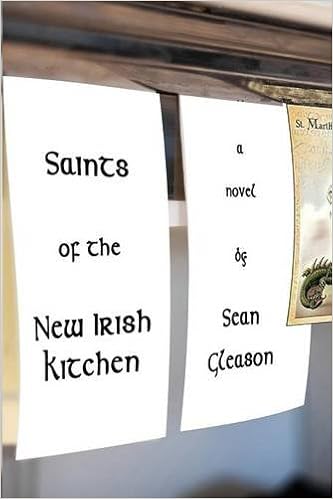
Saints of the New Irish Kitchen: A Book Review

In short, SAINTS OF THE NEW IRISH KITCHEN is a delightful, complex, and very funny novel...

The hero of our story is Martie Smurfit, and she has a lot on her plate (and that's the last culinary pun I swear). The child she gave up for adoption 16 years earlier is coming to meet her, she has been sacked from her job as executive chef, and her partner is pushing her to go into business together.

She takes advantage of Brendan McKechnie, a clueless contractor with his own set of wild dreams, and eases herself into position to take over his failing gastro-pub, hiding out in the kitchen so he does not learn anything about her personal life and fire her. 


If you haven't figured it out yet, Martie is a lesbian. Her sexuality is part of the background, however, which makes the novel one that features diversity without beating the reader over the head with the concept. She's just as ordinary as any other woman you might meet, with problems in need of solving. So one of her problems is girlfriend-related. It adds texture to the novel.

At any rate, all that hiding leads to unintended consequences as Brendan brings in a financier who gets outed by the bartender in a case of The Troubles of Northern Ireland visiting the States.To protect her investment, her career and her future, Martie call in favors from a wide cast of characters, all somewhat off-center like herself, and puts the criminal in a place where he can be found by the police, to be arrested far from her restaurant.

The police don't make an arrest, however. They don't seem to know a thing about any Irish thug with wads of counterfeit American dollars in his pockets.

Hilarity ensues, as they say, and the novel becomes flat-out funny as Martie and Brendan try to cover up a crime of battery after losing the Irish gangster. Jumping at every noise, fearing arrest at any minute, they carry on with the pub's grand opening while praying that the patron saint of cooks can work a miracle.

Perfect for a weekend's entertainment, the story has plenty of twists and turns, along with a storyline that tugs a bit at the old heartstrings. Not quite a romance in the typical sense, but the novel has all the elements of a romantic comedy that makes for a lighthearted look at a cut-throat business.

Tuesday, October 13, 2015

Self-Publishing, Self-Selling

For some reason, Jeff Bezos longs to publish books as well as sell them for a lower price than anyone else. He is not satisfied with wringing concessions out of publishers who must then squeeze a few more drops of financial blood out of writers' advances and royalties. No, he wants to be a publisher.

The problem he ran into rather quickly was the result of his hard-ball tactics in dealing with the publishing industry. The writers used their skill at wordplay to generate all sorts of negative publicity about Amazon and the behemoth's pricing structure, and the publishers let it be known that they were not at all pleased either.

The book shops that were hurt by Amazon's ability to cut prices had no love for the Bezos baby, and when you add up all the grumbling you arrive at the bottom line. Brick and mortar stores refused to carry books published by Amazon, and as many know, more books are discovered in a store than browsing online. For Amazon to succeed, it had to get shops to stock its offerings, but they wouldn't do it.

Who willingly sleeps with the enemy?

Rumours are floating around Seattle, Amazon's home town. The online giant is going old school.

From Kindle Direct Publishing to Amazon Book Emporium?
A corner shop in a posh shopping area has been undergoing renovation that is so cloaked in secrecy that even a clever reporter could not get so much as a glimpse of the interior. It's been said that the interior has shelves and perhaps books, but who can be certain? The windows are covered so thoroughly that a casual observer can't tell a thing about what's being done.

It is not a flight of fancy to presume that Jeff Bezos would turn to a do-it-yourself model. He's done more through the Kindle Direct Publishing platform for self-publishing authors than any other venue. The concept bypasses the traditional publishing industry with its gatekeepers and heavy reliance on MFA graduates, and has shaken the industry to the point that many literary agents help their clients self-publish manuscripts that are not deemed blockbuster enough by the Big Five houses.

From self-publishing, then, to self-selling. Jeff Bezos just might be using his financial resources to start up a chain of book shops that will indeed carry Amazon-published titles, so there, Old World publishing houses. He outflanked them with KDP, and now he thinks he can win with a similar tactic on the ground.

No matter that Barnes and Noble is closing up shops right and left. That can be ascribed to poor management or bad decision-making in the corner offices. As for the pain experienced by independent shops, well, that's been inflicted by Amazon so the Amazon book shops won't get hurt. They may not be able to offer pricing as low as the online model because stores have expenses to be met and clerks to be paid. You can't very well put a gaggle of robots in a store and expect people to laud the customer service.

More interesting may be the location of the store. Pick an area where people have ready cash and a pre-existing tendency to read and buy books, and your shop has a better chance of making it than if it were located in a less well-to-do area where sales might be slow.

Market to the higher echelons who would enjoy finding a bargain and sell more Amazon published titles.

Will it work? Perhaps. Or perhaps it will be an expensive undertaking that will eat up cash until the costs far outweigh the benefits. It seems like a rather expensive undertaking, just to get books into a building. And it certainly isn't something that the average self-publishing author could do, unless they are very, very wealthy.

Amazon has the wealth. But can a few scattered shops be enough to turn the tide for Amazon books?

Saturday, October 10, 2015

If The Textbooks Are Free, Who Pays The Writers?

College costs continue to climb year after year, and politicians continue to offer legislative solutions to the problem. Either those bills are never passed, or the new laws don't help, because there is no end in sight to the rise in tuition and associated expenses.

Senator Dick Durbin has come up with a plan that he must think is a genuine solution. On its face, it is brilliant. Why not cut one aspect of the out-of-control issue and make the textbooks free?

Those evil, greedy publishers are charging hundreds of dollars per book, and why should they get away with it? Why not give the various colleges and universities a grant that they can then use to create educational materials that can be distributed at no cost to the students whose families struggle to meet the fees?

So, does the grant money go to the freelancers who will write that material?

Or will it be spent on office staff and IT people with a chunk going to the professor who has to put the thing together?
Freelance writer after passage of The Affordable College Textbook Act

It costs a lot to create a textbook. There isn't enough money to go around because Congress is not going to write a blank check, so who is going to end up with the short straw when it's time to compensate those who put time and effort into making that textbook.

Publishers will, of course, get as much as they can out of educational materials. Then it's up to the sales force to promote those books and make college professors believe that their product is the best and you'd be a fool to consider a competitor's tome on English Literature or Calculus. It's competition that keeps prices in check, not an act of Congress, but competition depends on those who do the selecting. Often the person teaching the course had a hand in writing the text, so they have an added incentive to pick Publisher A over Publisher B. The student then has to pay because they can't pass a class without reading the textbook that has all that material that is going to be on the final that counts towards 75% of your final grade.

A professor might find some particular book meets all criteria for material to be covered. They won't think about how much the book will cost because they are concerned with teaching and learning. Let some other publisher come up with something just as good at a lower price, and then push that lower price as a benefit for the students, and the course material would come down a notch.

But not all that much. It's a very limited market and there are few publishers printing textbooks. So what can be done?

Bring textbook creation in-house and the professors will have to make their own books, which they won't take kindly to. They could hire the freelancers, but a teacher of philosophy isn't going to know who to hire, or what qualities are important, or anything else about a foreign industry. Isn't that why God created publishers?

So who picks the freelancers? The universities?

Instead of literary journals, the MFAs could learn how to write and edit textbooks, which would go a long way to tackling two thorny issues. Literary journals are expensive to produce and don't sell, so forget that literary nonsense and turn the graduate students into freelance writers whose course credits would require them to write all the chemistry and biology texts.

Now the university is looking at some real cost savings.


Wednesday, October 07, 2015

Read An Excerpt of SAINTS OF THE NEW IRISH KITCHEN


Available 8 December, a brilliant debut novel from Sean Gleason....


Sometimes you need more than divine intervention when too many secrets are about to spill. 


Just like Paris, Martie didn’t see sabotage coming up behind her. Someone spread lies about her and got away with it because she didn’t look over her shoulder, too focused on the road ahead. It was a cut-throat business and she should have learned from experience but it happened again. Just like Paris, she was too stunned to open her mouth and counter the claim that she was going in a different direction. She had been so sure, so confident that the financing for her own restaurant was in place. So certain, and the next thing she knew she was meeting her replacement. Never again. Standing in front of the ‘Help Wanted’ sign, Martie vowed to turn it all around and crush anyone who stood in her way.
If it meant starting over from the bottom, going back to the line, she would start at the bottom. And she would be ruthless. No more being nice. Where did that get her, but where she was, at a restaurant that was scheduled to open in less than a week but was not even close to meeting the deadline. Maybe it was a mistake, to apply. Maybe the place would never open and she was wasting precious time. Maybe she would be turned down for being overqualified like she had been at every other place she’d tried for the past two months. And maybe not. Martie walked around the ladder leaning against the wall, where an electrician was tussling with a light fixture. She was nearly impaled by a falling screwdriver.
“Hey, watch it,” the electrician said. “Can’t you read the sign?”
A strip of yellow caution tape barred her way. Looking up, she noticed a banner draped over the entryway. “Sign? ‘Grand Opening’, that sign?” she asked. “Not grand, or not opening?”
“The sign on the f-ing door, the one that says not to use the door. The door behind the caution tape. That door,” he said. He reached for a drill while holding up the fixture but his arms were too short for the job. The lamp came away and swung from a thin wire while the bright yellow tape across the doorway parted, to flutter on the spring breeze. Martie turned her head away before the end snapped in her eye.
What had been grunts muffled by the door exploded into a full scale screaming match that was more profanity than useful words. Threats and curses flew, accusations of slave-driving countered by assertions of sabotage. The dangling light fixture swung like a pendulum in the spring breeze, scraping away at the freshly painted facade. A combatant in dust-coated jeans took note of the damage and yanked the lamp down. Standing in the open doorway, he shook it as if he meant to club his adversaries.
“Everyone’s being careful, Mac? Everyone’s being careful? This is what you call careful? All this care is bankrupting me, for Christ’s sake.”
He marched back outside to confront the electrician, who was too busy tugging at wire nuts to pay the madman much attention. “Hey, Riordan, you lose something?”
“Thanks, Mr. McKechnie,” Riordan said, returning to his task as if nothing out of the ordinary was happening. “You done for the day?”
“For the day? I’m done for the fucking rest of my life,” McKechnie said. Turning to Martie, he barked, “You want something?”
“Just curious,” Martie said. She canted her head towards the sign in the window. “You must be the man I should talk to.”
“Yeah, lucky me.” He looked her over and the hint of a smile creased his cheek. “Come on back.”
Sawdust drifted from his brown hair and settled on his shoulders, adding a touch of red oak to the grey haze of plaster and stone. His right hand looked swollen, as if he had punched something. Or someone. “You might want to ice your knuckles,” Martie said.
“No big deal,” McKechnie said. “Air compressor fell on it.”
The front door opened into a small entry that was common in the Midwest, a spot to trap the cold air in winter and keep a draft out of the restaurant. Martie pulled on the handle of the inner door and took note of its etched glass inserts, partially hidden by a large sign. It was easy to read, even backwards. Big letters scrawled with a thick black marker declared that no one was to use the door until further notice. It was signed by Brendan McKechnie, President, McKechnie Construction. She almost crashed into the ladder, and the painter standing on it, that blocked the way.
“Are you sure it’s not broken?” Martie said as she skirted the hazard.
Piles of debris created an obstacle course from the foyer to the bar room, a clear indication that the pub was not close to meeting the opening day deadline. A hostess stand stood forlorn and alone, out of place in a small forest of plastic sheeting that covered what Martie guessed were stacks of chairs. A group of carpenters were putting their backs into shifting pieces of an antique bar into place. An older man, probably the foreman, filled a nail gun but paused in his chore to give McKechnie a look that was not anger, but pure mockery. He made a show of connecting the hose to the air gun and McKechnie swore under his breath.
“The kitchen is state of the art. Come take a look,” McKechnie said.
“Thank you, I’d like to see it,” Martie said.
“But I can’t take the credit. I’m following the advice of a restaurant consultant,” he said. “Did I introduce myself? Brendan McKechnie. Proud owner of McKechnie’s Pub.”
She had heard of Brendan McKechnie from her former employer, a force in the local restaurant industry, who regaled his culinary staff with tales of a clueless building contractor who thought he could be a restaurateur because he watched the Food Network. An idea took shape in Martie’s mind. If she played it right, she could be back where she wanted to be in no time. She would have to be cold-blooded, calculating, and as callous as the bastard who ruined her plans, but she had to do what was necessary to salvage her future. There would be one less restaurant in town before she was finished, and it would not be hers going under.
He steered her to the left, and Martie slowed her pace. Something about the room’s layout felt very familiar, with a small stage tucked into the corner near the front window. When she reached the back she saw a pair of snugs exactly where she expected them to be, but she could not have known they were there because she had never been in the place before. The kitchen doors opened on a corridor, and Martie was certain that if she kept walking straight ahead she would find herself in a dining room half–paneled in oak, with walls an earthy tone of green. A shiver crept up her spine.
With confidence that was all for show, she pushed the swinging door with her hip and entered a kitchen in absolute anarchy. A battle for control was being waged between three cooks, a sure sign that the pub was not going to open on time, if ever. With Brendan’s hand growing puffier by the minute, she ignored the shouting and snatched a towel from one of the warriors. She headed towards the ice machine, realizing that she knew where it was because she had sketched out the kitchen plan for her ex-boss when he asked her to design her ideal kitchen. So he had used her again, made her think she was doing all that work for herself when he only intended to sell her plan to someone else and keep all the profit. Never again.
While she settled the ice onto Brendan’s knuckles, Martie gave the kitchen a quick glance. She could make it hers, and establish a base of operations that would be unassailable, but could she get that far before the reunion? The baby she had given up for adoption was expecting to meet a birth mother who had climbed to the top of the cooking industry, and to get back to where she was when he first contacted her, she would have to get Brendan wedged firmly under her thumb. She had skill and knowledge, but there were other chefs out there who were hungry for acclaim. Martie had something else that Brendan needed, and needed desperately, or so her sources said. Without an influx of cash, the place might not open. And Martie had the money, a lifetime’s worth of scrimping and saving so she could open her own place. Brendan was going to be in her debt, and once she had him pinned, the restaurant was as good as hers.


Pans rattled on the burners and a pair of cooks faced off in a culinary battle, each vowing to show the other how to cook chicken. The rest of the line cooks stood off to one side, not sure which camp to join. A third contestant for the role of head chef demanded mirepoix, but no one raised a knife to the pile of celery and carrots on the cutting board.
“I think I need a drink,” Brendan said, examining his injury.
“Are you sure? Do you want to get that x-rayed or anything?” Martie asked. A plate crashed to the floor and a shouting match erupted. “Too many cooks, right?”
Brendan shrugged. “I figured they could sort it out.”
“If they don’t stab each other to death first. I wouldn’t count on any of them knowing enough to make a peanut butter sandwich.” Martie glanced at his hand. “Still pretty swollen. Can you make a fist?”
The sound of air hammers cut through the cacophony of battle. Martie followed Brendan back to the bar, where the carpenters were nailing trim around the bar back while a crew of painters followed on their heels, filling the holes with putty. A sharp prick of deja vu made her shudder. Even the bar itself was familiar, with a century’s worth of Guinness rubbed into its finish.
 “Might as well pull off the molding and crate up everything,” Brendan mumbled. “This is all headed to foreclosure.”
Stacked in the far corner was a forest of marble-topped tables that brought to mind Bewley’s Oriental Cafe in Dublin, where she once lingered over coffee with fellow prep cooks, dreaming of culinary glory. She made a circuit of the room, taking in the scene. A shaft of sunlight sparkled on the etched glass of the front door, a lovely work of art featuring twining ivy and shamrocks. This was the first time she had seen it, she was certain. Then there was the bank of French doors separating the bar room from the patio. Poking her head through an open door, she realized that the patio was not at all familiar, just an area that looked like every other outdoor dining venue. It was common to use French doors in a restaurant, to give a room some spatial flexibility, and there were probably hundreds of establishments that had banks of French doors. Her imagination was getting the best of her. The notion that she had been in this place before was the result of stress and low blood sugar, not reality.
Brendan waved a weak, defeated farewell to the laborers as they stowed their tools, the bar installed with such skill that it seemed to have always been there. The empty liquor shelves were out of place, and Martie had an urge to put a few bottles out, to set the stage and imagine how the place was going to look in a few more days, when she was running it. She peered over the edge of the bar and found a trap door in the floor that led down to a storage room. Someone was rattling around in the basement, another worker finishing up, but she didn’t feel comfortable enough to climb down the ladder and help herself. Not yet, at any rate.
“Can I ask you a huge favor? Could you hang out a minute, until I make sure I can move my hand?” Brendan asked. “Might need a ride to the hospital if I can’t grip the steering wheel.”
A turn to the left, to enter the waiting area for the dining room, and Martie gasped in shock. She had been here before. Not here, of course, in this new building, but in another place exactly like it. The wood paneled wall and the stairs that climbed to the second floor had been copied, down to the millimeter. The fireplace with its glass fishing floats from the beach at Spanish Point, the upholstered armchairs drawn up to the hearth, it was the pub in Miltown Malbay where they stayed last summer. Separate rooms. Separate planets would have been a better idea.
Walking up the stairs brought it all back, the fierce argument followed by a lapse in judgment that was beyond stupid. She entered the office, too disoriented to sit still, while Brendan stretched out on an old sofa. The lace curtains hanging in the windows were identical to the ones that hung in her room above the Miltown pub, although the accommodations were not replicated in Brendan’s version. What if he had been there at the music festival and overheard everything, all those everythings she could not fully recall because she drank herself blind to erase the misery and ended up in bed with a man she’d only just met. She could not dare comment on the similarity or say a word about Miltown Malbay.

Tuesday, October 06, 2015

The Trouble With Freelancers

Your average textbook is written by freelance writers, in large part because it is cheaper for the publisher to pay a pittance to a freelancer than to keep a staff of writers on hand. It takes a lot of writers to cover all the many topics, and what publisher can afford a science writer, a grammarian, a math expert, a geography wiz, etc. etc.

So publishers like McGraw-Hill accept the work of independent contractors, and then use those many paragraphs to create a textbook that meets the requirements of multiple school districts. The idea is to sell as many copies as possible, of course, so the words have to be carefully selected to avoid offending some group of parents or the local curriculum guidance committee or whoever is making the decisions.

Fraught with peril, as they say.

We's happy workers, massa
Sometimes the in-house editor doesn't catch an error and the book goes out to the students. It's the parents, helicoptering over their offspring, who find the mistakes that might be minor, but could be significant. In the case of a McGraw-Hill history text, it's one word that's wrong, but that wrong word makes a huge difference in the history lesson.

In explaining immigrant migration patterns, the freelance writer employed by McGraw-Hill used the word "worker" to describe the Africans who 'migrated' to America. Sure, they worked in agriculture. But it wasn't as if they left Africa willingly, part of the masses yearning to be free.

No, wait, they were yearning to be free, but that was after they arrived, not before.

One mom in Texas saw the bizarre passage and called out her local school board for using such a misleading text. You'd think it was written by a Confederate apologist, to read that Africans migrated to America and found work. The term 'worker' doesn't have the nuance of 'slave', which is such a negative word. We don't want our children to be exposed to such harshness, do we?

Why, if those huddled masses on the Ivory Coast were workers, what was the point of the Civil War? Not to free the workers, I dare say.

As the aggravated parent discovered, however, once a book is printed it is finished and complete. There is no going back to reprint it after making a slight adjustment to a single paragraph. The costs are more than prohibitive. The digital edition can be easily repaired, and McGraw-Hill has promised to make the correction, but the book and its error will live on in Texas schools until the book itself falls to pieces from repeated use.

Until that time, then, Texas children will read about all the people who came to America and be led to believe that the Africans were just another ethnic group following a well-worn path. Unless their teacher provides the correction in a lesson, that's where their little heads will be placed, and when it's time to study the Civil War, they can comfortably believe that it was just a matter of states' rights in the War of Northern Aggression.

And the South will rise again!

Friday, October 02, 2015

Get Ready To Enter


    Goodreads Book Giveaway


        Saints of the New Irish Kitchen by Sean Gleason


          Saints of the New Irish Kitchen


          by Sean Gleason


            Giveaway ends October 27, 2015.


            See the giveaway details
            at Goodreads.


    Enter Giveaway

Wednesday, September 30, 2015

The Western Is Not Dead, Just Updated

There was a time when Westerns were wildly popular. Novels about life in the Old West, films about the cowboys and Indians, and even television shows set in the west were all the rage. You couldn't turn around without bumping into one.

The genre faded, and you rarely see a Western novel in the book store or hitting the best seller list. It's outdated, you might hear a publisher say. No one does Westerns any more. That's so 1950s.

Maybe the genre isn't quite dead. Maybe it's undergone a slight modification, a face-lift if you will.

The Wild West is alive and well and it's living on the south side of Chicago.

A woman out visiting relatives with her mother, her son, and a couple of unnamed male companions was shot in a drive-by the other day. Chances are it was her companions who were targeted, but the average gunslinger isn't taking the time to aim. Two innocent women were killed in the exchange, but they were not the only ones to die that weekend. Every Monday we are presented with a list that tallies the dead and injured, the butcher's bill of gang members and those unfortunate enough to be nearby when the shots rang out.

Waiting for the posse to ride into Englewood

The format of the typical Western is rather straightforward. There is a good guy trying to tame the town by stopping by the bad guys from taking over and doing all the things that are illegal and uncivilized. How easy would it be for a writer to use that format and change the characters from cowboys in white hats to ordinary homeowners in Chicago's Englewood community? Are those folks not asking for the same thing as the townspeople of the Old West asked when they demanded that a sheriff be installed to bring law and order?

The stories of the Old West, such as those written by Zane Grey, were all about the conquering of savagery. Riders of the Purple Sage could be re-written today and the setting changed to the west side of Chicago and the genre would be resurrected. Of course no one would call it a Western. It would become urban fiction, but it would be little more than a cosmetic change.

You want cowboys? How about setting a novel in the Back of the Yards, a tough Chicago neighborhood that got its name from its location, behind the Chicago stockyards. They had plenty of cowboys on hand in those days. Now there's plenty of gangsters shooting guns at each other. Not unlike rival thugs in your average Western, shooting at each other to get rid of the competition so that one gang could reign supreme in the lawless department.

Westerns play out every weekend in some parts of Chicago, not unlike the violence of the Old West played out while people in civilized cities sat safely in their parlors or sat on their front porches reading about the violence. The characters don't ride horses any more, but they still ride out in search of rivals.

And like the innocent characters in a Western novel, the residents of Chicago's depressed communities are sitting around waiting for the posse to show up, or some new sheriff or anyone capable of enforcing the law so that they can enjoy the peace of civilization.

The Western is not dead. It's alive and well and disguised as urban literature. There are stories to be told, if anyone cares to sit down and do some writing. Just copy the style of the once popular genre, changing the key ingredients to provide the updating that brings an old story into the modern context.

Don't forget to include the law enforcement component that will seem like pure fiction to the people who are living with the violence. They're still waiting for the posse to come riding into town to restore order.

Friday, September 25, 2015

The Art Of The Query Letter

Even though submissions to Newcastlewest Books are by recommendation only, we still often find queries in the inbox. So many people have a story to tell and they look for an outlet, often without studying the art of the query letter that will open the door.

It's not unlike trying to unlock a safe without first learning the combination. The numbers are there for you if you go look for them, but there are those who think they can manage on their own.

The first step on the rocky road to publishin' is the creation of a query letter. It is a piece of business correspondence, not a chatty e-mail. By custom, the query letter is 250 - 300 words long.

That's it. 250- 300 words to market your manuscript. To say it's no easy task is a bit of an understatement.

Begin with a hook, something to catch a reader's attention, but be sure the hook introduces your story. Like I said, not easy. In two or three sentences you have to distill the essence of the conflict you've written about, and do it in a way that makes the reader want to read the next paragraph.

The middle of the query is a synopsis, in a way, although you don't have to give away the ending of the story. You do have to introduce the characters and show why a reader should care about them. What is at stake for the protagonist if he or she fails to stop an attack or find the lost locket or marry the duke?

Nothing is better than reading other query letters to get a better understanding of the form and style. Perhaps one of the best places to go is the blog written by literary Janet Reid. Query Shark can be bruising, but if you want to get published you'd best develop some scar tissue and thicken your hide. 

Need more help? Turn to your fellow queriers, who gather at writer forums to share and critique. AgentQuery Connect is an excellent stop on the road to crafting a good query letter.

Study up and learn what is expected in a query instead of throwing out some long-winded marketing mash-up that might sound brilliant to you but will get a rejection immediately. Things like attachments are not allowed, even if you know yourself to be honest and upright and not a hacker. The stranger you're sending that attachment to doesn't know that. They won't open your query and you're more likely to get trapped in a spam filter.

Once you've got the query letter process down, it's time to start sending it around. And then you'll learn about things like novel length and word counts and the sad fact that no one is going to ask to see pages of your 150,000 word opus. Even the first Harry Potter book wasn't a door stop.

Do your homework before you approach literary agents or publishers. It saves a lot of headaches and disappointment.


Wednesday, September 23, 2015

Is It Time To Canonize A Pedophile Priest?

The Pope is off in the States canonizing a missionary because the Hispanics need one of their own. That's the usual line of thought that goes into the process. Sainthood is a sort of gift to be bestowed on special interest groups, not unlike your local politicians finding the funds to construct a new roadway that the local people have been clamoring for because the voters up there in Roscommon got one and where's our piece of the pie?

So His Holiness has decided that there's no need for the requisite proof of two miracles to advance Junipero Serra to sainthood because the Latinos need to be thrown a religious bone.

As for the native population that was decimated by Father Serra and his merry band, well, they aren't such hard-core Catholics as all that. And they certainly are not as large a special interest group as the Mexican-Americans.

Besides, this canonization is all about recognizing past sins so that we can all move beyond them and seek forgiveness. Never forget, and never repeat. Saint Junipero Serra will become the patron saint of brutal conquerors who have long needed such heavenly hands to hold.

If it's all about recognizing past sins so that they will not be repeated, isn't it about time that Father Brendan Smyth was fast-tracked?

Don't the pedophiles need a patron saint of their own as well?

Junipero Serra converted native peoples whether they liked it or not, and in the process he brought along all sorts of new diseases that devastated the population. Instilling Catholicism required the removal of native culture, which the descendants of those tribes don't appreciate to this day. So by making him a saint, the Pope is saying to Americans, look at how poorly your ancestors treated people and look at how poorly you treat Hispanics today. At least that is the opinion of Steven Hackel, who wrote a biography of the missionary.

Except that Junipero Serra migrated to California from Mexico and then abused the locals, so if the Pope is trying to send the Yanks a message about their attitude to illegal immigrants, he has gone far off-track. Looking at the history, the story of Father Serra pretty much reinforces the message of those who want a big wall built to keep the Mexicans out.
If we're canonizing sinners to atone for the sin, you can't top Fr. Brendan Smyth for the crime of child abuse

At any rate, this canonization is all about atoning for sin by making the sinner a saint. The Catholic Church is supposed to be atoning for the sins of its pedophile clergy, right? So it stands to reason that Brendan Smyth should be beatified at once and canonized in the morning.

He may have been the most prolific pedophile in the clergy, abusing hundreds of children by his own count. He was moved from place to place as his abuse became known in the parish where he was posted, as the Church fought valiantly to cover up the crimes with obfuscation and guilt and the occasional bribe. The history of those days is grim, and the pain is still resonating.

Let's really get serious about examining the sins of the pedophiles within the Catholic Church, and at the same time give the clergy one of their own to serve as an example of a great sinner who still, despite his proclivities, managed to say the Mass and baptize the babies and marry the happy couples while preaching against sins like fornication.

If it's good enough for Junipero Serra, why can't the Irish clergy get a small slice of the sinner's pie?

Tuesday, September 22, 2015

The Improbability of Love: A Book Review

Overhead in an office at Penguin Random House:

---So this Hannah Rothschild, she's one of the Rothschilds, the bankers?

---She is indeed. Powerful family, and they lost a great deal of their art collection to the Nazis. So she writes from what she knows. And it's more than that. People are intrigued by the art world because it's foreign to them, and they know they'll never be part of it because it's such an exclusive club filled with the super-rich. I liked her Russian oligarch character, having to pay bribes back to the Leader, as he called him. Brilliant touch.

---But someone has to tell her.

---The story's a delight, isn't it? There's the plotline in which the long lost work of Watteau is found in the junk shop, but as the story progresses the painting's provenenance is revealed and the tale develops on an unexpected trajectory. Ms. Rothschild made one of her characters a former Nazi hiding in plain sight, and he's trying to keep his secrets. And the protagonist, Annie, she's in the center of a love story, with her lost love and arrival in London as her way of starting a new life. There's plenty there to keep a reader's interest. It starts out lightly enough, with her purchasing the painting and then wondering if maybe it's a valuable treasure that can save her from financial ruin. Then the next thing you know, the shop is firebombed and the reader gets a hint that the novel won't be quite such a soft bit of fluff as it first appeared.

---But there's a prologue and it's entirely unneccessary. It's a waste of time for the reader and only confuses them with all those character names. The characters appear in the body of the novel and they don't need to be presented up front. And that bit with the picture itself acting like the omniscient narrator, sort of a voice of God from on high. There's a huge info-dump, and it's grand that Ms. Rothschild knows all about provenance and tracing ownership but people don't want to read that. Someone has to tell her the book needs a good trimming.

---Did you read the section where Annie runs afoul of the powerful art gallery owner? Do you not think that Ms. Rothschild just might be writing from some personal knowledge there? You want to tell her the book needs editing, go right ahead, but if you end up floating face up in the East River, well, don't say you weren't warned.

---It's her first novel. And it's a fun read. It could be five-star worthy if she would cut out the prologue and get rid of the talking picture parts.

---I'm not telling her.

---Pity. I hope someone tells her so that when she writes her next book it will be excellent instead of just good. She has a talent for writing this sort of thing. There's humour and heart, and the action near the end when everyone is trying to track down the missing Watteau, it becomes a page turner.

---The novel will just have to go out as is, and let the readers tell her in their reviews. She can't go after everyone, can she?

---I hope not. You don't think this room is bugged, do you? That she'll find out and that will be the end for us? We'll never get a loan from any bank because the Rothschilds will put us in their black book. Or worse....

Friday, September 18, 2015

Air Marshal Incognito

You aren't supposed to know who the air marshal is when you board a plane. That's the point, isn't it? The potential hijacker or crazed loon should not be able to identify the person most likely to take them down, and so the air marshal flies under the radar, so to speak.

That being the case, the air marshal has to have a secret identity at the ready in case some friendly traveler sits down next to them and strikes up a conversation. And what do you do for a living that brings you here to this flight, is it business or pleasure, etc., etc., and the air marshal must protect his or her identity with some ready answers.


Three such air marshals based in Chicago are coming under fire for just doing their job.

The three in question came up with the perfect cover for their covert operations. They said they were pornographers. Who wants to sit next to one of them, right, and more to the point, who would want to have a friendly chat about smut? There's a real conversation-ender for you.

They went about setting up their secret identity with commendable spirit. Not only did they say they were producing porn films, but they went and hired prostitutes and actually created some homemade sex films. Take that, doubting travel companion. The closeted air marshal could just whip out his government-issued phone and show you his oeuvre.

As it turns out, it is illegal for federal employees like air marshals to hire prostitutes for any reason. It is also illegal for them to tape sex acts on government equipment. The Feds are particularly sensitive to such rules infractions because the Secret Service really humiliated everyone with their escapades, and the authorities prefer not to have to deal with another similar scandal. It wouldn't do to have taxpayers look at threats to shut down the Federal government and say, go for it we'd be better off without the clowns who pass for a defensive line against terror.

One of the three marshals has turned in his badge, while the other two apparently feel that they did nothing wrong. They were supposed to work incognito, weren't they? An agent forced to prove his cover story has to do what he or she has to do, and if that means hiring prostitutes and then filming the action, well, how is that grounds for dismissal?

Their boss, Roderick Allison, has assured Congress that this is a one-off incident and he's working to get the other two agents fired. Such activity, he testified, is not representative of air marshal culture. So we are all to believe that the rest of the force can come up with much better false identities, and excessive creativity is not tolerated.

Wednesday, September 16, 2015

The Rise Of Craft Beers Explained

Hops - No IPA is compete without it
Everywhere you turn, someone is starting up a brewery to produce beer that has more taste than the flavored water that passes for beer at the big conglomerates. The young, who have the stamina to drink enough beer to make a difference in the market, are turning up their noses at the offerings of Anheuser-Busch InBev or SABMiller. And they're wise, too, very much aware of the brand names used by those big conglomerates to make a person think they're buying a craft beer when in fact it's just another mass production out of a massive factory.

The big brewers are losing market share to the countless little start-ups, and so the suits look to cut costs as they attempt to work their way back into the hearts, and stomachs, of Millenials. Bigger is better, so the thinking goes, bigger means more efficiency and more synergies to be realized.

And for those who get themselves synergized out of work, they can always just go start up their own little craft beer brewery, right?

Anheuser-Busch InBev is making a lot of noise these days about buying up its nearest competitor, the equally massive SABMiller. The two corporations are themselves the product of several mergers of smaller operations, with each acquisition meant to reach the top of the beer market. What happens when one large entity controls a market? That's called a monopoly, and when a corporation grows into a monopoly, it gets to largely set the price for its goods and the buyer can either do without or pay up.

Wouldn't it be grand, the corner office holders were all over it, increasing profits and boosting a sagging bottom line. If only they were not looking over their shoulder at SABMiller, they could raise the price a bit and wouldn't the Christmas bonus look a bit more cheery.

You might think you can fight back by not purchasing Budweiser, but a long string of mergers has put most of the major brands under the umbrellas of the two biggest brewers. The only way left to show that you won't accept cheap beer sold at a premium, considering the quality of the product, is to buy from a craft brewer who is local to your area so you know they aren't hiding their parentage.

Time to get creative and maybe get rich?
Small craft brewers understand the desire of beer drinkers to quench their thirst with quality products, beverages that are made in small batches with someone who is genuinely interested in the quality of the product keeping an eye on the vats. They play up their smallness and local origins, offering tours of the facilities and touting their local roots. The brew master could be someone you know, or someone you met at university. He or she is not just another factory hand toiling for SABMiller in obscurity, with no real stake in how the beer tastes after it leaves the factory.

Instead of improving the goods, which would be cost-prohibitive, the top two brewers snap up craft houses that are keen to expand because their product is so popular but they lack the facilities to meet demand. Then the drinkers get wise, insist that InBev or whoever has just ruined their favorite brew, and move on to the next latest small brewery.

What's left? Decrease costs by merging and shrinking the population of employees, with their expensive salaries and benefits.

Meanwhile, the next generation of beer drinkers discovers that there are more tastes to beer than a Budweiser or a Stella Artois. There are recipes that are best in small batches, and if it costs a little more, it's worth it to drink one good beer rather than five poor ones.

Whether the proposed merger of Anheuser-Busch InBev and SABMiller will pass muster with the U.S. anti-monopoly authorities remains to be seen. The two titans may be relegated to battling it out, snapping up craft brewers who can take their windfall and set up another craft brewery that will out-compete the industry giants because the craft beer is what the public wants these days.

Maybe it's time that I gave up the writing and started inventing beer recipes?

Tuesday, September 15, 2015

Coming In December

Available 8 December 2015
Newcastlewest Books is excited to introduce debut author Sean Gleason, a brilliant writer with a gift for wry humour and witty prose.

His first novel will be published on 8 December, and it will make the perfect holiday gift for your fiction-loving relations. As the lay-down date approaches you'll find the book listed at all your favorite online bookshops, but for now you can sample a little of the story here. You can pre-order a digital copy, with hard copy pre-orders to come soon.

SAINTS OF THE NEW IRISH KITCHEN will feel like a romantic comedy, but in this case, the romance is between a woman and a restaurant. The story of the driven chef Martie Smurfit plays out against a backdrop of financial difficulties coupled with a bit of underhanded subterfuge as she manipulates an unaware building contractor into making her a full partner in the restaurant that has brought him to the brink of bankruptcy. All is on track until a man from her past shows up and threatens to expose her many secrets, any one of which could get her fired.

Martie's biggest secret is her sexual orientation, a very timely subject these days. Indeed, history is currently being made in regard to equality, and Sean handles the topic with a deft touch. Like any good rom-com, Martie's quest for secrecy leads to unintended consequences that threaten to upend her plans. An Irish gangster turns up, using her business partner to launder stolen bank notes, and when she steps in without thinking things through, the fun really starts.

Fans of Marian Keyes' style will enjoy SAINTS OF THE NEW IRISH KITCHEN, as will anyone looking for a page-turning story that will make the reader laugh out loud.

So go download the sample, and get ready for a pleasant read on a winter's weekend.

Wednesday, September 09, 2015

It Was The Greed That Did Him In

A man who cannot see has limited options when it comes to career choices. For Paul Mahoney, partially blind, the best choice was to launch his own business that he could run from home.

As a handicapped individual, he received some assistance, although two thousand pounds per annum is far from enough to support an adult male. He lived with his parents, a shy and retiring lad with a computer and a brilliant idea. He could earn a living using his computer. His eyesight problems were not so enormous when he had modern technology to give him a little help, and he did not have to meet the public if he worked in some technology-oriented way.

So he became a salesman, selling advertising space on websites.

The websites that paid him so well for his efforts were, however, quite illegal.
A self-made man not limited by his handicap. Limited by the law, but what's a man to do?

Mr. Mahoney discovered that people like to download things for free, especially newly released films not yet available on DVD. It's expensive to go to a theatre, and as for waiting for the disc to become available for rent, who wants to wait when everyone is talking about that latest movie sensation? Websites exist to provide pirated editions for those who dare to download things without worrying about also downloading malware or other unpleasant things. There is a demand for stolen goods that cost nothing.

How do those interested in viewing such a film find the places where those films can be viewed? And if one is a marketing specialist, how do you reach those who must see the newest film at a discount? Mr. Mahoney became their link to the target demographic, setting up websites that showed potential viewers where to find what they wished to see.

And then he sold advertising space on his websites.

He did so well at his chosen profession that he's thought to have generated three hundred thousand British pounds from his home-based business in Derry. Over the course of six years, during which he had to evade authorities and ignore court orders to stop, he made all kinds of cash that he stashed in the family home because the man's a recluse and you can't buy things over the Internet with cash.

There's only so long you can thumb your nose at government officials, and Mr. Mahoney has reached that limit. He has just been sentenced to spend some time in prison for his act of piracy, where he won't find it quite so easy to maintain his reclusive lifestyle.

Whether or not the Prison Service will allow him access to computers remains to be seen, but given the chance, Mr. Mahoney might start up another website and carry on his life's work. There's not much a partially blind man can do and a prisoner needs to be kept busy. Idle hands are the devil's workshop and all that.

The question remains, however. If Mr. Mahoney had not accepted the public assistance that he clearly did not need because he was doing well on his own, would he have been sentenced to a term in prison? Was it greed that did in him, or did he think that the checks from Her Majesty's coffers were good cover for his clandestine operation? Maybe it was not greed, but being too clever, that spoiled his dot.com empire.