Tuesday, February 23, 2016

Self-Publishing Without Internet Access

Out of print as quickly as it was laid down
The Royal Canadian Mounted Police don't understand how serial killer Robert Pickton was able to self-publish a book when he does not have access to the Internet.

They seem to think that self-publishing requires a person to do all the work, when in fact anyone can publish a book and never do a single thing online. All you need, in that case, are friends with computers who share your love of literature.

Mr. Pickton is currently serving a life sentence in British Columbia, and as part of his punishment, he cannot surf the Net. No googling, no e-mail, no electronic connection to the outside world. Yet he still managed to get his memoir published by Outskirts Press in far-away Colorado. Their web page, which Mr. Pickton could not have seen from his cell, boldly proclaims that it exists to help the self-publisher achieve his goal. So how could a man without the World Wide Web do such a thing?

As far as the Mounties can determine, the author wrote out his manifesto by hand, using good old-fashioned paper and pen. There are those (myself included) who really believe that the first draft comes out better when handwritten. The slower pace forces a writer to think a bit longer about each word and sentence, making for a stronger start to a long process.

With his drafts edited to his satisfaction, Mr. Pickton had only to turn to his cellmate for help. Michael Chilldres smuggled the manuscript out of the prison somehow, and it found its way to Outskirts Press. Being a criminal, the concept of honesty never came into play so whoever helped him just said that Mr. Chilldres was the author, or said they were Michael Chillldres and they were self-publishing the manuscript.

Except he wasn't the author, but again, these are men in prison we are dealing with.

Unfortunately, it's very difficult to do a book tour when you're behind bars. Getting publicity and generating buzz was never going to be easy. Did the writing duo of Pickton and Chilldres even sell a single copy? Maybe they did, to someone connected with Mr. Pickton's murder victims, who would be very likely to keep an eye on the Internet to make sure the murderer didn't profit from his crimes.

The book was discovered and a petition was launched to have Amazon pull the book from its listings. Amazon being the biggest book seller, it's only natural that the petition was directed there.

Amazon responded by removing the book, and if you try to buy direct from Outskirts, you'll come up empty. They aren't going to carry the title any more either. They wouldn't want to be getting any bad publicity about publishing any and all shite that comes their way, especially when it's shite scribed by a convicted killer who isn't allowed to visit their website to see his work available for sale.

His future as an author, even one off the grid, has come to a screeching halt.

The authorities in British Columbia are now busy crafting legislation that would prevent convicts from profiting off their crimes. Currently there is no law on the books to stop Mr. Pickton from selling his prose in the province, even though other provinces bar the practice. The law exists in the U.S. as well, and when you've lost the greatest part of your market, your future in writing looks quite dismal.

Until such laws are enacted, however, the prison authorities will have to monitor phone calls and visits, to be sure that criminals are not dictating their memoirs to their visitors, who can then go home to their computers and complete the process of self-publishing. It's not as if publishing on your own really requires you to do it all yourself. You can always get by with a little help from your friends.

Monday, February 22, 2016

Dodgers: A Book Review

East is a feral child, living rough, a product of the Los Angeles streets. He lives by his wits, which in DODGERS means he scratches a living as a watchman at a crack house. All he knows is his neighborhood, and that proves to be little when his underlings fail at their posts and East must make amends to the gang leader by murdering a judge who has angered the gang.

The book provides a well-described journey through foreign territory as East and his colleagues drive from LA to Wisconsin to whack their intended victim. He travels with his violent and unpredictable half-brother, an equally feral child who has no emotional connection to East. There are no children here, nor are there families as you might know them.

Along the way, the gang has various adventures that force East to rely on his wits to escape, all of which make for page-turning fiction. What happens after he reaches Wisconsin and a once simple plan falls to pieces is compelling reading.

The ending is a bit too 'deus ex machina' and I suspect that Bill Beverly would have given one of his writing students a dose of criticism for using the same technique, but other than that the prose is believable.

Granted, it is white people bringing in the element of salvation as East works his way home, a place that he realizes does not exist in the traditional sense that he sees all around him as he wanders through the upper Midwest. Some might quibble about the lack of black influence, wondering why some middle class black man could not have represented the world outside of the drug dens of Los Angeles. Could the narrative have flowed in the same way if so strong a contrast was not made between what East knows and what he sees for the first time outside of some television programme? Did he not leave Los Angeles wearing Dodgers team shirts to make him appear more in tune with white culture, and less threatening?

That's something for the book group to discuss.

What East discovers about the world beyond the borders of his neighborhood alters him completely, and that makes for a satisfying conclusion to a very modern tale. The prose is dense and is meant to reflect the language of the streets, making for a slow read, but the reader's effort is rewarded.

Thanks to Penguin Random House for the review copy. I thoroughly enjoyed the novel.

Monday, February 15, 2016

FanFic For The Literati

So many...
In publishing circles, fiction written by fans of a particular book is normally looked at like so much detritus. How clever they are, those dedicated readers, imagining other scenarios and plots in which to insert their favorite characters.

There are all sorts of fanfic written for Harry Potter, Hunger Games or what have you. In general, the prose is not taken seriously because it's silliness from people overly obsessed with fictional characters.

Unless, of course, it's an acceptable author doing the fanfic dance. Then it's something more literary. It's worth publishing.

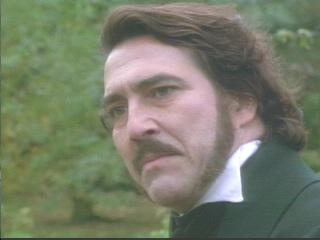
Rochesters...
Why else would some Jane Austen fanfic make it to the big time? What was Jo Baker's Longbourn but a bit of fanfic that took its characters from Jane Austen's Pride And Prejudice? We all know the story of the people upstairs, goes the reasoning, but what is happening below when Mr. Darcy and Miss Bennett are circling each other? It's fanfic but with a more literate bent, the fanfic label avoided by the imprimatur of a genuine publisher.

The world can never seem to get enough fanfic, and now there's to be another. Did you ever create imaginary scenarios to fill in the back story for Jayne Eyre? Did you not use your flights of fancy to write a novel because you laughed it off as so much silly fanfic?

Sarah Shoemaker did not dismiss the notion. No one is calling her upcoming novel fanfic, however, but it has taken on a shiny gloss of respectability by being labeled a re-imagining of the Bronte novel. Let Ms. Bronte tell her story from the perspective of the downtrodden governess. Ms. Shoemaker takes the story and puts her own twist on it, narrating events through the eyes of Mr. Rochester.

so little time
Mr. Rochester will hit the shelves next year some time, with the deal just announced. Literary agent Jennifer Weltz did not see the manuscript as fanfic, or would she have taken it on and then sold it to Grand Central? Of course she would not market the thing as fanfic for those who adore the Bronte novel, even if that is what it is. No indeed, this is a re-imagining.

Because we can't have too much original storytelling these days.

The bean counters at the publishing houses get terribly nervous with original works that are unlike what is selling. They want the tried and true, and fanfic has a definite market among those who liked the original, even if it was originally released over one hundred years earlier. It's stood the test of time, hasn't it? More than one movie version made, still being read, so why not ride on the fanfic wagon as it travels to profitable places?

How much longer before we get a novel about Heathcliff's version of events at Wuthering Heights? What about the whale that was pursued to the ends of the earth by Captain Ahab, what were his (or her) feelings at being persecuted? After all, we've already heard it all from Ahab's wife. Let's give the whale its turn in the fanfic sun.

Hollywood is living off re-makes of old popular films. Why should the publishing industry not try the same trick? And then wonder why sales are sliding and no one seems to be reading books. Like they aren't flocking to the cinemas.

Thursday, February 11, 2016

The Joy Of The Contest

Goodreads is a great place to find free books, given away by publishers who are promoting a new title. For the publisher, it's a marketing angle that puts prose in the hands of readers who have friends who read and trust the reviews of others. Word of mouth sells more books than a print advert.

But there are those who are not avid readers. They are avid contest entering sorts, people who want to win prizes. It does not matter what it might be, and if it is something that can be turned into ready cash, so much the better.

Books can be turned into cash if you aren't looking for a big payout. Used book sellers buy paperbacks to be sold to recyclers in need of pulpable material that can in turn be made into new paper. Maybe it's a dollar or two, but it's real money that takes no more effort to acquire than trolling through the list of giveaways at Goodreads and clicking on everything.

How does Goodreads determine who to send a publisher's free books to, in that case? Does it make sense to reward those who have no intention of reading, let alone reviewing the book?

It seems to be happening.

Newcastlewest Books ran two promotions for our newest work, SAINTS OF THE NEW IRISH KITCHEN. Ten books were shipped off to winners, but the great majority of those winners had no books on their lists. Not a single review given. Not a single book read.

Just a lot of entries for giveaways, every day, day after day.

As a publisher, we wasted our time, effort and money to generate a little buzz about a witty bit of women's fiction. Without some reviews on a site where a lot of readers find new books, our copies shipped out to the brick and mortar shops are missing the word-of-mouth buzz that generate sales. How many people are willing to risk their entertainment budget on an unknown quantity? Sure they can read the opening pages, but they would feel more confident about a purchase if they knew that a friend, or a Goodreads reviewer with similar tastes, had said some positive things about the novel.

Is it worth it to offer a giveaway at Goodreads?

Not when the book does not land in the mailbox of someone who intends to read and review the book. Not when a publisher is doing nothing more than transferring some scrap pulp, or feeding the addiction of a book hoarder who collects for the sake of having a collection.

Maybe someone at Goodreads could take a look at the analysis that determines who gets a book and who doesn't. Like culling out the applications of those who have long been members of the site but do nothing more than request books because they feel so happy when they win something, even things they never use.

Monday, February 08, 2016

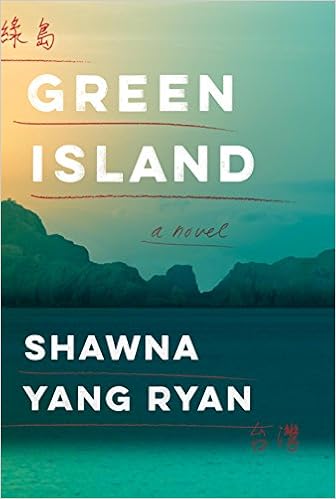
Green Island: A Book Review

We read fiction for entertainment, but often a novel can teach us something as well. Shawna Yang Ryan's GREEN ISLAND is such a book, one of those rare works of fiction that is so grounded in reality that you can't help but keep turning the pages.

Set in Taiwan, the novel delves into the life of ordinary people living under what was a dictatorship, even though the world saw the island as some hazy haven for liberty in the face of Communist aggression. The real government of China ruled there, until the geopolitical world shifted on its axis and Taiwan became an almost independent nation that continued to face down Communist aggression. By reading GREEN ISLAND, you will discover the harsh reality of an existence frought with peril and the threat of Mao's forces invading.

The tale is told by the youngest child of the Tsai family, although the POV shifts here and there, in a way that suggests the narrator is still telling the story from a different perspective. An uprising begins on the day she is born, and her father is dragged into the conflict by opposing the thuggish tactics of the Kuomintang rulers. The father is taken away, a political prisoner, and so the author enters into the questions posed by the remaining pages. How does one deal with the direst of circumstances, when lives are at stake along with personal freedom?

It is a question that the narrator must answer for herself as she deals with what she thinks is her father's madness. She comes to learn that he is indeed being watched, with the ever-present army of spies infiltrating the family itself as the Kuomintang utilizes every tactic to avoid losing power. After the narrator marries and moves to California, she finds that she cannot escape the ruthless government of Taiwan, especially as the United States reaches accord with Red China and Taiwan's future grows shaky.

The prose is gentle while the story is brutal, the tension increasing as the narrator finds herself enmeshed in a nightmare that Confucian obedience cannot resolve. While I could have used less references to smells and odors (the author is a bit obsessed with how things smell), the story is gripping. The overall theme of the novel is quite topical, with the issue of compliance versus resistance the sort of thing that could apply to many other places in a troubled world.

I would recommend this book to those who enjoy lyrical prose and thought-provoking narration. Thanks to Penguin Random House for the copy used in this review.


Thursday, February 04, 2016

The Better Devils Of Our Nature

The first thing you'd ask of Roosh Valizadeh is, are you serious, or is this some type of performance art?

The blogger is a firm believer in rape, taking a man's rights, anti-feminist, approach. Women are the enemy because they won't have sex with men on demand and that must be stopped. Or so he says. Can he be serious?

Maybe he's just being radically Islamic, coming from a background in which women who dare to go out in public without a guard are considered nothing more than prostitutes who deserve what they get. Leaving the confines of one's home is akin to asking to be raped, therefore, give the lady what she wants.
Look at me, Mommy, look at me!

Mr. Valizadeh is trying to organize a gathering of like-minded individuals, all men of course, and men who would like to be permitted to rape women who are not cowering behind locked doors.

You can find his philosophy at Return of Kings, if you're wondering how serious this man might be.

Some took him seriously, however. The proposed rally has been cancelled.

That's how it is with the Internet and the blogosphere and social media these days. Any fool can find a forum and an audience for any nonsense he or she wishes to spout. Those looking to spoof others are equally able to find an outlet for their joke.

There's no telling which way a post is meant to lean, comedy or tragedy.

In the case of Mr Valizadeh, his claims that he is skilled at picking up women and can show you, one of life's losers, how to seduce the ladies, smacks of the old ads in men's magazines from a by-gone era. All a guy needed was a dose of Spanish Fly and he could make a woman desire him. It was laughable then, and Mr. Valizadeh is laughable now.

Just like in those long-ago days, there are those who take his philosophy seriously, who really believe that it is the women at fault and not some personality defect preventing a guy from access to casual sex. Had the rally gone ahead, there would have been a few followers at Devon and Sheridan Roads on Saturday, milling about looking for answers to their emotional problems.

Women would have been excluded because they are bad, not falling on their backs, dazzled by the virility of the men who turn to Roosh Valizadeh for help in achieving their goal.

Those who did not see 'satire' in the proposed performance raised such a protest that it would have been impossible to stage a rally and maintain the anonymity of the attendees. Everyone has a camera on their cell phone, and photos would have been snapped and posted to shame any man so socially inept as to stand with the legalized rape contingent.

So the enemy has won. Or the performance art fell flat.

It doesn't much matter, in the end. Roosh Valizadeh got himself a big load of attention, his name in the news and his blog site advertised. He won.

Monday, February 01, 2016

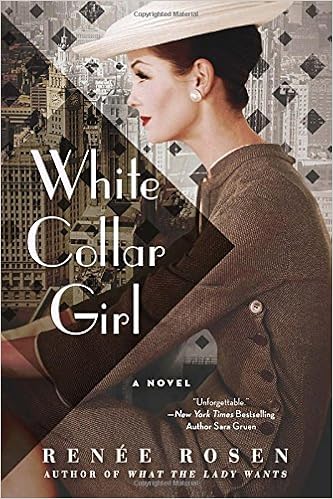
White Collar Girl: A Book Review

A few pages in to WHITE COLLAR GIRL and I was wondering if author Renee Rosen was a newspaper reporter. Not because her depiction of the Chicago Tribune offices seemed so real, but because she exhibited a reporter's tendency to describe things in minute detail. Good for an article in the newspaper, perhaps, but a little goes a long way in a novel.

The novel is set in the 1950s, and features a young Jordan Walsh making her way in a male-dominated profession. The cub reporter longs for a seat at the City Desk, a club as exclusive as Berghoff's men-only bar. Which gets a mention in the book, by the way. All kinds of things get mentioned in the book.

In general, the novel is more a series of events than a flowing narrative. Jordan puts in her time on the society pages while pondering what really happened to her brother, who was killed in a hit-and-run accident. Or was he on to a hot story and got himself killed for poking around a potential scandal?

Her drive to succeed spoils romantic relationships as she moves up the ladder, hoisted along by a secret source in high places feeding her info for further investigation. It makes for an entertaining read, but if you are familiar with Chicago history and politics, you might become annoyed at Ms. Rosen's decision to use modern-day scandals and mingle them in with events that actually happened in the 1950s. It might almost seem to be too much scandal in too short a time, with corrupt judges following corrupt meat inspectors and corrupt cops.

For a light weekend read, WHITE COLLAR GIRL will provide enough entertainment. The author does a good job of immersing her readers into the era, taking things a little too far by dropping addresses as well as names. She did her research on Chicago of the 1950s, to be sure, but it isn't necessary to use all of it to that extent.

Overall, the novel is worth reading, particularly if you can forget what you know about Chicago and go along for the ride. We often forget how tough a woman had to be sixty years ago to make it in business, and it can be enlightening to inhabit that world for a few hours to refresh memories and appreciate what our mothers and grandmothers had to endure.


Wednesday, January 06, 2016

Good Riddance To Bad Rubbish

Author Solutions had a rather shady reputation as a vanity press that charged unwitting writers for services that were either not delivered, or did not rise to expectations.

The firm has been the defendant in a few lawsuits filed by disgruntled clients who felt that they had been defrauded. They thought they were buying into a traditional publishing model, when in fact they were paying to get their words printed and bound. Sales and promotion were their chores to tackle, essentially, with Author Solutions doing little more than encouraging the writers to buy more product that was as ineffective as the previous product. It was not, the plaintiffs claim, a traditional publishing model at all at all.

For reasons never made clear, Penguin Random House took in Author Solutions in the course of the Penguin and Random House mergers. You would think they would have jettisoned the detritus from the start, but someone in the corner offices thought that something could be made of Author Solutions.

Look at how well Amazon has done with its Kindle publishing unit and its CreateSpace arm. Surely the random penguins could ride that particular self-publishing train and steal a bit of Amazon's steam. Let authors do it themselves, as they are increasingly doing these days, and maybe some golden nugget will shine without PRH having to do much of anything. Then it's time to pounce and promote that best-seller that otherwise would not have been discovered.

The chief penguin has just announced that PRH is selling off Author Solutions.

So clearly things did not work out as planned.

The vanity press was picked up by Najafi Companies, for undisclosed terms. The investment firm sees potential to make money with Author Solutions, despite the litany of complaints and reputation for deception. Such bad press does not directly impact a business that does not have a reputation as a traditional publisher to maintain, of course. Najafi is all about return on investment, and if that means misleading clients so that they pay thousands of dollars to see their book in print and can't understand why it isn't getting shelved in every brick and mortar store around, that's how money is made.

It is a different story entirely for Penguin Random House. CEO Markus Dohle does not want to besmirch the reputation of his well-regarded firm by having it linked in any way to PRH. It would not do, to have people in the industry whispering behind his back about the poorly edited product issuing forth from the Author Solutions wing and is PRH going down that road as well what a shame it used to be such a reputable house.

To provide authors with a platform to publish their work is one thing. To be actively involved in selling marketing plans and the like, programmes that are not much like the marketing campaigns for books acquired through standard channels is quite another.

Chances are, Author Solutions did not show as much promise as hoped. A Google search can readily reveal how unhappy Author Solutions clients are, and you don't attract many new customers when they can read all about the negative aspects of the vanity press.

Good riddance to bad rubbish for Penguin Random House. Let Mr. Najafi and his clan make a go of it.

Tuesday, December 29, 2015

Cut Costs And Censor The News In One Easy Step

Just one of Steinmetz's famous alums
No less than Hugh Hefner got his start in publishing as a high school student at Steinmetz, toiling away on the school paper while dreaming of soft pornographic grandeur.

Finances being what they are these days, the Chicago Public School system that operates Steinmetz is strapped for cash and must look for ways to cut costs. There has been talk of larger classes, teacher lay-offs, and various other scare tactics meant to terrify the taxpayers into begging their representatives for an increase in the tax levy. The taxpayers realize that no one can squeeze blood from a turnip, however, and they've collectively shrugged their over-burdened shoulders.

What constitutes a removable offering at the high school level? Sports? Impossible. A school's pride and spirit rests in the exploits of its teams.

Music? Maybe. It's nice and all, but a student can get into college without ever once playing an instrument.

How about getting rid of the newspaper? If not for Hugh Hefner sending a generous grant to keep the Steinmetz Star in print, the rag would have folded long ago. That windfall is gone, and what better way to kill a story about the finagling going on with school start times that fly in the face of research showing high school students are worthless in the early hours when it comes to learning.

The budding journalists were all set to produce an investigative piece on the early start times that were being sold to the public as money saving. Some higher ups didn't like the questions being posed, feeling that they were being put on the spot by smart-ass kids who should have been more deferential to their elders who know ever so much more.

School Principal Stephen Ngo took action on behalf of bureacrats everywhere. He wielded his power and axed the article. It would not run.

And then he sent out an e-mail declaring that journalism was getting the axe as well. Not only would there be no school newspaper, but students with an interest in journalism could take that interest and choke on it. They wouldn't sit in another class to learn about reporting or investigating.

Censorship does not go down well at any level, particularly at the secondary school portion of education where college interests are formed. Just when the kiddies start to spread their little wings, no one wants to see their feathers clipped so they cannot fly.

Thus, Mr. Ngo was countermanded by CPS authorities above him, who hemmed and hawed and spluttered things about misunderstandings. No indeed, there was no plan to eliminate journalism. What Mr. Ngo meant to say was that the newspaper would become an online only publication because it costs so darn much to print it. Have to save money where we can! But we're not censoring. No, indeed, what gave you that idea?

English teacher Sharon Schmidt, the paper's advisor, claims that the school has the money to print the paper. Maybe it does. Maybe it doesn't. You wouldn't expect a teacher to have complete knowledge of budgets district-wide, let alone be aware of all the machinations going on behind the scenes to pay bills and pensions with limited funds.

But that doesn't really matter. The fact that the school principal killed an article critical of the system he serves so loyally is enough to demonstrate an attempt to censor and then silence a group of students who have also learned that a free press is critical to a free people, even when that free press is a school newspaper.

Sunday, December 20, 2015

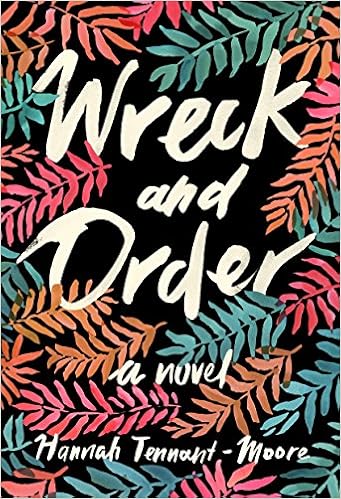
WRECK AND ORDER: A Book Review


Back when Lena Dunham's HBO series was a hot commodity, an acquisitions editor at Random House thought that WRECK AND ORDER would resonate with all those young women who never missed an episode. A twenty-something female exploring her sexuality, in an endless pursuit of the perfect orgasm? The makings of a blockbuster, right?

The television programme died a slow death while WRECK AND ORDER worked its way through the publishing process. Sadly, it has arrived when readers no longer wish to inhabit the world of a complete wagon.

Elsie, the protagonist, is a narcissist who is obsessed with sex. She should be a sympathetic character, what with a backstory of familial dysfunction and a history of abusive relationships. And she's a lost lamb, funded by her father's generous checks so that she does not have to actually work and support herself like an adult. Should a reader not feel sympathy for a character trapped in perpetual childhood?

She goes off to find herself and ends up wallowing in self-pity, too busy studying her own navel to notice that she's lodged her head firmly up her arse. She treats those around her with selfish disregard, and if you manage to stick around to read through to the end of this plate of shite and onions, you'll find that her experience among the downtrodden does nothing to improve her because that's what all the other ordinary novels do and this is literary fiction.

Don't waste your time on this one. The author can write, but there's more to creating a novel than an ability to string words together into coherent sentences.

Thanks to Penguin Random House for providing the review copy.

Thursday, December 17, 2015

A Poor Investment By A Savvy Investor

You might ask why Sheldon Adelson would want to own a newspaper. He's made a tidy sum with his casino interests, and now he's said to have gone and purchased a local Las Vegas newspaper at a time when print is dying. Not exactly looking for much of a return on investment, is he?

Free copies of the Las Vegas Review-Journal in every hotel room
Could it be a vanity purchase? Some billionaires might buy an expensive sports car, or even a sports team. They are well-heeled adults buying toys, essentially, and who considers amusements as investments? A billionaire spending $140 million? Not breaking the bank on that transaction.

So we come to the next puzzler. Why would Sheldon Adelson want to play with a newspaper. Look at what it did to Charles Foster Kane. Who wants to end up alone, dreaming of a sled and no one around you knowing what it is that you're talking about with your last breath.
Speaking of Citizen Kane---

The average pundit is going to assume that Mr. Adelson bought the journal so that he could direct its editorial slant and promote the conservative causes that he is known to support with his financial might. So concerned are local, though liberal, politicians that they are demanding the new investors reveal themselves. That way, when the newspaper criticizes them or fails to support them when it's election time, they can blame media bias.

According to the research done by the newspaper in question, it is Mr. Adelson's step-son-in-law who put the deal together, and the Las Vegas Review-Journal isn't the only paper in the mix. There are indications that the Adelson group is putting together an entire portfolio, taking a page from Rupert Murdoch whose FoxNews arm is highly influential in the American political scene.

As was pointed out by James DeHaven, Howard Stutz, and Jennifer Robison of the Las Vegas Review-Journal, Mr. Adelson is also a fervent backer of Israel, as is his wife. They are both donors to Republican campaigns, offering their financial might to help get conservative politicians elected. Are they going to use the newspaper as yet another weapon in their arsenal?

The pen is mightier than the sword.

No wonder so many are worried about a shift in the influence that a dying medium can exert on the older voter who is most likely to still take the daily paper and actually read it. Enough words extolling the virtues of one candidate and a billionaire could turn a voter's head. But don't all the other newspapers do the same? Is it only an issue when it's not your side that's gaining an ally?

Wednesday, December 09, 2015

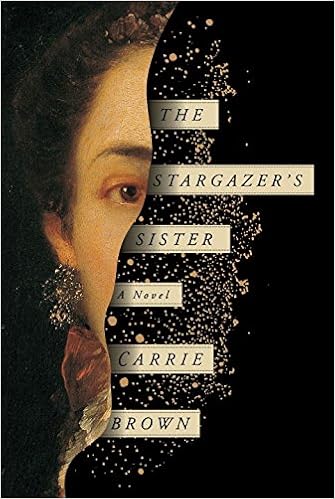
The Stargazer's Sister: A Book Review

Caroline Herschel was the sister of a noted astronomer, and how appropriate is the prose in THE STARGAZER'S SISTER, floating just above the page, almost lighter than air. The story of the woman behind the William Heschel is told with a delicate touch that fits the Georgian era in which the main character lived.

You'll find no end of descriptions of stars, sky, meadow, tree, etc. etc., but it feels right. A woman who did a bit of stargazing herself should be shown to be aware of what is around her, exhibiting powers of perception.

Author Carrie Brown imagines a life and creates a believable world inhabited by poverty, stress and abuse. Caroline, or Lina as she is called, has little to look forward to in her miserable life, with a face scarred by smallpox scars. If not for her brilliant brother acting as her tutor, her future would be bleak indeed.

Thanks to her brother, however, she has a chance to shine like the stars (couldn't resist, sorry) when he moves to England to make his way. In need of a housekeeper he takes in Lina, who shapes her life around William's needs, and in the end she sacrifices the best years of her life to help him become a famed scientist. Then he gets married and she's cast aside like an old rag.

The story hints at feminism in its earlier form, with an unattached female gaining a little acclaim, but getting there requires slogging through the middle of the book which drags a bit. The ending tails off, as did Caroline Herschel's life, but overall the character is presented well and the book is entertaining. If you are looking for the more obscure sort of historical figure, you will find this novel an enjoyable read.

And thanks to Penguin for providing a copy through First To Read.

Friday, December 04, 2015

Get A Gift, Give A Review

In the past, giving away free ARCs of books has helped get some attention for our books. As a very small publisher, Newcastlewest Books does not have the financial power to run big marketing campaigns, so putting a few books in the hands of readers is an affordable way to market our offerings.

Here it is, we go, read it and tell your friends how much you enjoyed it. Maybe they'll buy a paperback or an e-book, and tell their friends. That's how word of mouth buzz is generated.

With SAINTS OF THE NEW IRISH KITCHEN ready to be born, we offered the copies well in advance, using the free book giveaway function provided by Goodreads. Goodreads, in return, selected the winners from the long list of entrants and our office manager made sure that the copies were sent off to the winners.

So how does Goodreads select those lucky recipients?

Of the five readers who entered, most have never given either a rating or a review.

For a publisher, it's a waste of time, effort and money. The book was given away in the expectation that the person getting it would read it, add it to their list of books, and then give, at the least, a rating.

If the person getting the gift does not give a review, what is the point?

Goodreads is owned by Amazon, of course, and you'd have to wonder if their so-called 'algorithm' is skewed. The more ratings a book receives, the higher it climbs on Amazon's site, and when you're trying to get the attention of readers overwhelmed with choices, you want to get up there in higher echelons of the search results.

Sean Gleason's debut novel may not have been something that the entrants wanted to read. Maybe some people just want free books that they can turn around and sell to a second-hand shop. Once the book leaves the office, the recipient is free to do what they like with it, of course, but can a person not at least offer up a polite thanks for the gift?

And that has been the rant du jour. Five more copies are going out to another batch of readers, the majority of whom are in Canada or Great Britain. Maybe we'll get a review or two there. At least that's what we are hoping for as we try to get our novels in front of a few eyeballs and provide a little entertainment for those who like their prose.

Tuesday, November 24, 2015

Like "The Voice" But With Books

The gatekeepers have the publishing castle locked up tight, so authors find a different route to enter the kingdom. Chris Twyman of BoomWriter Media recognizes this fact in a recent article in which he extols the virtues of digital publishing for the masses. If you can't get in through the front door, create an opening yourself, but bring along a little help.

Mr. Twyman is all about the group thing. He equates the surge in digital self-publishing to the rise of the Airbnb rental that outflanks the hotel industry. People find a way to manage their needs by bonding with others seeking to fulfill the same need, and the next thing you know you're driving for Uber.

So why not do the same with publishing?

It costs nothing to publish electronically. As a writer, you don't get paid unless you first write something and sell it, so authors are in the same place financially.

But how can the self-publishing craze be incorporated into the old school model? After all, the marketing power of the Big Five is an asset highly coveted by those with a story to tell. You might be able to publish that story on your own, but you can't reach the audience that the major houses reach with their sales staff and promotions and such.

What the publishers want is a sure thing. What business wouldn't want to reduce risk on an unknown commodity like a debut author? So what if that author could prove that his or her opus was truly magnum?

That's where BoomWriter comes in. Except it's more like one of those reality contest programmes where a singer performs and the audience votes to choose the best singer who then goes on to obscurity because the people who vote aren't usually the ones buying up recordings. Sure they like the voice, but to pay money for the download? The voting was all for fun, but the purchasing involves real money, right?

Would we really end up with some great books if writers had focus groups to analyze and assess each chapter as it was born as a Word document?  

How about a group of writers collaborating on a single book? Would that result in the creation of a blockbuster or an over-edited bit of drivel that ultimately pleases no one?

This so-called 'sharing model' would eliminate writers whose words did not find favor with the community doing the reading, but all you have to do is scan the reviews of any book and you'll find a wide range of comments. Some books appeal to some people, some to others, and a reader doesn't know if they like something until they read it.

In the end, after the sharing model sliced and diced, a publisher would be left with something that a portion of the reading community likes. What the publisher wants is a community that buys. Thus far, it hasn't been the best predictor of the next major musical talent. It doesn't seem any more likely to shape the next big literary talent.


Thursday, November 19, 2015

Why You Need A Business Plan First

Opening a bookstore is a dream for many. To spend your days surrounded by books, to make reading a part of your job, what could be better for those who love prose?

Dreams are fine while they exist in your head, partially formed, nebulous. When you act on that dream, you had better get that head firmly wedged into reality because literature may be art but a store of any kind is a business and there's no room for reveries when expenses exceed income.

Kimberley and Rebeccah George wanted to open a bookstore in Chicago's Wicker Park neighborhood, a very trendy area that has gentrified itself into sky-high rents. People with money live there, educated people with money and an interest in books as entertainment. The sisters believed that there was room for another book seller in the area, and did not foresee a negative consequence to potential competition from the other four stores already doing business.

Their bookstore would set itself apart by providing comfy seating for book browsers, who could sip on coffee, nibble on pastries, or chug down a cold brew while selecting a few books.

Sounds like the sort of shop you'd like to patronize, doesn't it?

Except that the food end of the business required more infrastructure than the book selling end, and the would-be book vendors found themselves burning through their start-up funds. City inspectors brought the bad news about needing a second bathroom to meet food service requirements, and there the ladies were with their fancy signage all ready to go but not enough money to pay for the extra water line and plumbing.

They have started a funding campaign online, the sort of option that many residents of Wicker Park would understand. Those hipsters are aware of GoFundMe and Indigogo, aren't they? Surely they'll ride to the rescue and help a neighbor through a rough patch.

To date, there isn't much of a show of support for the bookstore.

Volumes Bookcafe needs $20,000 to meet requirements and get their shop opened. They've raised a little over $1800.00.

Where are the Wicker Park hipster book lovers?

Questioning the business acumen of the George sisters, possibly.

A sound business plan is the first step in launching a new venture. The budding entrepreneur has to estimate every single expense that is likely to crop up before the customers start patronizing the establishment. For the ladies George, that would include things like rent for the first few months, the cost to rehab the space, and a study of Chicago zoning ordinances that tell them what that rehab must entail.

If a business magnate doesn't perform due diligence in advance, can an investor trust that the business owner has enough of a clue about business to actually run the place and turn a profit? Investors want a return on their investment, even if they are contributing to a crowdsourced campaign. Maybe they'll get a free latte with every purchase, or a cookie to go with their tea. Maybe it's a discount on book purchases. But those discounts cost money and you'd want to have faith in the acumen of the person you're investing in.

Then again, book stores aren't exactly cranking out big profits. The hipsters are surely aware of online shopping and the discounts to be had by buying at Amazon after using the brick and mortar store as a free showcase.

Owning a bookstore is a dream. It takes some deep pockets to make that dream come true.

Monday, November 16, 2015

Book Selling And The Sales Force

Publishers employ a small army of sales people who spend their days making contact with book shop owners. They may call in to say hello, to tout the upcoming catalogue, or to commiserate about the poor economy and the competition from other types of entertainment. What they do is add the personal touch that builds relationships so that books that are not heavily marketed can get into a shop and get a chance to reach the eyeballs of the reading public.

It is an expensive venture, and not something that the average small press can afford. Sales people need back office support, to say nothing of their commissions and overhead costs. When a publisher sells but a few books, or has a rather small selection, the costs can be prohibitive.
From Plus To Minus

For a long time, Faber provided cover for the little guys who published important works of literary fiction or niche titles that were popular enough for the publisher but would not have drawn the interest of the Big Five. Through their Faber Factory Plus division, they acted as a clearinghouse for a number of small houses that could not afford their own sales team, but could manage the cost of sharing a team with their colleagues.

Little places like The Liffey Press or  Liberties Press, a couple of independent Irish publishers, partnered with Faber to get their titles into bookshops beyond their small reach. It meant that authors who were not about writing blockbusters could sign with a publisher who could market their works effectively. Authors might be about the art of literature, but they like to get a royalty check every now and again.

The concept worked for the likes of Daunt Books, who signed on and noticed that sales rose because they had someone pushing their product to the places where readers still go to find new books. They had a small reach with their own string of shops, but books published by Daunt have a greater audience than London, England. It required a sales force to get them there, and Faber's solution worked.

Just when things were looking up, Faber announced the end of the Factory.

At Faber's end, the outlook was not so grand. The publisher was losing money on the deal. Book sales are down overall, and having more different titles to sell did not result in more titles selling. Book vendors saw no point in stocking their shelves with items likely to sit, gathering dust, for extended periods of time because the money to buy books is not there anymore.

Faber could have increased prices, but there is a limit to what a small publisher can pay for sales representation. At some point, the cost of paying Faber Factory to push paper would be more than the profit from the sales, and what's the point of selling at a loss? You don't stay in business long unless you have a backer looking for a tax credit and a money-losing venture.

The publishers represented by the Faber sales force will lose that representation in the coming year, and their only option is to try to find a similar scheme elsewhere. Can they find a partner with a large enough reach into the book selling world? Can they afford it?

Without books in shops, it is much more difficult to be discovered by readers. No one browses an online listing like they do the stacks of a shop, examining spines or asking the employees for recommendations. Without Faber Factory Plus, the small publishers know that their days could be numbered if they cannot find someone else to get their titles into the brick and mortar shops.

There is nothing easy about selling art to a sceptical public, especially when the public doesn't have the spare change available to gamble on an unknown, un-hyped author. Small publishing is very much a labor of love, but you can't pay the rent with love. Authors may be losing yet another avenue to get their stories out there, and that is a sad day indeed.

Friday, November 13, 2015

Where Do You For A Good Spanking?

The urge strikes and you crave a spanking, or some bondage. You have a sweet leather outfit in the closet that you just have to wear but where can you go dressed like a dominatrix?

If you and your fetish are in Chicago, Galleria Domain 2 is the place you're looking for.

And if all goes as planned, there will soon be not one, but two, locations to serve your brand of sexual expression.
When you think of River North, you don't think BDSM---not yet, but maybe soon

All may not be going as planned, however. The neighbors are voicing their complaints. And the neighbors are the high-end sorts
who get really, really loud when sex clubs try to open up on their street.

Chicago's River North area swarms with suburbanites and tourists on the weekend, but the area is also home to the trendy and well-to-do who can afford the high rents and astronomical home prices. It isn't exactly a run-down, sleazy kind of neighborhood where you'd expect sex shops and street walkers waving at potential clients.

The people who invested big bucks to live in River North don't want to live near sex clubs. If they did, they would have moved elsewhere and made some other part of Chicago a fancy location. If you paid somewhere in the $2 million range for your pile, you'd squawk too if someone decided to plant a bondage parlor up the street from your home. A wine emporium is one thing, but kinky sex? Not In My Back Yard, thank you.

The owners of Galleria Domain 2 insist that their club is absolutely discreet in every way. It's going to be on the second floor so there's no window shopping that might alarm small children passing by. No alcohol is served so it's not like there's going to be drunken revelers spilling out of the doors half naked, dangling fur-lined handcuffs or waving leather whips overhead.

The club members have a safe word as well, so things never go too far and there's no need for the police to be showing up every weekend to rescue someone who's dominant partner got a bit over-exuberant.

But the people who live around the proposed location don't want to share their sidewalks with the sort of people who sit around and watch other people have sex. It's all too sordid and perverted for the average homeowner, and those average homeowners are howling to their alderman to put a stop to the club. Find something in the laws to prevent them from getting a permit, the voters are shouting, and if the alderman wants to be re-elected, he'll do all he can.

There's always naming and shaming if the alderman fails. The residents are free to set up bright lights and cameras on the street and record the faces of each and every person who enters and leaves the sex club. You want discretion, they could say. Here's your discretion right here. Posted online for anyone to see.

Before it comes to that, it's highly likely that someone in Chicago's zoning department could declare the club not compatible with surrounding land uses, and be done with it. No politician wants to upset voters who can afford to buy, and pay property taxes, on multi-million dollar homes. Money talks in Chicago. It's talking rather loudly on West Superior Street.

Tuesday, November 10, 2015

Free Books Make Excellent Holiday Gifts

Enter and you'll have a chance. Enter and you might get a message from Newcastlewest Books asking if you'd like a copy of the book even though you didn't win the contest.

Anything could happen. Nothing will happen if you don't take a chance.

Goodreads Book Giveaway

Saints of the New Irish Kitchen by Sean Gleason

Saints of the New Irish Kitchen

by Sean Gleason

Giveaway ends December 01, 2015.
See the giveaway details at Goodreads.
Enter Giveaway

Wednesday, November 04, 2015

No Literary Agent Is Better Than A Bad Literary Agent

Somewhere out there is Robert G., a writer who probably thought he hit the big time when he landed literary agent Faye Swetky to represent him. At last, he got his foot in the door of publishing. A champion was on his side, promoting his works to publishers who would read the agent's cover letter and be intrigued enough to read the synopsis and then, yes, and then, ask for the manuscript.

Somewhere out there are those who do their research on literary agents, to determine if the agent they are querying is really going to be able to get a manuscript inside a publishing house, large or small. These writers monitor forums at places where other writers like to loiter, sites like AbsoluteWrite.com where literary agents are vetted.

It's pretty apparent that Robert G., aspiring writer, did not perform this wearying task. If he had, he would not have accepted Ms. Swetky's offer of representation. And Ms. Swetky would not have shot off a query, with synopsis, to Newcastlewest Books to consider Mr. G.'s work of mainstream contemporary erotica.

No sex, please. We're a bunch of Irish Catholics here and the last thing we'd be interested in would be a piece of fiction that falls into the erotica category.

A perusal of our website would give anyone a very good idea of what sorts of books we do publish. You won't find a single bit of erotica there, not at all, at all.

Our new imprint, CITY THAT WORKS, does publish contemporary fiction, but again there's no smut. And, by the way, the fiction is still within our niche of Irish influenced writing. Sorry, Mr. G., but not one of the characters in your synopsis seem to be particularly Hibernian.

Robert G. sits in his writing place, eagerly anticipating news from his agent Faye Swetky. He will wait in vain, unless she finds some small publisher of erotica who doesn't require a literary agent to submit manuscripts. In that case, he will pay for something he could just as easily have done himself.

In the meantime, his erotic fiction goes nowhere when he could have spent his time finding an agent with a track record of sales. The manuscript will languish because he has opted to go with a bad agent when he would have been better off without one.

Not everyone who calls themself a literary agent is one.

I could respond to Ms. Swetky's missive and explain to her that we don't publish what she is selling, and by the way we don't look at manuscripts unless they come to us from a referral or a recommendation. But I have too many other things to do and not enough time to do them all, without adding another pointless task.

So, Robert G., know that your agent is submitting your manuscript. She isn't targeting specific publishers or calling around to contacts she has developed among the editors. A blanket e-mailing isn't agenting. Long ago in the dark ages before the Internet was filled with information, plenty of writers got snagged by those who thought it was easy to sell fiction. There's no excuse these days, when Google is your friend and Yahoo or Bing are there for your safety.

Use the force, Robert G.

Tuesday, November 03, 2015

A Matter Of Life And Coffee

You know how much coffee you need to shake the cobwebs out of your head in the morning. You know the quantity of caffeine that is required to set your heart back to beating in mid-afternoon when sleep tugs at your eyes.

When you buy a particular amount of coffee, then, you expect to get that much coffee. You are meeting your body's need, and a lesser amount isn't going to work.
32 oz may not be 32 oz

It turns out that Peet's Coffee in Winnetka, Illinois, the one that's cozying up to The Bookstall at Chestnut Court, has been misleading their caffeine-dependent clientele. Proving that a lack of the stimulant can make a person cranky, a client who was shorted on his order is taking the company to court.

Robert Garrett could just feel that smaller jolt after he consumed the contents of a French press carafe. He thought he was getting 32 oz, but when he took the time to measure the volume, it not only varied but it came in below 32 oz. He sampled the smaller size carafe and found the same results. He was ordering one thing and getting less. 25% less, according to his lawsuit

The coffee shop in question is somewhat new to the area, replacing a Caribou Coffee site following the recent buy-out. People tend to be loyal to their coffee purveyors and would naturally be skeptical of the newcomer. As it turned out, Mr. Garrett had good reason to be skeptical. The menu board he ordered from said one thing but what he got was less, which sounds like a dishonest way to do business.

And there's the question of getting enough coffee as well. Mr. Garrett's needs were not being met, unless he bought two carafes, in which case he'd have too much coffee which isn't what he was going after either.

Peet's is on top of it, as Chief Marketing Officer Tyler Ricks learns how people in the Midwest view upstart companies out of the West Coast. Mr. Ricks has explained that the carafe size is what is meant on the menu, not the volume of coffee the consumer will get to consume. You need room for the plunger in the French press, and the grounds take up volume but you're not drinking those either.

Mr. Garrett will probably get some kind of cash settlement for being misled by Peet's marketing style. If it says 32 oz,. you should get that much in your cup. If it's the pot that's 32 oz., then state specifically that the customer is buying the contents of a 32 oz pot and it isn't going to be 32 oz. after the brewing and straining is done.

Peet's may try to play clever with the sizes, and that may fly in Berkeley, California, but in a tony North Shore suburb, you may fool some of the people some of the time, but sooner or later you'll run up against an attorney who looks for loopholes and isn't about to be taken in by marketing spiel.

Welcome to the Chicago area, Peet's. Don't try to get cute.