Monday, February 27, 2017

The Barrowfields: A Book Review

Where are we going, you'll be asking Phillip Lewis. Where are you taking your readers on this meandering journey through an isolated backwater?

THE BARROWFIELDS is a coming of age tale, relating the awakening of Henry Aster who lives in a bizarre setting that feels a bit Flannery O'Connor-like. There is humour in Mr. Lewis' telling, but a bit of a chuckle is not enough to keep a reader enthralled. The Aster family is dysfunctional in a Southern Gothic sort of way, the father a hard-drinking lawyer with a burning desire to be a writer. Henry is the product of a would-be novelist's attempt to create a writer in his son, and there are more than enough references to obscure literary classics to make the average reader feel as if he or she has fallen into a lecture.

We are dragged into MFA-land as the story progresses, with Henry the university student discussing the word count on various fiction genres, and you the reader realize that Mr. Lewis is perhaps more of a short-story writer than a novelist. His prose is extremely pretty, but his ability to tell a coherent story is not fully developed. His attention to his personal craft is fluff that fills space but does not move the narrative.

The novel wanders in a way that had me skimming, in search of conflict or a plot point to cling to. The novel's premise is intriguing, but Henry gazes deeply into his navel as he ponders his failure to look after his younger sister as promised after his father leaves the family. Like so many recent works of fiction, the protagonist does not speak to the wider world or the human condition, but focuses quite firmly on a single individual with middle class problems.

Pretty prose does not a novel make. This one is worth a glance for the attractive sentences, but is difficult to finish because there isn't much substance behind the facade.

The review copy was provided by Penguin Random House. Thank you.

Tuesday, February 14, 2017

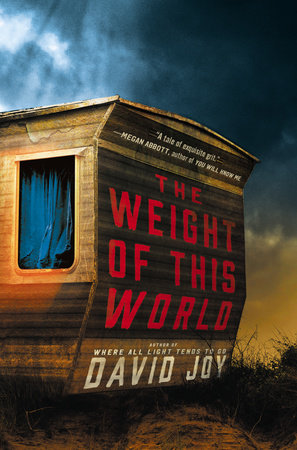
The Weight Of This World: A Book Review

Something to find at the local library for a test drive
On the plus side, the characters in David Joy's new novel are not New Yorkers filled with angst. Instead, THE WEIGHT OF THIS WORLD delves into a different dysfunctional sphere, that of the Appalachians.

The cast of characters fit the required stereotypes of hopeless losers, so much so that you feel as if they lack dimension. Thad Broom joins the army because that's what poor men in North Carolina's mountains do, in the eyes of those who don't actually know anyone who signed up. For those unfamiliar with the typical soldier boy, it won't be an issue and the novel is probably more enjoyable. Less disbelief to suspend.

Thad's best mate Aiden, adrift in the world, joins him on a meth-fueled bender but you don't really gain any insight into why the men have turned to drugs. Granted, Thad has to take something to self-medicate because he was injured and the Veterans Administration does nothing to help the injured vets, so there's a "ripped from the headlines" excuse. What's left? The usual residue of domestic violence, rape and slut-shaming, that sort of thing. No depth, just reasons you'd find in reading scholarly studies into such matters.

How much further can the dysfunction in this novel go? Aiden is having it off with Thad's mother. We're deep in the mentally deranged woods here, but the author is painting a picture and it all fits, if only because intellectuals tell us that starting at Point A brings you to Point B.

The action is profoundly violent, as one would expect in the world of drugs and drug selling and nothing-to-lose. This book is not for everyone, to be sure. And yet the prose is so pretty that you can't help but read, although not necessarily for the narrative.

I skimmed a great deal, gliding over the surface of a story that did not quite pull me in because too much did not ring true. Events happened in a way that followed the formula, or maybe I'm just reading too much these days and I tend to analyze too much.

In a way I enjoyed the book because the author writes so well, and then again I did not care for it much at all.

I'm quite on the fence with this one, debating the worth of the words as opposed to the content.

Tuesday, January 10, 2017

Everything Belongs To Us: A Book Review

Choppy, uneven---those are the terms that come to mind after reading EVERYTHING BELONGS TO US. So much potential for an intriguing story, but then it devolves into an ordinary 'love gone astray' melodrama...

The author presents South Korea in the late 1970s, using a rich girl, a poor girl, and a well-off young man to examine the social inequalities that churned below the surface. Shortly before the country's leader was assassinated, actually, and doesn't that sound like a tale filled with potential for conflict?

That is not the story that Ms. Wuertz chooses to tell. Instead, she uses the social issues to paint the backdrop of what is a very ordinary story of young people meeting at university, falling in love, and then falling out of love. Think love triangle sort of thing, with financial incentives looming ahead.

It was hard to read the book through because it dragged in places. The prose is elegant, but the storytelling ability needs a bit more work.

My Husband's Wife: A Book Review

How to review a thriller when I'm not a fan....

How to review a book featuring thoroughly unlikeable characters interacting in ways that don't seem quite plausible but feel contrived, for the purpose of moving the narrative in the direction desired by the author...

One of the characters appears first as a child of nine, and ends up a bit of a sociopath but the develpmental trajectory isn't there. Nothing beyond a bit of bullying, and the author telling rather than showing the creation of a woman unhinged. As for the stars of the novel, Lily and Ed, their relationship exists because the author wants it to exist. In real life, two such disagreeable creatures would have divorced almost immediately after their marriage, with Lily so sure that her new husband still has a thing for his previous lover. Move on and get on with it, you want to shout, but instead they remain united, endlessly bickering. Just saying that Lily still loves Ed doesn't work unless something happens to show that love, but theres's not much showing in MY HUSBAND'S WIFE.

This is the sort of thing that I can't honestly rate because I don't care for the genre and this particular offering did not draw my interest. I'll leave it to others to judge if MY HUSBAND'S WIFE meets the requirements for engaging psychological thriller-ness. As for me, I plodded along, not really caring who did what to whom, all the way through to the ending.

And I only carried on to the end because I received a free copy from Penguin Random House in exchange for a review, and I wanted to meet expectations.

Wednesday, December 21, 2016

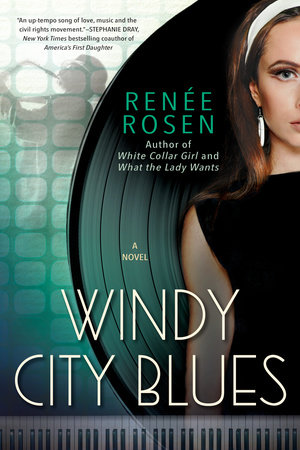
Windy City Blues: A Book Review

The Rolling Stones have recently returned to their blues roots and that means the legend of Chess Records gets a fresh airing. Timely indeed for author Renee Rosen, whose latest novel revolves around the rise of the storied business.

WINDY CITY BLUES wraps fiction with fact. A lot of fact. Dry as toast fact. It's a habit of the author, to use every scrap of research, to the point that you just want to tell her you don't need detailed directions that include every street the character must cross to get from her home to the Chess Records headquarters.

The novel is set against a backdrop of Jim Crow prejudice in Chicago after the Second World War, featuring fictional characters Leeba (white, Jewish) and Red (black, Christian). She's working with old pals Leonard and Phil Chess, helping build up their record business behind the scenes, and falls in love with an up and coming bluesman from the Deep South.

But there is so much more going on, what with the opening salvo of the civil rights movement sprouting and the Chess brothers producing what were called 'race' records to fill a niche in the black entertainment sector, making money and discovering talent and shifting as the industry turned to rhythm and blues.

It is a complex tale with many threads, to say nothing of the name dropping that fits in with the assortment of dry facts mentioned above. It often feels quite contrived, requiring a reader to do some serious suspension of disbelief.

The characters are relatively one-dimensional, the story-telling a bit wooden. The spark of life is dim in this novel, as if Ms. Rosen is relating a story like a news reporter rather than a novelist. Such is her style, however, and it may work for some readers.

Loose ends are tied up at the end in a way that falls flat because it feels too artificial, the author driving the narrative rather than the characters. The ending is a happy one for most of the participants, Leeba rubs elbows with both the Rolling Stones and Dr. Martin Luther King, she saves an orphan black child, and her husband finds his purpose at radio station WVON. Which was founded by the Chess Brothers when they began to burn out from the stress of running Chess Records.

Well-researched, with a tendency to plod along as the timeline marches on, WINDY CITY BLUES is a bit of a slog, but with some interesting elements for those interested in Chicago history. I often struggled to keep my eyes open while reading, but I wasn't sorry that I stuck with the book and finished it to the end.


Friday, December 09, 2016

The Realities Of Real Estate

Here and there, neighborhoods are gentrifying. That's a convoluted way of saying that the poor are being pushed out by the wealthier who want to reside in that same area.

It's a straightforward process, with a few artistic types acting the role of pioneer. They find cheap space for their workshops, create art, and attract those with the means to pay for said art. Then someone yearning to open up a restaurant featuring their own style of culinary wizardry realizes that those tourists could use a spot to have cocktails and perhaps a light supper, and the next thing you know a few unique eating establishments open up.
In lovely Cobble Hill, Brooklyn

Young people looking for affordable housing but with the amenities they crave, like boutique-type eateries, start moving in. Those who owned property see an opportunity to cash in on their hovel, and the whole thing spirals. Soon, real estate values are soaring and owners see the answer to their retirement dreams. They finally have a cash cow to be milked, and all because they bought in at the right time and just happened to be in the right place when the neighborhood changed.

Parts of Brooklyn are becoming quite trendy for the younger set that cannot hope to afford Manhattan prices but want to have a place nearby to call home. For Henry Zook and Mary Gannett, the ongoing gentrification has turned into their windfall.

They own BookCourt, a popular indie book shop, and they own the shop itself. When they launched their establishment thirty-five years ago, the price of Brooklyn real estate was manageable for the couple, who earned their living from selling books. Not the most lucrative of professions, is it?

Bookselling has changed over the years, as any reader can tell you. The big box stores came in and sucked up much of the clientele, offering lower prices that the indies could not meet. Then along came Amazon, with its ease of shopping as long as you didn't care about thumbing through an actual book and reading whatever page you wanted, rather than the first few that Amazon allowed digitally.

Zook and Gannett navigated through the turmoil and their shop became a popular spot as attitudes towards Amazon changed, along with the residential make-up of the area. BookCourt managed to hang on and sell books.

Back in the long-ago days, when the neighborhood was a bit blighted, the couple lived upstairs and had an easy commute to work. Over the years, however, the marriage fell apart and they left that apartment, making the trek to the office longer. At the same time, they grew older and saw retirement ahead, the golden days when they would not have to crawl out of bed, joints creaking, and spend another day hoping to make a few sales while dealing with the general public.

Along came Eastern Capital, with plenty of capital to throw around. The book shop is in a prime location for redevelopment, be it a tower of condominiums or a mixed use space with shiny new retail at the ground floor and expensive, luxury apartments above. Where BookCourt sits, young millenials and aging hipsters want to live.

Sure, the indie bookshop was one of the amenities that attracted gentrifiers to begin with, but as with any wave of urban renewal, those who were there first are also the first to go if the price is right. For Mr. Zook and Ms. Gannett, in their sixties and looking to lay their burden down, the price offered by Eastern Capital was the reward for taking a chance on a chancy neighborhood, investing in a shop selling books, and slaving away for thirty-five years in the hope that they could save up enough to not have to work until they dropped.

It's the circle of real estate life. The shop will be missed by those who liked having an independent book vendor down the street, whether they bought their books there or not. But other entrepreneurs will step in to fill the niche, some other book lover who wants to share their passion with those who have the disposable income to cover the price of a book.

Monday, December 05, 2016

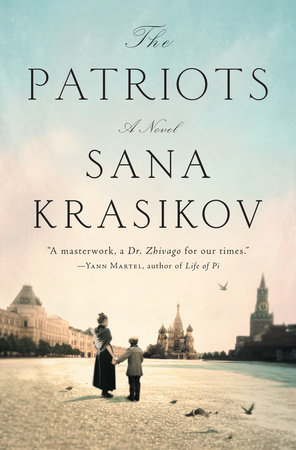
The Patriots: A Book Review

Before anyone knew how wretched life would become under communism, several naive American idealists thought that the Marxist philosophy represented a paradise on earth. Author Sana Krasikov takes off from that point and creates a riveting novel in the process.

THE PATRIOTS interweaves the narratives of Florence, a progressive Jewish girl from New York, and that of her adult son after her death. Florence becomes involved in a pro-Russian group during her time at university in the height of the Great Depression, falling so in love with all she thinks it will be that she emigrates. The reader knows ahead of time that all did not run according to plan, due to a well-placed prologue that piques the interest. A knowledge of history would give you a clue as well, but you do not need to be up on the subject to enjoy the novel.

Florence's son Julian has business in Russia, during Putin's first term, and while he deals with his family's past and the emotional scars inflicted, he is also trying to convince his own son to leave Russia and find a future in a country that is not a massive criminal enterprise.

The reader follows Florence's journey into what will become hell as Stalin wrests power and gradually turns on the Jews who thought the pogroms were relics from the Tsarist era. Her tale is one of survival that comes at a high cost, a slow descent that proves captivating to a reader's interest.

At the same time, Julian wrestles with his own ghosts as a child tossed into an orphanage after his parents were caught up in Stalin's paranoia. His involvement in a petroleum industry deal begins to mirror some of his mother's choices, and he will face his own dilemma on whether or not to cooperate with powers beyond his control.

The author on occasion becomes the omniscient narrator but the overall style of the book is one of pure storytelling. As a work of historical fiction, THE PATRIOTS brings you into a foreign place that is made less foreign with Julian's modern-era narrative, thus tying the past and present together. What makes the book particularly compelling is Florence's determination to live when the world around her grows increasingly bizarre and contradictory, when a positive action taken at one point becomes an act of treason when viewed several years later.

I would highly recommend this book.

And thanks to Penguin Random House for sharing the review copy with me.

Saturday, November 19, 2016

No Disrespect

She was his girlfriend, in her mind, and as such she had certain rights to his time and attention.

He was over her. Therefore, she had no claims to make.

She called him.

He ignored her calls.

She shot him.

Katrina Harris had known the young man since they were kids, riding that first wave of hormones in junior high. They became a couple and she attached meaning to the relationship that only a first love can hold. Terms like soulmates are often applied by those without the life experience to really understand what that means. In her mind, it was forever.

After the initial whiff of infatuation wore off for him, however, it was time to move on. After all, when a young man attends high school and starts meeting other people, and forming other friendships, those childhood crushes fade away into the realm of pleasant memory.

In Katrina's case, that was not an acceptable outcome. She had her man and she intended to keep him. Sure he said it was over, but she believed in her power to persuade him, to make him see things clearly. Words would accomplish her goal. She would talk to him and convince him that they were still a couple, and he was mistaken.

A girl can't very well convince a boy if he won't talk to her. If he won't take her calls or texts.

One day, when his phone was ringing, he handed it to someone else. Tell her to stop calling me, he might have said. Maybe it was his new girlfriend who was the messenger.

The police aren't saying, but you can picture it all in your head. He's had enough and doesn't want to talk to Katrina, so he has the new lady in his life tell the ex to stop calling. Nothing says 'It's over' like the replacement lover saying it. Pretty much spells things out.

With that, Katrina felt the full force of her man's disrespect. At any rate, that's how she perceived it. Her boyfriend had disrespected her by not talking to her when she demanded that they chat, and then he really disrespected her by having someone else take one of her calls and tell her to stop calling.

What's a girl to do?

In one part of American culture, the girl would run off sobbing to her girlfriends who would then spread malicious gossip about the ex, painting him as the worst dregs of humanity.

In another part of American culture, the part that is infamous for the indiscriminate use of guns, a girl gets a weapon and shoots the boy.

Katrina Harris has been charged with attempted first-degree murder, among other things. There is no doubt that it was a crime of passion, considering the fact that she left her purse behind with all her identification in it. Pretty easy to figure out who did the shooting when the cops have your work I.D. in hand, retrieved at the scene of the crime.

Teens do stupid things, to be sure, but is it stupidity that drove 16-year-old Katrina Harris to try to murder another human being because she felt disrespected? Or is there something deeper, more sinister, something that won't be solved by lawmakers barking about curbing gun violence with new legislation? Not everyone uses a gun to settle a question of honor. At least not in the 21st Century. Except in certain segments of America, where the notion of personal honor has become a matter of life and death.

Maybe when you don't have much else you can call your own besides your honor, you tend to exaggerate its importance. Maybe when it's all you have, you can't walk away from the bruise to the ego that is a break-up.

Wednesday, November 16, 2016

Conclave: A Book Review

So much mystery surrounds the selection of a Pope. The intrigue, the human failings cloaked in piety, the potential for the sorts of shenanigans you'd find in any political contest. It's all there in CONCLAVE.

Author Robert Harris presents the Papal Conclave through the eyes of the Dean of the College of Cardinals, a holy man who prays often and with sincerity. He really believes, does Cardinal Lomeli.

Using current events intertwined with imagination, the story unfolds behind the closed doors of the Vatican, with the elector cardinals cut off from outside communication. Things start off smoothly, with the initial vote and the voting trends and the like as leaders emerge, but rumours reach the Cardinal's ear and he has to check things out. One can't have a Pope enmeshed in scandal, not these days. Cardinal Lomeli is determined to protect the Church at all costs.

One enquiry leads to more questions, and more political maneuvering, as the leading candidates campaign in their subtle way. Under pressure to pick a Pope before the laity starts thinking there's some serious problems with the Church hierarchy (the pre-Vatican II sorts duking it out with the liberal wing, if you will), Cardinal Lomeli faces a crisis of faith. How to out a corrupt cardinal, if indeed the man is corrupt, or is it best to deal with the corruption later and appease the public?

The tension is subtle, but it is there as you turn the pages to see what comes next and how the Cardinal will unmask the wolves in sheep's clothing who would be the shepherd. The novel is great fun to read, even with the frequent interspersions of Bible verse that has me wondering if I've forgotten the words, I've lost track of the revisions that came through a few years ago, or Mr. Harris is relying on his heretical Church of England Bible for the quotes.

I would recommend this to my Catholic friends, of course, but anyone who enjoys political thrillers would find CONCLAVE a fascinating read.

Thanks to Penguin Random House for the review copy.

Days Like These: A Book Review

You've stuck to a reading diet of substantial literature, avoiding anything too saccharine. But at some point you need a little sweet to satisfy that craving for the literary equivalent of candy floss.

DAYS LIKE THESE is a highly predictable piece of feel-good writing, all empty calories that amuse without asking much of you in return. The novel follows Judy Schofield, British grandmother, and her brief escapade as caretaker of her exceedingly precious grandchildren. Hilarity ensues. There is wit to be found in these pages.

It's the sort of fiction that is often set in highly competitive New York City circles, with all those tiger parents looking to get their offspring an advantage in future advancement. The world that Judy falls into is packed with after school activities and learning oppportunities and high pressure to perform, which she as the clueless woman of a certain age has never experienced. For variety, the setting is London, but the same sort of people populate this novel. The alternate location shakes things up a bit, which is always welcome.

For those who had their children later in life, you might be cringing at the thought that author Sue Margolis thinks the average 62-year-old female has no idea what the competitive elementary school environment involves, but this book is all about suspending disbelief so swallow your stung pride. No, you're not all that old at 62. But there's a love story in here and it just wouldn't work so well if the Judy character was in her 70's, right?

Ah yes, there's romantic tension and secondary characters having the usual sorts of issues, and let us not forget the queen bee-mean girl character who sits atop the parental food chain. She gets her come-uppance, of course, because that's what always happens in these sweet little novels that you can consume in a weekend.

With all the unpleasantness in the world, this is a perfect time to settle in with Sue Margolis' newest. Escape into a place where everything comes right in the end and the endings are happy. Sometimes you need to indulge in a heavy dose of sugar.

With thanks to Penguin Random House for the early review copy.

Friday, November 04, 2016

Love, Alice: A Book Review

What if Philomena Lee had died, instead of her son Michael Hess? And in this telling, he's straight instead of gay (but not to worry, we'll be sure to be diverse and include a secondary gay character in our tale), and the woman he's drawn to does the hunting down of his mother?

That, in essence, is the premise for LOVE, ALICE by Barbara Davis.

Lacking the power of Katie Hanrahan's THE LEAVEN OF THE PHARISEES, the book touches on the horror of the Magdalene laundries and the lives that were destroyed by religious tyranny. In this case, the novel looks at Alice Tandy, up the stick and the father of her unborn child dead at sea. Her story is told through a series of letters that she pens to the child she was forced to give up for adoption, the letters discovered by a woman who is grieving the suicide of her fiance.

Unlike Philomena, this unwed mother has died by the time the story opens. Her mother turns up looking for her, not knowing the girl's been dead for nearly thirty years, and bumps into Dovie Larkin who then sets off on a quest to solve the mystery. What became of Alice's child, who she was seeking when she emigrated to South Carolina? Can solving this mystery bring closure to Alice's mother and Dovie as well?

The fact that Dovie's gay-dar is non-existent can be an impediment to a reader, who may very well be screaming out the answer to one question long before the author lets Dovie figure things out. Get on with it, for feck's sake, you may be saying, but don't give up. Except for that middle section that drags, the rest of the novel moves along at a comfortable pace.

The narrative gets a bit chunky when the author needs to present more than can reasonably be shown through an epistle. Is there anything more awkward than a letter that breaks out into dialogue? As if anyone would actually write a letter in that way? That can be the problem when one type of novel structure is used, and then doesn't quite fit. Somewhat distracting, after the majority of the backstory was presented in a standard form that felt real. It can stretch the suspension of disbelief to make a sharp turn near the end of the novel, but once committed to using missives, Ms. Davis had to keep going.

The misery of the Magdalene laundries gets a passing reference because this is a work of women's fiction that features a strong romantic element and plenty of emotion. You'll probably guess which character is actually Alice's child, a fairly predictable outcome as it is the sort of conclusion one expects from light fiction like this.

If you want real insight into the damage done by the Sisters of Mercy in their slave labor camps, read Katie Hanrahan's novel. If you just want something with a feel good ending, LOVE, ALICE will do.

Monday, October 31, 2016

The Center Of The Short Story Universe

Thanks to Penguin Random House and their First To Read programme, my inbox has been graced with short stories for the past two weeks, a serialized introduction to that which is deemed worthy of publication these days.

For some reason, I never seem to make any sort of effort to read short stories. There are literary journals galore, if I was so inclined. You'd think that short stories would be a perfect fit for those who like to read while commuting to work, the story fitting in with the time spent riding the rails or rattling over potholes on a bus. As easy as downloading a book, a reader could download the latest edition of whatever journal strikes the fancy.

Yet few readers bother. The average literary journal is the product of university creative writing departments, the production part of the training of the next generation of authors. Without such public funding, most journals would not long survive.

So how perfect, how fitting to my lazy tendencies and general tight-fistedness, that Penguin Random House has given me two short stories with no effort expended on my part. Free of charge, I can indulge and find out what makes a short story worthy of print.

The first offering came from Helen Ellis, author of American Housewife. What important topic does she choose to tackle?

Her protagonist is....a failed writer.

Really? That's the best that can be done? A writer writing about a failed writer? What about a failed welder? A failed farmer?

Write what you know is fine if your horizons are broad enough. But can writers write about anyone besides writers? They need to get out more, apparently.

The story itself was fine, with its stock characters of stupid Playboy bunny, feisty writer determined to succeed in her brief stint as a reality show contestant despite the odds, and a few celebrities thrown in to make the whole thing feel more real. The premise revolved around said failed writer as a contestant on a reality show that had something to do with finding treasure in trash and winning the show by getting the most money for the discovered items. The game show itself was the evil antagonist, with the host playing for the sort of drama you'd expect on a reality show if you ever watched such things. I'm more inclined to read a book, so I'm hardly an expert.

The second round of short stories came from Mona Awad, who came to fame writing about fat girls.

I suspect that the short story is actually an excerpt from her novel, 13 Ways of Looking At A Fat Girl. Considering that the short story giveaway is marketing by Penguin Random House to promote book sales, it's to be expected that they would offer a bit of the novel to entice someone to read more.

But would you want to read a novel about a narrator who wallows in self-pity and invites us to feel sorry for her?

That's what passes for short stories these days.

The material revolves around a self-centered universe, in which we the readers are invited to feel pity for people who are not exactly downtrodden or in desperate circumstances. Do we care about those who could solve their own problems if they realized that others have much bigger problems?

Yet publishers believe that is exactly what readers want.

Have they not spotted the connection, between low sales figures and the sort of books they publish? The market isn't there, or at least it isn't there outside of New York City publishing circles where self-pity thrives. The rest of us are just trying to pay the bills and keep the heat on.

Tuesday, October 25, 2016

The Lesser Bohemians: A Book Review

A novel? No. This is a 300 page poem.

To be taken in small doses.

Not for a casual weekend reading. Not for light entertainment.

So dense. Stream of conscious, partial sentences and fragments strung together.

What is it about?

Most likely it is the story of a young woman from Ireland who arrives in England to study acting and then comes of age. It's hard to tell, exactly, because it's no easy matter to plow through the thicket of words.

Did I enjoy it?

In part, yes. In part, no.

Creative, clever, often too cute by half, yet I was drawn to go back every time I put the book down thinking I couldn't possibly get through to the end.

THE LESSER BOHEMIANS is more of an experience than a read, something to be done as part of an attempt to find artistry wherever it exists. You wander through the modern art gallery, intrigued but not fascinated by the offerings, trying to understand what the artist was trying to convey. So, too, does a reader approach this novel/poem mash-up.

Not for everyone, to be sure, and not something easy to classify. It isn't often you find a book claiming to be a novel that skips the notion of dialogue in favor of enclosing the dialogue within the narrative. You might find yourself missing normal speech as you go along, worn down by the weight of the prose and looking for a break but finding none.

As I said, small doses.

With thanks to Blogging For Books for the copy used here.

Saturday, October 15, 2016

Publishing As A Labor Of Love

There is no money to be made in publishing when you want to publish books that you love.

Those of us going at it as independent publishers know this well. The cost of advertising and promotion are out of reach for the average indie, and generating buzz on a small budget is no easy task. How do you make yourself heard over the noise of all the other entertainment venues out there? And how do you make yourself heard when your readers can hear little more than the rattle of the empty bank account?

Not enough money to go around for the readers, and not enough money to throw around for the publishers.

Liberties Press has discovered this sad fact, although it took complaining authors to bring the issue to some notice. The small Irish publishers is far behind on paying its authors their full royalties, and some staff members left the company because they weren't getting paid.

Working for love, you see, does not pay the bills and there has to be a salary coming in from somewhere.

Sean O'Keefe didn't go into the publishing business with a plan to defraud authors. He wanted to publish good books that the major houses were ignoring because all they're after is the blockbuster best seller. When you see books as works of art, rather than widgets, you want to share your little jewels with others, but displaying those precious gems takes more of an investment than Mr. O'Keefe was able to make.

It's grand to receive a little stipend from the government to promote Irish writing, but there are more pressing needs for taxpayer money these days and you can't run a business based on donations that are spotty at best. Then there's the price of the book itself, which has to remain in a competitive range or it won't get purchased.

Editors and such like talented folk expect to be paid in euro, not love. If Liberties Press was staffed by independently wealthy book lovers who took no salary, it would have managed to pay its authors. That, however, is not reality. Reality is a staff that demands income and there simply is not enough coming in to Liberties Press to meet all its financial obligations.

The owner has tried juggling funds, robbing Peter to pay Paul as the hackneyed phrase goes. Borrowing works if there is a boost in profits to pay off the loan, but that sort of thing doesn't happen in publishing. The great books published by Liberties Press were sold to a small audience and there has never been enough sales to cover all operating expenses.

Authors won't want to publish through Liberties Press because they know they won't get paid. Literary agents won't submit manuscripts because they know they won't get their percentage, and they aren't working for love either.

In the near future, Mr. O'Keefe will be facing some legal problems as disgruntled and out-of-pocket authors chase down money owed. Can you squeeze blood out of a turnip? The courts will have to answer that question.

The dream remains for Sean O'Keefe, but he will have to carry on with a shattered reputation and little more than his own drive to acquire, edit and publish what he sees as great pieces of prose. You have to wonder if he will give in to the temptation of becoming a vanity publisher, if only to keep his struggling house from collapsing altogether.

All those authors didn't expect to receive little more than love when they signed contracts with Liberties Press, even if they wrote the books out of love for words in the first place. They were hoping for a little bigger return on their investment of time than the pleasure of seeing their book in a Dublin bookshop. That may be about their only profit once all this is done.


Friday, October 14, 2016

The Babylon Line: A Book Review

Write what you know, the students are told, and so we are crushed under the weight of stories that are set in creative writing classes.

THE BABYLON LINE is indeed set in a creative writing class, which will not resonate with the average reader because the average reader has vastly different life experiences. There is no connection to be made, at least not in the first twenty pages that I forced myself to get through in an effort to find something that spoke to the human condition.

Life is not universally lived in creative writing classes.

Readers should be aware that this is not a novel, but a play. I'm quite fond of Shakespeare, and have been known to read plays, but I just couldn't read this one.

I'm tired of stories centered on writers and creative writing classes. There are other artists out there, for feck's sake, artists who work in steel beams and concrete, for example. Artists who experience plenty of emotional doubt as they struggle through questions about their life's meaning and their significance in the greater scope of things.

Writers today can't seem to expand their horizons beyond the end of their own creative noses, focusing on their own worlds and the sorts of people they already know. This one has that touch of upper middle class ennui, with the failed writer coming to grips with his failure and that same old, same old trope.

Dull.

This book has been officially abandoned. I wouldn't recommend it to anyone I know.

Tuesday, October 04, 2016

Reality Show Meets Reality

Flip this house - but don't tear it down
They make it look easy on those home improvement shows, don't they. Buy a rundown house, fix up this and tear out that, install new cabinets and appliances, and there it is. Flip this house, for fun and profit.

Not in Chicago, however. No indeed, not in the City That Works, where building inspectors make ends meet by requiring contractors and do-it-yourselfers to dip into their pockets a bit deeper than anticipated.

Alison Victoria of Kitchen Crashers discovered that her reality show, in showing the reality of remodeling that might lead to more extensive renovations than first intended, stepped too deep into the reality of Chicago buildings. If she had not been filming, well, then the building inspector might have looked the other way if she slipped him an envelope stuffed with cash. As it was, she was tweeting about her project, keeping her fans in the loop, and reality shows just can't show the reality of a pay-off. The guys on the take don't like to work in the spotlight,

Her group purchased a cottage in Bucktown, a thoroughly gentrified area of Chicago that was popular with the hipsters until it got too gentrified. Homes go for big money in the neighborhood, thanks to its location, location, location near plenty of public transportation and a restaurant scene that draws people in from all over the city.

They invested well over $500,000 for a cottage that had long ago been converted to a two flat. The building permit allowed for some remodeling, to return the cottage to single family use, but you just never know what will happen when you start tearing things out of old buidings that aren't in the best of shape.

As Alison Victoria discovered, and planned to show her viewers, is that masonry is not always solid after one hundred years without new tuckpointing and when the walls start to crumble, you're looking at full-on demolition. During gutting, the walls fell apart and it became clear that the rehab project was becoming a demolition.Time to call in the architect to revise and the banker to revisit that line of credit.

Then when the building inspector shows up, you take him aside and have a nice talk that involves negotiating a price to make the building permit say something other than what it said in the first place.

That's reality, but it can't be shown on a reality show. Instead, Alison went right on ahead with her project in the way that the ordinary person would think you'd proceed. Encounter a problem, solve the problem, and build on would seem logical, but not in Chicago. Not when somebody's somebody isn't getting their beak wetted.

A stop work order has been slapped on the rehab that turned into a demo when the rehab went wrong. As far as the building department is concerned, Alison Victoria and her production team failed to pull new permits to allow for more extensive work that might have been required after the walls came tumbling down, but wasn't approved by said building department. Like demolishing the cottage instead of fixing it up.

Too bad she didn't have the right sort of recording equipment that would have disguised the identity of the building inspector who would have accepted a little something from HGTV for looking the other way when the project took a wrong turn. Now that would have been a real reality show, demonstrating the reality of working in Chicago when you aren't an alderman with the clout to do what you want because who's going to stop you.

Saturday, September 24, 2016

Job Opening In Denver

This could be you
Do you enjoy skiing and other outdoor activities associated with mountains? Fond of hiking and camping in the back country, watching the elk graze, that sort of thing?

And are you a literary agent looking to enjoy those hobbies while keeping your job?

Kristin Nelson is looking for you.

The Colorado-based agent is looking to expand, or at least replace Sara Megibow, who went on to a different agency after she'd learned the ropes from Ms. Nelson. There's a limit to how many clients one agent can manage, and the time has come for Ms. Nelson to bring in someone to carry some of the weight, and bring in a few more clients to grow the agency.

You have to have some knowledge of the publishing business, according to the job posting. Just because you think it would be interesting, or just because you could get your manuscript published more easily if you were an agent and developed connections, doesn't mean you'll get hired.

Ms. Nelson needs someone ready to jump into the game straight off, with a minimal amount of training. Maybe you've been interning in New York and are ready to live in the pristine wilderness, where canyons are real canyons and not just streets lined by skyscrapers. Perhaps you've been bored in your position as a minor acquisitions editor, disappointed with the offerings and thinking that if you were an agent you'd find some decent books for publication.

This is your chance, to combine your love of books with your love of the outdoors.

But you aren't too keen on bears and snakes, you say?

Not to worry. If your heart is set on moving up in the agenting business, Ms. Nelson is open to telecommuting. After all, it would be to her advantage to have a partner in New York City, in the heart of the beast. An occasional trip to Denver would be manageable, wouldn't it? The elevation would leave you breathless.


Thursday, September 22, 2016

Handled In House

Another pedophile priest, another failure to follow secular law
They just don't get, do they.

The Chicago Archdiocese, in line with dictates from the Vatican, instituted all sorts of safeguards after the child sex abuse scandal exposed the inner workings that were designed to protect the Church. It was the practice, before public outcry stopped it, to shift a pedophile priest from one parish to another, after exacting his promise to stop being a pervert. And when the priest reverted to form, it was off to yet another parish, to destroy the lives of other children while the Church busily swept the dirt under the rug.

Zero tolerance was supposed to become the rule, or at least that was what was put out there for public consumption. We won't tolerate un-priestly behavior, have no fear, so come on back to church and don't worry about leaving your young sons in the company of the priest. There's no more of that other funny business going on.

Okay, so the Chicago Archdiocese didn't take Octavio Munoz from his parish and assign him elsewhere after someone found child pornography on his computer. No indeed, they did what they were supposed to do and turned him over to the authorities.

And miracles happen every day, right. Father Munoz wasn't turned over to the police, along with his porn-riddled computer. Hell no. This is the Catholic Church. They can handle these problems in house. No need to seek outside assistance. Move along. And don't forget to drop your donation in the basket.

It isn't such a crime that the Archdiocese conducted an investigation after the initial complaint was lodged. No employer would act in haste without first gathering some evidence that an employee had committed a crime. Just because someone says they saw something isn't positive proof, and any boss would first call in the employee to have a talk about the accusation.

After all, confession is good for the soul.

So the Archdiocese launched a little investigation and couldn't find the offending laptop, but they did manage to find plenty of other items of interest. The investigators contacted the Chicago police. The Archdiocese sent Father Munoz to Maryland for treatment.

And forgot to tell the Chicago police who were conducting their own crime investigation that the perp was out of state.

It's Church business. The Church can handle it.

Except it isn't just Church business, it's everyone's business. It isn't up to the Archdiocese to send a priest for counseling after he has been found to have a serious problem with pedophilia, even if that priest is a star in the recruiting arm of the Church. Good for Father Munoz, that he was so skilled at attracting Hispanic men to the priesthood. But did he attract more pedophiles like himself? Anyone investigating that?

All the Archdiocese had to do was ask the Chicago P.D. if Father Munoz could be sent to a secure facility in Maryland where priests are routinely sent when they have mental health issues. It wasn't enough that the Church authorities followed the letter of the law and notified the police that they had uncovered a pedophile in the ranks. The Church couldn't just do what it wanted, as if there was no secular law governing treatment of suspected pedophiles currently under investigation.

The cops like to know where the perps are, and the Archdiocese was wrong to not follow the spirit of the law and cooperate fully with the police.

They just don't get it. The Church is so insular, so isolated from the rest of the world that changing its ways to conform to modern society isn't happening fast enough to keep the Church from killing itself in an atmosphere of detachment and irrelevance.

You know what they say about that which was hidden being revealed? Hypocrisy was the leaven of the Pharisees, and it's deadly when it infects an institution.

Tuesday, September 20, 2016

Let No Man Write My Epitaph

Published on the anniversary of Robert Emmet's esecution
With those words, Robert Emmet closed out his life and a rebellion that failed as soon as it began. On this day in 1803, he went to the gallows even though he had ample opportunity to escape Ireland and flee to America. Why did he stay when he knew he was doomed?

He would not leave Ireland without his beloved Sarah Curran, who could not elope. Back in those days, it would have spelled social doom for her family, her sisters in particular. Anyone who has read Jane Austen is aware of the black stigma that such behavior left on those who were quite innocent of any crime.

We know that Emmet went to his death, but what became of Sarah Curran?

Her story is told in a new novel, MERCY FIRST AND LAST, a well-crafted work of historical fiction that describes a woman from a privileged background who faced incredible adversity yet survived. Not unscathed, to say the least, but she found the courage to create a new life after her world was shattered.

With lyrical prose, the story of Sarah's tumultuous life is told with remarkable historical detail, putting the reader in Georgian Ireland during a time of rebellion and insurrection, the Age of Enlightenment after the success of the American revolution. Readers will be transfixed by the narrative, as Sarah witnesses and then becomes embroiled in a plot to overthrow the government and set Ireland on a path of freedom.

Now available, pick up a copy or download the digital edition.

Let no man write my epitaph, Robert Emmet said. He died a hero of Ireland, a man who would not abandon the woman he loved. What a burden it was for that woman to carry.

Saturday, September 17, 2016

When Your Source Documents Are Classified

Chicago Tribune journalists exposed military secrets in 1942 but we can't read about it now
Historians churn through old documents to create the story for us, the students of history. All the information is out there and they do the heavy lifting, putting all the little details together to form a cohesive picture.

For Elliot Carlson, some of the documents he needs to finish up his history of a World War II incident are sitting in the National Archives under lock and key, the dusty old artifacts not to be viewed by his curious eyes.

World War II was a long time ago, you might say, and don't we all know that the vets are dying off so rapidly that soon there'll be no one alive who witnessed the fighting. Surely there is some kind of time frame that would allow for the release of documents that have been sequestered for the past seventy-five years.

Not in today's modern bureaucracy there isn't.

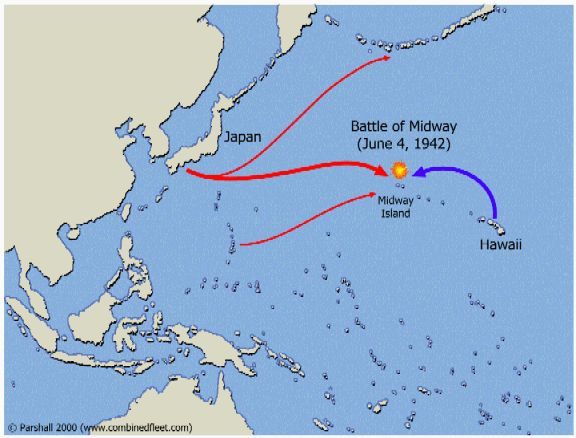
Mr. Carlson, an octogenarian himself, has written a book about an intriguing case that involved the Chicago Tribune and the Federal Government during the war. It seems that the newspaper published some interesting facts surrounding the Battle of Midway, facts that pretty much told the world that the U.S. had cracked the Japanese code and knew everything the enemy was going to do.

That sort of thing falls under the "loose lips sink ships" rule, and the U.S. Government decided that the journalists were essentially guilty of espionage. The case was more political than factual, a product of the hatred that President Franklin Roosevelt felt for the ardent Republican publisher Col. Robert McCormick. Roosevelt saw a chance to strike at his nemesis, using the power of the Justice Department. Hadn't McCormick used the power of the press to lambaste Roosevelt? Tit for tat, and so a prosecution was put into motion.

A grand jury was convened to discuss the matter, and because the documents Mr. Carlson seeks are transcripts of that same grand jury hearing, he's been told that he can't have them. Grand jury transcripts are sealed, to preserve the secrecy of grand jury proceedings, and so the Justice Department said no, go away. And take your historical interest with you. It's all about preserving the sanctity of grand jury secrecy, even if it's been 75 years.

True bureaucrats never look at the broad picture, of course, because they're all about following the rules to the letter. Even to the point of being ridiculous.

If the point of secrecy is to protect the safety of witnesses, well, you can be sure that they are all either a) dead, or b) not in any danger. It's not like some Japanese double agent is lurking in the shadows, ready to exact revenge.

Thus far, a federal district judge has scoffed at the arguments made by the Justice Department to have the records kept sealed, and a subsequent appeal was also denied by the 7th U.S. Circuit. So that's Justice Department 0, Elliot Carlson 2.

He hasn't won yet, and he's got his eye on the clock as the Justice Department considers its option to ask for a full hearing before the Court of Appeals, or possibly bumping the case up to the Supreme Court. There are rules, after all, and rules are there to be followed no matter what because what would a bureaucrat do at work if not be sure that all rules are being followed?

There's just no place for common sense or a nod to the public good when a bloated bureaucracy is looking out for itself.