They're fat, they're old and they're a crowd of boozers who are making the younger generation pay for their excess.
Insurance premiums are going up again, and it's the young who are dropping coverage because it's becoming unaffordable. They have little other choice than to maintain their health so they don't get sick, because it's simply too expensive to carry health insurance these days.
VHI has been steadily applying increases over the recent past, a percent here and there, as if we wouldn't notice that the monthly tab was higher. They can proudly proclaim that their rates are the lowest around, but being the cheapest in an expensive array isn't exactly a positive for the consumer.
Who is left with insurance?
More and more, it's the older generation, which a recent study has found to be living a most unhealthy lifestyle that leads to heart disease and arthritis and a host of other costly ailments that will require hospital stays. Expensive treatments, to be paid for by younger families who find security in having health insurance just in case.
Those higher costs have to be covered by premiums, which are paid by all in the group. The younger members aren't using their insurance because they are healthy and don't need stents or cholesterol medication, so what they put in is paying for the over-50s. Paying so their parents and grandparents can suck up piles of greasy chips while downing a dozen pints. Covering the costs so the older generation can enjoy themselves and think they're in good health.

It's time for the hard-pressed Irish family to rise up and take the grandparents out walking every day, a mile at least, and make sure there's no stopping by the local for a pint at the end of the trek.
If the young are to be made to pay for the old, the young must fight back or be eaten alive financially. How about some new legislation that would make it more difficult for the portly and inebriated to get health care? If a fat old granny presents at A & E, it's the back of the line for her. If you can't make your own health a priority, why should your children make your health a priority? A little tough love is what's called for.
The survival of the fittest, isn't that what we're all about? Sooner or later, it won't be a surprise if someone in the insurance industry or the government suggests certain "changes" to health coverage, whether it's a law to force all the young to buy insurance to help pay for the old folks, or an adjustment that makes those who use the system pay more for the privilege of being fat, old and fond of the drink.
Wednesday, January 29, 2014
Tuesday, January 28, 2014
Some Actors Must Always Be On
We may strut and fret our hour upon the stage, but there are those who must act continuously. Every minute of every day, they are on stage, doing their act. To fall out of character is to fall into the arms of the police.
Someone like Juventino Guzman should have remembered to play his role, but instead he forgot the cardinal rule of insurance fraud. Never let the mask slip. Never let them see you sweat...or not sweat, depending on what injury you've claimed to have suffered.
Mr. Guzman made his way in the world by pretending to slip and fall, then suing the business where said "injury" occurred. Insurance companies settled with him and he got a nice, big check. Upwards of $250,000, which is more than enough for a person to live on comfortably for a few years. He slipped and fell at least three times during his career. About two times too many, but greed does lead us all into temptation.
When the same person suffers the same injury more than once, insurance claims specialists take note, especially if those injuries tend to be bunched together in a short period of time. It's gotten easier to track such things, what with computers and searches that can yield a list of claims paid out to one particular individual. Insurance companies don't like paying out on claims because they don't care for added expenses, and they just love to catch someone pulling a fast one.
The industry has folks that go out and watch the so-called disabled, watch their every move and document any time that the actor falls out character and does something they claimed they couldn't do.
Through such detective work was Mr. Guzman caught. He thought no one was looking, but they were, and it was a simple matter of the insurance company bringing their evidence to the local police who then arrested the man for fraud. It's a form of stealing, you see, and when you've accepted several hundreds of thousands of dollars, it becomes grand larceny and that is a felony.
If Mr. Guzman fails to return all the money, he'll go to jail. What are the odds that he has it all tucked into a bank account somewhere?
While he makes his monthly payments, he'll be on probation, so he'll want to be extra careful around patches of ice or wet floors. He'll want to invest in some non-slip shoes, so no judge can ever accuse him of trying to pull the same scam while he's serving his sentence for a previous conviction.
He strutted his hour on the stage, but he had to strut twenty-four hours a day, seven days a week. It's not an easy job, to act non-stop. It takes focus and concentration or an ability to live like a hermit behind closed blinds so no one can see you move around with ease when you're supposed to be laid up and incapacitated.
| Forgot his lines |
Mr. Guzman made his way in the world by pretending to slip and fall, then suing the business where said "injury" occurred. Insurance companies settled with him and he got a nice, big check. Upwards of $250,000, which is more than enough for a person to live on comfortably for a few years. He slipped and fell at least three times during his career. About two times too many, but greed does lead us all into temptation.
When the same person suffers the same injury more than once, insurance claims specialists take note, especially if those injuries tend to be bunched together in a short period of time. It's gotten easier to track such things, what with computers and searches that can yield a list of claims paid out to one particular individual. Insurance companies don't like paying out on claims because they don't care for added expenses, and they just love to catch someone pulling a fast one.
The industry has folks that go out and watch the so-called disabled, watch their every move and document any time that the actor falls out character and does something they claimed they couldn't do.
Through such detective work was Mr. Guzman caught. He thought no one was looking, but they were, and it was a simple matter of the insurance company bringing their evidence to the local police who then arrested the man for fraud. It's a form of stealing, you see, and when you've accepted several hundreds of thousands of dollars, it becomes grand larceny and that is a felony.
If Mr. Guzman fails to return all the money, he'll go to jail. What are the odds that he has it all tucked into a bank account somewhere?
While he makes his monthly payments, he'll be on probation, so he'll want to be extra careful around patches of ice or wet floors. He'll want to invest in some non-slip shoes, so no judge can ever accuse him of trying to pull the same scam while he's serving his sentence for a previous conviction.
He strutted his hour on the stage, but he had to strut twenty-four hours a day, seven days a week. It's not an easy job, to act non-stop. It takes focus and concentration or an ability to live like a hermit behind closed blinds so no one can see you move around with ease when you're supposed to be laid up and incapacitated.
Monday, January 27, 2014
When The List Is Filled
If you have your mind set on snagging David Gernert as your literary agent, it's time to change your mind. Or be disappointed.
The man who "found" John Grisham has given an interview to Poets & Writers in which he describes the trajectory of his career, which did not begin in a literary agency. The article is well worth reading, if only to provide some insight into how the business used to be back in the day, when a publisher's editor did editing, and where it is at now.
Largely, it's a case of acquiring works from writers holding MBAs who have a degree that proves they know how to write well enough to save the publishers the added expense, but that's another story.
Mr. Gernert has seen the industry from both sides, from the publisher's perspective to the agent's view. He has a lot to say about the whole business, seasoned with a dash of sadness that the world of fiction is getting lost to the lure of video games and other time wasters. A fan of fiction, he mourns the demise of the lazy afternoon spent reading, with today's youth filling the empty hours with mindless play that provides entertainment of a sort, but not an amusement that will be of any benefit.
So there you have it.
Fiction is a tough sell, gotten tougher as reading takes a back seat to other activities that don't require much more than hand-eye coordination.
Therefore, he isn't interested in acquiring you as a client. He has enough authors in his stable, thanks for asking, and he doesn't need to take on another when it will just be another hard slog through the muck of bean-countery.
Only a recommendation from someone already on his list will get you a look. Befriending John Grisham, in that case, would go a long way. And it's highly unlikely, so don't get your hopes up.
Publishing is nearly impossible to break into, with the gatekeepers like Mr. Gernert carrying a full load. People aren't reading what he's trying to sell, which only makes things worse for his existing clients, to say nothing of bringing another on board.
But then again, there are other agents at his agency who are young and hungry and just might, just might, be interested in what you have to say.
The man who "found" John Grisham has given an interview to Poets & Writers in which he describes the trajectory of his career, which did not begin in a literary agency. The article is well worth reading, if only to provide some insight into how the business used to be back in the day, when a publisher's editor did editing, and where it is at now.
| No more stacks of manuscripts in the digital age |
Largely, it's a case of acquiring works from writers holding MBAs who have a degree that proves they know how to write well enough to save the publishers the added expense, but that's another story.
Mr. Gernert has seen the industry from both sides, from the publisher's perspective to the agent's view. He has a lot to say about the whole business, seasoned with a dash of sadness that the world of fiction is getting lost to the lure of video games and other time wasters. A fan of fiction, he mourns the demise of the lazy afternoon spent reading, with today's youth filling the empty hours with mindless play that provides entertainment of a sort, but not an amusement that will be of any benefit.
So there you have it.
Fiction is a tough sell, gotten tougher as reading takes a back seat to other activities that don't require much more than hand-eye coordination.
Therefore, he isn't interested in acquiring you as a client. He has enough authors in his stable, thanks for asking, and he doesn't need to take on another when it will just be another hard slog through the muck of bean-countery.
Only a recommendation from someone already on his list will get you a look. Befriending John Grisham, in that case, would go a long way. And it's highly unlikely, so don't get your hopes up.
Publishing is nearly impossible to break into, with the gatekeepers like Mr. Gernert carrying a full load. People aren't reading what he's trying to sell, which only makes things worse for his existing clients, to say nothing of bringing another on board.
But then again, there are other agents at his agency who are young and hungry and just might, just might, be interested in what you have to say.
Saturday, January 25, 2014
Evidence of Genuine Psychic Abilities
| One of them saw into the future |
The phone-a-psychic thing was popular for a time, preying on the vulnerable or the lonely. There were those who called frequently, and those who became dependent on the soothing words of a purported seer to manage their personal lives. There were certainly those who ran up considerable phone bills and had to scramble to pay.
Back in the old Celtic Tiger days, all sorts of new start-ups appeared. Now the Celtic Tiger is dead and Irish Psychics Live is equally deceased. The website is down and you'd never know there once was a psychic phoneline that offered genuine Celtic psychics, who of course are the most psychic folk on the planet. Because they're Celtic, as opposed to the Roma ladies in that storefront?
Tom Higgins, who founded the firm, is coming out of this demise unscathed. Because he got out BEFORE the bottom fell out.
That, dear reader, is evidence of true psychic ability.
Back in 2009, Mr. Higgins was bought out by Gavin Hickey and Maxine Payne, who should have phoned the hotline before buying the company. Mr. Higgins walked away with 9 million crisp euro, exiting a firm that was showing strong profits.
As proof of his ability to foresee the future, Mr. Higgins sold the company just in time. The year after he left, the place posted a considerable loss. In fact, the government is owed upwards of 800,000 euro that will most likely never be paid.
When the phoneline was operating, there was no end of criticism and animosity directed at Mr. Higgins. What might his critics be saying these days, now that he's shown his ability to see into the future and stick someone else with a loser?
Thursday, January 23, 2014
Police With Long Memories
We've all seen Goodfellas more times than we can count. There's something about such films, featuring criminals with a certain undefinable charm. The men are murderers, thugs, and deserving of lengthy prison sentences, but there's that code of honor they follow that makes them more intriguing than the average hustler.
Henry Hill was one of those goodfellas, played as a handsome rake by Ray Liotta. He admitted his part in the theft of millions from a Lufthansa cargo that arrived at New York's JFK airport back in 1978. The sensational crime was never solved, however, because of that code of honor that led Mr. Hill's associate, James Burke, to murder a large portion of his gang for the crime of not laying low as ordered, thereby endangering the secrecy.
According to Mr. Hill, the fact that Jimmy Burke was whacking those who took part in the crime, as a way to silence the witnesses, encouraged him to turn against his crime family to save his life. He talked, he wrote a book, and the book became a movie. After that, the crime was more or less forgotten.
But the New York police never forgot.
The case went cold, but they did not file away their leads and tips.
In June, the FBI went to the home of Jimmy Burke, who died years ago without ratting, and dug up the basement. Somewhere, somehow, they had a tip on the cold case. They were driven by more than a desire to solve a crime. It was the principle of the thing. To let the Mafia get away with a crime would send the wrong message about the FBI's ability to bring down organized crime. Without a break in the case, the Mafia would profit from the massive theft, since little of the stolen cash was ever recovered, and that isn't what the FBI wants.
Someone had been buried in the basement, someone maybe connected to the crime with relatives who were never sure where the family member went some night long ago. Someone might have said something after learning of the murder, and decided to get even by talking.
Several Mafiosi were arrested and are scheduled to be arraigned this week. All the police are saying is that the arrests are part of an ongoing investigation into cold cases, including the Lufthansa heist.
Long memories, those policemen. Probably a few who were new to the force in 1978 and harbor a desire to solve the crime before they retire.
And maybe there's a little animosity towards the image projected in Goodfellas, of charming devils committing crimes and enjoying great food, when the reality is not the sort of thing that Hollywood presents. It isn't all fun and games, a contest to outsmart authority and bring home bags of cash. The police force wants to make sure that the story ends with criminals doing life in prison, peons rather than bosses. Toothless animals, put into cages where they can't hurt anyone else.
| The real Goodfellas |
According to Mr. Hill, the fact that Jimmy Burke was whacking those who took part in the crime, as a way to silence the witnesses, encouraged him to turn against his crime family to save his life. He talked, he wrote a book, and the book became a movie. After that, the crime was more or less forgotten.
But the New York police never forgot.
The case went cold, but they did not file away their leads and tips.
In June, the FBI went to the home of Jimmy Burke, who died years ago without ratting, and dug up the basement. Somewhere, somehow, they had a tip on the cold case. They were driven by more than a desire to solve a crime. It was the principle of the thing. To let the Mafia get away with a crime would send the wrong message about the FBI's ability to bring down organized crime. Without a break in the case, the Mafia would profit from the massive theft, since little of the stolen cash was ever recovered, and that isn't what the FBI wants.
Someone had been buried in the basement, someone maybe connected to the crime with relatives who were never sure where the family member went some night long ago. Someone might have said something after learning of the murder, and decided to get even by talking.
Several Mafiosi were arrested and are scheduled to be arraigned this week. All the police are saying is that the arrests are part of an ongoing investigation into cold cases, including the Lufthansa heist.
Long memories, those policemen. Probably a few who were new to the force in 1978 and harbor a desire to solve the crime before they retire.
And maybe there's a little animosity towards the image projected in Goodfellas, of charming devils committing crimes and enjoying great food, when the reality is not the sort of thing that Hollywood presents. It isn't all fun and games, a contest to outsmart authority and bring home bags of cash. The police force wants to make sure that the story ends with criminals doing life in prison, peons rather than bosses. Toothless animals, put into cages where they can't hurt anyone else.
Wednesday, January 22, 2014
Not News, But A Pattern
Today, it's the archdiocese of Chicago that's abuzz with what is being treated as news. The Catholic Church there shifted pedophile priests around from parish to parish. The Catholic Church took evil men and essentially handed them a fresh crop of children to abuse.
This is not news.
This is further evidence of a pattern of behavior, a corporate policy to protect the firm at all costs.
The Catholic Church in Ireland was fully behind the concept of seeing no evil and moving that evil elsewhere, and then not allowing anyone to speak evil of the clergy. The bishops ran the scam for decades, on a grander scale than in America perhaps, but then there were all the industrial schools and Magdalene laundries to provide a ready supply of at-risk children to be traumatized.
Now the journalists in Chicago are yammering on and on about the victims, harmed for life, never to be made whole, massive payouts that cannot restore innocence. They could lift their stories from the archives of the Irish Times and need only change the occasional location, and save themselves the time.
Where were the authorities? In Ireland and in America, they were covering up what was being done to children because child abuse is bad for business. A bishop can't be seen as a moral authority if his name is on a letter to an accused pedophile, assuring the pervert that his employer has his back and hopes to see him return to the job as soon as an acquittal can be declared.
Because when that happens, and the bishop decries the ease of abortion and lack of respect for life, he gets laughed off the podium by jokesters responding with quips about the bishop wanting more children for his underlings to abuse.
There are some at the United Nations who detect this pattern, but when called on the carpet, representatives from the Vatican have stated that these abuse issues are local issues. It isn't the Vatican to blame.
There is no smoking gun in the hands of the Pope. There is no directive signed by his hand, laying out some official policy of moving pedophiles from parish to parish and then swearing all to silence.
It is, rather, a pattern that has evolved from a corporate ethos, in which problems have to be suppressed lest the faithful lose faith.
However, they are losing faith. Church attendance in Ireland is next to nothing, which means collections are shrinking while the cost to maintain facilities continues to rise. To say nothing of the expense of liability insurance, which is being tapped fairly heavily these days.
The current Pope is called a reformer, someone put in place to clean house.
The princes of the Church recognize at last that their former habits are causing more harm than good. They didn't elect Pope Francis because of his charm. They elected him to alter the course of a floundering institution, to restore faith in a corporation that long ago lost its way and never had much incentive to get back on the right track.
Until the money stopped coming in and the customers stayed away.
| Dealing with the fall-out of a cover-up |
This is not news.
This is further evidence of a pattern of behavior, a corporate policy to protect the firm at all costs.
The Catholic Church in Ireland was fully behind the concept of seeing no evil and moving that evil elsewhere, and then not allowing anyone to speak evil of the clergy. The bishops ran the scam for decades, on a grander scale than in America perhaps, but then there were all the industrial schools and Magdalene laundries to provide a ready supply of at-risk children to be traumatized.
Now the journalists in Chicago are yammering on and on about the victims, harmed for life, never to be made whole, massive payouts that cannot restore innocence. They could lift their stories from the archives of the Irish Times and need only change the occasional location, and save themselves the time.
Where were the authorities? In Ireland and in America, they were covering up what was being done to children because child abuse is bad for business. A bishop can't be seen as a moral authority if his name is on a letter to an accused pedophile, assuring the pervert that his employer has his back and hopes to see him return to the job as soon as an acquittal can be declared.
Because when that happens, and the bishop decries the ease of abortion and lack of respect for life, he gets laughed off the podium by jokesters responding with quips about the bishop wanting more children for his underlings to abuse.
There are some at the United Nations who detect this pattern, but when called on the carpet, representatives from the Vatican have stated that these abuse issues are local issues. It isn't the Vatican to blame.
There is no smoking gun in the hands of the Pope. There is no directive signed by his hand, laying out some official policy of moving pedophiles from parish to parish and then swearing all to silence.
It is, rather, a pattern that has evolved from a corporate ethos, in which problems have to be suppressed lest the faithful lose faith.
However, they are losing faith. Church attendance in Ireland is next to nothing, which means collections are shrinking while the cost to maintain facilities continues to rise. To say nothing of the expense of liability insurance, which is being tapped fairly heavily these days.
The current Pope is called a reformer, someone put in place to clean house.
The princes of the Church recognize at last that their former habits are causing more harm than good. They didn't elect Pope Francis because of his charm. They elected him to alter the course of a floundering institution, to restore faith in a corporation that long ago lost its way and never had much incentive to get back on the right track.
Until the money stopped coming in and the customers stayed away.
Tuesday, January 21, 2014
Short Term Memory Loss In Human Aging
I have yet to read Lewis Wolpert's treatise on ageing, but I imagine he might want to revisit his book and perhaps include a bit more on the chapter dealing with short-term memory loss.
He himself, it has come out, must be a victim. Either that, or he's guilty of plagiarism, so let's give the poor old professor the benefit of the doubt.
You're Looking Very Well was published by Faber & Faber back in 2011 and proved to be a popular read in non-fiction. Mr. Wolpert covered various topics on getting old, but with a common touch. Unlike your average university professor, which he once was, his prose was readable by the general public. An amazing feat, when you consider the fact that his editorial experience was in peer-reviewed journals, a type of writing that would be far from readable to all but the target audience, and generally dry as dust.
Given his literary (if you can call it that) experience in scientific journals, where every other word is usually that of someone who went before and must, therefore, be accredited, you would expect Mr. Wolpert to know a thing or two about naming sources of his various paragraphs.
Usually, in journals, the place where the scientist draws conclusions is the result of the research, and is the new finding that will be acknowledged by other researchers. Where there are no credits, it must be the scientist speaking, offering up their notion of what they have discovered in company with what others have discovered.
So when you read You're Looking Very Well and you see paragraphs without footnotes leading to a glossary of sources, you could assume it was Mr. Wolpert's own thoughts and opinions you were reading.
As it turns out, you would be wrong.
The addled old man forgot to reference many of his sources, it has been discovered. Faber & Faber could not have known, of course, because who can afford an editor to probe scientific literature searching for certain word combinations? The cost of the resulting book would be astronomical and beyond the reach of the general public, making for a very limited run with little or no return.
It's a black eye for the professor, whose career has been remarkable. Now, as he approaches the end of his days, when he's doing his best to promote science to non-scientists, he stands accused of cheating, of stealing the words of others and making them appear to be his own.
In his defense, he mentions the fact that he likely forgot where he got the material from, and ended up not recalling what he had written and what he had copied off the internet.
Old people tend to forget things that have happened most recently. Some say it is because their heads are so crammed full of things accumulated over a lifetime that they've run out of storage space.
For Mr. Wolpert, the short-term memory loss of the elderly has become very real. And like growing old, it isn't pretty.
| But if someone else said it first, you should give them credit no matter your age |
He himself, it has come out, must be a victim. Either that, or he's guilty of plagiarism, so let's give the poor old professor the benefit of the doubt.
You're Looking Very Well was published by Faber & Faber back in 2011 and proved to be a popular read in non-fiction. Mr. Wolpert covered various topics on getting old, but with a common touch. Unlike your average university professor, which he once was, his prose was readable by the general public. An amazing feat, when you consider the fact that his editorial experience was in peer-reviewed journals, a type of writing that would be far from readable to all but the target audience, and generally dry as dust.
Given his literary (if you can call it that) experience in scientific journals, where every other word is usually that of someone who went before and must, therefore, be accredited, you would expect Mr. Wolpert to know a thing or two about naming sources of his various paragraphs.
Usually, in journals, the place where the scientist draws conclusions is the result of the research, and is the new finding that will be acknowledged by other researchers. Where there are no credits, it must be the scientist speaking, offering up their notion of what they have discovered in company with what others have discovered.
So when you read You're Looking Very Well and you see paragraphs without footnotes leading to a glossary of sources, you could assume it was Mr. Wolpert's own thoughts and opinions you were reading.
As it turns out, you would be wrong.
The addled old man forgot to reference many of his sources, it has been discovered. Faber & Faber could not have known, of course, because who can afford an editor to probe scientific literature searching for certain word combinations? The cost of the resulting book would be astronomical and beyond the reach of the general public, making for a very limited run with little or no return.
It's a black eye for the professor, whose career has been remarkable. Now, as he approaches the end of his days, when he's doing his best to promote science to non-scientists, he stands accused of cheating, of stealing the words of others and making them appear to be his own.
In his defense, he mentions the fact that he likely forgot where he got the material from, and ended up not recalling what he had written and what he had copied off the internet.
Old people tend to forget things that have happened most recently. Some say it is because their heads are so crammed full of things accumulated over a lifetime that they've run out of storage space.
For Mr. Wolpert, the short-term memory loss of the elderly has become very real. And like growing old, it isn't pretty.
Monday, January 20, 2014
Is This The End Of The Nook?
Amazon launched its e-reader long ago, and by being the first, it set the pace.
Barnes and Noble tried to catch up, but once someone bought a Kindle, where was the incentive to buy a Nook? The devices are not inexpensive, and you can get the same books on one as the other. Then there was Apple's iPad, another tough competitor in the e-reading market. The iPad could do more, giving the buyer more value, which put the Nook that much further behind the pack.
Rather than surrender, the number two book retailer brought in all sorts of executives to turn things around.
To keep up with chaging technology, the Nook was altered and improved and tweaked, but the changes were slight. A better reading experience, a different screen, less eye strain, whatever sounded like a vast improvement was tried but still Nook remained well behind.
The man who came in to head Nook's media division was promoted in January, to head Barnes and Noble. Michael Huseby clearly knows what is going on with Nook because he was running it. That a couple of senior Nook executives have just left, so soon after Mr. Huseby has become CEO, is giving stockholders an indication that the Nook division just might end up liquidated.
The white flag of surrender may be on its way up the flagpole.
The international outreach program is soon to be without a director, and there are no names being floated to suggest a replacement is in the offing. Another executive left to work for Wal-Mart. You might draw an analogy to rats leaving a sinking ship, given the abrupt departures. Easy to picture the memos from Mr. Huseby on his first day at the top, suggesting that his former underlings at the Nook division would be well advised to move on while they had the chance.
Where Amazon has an advantage over Barnes and Noble is the lack of brick-and-mortar locations to be staffed and maintained. Amazon never had actual shops as part of its core, whereas Barnes and Noble began as a traditional bookseller. Those savings could be used to lower the price of books, but for a buyer, the savings might not be justified if they wanted a physical book without waiting three to five days for delivery. Having a store could be a plus for Barnes and Noble, but if headquarters wants to maximize the experience, it takes money, and what's the point of pouring money into a failing enterprise when it could be better invested in something that can set the corporation apart from its competitor?
The Nook division is dragging down profits for the corporation overall, and so something must be jettisoned to lighten the load. To boost stockholder value, then, the weakest member of the BN empire must go, and it appears to be the Nook. BN.com can continue to sell e-books, of course, and it can use Smashwords to access all available platforms to offer customers the opportunity to purchase for whatever device they have. That eliminates the expense of technology upgrades to chase after Apple, which is so far ahead of the Nook that there clearly is no catching up to be done.
People still want real books, even though the digital versions are popular. They still like to browse in bookstores and enjoy the instant gratification that comes with carrying the desired book to the clerk and then making the purchase, to bring the book home for a night's reading. The exit of several Nook executives suggests that Barnes and Noble is returning to its core, to take on Amazon as a seller of books, both online and in the old-fashioned, quaint, but still desirable shop.
Barnes and Noble tried to catch up, but once someone bought a Kindle, where was the incentive to buy a Nook? The devices are not inexpensive, and you can get the same books on one as the other. Then there was Apple's iPad, another tough competitor in the e-reading market. The iPad could do more, giving the buyer more value, which put the Nook that much further behind the pack.
Rather than surrender, the number two book retailer brought in all sorts of executives to turn things around.
To keep up with chaging technology, the Nook was altered and improved and tweaked, but the changes were slight. A better reading experience, a different screen, less eye strain, whatever sounded like a vast improvement was tried but still Nook remained well behind.
The man who came in to head Nook's media division was promoted in January, to head Barnes and Noble. Michael Huseby clearly knows what is going on with Nook because he was running it. That a couple of senior Nook executives have just left, so soon after Mr. Huseby has become CEO, is giving stockholders an indication that the Nook division just might end up liquidated.
| The Nook or the business model is broken |
The white flag of surrender may be on its way up the flagpole.
The international outreach program is soon to be without a director, and there are no names being floated to suggest a replacement is in the offing. Another executive left to work for Wal-Mart. You might draw an analogy to rats leaving a sinking ship, given the abrupt departures. Easy to picture the memos from Mr. Huseby on his first day at the top, suggesting that his former underlings at the Nook division would be well advised to move on while they had the chance.
Where Amazon has an advantage over Barnes and Noble is the lack of brick-and-mortar locations to be staffed and maintained. Amazon never had actual shops as part of its core, whereas Barnes and Noble began as a traditional bookseller. Those savings could be used to lower the price of books, but for a buyer, the savings might not be justified if they wanted a physical book without waiting three to five days for delivery. Having a store could be a plus for Barnes and Noble, but if headquarters wants to maximize the experience, it takes money, and what's the point of pouring money into a failing enterprise when it could be better invested in something that can set the corporation apart from its competitor?
The Nook division is dragging down profits for the corporation overall, and so something must be jettisoned to lighten the load. To boost stockholder value, then, the weakest member of the BN empire must go, and it appears to be the Nook. BN.com can continue to sell e-books, of course, and it can use Smashwords to access all available platforms to offer customers the opportunity to purchase for whatever device they have. That eliminates the expense of technology upgrades to chase after Apple, which is so far ahead of the Nook that there clearly is no catching up to be done.
People still want real books, even though the digital versions are popular. They still like to browse in bookstores and enjoy the instant gratification that comes with carrying the desired book to the clerk and then making the purchase, to bring the book home for a night's reading. The exit of several Nook executives suggests that Barnes and Noble is returning to its core, to take on Amazon as a seller of books, both online and in the old-fashioned, quaint, but still desirable shop.
Sunday, January 19, 2014
This Younger Generation Lacks Respect
Authorities on both sides of the border remain convinced that the Irish Republican Army pulled off the world's biggest bank heist in 2004 as a way to provide retirement funds to its old soldiers. The volunteers were being made to stand down, with the peace accord, but you can't put that old horse out to pasture without financial backing. Not after all the sacrifice, and the murders and bombmaking and petrol laundering and such.
Precious little of the haul has ever been found by gardai or the Police Service of Northern Ireland. They believe that plenty of folks in Armagh know exactly where that money is, but they aren't talking. Either they are loyal to the IRA, or they're terrified of retribution at the hands of IRA-mob boss Slab Murphy and his compatriots.
It's that sort of respect that protects the IRA in the region, which has largely devolved into a criminal enterprise that could be used as source material for a Sopranos-style drama series with a heavy Irish brogue.
The problem is, the younger generation has grown up with the IRA as a gang of thugs rather than freedom fighters, and they don't have the necessary level of respect. According to reports in the Independent, that respect has been lost because the IRA stopped killing people. Or whacking, to use the proper parlance.
So off go the kids to form their own gangs to launder diesel fuel and sell it on illegally, or run the IRA out of the drugs trade. And sometimes, one of them takes advantage of an opportunity and goes on a spending spree funded unwittingly by the IRA.
Someone in Armagh, who must have had some inside information, liberated 50,000 British pounds from its hiding place on land belonging to a top IRA operative. What was that IRA man going to do about it, if the lad took the cash and spent it? It's not as if Mr. IRA would go to the police and file a report, or press charges. Sure the old turkeys are largely toothless these days.
Said young man had a grand time over the Christmas holidays, buying drinks for friends and women for himself. He blew through the cash and now it's gone. And now the IRA wants it back.
Associates of Slab Murphy are said to have paid a call on the family home, doing a bit of smashing to get their point across.
The man who had fun at IRA expense is now in fear of his life.
He's discovered that just because the IRA isn't officially murdering those who cross them doesn't mean that someone in the organization might decide that perhaps it's time to change that policy. Especially if said member of the organization is out fifty thousand pounds of retirement savings.
Anyone in Armagh interested in a crowdsourcing initiative to replace the money and save a fool's life? Before the likes of Slab Murphy and others of his ilk take it into their heads to instill the meaning of respect in the younger generation who are much in need of learning if the IRA is maintain control.
It's what Tony Soprano would do, right?
| Slab Murphy, the boss of Armagh |
It's that sort of respect that protects the IRA in the region, which has largely devolved into a criminal enterprise that could be used as source material for a Sopranos-style drama series with a heavy Irish brogue.
The problem is, the younger generation has grown up with the IRA as a gang of thugs rather than freedom fighters, and they don't have the necessary level of respect. According to reports in the Independent, that respect has been lost because the IRA stopped killing people. Or whacking, to use the proper parlance.
So off go the kids to form their own gangs to launder diesel fuel and sell it on illegally, or run the IRA out of the drugs trade. And sometimes, one of them takes advantage of an opportunity and goes on a spending spree funded unwittingly by the IRA.
Someone in Armagh, who must have had some inside information, liberated 50,000 British pounds from its hiding place on land belonging to a top IRA operative. What was that IRA man going to do about it, if the lad took the cash and spent it? It's not as if Mr. IRA would go to the police and file a report, or press charges. Sure the old turkeys are largely toothless these days.
Said young man had a grand time over the Christmas holidays, buying drinks for friends and women for himself. He blew through the cash and now it's gone. And now the IRA wants it back.
Associates of Slab Murphy are said to have paid a call on the family home, doing a bit of smashing to get their point across.
The man who had fun at IRA expense is now in fear of his life.
He's discovered that just because the IRA isn't officially murdering those who cross them doesn't mean that someone in the organization might decide that perhaps it's time to change that policy. Especially if said member of the organization is out fifty thousand pounds of retirement savings.
Anyone in Armagh interested in a crowdsourcing initiative to replace the money and save a fool's life? Before the likes of Slab Murphy and others of his ilk take it into their heads to instill the meaning of respect in the younger generation who are much in need of learning if the IRA is maintain control.
It's what Tony Soprano would do, right?
Friday, January 17, 2014
Writing Prompt For A January Weekend
By day, he is a mild-mannered draftsman, toiling in obscurity at an ordinary machine shop.
At night, your protagonist is....Puma Man!
To write an interesting character, you want to hint at some hidden secrets in the opening pages, anything from an overt act to internal dialogue that will get your readers to turn the page. Take our draftsman, for instance. What might he get up to that would generate an intriguing narrative?
Look no further than real life and you'll find the answer.
Richard Hyerczyk worked as a draftsmen, but he had earned a master's degree in botany. Imagine how that must feel, to be so educated and thoroughly trained in one field, to have worked so hard to obtain an advanced degree, only to enter a world where your skills and knowledge were not needed. He taught a class here and there at the Chicago Botanic Garden, but alas his passion for plants could only be a hobby, rather than his life's calling. Still, he went to work every day because a man has to earn a living.
But by night, he became...Puma Man!
Our mild-mannered draftsman took a particular delight in firing off threatening letters to various organizations, public personages and clergy. Whoever had annoyed him for whatever reason caught the bitterest end of his sharp pen. He unnerved his victims with warnings of violence to come, rape and murder and mayhem.
Then he went to work the next day in his disguise, just another blue-collar worker in a blue-collar world.
Random threatening letters did not draw much of a response, and it was not worth the cost of police manpower to track down the source of the anonymous epistles. It was not until the botanist morphed into Puma Man that the Chicago police department decided they had to locate and stop the author of hate mail.
A few years back, a wild puma had to be put down because it was wandering in an urban environment filled with small, very edible, children. As you'd expect, the bigger story at the time was how the police took down someone's air conditioning unit in a hail of bullets. Most of their shots were well off the mark, but then again, how many of the lads were fond of hunting?
A new grievance arose, and Mr. Hyerczyk put pen to paper and sought revenge for his puma friend. He thought it would best express his outrage by giving the coppers a taste of what they'd given Puma, which was a hail of bullets while they were walking in an urban environment, that is, marching in a local parade.
It took several years, but Mr. Hyerczyk was caught and will soon face trial.
A fascinating man, to be sure. His family had no idea that he had it in him to become Puma Man, rather than the botanist by training who found true happiness by wandering in the woods, searching for lichen.
Your novel or short story needs a character with that kind of depth, with a secret that cannot be kept hidden because he hints at it with such craft that it is not obvious. On the surface, at the opening, he is ordinary. As the narrative plays out, you the author expose him, but only a little at a time, and preferably at the end of each chapter.
Why not use such a real-life example? You'd be hard-pressed to make this stuff up.
At night, your protagonist is....Puma Man!
| Looks harmless enough |
To write an interesting character, you want to hint at some hidden secrets in the opening pages, anything from an overt act to internal dialogue that will get your readers to turn the page. Take our draftsman, for instance. What might he get up to that would generate an intriguing narrative?
Look no further than real life and you'll find the answer.
Richard Hyerczyk worked as a draftsmen, but he had earned a master's degree in botany. Imagine how that must feel, to be so educated and thoroughly trained in one field, to have worked so hard to obtain an advanced degree, only to enter a world where your skills and knowledge were not needed. He taught a class here and there at the Chicago Botanic Garden, but alas his passion for plants could only be a hobby, rather than his life's calling. Still, he went to work every day because a man has to earn a living.
But by night, he became...Puma Man!
Our mild-mannered draftsman took a particular delight in firing off threatening letters to various organizations, public personages and clergy. Whoever had annoyed him for whatever reason caught the bitterest end of his sharp pen. He unnerved his victims with warnings of violence to come, rape and murder and mayhem.
Then he went to work the next day in his disguise, just another blue-collar worker in a blue-collar world.
Random threatening letters did not draw much of a response, and it was not worth the cost of police manpower to track down the source of the anonymous epistles. It was not until the botanist morphed into Puma Man that the Chicago police department decided they had to locate and stop the author of hate mail.
A few years back, a wild puma had to be put down because it was wandering in an urban environment filled with small, very edible, children. As you'd expect, the bigger story at the time was how the police took down someone's air conditioning unit in a hail of bullets. Most of their shots were well off the mark, but then again, how many of the lads were fond of hunting?
A new grievance arose, and Mr. Hyerczyk put pen to paper and sought revenge for his puma friend. He thought it would best express his outrage by giving the coppers a taste of what they'd given Puma, which was a hail of bullets while they were walking in an urban environment, that is, marching in a local parade.
It took several years, but Mr. Hyerczyk was caught and will soon face trial.
A fascinating man, to be sure. His family had no idea that he had it in him to become Puma Man, rather than the botanist by training who found true happiness by wandering in the woods, searching for lichen.
Your novel or short story needs a character with that kind of depth, with a secret that cannot be kept hidden because he hints at it with such craft that it is not obvious. On the surface, at the opening, he is ordinary. As the narrative plays out, you the author expose him, but only a little at a time, and preferably at the end of each chapter.
Why not use such a real-life example? You'd be hard-pressed to make this stuff up.
Wednesday, January 15, 2014
Monkeys, Typewriters And The Right Algorithm Will Get You A Bestseller
You just knew it was a matter of time until scientists would uncover the mathematics behind bestselling novels. And of course you could see some computer program coming as a result, a bit of software or perhaps an app for your iPad that would guarantee you the success you crave.
And of course you figure that the major publishing houses are going to put manuscripts through that digital slice and dice before making an offer to the literary agent trying to sell the thing. In time, then, agents will not read manuscripts at all before signing clients, but will use the algorithmic method to find the saleable and eliminate the doubt brought on by the artistic.
Who will need writers, when all the publishers will require is a room full of monkeys banging away on keyboards? Use the computer to sort through the drivel and give the winning primate a banana for the effort. The profit margin is enormous.
The core of the algorithm involves analyzing words and word combination, in essence putting math behind the old adage of "show, don't tell". Popular novels use showing words, the scientists have discovered, lots of nouns and adjectives, but fewer action verbs.
Authors need an interesting story as well, but you'd think that was common sense. Just as no one cares to view a powerpoint presentation of your sun holiday to the south of France, with photos of every meal you ate, so too do readers want something not boring to read. If you're intrigued by the details of whaling in the Nineteenth Century, for example, you'd be fascinated by Moby Dick. If you're in secondary school and forced to read it, you'd be wishing for a short case of total blindness to get out of the deadly dull assignment.
It's coming. The day of the formula bestseller is at hand, and the art of creative writing will have to give way. Or slide off sideways, to the niche publishers who are more interested in the beauty of the written word than the business of publishing.
And of course you figure that the major publishing houses are going to put manuscripts through that digital slice and dice before making an offer to the literary agent trying to sell the thing. In time, then, agents will not read manuscripts at all before signing clients, but will use the algorithmic method to find the saleable and eliminate the doubt brought on by the artistic.
| The modern writer's room |
The core of the algorithm involves analyzing words and word combination, in essence putting math behind the old adage of "show, don't tell". Popular novels use showing words, the scientists have discovered, lots of nouns and adjectives, but fewer action verbs.
Authors need an interesting story as well, but you'd think that was common sense. Just as no one cares to view a powerpoint presentation of your sun holiday to the south of France, with photos of every meal you ate, so too do readers want something not boring to read. If you're intrigued by the details of whaling in the Nineteenth Century, for example, you'd be fascinated by Moby Dick. If you're in secondary school and forced to read it, you'd be wishing for a short case of total blindness to get out of the deadly dull assignment.
It's coming. The day of the formula bestseller is at hand, and the art of creative writing will have to give way. Or slide off sideways, to the niche publishers who are more interested in the beauty of the written word than the business of publishing.
Tuesday, January 14, 2014
Chicago State University Would Prefer You Not Know This
Attempts by Chicago State University to silence its critics within its faculty have done little more than cause the school more trouble in the form of increased press coverage and mockery, along with some unwanted attention to hiring practices. There is a reason the university on Chicago's south side is nicknamed "Crony State".
The school's provost, hired only this past summer, is a fine example of cronyism in hiring. Angela Henderson holds a doctorate in nursing, but other than that, her strongest qualification for the job is the fact that her husband is the personal attorney of CSU's President, Wayne Watson.
It's not what you know, but who you know, that will get you a high-level post at CSU, but those who are handing out the favors don't like it when faculty points out the inconvenient truth. They surely won't be pleased with the ongoing investigation into Ms. Henderson's doctoral dissertation. It seems there might be examples of plagiarism contained therein.
Detecting plagiarism is made easier thanks to the wonders of modern software. A computer program can sift through pages of words and then find those same words arranged in the same sequence from the place the writer lifted them.
Unlike a work of historical fiction that is built on a frame of research, a dissertation requires the author to cite sources. There are specific rules and regulations for how those citations are to be punctuated, but then again, Ms. Henderson majored in nursing, not English. As the provost of CSU, unfortunately, she's responsible for ensuring that all the students adhere to the very guidelines that she doesn't know about, but her job isn't predicated on her academic heft anyway.
Ms. Henderson's dissertation committee at the University of Illinois Chicago (formerly known as Circle Campus) didn't check for plagiarism, or go over the thesis in search of missing quotations marks. Perhaps they are unfamiliar with the software that the CSU faculty used to find examples of improperly cited text. Or maybe one of the committee members, Wayne Watson, was not concerned enough to raise the issue.
Yes indeed. Mr. Watson who gave her the job was sitting in judgment, deciding if she was Ph.D. worthy.
UIC is examining the dissertation closely, to see if the plagiarism charges can stick. If they do, then Ms. Henderson's degree becomes null and void. As for her job, well, just let the faculty try to complain over at their blog that's been hit yet again with legal threats. That should keep them so busy that they don't have time to raise a big stink about the Provost of their school being unqualified for the job she got because she was somebody's somebody.
| Angela "It's Not What You Know But Who You Know" Henderson |
It's not what you know, but who you know, that will get you a high-level post at CSU, but those who are handing out the favors don't like it when faculty points out the inconvenient truth. They surely won't be pleased with the ongoing investigation into Ms. Henderson's doctoral dissertation. It seems there might be examples of plagiarism contained therein.
Detecting plagiarism is made easier thanks to the wonders of modern software. A computer program can sift through pages of words and then find those same words arranged in the same sequence from the place the writer lifted them.
Unlike a work of historical fiction that is built on a frame of research, a dissertation requires the author to cite sources. There are specific rules and regulations for how those citations are to be punctuated, but then again, Ms. Henderson majored in nursing, not English. As the provost of CSU, unfortunately, she's responsible for ensuring that all the students adhere to the very guidelines that she doesn't know about, but her job isn't predicated on her academic heft anyway.
Ms. Henderson's dissertation committee at the University of Illinois Chicago (formerly known as Circle Campus) didn't check for plagiarism, or go over the thesis in search of missing quotations marks. Perhaps they are unfamiliar with the software that the CSU faculty used to find examples of improperly cited text. Or maybe one of the committee members, Wayne Watson, was not concerned enough to raise the issue.
Yes indeed. Mr. Watson who gave her the job was sitting in judgment, deciding if she was Ph.D. worthy.
UIC is examining the dissertation closely, to see if the plagiarism charges can stick. If they do, then Ms. Henderson's degree becomes null and void. As for her job, well, just let the faculty try to complain over at their blog that's been hit yet again with legal threats. That should keep them so busy that they don't have time to raise a big stink about the Provost of their school being unqualified for the job she got because she was somebody's somebody.
Monday, January 13, 2014
Your Phone Is Not Your Life
| Then |
| Now |
The army dug a channel and straightened out the last part of the bend, giving the river a more direct route to the lake.
The banks of the river remained in place, however, and if you went into the water, you could walk out. There was a natural slope.
Straightening the meander did not solve the whole problem, which only increased as the population rose and factories found it convenient to dump waste in the river. Near the Union Stockyards on the south side, one tributary of the Chicago River became a solid mass of grease and animal parts, nicknamed Bubbly Creek for the gurgling methane that rose to the surface and exploded in a blast of stink.
Dumping all that sewage into the city's supply of drinking water, aka Lake Michigan, was creating all sorts of health problems. The solution to all the issues was simple, albeit expensive. By digging canals and turning the Chicago River into a drainage channel, Chicago's sewage was conveniently re-routed away from the lake and down to the system of waterways that leads to the Illinois River and on to the Mississippi.
Modern-day tourists are drawn to the river, to walk along the small parts they can access and take pictures of the ice floating on the cold water. In recent months, a few of them have fallen in and drowned.
The river isn't a river except in name. The banks are not banked, but straight concrete walls. Once you fall in, you cannot climb out. When you fall in cold water, the seemingly easy task of reaching a ladder and climbing out becomes impossible as your body reacts to the frigid temperatures.
Last night, a tourist admiring the view dropped his phone into the river and went in after it.
He is dead. One of his companions who went to help him was pulled out and is now in the hospital. A third companion has not been found but is presumed dead.
For a phone.
By all means, come to Chicago. It is a vibrant city, full of cultural and natural and man-made beauty. As you walk around, keep in mind that ice is slippery and just because there are stairs leading down to the riverwalk doesn't mean it's safe to go there. You don't see Chicagoans heading down there, do you? They know better.
And if you do happen to wander near the river and something falls in, say good-bye. Whatever it is, you can replace it. Something as commonplace as a phone isn't worth losing your life over.
Sunday, January 12, 2014
Troubling Sides Or One-Sided Troubles
Poor Karen Paperno. She opened a shop and did what she loved, only to find that the love was lost because of the money-grubbing sort that invaded her world.
She found her niche several years ago in the expanding market for breastfeeding supplies (I thought women came fully equipped but what does someone from the back of beyond know of accessories?) in the gentrifying neighborhood of Park Slope in Brooklyn. Being an increasingly trendy area, the clientele morphed from urban pioneer to wealthy status symbol displayer, much to Ms. Paperno's dismay.
When clients asked for a product that she refused to carry for her own personal reasons, she was horrified. Should they request something that was over-priced but highly desired, Ms. Paperno was equally upset. What was wrong with these people? She herself came from a left-wing upbringing, one that promoted sharing and equality and not too much for anyone.
Sort of like Catholicism but without the clergy. Or the guilt.
Self-guided religion leaves too much room to manuever, to pretend that you're following the tenets when in fact you're not. Like a person who owns a successful boutique selling breastfeeding paraphernalia and makes a comfortable living but doesn't realize that they've become the very sort they once found greedy.
The changing nature of her clientele forced Ms. Paperno to realize that fact. She had more than many. And her clients had more than her, and wanted even more. Was she then out of the middle class? Had she not risen as far as she imagined?
Her solution was to open a second store, to expand her nursing empire, when she could have just gone to confession and talked it over with the priest. How do I cope with these feelings of inadequacy, she would have asked, and the priest would have told her to say ten Hail Marys and a rosary and find the answer in her own heart.
Leftist parenting can't replace that kind of advice. At its foundation, and unspoken, are all the lessons that are drilled into receptive heads, imprinted on young minds by a nun with a cane across the palms if you didn't pick up on the catechism with suitable serioiusness. As for the Jesuits in secondary school, that's a whole other level of instilling Christianity, with a heavy dose of being of service to others. In other words, get your head out of your own arse and practice charity.
Alone, Ms. Paperno grew concerned that she was becoming too grasping, trying to match the financial wherewithal of her clients. She says she became self-conscious of her style of dress as she went about coveting her neighbor's goods without fully appreciating the purpose of the commandment.
So what did she do instead? She went off and stole a thing here or there, breaking yet another commandment. Then she blamed the world around her for her troubles, a world filled with grasping and the worship of money.
The New York Times wants us to believe that income inequality is the corrosive force at work, when in fact it has nothing to do with inequality. It has to do with jealousy, and understanding what it means to overcome the human desire to possess what others have. But that involves teaching religion, and Heaven forbid we do something so divisive or corrosive as that.
She found her niche several years ago in the expanding market for breastfeeding supplies (I thought women came fully equipped but what does someone from the back of beyond know of accessories?) in the gentrifying neighborhood of Park Slope in Brooklyn. Being an increasingly trendy area, the clientele morphed from urban pioneer to wealthy status symbol displayer, much to Ms. Paperno's dismay.
| The shop that was saved by acts of charity |
When clients asked for a product that she refused to carry for her own personal reasons, she was horrified. Should they request something that was over-priced but highly desired, Ms. Paperno was equally upset. What was wrong with these people? She herself came from a left-wing upbringing, one that promoted sharing and equality and not too much for anyone.
Sort of like Catholicism but without the clergy. Or the guilt.
Self-guided religion leaves too much room to manuever, to pretend that you're following the tenets when in fact you're not. Like a person who owns a successful boutique selling breastfeeding paraphernalia and makes a comfortable living but doesn't realize that they've become the very sort they once found greedy.
The changing nature of her clientele forced Ms. Paperno to realize that fact. She had more than many. And her clients had more than her, and wanted even more. Was she then out of the middle class? Had she not risen as far as she imagined?
Her solution was to open a second store, to expand her nursing empire, when she could have just gone to confession and talked it over with the priest. How do I cope with these feelings of inadequacy, she would have asked, and the priest would have told her to say ten Hail Marys and a rosary and find the answer in her own heart.
Leftist parenting can't replace that kind of advice. At its foundation, and unspoken, are all the lessons that are drilled into receptive heads, imprinted on young minds by a nun with a cane across the palms if you didn't pick up on the catechism with suitable serioiusness. As for the Jesuits in secondary school, that's a whole other level of instilling Christianity, with a heavy dose of being of service to others. In other words, get your head out of your own arse and practice charity.
Alone, Ms. Paperno grew concerned that she was becoming too grasping, trying to match the financial wherewithal of her clients. She says she became self-conscious of her style of dress as she went about coveting her neighbor's goods without fully appreciating the purpose of the commandment.
So what did she do instead? She went off and stole a thing here or there, breaking yet another commandment. Then she blamed the world around her for her troubles, a world filled with grasping and the worship of money.
The New York Times wants us to believe that income inequality is the corrosive force at work, when in fact it has nothing to do with inequality. It has to do with jealousy, and understanding what it means to overcome the human desire to possess what others have. But that involves teaching religion, and Heaven forbid we do something so divisive or corrosive as that.
Friday, January 10, 2014
A Frenchman Having An Affair Is Not News
French president Francois Hollande has threatened to sue Closer for publicizing a purported love affair, so let's keep in mind that this is France we're talking about. That's what Frenchmen do, isn't it? Have affairs?
And how could he not? The temptation must be too great in a city like Paris, surely the most romantic city on the planet. If you've ever been to Paris, you know how it is. The strolls along the Seine. The sidewalk cafes, the wine. The style.
Not that M. Hollande is any great beauty in the overall looks department, but he's awash in the heady aroma of power. With all those pheromones drifting on the air, how could the comic actess Julie Gayet not be smitten? Besides, the French are the masters of flirtation. It's a phenomenon that's used well by Katie Hanrahan in her upcoming novel, THE LIBERTY FLOWER, in which she paints a French character in very Gallic tones. You'd know the character was French by his manner of speaking, in which everything is a seduction, from closing a business deal to chipping away a lady's resistence. Seduction is a way of life in France.
On top of all that, it's a fact that M. Hollande is not even married. He's only co-habiting with a woman, and he was living with a different woman before that. He's not exactly the epitome of fidelity. Who could say but he's never married because he recognizes his limitations.
There was a time, of course, when the sex lives of politicians were never discussed. Reporters might have known of affairs going on, but there was an unwritten code that forbade the discussion of the private life. The demands of the market have changed all that.
Magazines and tabloids must have scoops and exclusive photos of scandals to move product. The reading public will buy Closer to read about the affair, to laugh at the antics of the powerful, and mock their president who is keen to soak the rich with a 75% tax but can't keep his own trousers zipped.
It's not as if the voting public really cares about their president cavorting in a new bed. They're more interested in the tax rates or the fact that their offspring have finished university and can't find jobs.
But M. Hollande very much cares, because there's nothing worse than going home to the significant other every night when she knows all about your bit on the side. He had a good thing going for himself, and now the editors of Closer have gone and ruined it for him. Clearly he's not pleased, but what can he do now that it's out in the open?
Besides either break it off and make up with his second live-in, or leave the second woman for the third, he can rant and rave about the invasion of privacy and the breaking of the old standard that protected the privacy of public officials who misbehave.
Either way, he's got a lot of headaches at home. Enough to make running France look like a day at the park.
| The once secret couple |
Not that M. Hollande is any great beauty in the overall looks department, but he's awash in the heady aroma of power. With all those pheromones drifting on the air, how could the comic actess Julie Gayet not be smitten? Besides, the French are the masters of flirtation. It's a phenomenon that's used well by Katie Hanrahan in her upcoming novel, THE LIBERTY FLOWER, in which she paints a French character in very Gallic tones. You'd know the character was French by his manner of speaking, in which everything is a seduction, from closing a business deal to chipping away a lady's resistence. Seduction is a way of life in France.
On top of all that, it's a fact that M. Hollande is not even married. He's only co-habiting with a woman, and he was living with a different woman before that. He's not exactly the epitome of fidelity. Who could say but he's never married because he recognizes his limitations.
There was a time, of course, when the sex lives of politicians were never discussed. Reporters might have known of affairs going on, but there was an unwritten code that forbade the discussion of the private life. The demands of the market have changed all that.
Magazines and tabloids must have scoops and exclusive photos of scandals to move product. The reading public will buy Closer to read about the affair, to laugh at the antics of the powerful, and mock their president who is keen to soak the rich with a 75% tax but can't keep his own trousers zipped.
It's not as if the voting public really cares about their president cavorting in a new bed. They're more interested in the tax rates or the fact that their offspring have finished university and can't find jobs.
But M. Hollande very much cares, because there's nothing worse than going home to the significant other every night when she knows all about your bit on the side. He had a good thing going for himself, and now the editors of Closer have gone and ruined it for him. Clearly he's not pleased, but what can he do now that it's out in the open?
Besides either break it off and make up with his second live-in, or leave the second woman for the third, he can rant and rave about the invasion of privacy and the breaking of the old standard that protected the privacy of public officials who misbehave.
Either way, he's got a lot of headaches at home. Enough to make running France look like a day at the park.
Thursday, January 09, 2014
Hitting The Bottom Of A Dry Well
Fascinating, the prehistoric insect encased in amber. At one time it flew through ancient air, high over other animals that are now equally extinct. Their time came, and then it went.
They no longer exist because the climate that fostered them changed. Other creatures arose from the primordial ooze and out-competed them. The plants on which they fed died out due to natural fluctuations in climate, the result of an asteroid strike or a volcanic eruption.
It would be grand if we could preserve other things in amber, to keep them for all times as they once were, but alas, the business climate is as variable as the exit from an ice age. Hence, the death of Modern Times bookstore in San Francisco.
When the shop first opened in 1971, the climate in the Mission District was radically different than it is now. The last dregs of the peace and love era were still infusing the atmosphere, and those with little financial resources found homes in San Francisco. Artists developed their colonies. Musicians hung out in the clubs. All was liberal, the baby boomers doing their own thing and hoping to die before they got old.
But they did indeed get old, and their children invented electronic devices, made enormous amounts of cash, and started buying up homes in the area because they wanted to live in the climate they were raised in. Money was not an object, and the price of real estate started to climb until only those with sufficient resources could afford to live in the Mission District. The less-wealthy types who supported Modern Times had to move elsewhere, to less trendy areas that were reasonable.
The second generation, the Milleniums and GenXers and what all, they embraced the new technology, and invented other ways to provide goods and services. The local independent bookshop lost its cachet among the younger set, who had fond memories but no great desire to buy books when they could purchase digital editions much more cheaply, and with instant gratification. A busy set of humans, they took advantage of free shipping and the ability to meet their needs online to save time. Going to a store became even less critical.
The ever-escalating rents, which landlords can demand because there is demand for space, have largely killed off Modern Times. The owners would encase their place in amber if they could, to preserve it as it once was, but that takes money and there is not enough money coming in as book sales decline. Costs go up, while income goes down, and there are only so many times you can go to the crowdfunding well before you find that the well has run dry.
The Mission District is no longer the progressive bastion it once was. It is now trendy. The demographics have shifted, as if an asteroid had struck San Francisco and wiped out the Modern Times' customer base. New life forms have filtered in, but they don't need or care about an independent bookstore that trumpets its existence since 1971. It's a bit of a dinosaur in their eyes.
They no longer exist because the climate that fostered them changed. Other creatures arose from the primordial ooze and out-competed them. The plants on which they fed died out due to natural fluctuations in climate, the result of an asteroid strike or a volcanic eruption.
It would be grand if we could preserve other things in amber, to keep them for all times as they once were, but alas, the business climate is as variable as the exit from an ice age. Hence, the death of Modern Times bookstore in San Francisco.
When the shop first opened in 1971, the climate in the Mission District was radically different than it is now. The last dregs of the peace and love era were still infusing the atmosphere, and those with little financial resources found homes in San Francisco. Artists developed their colonies. Musicians hung out in the clubs. All was liberal, the baby boomers doing their own thing and hoping to die before they got old.
But they did indeed get old, and their children invented electronic devices, made enormous amounts of cash, and started buying up homes in the area because they wanted to live in the climate they were raised in. Money was not an object, and the price of real estate started to climb until only those with sufficient resources could afford to live in the Mission District. The less-wealthy types who supported Modern Times had to move elsewhere, to less trendy areas that were reasonable.
The second generation, the Milleniums and GenXers and what all, they embraced the new technology, and invented other ways to provide goods and services. The local independent bookshop lost its cachet among the younger set, who had fond memories but no great desire to buy books when they could purchase digital editions much more cheaply, and with instant gratification. A busy set of humans, they took advantage of free shipping and the ability to meet their needs online to save time. Going to a store became even less critical.
The ever-escalating rents, which landlords can demand because there is demand for space, have largely killed off Modern Times. The owners would encase their place in amber if they could, to preserve it as it once was, but that takes money and there is not enough money coming in as book sales decline. Costs go up, while income goes down, and there are only so many times you can go to the crowdfunding well before you find that the well has run dry.
The Mission District is no longer the progressive bastion it once was. It is now trendy. The demographics have shifted, as if an asteroid had struck San Francisco and wiped out the Modern Times' customer base. New life forms have filtered in, but they don't need or care about an independent bookstore that trumpets its existence since 1971. It's a bit of a dinosaur in their eyes.
Wednesday, January 08, 2014
A Large Platform For A Large Advance
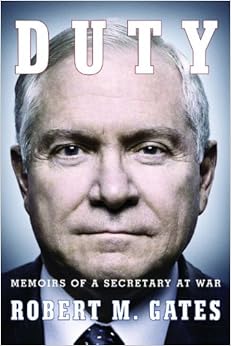
About all you've been hearing about lately is former Defense Secretary Robert Gates' new book.
That is one enormous platform for the author. And that enormous platform is why some authors get big advances.
The book has not been laid down yet, but there is so much buzz being generated that you know it's going to fly off the shelves when it is finally released later this month. Knopf hasn't had to pay a penny for all that publicity, either. It's come about because excerpts have been released, excerpts that play up controversy and feuding and political enmity.
DUTY is currently #2 on Amazon's list, and that ranking has come about because everyone is talking about the book even though they can only pre-order it. The publisher is merrily printing up copies, confident of a sell-through, because the 24-hour news shows are filling time with discussions of the book or reporters reporting on the book's contents.
Mr. Gates has a considerable platform for an author. He has a long career in Washington, having served under several presidents. That alone would guarantee him a tidy sum for an advance. What expanded the size of his platform was his willingness to reveal what went on behind the scenes during some trying times in the Obama administration, to be open and speak his mind instead of skirting issues that might be controversial.
Maybe he's paying back his enemies, those who aggravated him at the White House. Maybe he wants to set the record straight and point fingers away from him. Better to write the history first than be forced to play defense after your opponent scores.
A boatload of free publicity has constructed a strong platform on which Mr. Gates can pile up his hefty advance and subsequent royalties. He may not be the best writer. His prose may not soar. But it doesn't matter, because the book is going to sell and Knopf is going to make a profit.
That is one enormous platform for the author. And that enormous platform is why some authors get big advances.
The book has not been laid down yet, but there is so much buzz being generated that you know it's going to fly off the shelves when it is finally released later this month. Knopf hasn't had to pay a penny for all that publicity, either. It's come about because excerpts have been released, excerpts that play up controversy and feuding and political enmity.
| The man on the platform |
Mr. Gates has a considerable platform for an author. He has a long career in Washington, having served under several presidents. That alone would guarantee him a tidy sum for an advance. What expanded the size of his platform was his willingness to reveal what went on behind the scenes during some trying times in the Obama administration, to be open and speak his mind instead of skirting issues that might be controversial.
Maybe he's paying back his enemies, those who aggravated him at the White House. Maybe he wants to set the record straight and point fingers away from him. Better to write the history first than be forced to play defense after your opponent scores.
A boatload of free publicity has constructed a strong platform on which Mr. Gates can pile up his hefty advance and subsequent royalties. He may not be the best writer. His prose may not soar. But it doesn't matter, because the book is going to sell and Knopf is going to make a profit.
Tuesday, January 07, 2014
Survival Of The Most Stubborn
After Henry the eighth of that name decided to leave the Catholic Church for the sake of a woman he eventually grew tired of, the English had a policy of foisting His Majesty's newly crafted dogma on his subjects.
Thus, the bloodshed and the turmoil that tumbled across Ireland for centuries, as the determined Catholics refused to obey the laws that made their faith illegal.
Cathedrals that offered Roman Catholic mass were confiscated and turned over to the Church of England for their use, while the stubborn Irish Catholics held services wherever they could. They went so far as to school their children in secret when the British tried to make Catholic education a hanging offense. In Dublin, they replaced the cathedral with a pro-cathedral, a building to be used until such time as the Irish could cleanse their nation of Protestantism and take back St. Patrick's.
In time, the Church of England set up the Church of Ireland as a separate entity, as if the Irish Sea were too great a barrier for management to deal with.The Church of Ireland was on its own, and did rather well when all Irish residents had to pay a tax to support it, no matter what faith they followed.
Forced religion, it appears, is not something made to last.
The population of Protestants in the Irish Republic took a turn after the treaty was signed in 1922, amid a climate of retribution when the Catholics finally gained power. Church of Ireland members fled to England or Northern Ireland, while a few Catholics shifted across the border into what became a country so Catholic that public policy became an extension of the Catholic Church in Ireland.
Time had its effect as well, until we reach the Twenty-First Century and discover that Church of Ireland parishes have dwindled into near extinction. Many churches have closed due to lack of funding as the faithful died off and were not replaced. Attendance is down as well, with fewer people going to any sort of church service on a Sunday, thereby leaving no donation on the plate to cover expenses.
The Church of Ireland is all but gone, the loser in the game of religious domininace. The Catholics held fast, clung stubbornly to their religion, and won in the end.
But they still aren't getting St. Patrick's Cathedral back. Neither are they considering the Pro-Cathedral anything but a temporary facility. All things come to those who wait, right?
Thus, the bloodshed and the turmoil that tumbled across Ireland for centuries, as the determined Catholics refused to obey the laws that made their faith illegal.
| The Church of Ireland today |
In time, the Church of England set up the Church of Ireland as a separate entity, as if the Irish Sea were too great a barrier for management to deal with.The Church of Ireland was on its own, and did rather well when all Irish residents had to pay a tax to support it, no matter what faith they followed.
Forced religion, it appears, is not something made to last.
The population of Protestants in the Irish Republic took a turn after the treaty was signed in 1922, amid a climate of retribution when the Catholics finally gained power. Church of Ireland members fled to England or Northern Ireland, while a few Catholics shifted across the border into what became a country so Catholic that public policy became an extension of the Catholic Church in Ireland.
Time had its effect as well, until we reach the Twenty-First Century and discover that Church of Ireland parishes have dwindled into near extinction. Many churches have closed due to lack of funding as the faithful died off and were not replaced. Attendance is down as well, with fewer people going to any sort of church service on a Sunday, thereby leaving no donation on the plate to cover expenses.
The Church of Ireland is all but gone, the loser in the game of religious domininace. The Catholics held fast, clung stubbornly to their religion, and won in the end.
But they still aren't getting St. Patrick's Cathedral back. Neither are they considering the Pro-Cathedral anything but a temporary facility. All things come to those who wait, right?
Monday, January 06, 2014
The New Year Begins
The post-holiday hangover in the publishing world has ended at last.
This being the Monday after the New Year's holiday, the literary agents are back at their desks and the acquisitions editors are parked behind stacks of manuscripts...or they're peering at computer screens to read digital versions of the submission. They are all back to work, and it's time to get yourself back to firing off query letters and working on a new project and doing a bit of editing on that old manuscript that's been aging under the perfect conditions to be found in your closet.
It's time for us at Newcastlewest Books to put the finishing touches on our newest release. Katie Hanrahan's THE LIBERTY FLOWER will soon be available and it would be grand if her readers could make use of Amazon's "look inside the book" feature. To do that, however, requires us here to put together the file and submit it.
No more distractions, like last minute gift shopping or organizing the menu for a drinks party.
The holidays are over. The party is over.
Back to work. The blog needs a little housekeeping as well to be made up to date.
This being the Monday after the New Year's holiday, the literary agents are back at their desks and the acquisitions editors are parked behind stacks of manuscripts...or they're peering at computer screens to read digital versions of the submission. They are all back to work, and it's time to get yourself back to firing off query letters and working on a new project and doing a bit of editing on that old manuscript that's been aging under the perfect conditions to be found in your closet.
![]() |
| Available in Spring, 2014 |
No more distractions, like last minute gift shopping or organizing the menu for a drinks party.
The holidays are over. The party is over.
Back to work. The blog needs a little housekeeping as well to be made up to date.
Saturday, January 04, 2014
The Mid-List: Home To The Niche Publisher
The mid-list book is an endangered species, according to niche publisher Colin Robinson.
Budget cuts, coupled with a decline in sales, is putting pressure on the major publishing houses to produce blockbusters written by authors who don't need much in the way of an advance, or royalties for that matter. And those authors need sturdy platforms to market their own books which they have edited at their own expense because there is no money for promotion to be had.
Given the economical climate hovering over publishing, you would have to think that mid-list authors, those producing gems that are overlooked in a sea of verbal backwash, will soon be left with nothing but the Kindle Direct Program. Do-it-yourself, and then what? It's all about impossible to get noticed because there are few book reviewers to be enticed and libraries can't afford to indulge in little luxuries like mid-listers.
Except for one thing.
As the Big Five (it was six at this time last year) publishing houses limit their acquisitions to celebrity ghost written tomes or the prose of academics teaching creative writing, more and more small houses are popping up. The founders do not expect to make a huge profit because they know there is no money in publishing. They start up new sources of books as a labor of love, to keep the mid-list author from dying, while preserving what is best about reading.
Has anyone done a study to determine if the decline in book sales is entirely due to a depressed economy, or have readers left because they don't all want the blockbusters and why waste money on some drivel just because the novel is perfectly contructed from a technical aspect, arrived at the publisher not needing editing, but is boring?
Small houses with limited resources face a daunting task in getting their books noticed, as Mr. Robinson has no doubt discovered. O/R Books is very much a niche publisher, promoting itself as a source of books with a particular philosophical bent. Like O/R Books, there are small houses cranking out conservative tomes, neither of which is intended to reach a mass audience salivating over the latest Stephen King novel.
There are no advances to be had here, either, so conditions are sadly similar to the reception a mid-list author would get from a major house. The only benefit is that the niche house will publish a book worth reading, even if the audience is small. It is in the niche publishing houses that books can be art as well as business, where taking a risk on something that could turn out to be brilliant can be done without shareholders calling for the publisher's head.
Now if someone could figure out how to get noticed without an advertising budget to generate buzz, we wouldn't be so worried about losing the sort of writer who can craft beautiful prose, even without an MFA or a trust fund to the writer's credit.
Budget cuts, coupled with a decline in sales, is putting pressure on the major publishing houses to produce blockbusters written by authors who don't need much in the way of an advance, or royalties for that matter. And those authors need sturdy platforms to market their own books which they have edited at their own expense because there is no money for promotion to be had.
| O/R Books |
Except for one thing.
As the Big Five (it was six at this time last year) publishing houses limit their acquisitions to celebrity ghost written tomes or the prose of academics teaching creative writing, more and more small houses are popping up. The founders do not expect to make a huge profit because they know there is no money in publishing. They start up new sources of books as a labor of love, to keep the mid-list author from dying, while preserving what is best about reading.
Has anyone done a study to determine if the decline in book sales is entirely due to a depressed economy, or have readers left because they don't all want the blockbusters and why waste money on some drivel just because the novel is perfectly contructed from a technical aspect, arrived at the publisher not needing editing, but is boring?
Small houses with limited resources face a daunting task in getting their books noticed, as Mr. Robinson has no doubt discovered. O/R Books is very much a niche publisher, promoting itself as a source of books with a particular philosophical bent. Like O/R Books, there are small houses cranking out conservative tomes, neither of which is intended to reach a mass audience salivating over the latest Stephen King novel.
There are no advances to be had here, either, so conditions are sadly similar to the reception a mid-list author would get from a major house. The only benefit is that the niche house will publish a book worth reading, even if the audience is small. It is in the niche publishing houses that books can be art as well as business, where taking a risk on something that could turn out to be brilliant can be done without shareholders calling for the publisher's head.
Now if someone could figure out how to get noticed without an advertising budget to generate buzz, we wouldn't be so worried about losing the sort of writer who can craft beautiful prose, even without an MFA or a trust fund to the writer's credit.
Thursday, January 02, 2014
Giving Shape To Memory
On June 28 in 1914, the world was plunged into war because some minor figure in Eastern Europe was assassinated.
One hundred years on, how best to commemorate, or denigrate, the memory of those war years that cost so many lives but also destroyed the old class system and entrenched social construction?
Hints of how best to shape this memory are found in modern culture. You've only to watch a few episodes of Downton Abbey to be presented with the dilemma of the British upper classes, whose way of life was upended by the First World War. The working classes were essentially freed by the demand for soldiers and munitions workers, who found there was more to life than going into service. To say nothing of the ladies who were essentially liberated by war work and never returned to the confines of the old social systems.
For the Irish, the memory of the conflict is itself conflicted. The poor Irish were actively recruited as cannon fodder and many took the King's shilling because they were desperate to provide for their families. But they fought on the side of the enemy, which was Great Britain, and that was brought home in 1916 when the Irish rose up in a failed rebellion. Only recently have the Irish dead been shown a touch of respect, as if it took one hundred years to accept the fact that too many had no other option because there were no jobs.
The Russian Revolution proceeded from the war, and we all know how that ended up. Are the Russians better off now, under Tsar Vladimir, or would things have shifted towards a constitutional monarchy in due course?
So many dead, and those who wish to commemorate the war seek to remember those who fell as heroes who sacrificed for a greater good. On the other hand, there are those who see those same men as lives wasted by incompetent officers who were officers because they were members of the aristocracy, thoroughly incompetent and blind to their failings.
Director Ken Loach would like his native land to shape the memory into one of disaster, not glory. The four years of war did not lead to an end of warfare, as was trumpeted at the time, but instead created a new disaster that bred the likes of National Socialism and another, even more destructive, war.
After one hundred years, how is the memory of millions dead and millions maimed to be shaped for future reference? The governments representing the nations who sent their own to die for an unclear cause will prefer to look on the positive side. What the citizens think will most likely appear in the public sphere, in books and films and television programmes that work to shape memories in a more powerful way than a grand parade staged for the benefit of tourism.
One hundred years on, how best to commemorate, or denigrate, the memory of those war years that cost so many lives but also destroyed the old class system and entrenched social construction?
Hints of how best to shape this memory are found in modern culture. You've only to watch a few episodes of Downton Abbey to be presented with the dilemma of the British upper classes, whose way of life was upended by the First World War. The working classes were essentially freed by the demand for soldiers and munitions workers, who found there was more to life than going into service. To say nothing of the ladies who were essentially liberated by war work and never returned to the confines of the old social systems.
For the Irish, the memory of the conflict is itself conflicted. The poor Irish were actively recruited as cannon fodder and many took the King's shilling because they were desperate to provide for their families. But they fought on the side of the enemy, which was Great Britain, and that was brought home in 1916 when the Irish rose up in a failed rebellion. Only recently have the Irish dead been shown a touch of respect, as if it took one hundred years to accept the fact that too many had no other option because there were no jobs.
The Russian Revolution proceeded from the war, and we all know how that ended up. Are the Russians better off now, under Tsar Vladimir, or would things have shifted towards a constitutional monarchy in due course?
So many dead, and those who wish to commemorate the war seek to remember those who fell as heroes who sacrificed for a greater good. On the other hand, there are those who see those same men as lives wasted by incompetent officers who were officers because they were members of the aristocracy, thoroughly incompetent and blind to their failings.
Director Ken Loach would like his native land to shape the memory into one of disaster, not glory. The four years of war did not lead to an end of warfare, as was trumpeted at the time, but instead created a new disaster that bred the likes of National Socialism and another, even more destructive, war.
After one hundred years, how is the memory of millions dead and millions maimed to be shaped for future reference? The governments representing the nations who sent their own to die for an unclear cause will prefer to look on the positive side. What the citizens think will most likely appear in the public sphere, in books and films and television programmes that work to shape memories in a more powerful way than a grand parade staged for the benefit of tourism.
Monday, December 30, 2013
For The Voracious Reader Without An E-Reader
Despite the Celtic Tiger and all the benefits of membership in the European Union, Ireland is not populated by fabulously wealthy people. Not everyone who loves to read has a smartphone with a Kindle app, or an e-reader that suck up novels from cyberspace.
The public library, in response to the instant gratification of immediate downloading that is not available to all, has come up with a system that mimics the borrowing of e-books. With real books. And a real trip to the building where those books are arranged on shelves.
No e-reader, but you're desperate for something to read and the library closed hours ago? Wondering what to do with your free evening when you can't abide the thought of watching some dreary television programme?
Get up off your comfy chair, o avid reader, and get thee to that library that appears to be closed, but is actually open. To those deemed worthy of access.
For members only, the doors will open at your command. It's a swipe of a membership card, but it's the same thing. Won't you feel special, like one of the select? No librarian to shush you. Just the sound of your footsteps echoing in the empty though hallowed hall as you peruse the stacks.
Don't indulge in your fantasy about having sex between non-fiction stacks. There will be security cameras monitoring your every move.
The same goes for using the library as an overnight place to stay. You won't keep your card long if you're spotted making camp and using the facilities for bathing.
Books will be fitted with various devices to prevent you from stealing them without first doing what the librarian usually does to check out the tomes. Try to leave without following procedure and alarms will ring, gates will drop and the door will lock automatically before the gardai swarm the place. You wouldn't want that, would you? So the State can trust you to behave and not try to steal the only copy of Fifty Shades of Grey?
Didn't find an e-reader under the tree this Christmas? You won't need one in the coming year. The library will be open for you, just like that electronic device you don't have would be like an endlessly open library. Except it will take a bit more effort to actually acquire a book, but at least you'll get a bit of exercise and isn't that one of your New Year's resolutions?
The public library, in response to the instant gratification of immediate downloading that is not available to all, has come up with a system that mimics the borrowing of e-books. With real books. And a real trip to the building where those books are arranged on shelves.
No e-reader, but you're desperate for something to read and the library closed hours ago? Wondering what to do with your free evening when you can't abide the thought of watching some dreary television programme?
Get up off your comfy chair, o avid reader, and get thee to that library that appears to be closed, but is actually open. To those deemed worthy of access.
For members only, the doors will open at your command. It's a swipe of a membership card, but it's the same thing. Won't you feel special, like one of the select? No librarian to shush you. Just the sound of your footsteps echoing in the empty though hallowed hall as you peruse the stacks.
Don't indulge in your fantasy about having sex between non-fiction stacks. There will be security cameras monitoring your every move.
The same goes for using the library as an overnight place to stay. You won't keep your card long if you're spotted making camp and using the facilities for bathing.
Books will be fitted with various devices to prevent you from stealing them without first doing what the librarian usually does to check out the tomes. Try to leave without following procedure and alarms will ring, gates will drop and the door will lock automatically before the gardai swarm the place. You wouldn't want that, would you? So the State can trust you to behave and not try to steal the only copy of Fifty Shades of Grey?
Didn't find an e-reader under the tree this Christmas? You won't need one in the coming year. The library will be open for you, just like that electronic device you don't have would be like an endlessly open library. Except it will take a bit more effort to actually acquire a book, but at least you'll get a bit of exercise and isn't that one of your New Year's resolutions?
Sunday, December 29, 2013
Speak No Evil, YouTube No Evil
Dominick DiMatteo started a grocery store and grew it into a chain of supermarkets that provided Chicagoans with food and imported items that weren't to be had at the nearest National or Jewel. He worked hard, responded to customer needs, and built up a grocery empire.
Then along came a gaggle of suits from out of town, loaded down with piles of cash. They made the DiMatteo family an offer that they couldn't refuse because retail is a hard business and if someone buys you out at the price you want, you'd be a fool not to take it.
Bob Mariano was working for Dominicks when Safeway came in and started changing things. Mr. Mariano was raised on the DiMatteo philosophy of putting the customer first. He found that Safeway was all about turning a profit to earn back their investment, so he left for the Roundy's chain of grocery stores up in Wisconsin.
Roundy's flourished while Dominicks declined, with Safeway focused completely on making money without investing anything in the stores. Sales continued to slide, until the fateful day when the beancounters said things would never turn around. The Dominicks brand that had become a Chicago icon had to be cut out of the corporate balance sheet because it was too much of a drag.
Those who owned Safeway proved their incompetence at running a once successful string of shops. They would prefer, however, that their disgruntled employees not speak evil of their idiocy.
And so, on his last day at work before the Glen Ellyn branch of Dominicks was set to close forever, Steve Yamamoto was suspended for the day. He had sinned against Safeway by making a YouTube video that "thanked" Safeway for closing up and putting 6,000 people out of work, a few days after Christmas.
Thanks Safeway. And Bob Mariano would like to say "I told you so". He is buying up eleven Dominicks locations and putting in Mariano's, a somewhat upscale grocer that is more what Dominicks was before Safeway, and the way Dominicks would have been if Mr. Mariano had been allowed to run things his way, rather than Safeway's way.
And 6,000 people would likely be facing the New Year with full employment, rather than a bleak job market. Thanks, Safeway.
Then along came a gaggle of suits from out of town, loaded down with piles of cash. They made the DiMatteo family an offer that they couldn't refuse because retail is a hard business and if someone buys you out at the price you want, you'd be a fool not to take it.
Bob Mariano was working for Dominicks when Safeway came in and started changing things. Mr. Mariano was raised on the DiMatteo philosophy of putting the customer first. He found that Safeway was all about turning a profit to earn back their investment, so he left for the Roundy's chain of grocery stores up in Wisconsin.
Roundy's flourished while Dominicks declined, with Safeway focused completely on making money without investing anything in the stores. Sales continued to slide, until the fateful day when the beancounters said things would never turn around. The Dominicks brand that had become a Chicago icon had to be cut out of the corporate balance sheet because it was too much of a drag.
Those who owned Safeway proved their incompetence at running a once successful string of shops. They would prefer, however, that their disgruntled employees not speak evil of their idiocy.
And so, on his last day at work before the Glen Ellyn branch of Dominicks was set to close forever, Steve Yamamoto was suspended for the day. He had sinned against Safeway by making a YouTube video that "thanked" Safeway for closing up and putting 6,000 people out of work, a few days after Christmas.
And 6,000 people would likely be facing the New Year with full employment, rather than a bleak job market. Thanks, Safeway.
Saturday, December 28, 2013
She Wanted A Chopper To Ride, Not To Actually Chop
Women do most of the shopping so it comes as no surprise that men are not very good at it. They don't know what the women in their lives would like for Christmas, hence the flurry of returns on the 26th of December.
How many husbands thought that some sort of kitchen appliance would make the significant other happy? Especially if she likes to cook, or maybe she mentioned in passing that she remembered her grandmother making french fries, so crispy and delicious. You like fries. What a great idea. Buy her a food chopper and she'd make fries for herself and for you. Everyone wins.
Didn't she say something about a chopper at some point during the year?
If only men would read more than the sports news. They would know that the chopper she wants doesn't fit in the kitchen. It belongs in the garage.
Yes, it's true. Women want Harleys. They want to ride.
Harley Davidson says so.
The famed manufacturer did a study that showed women want to ride because they enjoy the freedom that comes with trucking down the road, bugs beating against their face. Those who own Harleys are more confident and feel more attractive with that big hog between their legs.
You screwed up this year.
But now you're in the know. You've been informed. For 2014, put that Harley on the top of the Christmas list and you'll end up with a partner who looks good and feels good.
Assuming, of course, that she actually wants to ride a bike with no protection in the event of a crash. Some women are just cautious that way. They like all the air bags and anti-lock brakes. In which case, there's always the Ronco Vegematic.
How many husbands thought that some sort of kitchen appliance would make the significant other happy? Especially if she likes to cook, or maybe she mentioned in passing that she remembered her grandmother making french fries, so crispy and delicious. You like fries. What a great idea. Buy her a food chopper and she'd make fries for herself and for you. Everyone wins.
Didn't she say something about a chopper at some point during the year?
If only men would read more than the sports news. They would know that the chopper she wants doesn't fit in the kitchen. It belongs in the garage.
Yes, it's true. Women want Harleys. They want to ride.
Harley Davidson says so.
The famed manufacturer did a study that showed women want to ride because they enjoy the freedom that comes with trucking down the road, bugs beating against their face. Those who own Harleys are more confident and feel more attractive with that big hog between their legs.
You screwed up this year.
But now you're in the know. You've been informed. For 2014, put that Harley on the top of the Christmas list and you'll end up with a partner who looks good and feels good.
Assuming, of course, that she actually wants to ride a bike with no protection in the event of a crash. Some women are just cautious that way. They like all the air bags and anti-lock brakes. In which case, there's always the Ronco Vegematic.
Thursday, December 26, 2013
A Foot In The Door
What better way to get your manuscript under the nose of a literary agent than to get your foot in the door of the agency and work behind the scenes? If you're really determined to get published, you'll take this job:
Where is this job to be had, you ask?
No less an agency than Inkwell Management.
Imagine yourself in their New York office, reading queries and casually slipping your own into the pile. Then you'd write up an evaluation that lauds your own work, which is praiseworthy anyway so it's no lie.
With great subtlety you slip that "requested" manuscript onto the desk of Kim Witherspoon or Alexis Hurley and you're on your way to a fat contract with a major publishing house.
Send your resume to the Hiring Manager and get ready to insert your foot firmly in the door. It's the first step on the smoother side of the rocky road to publishing. And don't forget who sent you. If a query shows up from a certain writer who told you about the job in the first place...
We are looking for an ambitious agent’s assistant, who would be enthusiastic to work with a wide variety of fiction and non-fiction projects.It doesn't sound very complicated or difficult. You've finished a manuscript, so you've demonstrated the ability to see things through to the end. As for answering a phone, you do it every day. And who doesn't know Microsoft Office? Especially Word.
The assistant will organize and send submissions to publishers, draft personalized letters, edit client manuscripts, and read and review incoming queries and manuscripts. In addition, the assistant will write plot synopses, critical evaluations, and participate in editorial meetings with agents and authors. We are looking for someone to tackle all of these tasks, while also answering the phone and coordinating meetings and schedules.
Applicants must be articulate, personable, and hold a high level of interest in the publishing field. At least 2 years of relevant experience at a major trade house is ideal. Strong written, verbal, and computer skills are necessary. Advanced familiarity with Microsoft Office and online resources are essential. Applicants should be motivated, highly organized, tech-savvy, and have the ability to multi-task in a fast-paced, deadline-driven environment. The assistant must be able to work with and without direct supervision.
Where is this job to be had, you ask?
No less an agency than Inkwell Management.
InkWell is one of the world’s leading literary agencies, proudly representing major literary prize winners as well as many of the world’s bestselling and best-loved authors. We enjoy a considerable international reputation as a significant and innovative player in the industry.
In addition to its full-time agents and their assistants, the InkWell team includes a tireless foreign rights department, a dedicated social media, marketing and publicity expert, and a meticulous contracts manager. We also join forces with leading literary agencies in every foreign market and have agents based in Australia, Boston, and Dallas. We continue to be excited by—and on the lookout for—original ideas, riveting stories and great writing.
Imagine yourself in their New York office, reading queries and casually slipping your own into the pile. Then you'd write up an evaluation that lauds your own work, which is praiseworthy anyway so it's no lie.
With great subtlety you slip that "requested" manuscript onto the desk of Kim Witherspoon or Alexis Hurley and you're on your way to a fat contract with a major publishing house.
Send your resume to the Hiring Manager and get ready to insert your foot firmly in the door. It's the first step on the smoother side of the rocky road to publishing. And don't forget who sent you. If a query shows up from a certain writer who told you about the job in the first place...
Tuesday, December 24, 2013
And A Merry Christmas To You
As you gather with friends and family, enjoy this, the best Christmas song ever written:
Nollig shona dhaoibh.
Monday, December 23, 2013
Let Us All Do Are Part To Fill Our Quota
Those who are in charge of disposing of our holiday debris have informed us that we are going to create an enormous mountain of garbage.
So let's all do our part.
Irish revelers are projected to consume 60 million litres of alcohol over the coming weeks. We'll be in the pubs, drinking. We'll be at home, drinking. We'll be at parties, drinking.
Don't slack off. Do your bit. Have that extra bottle of beer, even though you think you've enough. You wouldn't want to disappoint the folks at Repak, would you?
Recycling firm Repak says we'll dispose of enough empties to span the distance from Dublin to Lapland. Not that you'd need to string them out for a return to use, what with Repak poised to handle the volume. Don't disappoint them this year. They have their staff in place, and if there aren't all that many bottles, there could be redundancies and you wouldn't want to be responsible for someone losing a job at Christmas because you didn't meet your quota.
Drink up, Ireland. Consume enough alcohol to fill twenty-four swimming pools.
St. Stephen's Day is in place so that you can recover from the overindulging. That's why the tradition of hunting wrens started, you know. It was a group of hung-over partiers with pounding skulls who couldn't stand the chirping another minute.
So let's all do our part.
Irish revelers are projected to consume 60 million litres of alcohol over the coming weeks. We'll be in the pubs, drinking. We'll be at home, drinking. We'll be at parties, drinking.
Don't slack off. Do your bit. Have that extra bottle of beer, even though you think you've enough. You wouldn't want to disappoint the folks at Repak, would you?
Recycling firm Repak says we'll dispose of enough empties to span the distance from Dublin to Lapland. Not that you'd need to string them out for a return to use, what with Repak poised to handle the volume. Don't disappoint them this year. They have their staff in place, and if there aren't all that many bottles, there could be redundancies and you wouldn't want to be responsible for someone losing a job at Christmas because you didn't meet your quota.
Drink up, Ireland. Consume enough alcohol to fill twenty-four swimming pools.
St. Stephen's Day is in place so that you can recover from the overindulging. That's why the tradition of hunting wrens started, you know. It was a group of hung-over partiers with pounding skulls who couldn't stand the chirping another minute.
Thursday, December 19, 2013
Mixing Media
Performance art is supposed to be equal to the physical thing that hangs on your walls. Why, then, would it be wrong for an artist to mix the media and present a work of art that exists in a particular space while also being performed in other places?
Jason Pallas has been punished for doing just that. Which proves that the jury of experts running the West Chicago City art museum are a bunch of philistines with no concept of what real art is.
What would you expect, though, from a town that doesn't even have an original name? They could have called themselves anything, but the town founders tried to piggy-back on Chicago's fame. They didn't copy the city's vibrant art scene, or highly evolved attitude towards modern art.
The mixed media art presentation that Jason Pallas put together arose from a project that asked artists to create something based on an object in the museum's collection. Mr. Pallas found inspiration in a 1930's playbill for a minstrel show.
Controversial, to be sure, but art is meant to make us uncomfortable. Being reminded of the old Jim Crow days is definitely not pleasant, but neither should we shy away from reminders of what we would not wish to repeat.
At any rate, Mr. Pallas did his art thing and the museum put it on display, not realizing that what was in the museum was only part of the overall piece. The rest of it was an installment of performance art that was spread out over a wide area.
He crafted false press releases, inviting all to a minstrel show to be put on by a fictional glee club at the local high school.
And he got a reaction, which is what performance art is meant to elicit.
The plebeians in charge of the museum promptly removed the physical portion of the artwork from their exhibit, and have been exhibiting high dudgeon ever since. They could have saved themselves a lot of trouble by looking at the artist's other pieces, and reading a bit about his attitude towards art, but when all you know of art is that nice big painting hanging behind your couch, you won't be prepared for what is being done these days.
Of course there was no minstrel show, but in the 1930's in West Chicago there was a minstrel show and Mr. Pallas used his talent to bring the bad old days back to mind. He made the museum people very, very uncomfortable.
His mixed media artwork was a success. Even if no one can see it now at the West Chicago City Museum.
Jason Pallas has been punished for doing just that. Which proves that the jury of experts running the West Chicago City art museum are a bunch of philistines with no concept of what real art is.
| By Jason Pallas |
What would you expect, though, from a town that doesn't even have an original name? They could have called themselves anything, but the town founders tried to piggy-back on Chicago's fame. They didn't copy the city's vibrant art scene, or highly evolved attitude towards modern art.
The mixed media art presentation that Jason Pallas put together arose from a project that asked artists to create something based on an object in the museum's collection. Mr. Pallas found inspiration in a 1930's playbill for a minstrel show.
Controversial, to be sure, but art is meant to make us uncomfortable. Being reminded of the old Jim Crow days is definitely not pleasant, but neither should we shy away from reminders of what we would not wish to repeat.
At any rate, Mr. Pallas did his art thing and the museum put it on display, not realizing that what was in the museum was only part of the overall piece. The rest of it was an installment of performance art that was spread out over a wide area.
He crafted false press releases, inviting all to a minstrel show to be put on by a fictional glee club at the local high school.
And he got a reaction, which is what performance art is meant to elicit.
The plebeians in charge of the museum promptly removed the physical portion of the artwork from their exhibit, and have been exhibiting high dudgeon ever since. They could have saved themselves a lot of trouble by looking at the artist's other pieces, and reading a bit about his attitude towards art, but when all you know of art is that nice big painting hanging behind your couch, you won't be prepared for what is being done these days.
Of course there was no minstrel show, but in the 1930's in West Chicago there was a minstrel show and Mr. Pallas used his talent to bring the bad old days back to mind. He made the museum people very, very uncomfortable.
His mixed media artwork was a success. Even if no one can see it now at the West Chicago City Museum.
Wednesday, December 18, 2013
Stop Me If You've Heard This One Before
| Sorry, Shia, but your film? It's been done before |
What he could not possibly know, being an actor capable of memorizing lines written by others, is that the writers actually have to come up with an original idea, or get permission to use another author's work. Then when the credits roll at the end, the audience can read the card that gives that author some credit for coming up with the plot and some of the narration. Oh, yes, and the author gets paid for the use of his work.
But what would an actor know of such backlot antics?
Because no one ever told him how the script got into his hands, Mr. LaBeouf failed to follow protocol when he lifted "Justin M. Damiano" and turned it into a short film that he calls "HowardCantour.com".
The title was his own idea. Doesn't that make the whole thing his own as well?
The title was about all that was original. The story and some of the spoken words were first composed by Daniel Clowes, a Chicago-based writer of graphic novels. He wrote and illustrated "Ghost World", which was made into a film for which he received credit and payment. Apparently Mr. LaBeouf never stayed to watch the credits, or he was not a fan of actress Thora Birch. THen again, he might have people to do his research and it's nearly impossible to get competent help these days. It's not as if everyone is familiar with Google searches.
At any rate, he made his film and absorbed the applause at the Cannes Film Festival and then found himself on the receiving end of a fierce backlash. His first attempt to branch out into production has been met with charges of plagiarism.
His first attempt at film production will soon give him an education in copyright law and lawsuits and settlements. He may also be schooled in the art of editing, in which he makes corrections to the credits so that the real author, Daniel Clowes, gets what he's due for being the true creative force behind the movie.
It's all a learning process, when you switch careers. Sometimes, as in this case, it turns out to be a very expensive and humiliating education.
Tuesday, December 17, 2013
The Linguistics Professor Who Could Not Speak
Linguistics is the study of language. You would think that someone qualified to teach linguistics would be well-equipped to express thoughts, to speak clearly, but you would be wrong.
At Northeastern Illinois University, John Boyle was not granted tenure as a professor of linguistics because his speaking was not what the school's president was looking for.
John Boyle was not a close personal friend of Sharon Hahs. He dared to use his linguistic skills in criticizing her regime, citing various examples of what he saw as poor management when it came to the linguistics department being chopped up to set the Teaching English As A Second Language curriculum up as its own department. Normally, he would be free to say what he thought, but this being a small college located on Chicago's north side, it seems that Ms. Hahs took a page from her colleagues at Chicago State University and tried to quash all that free speech that was aimed at her.
All of his fellow professors at NEIU thought Mr. Boyle deserved tenure. Everyone in the chain of command thought he'd earned it. Until the promotion landed on Ms. Hahs' desk, it looked as though Mr. Boyle and fifteen other teachers would be granted tenure and they could relax in the comfort of job security.
Alas, it was not to be for Mr. Boyle and only Mr. Boyle.
Ms. Hahs rejected his tenure application, claiming that Mr. Boyle failed his students by steering them towards a study of linguistics rather than advising them to learn how to teach English to non-native speakers. That's probably where the money is, job-wise, but a man who specialized in linguistics would be expected to be partial to his passion.
The official body that watches over university faculty took a look and determined that Mr. Boyle's rejection was a case of retaliation. His decision to speak freely was punished by Ms. Hahs, who had no legitimate reason to deny tenure. The committee believed that the linguistics faculty's vote of no confidence in Ms. Hahs may have fueled her decision to keep Mr. Boyle from achieving the career landmark.
Mr. Boyle is currently without a job, having lost his case before the Illinois Educational Labor Relations Board which sided with Ms. Hahs.
He has his pride intact, however, and can bask in the glow of vindication (from the Latin, I believe).
Whether he can land another university teaching job is unknown, however. There are few if any tenure track positions around these days, and there is this blot on his record that other schools might see as a red flag that warns of a potential troublemaker. Such is the cost of free speech at the collegiate level.
At Northeastern Illinois University, John Boyle was not granted tenure as a professor of linguistics because his speaking was not what the school's president was looking for.
| Sharon "Don't Tread On Me" Hahs |
John Boyle was not a close personal friend of Sharon Hahs. He dared to use his linguistic skills in criticizing her regime, citing various examples of what he saw as poor management when it came to the linguistics department being chopped up to set the Teaching English As A Second Language curriculum up as its own department. Normally, he would be free to say what he thought, but this being a small college located on Chicago's north side, it seems that Ms. Hahs took a page from her colleagues at Chicago State University and tried to quash all that free speech that was aimed at her.
All of his fellow professors at NEIU thought Mr. Boyle deserved tenure. Everyone in the chain of command thought he'd earned it. Until the promotion landed on Ms. Hahs' desk, it looked as though Mr. Boyle and fifteen other teachers would be granted tenure and they could relax in the comfort of job security.
Alas, it was not to be for Mr. Boyle and only Mr. Boyle.
Ms. Hahs rejected his tenure application, claiming that Mr. Boyle failed his students by steering them towards a study of linguistics rather than advising them to learn how to teach English to non-native speakers. That's probably where the money is, job-wise, but a man who specialized in linguistics would be expected to be partial to his passion.
The official body that watches over university faculty took a look and determined that Mr. Boyle's rejection was a case of retaliation. His decision to speak freely was punished by Ms. Hahs, who had no legitimate reason to deny tenure. The committee believed that the linguistics faculty's vote of no confidence in Ms. Hahs may have fueled her decision to keep Mr. Boyle from achieving the career landmark.
Mr. Boyle is currently without a job, having lost his case before the Illinois Educational Labor Relations Board which sided with Ms. Hahs.
He has his pride intact, however, and can bask in the glow of vindication (from the Latin, I believe).
Whether he can land another university teaching job is unknown, however. There are few if any tenure track positions around these days, and there is this blot on his record that other schools might see as a red flag that warns of a potential troublemaker. Such is the cost of free speech at the collegiate level.
Subscribe to:
Posts (Atom)