Wednesday, November 06, 2013

Step Into My Parlor Said The Kindle To The Indie

With apologies to Mary Howitt 

The Kindle And The Indie


"Will you walk into my parlor?" said the Kindle to the Indie;
"'Tis the prettiest little parlor that ever you may spy.
The way into my parlor is up a winding stair,
And I have many ebooks at 10% commission for you there."
"Oh no, no," said the little Indie; "to ask me is in vain,
For who goes up your winding stair can ne'er come down again."

"I'm sure you must be weary, dear, with retail prices up so high.
Well you rest upon my little bed?" said the Kindle to the Indie.
"There are pretty incentives drawn around; my ereaders are fine and thin,
And if you like to rest a while, I'll snugly count you in!"
"Oh no, no," said the little Indie, "for I've often heard it said,
They never, never wake again who sleep upon your bed!"

Said the cunning Kindle to the Indie: "Dear friend, what can I do
To prove the warm affection I've always felt for you?
I have within my selection all the bestsellers at a nice price;
I'm sure you're very welcome to a piece of profit - will you please to take a slice?"
"Oh no, no," said the little Indie; "kind Kindle, that cannot be:
I've heard what's in your long-range plan, and I do not wish to see!"

"Sweet creature!" said the Kindle, "you're witty and you're wise;
How handsome are your bricks and mortar; how brilliant are your buys!
I have a little looking-glass upon my parlor shelf;
If you'd step in one moment, dear, you shall behold yourself."
"I thank you, gentle Kindle," Indie said, "for what you're pleased to say,
And, bidding you good morning now, I'll call another day."

The Kindle turned him round about, and went into his den,
For well he knew the silly Indie would soon come back again:
So he wove a subtle web of discounts in a little corner sly,
And set his table ready to dine upon the Indie;
Then came out to his door again and merrily did sing:
"Come hither, hither, pretty Indie, with your stacks and children's wing;
Your covers are green and purple; there's a knowledge of books within your head;
Your ability to recommend is diamond bright, but mine is dull as lead!"

Alas, alas! how very soon this silly little Indie,
Hearing his wily, flattering words, came slowly flitting by;
With fear of being run out of business near and nearer grew,
Thinking only of her bottom line and monthly rent due,
Thinking only of her lost sales to showcasing. Poor, foolish thing! at last
Up jumped the cunning Kindle, and fiercely held her fast;
He dragged her up his winding stair, into the dismal den -
Within his little parlor - but she ne'er came out again!

And now, dear little booksellers, who may this story read,
To offers too good to be true I pray you ne'er give heed;
Unto an evil predatory competitior close heart and ear and eye,
And take a lesson from this tale of the Kindle and the Indie.

Pity The Jurors

Kevin Trudeau, pitch or con man
For reasons no one can determine, I have never been called to serve on a jury. I am a registered voter and I have a driver's license, the two ingredients needed to get the notice of the court clerk, but still. No one has ever invited me to sit in judgment.

People tell me how lucky I have been, as they go on to describe their futile attempts to get out of jury duty.

It sounds like something fascinating, to sit in a court room and take in the entire process.

As it turns out, I may be more lucky than I realized.

Kevin Trudeau, the notorious pitchman who made a fortune off questionable scams and then hid his money when the Feds came calling, is finally going to trial in Chicago. His tendency to live the high life while crying poor has not gone unnoticed and the authorities want him to pay his fines or go to jail. Having been ordered, to stop hawking his books, it appears that Mr. Trudeau did not, and this time the Feds are going after him hard. They have not been able to find his money, so they would like to remove him from access to it.

The trial is getting underway, and the jury has been selected. They have been given their homework, to help them understand what Mr. Trudeau is all about, with his pitch about "them" not wanting you to know certain secrets that will cure every illness, including cancer, get you free money, lose weight, and get out of debt.

He pitched his lucrative schemes on television, making a name for himself in the world of the infomercial, and as the jury didn't buy any of his books before, they have to read them now to be better informed.

It sounds like a form of torture, to read such garbage. To be forced to give up precious reading time to devote to a study of hucksterism and falsehoods and conclusions drawn on distorted premises is enough to make anyone fight like mad to get out from serving on the jury.

Because the case hinges on the fact that Mr. Trudeau did not stop selling his dangerous weight loss strategy after the government ordered him to do so, the jury has to read his book about how to loose weight the easy way (500 calories a day will see the pounds fall away, to be sure, in company with all the serious health consequences of starvation) to see why the order was issued in the first place. The book is pure bunk and when sold as fact, that's illegal.

His defense is that we Americans can write whatever we want in a book. Whether or not things described in the book actually worked is not the issue. There was something about a money-back guarantee, wasn't there? Caveat emptor, as the Romans said. No blood, no foul.

If found guilty, Mr. Trudeau could face life in prison for his role in the massive scam. If a jury buys his arguement, that he could write whatever he pleased and then pitch it because in his opinion he was saying the truth, he can stop going through the motions of hiding the millions in profits he made from his books.

And the old adage about not believing everything you read will be proved true, especially when there's a sucker born every minute and there's someone out there looking to fleece every one of them.

Monday, November 04, 2013

Hoarder

Hildebrandt Gurlitt did not obey orders.

After his Nazi superiors told him to destroy all the artwork they had stolen and put on display as examples of degenerative art, he said the artwork was lost when his flat in Dresden was bombed. To the rest of the world, the works by artists such as Matisse and Picasso were presumed lost.

Hildebrandt Gurlitt lied about the devestation. He had all the work hidden away and knew it was perfectly safe, completely intact.

After the war, he could have turned it over to the victors, but Dresden was claimed by the Russians and Mr. Gurlitt was not going to let them have the priceless art. It would only be taken to Moscow, to hang on Stalin's walls or be stuck in some storage place and left to rot. He kept hiding the trove, through the Commuist takeover and the subsequent misery that followed. He never let on that he still had 1,500 pieces of art that he was supposed to have destroyed.

He died in 1956 and his son carried on the family tradition of safeguarding artwork that the rest of the world was not looking for because it was presumed lost forever.

In time, the Berlin Wall fell and the old Soviet Union collapsed. With east and west united, it would have been possible for Cornelius Gurlitt to come forward, but he was not the type to be forward about anything. The 80-year-old son of the Nazi-era art collector has been described as reclusive. In less polite terms, he was more of a hoarder, perhaps driven to maniacal secrecy by the contents of the family flat and the paranoia generated by the Communist regime.

His Munich apartment was raided after customs officers found 9000 euro in Mr. Gurlitt's possession. If the EU is good for one thing, it's good at collecting its share of everyone's earnings, and they are very concerned with money being transported across borders to avoid taxes. As it turned out, they had stopped a man who had never held a job or registered with German authorities. The money in the old gentleman's pocket came from somewhere, however,  and the EU wanted its piece of the action. The apartment raid was intended to uncover something like money laundering or a black market operation, but what was discovered was more than amazing.

As best as authorities could determine, Mr. Gurlitt sold a painting here and there to get enough to live on, and his living standards were more than modest. The apartment was cluttered with empty tins of rotting food, the lare of a hoarder. Clearly he was not selling art to fund a lavish lifestyle, but to squeak by, as if he was driven by desperation to sell what he did not wish to sell.

What will become of Mr. Gurlitt is not an issue being mentioned because the art world is too stunned by the news that what was once thought lost has now been found. All the items in the Munich flat were purchased from Jews fleeing the Holocaust, sold for a pittance to Hldebrandt Gurlitt. Because the art is considered stolen, authorities are focusing on the nearly impossible task of reuniting the artwork with the descendants of the original owners.

Mr. Gurlitt's hedge against old age is gone, and he could be charged with selling stolen art. The auction house that represented him in his most recent sale will be entangled in a legal mess, and the person who bought the art in good faith will have their own set of lawyers to defend them, or at least get full restitution.

To think that a man could defy the Nazis to preserve something so valuable to society is remarkable. That his son managed to keep his secret for seventy years is a story worth telling. We can only hope that Cornelius Gurlitt will finally speak.

Friday, November 01, 2013

A Little Nibble Of The Whale On The Menu

If you have always dreamed of owning a piece of a publishing empire, the once mighty whale that was HMH-Riverdeep-Greenwood-and-who-can-remember-them-all is soon to be available for your dining pleasure. Small bites, like tapas, are going to be on investors' menus on 14 November.

Is it a treat worth buying, even at $14 per share, or is it still an overpriced offering that won't hold the initial price beyond the first rush, when the market movers snatch it up in the hopes that others will nibble on their leavings as they walk in and walk right out with more money than they came in with?

To be sure, Houghton Mifflin Harcourt has seen a bit of a renaissance, after a debilitating series of sackings (also known as realized synergies) that shrank the once huge publishing houses. The merged corporation is hoping that buyers will see the bright side, and buy the stock as a solid investment that will yield some respectable returns. Not that HMH will gain a penny from the IPO. All the funds collected are going to pay off creditors who can't wait to get out from under the weight of the dead whale.

Before you jump in, you'll have to ask yourself how much you believe in CEO Linda Zecher. She has brought the struggling publisher through the bankruptcy process, but is that enough to put HMH on a solid footing going forward? Or has Houghton Mifflin Harcourt gone as far as it can go?

Some say that investing in stocks is little different from gambling, and there is a high element of risk in taking on a refigured company at a time when textbooks are not flying off shelves as local communities scale back purchases to rein in costs. But economies go up as well as down, and HMH stands to profit when the curve heads up.

That's the gambler's take when making a bet. There's such a surge of excitement while you wait for the outcome, to see if you've made the right call and you're about to come out a winner.


Thou Shalt Not Let A Prestigious High School Be Mocked

Yesterday, a friend in Chicago sent me a link to a story that was splashed all over the local news, about a young man in a suburb north of Chicago who dressed up as Jesus for Halloween and was promptly told to take off his costume because it could be construed that he was mocking Jesus.

The ban on the costume did not last long after the story got out. Highland Park High School could not tolerate the perceived lack of tolerance on their part. And the young man in question was black. They really don't want to invite scrutiny by the NAACP. It spoils their image.

Very few of the student population at the secondary school would have been offended by the costume, according to my source, because the majority of the students are Jewish. If anything, they might have complained that their classmate was guilty of proselytizing, trying to convert the unbelievers to Christianity when they believe that the Messiah has not yet come.

The citizens of Highland Park vote Democratic and support all manner of liberal causes. They want the rest of the world to perceive them as accomodating to all, of accepting all manner of faiths and ethnicities. With that in mind, they also want to show how they do not tolerate a lack of that same sensitivity in others.

In this case, the reaction was over the top and made the school administrators look rather petty, if not foolish. News crews descended on the normally sleepy suburb, and you can be sure that nervous parents were calling in to find out why there were satellite trucks ringing the front entrance and reporters were doing live remotes with the school's name as their backdrop. Those who watched the story play out would have been calling in as well, to voice their opinion on the decree against Black Jesus. Once the school became an item of mockery, the ruling had to be quickly reversed.

Whether or not the young man donned his Jesus outfit after he was told it was, upon further review, acceptable, is not known. Nor does it matter.

The teen's parents can sit at home and silently fume about the Jews hating Jesus, or picking on their boy because he is in the minority, from a basis of both religion and skin color. The school adminstrators will wipe their nervous brows and feel that they dodged a bad case of negative publicity, even as they write up a new set of guidelines for next year's Halloween fun.

Rather than ban Jesus, why not encourage others to adopt Moses or David or Esther as their costume for the day? Why not encourage the diversity that exists and help the students understand where others are coming from, instead of trying to keep the unpleasant realities of a diverse society from entering the doors of Highland Park High School?

Soon enough, the teens of today will have to leave their protective bubble and discover what the outside world is like. Their education should prepare them for more than scoring high on their ACTs or getting accepted at an Ivy League school.

Thursday, October 31, 2013

They Come And They Go

I was surprised to get a notification about a short story I had submitted almost three years ago and then completely forgotten about. The literary journal that I submitted to never quite got up and running. It went before it ever arrived, and like so many other non-responses I'd gotten over the years, I'd quite forgotten about this one until a notice came that the short story had been rejected.

Someone, apparently, was cleaning up old business.

That's the thing with literary journals. They pop up, usually started by enthusiastic English majors who think they can identify the sorts of things that matter to the public, the strories that people will read and discover some truth about the world.

And then they fade away due to lack of money because people aren't paying into the system. By and large, literary journals sell copies to authors looking to submit to the journal. It's a poor business model.

One journal dies, and another one is born. Amazon is now going to enter the literary journal field.

The plan is to produce a weekly journal of short stories that will sell at $19.99 for an annual subscription. Cheap, yes, but will it sell at any price? Look at all the others who have gone before, only to expire when the cash flow dries up. Or will Amazon keep the money tap open, to prop up a new venture?

Amazon's publishing arm seems to be on shaky ground, what with Larry Kirshbaum making for the exits. The fact that traditional brick and mortar stores won't carry Amazon-published books played into the poor results. How does a literary journal figure into some plans for future success?

Authors who have published short stories in prestigioius literary journals will have their stories submitted for prestigious prizes. Look at an author biography on a book and you'll often see mentions of the Pushcart Prize or something similar. It is the platform for fiction authors, the street cred that wins them the publishing contracts.

What if a Day One writer wins a prize and then signs with Amazon Publishing? Could Amazon use that prestige as leverage to gain access to Barnes and Noble's stores? Would public demand for this brilliant author push independent book sellers to carry something published by their archenemy Amazon?

Or will Day One fold like all the rest, a victim of the reading public's disinterest in short stories.

By the way, if you were about to add this Kindle product to your list of places to submit that short story you believe strongly in, you can save yourself a rejection. At the moment, the journal is not accepting submissions from the sort of authors they claim they want to discover. For now, they are sticking with the tried and the true, the MFA students and the graduates of acclaimed writing programs.

The launch of a new product has to be controlled, after all, to see what the readers are favoring so that future issues can be molded to fit the demand. If Amazon is to find the most promising future authors, they have to find out what the public will buy. And what they will ask for when they shop at their local indie bookstore that really doesn't want to carry anything from Amazon Publishing but the customer is always right, after all.

Tuesday, October 29, 2013

I Do, I Do

The location of a wedding is almost as critical as the bride's dress or the flowers, setting the mood and reflecting the couple's personalities.

What better place to exchange your vows, if you love the Impressionists, than in front of one of Chicago's most iconic paintings? And make it fast, please. The Art Institute is not actually open to weddings in the galleries during visiting hours and even if it were it wouldn't be free.

Sunday Afteroon On The Island Of La Grande Jatte
John Poole has been a member of the Art Institute for years, and like so many others, he was taken by the Geoge Seurat work that is one of Chicago's treasures. He wanted this paiting to be the backdrop of his civil ceremony when he married Stacy Alan. It was Ms. Alan who had the religious ceremony organized. Mr. Poole was given the task of selecting the best place for the other part, and naturally he chose the Art Institute.

People will stand for a long time in front of the painting, studying the points of paint and marvelling at the artist's technique. They stand close, they move back, side to side, but "Sunday Afternnon" requires more than a passing glance.

That twenty people would gather around the painting would be cause for alarm among the guards, you would expect. It would take twenty people to carry the thing, to begin with, and what can two people do against a mob bent on confiscating a priceless work of art?

Given those limitations, Mr. Poole and Ms. Alan decided that they would have to move fast. I do, I do, and out the door before someone called the cops.

It is being called a guerilla wedding, a three minute rush to tie the knot.

As it turned out, no one was arrested. Patrons in the gallery either watched or ignored the wedding. The guards let it go, perhaps because the attendees looked as harmless as they were.

For Mr. Poole and Ms. Alan, it was a wedding to remember, one that could not be memorialized because there is no flash photography and a lover of art would never do anything to harm the object of his affection.

In future, however, the Art Institute will likely crack down on the sure-to-catch-on guerilla weddings. You can stage your wedding at the museum, of course, but if you don't want to get booted out before you can say "I do", you'll want to go through normal channels and hire the appropriate room like everyone else who plans an event at the Art Institute. No more free rides.

Monday, October 28, 2013

What Century Is This?

According to the calendar, it is 2013. And nearly the end of the year, to be exact.

So why would Ireland still maintain a board for the purpose of censoring published materials? Do we still need to be protected from the filth that is James Joyce's Ulysses? Or the licentiousness of F. Scott Fitzgerald?

The board that was established in 1929 was fiercely protective of Irish morality, but back in the early years of the Free State, that was what the people (egged on by the Catholic Church) wanted from their government. Almost ninety years late, that same board exists, and a member of the public has recently filed a complaint.

It's ludicrous, in this day and age, to have a group of appointed officials determine what is suited to delicate Irish eyes, especially when the Internet reaches into every corner of the nation and the idea of censorship is laughable. That is probably why there are no board members, not since 2008. Anyone daring to accept such a post would rightly be accused of greed, taking the position for the sake of the salary. There is no great upwelling in favor of censorship like that in 1929. If anything, people want more freedom, not less, and not limited by the bishops or bureaucrats in Dublin.

The board was largely forgotten until Alan Shatter's novel was reprinted after it was resurrected from a backlist. Someone found it offensive and voiced a complaint to the Censorship of Publications Board, claiming that the book was filthy. Characters in the book were having sex. Sex! God help us.

The complaint went nowhere because there was no one to field the question, and no one particularly interested in pursuing it.

Banning the book would only encourage people to buy it, after all, and we don't want to encourage the minister to give novel-writing another go.

Now that would be borderline obscene.

At any rate, there is talk of doing away with the non-functioning board, to take its existence off the books and leave it in the dust of history, when Ireland was notorious for being the most virulently censorious place on earth---while locking up children and women for perceived crimes against morality.

Was there anything more obscene?

Saturday, October 26, 2013

A Return To Child Removal

Ireland is once again searching its soul following the removal of two Roma children from their parents because someone thought there was not enough of a family resemblence to preclude a case of gypsy kidnapping.

The nation has a very ugly history of child removal, going back decades. The crime back then was not one of appearance, but of poverty, and generations of Irish children were traumatized to an incomprehensible degree. Fall-out from the industrial school system continues to reverberate, at a cost to the Irish taxpayer in the form of redress and at a cost to the victims that cannot be calculated.

There was a time when a busy-body neighbor could mention a particular family to the parish priest, to point at a widow trying to raise children when the newly minted Constitution all but banned women from working. It could be that a man was seen coming and going, a hint of illicit sex and affairs, and as easily as obtaining a court order, the children were taken and locked away from their mother and some perceived immorality.

Busy-bodies continue to exist, but lately they are set off by what they think is a possible kidnapping case. What made these two recent cases particularly troubling is that the lesson of the industrial school scandal does not seem to have been learned. On the basis of a single complaint, or one individual weaving fantasies, a child was removed from its home and put into the care of strangers. The gardai went along with it, giving credence to something as absurd as an impression made by someone unqualified to judge family ties.

The Ombudsman for Children has been tasked with examining the two incidents, to see how things went as far as they did.

The potential child kidnapping in Greece turned out to be a genuine legal issue, one in which the parents were not in the least related to the little girl they claimed as their own. In Ireland, the children were removed because someone thought they didn't look like the parents. One eejit got wound up looking at the news coverage and one eejit was taken seriously when the authorities should have done more than take his or her word.

While it was wrong that the children were made to suffer needlessly, the State has some concerns over its own image as well.

That is not the image that any country wishes to project when it is trying to attract investment from foreign companies who would be sending their foreign employees with their foreign families to live among people with nothing better to do than stir up trouble.

Back in the days of State-Church collusion in child removals, all it took was a parish priest deciding that a child was at risk of moral taint. The country has not come far if the gardai can instigate a removal for the same weak evidence. To be sure, those who lodged complaints both now and in the past were convinced that they were doing what was best.

They did not know what was best. We rely on those in authority to sort out the good from the bad, and the authorites failed.

Friday, October 25, 2013

A Scam Agent Or A Scam Writer?

The submission comes from Lynn Garrett Literary Agent, but there is no literary agency named for Ms. Garrett in any search I could think of. There is a Lynn Garrett in publishing, but she is the religious books editor at Publishers Weekly. She works as a publishing consultant, doctoring books and linking authors to agents. As best as I can judge, she herself is not a literary agent.

And the e-mail address on her website doesn't match the one on the submission in my inbox, either.

So, based on the query letter, either Lynn Garrett has lost her mind or a writer is using her name for a fake literary agent, to make it appear as if he has representation.

I'd go with the author being cute, but the query letter seems to be written by someone who doesn't speak English as a first language, while the sample chapter suggests a writer of Southern or African-American heritage, based on the phrasing. In which case, I should feel sorry for the writer because he is clearly being scammed.

I do receive submissions from time to time, from authors who pay no attention to the niche that Newcastlewest Books fills. We are a micro-publisher, more than tiny, and our books reflect our Irish heritage, works of historical fiction that reveal how connected our past is to our present. So if someone submits a book that takes place in the States and there is no connection to the Emerald Isle whatsoever and the author makes no claim of Irish heritage, whoever submitted the packet must surely be carpet-bombing publishers based on a list drawn up on Publishers Marketplace.

Note to submitter: If you can't determine by a first name if the person you're addressing is male or female, don't just insert a standard 'Ms.' and hope for the best. I'm not female, and you'd have been safer to address the letter to me using my full name without the title. Just something to keep in mind for the next time you send an e-mail blast. Not that I'm going to reject you based on something that minor. No, not at all.

What other clues can I find in this submission that will help me determine if it is a literary agent or an author disguised as a literary agent?

Let us begin here. The novel in need of publishing runs 300,000 words. Not novella length at 30,000, no indeed. A huge brick of a book. You just know that the writer has not yet grasped the concept of editing, of not repeating things over and over when the reader got it the first time it was mentioned. In a remarkable coincidence, the synopsis provided is equally repetitive and says absolutely nothing useful beyond a character sketch that takes up so much space, saying the same thing again and again, that there is no room left to provide a plot outline.

The sample chapter is a lot of words that fail to move the narrative. The sentences suggest someone who isn't well-educated, in spite of the author's biography laying claim to a couple of university degrees. But if an author would invent a literary agent, why wouldn't he also create a false history to make him appear more competent?

As for the synopsis, an individual who can't distill their thoughts down to a reasonable essence couldn't compose a concise synopsis, and that tends to suggest that there is no Lynn Garrett Literary Agent but an author thinking he's found an ingenious way to get his foot in the door.

Sadly, I have to slam that door, and without informing him that you never, ever, open a novel with someone waking up from a dream. And you don't need to mention the content of the dream repeatedly, as if it's critical foreshadowing and it has to be ground into the reader's head or they won't get the action on page 299,878.

Not right for our list, I'll have to respond. Not right for anyone's list, until the author learns how to write by reading extensively.

Wednesday, October 23, 2013

Funny That The Child Doesn't Look Like You

Who does the baby look like? It's a popular game played when you have to go call on someone who's just had one and there isn't much else to discuss because babies don't actually do much to elicit great dialogue.

Ever since the little blond haired girl was found in the company of a gypsy family in Greece, however, the game has taken on a new level of intensity.

People are looking. Looking closely. At those who are not from around the town. Whose children may or may not resemble the parents to a sufficient degree.

In Greece, the Roma parents displayed the East Indian features that represent the origin of the gypsies, a group of people that migrated west at some long-ago time and then kept on traveling from town to town in search of work. They did not blend in with the native inhabitants, and so they stood out, and so they became infused with folklore. For centuries, children have been told to stay away from the gypsies because they kidnap pretty children. That myth remains, in part because there is a very small subset of Roma who do engage in such crimes, among others. And because myths tend to remain in the culture, in the form of stories told at bedtime.

The Greek incident may be a case of kidnapping or a case of illegal adoption, or just another scam to get more government subsidies handed out for child welfare. The more chldren, the bigger the payout, and the Roma clan in Greece claimed more children born in the space of ten months than was biologically possible. If some bureaucrat had bothered to check into it, the little girl would have been found much sooner, and the trail might not have grown so cold.

The story has appeared all over the world, and the fair-complected residents of Dublin are not strangers to international news stories. They heard, they saw the pictures, and someone went so far as to presume that a similar case was playing out in the city. The gardai were called out on Monday because a child did not seem to look like the parents at all at all.

Until DNA can prove the claim of the parents that it is indeed their daughter, the child is in protective custody. The proofs that they offered, a birth certificate and location of the live birth, did not match up with hospital records.

Another family went through the same ordeal on Tuesday, the same scenario playing out again. The baby boy didn't look like his parents, as far as the neighbors could judge. The gardai were called out. The child was taken into protective custody.

Lucky for them that they had paperwork that proved the child had been born to the mother in an Irish hospital, a fact the hospital was able to confirm. After hours of mental torture, the father was able to reclaim his son and go home.

To find someplace else to live, as soon as possible, and as far from prying eejits as he could run.

Chances are, the gardai will be called out again and again, as people with little else to do than spy on their neighbors play the "Who does the baby look like" game and create turmoil when they have never set eyes on the child's grandparents or great-greandparents and haven't a clue as to family resemblance. That's because the people they spy on are new to the area, strangers, like the gypsies who steal children.

Monday, October 21, 2013

Gimme That Old Time, Profitable, Religion

Why didn't some guidance counselor in my past recommend that I attend divinity school? Did they fail to see the potential profit to be found in religion?

Not my Catholic faith, of course. There's too many vows of poverty in Catholicism to turn it into a lucrative field, especially with the new Pope promoting poverty once again. You won't see your average priest driving a Porsche, right?

No, the money is to be found in that old time religion, the hellfire and damnation preaching that brings in the political clout. That's where the real money is.

John Abercrombie is the latest example of the lucrative practice that makes some Chicago-based ministers very weatlhy.

He started out as a simple minister with a simple church in a depressed section of the city. The Apostle of Truth & Deliverance International Ministries attracted a congregation but the Reverend was not satisfied. He could do more than just preach. He could outreach.

His desire to do good for his community drove him to buy some run-down apartment buildings. To be able to get a mortgage takes money, so clearly he was getting ahead thanks to the donations of those he put in the pews at this church.

At some point, he realized that the government was giving away money to those who wanted to help the commuity. In a perfect merging of government and private interests, he too was keen to lift up the people from whom he also sprang. So he applied for the grants and endowments and gifts and freebies that were available. Then he did some clever bookkeeping to move money around and see to it that a good percentage ended up in his pocket.

What better reference did he need than his ministry and the political clout he gained by getting out the vote for those who would use their office to help him in return? No one bothered to check up on his activities. The IRS filed a lien against him for back taxes, but that was not related to the administration of the grant money.

What became of the one million dollars he received?

It wasn't put back into his rental units, many of which were without heat or water because Reverend Abercrombie didn't pay all the bills. Some were rat-infested, some were falling apart. They were slums when he bought them and slums they remained.

His own home, however, reflects his success at using shell companies to move the government largesse between his private accounts and those of his various religion-themed businesses. One of his employees served a couple of years in prison for her role in the scheme, while her boss managed to keep his hands clean and avoid a similar fate.

So clean are his hands that he was not subjected to a background check when the City of Chicago handed him a big check for what was purported to be a job creation project in the Austin neighborhood. Funny thing. The fast food restaurant that Mr. Abercrombie built went bankrupt and closed, leaving employees without their full pay. While he continues to reside in a McMansion in Orland Park. It's a long way away from Austin where he came from, in both distance and racial composition.

If only I had gone to Moody Bible Institute, I could be rich today, my lifestyle funded by the American taxpayer.

But I'd pray for all their souls from the comfort of my well-appointed home. I wouldn't be ungrateful.

Friday, October 18, 2013

Setting A Price On History

The rule of thumb for evaluating the worth of some artifact is to ask what someone is willing to pay for it. You might think something must be worth a fortune because it's old and, you assume, rare, but what that item is really worth is based on what a buyer is willing to pay.

Rufus McDonald has discovered that sad fact, to his shock and frustration. He thought he had uncovered his fortune in a collection of forgotten documents. Then when he tried to turn history into gold, he was struck by reality.

The contractor was cleaning out an attic in Chicago's Englewood neighborhood, and found a trunk full of old documents. He kept them, thinking that they might have some value because they were old. The contents of the trunk belonged to Richard Greener, not that Mr. McDonald had any idea who Richard Greener was until he spoke to an appraiser.
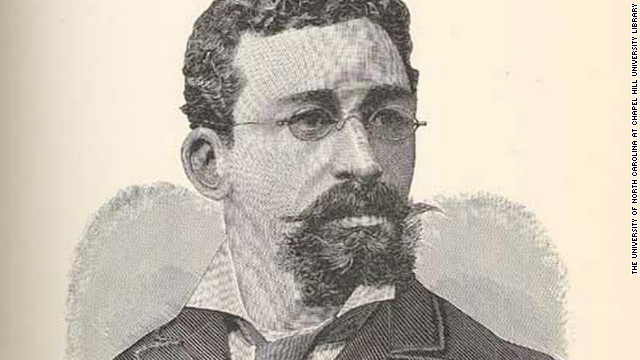
Richard Greener

As it turned out, Richard Greener was the first African-American graduate of Harvard University in 1870. He was a dean at Howard University's law school, a diplomat and a scholar. Time had faded his star, however, and by 2009 when the papers were found, Mr. Greener had passed from the fame he once enjoyed. He was largely forgotten, in spite of his incredible achievements at a time when slavery was only just ending.

Harvard University has an enormous endowment, don't they? So Mr. McDonald approached them and offered the collection of documents for their holdings.

What Harvard offered was not anywhere close to what Mr. McDonald thought he should be getting. This was Mr. Greener's diploma, the first issued to a black man by Harvard. Was there no value in history? Or was Harvard just low-balling the contractor, thinking they could put one over on him because he was not a Harvard graduate himself, and therefore not particularly bright.

It's a long way from $65,000 to $7500, as anyone who watches Pawn Stars regularly would know.

Mr. McDonald was insulted at the offer, and walked away, threatening to burn the papers if that's how Harvard felt about it.

Harvard claims that they came in low because they didn't have an appraisal in hand at the time. Which would indicate that they value history at $7500. That's what old diplomas and miscellaneous papers are worth. As if they had no idea who Mr. Greener was.

Right.

The university also says that they came back with a second, higher, offer, but Mr. McDonald says he never got a counter-offer. Mr. McDonald is also done with Harvard.

He sold another diploma and Mr. Greener's law license to the University of South Carolina for $52.000. The university was delighted to get their hands on that bit of history because the law school diploma was issued at the height of the Reconstruction Era when the school enrolled its very first African American students. For a school located in what was once slave territory, the cradle of the Civil War, the value of history is quite high indeed.

Mr. McDonald is shopping his treasure trove around, hoping that others will recognize the value of the history he uncovered in an attic in a derelict house in Englewood. Someone who realizes that the records of a man who broke ground in racial equality have more worth than the value of some old paper from some old black guy.

Wednesday, October 16, 2013

Putting In A Call To Stephen King

Here is the logic and the inevitable conclusion. As Amazon is the world's largest bookseller, and Amazon is going to start making mobile phones, then Amazon's phone will be used to ring up authors. Or audio books. Either way, it's got to be what they're planning with electronics manufacturer HTC.

The new phone would have to do something to set it apart from all the rest, and with Amazon's reach into the book market, there must surely be a connection. Possibly a voice mail message from Stephen King, asking the caller to leave a message? Or a ring tone featuring Colm Toibin sighing as he loses out on the Man Booker when it appeared to be in his grasp? And to an author who is nearly a child, not yet thirty years of age.

Business gurus see the move as an attempt by Amazon to compete against Apple and Google in devices other than e-readers. The smart phone is pushing e-readers aside, in that it can act as an e-reader but multi-task. Kindles are useful for a single purpose, and as that single purpose declines, Amazon would want to be prepared to move into the next niche.

As you'd expect, everyone involved in a potential new product is keeping quiet. There is no point in creating buzz in the market before the product is fully tested and ready for sale, especially if bugs and kinks have to be worked out. Tech types hearing rumours of problems with the phone would generate a different sort of buzz that would harm a genuine launch.

The phone would come with the Kindle app, without a doubt, along with the usual navigation tools, e-mail boxes and of course a contact list for the end user.

And for those who buy the priciest version, might there be a contact pre-loaded, a nice little perk for those leaving Apple's camp for an untried purveyor of smart phones? Who is your favorite living author, Amazon might ask as you sign up for the pre-sale, or maybe it will become a question inserted into your Amazon Prime account. Who would you like to be able to call and discuss literature, editing, plot devices or grammar?

What about Amazon Prime members?

The phone could be yet another benefit for those who sign up, something even more useful than free shipping.

Offer that, Apple or Google, if you can. But you know you can't. All the old dinosaur mobile phone companies can do is computer related. Only Amazon controls the book market, and by association, controls the authors.

You don't think if Amazon told Stephen King to take a call from some starry-eyed fan who paid a huge amount of money for the new Amazon smartphone that he wouldn't do it? There would be no doubt, especially after all the Stephen King books mysteriously disappeared from Amazon's website and the bean-counters informed him of how much he needs Amazon to reach his audience.

Assuming, of course, that Amazon and their partner HTC can develop a gadget that works as smoothly as an Apple iPhone. There is a reason that the iconic smartphone continues to sell in large numbers. Even a phone call from Stephen King can't help sales if the device is hard to use, or the keypad is slow to respond to touch, or the phone is too heavy or too thick or the battery life is painfully short.

Amazon cannot just put out a phone and expect people to buy it because it's coming from Amazon in a box with a smile on it. There has to be something unique, something to attract an audience that is already oversupplied with smartphones. It just makes sense, doesn't it? The link between books and phones?


Tuesday, October 15, 2013

Porn Recommended For You

We went to Ebay to find a replacement piece of Tupperware because we don't know anyone who sells Tupperware. Thank God for that, of course, so there's no need to feel pressured to buy things from a friend at the home of another friend with all your friends watching to see what you're buying and you can't go cheap in that kind of atmosphere.

At the end of the list that Ebay put up for us in response to our search, there were a few other related items that Ebay thought we might like since we were looking for Tupperware and you never know if something else would catch a buyer's eye.

Related, to an extent.

One of the products that Ebay thought we might like was an e-book about a Tupperware party and judging by the book's cover it wasn't anything to do with food storage items. It was porn, from the vast assortment of digital books that slide under the radar as erotica. And no, Ebay, I was not the least interested in your suggested further purchase so if you'd be good enough to not recommend anything, I'd appreciate it.

Not Suitable For Children
As you'd guess, it was self-published by someone looking to make big money out of smut, which is a growing industry. Look over the listings at self-publishing venue Smashwords and you'll find a long list of offerings. Fifty Shades of Grey got its start as self-published erotica, so it is not so far out of the mainstream as you might think.

Some journalists at the U.K.'s Mail on Sunday discovered that the explosion of self-published titles has had an unintended consequence when it comes to traditional book sellers. To compete with the likes of Amazon, the brick-and-mortar shops have an online presence that gives their clients access to all the digital books that are out there. What no one realized, or hoped would go unnoticed, is that there are in incredible number of pornographic works out there in the ether, and running a search for a harmless term can bring up some truly sick works.

Like a search for Tupperware delivered a self-published piece of smut, so too did the writers at the British newspaper discover that "daddy" has many meanings in the dark world of the pervert. A simple search of the WHSmith website for books about "daddy" resulted in a list of books trading on incest as an acceptable form of sexual activity.

WHSmith was getting their e-books via Kobo, which operates a self-publishing platform that is supposed to filter out the worst porn, but with so many titles coming online, who could possibly vet every one of them?

The partnership will have to be revised, because WHSmith is running afoul of British law by making certain Kobo titles available. For now, the book vendor's website is down, until they can figure out how to offer ebooks to their customers who might otherwise go to Amazon, without allowing the self-published trash to fall in through the gaps.

It isn't as if they want to eliminate all self-published or small indie press books. But how can a search engine filter out the erotica when search terms tend to be fairly general?

Until they can figure out that puzzle, WHSmith is not selling anything on line.

Monday, October 14, 2013

The Slow Grind Of Justice

It has been over three years since Natasha McShane was beaten on a Chicago street. At the time, the County Armagh native thought her life was just beginning. As it turned out, her life was ending.

Ms. McShane was about to start coursework at the University of Illinois at Chicago, and like all the young people in the city, she sampled the vibrant nightlife in a trendy area. Because she was a small woman, in company with another woman, she was a target for a thief who could have robbed her quite easily. He chose, instead, to beat her head in with a baseball bat before stealing her purse. She didn't have much by way of valuables or cash. She was a university student, living on a budget.

After years of wrangling between prosecutors and defense attorneys, the case is going to trial.

What defense can lawyers for Heriberto Viramontes mount? The other woman who was with Ms. McShane, who was also beaten, is prepared to stand in the witness box and testify that Mr. Viramontes was the perpetrator. She will point him out to all those present in the courtroom and swear that he is the one who took Natasha McShane's future.

Mr. Viramontes had a helper who drove him away from the scene of the crime. She has turned on him to protect herself from jail time, and she is prepared to stand in the witness box and assert that the man standing accused is the one who left Ms. McShane with such severe brain damage that she is unable to walk or talk or take care of herself at all.

Defense attorneys will argue that the witnesses are all very much mistaken.

They have no other option.

They have, as they must surely realize, very little chance of seeing their client acquitted.

Those trying to keep Mr. Viramontes from jail time on this particular charge (he's been in jail before, several times, and is no stranger to a courtroom) were unable to keep DNA evidence out of the trial, and so they cannot say that the bat in question was not used to crush Ms. McShane's skull. Her mother will testify about the extent of the injuries and the jury will sympathize with the victim, and the defense lawyer will stand up and insist that he can prove that the horrific injuries were caused by someone else other than his client because you can't trust your eyes. The witness who was also beaten is not reliable because she was traumatized and therefore easily mistaken. The accomplice is not reliable because she struck a deal to benefit herself.

Then the jury will weigh the testimony, will think about the videos of Ms. McShane as she is today, incapicated and brain damaged because she was hit over the head in a robbery. They will think about what was taken, next to nothing, and what was lost, everything.

Mr. Viramontes will then go to jail, again. The family of Natasha McShane will go home, knowing that justice was done, but their daughter is still broken and will never be made whole. But at least they can get on with their lives, knowing that the man responsible will not have another opportunity to destroy another young life.

Friday, October 11, 2013

There Is But One Direction To The Communion Rail

Life is difficult when you live in a parish where the parents are completely out of touch with the latest trends in music. Imagine that your wee little one wanted to attend the upcoming One Direction performance, and the feckin' eejits who scheduled the First Communion never thought to verify that the date they selected was open, and not the night of a rare One Direction concert?


A few modern, up-to-date parents in Limerick managed to win their youngsters' love by purchasing tickets to swoon over One Direction as the boy band winds through its latest tour. It's not as if the adults could control which gig of the three available they would buy, given the demand. When your screaming daughter threatens to hate you forever if you don't take her, you'll go with whatever you can get and be happy.

It turns out that those few lucky adults were so unfortunate as to create a scheduling conflict with their act of parental indulgence. One Direction is playing on the same day as the local parish slotted the First Communion celebration. The winners with the tickets thought it would be a simple matter of the church changing its plans, to give them enough time to get to Dublin and find a place to park, buy the requisite souvenirs, and find their seats before the first notes were sounded. The unlucky majority, made up largely of those who despise the boy band, or those who were failed to make the cut before the tickets sold out, refused to go along with the proposal to have First Communion on another, non-One Direction, day.

Such is the hardship endured by those who live in the west of Ireland, a sleepy backwater stuck in a time warp. Dublin and Cork parishes had sense enough to schedule the communion celebration in keeping with One Direction's tour dates. Those parents had no worries about conflicts, or attempts to sway their neighbors into voting to change the communion date.

Boy bands, and all the pubescent sexuality they exude, are not in keeping with the morals of the conservative Catholic faithful who would never think of doing anything that smacks of rebellion against the Church. Once the priest said what day the parish would stage the sacrament, that was it. You don't go around telling the clergy that the day doesn't work for you because your daughter will die if she doesn't get to watch five boys prance about on stage for an hour. That's disrespect, that is.

The ticket-holding parents are left with a dilemma. They can either skip a very important day in a child's Catholic life, or they can make the child a fervent atheist by forcing her to attend Mass while One Direction croons in Croke Park. Given that level of trauma, the poor child will probably never wear white again.

Those facing such an impossible choice have their recalcitrant neighbors to thank, and you can bet that they will neither forgive nor forget. Life will be very unpleasant at Gaelscoil an Raithin for a long, long time. Or at least until One Direction fades from view, like every other boy band before it.

Thursday, October 10, 2013

Not Always On Your Side

You know a relationship is on the rocks when she sings to the Feds and cooks your Spandex shorts.

For a long time, cyclist Lance Armstrong denied that he used any drugs or doping or trickery to become the best cyclist in the world. He won all those Tour de France championships on the basis of hard work alone, he insisted.

Teammates piped up and said that he did, indeed, use artificial methods to boost his performance, but since they were implicated themselves, too many people felt that they were trying to deflect blame or point fingers. What they said was little more believable than the rumours being spread by rivals.

Suddenly, it all fell apart and Lance Armstrong admitted to cheating. Not that he was alone, of course. Cycling is rife with cheating. It was his endless cycle of denial that hurt his reputation. To be found out after denying your sins is worse than if you'd confessed from the start.

What changed, to elicit his admission?

It turns out that the woman he loved, at the time at any rate, sang pretty tunes to investigators. In spite of her song lyrics, singer Sheryl Crow was not always on Lance's side.

According to an upcoming book from reporters Reed Albergotti and Vanessa O'Connell, Ms. Crowe joined her sweetheart Lance on a trip to Belgium, where he received a blood transfusion that was not medically necessary. Endurance athletes have found that extra blood cells, which carry oxygen, will provide above normal amounts of oxygen to muscles when that extra oxygen is most needed to prevent fatigue. Runners can go further at top speed before biology takes over if they over-ride the body's natural levels of red blood cells.

It is illegal because it is cheating. What an athlete's body can do is all that is allowed in contests. When they transfuse their own blood right before a match, they are not playing by the rules.

Fool that he was, Lance Armstrong thought that Ms. Crow was as supportive of him as his former wife, whom he left when it was clear he was cheating on her...with Sheryl Crow. As it turns out, the affair did not last and the couple split, leaving Ms. Crow with no incentive to protect her ex-lover's reputation.

So she sang to investigators, told them all about that trip to Belgium.

Facing charges herself if she did not answer honestly, Ms. Crow did not try to obfuscate or lie out of love for her man. Mr. Armstrong wasn't her man any more and she wasn't going to take any heat whatsoever for his sake. She owed him nothing.

WHEELMEN is due out soon, a book that promises to lay open the whole doping scandal that Lance Armstrong spent years in denying.

The lesson of his downfall? Perhaps he should have been a better partner, because we all know that "Heav'n has no Rage, like Love to Hatred turn'd, Nor Hell a Fury, like a Woman scorn'd".

Wednesday, October 09, 2013

The Birthplace of Yeats and Joyce Is Semi-literate

The studies show that the Irish people aren't as advertised. The land that gave rise to a host of literary luminaries is not quite so literate itself.

Take heart, Ireland. You're brighter than the average American. But that's hardly compensation for not ranking higher in terms of world literacy.

The Central Statistics Office carried out a survey among 6000 Irish citizens, a group encompassing all ages between 16 and 65. The test subjects answered a series of questions that measured their competence in both mathematics and reading, and did no better than average as compared to twenty-four other nations. Who wants to be average?
Worse than Japan, better than Italy

Ireland is supposed to be a highly literate nation, filled with highly educated people. It would seem that the people are not getting what they should out of that education, however. When it comes to reading food labels or solving simple problems, the Irish are not getting it done like the Japanese. The results imply that something is wrong with Irish schooling.

Where Ireland did shine was in the number of participants actually responding. Most people see a survey and chuck it in the bin, but over 80% of the Irish invitees took the time to answer the questions and return the form. Such a participation rate only makes the final results more troublesome. Consider if less than half had bothered with the survey. It would be easy enough to dismiss the results, to say that the dumbest half of the population responded so the results are skewed in the wrong direction. Sad to say, but it looks as if the majority of the Irish people are not particularly bright.

Population statistics paint an interesting and different image, however.

In the past twenty years, the percentage of young people has declined, and it is known that they are emigrating in large numbers. Ireland does not have a use for them, with the economy in the doldrums. Those left behind are not as educated, not as clever, and not able to solve problems as easily as the ones who emigrated in search of opportunity. It could be that education is getting it done, and the ones with the most to offer are boarding a plane at Dublin Airport while the rest are taking a test to gauge literacy.

When the technology companies come calling, looking for that motivated and educated work force that Ireland claims, they will turn to the survey and note that the work force isn't so very sharp after all. Little better than Poland, according to the statistics, where labor costs are a bit less and the population equally motivated to bring jobs to their struggling economy.


Monday, October 07, 2013

If You Are An Expert In Your Field

You won't often find a writer of historical fiction who is also an historian. As in doctorate in history historian.

To write believable fiction, you can research the era in which you've set your novel and use that information sparingly. Nothing is gained by inserting all you've discovered in a work of fiction because readers don't need too much information. They need room to imagine things for themselves, and the fact is, a lot of hard data drags down the narrative.

But you need a platform if you're going to get noticed in an overcrowded publishing industry.

Why not go to school and get that Ph.D. in history, and then tack on a Master's degree in Fine Arts to show you've been taught how to write creatively. With planks like that in your platform, you'll get William Clegg's attention.

Mr. Clegg represented Ashley Prentice Norton when she was after publishing a thinly veiled roman a clef. Her platform, like her novel, was based largely on her social position and attendant experiences as an heiress of the Standard Oil fortune. Marketing the book swirled around the platform, which isn't something you yourself are likely to have. There are not all that many heiresses out there in the world as a percentage of the population. It's something you're born into, not educated into.

So you won't have the likes of William Clegg calling on you unless you can come up with a better platform. Like the one Katy Simpson Smith built from university degrees.

The multi-degreed writer is represented by the WME agent, although her upcoming novel is not her first go at publication. She had her dissertation published through Louisiana State University Press. But perhaps her first love was fiction, because she also earned a Master's in Fine Arts. Can you picture her parents, wringing their hands and wondering if their daughter was becoming a professional student, staying in school forever instead of getting a job? Then when she earned a fellowship at Chicago's acclaimed Newberry Library, did they sit at home and fret over where she was headed, and if she was heading in the right direction?

At any rate, all that education paid off because Ms. Smith attracted the attention of a powerhouse literary agent who has sold her novel to Harper, at auction. There's some buzz generation for you, to get a bidding frenzy churning.

Ms. Smith's novel is set in North Carolina, which is oddly enough the very place where she earned her doctorate. The action takes place in the Revolutionary War era, an historical period that she studied in the course of preparing her dissertation on motherhood in the American south. There will be tension and adventure in the novel, which isn't likely the sort of thing you'd find in a dissertation, but novels need something to keep the reader turning pages. THE STORY OF LAND AND SEA is described as a story of a young girl hidden away by her father on a sailing ship, to protect her life.

You could have written something equivalent, but if you don't have the platform in the form of advanced education and pieces of paper to prove you're educated, Mr. Clegg is not open to new queries.

Can Ms. Smith write entertaining fiction? Readers will judge for themselves when the novel is published. What Ms. Smith has gained with her credentials is a chance to prove what she believes she can do. If she fails, Harper isn't likely to take another chance on her second novel. But at least she had an opportunity.

And she can always fall back on her degrees. Someone has to teach history, after all.

Saturday, October 05, 2013

The Success Story To Keep You Hoping

It is very rare for a self-published author to get noticed by the major publishing houses, which is why a story about one such success gives hope to those hoping to break in to the big time.

Ronald Balson is that rare case, a man who wrote a novel and couldn't get anywhere in the traditional manner with a literary agent. Now his novel ONCE WE WERE BROTHERS is about to become a movie.

Mr. Balson is not a young man. He already had a long career as a lawyer. Like many of us, he had a story in him that he wanted to share, but after he finally landed a literary agent, he found that the major publishers didn't want to share his novel with their customers. His literary agent offered all sorts of editorial input to really polish up the manuscript, but even then, there were no takers.

That he landed a literary agent is a small glitch in the do-it-yourself saga, but on the other hand, his success is a testament to the personalized query letter. He says he approached an agent who shared his mother's maiden name, and suggested they might be related. But that is a matter for another discussion.

At any rate, he wasn't content to let the story gather dust in a closet until his kids found it after his demise. Instead, Mr. Balson took advantage of the advances made by modern technology and put out his book on his own. He got copies into the hands of friends and family, as would anyone else, but in his case, the book caught on. Word of mouth sold it, and when the numbers got high enough, St. Martin's Press came calling.

It is almost unheard-of for an author to find success on his own, even those with literary agents trying to promote their manuscript.

There are stories being told that the major publishers might think of as over-told, or not unique enough, or too imitative of another author, and therefore not marketable. But the people who read and buy books are not actually being polled or sampled or focus grouped. It should be no surprise that some literary agents are becoming publishers, to get good books published digitally for clients they believe in, but can't convince one of the Big Five to believe in as well. In Mr. Balson's case, he became his own publisher with all the low overhead that is self-publishing and self-promotion and word-of-mouth advertising.

Maybe your novel will be the next success story.

You won't know unless you try.


Thursday, October 03, 2013

Offending Catholic Palates

The communion wafer that Catholics consume as part of their religious practices has no taste. It is a piece of unleavened bread, and is based on the matzah that Jews eat at Passover.

It is now part of the Kuma's Corner burger menu, and some Chicago-area Catholics are up in arms.

Watch enough of the Food Network and you'll realize that chefs are aware that many of their customers are watching a lot of the Food Network and developing some high expectations. Food isn't just for eating. It's circus. Diners have to be entertained, to have their minds tweaked as much as their palates. So it should come as no surprise that the foodies at Kuma's Corner have cooked up a new burger to freshen up the menu. It's just that some think they've gone a little too far.

The latest offering at the heavy-metal themed restaurant pays tribute to a heavy metal band from Sweden that Catholics find offensive, in that the band wears costumes implying a mockery of the Catholic clergy. Other monthly specials at Kuma's have been named for other heavy metal bands, so it's not as if Kuma's has never done this sort of thing before. The chef then selects certain elements associated with the band, and whips up a burger to fit, and the burger of the month goes on sale.

What comes out of the kitchen is usually just a sandwich with a creative collection of cheese, meat, sauce and garnish that doesn't really spell out the band being honored. It's more marketing and culinary wizardry than slavish copying.

Until someone hit on the idea that the Swedish band Ghost does this Offend-The-Catholics-themed thing and what better way to express the band's image in food than with a communion wafer and a wine reduction sauce. Oh, and a little aioli made with ghost chilis as a nod to the band's name.


And so you have the Ghost.

It's a goat burger with cheese, served on a pretzel bun. You can ask the kitchen to hold the communion wafer, if you like. It doesn't add a thing to the flavor of the burger. Sort of like the parsley or sprig of rosemary that some restaurants dump on your plate before serving, under the theory that you eat with your eyes first.

Some Catholic eaters are taking offense at the restaurant's use of something they see as a powerful symbol of their faith, turning it into a garnish. They wouldn't be fans of Ghost if they knew of the band for which the burger was named, and they aren't accepting the excuse that this particular burger is just another of Kuma's monthly specials following a familiar pattern of homage to heavy metal.

You would think they would be more deeply offended by the $17 price tag on a goat patty with a thin slice of cheese and a drizzle of sauce.

Seventeen dollars? For a sandwich? Now that's offensive.

Wednesday, October 02, 2013

Holding Pattern

After a couple of weeks, it is safe to assume that the literary agent who never responded to your query is saying no in the way that is becoming standard operating procedure among literary agents.

Circling the publishing runway
After six months, with no reponse, I had no doubt that it was a no response means no sort of response, and I moved on. I moved on to the point of getting ready to publish the manuscript, which had been a work in progress for eight years of writing, revising and rewriting. The query process had run its course, the time period in which my historical novel is set didn't appeal to agents looking for specific eras (Elizabethan or Regency), and I was sure there was an audience out there for my prose.

The manuscript was halfway to being formatted for printing, and the graphic designer was putting together some artwork for the cover. Suddenly, I was back to circling the publishing runway. An agent asked to see the full manuscript after reading the first three chapters....six months ago.

If the opening chapters didn't dazzle back then, it's not likely that all of the chapters will suddenly sparkle in one agent's eye.

But maybe. What if. And all that other nonsense that keeps us dangling, just hoping to get an agent to bite.

The manuscript is in a holding pattern, with publication delayed until the agent can take a look. How long? If it took six months to tackle thirty pages, the whole novel will require a good ten months to a year. But I don't really want to wait that long. But it's the first book of a series, and if I can get my foot in the door with the first one, I stand a good chance.

Publication is postponed until the agent either offers or rejects. Or I get tired of the waiting, the uncertainty and the stress of the whole process, and tell the graphic designer to go ahead with the cover.

In the meantime, I'll work on something else to take my mind off the submission process. If I don't write another book or research the next installment, I'll be checking my e-mails countless times a day, like a pilot asking the tower if it's time to land or time to keep circling. We don't really have any time to waste like that, do we?

Monday, September 30, 2013

To Remain Relevant, Characters Must Die

Sorry, but Mr. Darcy had to go.

The third installment of the Bridget Jones diary series is due out soon, and it appears that Mr. Darcy is no longer a part of Bridget Jones' life. She is, by all accounts, a widow in her latest incarnation. In Mr. Darcy's place is another man, with another opportunity for sexual tension and conflict to drive the narrative.

Readers may not be aware of it, but writers know that there has to be something going on in to get the reader to turn the page and keep going to the very end. There is conflict, and then there is resolution. The problem with a series lies in maintaining that conflict, and it can be very difficult when a happy ending in the first book leads to a loss of conflict if the relationship were to continue into book three.

Bridget Jones and Mr. Darcy had become a stale, dull, married couple with children. Author Helen Fielding had no place left to go with them.

So Mr. Darcy was off-loaded and Bridget Jones trucked ahead.

Ms. Fielding's fans are up in arms over it. They wanted to read more about the couple in which they'd invested time and effort. To pick up book three and discover that they are no longer a couple? Outrageous.
Helen Fielding goes afield

The author wanted to explore other social issues, and in the case of Mad About The Boy, she tackles the cougar phenomenon. It's perfect for Bridget Jones, of course, because the first book was all about finding the right man. Now the character can go through the same process, but with a slight twist. Ms. Fielding has aged Bridget to fifty years of age, and the character is set to pursuing a man approaching thirty.

Conflict. Sexual tension. There can't be any of that in a story about a happily married couple with children. Some wit, yes, along with some humourous situations, but the plot line had run its course as far as Ms. Fielding could judge.

She's gone not too far afield, in that latest offering explores a topic that is of greater interest to older women. What Ms. Fielding also recognizes is that those who first jumped into the diary of Bridget Jones are now ten years older, and they have different worries than they once did when they were single and looking for love like the title character of Ms. Fielding's novel. Her decision to look at December-May romance fits the demographic.

And since the fictional couple was happily married, how else would Ms. Fielding get rid of Mr. Darcy than by natural death? Divorce would not ring true, and a divorce would spoil the sense that readers developed of a satisfying conclusion to the literary romance. An accident or an unknown heart defect or whatever was required to keep the characters in character, but move the narrative in a new direction.

The possibilities that open up for a widow provide plenty of topics to develop tension and move a narrative. With Mr. Darcy gumming up the works, the narrative couldn't move.

Fans of Bridget Jones are disappointed now, but when book number four comes out, they'll have accepted the loss of Mr. Darcy and moved on. Rather like the Bridget Jones character herself.

Saturday, September 28, 2013

We Are The Lowbrow Nation

The National Endowment for the Arts is alarmed. The United States is become a nation of knuckle-dragging Philistines. Lowbrow, non-intellectual Neanderthals whose minds are going mushy.

We do not read "Literature" any more.

Some of us do, of course. Some of us even write "Literature" and sell it to our fellows in the culturati, but there apparently are fewer of us.

Among adults, the number who read a novel in the past year has dropped from the year before. Only 46.9% of  American adults read a book that they did not have to read for work. That they read for entertainment. Less than half.

The numbers for poetry reading sank as well, and those numbers were already low. Of course, if you compare the poetry of Byron or Keats to the stuff that's being written now, it's understandable. Modern writing just doesn't reach the average person who did not major in English or obtain an MFA from a prestigious institution.

Looks like a work of non-fiction in his hands
People are still reading, but not as much, and not just fiction. Overall, just over half of all adults read something, but that something is increasingly becoming a work of non-fiction. The trend is especially true in men, but there is a tendency among the male of the species to use books as a way to learn something. The average guy is more likely to pick up a manual on plumbing repairs than a novel about family dysfunction because he has a leaking faucet to deal with and a book about heartbreak isn't going to stop that leak.

The NEA, which depends on taxpayer support to keep going, would like to figure out how to make their little bureacracy more relevant so that the taxpayers don't start demanding that their funding gets cut because the NEA is a pure waste of money. But how can some government agency encourage people to read for fun?

Look at the disaster that has been the government's efforts to get kids to eat wholesome foods in their school lunches. Little wonder that the First Lady is veering off onto a new campaign to encourage everyone to drink more water. Whether or not she can convince anyone to do something as easy as that is another matter, and the NEA faces the same difficulty.

How can they make people believe that modern writers are creating works worth reading? With most people totally occupied at earning enough to keep a roof overhead and food on the table, how can the NEA promote an activity that takes up time we don't have?

Not everyone has access to a public library where they can get books for free, either. The cost of a book, even an e-book downloadable to a smart phone, can be prohibitive when more than half the population is scratching for loose change to pay a utility bill. Books become a luxury, like going to see a movie, and Hollywood can tell you that movie attendance is down from where it once was when times were good and money was available.

So, break out, America. Read a novel. Download one or all four of these novels from Newcastlewest Books, and re-discover the cheap vacation that you can enjoy by getting lost in a book about a different time and a different place and a different set of conflicts to be resolved.

Friday, September 27, 2013

The Flight Of The Best And Brightest Earls

Emigration has long been a part of Irish life. You could point to the Flight of the Earls, when the great chiefs of Ireland escaped to Spain in 1607, after losing the Battle of Kinsale to the British invaders. The old form of social order, with clans ruled by chiefs, was gone for good and things would never be the same. It would take another four hundred years to get out from under British rule, and even now the English control six of Ireland's counties.

The enormous outflow of people during Black '47 is legendary, and there again, Ireland lost a huge piece of its population. They say the nation has yet to recover, with fewer people on the island today than there were before the potato blight wiped out millions.

Even after the worst of the famine, Irish men and women left their homes for more opportunity and chances for advancement. Many found success in America, and then set about exporting rebellion to aid those they left behind. But they themselves did not go back.

On into the Twentieth Century, there was a continous outflow of those who wanted to achieve but could not get ahead in a backward country. It was the young who left, those with the energy and stamina to endure the difficulties of making a new life in a strange place. Armed with an education, they brought their gifts to other places, like America or Canada or Australia or England, and the investments made by Irish taxpayers were lost, to benefit foreign countries.


A large swath of Ireland's youth emigrated in the 1970s and 1980s, so many of the best and brightest that songwriter Liam Reilly took notice. He wrote a song about it, a song that laments the exodus. The repercussions of that exodus are being felt strongly today, with the parents of the emigrants now too old to care for themselves, and too old to move away to join their children. The nursing homes are forever short of beds, and the government is left to care for them.

History is repeating itself.

A recent study from University College Cork has found that Ireland's best and brightest are on the move yet again,  taking their taxpayer-funded educations and talents with them. Approximately 62% of recent emigrants had a third-level education.

It's the same old story. Young people grow up, work hard in school, and then discover that there is nothing much for doing in their homeland. The jobs aren't there. The opportunity isn't there. They look to the future and see nothing waiting for them.

So they go elsewhere. And once they've settled in to their new home, and started in on raising a family, they don't go back.

The concern lies in the future outlook, one in which there are not enough doctors because they left after they got their medical degrees. There will not be enough skilled tradesmen to build new things because they lit out for Australia and Canada. The same holds true for any other profession, from accountants to bankers. All that will be left are the uneducated, those without drive to improve themselves and so, without the drive to improve their country. Businesses won't locate their international headquarters in a sleepy backwater lacking an educated population to fill jobs, and so Ireland could slide back into poverty.

Another bloody Flight of Earls.

Wednesday, September 25, 2013

Form Used To Follow Function

The Stock Exchange, before demolition
Once upon a time, Louis Sullivan designed buildings that were unlike anything previously seen.

He was, perhaps, a star architect of his era.

His buildings were constructed from the inside out, to make usable spaces that were also beautiful on the outside. Times and tastes changed, however, and he ended up designing little boxes for banks in small towns in the American middle west.

What did not change was his motto, that form follows function. He thought that buildings should work for those inside, and from there the architect could design a facade that made the structure attractive to those outside.

That was then, in another era, when buildings were decorated with elaborate terra cotta and cast iron motifs that reflected the prairie from which Chicago rose.

Today's starchitects are all about the facade, about making sculptures that attract attention and bring in the commissions from those who would like to put their name on a building that reflects some attention back on them.

The Valencia skyline
As the people of Valencia, Spain, have discovered, Santiago Calatrava is a huge star in his field, but he's not Antonio Gaudi.

Bogged down in debt, the taxpayers of Valencia are asking why their leaders thought it was a good idea to borrow heavily to build Mr. Calatrava's City of the Arts and Science. The project is so far over budget that the budget seems more like a fairy tale than real numbers, and there is no indication that the buildings are going to improve the financial picture of Valencia.

The architect earned a considerable amount of money, as you'd expect. He's a star.

What the people have ended up with are buildings that don't work. The form doesn't allow for the function. It's just a form that doesn't look like anything else that's been done before, but looks aren't everything.

One critic has pointed out that someone earning millions of euro in salary should not have forgotten to include elevators and fire escapes in a science museum. Those are just basic necessities. Even Louis Sullivan managed the elevator business, down to the exquisite doors that fronted them.

Windows leak. Several seats at the opera house are behind pillars, where the lack of a view to the stage would require some pretty steep discounts on the seat price. You don't recoup costs very quickly if you can't charge full price.

It is one thing to create works of art to be admired from many angles. It is quite another to try to cram a building into a work of art and then tell everyone that the structure will work just fine for its intended purpose.

That takes hubris. Which is what you'd expect to find in a star architect who commands millions of euro in commissions.

Form used to follow function. Today's big name architects have forgotten the old lessons in a rush to make something new and make a big name. Unfortunately for the taxpayers paying for the public buildings designed by the starchitects, they need the function more than the form.