To write in the genre known as Southern Gothic, an author must have mastery of a spreadsheet program to keep track of the characters and the twists that the plot takes.
Or, you could try to untangle what is actually happening in a small West Virginia hamlet and go from there.
I just finished reading Julia Keller's A KILLING IN THE HILLS (and posted a review on Goodreads), so the story out of West Virginia drew my attention. In the novel, Ms. Keller's protagonist is a prosecutor in a small burg where the drug trade is destroying the community. It turns out that the drug trade really is destroying a very real community, with fiction mirroring fact.

In the tiny town of Williamson, the local sheriff was gunned down and it was assumed it was a revenge killing. Eugene Crum had been elected on his strong anti-drug stance and his determination to root out the drug lords. As the coal industry has collapsed in West Virginia, the drug trade has blossomed, taking advantage of the isolation and the lack of jobs. To earn a few dollars, some people are desperate enough to work at any trade, including drug smuggling, if that's what it takes to put food on the table.
The murder of a law enforcement officer while on duty cannot go unpunished or uninvestigated. This particular investigation, however, has taken a most curious turn.
Judge Michael Thornsbury has been arrested on charges of conspiracy involving an affair with his secretary and an attempt to railroad her husband as a way to punish her for breaking off the affair. That, it turns out, is only a small part of the corruption that bubbles through the community.
One thing led to another, and now there are charges lodged against a police officer related to the judge's conspiracy. That, in turn, brought on charges of extortion leveled at a county commissioner, none of it directly related to Mr. Crum's murder.
It gets more murky, however, and this is where Southern Gothic gets dark.
The murdered sheriff was said to be part of the very drug trade he was supposed to be destroying, and Judge Thornsbury was accused of involvement in yet another conspiracy to protect the dead man's reputation when rumours began to swirl. Which begs the question, did Mr. Thornsbury do so out of loyalty to a political supporter, or out of loyalty to a drug kingpin who controls trade in the Williamson area? Or is the judge that kingpin?
After the police arrested a man and charged him with murder, it wasn't long before the accused's father said his boy was mentally challenged. Did he read Julia Keller's novel as well? Because the father then added that his son had been molested in his teens by the sheriff, so there's reason enough to kill a person twenty years later. Nothing to do with the drugs trade, or protecting the privileged few who have run things in the town for decades.
Friends of the sheriff have come to his support, denying the link to illegal prescription drug sales.
The FBI is attempting to untangle the mess, chasing down leads and talking to people who are not likely to give unbiased opinions. After all, the FBI will eventually go home to Washington, D.C., while the citizens of Williamson will be left behind, to face whatever retribution might be handed out by those who mange to cling to power.
If you're looking for a plot line for a murder mystery set in the backwoods of the Appalachian Mountains, you need look no further than a real-life case with real people living in a sewer of real corruption. Good luck in keeping track of the disparate threads that run through the plot, leading to dead ends and cul-de-sacs and roundabouts.
But that's what makes Southern Gothic fiction so fascinating to read.
Tuesday, September 24, 2013
Monday, September 23, 2013
When It's Time To Change Import Policies
The borders are too porous, and that fact was brought home this past weekend in Monaghan. The danger of a certain export filtering across the border between the Republic of Ireland and Northern Ireland must be addressed immediately.
I speak of the child beauty pageant.
Toddlers and Tiaras, from Texas with love to a populace eager to try anything that smacks of America...no matter how denigrating it might be.
Universal Royalty Beauty Pageant brought their circus to Castleblayney and moms across Ireland thought that they had their chance at last, to promote their daughter as the next Honey Boo Boo and reap the rewards of all that bad taste. It's understandable, to an extent. The people who settled in the Appalachian region of the United States came from Ulster, so it's almost like their descendants were returning the favor.
Thanks a million, really, but no thanks.
The original venue for the pageant cancelled when they learned exactly what sort of thing the Universal Royalty people were about. Sexualizing young girls, putting them in full make up and big hair, is not generally seen as a desirable activity. Given the history of child sexual abuse in Ireland, making children up to look like grown women has a certain cachet that is not acceptable.
The pageant organizers make money off the contest in the entry fees, only part of which are returned to the participants as prizes for being the most non-child-like in appearance. There is an entire industry devoted to bringing out the inner Lolita in every little girl, and one firm has determined that the market is ripe for development in Ireland, of all places. Sure people aren't running to Mass every Sunday, but they haven't escaped from decades of moral principles that are instilled from birth by mothers who were raised the same way.
Instead of the Bracken Court Hotel in Dublin, the competition was staged in the beer garden of Corrigan's Kitchen in County Monaghan, which seems more appropriate of a venue for an Irish-based festival. That it had to move out of the Republic to find a place to hold the contest may perhaps be a testament to Irish mammies disapproving of such a thing, or there was not a suitable place anywhere else to put on the show.
If they had called it the Lovely Girls Competition, and asked a few local priests to judge the contest, maybe then they wouldn't have made such a fuss at the Bracken Court Hotel. Some things imported direct from the States must be modified to fit the market, which will be devastated if something isn't done to monitor what's coming in from across the Atlantic.
I speak of the child beauty pageant.
Toddlers and Tiaras, from Texas with love to a populace eager to try anything that smacks of America...no matter how denigrating it might be.
| Eight going on eighteen |
Universal Royalty Beauty Pageant brought their circus to Castleblayney and moms across Ireland thought that they had their chance at last, to promote their daughter as the next Honey Boo Boo and reap the rewards of all that bad taste. It's understandable, to an extent. The people who settled in the Appalachian region of the United States came from Ulster, so it's almost like their descendants were returning the favor.
Thanks a million, really, but no thanks.
The original venue for the pageant cancelled when they learned exactly what sort of thing the Universal Royalty people were about. Sexualizing young girls, putting them in full make up and big hair, is not generally seen as a desirable activity. Given the history of child sexual abuse in Ireland, making children up to look like grown women has a certain cachet that is not acceptable.
The pageant organizers make money off the contest in the entry fees, only part of which are returned to the participants as prizes for being the most non-child-like in appearance. There is an entire industry devoted to bringing out the inner Lolita in every little girl, and one firm has determined that the market is ripe for development in Ireland, of all places. Sure people aren't running to Mass every Sunday, but they haven't escaped from decades of moral principles that are instilled from birth by mothers who were raised the same way.
Instead of the Bracken Court Hotel in Dublin, the competition was staged in the beer garden of Corrigan's Kitchen in County Monaghan, which seems more appropriate of a venue for an Irish-based festival. That it had to move out of the Republic to find a place to hold the contest may perhaps be a testament to Irish mammies disapproving of such a thing, or there was not a suitable place anywhere else to put on the show.
Saturday, September 21, 2013
When You Can't Distinguish Fiction From Non-Fiction
She's a lovely girl, who once had a dream of breaking into fashion modeling. By the way, she is not, in fact, HIV positive. That part is a fiction. The problem is, those who saw this image believed fiction to be real, and so Avril Nolan has taken the photo agency to court.
Ms. Nolan had a portfolio, as would any other young lady trying to land jobs in modeling. She no doubt spent a great deal of money in having that porfolio put together so that it would be professional and display her features in the most attractive way. Now 33, she has moved on in her career and is in the publicity game in New York City. Those two-year-old photos, however, remain with the photo agency like artifacts of another era.
At some point, the agency found an old picture and thought it would work well for an advertising campaign being run by the New York State Division of Human Rights. The government agency is keen to normalize the image of the HIV patient, to show all of New York that such a person is not some drug addict or gay male. No, the HIV positive population includes your average (albeit strikingly pretty) young lady who could be sitting next to you on the bus looking just like anyone you might know. Assuming you know some attractive people.
For her new friends in New York, it must surely have been a startling revelation to see a younger version of their Avril looking back at them from the page of AM New York, touting her HIV positiveness. They'd had no idea of her past, and would it be safe to shake her hand again? What about her boyfriend, can you imagine what he would have thought when presented with this bit of advertising fiction that wasn't clearly labeled as fiction?
According to her lawsuit, Ms. Nolan claims that she never issued any sort of release for the photo, and so the agency licensed it to Getty Images illegally. They had no right to use it for their own purposes without first asking her permission. They certainly had no business profiting off something they did not own, which she owns, and for which she never earned anything but pain and suffering and humiliation.
To make matters worse, she is in publicity and her clients might not have been pleased to discover that their PR person was HIV positive because that doesn't imply the leading of a pure and faultless life. If she wasn't into drugs, then, she must have been into unsafe sex and if she can't be trusted to look after her own health, how can she be trusted to look after someone's account?
It's a straightforward case, in that the original photo agency admits she hadn't signed a release. As for Getty Images, they can't be blamed if they bought a picture on false pretenses, unless they are required to have the model's release in hand when they use a licensed image. In which case, they didn't, and the lawsuit will most likely be settled out of court.
What of the Division of Human Rights in New York that once trumpeted how they are all about protecting the rights of HIV positive people? They may have to go back and re-visit the old advertising campaign, to clearly state the genre in which they're publishing their advert. The cover image is pure fiction. The content is genuine. It's that, or find an equally attractive but genuinely HIV positive model and make the lot a work of non-fiction that doesn't humiliate anyone.
Ms. Nolan had a portfolio, as would any other young lady trying to land jobs in modeling. She no doubt spent a great deal of money in having that porfolio put together so that it would be professional and display her features in the most attractive way. Now 33, she has moved on in her career and is in the publicity game in New York City. Those two-year-old photos, however, remain with the photo agency like artifacts of another era.
At some point, the agency found an old picture and thought it would work well for an advertising campaign being run by the New York State Division of Human Rights. The government agency is keen to normalize the image of the HIV patient, to show all of New York that such a person is not some drug addict or gay male. No, the HIV positive population includes your average (albeit strikingly pretty) young lady who could be sitting next to you on the bus looking just like anyone you might know. Assuming you know some attractive people.
For her new friends in New York, it must surely have been a startling revelation to see a younger version of their Avril looking back at them from the page of AM New York, touting her HIV positiveness. They'd had no idea of her past, and would it be safe to shake her hand again? What about her boyfriend, can you imagine what he would have thought when presented with this bit of advertising fiction that wasn't clearly labeled as fiction?
According to her lawsuit, Ms. Nolan claims that she never issued any sort of release for the photo, and so the agency licensed it to Getty Images illegally. They had no right to use it for their own purposes without first asking her permission. They certainly had no business profiting off something they did not own, which she owns, and for which she never earned anything but pain and suffering and humiliation.
To make matters worse, she is in publicity and her clients might not have been pleased to discover that their PR person was HIV positive because that doesn't imply the leading of a pure and faultless life. If she wasn't into drugs, then, she must have been into unsafe sex and if she can't be trusted to look after her own health, how can she be trusted to look after someone's account?
It's a straightforward case, in that the original photo agency admits she hadn't signed a release. As for Getty Images, they can't be blamed if they bought a picture on false pretenses, unless they are required to have the model's release in hand when they use a licensed image. In which case, they didn't, and the lawsuit will most likely be settled out of court.
What of the Division of Human Rights in New York that once trumpeted how they are all about protecting the rights of HIV positive people? They may have to go back and re-visit the old advertising campaign, to clearly state the genre in which they're publishing their advert. The cover image is pure fiction. The content is genuine. It's that, or find an equally attractive but genuinely HIV positive model and make the lot a work of non-fiction that doesn't humiliate anyone.
Friday, September 20, 2013
The Manuscript In The Attic
Noted scholar and beer summit attendee Henry Louis Gates Jr. ran across an antique manuscript at an auction and decided to buy it. The handwritten pages were, as far as he could judge, a novel that was written in the 1850s by a former slave who had run from her master. Other than that, he knew nothing about the author, but he published her novel as another narrative of African-American history.
Was The Bondwoman's Narrative written by a woman? Without any proof as to the author's real identity, the sheets could have been inked by just about anyone. Was the story based on actual events or was it largely fiction? There again, without an actual person of record, the novel might or might not be authentic. It was published based on certain assumptions that were unproven in 2002.
English professors do more than teach English, and Gregg Hecimovich of Winthrop University turned detective to find out if the purported author, Hannah Crafts, was a real person, a woman, and a slave.
He started with the novel, a semi-autobiographical treatise, and figured out which slave owner and plantation fit the narrative. By combing through documents, wills, and dusty archives, he was able to figure out that there was indeed a slave woman named Hannah Bond who was owned by the Wheeler family of North Carolina.
The pieces fit in as he uncovered more connections between Ms. Bond and the incidents she described from her position as Mrs. Wheeler's maid. The professor was able to trace Ms. Bond's story from the plantation to her escape and sanctuary with the Crafts family in New Jersey. In the anti-slavery North, she was able to find work as a schoolteacher and eventually married, at some point penning her novel and then leaving it tucked into a desk drawer to be discovered by chance and then purchased by someone in a position to have it published.
Scholars are proclaiming the depth of Mr. Hecimovich's research, and how he tried to determine how a slave could have gained enough education to be able to read and write. In addition, Mr. Hecimovich found evidence that Ms. Bond had access to works of literature that were current in her day, including novels by Charles Dickens and the Bronte sisters. At a time when it was illegal to educate a slave, Ms. Bond learned, to the point where she was able to teach others.
That it happened, and the novel is proof of her literacy, is a fascinating aspect that was not evident until the author's identity was determined.
With evidence that validates much of the novel, the world as seen by a lady's maid in bondage becomes more real. Mr. Hecimovich will publish his findings, and his book will become a companion piece to Ms. Bond's words, giving them context and adding to the historical record. Until an actual slave woman could be tied to the novel, there was no certainty that the stories told in the book were more than some author's flights of fancy. The research changes all that, over ten years after the novel was first published.
At first, The Bondwoman's Narrative was a novel of questionable origin. Now it is a research document that cannot be excluded by anyone writing about life in the United States in the 1850s. At the time, the issue of slavery was driving politics and the average citizen had an opinion. So must your characters, if your historical novel is to have the necessary degree of realism.
Was The Bondwoman's Narrative written by a woman? Without any proof as to the author's real identity, the sheets could have been inked by just about anyone. Was the story based on actual events or was it largely fiction? There again, without an actual person of record, the novel might or might not be authentic. It was published based on certain assumptions that were unproven in 2002.
English professors do more than teach English, and Gregg Hecimovich of Winthrop University turned detective to find out if the purported author, Hannah Crafts, was a real person, a woman, and a slave.
He started with the novel, a semi-autobiographical treatise, and figured out which slave owner and plantation fit the narrative. By combing through documents, wills, and dusty archives, he was able to figure out that there was indeed a slave woman named Hannah Bond who was owned by the Wheeler family of North Carolina.
The pieces fit in as he uncovered more connections between Ms. Bond and the incidents she described from her position as Mrs. Wheeler's maid. The professor was able to trace Ms. Bond's story from the plantation to her escape and sanctuary with the Crafts family in New Jersey. In the anti-slavery North, she was able to find work as a schoolteacher and eventually married, at some point penning her novel and then leaving it tucked into a desk drawer to be discovered by chance and then purchased by someone in a position to have it published.
Scholars are proclaiming the depth of Mr. Hecimovich's research, and how he tried to determine how a slave could have gained enough education to be able to read and write. In addition, Mr. Hecimovich found evidence that Ms. Bond had access to works of literature that were current in her day, including novels by Charles Dickens and the Bronte sisters. At a time when it was illegal to educate a slave, Ms. Bond learned, to the point where she was able to teach others.
That it happened, and the novel is proof of her literacy, is a fascinating aspect that was not evident until the author's identity was determined.
With evidence that validates much of the novel, the world as seen by a lady's maid in bondage becomes more real. Mr. Hecimovich will publish his findings, and his book will become a companion piece to Ms. Bond's words, giving them context and adding to the historical record. Until an actual slave woman could be tied to the novel, there was no certainty that the stories told in the book were more than some author's flights of fancy. The research changes all that, over ten years after the novel was first published.
At first, The Bondwoman's Narrative was a novel of questionable origin. Now it is a research document that cannot be excluded by anyone writing about life in the United States in the 1850s. At the time, the issue of slavery was driving politics and the average citizen had an opinion. So must your characters, if your historical novel is to have the necessary degree of realism.
Thursday, September 19, 2013
To Live Like A Guinness
Imagine how much improved your writing would be if you had your pens and reams of paper positioned in the room above. Can you see your laptop propped open on the desk, your notes scattered nearby?
The imagination would flow freely as you placed your characters in an historic setting. Perhaps they would be contemplating rebellion in the American colonies, or the revolution brewing in France. They might be servants from below stairs, secretly sharing their admiration for bold Robert Emmett.
How about a novel set in the era of the Great Famine, in which one of the Protestant Ascendancy is fearing retribution from the starving tenants? Or perhaps you'd examine the conflict between poor Irish Catholics and the wealthy Protestant landlords in 1916, during the Easter Rising and then after, when ethnic cleansing saw the removal of the British aristocracy from Irish soil. And what if one of your wealthy landlords was a Guinness? One of THE Guinnesses who brewed a stout that became iconic, that continued to sell in the poorest places during the hardest of times.
If you have upwards of three million euro on hand, you could be doing just that.
Patrick Guinness, a seventh generation Guinness, bought Furness House, the old family pile, some years back, planning to restore it to its former glory. It had fallen on hard times over the years, and there were many years. The original home was built in the 1730s. As you can imagine, there is a lot of upkeep needed in such an ancient building and the place had been let go as the owners found the cost of repair to be prohibitive.
Even Mr. Guinness gave up on the rehab project, and he has decided to try selling the partially renovated abode once again. Opening bids will begin at three million and go from there.
At that price, it's a relative bargain. You won't find this sort of detailed plasterwork in any modern McMansion, nor will you find a stairway built of Spanish chestnut in a place designed by some starchitect. The grooves worn into the steps cannot be reproduced but must be scuffed in by centuries of feet climbing the stairs, Guinness feet that walked through Ireland's history.
There are other unique features on the grounds as well, including the ruins of a Norman church. What adventures your characters could have in such a setting. How well you could write about them if you were there.
If you have the cash, ring up Richard Doyle at DNG Naas and put in your bid. Then line up your pens or charge your laptop, and get ready to write like you've never written before.
The imagination would flow freely as you placed your characters in an historic setting. Perhaps they would be contemplating rebellion in the American colonies, or the revolution brewing in France. They might be servants from below stairs, secretly sharing their admiration for bold Robert Emmett.
How about a novel set in the era of the Great Famine, in which one of the Protestant Ascendancy is fearing retribution from the starving tenants? Or perhaps you'd examine the conflict between poor Irish Catholics and the wealthy Protestant landlords in 1916, during the Easter Rising and then after, when ethnic cleansing saw the removal of the British aristocracy from Irish soil. And what if one of your wealthy landlords was a Guinness? One of THE Guinnesses who brewed a stout that became iconic, that continued to sell in the poorest places during the hardest of times.
| Furness House |
Patrick Guinness, a seventh generation Guinness, bought Furness House, the old family pile, some years back, planning to restore it to its former glory. It had fallen on hard times over the years, and there were many years. The original home was built in the 1730s. As you can imagine, there is a lot of upkeep needed in such an ancient building and the place had been let go as the owners found the cost of repair to be prohibitive.
Even Mr. Guinness gave up on the rehab project, and he has decided to try selling the partially renovated abode once again. Opening bids will begin at three million and go from there.
At that price, it's a relative bargain. You won't find this sort of detailed plasterwork in any modern McMansion, nor will you find a stairway built of Spanish chestnut in a place designed by some starchitect. The grooves worn into the steps cannot be reproduced but must be scuffed in by centuries of feet climbing the stairs, Guinness feet that walked through Ireland's history.
There are other unique features on the grounds as well, including the ruins of a Norman church. What adventures your characters could have in such a setting. How well you could write about them if you were there.
If you have the cash, ring up Richard Doyle at DNG Naas and put in your bid. Then line up your pens or charge your laptop, and get ready to write like you've never written before.
Wednesday, September 18, 2013
The Kids Are On Ice
Technology is outpacing the legal system. The problem for the legal system is that it must respond, and set precedent. It's the last thing the average judge wants to do.
The Illinois Supreme Court is going to hear a case brought by an unmarried couple who are squabbling over possession of their frozen offspring.
So right there you can imagine Judge Judy giving those two an earful for playing house and then coming to the court to solve their problems when there are no laws on the books that can help them.
The case at hand boils down to a child custody issue, except the child isn't born yet. Or even in utero. It's sitting in a tank of liquid nitrogen in a lab, on hold.
If the baby-to-be is defrosted and implanted, and then becomes a live child, the former boyfried becomes a father but he doesn't want to be a father any more. Even though the mom-in-waiting says she won't sue for child support, that baby would link the couple together forever. What if the future mom expects future dad to be involved in baby's life when he wants nothing to do with fatherhood? No surprise that he doesn't want his ex to gain custody of the frozen embryos, out of concern that he won't just be some anonymous sperm donor.
Karla Dunston put off having children until her career was set, but when she was diagnosed with non-Hodgkins lymphoma she knew that her fertility was about to disappear in a blast of chemotherapy. She had a boyfriend who wanted to support her emotionally. She knew she could freeze embryos now, undergo chemo, recover from her disease and then have a baby, so it made sense to head to the fertility clinic. Modern science was providing her with a means to achieve her dream of motherhood, in spite of illness.
All well and good, until the relationship soured and Jacob Szafranski didn't want to father a child with her any longer. They weren't together. What was the point?
The point is, Ms. Dunston wants to have a baby and she wants those frozen embryos. Mr. Szafranski claims that allowing the embryos to be implanted is a violation of his rights. It's like he's being forced into fatherhood when he doesn't want to be a father.
The right-to-life crowd will take the side of the frozen embryos and demand that they have legal representation so their chilled voices can be heard. There will be those who insist that the woman has the right to an abortion so she has a right to motherhood as well, if that's her choice. Men's rights groups will scream loudly about making a guy pay for something he didn't sign up for.
Except, you see, Mr. Szafranski did.
It's not as if the folks at the fertility clinic raped him to collect his sperm. He was a willing participant at the time.
What technology has granted him is an opportunity to entertain second thoughts, and his second thoughts have come after the affair ended. There are plenty of men out there who have second thoughts at the same period in the relationship, but the girl is already pregnant and it's too late to turn back. Right now, Ms. Dunston isn't pregnant. Technology allowed her to postpone the normal course of pregnancy.
But there are still three frozen embryos in that cryogenic tank at Northwestern Memorial Hospital.
Will the judges decide that once the first step is taken, you're in it for the rest of the journey? Or can they issue a decree granting Ms. Dunston's wishes but turning Mr. Szafranski into an anonymous sperm donor, free and clear of all responsibility to his potential offspring? And how can they make their decree binding when all it takes is a phone call from Ms. Dunston to some future Mrs. Szafranski to suggest they get the kids together so the Dunston baby can meet its half-siblings?
Technology runs at a rapid pace while the law plods along on a rutted path. The Illinois Supreme Court judges have a difficult case before them, which means their political clout has a difficult case to influence. Has Mr. Szafranski considered a hefty political donation to Alderman Ed Burke to sway the judges towards his way of thinking? You know, the one whose wife is a Supreme Court judge.
The Illinois Supreme Court is going to hear a case brought by an unmarried couple who are squabbling over possession of their frozen offspring.
So right there you can imagine Judge Judy giving those two an earful for playing house and then coming to the court to solve their problems when there are no laws on the books that can help them.
The case at hand boils down to a child custody issue, except the child isn't born yet. Or even in utero. It's sitting in a tank of liquid nitrogen in a lab, on hold.
If the baby-to-be is defrosted and implanted, and then becomes a live child, the former boyfried becomes a father but he doesn't want to be a father any more. Even though the mom-in-waiting says she won't sue for child support, that baby would link the couple together forever. What if the future mom expects future dad to be involved in baby's life when he wants nothing to do with fatherhood? No surprise that he doesn't want his ex to gain custody of the frozen embryos, out of concern that he won't just be some anonymous sperm donor.
Karla Dunston put off having children until her career was set, but when she was diagnosed with non-Hodgkins lymphoma she knew that her fertility was about to disappear in a blast of chemotherapy. She had a boyfriend who wanted to support her emotionally. She knew she could freeze embryos now, undergo chemo, recover from her disease and then have a baby, so it made sense to head to the fertility clinic. Modern science was providing her with a means to achieve her dream of motherhood, in spite of illness.
All well and good, until the relationship soured and Jacob Szafranski didn't want to father a child with her any longer. They weren't together. What was the point?
The point is, Ms. Dunston wants to have a baby and she wants those frozen embryos. Mr. Szafranski claims that allowing the embryos to be implanted is a violation of his rights. It's like he's being forced into fatherhood when he doesn't want to be a father.
The right-to-life crowd will take the side of the frozen embryos and demand that they have legal representation so their chilled voices can be heard. There will be those who insist that the woman has the right to an abortion so she has a right to motherhood as well, if that's her choice. Men's rights groups will scream loudly about making a guy pay for something he didn't sign up for.
Except, you see, Mr. Szafranski did.
It's not as if the folks at the fertility clinic raped him to collect his sperm. He was a willing participant at the time.
What technology has granted him is an opportunity to entertain second thoughts, and his second thoughts have come after the affair ended. There are plenty of men out there who have second thoughts at the same period in the relationship, but the girl is already pregnant and it's too late to turn back. Right now, Ms. Dunston isn't pregnant. Technology allowed her to postpone the normal course of pregnancy.
But there are still three frozen embryos in that cryogenic tank at Northwestern Memorial Hospital.
Will the judges decide that once the first step is taken, you're in it for the rest of the journey? Or can they issue a decree granting Ms. Dunston's wishes but turning Mr. Szafranski into an anonymous sperm donor, free and clear of all responsibility to his potential offspring? And how can they make their decree binding when all it takes is a phone call from Ms. Dunston to some future Mrs. Szafranski to suggest they get the kids together so the Dunston baby can meet its half-siblings?
Technology runs at a rapid pace while the law plods along on a rutted path. The Illinois Supreme Court judges have a difficult case before them, which means their political clout has a difficult case to influence. Has Mr. Szafranski considered a hefty political donation to Alderman Ed Burke to sway the judges towards his way of thinking? You know, the one whose wife is a Supreme Court judge.
Tuesday, September 17, 2013
Lost Again
Books are expensive and there's a long line ahead of me waiting for new releases at the public library, so I took the plunge. I signed up with Penguin. Gave them my e-mail. Let them send me their adverts and alerts.
Sure there's a sucker born every minute.
Penguin runs a contest every month, in which participants (like me, and there must be thousands of us) can take a chance on winning an advance copy of upcoming releases. The idea is to get reviews out there when the book hits the market officially, with all that pre-release buzz that is generated by influential bloggers and book reviewers.
Clearly I'm not influential. Could that be the issue?
I've been receiving the e-mail offer of entry for several months, and every time I get it I scan the books and read the cover copy. What might I like to read, I ask as I scroll through. No romance. No self-help. Some fiction. Some non-fiction.
And every month I get a response that advises me that I have not won.
Again.
But by all means, here's a link to easily buy a copy of the book for yourself! How kind of Penguin, to make things so easy.
How about a little cash to cover the cost of the book, Penguin? I don't have it.
So for all the effort, I get nothing more for free than access to the opening pages. I could review those, I suppose. Let potential buyers know if the book caught my interest or if it seemed like a long slog that they'd be advised not to undertake.

But it's not all that convenient to get to the excerpt. At least St. Martin's Press has the generosity to send me the first twenty pages of their new releases every week, through the Read It First program. They don't apply pressure to buy the book, either.
Will I give up on Penguin? Not yet. There's that element of gambling involved, the thrill that's not unlike buying a lottery ticket and waiting for the numbers to be drawn. You're not likely to win that, either, but it is a little exciting to imagine the possibilities.
This month, I lost the Penguin book give-away contest again.
Next month, I'll try again.
If, by some miracle, I remember the titles of the books I requested but didn't win when they finally come around to the shelf at the library, I might read them. And review them. But by that time, it will be old news.
Sure there's a sucker born every minute.
Clearly I'm not influential. Could that be the issue?
I've been receiving the e-mail offer of entry for several months, and every time I get it I scan the books and read the cover copy. What might I like to read, I ask as I scroll through. No romance. No self-help. Some fiction. Some non-fiction.
And every month I get a response that advises me that I have not won.
Again.
But by all means, here's a link to easily buy a copy of the book for yourself! How kind of Penguin, to make things so easy.
How about a little cash to cover the cost of the book, Penguin? I don't have it.
So for all the effort, I get nothing more for free than access to the opening pages. I could review those, I suppose. Let potential buyers know if the book caught my interest or if it seemed like a long slog that they'd be advised not to undertake.
But it's not all that convenient to get to the excerpt. At least St. Martin's Press has the generosity to send me the first twenty pages of their new releases every week, through the Read It First program. They don't apply pressure to buy the book, either.
Will I give up on Penguin? Not yet. There's that element of gambling involved, the thrill that's not unlike buying a lottery ticket and waiting for the numbers to be drawn. You're not likely to win that, either, but it is a little exciting to imagine the possibilities.
This month, I lost the Penguin book give-away contest again.
Next month, I'll try again.
If, by some miracle, I remember the titles of the books I requested but didn't win when they finally come around to the shelf at the library, I might read them. And review them. But by that time, it will be old news.
Monday, September 16, 2013
The Third Rail
Politicians and pundits often refer to some sensitive issue as being the third rail of "insert area needing solution here". Most people these days are too busy to listen to politicians and pundits dissect the difficult problems of the day, so of course they have no idea what a third rail is, let alone why it's deadly.
Because people aren't listening to politicians and pundits, and they don't know about third rails, they're dying.
What other explanation can there be for the Chicago Transit Authority's new marketing campaign?
The CTA is noticing an uptick in third rail-related deaths, so it's clear that the average train rider doesn't know about the third rail and why you shouldn't touch it. The signs posted along the tracks aren't doing the the trick, and so something more must be done to make people aware of the rail that provides the electricity that makes the trains go.
A new campaign has been launched to tell people to stay off the tracks, which you'd think was common sense, given that the third rail carries 600 volts of electricity which is more than enough to electrocute anyone who comes in contact.
The posters that will soon appear in Chicago area train stations are there to remind commuters that if they drop their cell phone on the tracks, consider it lost because if you jump down on the tracks to pick it up, you'll die. There is no poster down there on the actual third rail that warns you, right at the spot of possible contact, that you are well within range of 600 volts, so there will be no explicit warning about the rail itself. The poster is where it is to discourage people from going down to track level in the first place, so they don't actually have to encounter the third rail.
How much good the posters will do to advise those who are too drunk to see straight is a problem that won't be solved by slapping colorful pieces of paper on a wall. It's often the inebriated who can't stand up without wobbling who tend to tumble off the platform, and because they are impaired, are most likely to flail around until they hit the third rail and fry their personal electrical system.
What about the distracted ones who find themselves on the wrong platform and make a dash across the tracks to get to the opposite side by crossing the tracks instead of using the overhead crosswalk? If they are in such a rush, they aren't likely to peruse the warning posters before climbing off the platform and picking their way across the ties.
The better solution is to instruct the children in the time-honored manner in which they were once taught to respect the third rail. Every mother in Chicago and the surrouding suburbs should bring the kids to an 'El' platform and point to the third rail, adopt an ominous tone, and assure the little ones that if they touch that thing they'll die immediately. Then repeat the warnings on a regular basis until the lesson becomes ingrained and a new generation knows about the third rail.
That's easier than trying to reach busy adults who don't listen to politicians and pundits so they never stop to ask what the third rail is and why it is so untouchable.
| Third rail with contact shoe |
Because people aren't listening to politicians and pundits, and they don't know about third rails, they're dying.
What other explanation can there be for the Chicago Transit Authority's new marketing campaign?
The CTA is noticing an uptick in third rail-related deaths, so it's clear that the average train rider doesn't know about the third rail and why you shouldn't touch it. The signs posted along the tracks aren't doing the the trick, and so something more must be done to make people aware of the rail that provides the electricity that makes the trains go.
A new campaign has been launched to tell people to stay off the tracks, which you'd think was common sense, given that the third rail carries 600 volts of electricity which is more than enough to electrocute anyone who comes in contact.
The posters that will soon appear in Chicago area train stations are there to remind commuters that if they drop their cell phone on the tracks, consider it lost because if you jump down on the tracks to pick it up, you'll die. There is no poster down there on the actual third rail that warns you, right at the spot of possible contact, that you are well within range of 600 volts, so there will be no explicit warning about the rail itself. The poster is where it is to discourage people from going down to track level in the first place, so they don't actually have to encounter the third rail.
How much good the posters will do to advise those who are too drunk to see straight is a problem that won't be solved by slapping colorful pieces of paper on a wall. It's often the inebriated who can't stand up without wobbling who tend to tumble off the platform, and because they are impaired, are most likely to flail around until they hit the third rail and fry their personal electrical system.
What about the distracted ones who find themselves on the wrong platform and make a dash across the tracks to get to the opposite side by crossing the tracks instead of using the overhead crosswalk? If they are in such a rush, they aren't likely to peruse the warning posters before climbing off the platform and picking their way across the ties.
The better solution is to instruct the children in the time-honored manner in which they were once taught to respect the third rail. Every mother in Chicago and the surrouding suburbs should bring the kids to an 'El' platform and point to the third rail, adopt an ominous tone, and assure the little ones that if they touch that thing they'll die immediately. Then repeat the warnings on a regular basis until the lesson becomes ingrained and a new generation knows about the third rail.
That's easier than trying to reach busy adults who don't listen to politicians and pundits so they never stop to ask what the third rail is and why it is so untouchable.
Friday, September 13, 2013
A Brief History of the Financial Collapse
In today's Irish Times you'll find an intriguing article that dissects the cause of the recent financial panic that has landed us in the spot we're in today. That is, skint.
Written so that non-financiers can understand the complex deals, the article is fascinating and informative. And more than a little depressing, in that risky behavior that was seen as reckless on the heels of the Depression in the 1930s was allowed to flourish, as if a market collapse couldn't happen again. The story focuses largely on Lehmann Brothers, which went bankrupt and exposed the rotten core that was propping up the property market.
You may not look at financial matters the same way again, when you see how large sums of money made sensible people a bit mad.
The link is below. Go on and read it. Be informed.
Origins of the Great Recession - Economic News | Ireland & World Economy Headlines |The Irish Times - Thu, Sep 12, 2013
Written so that non-financiers can understand the complex deals, the article is fascinating and informative. And more than a little depressing, in that risky behavior that was seen as reckless on the heels of the Depression in the 1930s was allowed to flourish, as if a market collapse couldn't happen again. The story focuses largely on Lehmann Brothers, which went bankrupt and exposed the rotten core that was propping up the property market.
You may not look at financial matters the same way again, when you see how large sums of money made sensible people a bit mad.
The link is below. Go on and read it. Be informed.
Origins of the Great Recession - Economic News | Ireland & World Economy Headlines |The Irish Times - Thu, Sep 12, 2013
Thursday, September 12, 2013
The Feminization Of Men
| It isn't the beer, gentlemen |
First, you have to keep in mind that the baby boom generation is well into middle age, and they represent a big portion of the population. They've influenced society since the day they were born, if only because there are so many of them, and it stands to reason that they will continue to exert a strong effect on society until they've all died off.
Yes, we are a wussified country. There is a legitimate reason, one with endocrinological origins that, to date, has no cure.
I am talking about estrogen.
It's the hormone that women have in abundance, until they reach menopause with its hot flashes and night sweats, weight gain and stray hairs sprouting on the chin. So far, scientists have focused their attention on estrogen as it relates to female health. Who would have guessed that a hormone associated with women would be a factor in male aging as well?
The study is new and there is much to be learned, but scientists have found that men produce estrogen and it has a profound influence on their aging bodies. Like a pubescent girl, they add fat but it doesn't create a shapely figure like it does in women. No, it lands in the gut where a guy will blame his beer drinking or lack of exercise when it's his body turning him into a semi-female.
So you have all these aging baby boomer men, and even though their levels of estrogen are declining, they are cranking out estrogen at higher levels than their female counterparts. It can only mean that the guys are getting feminized, the guys who are more likely to be involved in politics or vote. And it isn't just that their muscles get smaller and weaker, like a woman's muscles. Estrogen works on the brain as well, to screw up libido and chickify male thought.
When men think more like women, they're more inclined to talk out conflict rather than engage in a fight to settle differences. They're far more likely to see football as too violent, and call for more safety measures that make the game....less dangerous.
All this time, scientists were looking at declining testosterone levels in aging males, thinking that they had identified the source of the problem. Thousands of men are taking supplements to boost their testosterone, but it turns out that their estrogen levels are largely at fault, in ways not fully understood.
You know what that means, of course. Those ads for Low-T are going to start putting fears of Low-E into a guy's head, and men will become so terrified of turning into women that they'll flock to their doctors for prescriptions.
Then they'll watch football and cheer for the most violent hits and mock those who want changes to helmets to reduce concussions. In which case, you'd want to buy stock in whatever pharmaceutical company that is selling the cure for a disease that isn't actually disease, but a process of natural aging.
Because we can't sit idly by and watch our nation turn into a country of wimps and girly-men.
Wednesday, September 11, 2013
Romeo And Juliet Were Only Kids
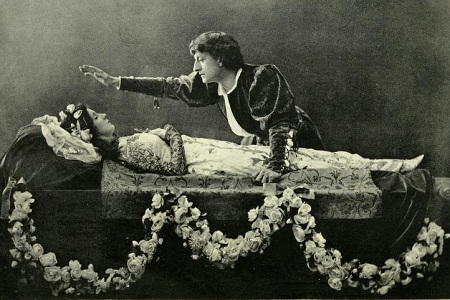
At some point when you're studying Shakespeare's Romeo and Juliet, someone will inform you that Juliet was all of fourteen. They were a couple of kids, back in the day when marriages were arranged early because people tended not to live long. If a family was to keep itself going, the parents had to move on the engagement.
With modern life spans extending easily into the eighty-year range, we see fourteen-year-olds as children. They are far from mature, and certainly not grown up enough to deal with serious relationships.
A little dumb, as well, at that age. With a tendency to act on impulse, without thinking.
And so we have the story of a real-life Romeo and Juliet, a pair of fourteen-year-old kids who were in love, or so they thought, and they were stuck with parents who were trying to keep them apart.
If Shakespeare's Romeo had a car, there's no telling where the story might have gone. The tale of Braxton Wood and Jayden Thomas played out as that original might have, but for the lack of easy transportation.
And yes, you do have to be sixteen to drive but when a kid is breaking the law, well, what's one more violation?
Mr. Wood took his parent's car and spirited his beloved Jayden away, from their home in Michigan to the nearest big city. Which would be Chicago. Once they had gotten away from those who sought to separate them, they discovered that they needed more of a plan than just getting away. Money would have been useful. Very useful.
Once the pair reached Chicago, they had no money and no place to go. They lived in the car, which provided shelter, but lacked amenities like indoor plumbing and bathing facilities. If they knew the city better, they might have been able to drive to a location near a beach house with showers, but alas there's that financial issue again. And there was always the risk that some policeman would see Braxton driving and wonder if the kid was old enough to drive and pull him over and there goes the whole escape plan.
A local man spotted the kids in the car after seeing a story about them on the local news, and recognized their faces. He called authorities, and you can bet that the star-crossed lovers were glad to be found. No one can live on love alone. The occasional Happy Meal goes a long way to keeping the flame alive.
They are back home in Michigan again, to face the parents who wanted to cool the romance.
Will their adventure bring them closer together? Or will they now drift apart?
There's your writing prompt for the week. You could make an interesting bit of YA fiction about a couple of kids who think they're madly in love forever and forever. You, as an adult, have a pretty good idea of how these things usually end up. Or how you would like other kids to think they'll turn out. Parents always appreciate a little outside help when they're dealing with teens whose brains aren't developed enough to understand all the consequences of a given action. Like running away without knowing where to go or how to support yourself.
With modern life spans extending easily into the eighty-year range, we see fourteen-year-olds as children. They are far from mature, and certainly not grown up enough to deal with serious relationships.
A little dumb, as well, at that age. With a tendency to act on impulse, without thinking.
And so we have the story of a real-life Romeo and Juliet, a pair of fourteen-year-old kids who were in love, or so they thought, and they were stuck with parents who were trying to keep them apart.
If Shakespeare's Romeo had a car, there's no telling where the story might have gone. The tale of Braxton Wood and Jayden Thomas played out as that original might have, but for the lack of easy transportation.
And yes, you do have to be sixteen to drive but when a kid is breaking the law, well, what's one more violation?
Mr. Wood took his parent's car and spirited his beloved Jayden away, from their home in Michigan to the nearest big city. Which would be Chicago. Once they had gotten away from those who sought to separate them, they discovered that they needed more of a plan than just getting away. Money would have been useful. Very useful.
Once the pair reached Chicago, they had no money and no place to go. They lived in the car, which provided shelter, but lacked amenities like indoor plumbing and bathing facilities. If they knew the city better, they might have been able to drive to a location near a beach house with showers, but alas there's that financial issue again. And there was always the risk that some policeman would see Braxton driving and wonder if the kid was old enough to drive and pull him over and there goes the whole escape plan.
A local man spotted the kids in the car after seeing a story about them on the local news, and recognized their faces. He called authorities, and you can bet that the star-crossed lovers were glad to be found. No one can live on love alone. The occasional Happy Meal goes a long way to keeping the flame alive.
They are back home in Michigan again, to face the parents who wanted to cool the romance.
Will their adventure bring them closer together? Or will they now drift apart?
There's your writing prompt for the week. You could make an interesting bit of YA fiction about a couple of kids who think they're madly in love forever and forever. You, as an adult, have a pretty good idea of how these things usually end up. Or how you would like other kids to think they'll turn out. Parents always appreciate a little outside help when they're dealing with teens whose brains aren't developed enough to understand all the consequences of a given action. Like running away without knowing where to go or how to support yourself.
Monday, September 09, 2013
An Appeal To County Pride, or, There Is A Sucker Born Every Minute
If a bank robber robs banks because that is where the money is, then it stands to reason that a scammer would scam ex-pats in America because the money surely is not in Ireland these days.
With that in mind, a clever Irishman launched a scam that trades on the pride of Mayo men and women in the U.S. For the first time in generations, there is a good chance that Mayo could take the Sam Maguire and the excitement has rendered many of them senseless. After so many years, it stands to reason that enthusiasm and hope would beat out cynicism and common sense.
The scammer has been ringing up Mayo supporters in several American cities with large Irish populations. These hard working immigrants who have done well in their own businesses are being offered an opportunity to advertise their business on a sports-themed website. The victims have been told that their money is going to support the Gaelic football team. When it's your home town lads, you're more likely to open your wallet without giving it another thought, and that is what the scammer has been counting on, with some success.
There isn't much in Mayo, which can boast of the monument to the Famine immigrants who perished on coffin ships as they sailed away from their blighted land. It's not a wealthy county, by any means, and its local GAA football team hasn't done much to make the residents brag about their athletic prowess. That this year could be the year has some so enthralled that they are eager to help out in the only way they can if they can't be at Croke Park to cheer on the team. Instead of buying a ticket, a fan might reason, the money could be donated to help the team with all the expenses that come with travel to a distant place like Dublin.
There is no money going to the Mayo team. It's all going to the man who created the fraud. By most accounts, he's met with some success, while the businessmen who fell for his sales pitch are out of pocket.
So if someone calls to ask for donations for whatever GAA team you might be supporting from abroad, just hang up.
Unless you wish to be one of those suckers who is born every minute.
| Is this Mayo's year? |
The scammer has been ringing up Mayo supporters in several American cities with large Irish populations. These hard working immigrants who have done well in their own businesses are being offered an opportunity to advertise their business on a sports-themed website. The victims have been told that their money is going to support the Gaelic football team. When it's your home town lads, you're more likely to open your wallet without giving it another thought, and that is what the scammer has been counting on, with some success.
| Monument to the Famine victims |
There isn't much in Mayo, which can boast of the monument to the Famine immigrants who perished on coffin ships as they sailed away from their blighted land. It's not a wealthy county, by any means, and its local GAA football team hasn't done much to make the residents brag about their athletic prowess. That this year could be the year has some so enthralled that they are eager to help out in the only way they can if they can't be at Croke Park to cheer on the team. Instead of buying a ticket, a fan might reason, the money could be donated to help the team with all the expenses that come with travel to a distant place like Dublin.
There is no money going to the Mayo team. It's all going to the man who created the fraud. By most accounts, he's met with some success, while the businessmen who fell for his sales pitch are out of pocket.
So if someone calls to ask for donations for whatever GAA team you might be supporting from abroad, just hang up.
Unless you wish to be one of those suckers who is born every minute.
Saturday, September 07, 2013
That Was Then, Now It's Closing
We all mourn the demise of an independent book shop, knowing that some community is losing an element that makes the place more civilized. Every time a store closes, someone mentions Amazon and its power to set prices, not pay local taxes because it does not exist anywhere, and generally crush the competition.
Sometimes, however, a shop goes out of business because times have changed while the store has not.
Such is the case of Giovanni's Room in Philadelphia, Pennsylvania. It is one of the oldest bookstores serving the gay community (which includes all sub-genres of homosexuality such as lesbians, bisexuals, transgender et al.), but that is the problem. The community once served is not as marginalized as it was when the shop relocated in 1976. Almost forty years later, it is slated to close.
Relative to the over-all book-buying public of Philadelphia, the place was serving a small community. The niche market was large enough to support the shop when that was all there was, but when other options came available, the business went into a decline.
Owner Ed Hermance has waxed nostalgic over the heady days when the AIDS epidemic was first recognized, a time when causes and cures were largely unknown and rumour was substituted for knowledge. His shop served a critical function back then, by providing literature and information that was factual. No one else bothered with it because it was relevant to a community that was under-served, except by Mr. Hermance.
These days, information about AIDS is available online, direct from multiple sources.
The niche book seller lost a piece of his niche, but had nothing else with which to fill the gap.
The niche is not hunkered down trying to hide in the shadows, either. People have more support in the community at large than they once did, and coming out to your friends does not require a poetry reading at an indie bookshop that caters to a specific subset of the population.
Giovanni's Room once served a purpose, but the purpose has been lost to a changing attitude that has seen openly gay politicians win public office while their constituents yawn at the announcement of sexual orientation. Grand, so, but can you get the trash picked up and lower our taxes and bring jobs to the place? is what matters to voters these days.
It is always sad to see a small shop close up, no longer there to provide the personal service or recommendations that make a local book store such a pleasure, in a way that Amazon can never match. But in a way, it is a victory for acceptance of a small population that was once on the fringes of society. The need for a shop catering specifically to gay people, where they can feel comfortable, is no longer as necessary as it was in 1973.
That's progress. It's a good thing, in one way. Acceptance has made Giovanni's Room redundant, with the niche it once filled no longer existing in a size large enough to support an entire bookstore. For those who enjoyed the store and considered it their local shop, where they knew people and could find friendly faces when they walked through the door, it isn't such a great day at all.
Sometimes, however, a shop goes out of business because times have changed while the store has not.
Such is the case of Giovanni's Room in Philadelphia, Pennsylvania. It is one of the oldest bookstores serving the gay community (which includes all sub-genres of homosexuality such as lesbians, bisexuals, transgender et al.), but that is the problem. The community once served is not as marginalized as it was when the shop relocated in 1976. Almost forty years later, it is slated to close.
Relative to the over-all book-buying public of Philadelphia, the place was serving a small community. The niche market was large enough to support the shop when that was all there was, but when other options came available, the business went into a decline.
Owner Ed Hermance has waxed nostalgic over the heady days when the AIDS epidemic was first recognized, a time when causes and cures were largely unknown and rumour was substituted for knowledge. His shop served a critical function back then, by providing literature and information that was factual. No one else bothered with it because it was relevant to a community that was under-served, except by Mr. Hermance.
These days, information about AIDS is available online, direct from multiple sources.
The niche book seller lost a piece of his niche, but had nothing else with which to fill the gap.
The niche is not hunkered down trying to hide in the shadows, either. People have more support in the community at large than they once did, and coming out to your friends does not require a poetry reading at an indie bookshop that caters to a specific subset of the population.
Giovanni's Room once served a purpose, but the purpose has been lost to a changing attitude that has seen openly gay politicians win public office while their constituents yawn at the announcement of sexual orientation. Grand, so, but can you get the trash picked up and lower our taxes and bring jobs to the place? is what matters to voters these days.
It is always sad to see a small shop close up, no longer there to provide the personal service or recommendations that make a local book store such a pleasure, in a way that Amazon can never match. But in a way, it is a victory for acceptance of a small population that was once on the fringes of society. The need for a shop catering specifically to gay people, where they can feel comfortable, is no longer as necessary as it was in 1973.
That's progress. It's a good thing, in one way. Acceptance has made Giovanni's Room redundant, with the niche it once filled no longer existing in a size large enough to support an entire bookstore. For those who enjoyed the store and considered it their local shop, where they knew people and could find friendly faces when they walked through the door, it isn't such a great day at all.
Thursday, September 05, 2013
A Fallen Giant
| Algona's jewel box |
Nothing brings that home more than the recently completed restoration of this little box in Algona, Iowa, one of the last buildings that Mr. Sullivan designed before he died penniless.
The father of the skyscraper was reduced to designing tiny buildings in remote Iowa towns, so far had he fallen from public favor and acclaim. The exquisite ornamentation for which he was famous had passed out of style, perhaps helped along by the Prairie School designs of former Sullivan pupil Frank Lloyd Wright.
| Chicago's Auditorium Building |
In 1913, when the loan and realty office was erected in Algona, the public wanted simplicity and Louis Sullivan gave them what they wanted, using simpler decorations and stained glass windows to create a structure that was suited to its purpose but a feast for the eyes. Not many people would have seen the building when it was first opened. Algona was a remote little town, far from the glory of a big city like Chicago.
Iowa has its share of other late Sullivan buildings which are called "jewel boxes" for their small size and beauty. By the time Louis Sullivan was drawing out the plans for these gems, he was lost in an alocholic haze.
Did he fall because he was addicted to booze or did he become addicted to booze as a way to numb the pain of rejection as he fell?
Imagine a man with such talent and insight, with a strong vision of how buildings should look. He believed in a certain relationship between the people served by his buildings and the appearance of the facades. Ornament was part of that relationship, but the general public turned its back on his form of ornamentation.
When the 1893 World's Fair was in its planning stages, Louis Sullivan had strong opinions on what the place should look like, a showcase of American architecture of which he was, at the time, a leader. Instead, the world was given Greek Revival and buildings meant to look like ancient temples. The architect's frustration must have been immense, but was that because he was already turning to liquor and so his bitterness exploded?
Louis Sullivan was a complex man, at once a genius and troubled. He would make a perfect character for an historical novel set in Chicago, a man at the top of his game but not aware that he is about to fall off a cliff of his own, or perhaps his rivals', making.
Wednesday, September 04, 2013
Bundling: The Sharing Of A Bed By An Unmarried Couple, and Google's New Marketing Gimmick
Naturally, I'm going with the old concept of bundling because I'm a publisher of historical fiction and I'm more likely to run across characters who bundle than a publisher who sticks to modern commercial fiction.
Yet it is appropriate to look at the archaic definition of bundling to get a sense of what Amazon plans to do in October when they start bundling.
Amazon will let those who buy hard copies of books purchase the digital version of the same book at a steep discount.
Sort of like getting to share a bed with the one you love, but there's a board between you that's meant to keep you separate. What good is the bed, in that case, if you can't use it to its fullest? You have to roll over the board when the parents aren't looking, or listening, if you're to get anywhere.
By the same token, Amazon is going to take advantage of the absence of the now illegal agency pricing model. Before, the publishers set the prices of their e-books and screamed mightily when Amazon wanted to peg them all to a $9.99 point. Now, Amazon can dictate harsher terms to the publishers who don't have a lot of leverage against the biggest purveyor of e-books around.
Amazon is proclaiming the new bundling option as a way to increase market share, but how many people are going to buy a hard copy and an e-book of the same book? Do you really need two books?
The e-book is still cheaper than the paper book, so if you're looking to save a little money, you'd go with the e-book and realize that you're still better off than if you bought two versions of the same words.
How many people are so avid in their reading that they'd want to be able to pick up where they left off without having to haul the book around? Are these the same sorts of bibliophiles who like to have the real thing to put on a shelf in the library of their spacious flats, but prefer the convenience of the e-reader as they jet around Europe? There can't be that many of them, or at least not enough to make a big uptick in sales.
Newcastlewest Books is joining in the experiment which we don't expect will go anywhere for those of us who publish on a small scale and see the preponderance of our sales in digital. But just the same, here's the plug. Buy a hard copy of THE KING OF THE IRISH in October from Amazon and get the digital version for $1.99.
Go ahead and bundle.
Back in the day, those boards didn't keep man and woman apart anyway. Bundling hard copies and e-versions doesn't seem to be any more effective at doing what it's advertised to do.
Yet it is appropriate to look at the archaic definition of bundling to get a sense of what Amazon plans to do in October when they start bundling.
| Bundling |
Sort of like getting to share a bed with the one you love, but there's a board between you that's meant to keep you separate. What good is the bed, in that case, if you can't use it to its fullest? You have to roll over the board when the parents aren't looking, or listening, if you're to get anywhere.
By the same token, Amazon is going to take advantage of the absence of the now illegal agency pricing model. Before, the publishers set the prices of their e-books and screamed mightily when Amazon wanted to peg them all to a $9.99 point. Now, Amazon can dictate harsher terms to the publishers who don't have a lot of leverage against the biggest purveyor of e-books around.
Amazon is proclaiming the new bundling option as a way to increase market share, but how many people are going to buy a hard copy and an e-book of the same book? Do you really need two books?
The e-book is still cheaper than the paper book, so if you're looking to save a little money, you'd go with the e-book and realize that you're still better off than if you bought two versions of the same words.
How many people are so avid in their reading that they'd want to be able to pick up where they left off without having to haul the book around? Are these the same sorts of bibliophiles who like to have the real thing to put on a shelf in the library of their spacious flats, but prefer the convenience of the e-reader as they jet around Europe? There can't be that many of them, or at least not enough to make a big uptick in sales.
Newcastlewest Books is joining in the experiment which we don't expect will go anywhere for those of us who publish on a small scale and see the preponderance of our sales in digital. But just the same, here's the plug. Buy a hard copy of THE KING OF THE IRISH in October from Amazon and get the digital version for $1.99.
Go ahead and bundle.
Back in the day, those boards didn't keep man and woman apart anyway. Bundling hard copies and e-versions doesn't seem to be any more effective at doing what it's advertised to do.
To Encourage Student Interest In Trinity College Dublin
Universities these days are competing for the best and the brightest. Which leads the administration to wonder what sort of amenities might attract that highly desirable student population.
Trinity College Dublin has found an answer, and it's a wonder some other prestigious institution of higher learning didn't think of it already. Or have the courage, after thinking of it, to put the plan into motion.
Any college would provide a shop, or a few shops, on campus to provide for the basic needs of the students. The scholars need their bags of crisps and hot tea to go. They would not consider a school that did not offer them an on-campus site so that they could easily grab a few groceries or a box of laundry soap. It's all about convenience for the students, whose schedules are tight.
But would any other school include an off-license establishment where the hard-working pupils could purchase the fuel that keeps your average student going? Where else are you going to buy alcohol on campus, without having to hunt out a supplier? How grand is that, to buy your beer and not have to lug it for miles through the streets of Dublin?
Local residents are outraged at the prospect of making it easier for college students to drink, what with the amount of drinking that's already going on. In some minds, putting the typical, which is to say interested in consuming adult beverages, in such close proximity to a source of alcohol would only exacerbate the problem. At least that is the tack taken by those who are dead set against the off-license. It's as if the university is condoning the sort of anti-social behavior that is associated with drunken TCD-ites, with all their public urination and vomiting and general rudeness. Let them go over to the nearest Spar and at least have to walk off some of their excessive intake in the coming and going.
All the complaints went for naught as An Bord Pleanala upheald the decision of the city council. Chances are, more than a few of the board members have fond memories of their younger days, when they could only dream of having an off-license so close at hand. And then there might be one or two who would rather the students stayed on campus and kept their anti-social behavior there instead of spreading it over the local streets.
Looking to further your education, and prepare yourself for the future? Of course you are. But now you can do it in an atmosphere of absolute convenience for you, the student of Trinity College Dublin. TCD is looking out for you. Where else are you going to find that level of care and concern? Why are you wasting your time filling out applications for other schools?
Trinity College Dublin has found an answer, and it's a wonder some other prestigious institution of higher learning didn't think of it already. Or have the courage, after thinking of it, to put the plan into motion.
| Trinity College Dublin |
But would any other school include an off-license establishment where the hard-working pupils could purchase the fuel that keeps your average student going? Where else are you going to buy alcohol on campus, without having to hunt out a supplier? How grand is that, to buy your beer and not have to lug it for miles through the streets of Dublin?
Local residents are outraged at the prospect of making it easier for college students to drink, what with the amount of drinking that's already going on. In some minds, putting the typical, which is to say interested in consuming adult beverages, in such close proximity to a source of alcohol would only exacerbate the problem. At least that is the tack taken by those who are dead set against the off-license. It's as if the university is condoning the sort of anti-social behavior that is associated with drunken TCD-ites, with all their public urination and vomiting and general rudeness. Let them go over to the nearest Spar and at least have to walk off some of their excessive intake in the coming and going.
All the complaints went for naught as An Bord Pleanala upheald the decision of the city council. Chances are, more than a few of the board members have fond memories of their younger days, when they could only dream of having an off-license so close at hand. And then there might be one or two who would rather the students stayed on campus and kept their anti-social behavior there instead of spreading it over the local streets.
Looking to further your education, and prepare yourself for the future? Of course you are. But now you can do it in an atmosphere of absolute convenience for you, the student of Trinity College Dublin. TCD is looking out for you. Where else are you going to find that level of care and concern? Why are you wasting your time filling out applications for other schools?
Tuesday, September 03, 2013
I'm Rich
It pays to read. In a way. Not that it's a lucrative activity, but when you add up all the e-books and divide byseventy-three cents and, well, actually, I'm not rich. I don't fit the class for which a settlement has been reached.
American readers who bought e-books for their Kindle from Amazon have been notified that they are in line for refunds from certain publishers, such as Hachette or Penguin. The publishers are being punished for going along with the agency model that was put into place when Apple was getting ready to open the iBookstore, an arrangement that the U.S. court decided was in violation of anti-trust legislation.
So you, the lucky Amazon Kindle book purchaser, will get a reward for the suffering that you endured because Apple and the major publishing houses tried to set e-book prices, sometimes lower than the price set by Amazon.
How will you spend your windfall?
You have few options. In fact, you have a single option.
The amount that the court decreed was a just punishment to the publishers will appear as a credit on your account when next you buy from Amazon.
Who is being punished?
The agency model was designed to counter Amazon's attempt to monopolize the e-book market, and the behemoth stands to gain as the publishers pay the price of collusion. Book buyers get nothing if they do not buy from Amazon, but if you're disgusted with Amazon, you have no choice but to forgo the bonus or swallow your pride and boost Amazon's bottom line.
Maybe you'd rather have a cheque to use as you'd like, but that is not the court's decision. Instead, Amazon stands to gain even more. Why buy the latest best-seller from some other source when you're going to get the book cheaper at Amazon by cashing in your credit?
It doesn't make sense, does it? But that's how these settlements often work out.
If you're determined to use the credit because who can pass up free money these days, why not use it for some fine Irish historical fiction? There are no less than four novels that are well worth reading, and you can easily download them to your Kindle from the Smashwords website. If Amazon is going to get rich, at least you can get richer through fiction that is both enlightening and intriguing.
So you, the lucky Amazon Kindle book purchaser, will get a reward for the suffering that you endured because Apple and the major publishing houses tried to set e-book prices, sometimes lower than the price set by Amazon.
How will you spend your windfall?
You have few options. In fact, you have a single option.
The amount that the court decreed was a just punishment to the publishers will appear as a credit on your account when next you buy from Amazon.
Who is being punished?
The agency model was designed to counter Amazon's attempt to monopolize the e-book market, and the behemoth stands to gain as the publishers pay the price of collusion. Book buyers get nothing if they do not buy from Amazon, but if you're disgusted with Amazon, you have no choice but to forgo the bonus or swallow your pride and boost Amazon's bottom line.
Maybe you'd rather have a cheque to use as you'd like, but that is not the court's decision. Instead, Amazon stands to gain even more. Why buy the latest best-seller from some other source when you're going to get the book cheaper at Amazon by cashing in your credit?
It doesn't make sense, does it? But that's how these settlements often work out.
If you're determined to use the credit because who can pass up free money these days, why not use it for some fine Irish historical fiction? There are no less than four novels that are well worth reading, and you can easily download them to your Kindle from the Smashwords website. If Amazon is going to get rich, at least you can get richer through fiction that is both enlightening and intriguing.
Thursday, August 29, 2013
The Newborns Are Safe, Aren't They?
That is the question that women will be asking of the staff at University Maternity Hospital in Limerick from here on. If it's so easy for a thief to lift items from the maternity ward, it stands to reason that a mother would be worried about her most valuable possession being taken as well.
Recently, Jill Leonard went to the hospital to deliver her second child and things did not go as smoothly as anyone would have wished. She had carried well past her due date, and in the end, Ms. Leonard had to undergo a C-section. To say that she and partner Adrian O'Connor were stressed beyond reason is an understatement. There is little more frightening to a couple than to have a discussion with an obstetrician that entails things like fetal distress, surgery and potential side effects.
The last thing either parent were thinking about was the security of the ward where Ms. Leonard would recover after delivery.
After enduring the operation, and with the anesthesia wearing off, Ms. Leonard was keen to share the news with family and friends. Originally from the United States, she wanted to use her smartphone to send the sort of immediate pictures, videos and images that make the distance seem much smaller.
Her phone, as she soon discovered, was gone. Along with her wallet, and all her cash and credit cards contained therein.
You would think that the wards of a maternity hospital would be secure, given the threat of baby kidnapping. Apparently, the ward at the maternity hospital in Limerick is far from secure. Ms. Leonard's handbag was rifled and she was robbed while she was in the operating room.
While she recovers from what is a major operation, Ms. Leonard must deal with the theft of her personal and business credit cards. The thief has her home address, her business address, and enough of her identification material to steal her identity with relative ease. Knowing that some criminal knows where you live is not a pleasant sensation, especially for someone feeling particularly vulnerable.
The hospital's response is to recommend that women in labor not bring smartphones, money, credit cards, or anything of value to the hospital. This is not the first time a woman's things have been taken from the maternity ward, it has been suggested. You would hope that the gardai are at least taking a good, long look at anyone employed by the hospital with access to the ward, someone who would know that a patient was in surgery and would be gone for a certain period of time. It doesn't sound like a particularly difficult investigation. Unless the ward is open to anyone who happens to wander by.
What's next? Recommending that babies not be left unattended? Is it any wonder that home birth is growing in popularity? At least you can lock the front door to keep the thieves out.
Recently, Jill Leonard went to the hospital to deliver her second child and things did not go as smoothly as anyone would have wished. She had carried well past her due date, and in the end, Ms. Leonard had to undergo a C-section. To say that she and partner Adrian O'Connor were stressed beyond reason is an understatement. There is little more frightening to a couple than to have a discussion with an obstetrician that entails things like fetal distress, surgery and potential side effects.
The last thing either parent were thinking about was the security of the ward where Ms. Leonard would recover after delivery.
After enduring the operation, and with the anesthesia wearing off, Ms. Leonard was keen to share the news with family and friends. Originally from the United States, she wanted to use her smartphone to send the sort of immediate pictures, videos and images that make the distance seem much smaller.
Her phone, as she soon discovered, was gone. Along with her wallet, and all her cash and credit cards contained therein.
You would think that the wards of a maternity hospital would be secure, given the threat of baby kidnapping. Apparently, the ward at the maternity hospital in Limerick is far from secure. Ms. Leonard's handbag was rifled and she was robbed while she was in the operating room.
While she recovers from what is a major operation, Ms. Leonard must deal with the theft of her personal and business credit cards. The thief has her home address, her business address, and enough of her identification material to steal her identity with relative ease. Knowing that some criminal knows where you live is not a pleasant sensation, especially for someone feeling particularly vulnerable.
The hospital's response is to recommend that women in labor not bring smartphones, money, credit cards, or anything of value to the hospital. This is not the first time a woman's things have been taken from the maternity ward, it has been suggested. You would hope that the gardai are at least taking a good, long look at anyone employed by the hospital with access to the ward, someone who would know that a patient was in surgery and would be gone for a certain period of time. It doesn't sound like a particularly difficult investigation. Unless the ward is open to anyone who happens to wander by.
What's next? Recommending that babies not be left unattended? Is it any wonder that home birth is growing in popularity? At least you can lock the front door to keep the thieves out.
Wednesday, August 28, 2013
Goodbye To Summer And Publisher's Hours
If you're thinking of submitting a query to some literary agent of your choosing, you might want to refrain. Perhaps you haven't taken a good look at a calendar. This weekend is extra long and heavy with significance. It is...the end of the summer.
Publishers have traditionally not worked on summer Fridays, as if the world has not changed significantly in the last hundred years. A gentleman's business, you see, and gentlemen like to head off for their summer cottages as early as possible, which makes it imperative that work hours be curtailed on Friday afternoons.
Because their contacts at the publishing houses are out of their offices on Fridays, literary agents tend to follow the example and they don't work much on Fridays either.
With the end of summer coming, many literary agents take their holidays and close up for a week or two to welcome the return of the autumn season. Chances are, that agent you are so convinced is ideal for your manuscript is not even in the office this week. When they return after the holiday, their inbox will be filled to overflowing. In modern e-mail terms, that means you might get an error message from the Mailer-Daemon that the inbox is full. So you've wasted your time in querying.
A full inbox is not pleasant, and as your ideal literary agent dives into the sea of queries on that first post-holiday day of work, said agent becomes annoyed. Patience wears thin, as query after dreadful query passes by their eyes. You don't want your perfect query to be read under that kind of circumstance, do you?
Of course not.
So instead of querying agents who aren't in and who will not look favorably on your query when they return to work next week, sit down and read a good book. Or four. Newcastlewest Books has a fine collection that could keep you entertained while you wait for the end of summer hours. And downloading takes no time at all.
Publishers have traditionally not worked on summer Fridays, as if the world has not changed significantly in the last hundred years. A gentleman's business, you see, and gentlemen like to head off for their summer cottages as early as possible, which makes it imperative that work hours be curtailed on Friday afternoons.
Because their contacts at the publishing houses are out of their offices on Fridays, literary agents tend to follow the example and they don't work much on Fridays either.
With the end of summer coming, many literary agents take their holidays and close up for a week or two to welcome the return of the autumn season. Chances are, that agent you are so convinced is ideal for your manuscript is not even in the office this week. When they return after the holiday, their inbox will be filled to overflowing. In modern e-mail terms, that means you might get an error message from the Mailer-Daemon that the inbox is full. So you've wasted your time in querying.
A full inbox is not pleasant, and as your ideal literary agent dives into the sea of queries on that first post-holiday day of work, said agent becomes annoyed. Patience wears thin, as query after dreadful query passes by their eyes. You don't want your perfect query to be read under that kind of circumstance, do you?
Of course not.
So instead of querying agents who aren't in and who will not look favorably on your query when they return to work next week, sit down and read a good book. Or four. Newcastlewest Books has a fine collection that could keep you entertained while you wait for the end of summer hours. And downloading takes no time at all.
Tuesday, August 27, 2013
Today's Trend is Tomorrow's Has-Been
Do not write to chase the current market, writers are advised, because today's trend won't be there tomorrow and you'll be left with a manuscript that can't be sold.
What you want to do is what J. K. Rowling did with her Harry Potter series: be the trendsetter and set the style. Then close up shop when it's clear that you've ridden your trend to the end of its natural life span.
Look at what has happened to Billabong, the Australian surf apparel firm that is, at this moment, all but dead. Only a few years ago it was at the top of its trend, its clothing line highly desirable by those who wanted to appear surf-ly.
Like an author hitting the market at the right time with something different, Gordon Merchant developed a product that resonated with a market segment flush with cash and willing to buy. Back in the 1970's, youth culture was going strong and the surfing scene had a certain cachet, especially among those landlocked youth who could only dream of riding the waves. But they could dress the part, if they bought Billabong apparel.
Mr. Merchant rose in the ranks of the world's richest, selling board shorts and hats, outdoor gear and whatever else the public would buy with his logo emblazoned on it.
Like any normal human being, Mr. Merchant wanted to enjoy what he had earned, and so he stepped down from the daily operation. Now, if he had imitated J. K. Rowling, he would have started up some other firm in a related field, perhaps a clothing range aimed at Australian hip-hop aficionados. He might have given birth to a new trend.
Instead, he pulled back and let his empire be run by others who decided that what was needed to expand market share was a large collection of shops in which young trendsetters could browse the offerings. Tricking out those emporia required cash, and cash came from debt financing because wasn't that the rage a few years back?
Imitators came along and took some of Billabong's market share, imitators with less debt to services. And the Australian surfer culture began to fade into obscurity as well, with some other new fashion stylings becoming popular with a fickle crowd looking for variety.
Billabong is valued at approximately zero. The trend came, and it went, while the executives who ran the place thought the trend would last forever. They didn't bring in someone to introduce the next big thing, the craze of the near future.
So it won't do you any good to write about a boy, or a girl, wizard, no matter how perfect your prose. Write what you know, or what you feel passionate about, and maybe you'll get your manuscript into the right hands at the right time, like Billabong's surfer styles arrived in a timely manner. Then you can worry about staying on the top of the wave instead of being washed under.
What you want to do is what J. K. Rowling did with her Harry Potter series: be the trendsetter and set the style. Then close up shop when it's clear that you've ridden your trend to the end of its natural life span.
Look at what has happened to Billabong, the Australian surf apparel firm that is, at this moment, all but dead. Only a few years ago it was at the top of its trend, its clothing line highly desirable by those who wanted to appear surf-ly.
Like an author hitting the market at the right time with something different, Gordon Merchant developed a product that resonated with a market segment flush with cash and willing to buy. Back in the 1970's, youth culture was going strong and the surfing scene had a certain cachet, especially among those landlocked youth who could only dream of riding the waves. But they could dress the part, if they bought Billabong apparel.
Mr. Merchant rose in the ranks of the world's richest, selling board shorts and hats, outdoor gear and whatever else the public would buy with his logo emblazoned on it.
Like any normal human being, Mr. Merchant wanted to enjoy what he had earned, and so he stepped down from the daily operation. Now, if he had imitated J. K. Rowling, he would have started up some other firm in a related field, perhaps a clothing range aimed at Australian hip-hop aficionados. He might have given birth to a new trend.
Instead, he pulled back and let his empire be run by others who decided that what was needed to expand market share was a large collection of shops in which young trendsetters could browse the offerings. Tricking out those emporia required cash, and cash came from debt financing because wasn't that the rage a few years back?
Imitators came along and took some of Billabong's market share, imitators with less debt to services. And the Australian surfer culture began to fade into obscurity as well, with some other new fashion stylings becoming popular with a fickle crowd looking for variety.
Billabong is valued at approximately zero. The trend came, and it went, while the executives who ran the place thought the trend would last forever. They didn't bring in someone to introduce the next big thing, the craze of the near future.
So it won't do you any good to write about a boy, or a girl, wizard, no matter how perfect your prose. Write what you know, or what you feel passionate about, and maybe you'll get your manuscript into the right hands at the right time, like Billabong's surfer styles arrived in a timely manner. Then you can worry about staying on the top of the wave instead of being washed under.
Monday, August 26, 2013
Australia: Providing Jobs For The Irish Since 1788
Thanks a million, Australia. So said Ireland's Minister for Arts, Heritage and the Gaeltacht Jimmy Deenihan.
He credits the visa system that has helped well over 20,000 Irish men and women move to Australia to find work, what with there being not much of that sort of thing available in Ireland. Sort of like the way things were in the early 1800's, when countless Irish citizens were allowed to move to Australia without needing any sort of visa at all. They called it "transportation" back then, and the Irish who went weren't entirely eager to go.
In a recent speech in which he expressed his thanks to Australia, Mr. Deenihan mentioned the transportation of a large group of Irish women who were in desperate straits at the height of the Famine. Given free passage to Australia, they left all that they knew for the sake of survival, and not because they longed for adventure at the ends of the earth. If anything, they were encouraged to leave, or made to leave, by British authorities who needed women to settle in Australia and become wives and mothers, to further populate the British Empire. Not exactly the stuff of romance, but then, starvation usually is not.
How much better it is these days, when an Irish man or woman can actually choose to go to Australia for a job. In the old days, a man might be put to work in construction and a woman be hired out as a housemaid. Today, men travel to take jobs in construction and women find work as nannies or waitresses. So very different, thanks to the ease of the visa system now in use.
So thank you, Australia, for taking what the English considered human refuse and incorporating them into your society. It's a mark of honor, to claim a convict ancestor if you're tracing your Aussie family tree, and doesn't that show how far the Irish have come?
Thanks for welcoming the excess labor force that Ireland cannot absorb, to be incorporated into modern Australian society. They aren't pioneers, like the original Irish settlers. They know more about the country they are entering than their ancestors before them. And if they stayed in Ireland, they wouldn't have to be stuck in workhouses or left to starve in the boreens.
So thanks, Australia. Thanks for recognizing the benefits the Irish brought to your country, and for recognizing their usefulness today.
| The Irish arrive in Australia |
In a recent speech in which he expressed his thanks to Australia, Mr. Deenihan mentioned the transportation of a large group of Irish women who were in desperate straits at the height of the Famine. Given free passage to Australia, they left all that they knew for the sake of survival, and not because they longed for adventure at the ends of the earth. If anything, they were encouraged to leave, or made to leave, by British authorities who needed women to settle in Australia and become wives and mothers, to further populate the British Empire. Not exactly the stuff of romance, but then, starvation usually is not.
How much better it is these days, when an Irish man or woman can actually choose to go to Australia for a job. In the old days, a man might be put to work in construction and a woman be hired out as a housemaid. Today, men travel to take jobs in construction and women find work as nannies or waitresses. So very different, thanks to the ease of the visa system now in use.
So thank you, Australia, for taking what the English considered human refuse and incorporating them into your society. It's a mark of honor, to claim a convict ancestor if you're tracing your Aussie family tree, and doesn't that show how far the Irish have come?
Thanks for welcoming the excess labor force that Ireland cannot absorb, to be incorporated into modern Australian society. They aren't pioneers, like the original Irish settlers. They know more about the country they are entering than their ancestors before them. And if they stayed in Ireland, they wouldn't have to be stuck in workhouses or left to starve in the boreens.
So thanks, Australia. Thanks for recognizing the benefits the Irish brought to your country, and for recognizing their usefulness today.
Friday, August 23, 2013
Communication Without Words
You've heard it said, that a picture is worth one thousand words. Often, you need only draw a picture or show an object and you can say more with that gesture than you could if you'd written out an entire paragraph.
What you lose by using images is control over the words that the viewer forms. What the picture means to you, what words are in your head, are not necessarily the same words that will be conveyed to someone else with a different set of life experiences to color their impressions.
What do you see when you look at the items that were included in a press kit sent out to movie reviewers in the UK and Ireland?
If you're not Irish, you might see something you associate with criminals, but what is the significance of duct tape? The shamrock is the symbol of Ireland and that's a pleasant sort of thing, but the cassette tape? And nails?
If you happen to know something about The Troubles, or grew up in the era when loyalists and nationalists were busy setting bombs in an attempt to terrorize the other side into submission, what you see in the press kit is not a positive image.
Director Nathan Todd has apologized for the uproar created by the press kit sent around to promote his new film, A BELFAST STORY. His movie is not meant to inflame tension that exists to this day in Northern Ireland. He certainly did not wish to antagonize the critics he sought to woo, either, because his movie is all about life in Belfast after the peace accord that was reached thirty years ago.
The items in the gift packet were supposed to represent the two choices that the opposing sides in the endless war face with the end of armed conflict. On the one side, there is violence as represented by the balaclava and the nails you'd put in a bomb. Or you can study the family photos to get an impression of peace and harmony, a turning away from the conflict without rancor.
What Mr. Todd needed were a few words to steer his critic-viewers towards his interpretation. Unfortunately, they looked at the items in the press kit through the lens of their experiences, whether they lived in Belfast at the height of The Troubles or were looking over their shoulder every minute in London, wondering if the IRA was going to set off a bomb.
With the wrong impression created by the lack of explanatory words, Mr. Todd lost the good graces of a few critics. Instead, he provided them with a new filter, one that they will use when they watch his movie. That filter might alter their perception of the film, thereby skewing their reviews to the negative.
A picture may be worth one thousand words, but sometimes, a few words go a long way. It saves on all the words of an apology, as Mr. Todd has discovered.
What you lose by using images is control over the words that the viewer forms. What the picture means to you, what words are in your head, are not necessarily the same words that will be conveyed to someone else with a different set of life experiences to color their impressions.
| "A Belfast Story" press kit |
If you're not Irish, you might see something you associate with criminals, but what is the significance of duct tape? The shamrock is the symbol of Ireland and that's a pleasant sort of thing, but the cassette tape? And nails?
If you happen to know something about The Troubles, or grew up in the era when loyalists and nationalists were busy setting bombs in an attempt to terrorize the other side into submission, what you see in the press kit is not a positive image.
Director Nathan Todd has apologized for the uproar created by the press kit sent around to promote his new film, A BELFAST STORY. His movie is not meant to inflame tension that exists to this day in Northern Ireland. He certainly did not wish to antagonize the critics he sought to woo, either, because his movie is all about life in Belfast after the peace accord that was reached thirty years ago.
The items in the gift packet were supposed to represent the two choices that the opposing sides in the endless war face with the end of armed conflict. On the one side, there is violence as represented by the balaclava and the nails you'd put in a bomb. Or you can study the family photos to get an impression of peace and harmony, a turning away from the conflict without rancor.
What Mr. Todd needed were a few words to steer his critic-viewers towards his interpretation. Unfortunately, they looked at the items in the press kit through the lens of their experiences, whether they lived in Belfast at the height of The Troubles or were looking over their shoulder every minute in London, wondering if the IRA was going to set off a bomb.
With the wrong impression created by the lack of explanatory words, Mr. Todd lost the good graces of a few critics. Instead, he provided them with a new filter, one that they will use when they watch his movie. That filter might alter their perception of the film, thereby skewing their reviews to the negative.
A picture may be worth one thousand words, but sometimes, a few words go a long way. It saves on all the words of an apology, as Mr. Todd has discovered.
Thursday, August 22, 2013
Suckers Continue To Be Kickstarted Every Day
H. Drew Blackburn asks, what ever happened to the "Best Music Writing" book that was supposed to have been published last year after a successful Kickstarter campaign?
The required funding level was reached, so that Daphne Carr could resurrect a series that DaCapo Press had allowed to die. She started up her indie publishing company, complete with Facebook page and Twitter account and even a website. To date, there is yet to be a book produced as promised, with the original publication date set to last year.
So sad, to see the blinders of innocence fall from young eyes. You want to make the hipsters a nice cup of tea and hold their hands, pat their heads and say "There, there" to soothe them. They've been had, and it's a harsh lesson. It's the old saw about a sucker being born every minute coming real. That it's one of their own who swindled them, a music critic and writer and supporter of the Occupy movement, makes it all the more painful.
Daphne Carr was in charge of the $17,000 fund that was generated by those who believed in her vision. The music writing series was popular with those into the music scene, and when they saw a chance to keep it alive, for a donation of a few dollars, they sent their money and then waited for the book to appear.
Now they are asking what happened to that money, which clearly was not used as advertised. A Twitter account is free, like a Facebook page, and a website can be had for a reasonable price that doesn't approach $17,000.
Attempts to reach Ms. Carr, to ask after the money, resulted in a lack of substantive response. That's how it usually ends up. Ask anyone who's fallen victim to a scam. They usually can't contact the scammer either when they want to know where their money went.
What recourse do donors have?
They can take to the internet and malign Ms. Carr. They can speak ill of her and launch a campaign to trash her reputation. They could also take her to court, which doesn't seem likely. The costs would far outweigh the potential benefits. If you've lost $20, you aren't going to spend $200 to get it back.
It's like giving money to a panhandler. You don't know if the apparently homeless individual is genuinely homeless, or is making a comfortable living by begging. Maybe you're only helping a drug addict obtain their next fix. But maybe you're helping someone in dire need to cover the cost of a meal or buy a pair of warm socks.
You pay your money and you take your chances. That's Kickstarter. Don't be surprised if the cause you supported turns out to be a professional beggar making twice your salary by pretending to be what they are not.
Remember, there's a sucker born every minute. And it might be you.
The required funding level was reached, so that Daphne Carr could resurrect a series that DaCapo Press had allowed to die. She started up her indie publishing company, complete with Facebook page and Twitter account and even a website. To date, there is yet to be a book produced as promised, with the original publication date set to last year.
So sad, to see the blinders of innocence fall from young eyes. You want to make the hipsters a nice cup of tea and hold their hands, pat their heads and say "There, there" to soothe them. They've been had, and it's a harsh lesson. It's the old saw about a sucker being born every minute coming real. That it's one of their own who swindled them, a music critic and writer and supporter of the Occupy movement, makes it all the more painful.
Daphne Carr was in charge of the $17,000 fund that was generated by those who believed in her vision. The music writing series was popular with those into the music scene, and when they saw a chance to keep it alive, for a donation of a few dollars, they sent their money and then waited for the book to appear.
Now they are asking what happened to that money, which clearly was not used as advertised. A Twitter account is free, like a Facebook page, and a website can be had for a reasonable price that doesn't approach $17,000.
Attempts to reach Ms. Carr, to ask after the money, resulted in a lack of substantive response. That's how it usually ends up. Ask anyone who's fallen victim to a scam. They usually can't contact the scammer either when they want to know where their money went.
What recourse do donors have?
They can take to the internet and malign Ms. Carr. They can speak ill of her and launch a campaign to trash her reputation. They could also take her to court, which doesn't seem likely. The costs would far outweigh the potential benefits. If you've lost $20, you aren't going to spend $200 to get it back.
It's like giving money to a panhandler. You don't know if the apparently homeless individual is genuinely homeless, or is making a comfortable living by begging. Maybe you're only helping a drug addict obtain their next fix. But maybe you're helping someone in dire need to cover the cost of a meal or buy a pair of warm socks.
You pay your money and you take your chances. That's Kickstarter. Don't be surprised if the cause you supported turns out to be a professional beggar making twice your salary by pretending to be what they are not.
Remember, there's a sucker born every minute. And it might be you.
Wednesday, August 21, 2013
Corboy & Demetrio And The Grand Gesture
There are two biological imperatives that drive us. We act to preserve self, and then we preserve the species.
Men facing infertility for any reason, whether it is a genetic malady or cancer treatment, can now preserve their sperm so that they can do their part in preserving the species. Faced with illness or disability that threatens the second biological imperative, they are utterly dependent on modern technology to salvage their chance to have children.
A cryogenic tank filled with sperm samples broke down recently at Northwestern Memorial Hospital in Chicago. What safeguards and safety checks were in place all failed, and the frozen sperm defrosted. Because that piece of equipment broke down, as many as 250 men who thought they were cheating infertility will not be able to reproduce as planned.
For those who dreamed of having children, those dreams are gone. The samples, once thawed, would deteriorate rapidly. The frozen sperm were living things, held in suspended animation through the wonders of cryogenics. After the equipment failure, the sperm cells began to die rapidly and once dead they are useless.
As you would expect, anger followed the notification to the patients whose sperm was in the freezer. At least forty men were so upset that they filed a lawsuit against the hospital, to make them pay for the heartache and inexpressible grief that must have felt like a death in the family.
Corboy & Demetrio is perhaps the largest personal injury law firm in Chicago, if not the world, and they will be representing those forty plaintiffs.
The lawsuit is, in large part, a grand gesture of outrage over something that cannot possibly be made whole with all the money in the world.
The law firm will win a huge settlement, of course, because what jury or judge would not have the deepest sympathy for the plaintiffs? Families were counting on Northwestern Memorial to do what they said they would do, which is to preserve and protect the ability to procreate for those who would otherwise be childless. The safety measures the hospital put in place were not enough to ensure that the promise was kept, and if the only thing that can be given is money, then money will be given.
But in the end, the men whose sperm samples were killed know that they cannot restore what was lost. Ultimately, the cash settlement will not change the fact that they cannot contribute their genes to the human race. They cannot be part of the biological imperative that drives us to have children whose faces remind us of ourselves.
Northwestern Memorial must be punished for their failure, but the punishment will do absolutely nothing to fix that which was broken due to the hospital's negligence.
Men facing infertility for any reason, whether it is a genetic malady or cancer treatment, can now preserve their sperm so that they can do their part in preserving the species. Faced with illness or disability that threatens the second biological imperative, they are utterly dependent on modern technology to salvage their chance to have children.
A cryogenic tank filled with sperm samples broke down recently at Northwestern Memorial Hospital in Chicago. What safeguards and safety checks were in place all failed, and the frozen sperm defrosted. Because that piece of equipment broke down, as many as 250 men who thought they were cheating infertility will not be able to reproduce as planned.
For those who dreamed of having children, those dreams are gone. The samples, once thawed, would deteriorate rapidly. The frozen sperm were living things, held in suspended animation through the wonders of cryogenics. After the equipment failure, the sperm cells began to die rapidly and once dead they are useless.
As you would expect, anger followed the notification to the patients whose sperm was in the freezer. At least forty men were so upset that they filed a lawsuit against the hospital, to make them pay for the heartache and inexpressible grief that must have felt like a death in the family.
Corboy & Demetrio is perhaps the largest personal injury law firm in Chicago, if not the world, and they will be representing those forty plaintiffs.
The lawsuit is, in large part, a grand gesture of outrage over something that cannot possibly be made whole with all the money in the world.
The law firm will win a huge settlement, of course, because what jury or judge would not have the deepest sympathy for the plaintiffs? Families were counting on Northwestern Memorial to do what they said they would do, which is to preserve and protect the ability to procreate for those who would otherwise be childless. The safety measures the hospital put in place were not enough to ensure that the promise was kept, and if the only thing that can be given is money, then money will be given.
But in the end, the men whose sperm samples were killed know that they cannot restore what was lost. Ultimately, the cash settlement will not change the fact that they cannot contribute their genes to the human race. They cannot be part of the biological imperative that drives us to have children whose faces remind us of ourselves.
Northwestern Memorial must be punished for their failure, but the punishment will do absolutely nothing to fix that which was broken due to the hospital's negligence.
Tuesday, August 20, 2013
The Best Advice A Writer Will Ever Have
The man who defined the crime writing genre has died. Elmore Leonard was 87.
His voice was unique, his prose spare. His volume of work was large.
When asked about his rules for writing, he mentioned a few key ingredients such as limited use of dialect in the narrative. If you've ever read a story in which the author uses some very creative spelling to express a regional accent, and uses that through the whole novel, you'll understand exactly why Mr. Leonard said not to do it.
He was not in favor of long passages of description that paint a character. That, he realized, was the job of the reader, who is perfectly capable of imagining the imaginary. If you've ever read a book written by a journalist, you'll see what he was driving at. When you're reading, do you really need to know exactly how tall the character is, hair color, eye color, weight, clothing described down to the buttons? It's boring.
Which leads to the best writing advice you'll ever get.
Leave out the parts the readers aren't going to read, the verbiage that they skip in their search for interesting elements that move the narrative forward.
That is the secret to good writing.
Rest in peace, Elmore Leonard.
Monday, August 19, 2013
Civil Disobedience In The Bog
During the height of the potato blight and resulting famine, the Irish lacked food but they were warm. The bogs provided them with plenty of fuel that burned hot and seemed to be in endless supply.
Burning peat is part of the culture, as much as cead mile failte and a pint of Guinness.
People still use peat to heat their homes, especially in the west of Ireland where the peat bogs stretch for miles and families continue the tradition of cutting the bog with traditional tools. And because this is the west of Ireland, where civil disobedience has become ingrained in the psyche, those who like to cut peat for fuel are not being stopped by a directive from some gaggle of bureaucrats in Belgium.
The European Union has imposed restrictions on bog cutting in Ireland, based on a notion that habitats need to be protected and we can't have people slicing up the sod without the proper protocols and permissions and such.
The EU wants to limit how much of Ireland's bogs can be harvested because of concerns regarding biodiversity and its maintenance. The European Commission is serious about this flagrant violation of their rules, and is threatening to come down hard on the Irish State in the form of fines. So not only is too much turf-cutting dangerous for the environment, it is dangerous to Ireland's financial health.
Local gardai watched the turf cutters but did nothing to stop them, which is a pretty good indication of their opinion in regard to the EU trying to restrict an Irish tradition. That, and times are hard. People genuinely need the peat for winter fuel because they can't afford anything else. The turf, at least, is free for those with the strength and willingness to do a little hard work to obtain it.
The bogs that were cut in County Galway are on private property, which makes it a little more tricky for the State to regulate. It's one thing if someone is sneaking onto public property to lift a few sods. It's a different picture when the land is owned by a private party and there are all sorts of procedures to be followed before the guards can set foot on that land.
When a family is cold, you can't argue biodiversity with them.
Instead of threatening to take Ireland to court for failing to rein in its own citizens, the EU would be better served to trade compliance with their regulations for the cost of the fuel that would substitute for the turf. Pay people to not cut the bogs and harvest the turf, and the EU provides an alternative that could do more to protect the bogs than a lot of hot air blowing out of Brussels. By the time that hot air reaches the southeast of Galway, it's gone cold, and what does the cold air do for someone who's already shivering?
Burning peat is part of the culture, as much as cead mile failte and a pint of Guinness.
People still use peat to heat their homes, especially in the west of Ireland where the peat bogs stretch for miles and families continue the tradition of cutting the bog with traditional tools. And because this is the west of Ireland, where civil disobedience has become ingrained in the psyche, those who like to cut peat for fuel are not being stopped by a directive from some gaggle of bureaucrats in Belgium.
The European Union has imposed restrictions on bog cutting in Ireland, based on a notion that habitats need to be protected and we can't have people slicing up the sod without the proper protocols and permissions and such.
The EU wants to limit how much of Ireland's bogs can be harvested because of concerns regarding biodiversity and its maintenance. The European Commission is serious about this flagrant violation of their rules, and is threatening to come down hard on the Irish State in the form of fines. So not only is too much turf-cutting dangerous for the environment, it is dangerous to Ireland's financial health.
Local gardai watched the turf cutters but did nothing to stop them, which is a pretty good indication of their opinion in regard to the EU trying to restrict an Irish tradition. That, and times are hard. People genuinely need the peat for winter fuel because they can't afford anything else. The turf, at least, is free for those with the strength and willingness to do a little hard work to obtain it.
The bogs that were cut in County Galway are on private property, which makes it a little more tricky for the State to regulate. It's one thing if someone is sneaking onto public property to lift a few sods. It's a different picture when the land is owned by a private party and there are all sorts of procedures to be followed before the guards can set foot on that land.
When a family is cold, you can't argue biodiversity with them.
Instead of threatening to take Ireland to court for failing to rein in its own citizens, the EU would be better served to trade compliance with their regulations for the cost of the fuel that would substitute for the turf. Pay people to not cut the bogs and harvest the turf, and the EU provides an alternative that could do more to protect the bogs than a lot of hot air blowing out of Brussels. By the time that hot air reaches the southeast of Galway, it's gone cold, and what does the cold air do for someone who's already shivering?
Saturday, August 17, 2013
Illinois Makes Literacy Illegal
![]() |
| Statewide ban on books |
As reported on the front page of today's Chicago Tribune, the governor is trumpeting his animosity to those who talk on the phone while driving, but there is obscure language in the law that has also had resulted in a ban on books.
References to this incredible attack on literacy are hard to find in news reports, with the attack on books hidden behind such obscure phrases as "hand-held devices" which is clearly intended to prohibit not only hard copies, but electronic books as well. Unless, of course, the reader puts the book or e-reader on a flat surface and does not hold it. With one stroke of the pen, it is now illegal in Illinois to lay back on the grass or in a hammock and hold a book overhead.
In an amazing development, Illinois' Secretary of State, and keeper of the State's library, has not spoken out about this unprecedented attack on the written word. Jesse White is, thus far, silent on the matter. Neither has a voice of complaint arisen from any of Illinois' many public libraries, which have suddenly become holders of quasi-illegal devices lining their stacks.
Lovers of literature can be expected to openly defy the law, in the quiet way of the bookworm. All over the state, expect to spot normally law-abiding citizens sprawled on the grass of public parks, or resting on blankets at picnics or beaches, with books in their hands.
Like most unpopular political actions, the statewide ban on books was put into law on a summer Friday afternoon, in an effort to garner the least amount of attention.
Readers are now advised to put down their books, or risk an expensive fine.
Friday, August 16, 2013
To Commemorate The Dublin Lockout
In Dublin City, in 1913, the boss was rich and the workers slaves. In 2013, the workers want to go to work so could those in charge of Dublin City commemorations please not close down O'Connell Street on one of the busiest shopping days of the year?
To bring in the tourists, Ireland would very much like to hold all sorts of special events surrounding the upcoming centenary of the Easter Rising, a rebellion that can claim some origins in the labor dispute of 1913 that galvanized support for a change in government.
Naturally, there is talk of staging re-enactments, but most people would not recognize the artfully staged reproduction of the tram drivers walking off the job as anything other than a modern strike, which is so common in Europe that tourists are often advised to be prepared with an alternate plan in the event of some transport group downing tools.
Parades bring in the out-of-towners who spend money, but a parade requires a street be closed and if the street is closed people are not driving on that street and parking and calling in the shops. Business is down these days, with the economy still faltering, so the last thing the modern-day bosses want is to make things worse. If they don't sell things, the VAT isn't created or collected, so it's not in the government's best interest either.
Grand, bringing in more warm bodies to the shopping district, but what use are those warm bodies if they aren't parting with some cold cash? When Michael D. Higgins waxes prolific, he'll hold the tourists spellbound with that adorable brogue of his and where does that leave the shop clerks? Leaning on their counters, not making sales, that's where.
You'll have parents racing to purchase back-to-school necessities for children on the day of the commemoration, and those parents vote. They won't look favorably on their elected officials if they're inconvenienced when they least have the patience for that inconvenience.
Why not Sunday? Why must the event be commemorated on Saturday? After one hundred years, does it really matter if the event is held a day later?
The trade unions are keen to stage the commemoration because it's all about them. Attempts to deny them their day of glory could lead to industrial action.
But of course, no one will notice because they'll presume it's part of the show.
To bring in the tourists, Ireland would very much like to hold all sorts of special events surrounding the upcoming centenary of the Easter Rising, a rebellion that can claim some origins in the labor dispute of 1913 that galvanized support for a change in government.
Naturally, there is talk of staging re-enactments, but most people would not recognize the artfully staged reproduction of the tram drivers walking off the job as anything other than a modern strike, which is so common in Europe that tourists are often advised to be prepared with an alternate plan in the event of some transport group downing tools.
Parades bring in the out-of-towners who spend money, but a parade requires a street be closed and if the street is closed people are not driving on that street and parking and calling in the shops. Business is down these days, with the economy still faltering, so the last thing the modern-day bosses want is to make things worse. If they don't sell things, the VAT isn't created or collected, so it's not in the government's best interest either.
Grand, bringing in more warm bodies to the shopping district, but what use are those warm bodies if they aren't parting with some cold cash? When Michael D. Higgins waxes prolific, he'll hold the tourists spellbound with that adorable brogue of his and where does that leave the shop clerks? Leaning on their counters, not making sales, that's where.
You'll have parents racing to purchase back-to-school necessities for children on the day of the commemoration, and those parents vote. They won't look favorably on their elected officials if they're inconvenienced when they least have the patience for that inconvenience.
Why not Sunday? Why must the event be commemorated on Saturday? After one hundred years, does it really matter if the event is held a day later?
The trade unions are keen to stage the commemoration because it's all about them. Attempts to deny them their day of glory could lead to industrial action.
But of course, no one will notice because they'll presume it's part of the show.
Wednesday, August 14, 2013
With A Prominent Role For Liam Neeson
Who can forget the intensity of Irish actor Liam Neeson as he delivered a threat to the thugs who had kidnapped his fictional daughter in Paris?
Put that sense of tension in your head and consider this story line as you ponder your next plot for that novel you'd like to write.
An Irish girl who'd gone to Ibiza for work was reported missing by her family when they could not contact her. Taken, perhaps?
Within days, the Peruvian government announced that they had Michaella McCollum Connolly under arrest for drug smuggling.
How did she get to Peru from Ibiza, and how did she get arrested with a woman from Scotland whom she did not know?
Awaiting trial, Ms. Connolly has claimed that she and fellow victim Melissa Reid were duped by some stranger in Ibiza who then essentially kidnapped them. He instilled a certain fear in the two women, who came to believe that they would be killed if they did not do exactly as their kidnapper commanded. Over the course of several days, they were held against their will and that gave their kidnapper plenty of time to terrorize them into submisison.
Ms. McCollum Connolly was moved around Spain by the gang, her passport and phone confiscated to prevent her from escaping. Ms. Reid was held separately until the pair were united in Mallorca before being made to carry packets of cocaine in their luggage.
All the time, they thought they were being watched by the criminals who had taken them captive. They did not know who in the crowd at the airport might be the gunman. They did not know if a passenger on the plane was there to kill them if they sought help from authorities, or if some agent of the drug runners was waiting in Ireland to gun down Mr. and Mrs. Connolly if their daughter stepped out of line.
The pair were, according to their statements, used as drug mules by a vicious gang and they went along with the plan because they felt they had no other options. Not only were they afraid for themselves, but the kidnapper voiced threats against their families.
As you'd imagine, they were nervous going through customs and no doubt attracted plenty of attention from the officials examining bags. The drugs were easily found, and the two were promptly arrested. They are now awaiting a court hearing while sitting in a Lima jail, where conditions are said to be harsh.
The family of Ms. McCollum Connolly is trying to make their way to Peru while arranging legal representation for their daughter. Their best hope, barring an appearance by Liam Neeson to rescue the girl, is a change in Peruvian law that would allow the women to be immediately paroled and booted out of the country.
The story is there for your version of its telling. All you need do is sit down and write.
Put that sense of tension in your head and consider this story line as you ponder your next plot for that novel you'd like to write.
An Irish girl who'd gone to Ibiza for work was reported missing by her family when they could not contact her. Taken, perhaps?
Within days, the Peruvian government announced that they had Michaella McCollum Connolly under arrest for drug smuggling.
How did she get to Peru from Ibiza, and how did she get arrested with a woman from Scotland whom she did not know?
Awaiting trial, Ms. Connolly has claimed that she and fellow victim Melissa Reid were duped by some stranger in Ibiza who then essentially kidnapped them. He instilled a certain fear in the two women, who came to believe that they would be killed if they did not do exactly as their kidnapper commanded. Over the course of several days, they were held against their will and that gave their kidnapper plenty of time to terrorize them into submisison.
| Michaella McCollum Connolly and Melissa Reid |
All the time, they thought they were being watched by the criminals who had taken them captive. They did not know who in the crowd at the airport might be the gunman. They did not know if a passenger on the plane was there to kill them if they sought help from authorities, or if some agent of the drug runners was waiting in Ireland to gun down Mr. and Mrs. Connolly if their daughter stepped out of line.
The pair were, according to their statements, used as drug mules by a vicious gang and they went along with the plan because they felt they had no other options. Not only were they afraid for themselves, but the kidnapper voiced threats against their families.
As you'd imagine, they were nervous going through customs and no doubt attracted plenty of attention from the officials examining bags. The drugs were easily found, and the two were promptly arrested. They are now awaiting a court hearing while sitting in a Lima jail, where conditions are said to be harsh.
The family of Ms. McCollum Connolly is trying to make their way to Peru while arranging legal representation for their daughter. Their best hope, barring an appearance by Liam Neeson to rescue the girl, is a change in Peruvian law that would allow the women to be immediately paroled and booted out of the country.
The story is there for your version of its telling. All you need do is sit down and write.
Tuesday, August 13, 2013
In Memory Of A Literary Agent
Writers of romance, be it modern or historical, would have literary agent Pam Strickler on the top of their list of agents to be queried.
She started out as an editor before opening her own agency in New Paltz, New York, which has never been the heart of the publishing world but she was comfortable there. The world of electronic communications was just blossoming when she opened her agency, which allowed her to work without having to live in New York City.
As an agent, she represented romance authors like Kimberly van Meter and historical fiction writers such as Kate Quinn. Not prestigious literary lights, but women capable of telling entertaining stories that were popular with their audience. For those who wanted to join the ranks of those authors, Ms. Strickler was concientious about responding to their queries. She did not subscribe to the no response means no school, a nice touch that aspiring writers appreciate.
Ms. Strickler recently passed away after a four month bout with cancer.
Before her death, she closed her agency, although the only indication that most would have received was an autoresponse to their query that stated the agency was closed to queries. Her clients will move on, to find a new agent, although their future interactions with a replacement will always be colored by recollections of Ms. Strickler's way of doing things.
Her clients were lucky, to have an agent who knew how to edit. Their manuscripts were that much better when presented to publishers, which made them more sellable. To replace that talent will not be easy.
She started out as an editor before opening her own agency in New Paltz, New York, which has never been the heart of the publishing world but she was comfortable there. The world of electronic communications was just blossoming when she opened her agency, which allowed her to work without having to live in New York City.
As an agent, she represented romance authors like Kimberly van Meter and historical fiction writers such as Kate Quinn. Not prestigious literary lights, but women capable of telling entertaining stories that were popular with their audience. For those who wanted to join the ranks of those authors, Ms. Strickler was concientious about responding to their queries. She did not subscribe to the no response means no school, a nice touch that aspiring writers appreciate.
Ms. Strickler recently passed away after a four month bout with cancer.
Before her death, she closed her agency, although the only indication that most would have received was an autoresponse to their query that stated the agency was closed to queries. Her clients will move on, to find a new agent, although their future interactions with a replacement will always be colored by recollections of Ms. Strickler's way of doing things.
Her clients were lucky, to have an agent who knew how to edit. Their manuscripts were that much better when presented to publishers, which made them more sellable. To replace that talent will not be easy.
Subscribe to:
Posts (Atom)