Friday, April 29, 2011

Healthy Entrees Will Be Available

Most towns are dotted with empty storefronts these days, as businesses struggle and then die.

In Evanston, Illinois, home to Northwestern University, one property owner would like to reverse the trend. Or at least got some of his real estate turning a profit before he goes broke paying taxes on a vacant parcel.

Local residents, however, aren't on the same page.

This sort of thing as pictured above will not be tolerated in a suburb that was founded by Methodists seeking a bucolic setting for their college. We're talking about the home of the Women's Christian Temperance Union, a town that was dry until the 1970's.

The Tilted Kilt would like to open one of their Irish pub-themed restaurants in Evanston. Themed is the key word. The franchises are far removed from an Irish pub, and bear a remarkable resemblance to Hooters.

There's a general uproar about endangering Evanston's "girl children" (as opposed to old women who refer to one another as "girls"), miseducating (sic) the boys and girls, disrespecting the womenfolk, and insulting some of the men. To say nothing of sexual harassment.

Tilted Kilt's owners say they run a high-end sports bar. There's enough grease on the menu to clog every artery in town.

Petitioners who seek to block the issuing of a liquor license see a bunch of silicone-implanted, semi-nude vixens parading around in Catholic school girl uniforms, which promotes the notion of pedophilia. To say nothing of other sick fantasies. What does that have to do with Celtic themes or dinner?

Ted Mavrakis owns the building where Tilted Kilt plans to open. He scoffs at the complaints about the scanty outfits.

Not that revealing, he says. So the cleavage is popping out of the tops and the midriffs are bare and the skirts are short. You'd see as much at the local swimming pool.

Northwestern professor Gary Fine notes that the ladies of Tilted Kilt have larger endowments than the university (insert rimshot here), but he's not so sure that downtown Evanston is the right sort of place for a sexually-charged bar.

The petition drive to keep a single kilt from tilting is a pretty good indication that the bar would face continued opposition from a population that is exceedingly liberal but as Victorian as their restored period homes.

Like the Hooters franchise that opened in the north suburban shopping enclave of Vernon Hills, a Tilted Kilt could have a brief shelf life. A family-centric suburb won't support semi-nudity, and the Northwestern college students can't afford the prices of a high-end bar.

But at least Mr. Mavrakis could sleep a little easier for the year or two that the Tilted Kilt might exist before going bust (rimshot!).

Thursday, April 28, 2011

Still Alive, Still Kicking

As it turns out, Harper Lee (still alive, who'd have thought) is not cooperating with former journalist Marja Mills on an official biography.

The author issued a statement through her sister, an attorney, to set the record straight. What Ms. Mills is writing is her own memoir, and trades on what she describes as a friendship with Harper Lee and various relations. Ms. Lee assures us that she is not cooperating with Ms. Mills, has not authorized this book, and if you think otherwise you're seriously misguided.

Marja Mills' agent lands somewhere between the two. Miriam Altschuler says that Ms. Mills was granted support in writing from Alice Lee, and Harper Lee gave her a verbal pat on the back. Before her stroke in 2007, mind you, so maybe the old brain isn't as sharp as once it was?

Where did the memoir come from? Likely the book is an expansion of an article Ms. Mills wrote about Harper Lee back in 2002, when she interviewed family and friends of the author. It is worth noting that Harper Lee declined to speak to the reporter back then as well.

The book will sell if it can be positioned as an exclusive, never before heard tale of an author who only penned but the one novel. Sales will not take off if the buying public believes that the Lee family had no real input into the content, and all that's left is the ramblings of a journalist who's presenting an investigation that turned up no new data.

Of course, sales will be good if enough publicity and buzz of any sort can be generated, and dragged out until the memoir is laid down on the front table of bookstores nationwide.

Wednesday, April 27, 2011

If She's Talking She Can't Be Dead

Sweet Jesus, I thought Harper Lee had died years ago.

After she wrote To Kill A Mockingbird, she retreated into privacy and never did write another novel. Or at least, none that we know of.

I associate her prose with a long gone era, and I presumed that like authors of her time, she had passed on. As it turns out, Ms. Lee is alive and well and working with her biographer.

According to reports, Marja Mills has penned what must be considered an authorized telling of Harper Lee's life. Topics will include Ms. Lee's experiences growing up in the American South during the Jim Crow era, which will give scholars a chance to analyze how her past influenced her work. Family and friends are weighing in as well, to paint a complete picture of a somewhat reclusive figure.

Penguin has picked up the book and plans to release it, they say, but no date has been given.

Are they maybe waiting for the celebrated author to die so that they can capitalize on the publicity surrounding her passing? That's when hundreds of others like me will shake our heads and mumble, "I thought she died years ago."

And then we'll all run out to buy the book to see what she was doing when we thought she was resting in peace.

Tuesday, April 26, 2011

To Create Believable Fiction

As an author, you want to draw in your readers, draw them in so deeply that they suspend disbelief. Some are far better at this than others.

If you ask Paula Bonhomme, she'd say that Janna St. James has a remarkable talent for creating believable fiction.

Ms. Bonhomme didn't know Janna St. James as Janna, however. That was all part of the fiction. Through chat forums and e-mails, she got to know the person as Jesse James, a rugged Colorado firefighter.

And he was a believable character, a man with issues that would not be out of place in a piece of women's fiction. There were other characters brought in as well, to flesh out the plot and drive the narrative. A jealous ex-wife and young son were introduced, to provide the emotional element that would keep the pages turning.

If there had been pages, that is. This particular work of fiction took two years to write to completion. More of an old-fashioned serialized novel.

As often happens without a good editor to give advice, Janna St. James inserted an epilogue that spoiled the entire story.

Appearing in the role of consoling friend of the late Jesse James, she used her own name when she met up with Paula Bonhomme out in Colorado, where they traveled to sites important to the deceased firefighter. She padded her resume, and Ms. Bonhomme checked things out on-line. It turned out that Janna St. James was a suburban housewife whose on-line description includes a boast that she is the greatest online scammer ever.

Ms. Bonhomme sued, but the court dismissed the case, noting that Ms. St. James was creating fiction and therefore was not liable. The appeals court felt differently about the perceptions of falsity and reality in fiction. The lawsuit will be heard.

Rather than a lawyer, perhaps Ms. St. James should consider hiring a literary agent. She's demonstrated remarkable talent at making up things.

And she's not sorry about it, as you can see on the video.

Monday, April 25, 2011

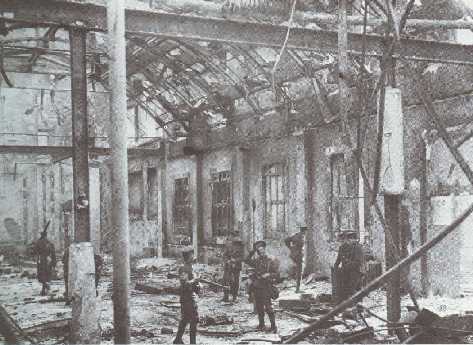
Easter Monday At The G.P.O.

Ninety-five years ago, small bands of armed volunteers took possession of the General Post Office, Boland's Mills, and St. Stephen's Green.

The Irish rebelled against the British, but then, they'd tried the same thing in 1867. And 1848. And 1798. Every time, different tactics were tried, and every time, the Irish rebels sought outside help.

Foreign nations stood by and watched, not willing to get involved.

While some wonder what the patriots of the past might think about Ireland's present day problems, some of us wonder what might have happened in the past if present actions were applied.

What if France or Germany or the United States had intervened in 1916?

What if there had been an international outcry over the harsh treatment of Irish Catholics at British hands, similar to the outcry over the repression of the Libyan regime?

Irish-Americans were lobbying their elected representatives prior to 1916, hoping to force regime change through political pressure, but there was no will to call the mighty British Empire to task. Alas, Ireland was impoverished by centuries of pillage, and the Corrib gas fields were unknown.

How different things would be if foreign nations had eyeballed all that fossil fuel, trading assistance for deep discounts and guaranteed supplies.

The French went to America's aid at the behest of Benjamin Franklin and Thomas Jefferson, but it wasn't out of Christian charity. There was much to be gained by an alliance that was supposed to enrich France and impoverish England. America had vast resources. Ireland in 1916 had the worst tenements in Europe.

What might have become of Ireland if American aid arrived in 1916? That's a matter for authors of alternative fiction to ponder and imagine.

Saturday, April 23, 2011

An Explanation Will Be In Order

Not the same Daniel
Americans following President Obama's itinerary through Ireland will note that he plans to stop at Glasnevin Cemetery and possibly lay a wreath at the grave of Daniel O'Connell.

That singer, they'll say, did he die? And so young.

You're thinking of Daniel O'Donnell and it's not the same Daniel at all. Have no fear. You can still hear your one warble tunes when next you vacation in Branson, Missouri.

This one we're talking about
The President wishes to demonstrate his African roots by paying homage to a man who was, among many things, a fierce abolitionist.

Daniel O'Donnell is called 'The Liberator' and his name is cherished in Ireland.

He came of age when Catholics were legally banned from sitting in Parliament. So great was the injustice that O'Donnell took a stand, speaking against the Union of Ireland and England which did away with the Irish Parliament and further weakened the rights of Catholics.

England fought back, passing laws and regulations to rein in the agitating Catholics and keep the Protestant Ascendancy in place. O'Connell's goal became emancipation for Ireland's Catholics. Frederick Douglass, a champion of emancipation, called on O'Connell while visiting Ireland in 1845.

President Obama will visit O'Connell's grave, just as Frederick Douglass visited the man himself. It's loads of symbolism, although Mr. Obama may not wish to remind everyone of the strong religious bias that once existed in Ireland, and continues to fester in the north.

If the journalists could please not put much emphasis on Daniel O'Connell's strong religious faith and the esteem with which he's held by the Catholic Church? No need to remind the voters that the Catholic Church isn't holding Mr. Obama in high regard these days.

Shouting Into Deaf Ears

Justice for Magdalenes has been shouting into deaf ears. They've turned to the United Nations Commission Against Torture in the hope that someone there might be listening.

On the heels of the investigation into Ireland's industrial schools, the women who were held as virtual slaves for the crime of being pregnant outside of marriage (or too pretty in some cases) sought equal treatment for their injuries.

The bureaucrats claimed that the women were not part of the education system, as was the case with those incarcerated for the crime of being poor.

Besides, incarceration in the laundry was voluntary...wasn't it? Not ordered by any court....was it? And can't the Magdalene laundry survivors just please go away and stop reminding everyone of a hideous practice?

To date, the women who slaved in the laundries without pay have not received so much as an apology.

Maeve O'Rourke has authored a submission to the UN commission which lays out the grievances, in the hope that the Irish government will be forced by a world authority to open its deaf ears and listen. And act.

Because cruelty, torture, degradation and inhuman treatment were part and parcel of the Magdalene laundry system, Ireland is required by UN convention to investigate and provide compensation.

The laundries were shuttered completely in the late 1990's. If the government can stall long enough, all the Maggies will die of old age and the problem will go away.

Ms. O'Rourke has upped the stakes to prevent this from happening, by turning to the UN and making the injustice known throughout the world. By embarrassing the Irish government, she may turn up the volume just enough, making the voices of the Maggies heard at last.

The barbarity of the laundries is too unpleasant to contemplate, and most would rather not think about it, as if it never happened. The problem is, it did happen. Innocent women were physically and mentally abused by order of the State and the Catholic Church. Those who suffered for no reason deserve to be heard.

Friday, April 22, 2011

The Mood Made Solemn By Law

We won't be heading off to the local for a friendly pint on a Friday evening.

In Ireland, it's against the law.

Maybe you're not of a religious bent or you're unfamiliar with Christianity, but today is Good Friday. It's a solemn day, a day in which we are to reflect on our evil ways with a mind to set things right in the future.

Since 1927, when the Irish Free State began to flex its puny muscles, pubs have been forced to shut their doors on Good Friday. Can't have people laughing or smiling or getting drunk when they should be contemplating Jesus Christ's suffering for our sakes. And since there's always a few weak ones in the bunch, the Government made it official and the bars are shuttered.

As usual, the Vintner's Federation is making some noise about the antiquated legislation.

Why can't people decide for themselves if they wish to carry on an old tradition, rather than have the decision made for them by the State?

Then there's the issue of the tourists who take their holidays around Easter time. The tourism industry promotes the camaderie and friendly atmosphere of the pub, but will visitors be happy to find that the pub they planned to visit on Friday is closed, along with every other liquor-serving establishment around?

Old habits die hard. In spite of the drop-off in Mass attendance and the furor generated by the clerical sex abuse scandal, politicians are reluctant to tackle a minor issue that may not be all that unpopular.

Good Friday closing is part of the fabric of Irish life. It's always been so, and where's the harm if we abstain from beer for one day out of the year? Besides, you can stock up at an off-license on Thursday evening and make your own party at home.

Thursday, April 21, 2011

The Royal Wedding Shrinks To A Small Screen

The excitement! The buzz! The fashion! The hats!

Unless you're here in County Limerick, where the general sentiment regarding the Royal Wedding ranges from a yawn to vulgarity not suitable for publication.

In Limerick City, the wedding coincides with the start of the tourist-attracting Riverfest. Naturally, someone in charge of things saw a need to make a fuss over the Prince taking a bride.

A big screen with a live feed would do the trick.Placed in a prominent area, say, the Milk Market.

The Anglo-Irish Treaty of 1922 is just so much worthless paper in the west of Ireland. Aware of the local sentiment, Michael Sheehan implied that things needed to be toned down. Former mayor John Gilligan took it a step further and stated that the Milk Market was not a venue meant to promote the monarchy. Maurice Quinlivan, of Sinn Fein, reminded us all that not everyone is welcoming royalty.

Those who wish to watch the wedding will have to make do with small screens and the derision of their nationalist neighbors. It's really for the tourists anyway, the ones who are captivated by the fashion, the hats, and the Disney-fication of princesses.

Wednesday, April 20, 2011

All About The Platform

Dublin-based literary agent Marianne Gunn O'Connor made her name when she wrangled a huge deal for Bertie Ahern's little girl.

Reviews of Ms. Ahern's debut novel were mixed, but it sold. Her father was the taoiseach, after all, and that connection alone generated all sorts of buzz in Europe. Cecelia Ahern, you see, had a firm platform on which to stand.

For the same reason, Kathleen MacMahon will be blessed with an advance of 600,000 shiny British pounds for two books, the deal concluded by Marianne Gunn O'Connor. Say what you will about the quality of her clients' prose, but she's unbeatable as a literary agent.

Ms. MacMahon also has a sizeable platform from which to launch her sales campaign. She's been with RTE for ages and she's not exactly a complete unknown.

News of the deal serves as pre-launch buzz-building. Then there's the favorable review that one would expect from the Irish Times, where Ms. MacMahon's auntie is the literary editor.

For publisher Little, Brown, it's a risk worth taking. A first time author with name recognition goes a long way, as compared to a first time author who is unknown outside of their immediate area.

Authors hoping to break into the publishing fortress should not point to this deal as an achievable dream that could apply to them. Some things are reserved for those who can construct a platform, sparing the publisher some publicity costs.

It doesn't matter if This Is How It Ends is as smarmy as Cecelia Ahern's offerings, if it takes an entire box of tissues to soak up all the tears. It doesn't matter that your prose is superior or your plot less hackneyed.

It's all about the platform. If you don't have one, it's a very large strike against you.

Tuesday, April 19, 2011

To Kill A Queen

An Taoiseach Enda Kenny has assured his colleagues in England that "the vast majority" of the the Irish people will welcome Queen Elizabeth when she sets foot on Irish ground.

Notice that he didn't say "everyone".

The timing could have been better. Her Majesty will inhale the misty air of Dublin on the anniversary of the city's bombing by unionist thugs in 1974. Mr. Kenny anticipates a bit of a protest but nothing so big as to interfere with the "vast majority" making welcome.

That's not the least of it. The use of the bomb as a regime-changing tool is part of Irish history, featuring prominently in Charles Stuart Parnell's time, when a long-standing battle for liberty fired up fresh.

Irish nationalists attempted to set off bombs all over London, with funding and planning largely coming out of Chicago (but that's another story for another day). When Queen Victoria celebrated her Golden Jubilee, security was massive. An attempt on her life was feared.

To learn more about those times and the mindset of those who would kill a queen, you'll find it in the pages of A Terrible Beauty.

After you've read that book, you'll understand how a mission can carry on, down through the generations. You'll understand why Enda Kenny hedged his bets when he spoke of "the vast majority".

There's a minority he's worried about. They want England out of Ireland, as did their ancestors before them. They might have tried to kill a queen once before with a bomb. Or maybe the plot on Queen Victoria's life was perpetrated by someone on her side, to put an end to Home Rule and preserve the Empire.

The Irish have long memories. Expect security to be stifling.

Monday, April 18, 2011

The Arc of the Story

In 1913, labor unrest was creating turmoil around the world.

In Russia, it ushered in communism and we all know how that ended up. Ireland saw the industrialists push back in a massive lockout that features in A Terrible Beauty. Read the novel and you'll discover how well that ended up.

Modern day Ireland is heavily unionized, and it's in dire financial straits. In order to qualify for a bail-out from the European Union, the government has to cut costs, and the unions that fought for recognition in 1913 are not the heroes of the day anymore.

The arc of the union story is on the downward slide. Labor is no longer negotiating for higher wages with the likes of Lord Iveagh or the Protestant Ascendants who owned the tramways and the coal piles. Civil Service union members are threatening industrial action, if they don't get their way, but it's their neighbors they're railing against.

As finances fell apart, Government negotiated a new deal with public sector unions that would please the masters of the EU purse. Now those same unions are threatening to walk off the job if their wages are cut. There's been talk of bringing Ireland to a standstill if public sector union members have to accept smaller paychecks.

It'll be more than a standstill if Ireland doesn't meet EU-prescribed cost cutting goals. At the moment, Irish banks are looking at junk bond status for their long term deposits, with the markets not so sure that the Government can get all its financial ducks in a row.

Without a bailout from the European Union, there will be more than wage cuts in the offing. There will be wholesale redunancies.

The public sector unions are complaining about their members being cast into poverty if wages are cut, as if the Government is sitting on large piles of cash, hoarding greedily. In truth, the Government is sitting on a mountain of debt. If the Civil Service employees want a bigger piece of that pie, they just might get it.

Saturday, April 16, 2011

Channeling James Frey?

When is a memoir not a memoir?

Disgraced author James Frey provided the answer to that question when he was outed as a fraud. The book he sold as a memoir turned out to be a work of fiction.

Just like Frey's blockbuster release, Greg Mortenson's tale of his charity work in Pakistan and Afghanistan has sold millions of copies. Three Cups of Tea was an inspirational blockbuster in its own right, touting the author's dedication to building schools in remote mountain areas that are little changed since the Stone Age.

Those who found Mr. Mortenson's memoir to be too good to be true are speaking openly of their doubts.

One of those questioning whether the memoir is really a work of fiction is acclaimed author John Krakauer, who knows a thing or two about mountain climbing and doesn't believe Mr. Mortenson's assertions that he got lost while climbing and so began his improbable journey.

However, Mr. Mortenson has noted that the people Mr. Krakauer spoke to are making up stories of their own in an attempt to discredit his efforts to educate girls. He has a point.

Mr. Mortenson has been applauded for improving female access to education, and there are many who would disparage his efforts if it helped end it. To take anyone in the area at their word, that schools said to have been built weren't, is a serious mistake.

The truth as we Westerners know it is far more fluid in non-Western places.

The only way to judge the veracity of Mr. Mortenson's contentions is to travel to the places where his efforts met success, and verify that either a school is there, or was there until pro-Taliban forces destroyed it.

Sixty Minutes is on the case. We'll soon see if Mr. Mortenson wrote a memoir, or followed in James Frey's shadow and wrote a novel that would only sell if he said it was real.

Friday, April 15, 2011

Superficial Abuse

The disgraced bishop admits that he did, in fact, abuse two of his nephews, and not just the one as originally charged. He went on television to protest his relative innocence.

Ah sure and it was only superficial abuse, says Roger Vangheluwe, previously the bishop of Bruges.

Superficial, he says? Does that mean that the average person wouldn't notice much of anything about the two boys who were molested, one over the course of thirteen years? No scars on the surface, no bruising of exposed flesh.

He gave the boys large sums of money, but that didn't keep them from talking. And talking about what? Vangheluwe didn't see it as anything sexual. Besides, the one nephew wasn't against the intimacy, no, not in the least.

All the harm that was caused must have been entirely internal.

Therefore, the ex-bishop can confidently state that he's not a paedophile.

Where is the clergyman now?

The Vatican told him to leave Belgium last week amid the uproar. Get yourself some spiritual treatment, son. Reports place Vangheluwe in a French monastery where we can assume he's praying his heart out.

So much trouble he's caused. Until now, all the Irish bishops who came under fire for protecting serial abusers in the clergy were allowed to resign. What's to be done when it's the bishop himself who's the pervert?

He can be defrocked, but that only brings more unwanted attention to the sex abuse crisis that continues to roil the Church. Doing nothing, however, won't quiet the faithful followers either. Hiding him in a French monastery certainly hasn't been effective at quelling unrest.

Belgium's justice minister has had about enough, and he's calling on the Vatican to impose some harsh penalties on a man who doesn't think he did all that much harm.

All that was hidden is out in the open and the world is seeing what's been brushed under the rug for so long.

Time to clean house, do you think, instead of piling things in closets and hope the guests don't open a door?

This Will Make The Secret Service Nervous


If it weren't for President O'Bama's upcoming visit to Moneygall in County Offaly, no one would know or care about a slight traffic mishap.

A vehicle loaded with explosives crashed into Donovan's hardware store yesterday, right on the main road. You can bet that someone in the Secret Service felt a bit of a heart flutter when he heard the news.

What's the first thought? Knowing that the owners of the affected shop also own the President's ancestral home, you'd start thinking conspiracy by disaffected terrorists. A link to the IRA, perhaps?

Panic sets in.

The lorry driver suffered nothing more than a sore wrist and bit of a heart flutter of his own. It's believed that something went wrong with the vehicle's mechanical underpinnings, and looking at the pictures, it's apparent that there wasn't much of a collision.

As for the explosives, they were being carried for legitimate business purposes and were not going to blow up then and there. The truck had come from an explosives factory in Nenagh and was headed to a mining site.

It was all just an ordinary, everyday sort of accident. But it happened in Moneygall, where America's President is supposed to meet and greet.

Nothing to see here, move along.

While the man charged with keeping the President safe sweats out another possible disaster scenario.

Thursday, April 14, 2011

The Dalai Lama In Dublin

While the Dalai Lama was in Dublin, he entertained the masses at the Citywest Hotel. The reason for his first visit to Ireland in twenty years was to promote a trio of charities that his Lama-ness supports.

The event was organized by Richard Moore, who founded the Children In Crossfire charity. Mr. Moore is quite familiar with crossfire. He lost an eye to a rubber bullet in Derry at the age of 10.

As you'd expect, the Dalai Lama won over the people who came to see and hear him, to bask in the glow of peace that radiates from his saffron robes.

From Dublin, the Dalai Lama has plans to travel to Limerick and other parts of the island, speaking and promoting world peace.

I have to wonder if he'll find the time to play a round of golf. And will he then stiff the caddy?

Bill Murray Dalai Lama Scene from Caddyshack
Tags: Bill Murray Dalai Lama Scene from Caddyshack

Wednesday, April 13, 2011

Newcastlewest Books Contest Still Open

We've given away four copies of A Terrible Beauty already, but we'd like to get a copy into more hands.

Just tell us how Irish you think you are.

Send a short message to info@newcastlewestbooks.com, include your name and address, and you might win your own copy of a story that you won't be able to put down.

From 1867 to 1916, A Terrible Beauty traces the arc of rebellion that bubbled under the surface for decades before erupting in bloody combat on Easter Monday, 1916. What drives a person to risk all for the sake of liberty? You'll find an answer within the pages of A Terrible Beauty.

You can read the first chapter here. Then you'll want to enter our contest here.

Go on, tell us how Irish you are. You've nothing to lose, and an outstanding piece of fiction to gain.

Tuesday, April 12, 2011

It Might Be The Drink Talking

Ideas that crop up around the bar at the local may not be the most brilliant, but this one could be fun.

How Irish are you?

Send a couple of lines to info@newcastlewestbooks.com and you could win a free copy of our newly released novel, A Terrible Beauty. We have five copies for five lucky scribes who can answer the question that Mary Claire O'Dwyer puts to Simon Plowman during the voyage to the prison colony in Fremantle, Western Australia.

Don't forget to include your name and mailing address. Contest closes on Palm Sunday, April 17, 2011.

Monday, April 11, 2011

Announcing Our First Release

Newcastlewest Books is pleased to announce the release of A Terrible Beauty, a story of rebellion and a family torn apart by secrets.

Beginning with the failed uprising of Irish soldiers in the British ranks and continuing to Easter Monday, 1916, A Terrible Beauty presents the twists and turns of espionage when revolution threatens to tear apart the British Empire.

With the upcoming 95th anniversary of the Easter Rising, this is the perfect time to read about the history of a rebellion that simmered for decades before the first shot was fired.

About The Novel

The penal colony in Western Australia is escape-proof---but that is about to change. Sentenced to seven years transportation, Mary Claire O'Dwyer is determined to free the Fenian rebels. She will find allies in unexpected places, where a Royal Marine's scarlet coat can be another deception.

On the voyage to Western Australia, she is pressured by Simon Plowman to work for him as a covert spy, but the man who crushed the Fenian uprising in 1867 will inadvertently train her in the art of espionage and deception. She wastes no time in organizing a jail break.

In the U.K., Simon is seen to undermine every important Irish movement. Whether he is manipulating Charles Stuart Parnell or blackmailing Lord Salisbury, he appears to be an agent for the Crown, and when he casts his lot with Edward Carson's Ulster Volunteers, his loyalty goes unquestioned.

At the same time, his daughter develops into a radical revolutionary, sneaking around behind her father's back to support the workers during the Dublin Lockout of 1913 and expanding into gun-running for the Citizen Army.

Aware that her mother left a record of her time in Fremantle, Eireann never stops searching, while her father never stops holding her at arm's length. What she perceives as political differences or lack of love is far removed from Simon's real motives. Only when she believes that she may soon face her father across battle lines will Simon introduce her to her parents, and demonstrate just how deceiving appearances can be.

Tinker, Tailor, Agent Publisher

For a long time, literary agents felt that it was a conflict of interest for them to act as publishers.

The times they are a-changing.

President of Nielsen Book, Jonathan Nowell, sees the growth of e-books as a factor in the decline of hardcopy sales. While people are still reading fiction, they are increasingly turning to the digital edition.

As you would expect, there's less money to be made in the highly price-competitive e-book, which leaves less for the literary agent. A wise publisher would offer much lower advances as well, knowing that the company will not sell hardcopies in the numbers they once did.

The problem for authors lies in the loss of display space. Without a Borders on every corner, the reading public will have a much more difficult time in discovering a writer, who will be fighting for attention through increased marketing and there go more profits turning into expenses.

Literary agent Sonia Land of Shiel Land took a bold step in an unknown direction when she acted as the publisher for Catherine Cookson's backlist. She created a publishing house and the books were released as digital editions of her late client's original works.

Ms. Land may be a step ahead of the game. Amazon.com is charging ahead with its publishing plans. Powerhouse agency WME has inked a contract directly with Amazon for one of their authors, a move that some might see as a conflict of interest for a literary agent. With authors showing a growing interest in taking their work direct to digital, it may not be such a conflict after all.

How many books has any given literary agent fallen in love with, only to be turned down by a big house publisher? If an avenue exists for that work to see the light of day, is it a conflict for the agent to do what he or she can for their client, even if it means acting as a publisher?

Batten down the hatches. It's not smooth sailing ahead.

Saturday, April 09, 2011

A Business Needs A Website

We have a book in process, but we need a home for it. Today, the work begins on building the website for Newcastlewest Books.

Until the website is created, there will be a placeholder at the site, but the fact that we bought our URL feels like we've taken a huge step forward. There are still many options to consider, and a lot of work left to be done before we can fully launch our enterprise.

It seems appropriate to start out during the Easter season with a book that brings the reader from the failed Fenian military rebellion of 1867 to Easter Monday, 1916, when the Irish took up arms yet again to overthrow British rule.

Our first release is an intriguing adventure; the plot twists and turns as the characters engage in the sort of double-dealing and obfuscation that is at the heart of covert military operations.

Indeed, A TERRIBLE BEAUTY is that rare novel that will appeal to both men and women, with a heartbreaking story of a family torn apart by civil war and destructive secrecy.

Look for our announcements soon, and who knows, maybe you'll get a copy for free.

Friday, April 08, 2011

And It Lingers

Within weeks, Ireland will celebrate the 95th anniversary of the Easter Rising, the final grand gesture in a series of such grand gestures of rebellion.

Newcastlewest Books' soon to be released novel, A Terrible Beauty, follows the decades-long string of small events that led from the failed Fenian movement of 1867 through that fateful Easter Monday in 1916 when a rag-tag group of intellectuals and trade unionists started shooting.

After so long a fight, it's little wonder that a hatred of England would linger over the Emerald Isle. But after 95 long years? It lingers still.

The Queen of England is scheduled to visit Ireland after the dust settles following the big royal wedding. There have been all sorts of concerns expressed, not least that which deals with security. The offshoots of the IRA have upped the ante of late.

While security can be increased, there's nothing that the government can do to make the Irish people welcome British royalty. How embarrassing would it be when Her Majesty steps onto the pitch at Croke Park and finds a crowd shouting derision and offering reminders of the Bloody Sunday massacre of 1920?

Passed down from generation to generation, the traditions of the Gaelic Revival of the late Nineteenth Century are embodied in the Gaelic games that the GAA promotes. And the Gaelic Revival was an expression of rebel spirit that didn't die when Home Rule was routinely put back on the shelf from th 1890's and beyond.

Queen Elizabeth has already been barred from a Dublin pub, and this comes 95 years after the fight started.

Yes, but the fight hasn't yet ended. There are six counties still under British control, and there are many whose ancestors fought against the treaty that divided the nation.

The British monarch will visit Ireland, 95 years after the fight began in earnest. She won't be welcomed by all.

For such a singular event, the Irish government would like to put on its best face to show the world and the press corps that will be tagging along. Those who quietly fume over deeds long past might like to take the occassion to remind that same world that the Easter Rising of 1916 isn't quite done yet.

Makes for a rather unpalatable brew when you're the host of the big party and all the guests don't get along.

Thursday, April 07, 2011

Employment Opportunity

Unemployment in Ireland is running somewhere approaching 14%. People need jobs. The uilleann pipe industry needs people.

As often happens in skilled crafts, those who know how to make the instruments are few and far between. There is no mass production of uilleann pipes; each one has to be made by hand and it's a painstaking process. It's also a slow one.

A set of pipes from a master craftsman can set a musician back E20,000, so it's not as if there's an enormous demand. The fact remains, there is a demand and with few around who know the trade, musicians find themselves waiting a long time.

To keep the uilleann pipes alive into the future, Na Piobairi Uilleann is setting up a school to teach the art of pipe manufacture.

Unless they can raise E120,000 per year for the next five years, they can't afford to offer a full-time course. For now, the best they can do is provide part-time instruction, in the hope that a few people will fall in love with the complex artistry that is required to create a set of pipes.

Without manufacturers coming up from the younger generations, the uilleann pipes could fade into obscurity and the music would be lost. Singer/songwriter Damien Dempsey will perform on Friday, 29 April, at a fundraising event for the pipe school.

St. Patrick's Day is in the past for this year, but is there anyone out there with the warm glow still lingering? Here's a reminder of the haunting and ethereal quality of the uilleann pipes from Liam O'Flynn, a master of the instrument. Worth making a donation, isn't it?

Wednesday, April 06, 2011

Hanging On A Branch Of The Family Tree

One of the things that literary agents hate to see in a query letter is any mention of who the author thinks would be brilliant to play the role of the protagonist.

Imagine the likes of Binky Urban opening a query letter in which the author states he can imagine Natalie Portman in the starring role. Straight into the bin with that one.

It shouldn't come as a surprise that fertility specialist Dr. Avner Hershlag was unable to secure representation for his thriller.

Dr. Hershlag is the victim of a non-Hollywood approved name. His daughter changed it to the more palatable "Portman" and her star has been on the rise ever since. Right from the start, his author's platform has been shaky.

What good would it do him to open his query letter with a mention of his famous offspring? Sorry, but the names don't match and here's another nut trying to crack the industry. As if a literary agent would be gullible enough to fall for such a ruse when it's obvious the names are different.

Left with no other choice, the good doctor published his book himself, but didn't find the sales he was hoping for. Major sales require marketing, which the average self-publisher doesn't have the time to do.

The rift that developed between Dr. Hershlag and his daughter following her sex scenes in The Black Swan  generated a bit of publicity and the time has come for the author to take advantage of the attention.

He's shopping around for a big-house publisher and he's making no secret of the fact that he is Natalie's daddy. And that's the sort of platform that major publishing houses like.

It doesn't much matter how good or bad the novel is. They have in-house editors who can apply a polish. What only Dr. Hershlag can provide is his connection to a famous actress, and that is a very valuable commodity for a debut author. No amount of skilled writing or story-crafting can create a platform like that.

Tuesday, April 05, 2011

Scrounging For Book Money

In San Francisco, A Different Light and Modern Times book shops are essentially going out of business.

I don't want that to happen to my local independent vendor. If only I could scrape up enough cash (the car's going to need gas by Thursday so the budget is stretched already) to support them.

Any loose change under the sofa cushions? A few dollars tumbling in the dryer?

The ladies who own and manage my local shop know their merchandise. Anyone who wanders in, looking for something to read, can find direction among the shelves and tables. Oh, but there's no coffee. This isn't one of those kinds of places. It's a book store that sells books and you won't find a scone lurking in the corner.

A Different Light catered to a particular clientele, but times have changed and the gay/lesbian/bi/trans community can find appealing books all over the place. No more need for one site supplying the needs of a relatively hidden community. They're not in the closet anymore, and with acceptance comes change.

The change isn't good for those who hitched their wagons to a single star, only to watch the star fade and die.

Modern Times has fallen victim to declining revenue in the face of a landlord who wants to earn a certain level of profit from his rentals. Hence, their request that people come in and buy books.

My local bookstore is geared towards the general reading public, and it's located in an area where people can still afford a few luxuries, like books. The store owner makes a point of offering personal service, another huge plus in this part of the world.

Yet I know that several friends who were regular customers are now celebrating their new Kindles.

That means they aren't buying so many books as they once did at the store, choosing the instant gratification of the e-book. But did they select that e-book based on advice from the bookstore owner? Without the shop, who can steer me in the right direction when I'm flush with cash and want something to read that isn't a reject left on the library shelf?

Support your local independent book store. Buy a book.

Monday, April 04, 2011

The Proofs Have Arrived

As we move forward in the creation of Newcastlewest Books, we're finding that there's a great deal of housekeeping that needs to take place before launch.

Using three sets of eyes, we'll go over every single letter on every single page of the proof copy, to make sure that nothing was lost or changed as it traveled through the ether from one computer to another.

Someone has to make sure the pages are correctly numbered. Sound tedious? It is. But's it's necessary if the books we'll publish are to be of high quality from prose to print style.

The cover art is spectacular, and the image really conveys the sense of isolation and solitude that underlies much of the narrative. Just looking at the cover is a thrill, enough excitement to fire up the enthusiasm to tackle the biggest project we've every taken on.

So it's back to the trenches, to verify that all is as it should be.

In the meantime, you can preview the novel here.

Then we'll take the next step on this rocky road to publication. Descriptions for catalogs have to be written, though none of us have much confidence in our salesmanship.

After all, we've had little or no luck attracting literary agents's attention through the sales pitch in our various queries.

Here's hoping what the reading public is looking for is what we're able to represent.

Saturday, April 02, 2011

Whither Publishing?

The proof copy of Newcastlewest Books' first release arrived. I'm wondering if I've joined in a venture that's already outdated. 

While the physical book represents something concrete, we expect sales to be made in the e-book, not the print version. There is an immediacy to electronic publishing, the ability to read something when you first discover it.

Getting a book into a brick and mortar store is no easy task for a small start-up like Newcastlewest Books. The competition for shelf space means we're out of our league in terms of payola to the book vendors to put our work on a front table or facing out on the shelf.

Indeed, the high price of advertising alone is driving us, and many other authors, to rely on social media to get the message out. More and more, authors will Twitter and Facebook away to reach their readers, leaving behind the expensive print adverts.

Publisher Nicholas Callaway has turned from publishing books to creating apps for books, seeing it as the future of reading. Interactive books will be more than words on a page, due  entirely to advances in computer technology.

But do we need a novel to do  more than tell a story that entertains or enlightens or teaches?

By adding features to the written word, do we risk overstimulating the reader until they've lost the thread of the plot?

Perhaps a map would help to explain a story's locale in ways a writer would not, because it would be dull going and a picture's worth one thousand words. In general, the application for a book could serve well in some instances, but a story should not need much embellishment.

Too much going on, too many tangents to follow, could spoil the experience of getting lost in a  novel.

The app may not be for us, but we're going to have to embrace the e-book if we're to get our words out there. After all, what good is a story if there's no one listening to you tell it?

Friday, April 01, 2011

Sparking A Row

When literary critic Eileen Battersby gave a less than positive review of Dermot Healy's new novel, she expressed her opinion and thought that was the end of that.

Turns out that she sparked a row that has been flaming on the pages of the Irish Times.

Wouldn't you know, but it's one of several weekends where I didn't read all of the newspaper.

Novelist Eugene McCabe took offense at Ms. Battersby's comments about Long Time, No See. As far as he's concerned, Dermot Healy is a brilliant writer and Ms. Battersby isn't fit to lick his boots, so who is she to dare to criticize?

While all this was going on, Mr. Healy was blissfully ignorant. Once he learned of the spat, however, he became totally unconcerned.

Like any author, he doesn't like to receive a negative review, but it's the nature of the business. Everyone's entitled to their opinion, and as long as Ms. Battersby's opinion isn't shared by the majority of the book-buying public, it doesn't much matter. Once the book is written, it's finished and the author moves on to his next work.

A true gentleman, Mr. Healy had nothing negative to say about his critic's writing ability, given that he hasn't read her prose and therefore could not have a true opinion of its quality.

Mr. Healy cares not a whit about the chatter, but in the end, such talk can boost sales of his novel. People will be curious to know who is right in such a heated exchange of rhetoric, and any publicity is good publicity, even if it's something as silly as an argument over who is qualified to offer criticism.

I missed the original review and I probably wouldn't have known about the book if not for the dispute. So it worked. I'll be sure to read the novel now and see for myself who is right.

Protecting A Job Description While Losing The Job

Terrance McGann is proud of the legal work he's done for the Chicago Regional Council of Carpenters.

Thanks to him, the carpenters have rescued a job description. In the process, however, the carpenters will end up losing the job.

The Metropolitan Pier and Exposition Authority understood the complaints of trade show groups, who were so upset about outlandish union rules regarding set-up and take-down of exhibits that Chicago was losing trade shows at a frightening rate.

To staunch the flow of financial blood, the Authority decreed that unions could no longer gouge exhibitors. By allowing exhibitors to do some of the work themselves (that includes dangerous work like plugging in an extension cord), the trade show attendees could save some money and they wouldn't be so likely to go to Vegas or Orlando.

With the new legislation in place, the Exposition Authority found that customers who threatened to up stakes agreed to keep their show in Chicago, and those who had avoided Chicago because of the old union rules decided to give it a try under the new and improved schedule.

Not so fast, said the Teamsters. They went to court to stop the changes, and Judge Ronald Guzman found that state governmental bodies couldn't alter collective bargaining agreements. The rules governing McCormick Place trade shows fit into that particular slot.

Citing recent political machinations in Wisconsin, attorney McGann waxed triumphant. There'd be no cutting his carpenters out of the vast sums to be gained from the various trade shows that present their wares in Chicago.

Except that the trade shows aren't exhibiting their wares at Chicago trade shows like they used to because the union acted like a parasite and sucked the life out of them.

The very rules that Mr. McGann fought to preserve are the same rules that ran up costs and made Chicago non-competitive.

Well done, Teamsters.

In a grand gesture of union solidarity, you've protected guarantees of work hours that were highly beneficial to the union members.

And you've ensured that those same union members won't have work because the trade shows will turn around and go elsewhere, as they were before the modifications were put in place.

Rather like a starving man pointing to the big fish he caught, the one that's mounted and stuffed for exhibit but can't provide a morsel of food to keep him alive. It's a point of pride, perhaps, but other than that, it's worthless.